Episode Info
- Season27
- Episode6
Hosted by Christina Ruffini and Sir Richard Dearlove
Guest
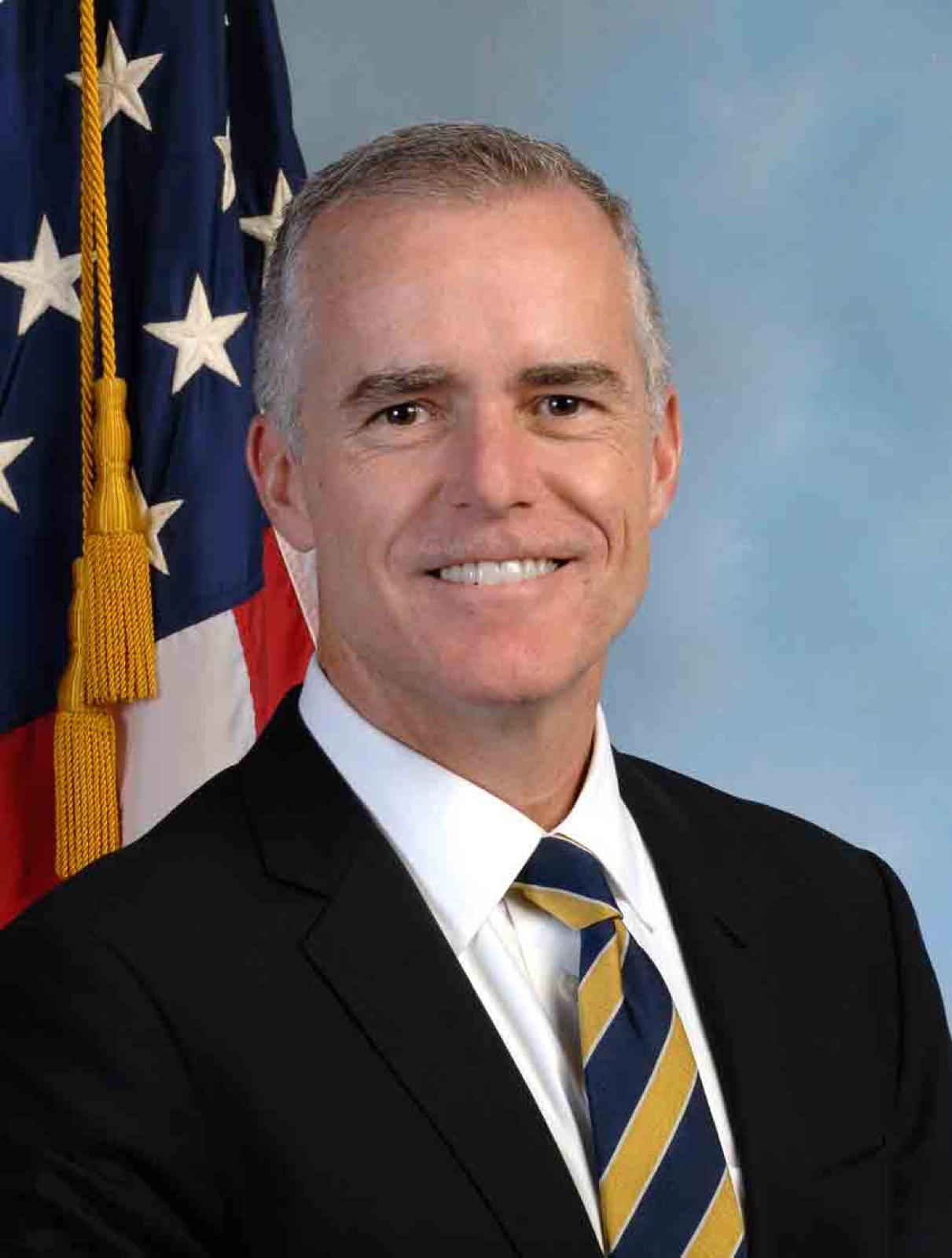
Andrew McCabe
Andrew McCabe is a former FBI Deputy Director discussing efforts by foreign actors, such as Russia, China, and Iran, to influence American elections.
Episode Summary
Former FBI Deputy Director Andrew McCabe joins journalist Kasia Madera and One Decision's resident spymaster, former MI6 Chief Sir Richard Dearlove, to discuss efforts by foreign actors such as Russia, China, and Iran to influence American elections, recent warnings from intelligence officials about potential terror attacks, Donald Trump's relationship with Vladimir Putin and what a Trump election win—or loss could mean for the United States. Andrew and Sir Richard also talk about their connection with John O'Neill, an FBI counterterrorism expert who later became the head of security at the World Trade Center in New York. He tragically died in the September 11, 2001, terrorist attack when the South Tower collapsed.
Listen & Subscribe
- Watch on YouTube
- Listen on Apple Podcasts
- Listen on Spotify
Transcript
COLD OPEN
Mccabe: I'm always more concerned about the Russians because they think they kind of forge the path. This is not new. Their interest in just simply selling chaos and division and polarization, if they can do that, it's a win. If they can actually hurt a candidate they don't like or help one that they do like, that's an even bigger win.
INTRODUCTION
Madera: That was the former acting director of the FBI, Andrew McCabe, talking about possible Russian interference in the upcoming US presidential election. It's worth bearing in mind that Andrew was involved in the investigation into possible collusion between Trump's 2016 presidential campaign and Russia. You're listening to One Decision, the podcast that looks at the choices that shape our lives. I'm your guest host, journalist Kasia Madera, along with former MI6 chief, Sir Richard Dearlove. We caught up with Andy to discuss among many things what a second Trump term could mean. So let's get to the conversation.
INTERVIEW
Dearlove: The reason I wanted to start off and ask you this question, it's nearly the anniversary of 9/11, and you must have worked for John O'Neill in the New York field office. John was a dear, dear friend of mine. We worked together very closely. We saw a lot of each other. For me, he's a quintessential American hero. I just thought it was a good way to start the podcast to ask you about your memories of John because in fact I had dinner with him before we started the job as security officer for the Twin Towers, and that was obviously the last time we saw each other.
Mccabe: Yeah. Thank you for bringing him up. He's someone whose memory I hold so dear as well. One of my very first memories of arriving in New York City as a brand new agent out of Quantico. One of the first meetings I sat in, I was very nervous to be there with the heads of the field office. John O'Neill was there. He, I guess, had read my file, my background, and knew that my father had formerly worked for a car company, for Mazda, the car company. And so in the middle of the meeting, he stops the conversation and looks at me and he says, McCabe, your father worked at a car company. He's like, Can he get us a deal on some new Buick cars? Our Buick cars are falling apart around here. And that was him. John was a guy who just cut right to the chase. Wasn't afraid to make a joke or call you out on something. I was a SWAT agent in New York. John, whenever we did a job for the counterterrorism side of the office, John was there wherever we were, as long as we were there. He'd come up to the trucks, he'd stick his head inside, he'd bring us food. And he was a guy who was at the very top of the organization, but always did everything he could to take care of the boots on the ground. So I just learned a lot of lessons about leadership from watching him and having the fortune to be in the same office that he was in.
Madera: It's such poignant reflections that you share with us, Andy. Thank you so much. While we're talking about terrorism, the threat of counterterrorism, of course, you rose through the FBI's counterterrorism division. And your successor, Chris Wray, has been saying that the threat from foreign terrorism has risen to, in his words, a whole another level after October 7, after what happened, the attack by Hamas in Israel. I just wonder, where are we with that threat level across The United States, but also globally?
Mccabe: Yeah, I think there's no indication that we have crested the hill and are starting to come down in terms of our concern about terrorist threats. And it really comes at an interesting time because in this country, threats of domestic extremism have been rising for several years and have really taken over kind of the prime focus of the FBI's counterterrorism efforts until October 7. And then to have the international terrorist threat, in essence, reemerge in some ways from a group that we really have not been focusing on very closely here in The United States. I can only imagine what October 8 was like for my former colleagues, those folks who are still working terrorism issues in the FBI. Because quite frankly, Hamas is not a group that we were putting a lot of resource or time and attention on. Early in the post 9/11 era, we spent a lot of time thinking about supporters of Hamas in The United States, ultimately concluded that the people here who we thought might be connected to Hamas or Hamas affiliated people overseas were really engaged in just that financial support, material support to a low level, but not operational activity. And now, with the level of hostilities between Israel and Hamas and the level of US support for Israel, they have to really rethink that entire dynamic and to kind of, maybe to some degree reinitiate those efforts to develop sources of information, to develop a rich picture of the communities of interest that historically have had some subjects of investigation in them, and to start to think whether or not we face truly an operational threat from Hamas and Hamas affiliated groups and individuals here in The United States. So they got their work cut out for them.
Dearlove: Yeah. I think we have a similar problem in The UK. I mean, Hamas has always, as it were, been represented at least by sympathy in the pro-Palestinian community in The UK, but the question now is do we face something more serious? And the thing I worry about is the sort of inspiration of lone wolves, the radicalization of individuals when it's not, you know, conspiratorial terrorism, but maybe one or two individuals doing something, and it's very hard for the intelligence and security services to track these sort of lone wolf activities because they don't leave much for signature.
Mccabe: They really don't. I share your concerns about that and I think if anything the protest activity that we've seen here certainly throughout the spring on many college campuses have kind of reminded us that there are some very, very strong feelings of sympathy for that community here in The United States. Now that protest activity, for the most part, is First Amendment protected speech, so it's not the sort of thing that we, you know, and the FBI investigates without more substantial predication. But nevertheless, I think it's an interesting kind of indicator of how strongly the sentiment is right now in support of Palestinian people writ large, and whether or not there could be some other extremist variants within those populations.
Dearlove: Do you see any evidence in The States of, as it were, anything linked with the IRGC because the IRGC of course have been so important in their sort of support and organization of Hamas to an extent. And certainly here in The UK there is evidence of certain mosques, let's say, where it looks as though there are IRGC inspired mullahs or other people who are very pro-Iranian, and that's quite worrying, I think, particularly for the Jewish community and for our security service.
Mccabe: I totally agree with you. And that's the x factor. Right? In this very complicated picture in The Middle East right now, the x factor is always Iran. And Iran's support for the proxy groups that carry out their activity, be it in Israel or in Palestine or in Yemen or, you know, the list goes on and on. The FBI has always been very concerned about IRGC or Quds Force supported, directed, planned activity here in The United States. We haven't really seen, we don't have a lot of examples of that. But they're so effective at training and deploying operatives around the globe. We've seen significant periods of IRGC and Quds Force supported acts of terror in other places. So that's something that you absolutely have to keep your eye on here in The States and of course in The UK as well. It's a complicated time. I was in Ohio speaking to a Jewish community that's concerned about antisemitic threats and the threat of terrorism. I think people are really waking up, kind of reawakening in a way to thinking about things in terms of, hey, what do the conflicts overseas mean for us here? And how should we be more proactive in really embracing, taking on responsibility for our own safety?
Madera: It's fascinating to hear you say that perhaps intelligence into Hamas dropped off, that you weren't gathering enough. What about Hezbollah, in particular the paramilitary wing, the Jihad Council, of course, supported by Iran? Is that something that you have been very interested in and getting that intelligence that perhaps the FBI hadn't on Hamas?
Mccabe: You know, from my experience, Hezbollah was always a bit higher on the kind of resource priority list because of their very close connection to Iran, the fact that they receive extensive training and support from the IRGC and from the Quds Force, their involvement in overseas terrorist activity. So they were kind of still on that very exclusive list of foreign terror entities that we thought were capable of undertaking operational activity in The United States. Hezbollah has always been a group that I think the FBI had a lot of respect for in terms of their capability and their engagement in international terror, a lot of which we felt they did at the behest of their kind of Iranian masters.
Madera: I wonder when we're talking about those kind of agents that get through, in The US, there's been such a lot of noise about the two former aides to two New York governors that have been charged with spying on behalf of the Chinese government. How does that happen?
Mccabe: This is an issue that we have been talking about and trying to prepare our private sector partners for, our state and local governments for, the desire by the Chinese government to establish agents with access to government information and the ability to affect the conduct of governments, be it at the federal level or at local levels, is limitless. And they are expert in generating large populations of people who can get into those positions and get their hands on the sort of information that the Chinese government is interested in. This kind of insider threat that we've been talking about for, it seems like decades now, I think the case in New York is a perfect example of this. I mean, of course, the charges are an allegation and they still have to be proved. But yeah, I think there's nothing that our adversaries in China are not interested in. The day to day running of arguably the most significant state in The United States, I'm sure it was a great opportunity for them.
Dearlove: Andrew, looking at that case, it looks to me very much as though these people were United Front Work Department of the Communist Party, which is an intelligence organization but specifically designed to sort of influence and infiltrate political activity for the benefit of China. We had a case in The UK a couple of years ago which looks like almost a carbon copy. There's a woman called Christine Lee who was a London lawyer, solicitor working out of an office which didn't appear to make any money, but she had lots and lots of access to cash and she spent her time lushing up British MPs and hanging around the House of Commons and organizing people's visits to China. The security service picked her up. The next day she did a runner and disappeared and was never seen again. But it sounds to me as though this case is pretty much identical. I'm sure in my own mind they are United Front Work Department agents, as it were, who would be incredibly well funded too.
Mccabe: That's the sort of MO. I think that sounds entirely possible. It comes at a time here when we've seen really a very diverse group of actors and agents doing essentially the same thing. We had that case exposed in New York maybe late last year or early this year about these Chinese police stations establishing themselves, one in New York. You have Chinese law enforcement essentially doing whatever they do, finding people, threatening people, extorting Chinese citizens, all in the name of the government of China right here in The United States. It doesn't surprise us because we've seen it, but it should shock and horrify, I think. Nobody is as aggressively still oriented in the tradecraft of deploying human beings to The United States to collect information, to conduct influence operations, and then to just basically carry out the duties of the government of China here on terra firma US. So it's hard to stay on top of. They are well funded, and there are very many of them. And each one of them comes with a whole panoply of diplomatic issues when you actually try to step in and interdict what's going on.
Madera: While we're on the subject of China then, you're talking about, Andy, its aggressiveness. Just talk us through your fears about its impact, its ability to interfere with the upcoming election in The States.
Mccabe: The things we've been most concerned about with Chinese intelligence activity over the last ten years, really their desire to collect classified information, their desire to engage in, as we've been talking about, influence operations. That has not changed. What changed ten years ago was their focus on the private sector and their desire to steal economic intelligence for the benefit of Chinese, mostly state owned enterprises. And so we've spent so much time trying to educate our main private sector targets, defense industry targets, technology targets, things like that. And now, I think in the wake of the kind of seminal election operation for us was, of course, the presidential election in 2016. And I think what our experience in 2016 showed many other nations is how easy and inexpensive and low risk those operations are for potential high reward. And so if you've been listening to the FBI, they've talked about election security in the last few months, we know that the Chinese are in this game with Russia and now with Iran. It's a little bit different. It looks different than it did in 2016. It's more flooding the zone with misinformation, the creation of false social media accounts, the use of networks to amplify the information on those false accounts, and all for the purpose of kind of seeding false information into the electoral process. Now each actor may have a different reason for wanting to do that, so the motivations can sometimes shift a little bit. But it puts our intelligence community on the spot really to try to adapt to this new wave. In 2016, when we figured out what was going on, quite frankly, we weren't very good about figuring out what to do about it. We had many conversations in the Intel community and in the White House about whether we should be more open with the American people about what we knew was happening on Facebook, on Instagram, on Twitter. And it's not an easy decision because if you expose the activity that you're aware of, you run the risk of basically doing the adversary's job for them. If their goal is to sow disinterest or distrust in the process, then maybe you're doing that by amplifying and exposing what they're up to. But ultimately, I think that inoculation theory of letting people know that, hey, a lot of the information you may be consuming is false. And not only is false, it's been targeted at you by a foreign enemy. I think that's an important step to take. I think people have to be responsible for the news that they consume. And if we can give them that sort of information, let them know what's happening out there, maybe we get slightly better, more informed voters. So it's an ever shifting target set. The tactics keep changing election cycle to election cycle, but what we know is they're always going to be in it.
Dearlove: Andrew, I couldn't agree with you more. I mean, what we need to do, even as former intelligence officials, is to try to educate the general public about the nature of the threat. And we've had some quite unprecedented interventions in The UK. I think about eighteen months ago the Director General of MI5, of the Security Service, stood up and said publicly in the speech that China was now the largest or strongest threat to national security in The UK. That was unprecedented, to make a public speech and as it were to identify China in that role. I think what you're pointing towards is this sort of spread of activity which is partly political, partly espionage, partly intelligence gathering, partly influence. It comes at you in all directions and there's been a huge growth because when I retired in 2004, okay it was a problem but didn't have anything like the dimensions that it's got now, which means China has sort of grown in confidence, it's grown in aggressiveness, it's not nearly as reticent as it used to be.
Mccabe: I think that's absolutely right. On the other side of that equation, we have become a more and more attractive target as a larger and larger percentage of our population relies almost exclusively on what they see, certainly on the internet, but even more so social media for their news, for their information about the candidates, about the election, about the mechanics of the election, where to go to vote, how to register, things like that. And so if you can tip the scales there just a little bit and insert damaging false information that's going to interfere with what they know and their ability to kind of exercise their democratic rights, their voting rights. That's a very effective, low cost, low risk way to have an impact on American life.
Madera: The lines feel really increasingly blurred when, as you will know, you've had a number of high profile influencers, conservative influencers in The United States saying that they're victims of an alleged Russian disinformation campaign. How is a layperson meant to comprehend or know or understand where information is coming from if even these guys who are media savvy allege that they're victims?
Mccabe: Certainly people who are in the media business, and that in this day and age includes influencers who put things on YouTube. It's not just a handful of networks. They certainly should be held to a higher standard of due diligence and understanding who exactly they're interacting with. But it's very hard for consumers to separate very well produced propaganda from the information that they just enjoy and like to hear. That Russian case is really fascinating to me because the similarity to the case we heard, the information we learned from our government about Iranian efforts to penetrate both campaigns in this election. The Iranians tried in 2020 with a basic phishing scheme to try to find their way into the email accounts of people associated with the campaigns. They weren't very successful. So this time, they upped their game, and they targeted a former adviser to the campaign. They were successful there. And then they used his account to go after a wider target set of campaign affiliated people. It's basically what you're seeing in the Russia case. Rather than just dumping their propaganda on the internet, they've realized if we can enlist the help of these influencers who are already accepted, it's like an access agent, right? And push the propaganda through them, then we have a kind of a built in significant audience that will consume this stuff thinking they're getting it from their trusted source. So it's fascinating. Two different intelligence agencies but using some version of the same approach.
Madera: Which one are you more concerned about?
Mccabe: Wow. You know, I'm always more concerned about the Russians because I think they kind of forge the path, right? And their desire to wreak havoc or mischief in our political system is something that's been going on for years, decades and decades and decades. This is not new. Their interest in just simply selling chaos and division and polarization, if they can do that, it's a win. If they can actually hurt a candidate they don't like or help one that they do like, that's an even bigger win. I'm always most concerned about them. The interesting thing about the Iranians is how quickly they're evolving. But also, we know they were trying to get their hands on insider campaign information. We don't know what they were going to do with it. I assume it would have been a weaponization of that information in the way that we saw the Russians do in 2016, but we don't know for sure. So it's hard really to assess the Iranians at this point, but definitely a group worthy of keeping our eye on.
Dearlove: Andrew, as a result of the war in Ukraine, we've certainly seen across Europe at least a massive increase in Russian espionage activity. Some of it is just fundamentally blatant, and obviously I would interpret it as being carried out mainly by the GRU because it has this sort of military dimension. But on the other hand, the intelligence presence is aggressive, and obviously the Russians see this as an extension of their war effort. Does this sort of apply to the same extent in North America, do you think, or haven't they quite, as it were, reached that far?
Mccabe: My opinion is that the level of really aggressive Russian intelligence collection and particular cyber activity as a result of US support for Ukraine has not been quite as high as I anticipated it would be. I think that's changing now that we are very deep into a heated election cycle. So I think the way that that's playing out here in The States is in the Russians' efforts, clear efforts, to try to aid the Trump campaign because they perceive that with a Republican administration there's a greater likelihood that a Republican administration might back away from our current very strong support of Ukraine. There's been talk from Republican politicians on the Hill about reconsidering the level and amount of support The United States has given to Ukraine. So that is a very reasonable goal for the Russians to drive towards that end, and I think that's what we're seeing now.
Madera: You were, of course, involved when you were on the inside in the investigation into possible collusion between Trump's 2016 presidential campaign and Russia. Then when you were outside of the organization, you just said that there is a possibility that Trump is a Russian asset. Do you still believe so?
Mccabe: I do. I do. I don't know that I would characterize it as like an active, recruited, knowing asset in the way that people in the intelligence community think of that term. But I do think that Donald Trump has given us many reasons to question his approach to the Russia problem in The United States. And I think his approach to interacting with Vladimir Putin, be it phone calls, face to face meetings, the things that he has said in public about Putin, all raise significant questions about why he has his attitude and acceptance of Putin and kind of offhanded comments of support to Putin, even in the context of support to Ukraine, or in his comments about his own feelings about NATO and the threat that Russia could potentially pose to our NATO allies. I think when you put all those things together, you have to have some very serious questions about why is it that Donald Trump seems so much more accepting and supportive and really kind of has this fawning sort of admiration for Vladimir Putin in a way that no other American president, Republican or Democrat, ever has. It may just be from a fundamental misunderstanding of this problem set. That's always a possibility. And I guess the other end of that spectrum would be that there is some kind of relationship or a desire for a relationship of some sort, be it economic or business oriented, what have you. I think those are possibilities. None of them have been proven. But as an intelligence officer, those are the things that you think about.
Dearlove: But I mean, the one thing that we do have to credit Trump with, and I do it grudgingly, but I do admire this aspect of his policy, is actually changing Western policy on China. He did. I mean, there's really no distinction between Biden's China policy and Trump's. He's just carried it on, and he did sort of force the West into rethinking their relations with China without completely breaking the relationship. In a way it did get people to sort of face up to the reality that the relationship with China, as it was being conducted in the past, wasn't necessarily in our national interests.
Mccabe: I think you're right about that. That was something that we saw as a distinct opportunity as soon as he was inaugurated. So we had struggled, quite honestly, on China issues with the prior administration in terms of taking a harder line with China on things like economic espionage and cyber attacks and things like that. And so we thought with an incoming Republican administration that had been pretty pronounced in their feelings about China, if we got in there early, we would have maybe an opportunity to make our pitch for policy shifts in subtle ways. And I think that was a good thing for us to do. To their credit, they were good listeners. And I think we were preaching to the choir a little bit because they were kind of leaning in that direction anyway. But I agree with you. I think taking a harder line on Chinese misadventure here in The United States was something that was a long time coming, and they did that. So I give them credit for that.
Madera: When you focus in on Donald Trump's, when you describe his unpredictability, he's recently said that he had every right to interfere in the 2020 election. What do you make of that?
Mccabe: You know, you're probably not gonna like this one, but I don't really make that much of it. And the reason I don't is because I think that comes off as like a pretty standard kind of Trumpian misstatement. I think probably what he meant, and again, I'm the last person that should be trying to interpret what was going on in his head when he said something. I think when he said interfere with the 2020 election, I think he meant challenge the 2020 election, which he did by filing somewhere in the neighborhood of 60 different lawsuits. And he did have the right to file those lawsuits, he was entitled to. He did. He lost them all. But nevertheless, that's part of the process here. So I really kind of feel like that's what he was thinking or referring to. A bad choice of words, absolutely, in light of everything that happened on January 6.
Madera: So if not Kamala Harris, then potentially President Donald Trump again. What do you foresee? And you were very gracious in talking about him maybe challenging rather than interfering in the previous election, but that then gets picked up. And you have personally been attacked by Trump's adviser, Steve Bannon. That must be a terrible place to be for you personally.
Mccabe: Yeah. It's not pleasant. It's not the way you want your day to go. But my charitable assessment of his comments about interfering in the election aside, I do have very serious concerns about what will happen in this country. First, if Trump loses a close election, I think that we could be in for a very unstable time here in the country. First and foremost, because of, I think, reactions of, you know, Trump has spent so much time really embedding the country or at least half of it with this notion that the 2020 election was stolen, which it was not, and that the 2024 election will have been stolen if he loses. And we are probably preparing for a very close election. And if he loses a very close election, I'm talking about like two, maybe three electoral college votes, I think we could have the possibility of violence and unrest, I think our security folks need to think about that. I am also very concerned about what happens if Donald Trump wins. And my concerns are based first on personal experience from what happened to us as a nation and me as an individual the last time. I know what it feels like to be targeted by Donald Trump. I know what it feels like to be on the receiving end of what is essentially a campaign of political vendetta. And every indicator that I see at this point is that he is doubling down, tripling down on that sort of stuff. And he is surrounding himself by very different people this time. The kind of more experienced cooler heads in the room that we had during the first Trump administration will not be there. He has an infrastructure in his campaign and around the campaign of people who are pretty clearly dedicated to facilitating whatever it is he wants done. He says now that he doesn't support Project 2025, but there's no question that the Project 2025 document is a bit of a blueprint for how the people around Trump will want the second term to go, and he's been known to kind of follow their suggestions. And then finally, he's now been cloaked in immunity by our Supreme Court. So there's nothing pushing back against what we know are some of his worst impulses. He firmly believes and is correct in believing that he cannot be held accountable really for criminal activity in The United States committed while he's president. That is a very concerning combination of factors. And I think that people aren't being creative enough in the way they think about what might happen. There's, I believe, a false sense of security in this country where people are saying, Well, it was rough the last time, but the Justice Department, they held their ground. They didn't go along with the pre January 6 schemes. And look, the institutions got beat up, but they stood up. That will all look very different if he follows through on his prior efforts to reclassify government employees, remove their employment protections, fire upwards of, we're talking about anywhere from up to 50,000 people, have their employment status reclassified and they will be vulnerable to being replaced by political appointees. These are all things that will fundamentally change the way government functions and can or cannot deliver services to Americans. Eliminate the Department of Education overnight. And then what happens? That is a list of proposals that I think people are just not thinking creatively about.
Madera: Let's end on a positive note. Give us something to look forward to. Society is resilient, isn't it? We must have hope.
Mccabe: Yeah, we are. We've been through really tough times before. In this country, we've been very deeply divided. We went through a civil war in which we killed half a million people, half a million of our fellow citizens. So we're not there. And I don't think we're even close to that. And I still believe that when you put the political fighting, you take off our political jerseys, we believe in more of the same things than we disagree about. Right? There are fundamental values in this country, and I would argue in this world, that we can all still agree about. And still believe strongly about our communities, about our friends and neighbors, about our children. Sometimes we disagree on what the best path forward is for any of those things, but we still value and cherish those relationships. And I think those are the things that get us through these times of arguments and polarization. So I remain optimistic. No matter what happens in this election, I think we'll get through it, and we'll pass through this period. It could be a little bit bumpy, like a bumpy road, but we get down it one way or another.
Dearlove: I spent quite a lot of time in The States, still do. And I think the one thing which is really striking is the strength of civic life at the local level. Frankly, I don't think that's damaged. I think it's intact.
Mccabe: I agree with you. I agree with you. We still get together and celebrate holidays. Go to baseball games with our kids. We are all interested in how they're doing in school. We want them to achieve and go to college and get jobs. That's the part of American life that we all engage in, we all believe in. Everyone, no matter where you're from or what you look like or who you love, people are still brought together by these same fundamental ideas. Thinking a little bit more about those and less about the things on the margins that we disagree about, I think is what gets us through. There's more that unites us than divides us.
Madera: What a good note to end it on. Andrew McCabe. Andy, thank you so much for speaking to us here on One Decision.
Mccabe: Well, thank you so much for having me. It's been such a privilege, and I love the podcast. And so well done. Thank you for doing this work.
Madera: Thank you, Andy. All the best. That's it for this week's episode of One Decision. Our thanks to former FBI acting director Andrew McCabe and Sir Richard Dearlove. You can sign up on our website, 1decision.com, for access to exclusive episodes and articles and real time updates on the latest news and global affairs. Stay connected with us at 1decision.com. See you next time.