Episode Info
- Season27
- Episode17
Hosted by Christina Ruffini and Sir Richard Dearlove
Guest
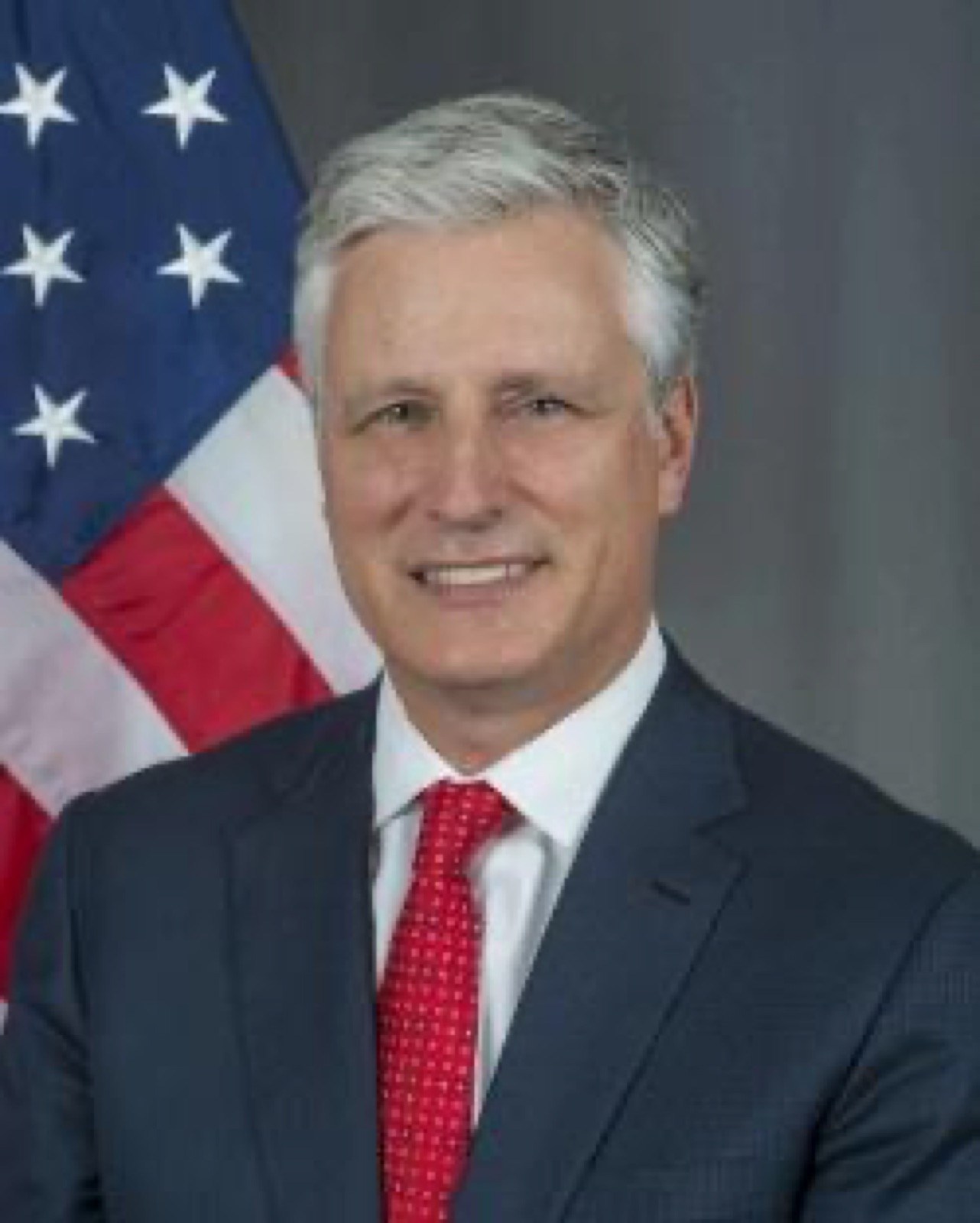
Ambassador Robert O'Brien
Ambassador Robert O'Brien is a former National Security Advisor who served during President Donald Trump's first administration and offers insights into Trump's decision-making process and the Presidential Daily Briefs.
Episode Summary
In this week’s episode of One Decision, host Christina Ruffini and former Secretary of Defense and CIA Director Leon Panetta sit down with Ambassador and former National Security Advisor Robert O’Brien. O’Brien, who served as National Security Advisor during President Donald Trump’s first administration, shares his thoughts on several topics, including the Cabinet selections of the incoming President, global concern for Ukraine, the Israeli hostage crisis, and more. O’Brien also offers insights into President Trump's decision-making process and shares a behind-the-scenes look at the Presidential Daily Briefs.
Listen & Subscribe
- Watch on YouTube
- Listen on Apple Podcasts
- Listen on Spotify
Transcript
COLD OPEN
O'Brien: You can imagine Ukraine is a big issue, and that's a concern that a lot of people have. I've been on the phone, almost nonstop with heads of government and foreign ministries and, and and NATO officials for the past couple weeks since the election.
INTRODUCTION
Raffini: That was ambassador Robert O'Brien. O'Brien held several roles under president Donald Trump's first administration including chief hostage envoy at the State Department and of course national security adviser. His time in the room where it happened including the Oval Office offers unique insight into Trump's decision making process as we approach this second term. O'Brien will also give us his take on president Trump's cabinet picks, some of which are, of course, a little bit controversial, as well as what the world can expect when it comes to Trump foreign policy 2.0. Alright. So in addition to secretary Panetta, we have former national security adviser Robert O'Brien with us today. Can you just for people who don't know, I mean, when you were at the state department, you had this very important and very complicated role as the hostage envoy, the hostage negotiator. How did you end up serving in the Trump administration? How did you end up with that role and then transitioning to national security adviser?
INTERVIEW
O'Brien: What I tell people is that, I got the role because my candidate lost the election. You know, I supported president Trump. I was not part of his campaign. And they called me a few months later and asked if I'd take this job. And the hostage envoy job was certainly not what I had in mind. But my whole career, I've traveled overseas, like both of you, as a lawyer doing international arbitration. I always wondered if someone hijacked a plane, if someone took me hostage, is there someone that would come get me? And I thought, you know what? I'm gonna give it a shot. I'll do it for a year. I'll take a year off my law practice. And one year kinda turned into a year and a half, and we were very fortunate. We brought a fair number of people home. And as part of bringing hostages home, you take them to the Oval Office to meet the president. So I got to know the president through bringing hostages home. And I was actually in Israel working on a hostage case involving Gaza and Hamas when John Bolton resigned or was fired, depending on who you listen to. And on my flight home, I got a call from the White House and asked if I'd come in and interview for the NSA job. I guess the interview went well, President Trump asked me to do the job. It was an honor of a lifetime. I always saw my role as making sure the cabinet secretaries got their advice to the president, and then he made decision. And I was certainly there to give my advice, but I always wanna be the last person to speak and hopefully do it in private so that the other cabinet secretaries viewed me as an honest broker and that they'd have a chance to influence the president with their council.
Raffini: I wanna ask both of you a little bit about how different presidents make decisions and go through that process. But, I mean, let's start with the decision to nominate certain individuals, for the cabinet. Mike Waltz, national security adviser, Marco Rubio for secretary of state. Those are the fairly straightforward ones, I would say. Right? And then there are some others that are a little more controversial. What is your take so far on the selections?
O'Brien: So look. Yeah. I was very pleased to see, Marco pick. He had a great group of people who he's considering for secretary for what we call S. Marco Rubio, Bill Hagerty, who's a great senator from Tennessee, and Rick Grenell, our former ambassador to Germany. And they're all close friends. And I did not throw my hat in the ring for that position because I thought he had three great choices and he made one of them. So I was very happy to see Senator Rubio get nominated. Mike Waltz, a lot of Americans don't know him, is just a phenomenal guy. He was a special forces operator. He was in the private sector. He was a congressman. Very good judgment. And I've got two daughters who are in the military, one's an Air Force pilot, one's an Army JAG officer. And I sleep better at night knowing that Mike Waltz is a guy who's advising the president on issues of war and peace. He's got good judgment, a lot of wisdom, and he's been through combat himself. So and has a very genial personality. I think he'll get along well with the president. So I think he's a great pick. President Trump also believes he was elected to disrupt things and disrupt the deep state. He's got his disruptors as well. You've got RFK and Tulsi Gabbard and Matt Gaetz and others. So you have some very kind of mainstream traditional picks. John Radcliffe is another person I put in that category who's going to take Leon's old job at DCIA. Radcliffe is a very well respected, moderate in temperament, thorough guy, and I think he'll do a great job at the agency. He's got the experience of having been DNI, so I think he knows the job. I think president Trump is delivering on what, you know, if you watched his rallies, part of the rallies were very kinda traditional Republican, peace through strength, talking about the Abraham Accords, talking about rebuilding the military, and then part of the rallies were taking on the deep state. And so I think you're seeing the same thing you saw in the rallies in his cabinet picks.
Panetta: As far as the various selections, a lot of people I don't know. Marco Rubio, I thought, was an outstanding pick for secretary of state. He's got a great background, knows the issues involved with foreign affairs, also is great on national security. And I think that's true for some of the others. There are clearly the ones that are gonna be controversial. The most controversial is gonna be Matt Gaetz, for attorney general. I think RFK junior is gonna be another one that raises a lot of controversies that I'm sure that the senate will wanna ask a number of questions about how he approaches health care issues. And then, you know, the secretary of defense is again somebody I do not know. I don't know what his background's like. I've never met him. He has a military background, which is good. And he has an education background that's pretty good as well. The challenge is, as Bob mentioned, it is not easy to put your arms around an operation like the Pentagon. You're talking 3,000,000 people, 2,000,000 in uniform, 1,000,000 civilians. It is the largest office building on the face of the earth. So he doesn't have a lot of experience doing that. On the other hand, obviously, if he's smart enough to get good people around him to be able to help on that, that would help a great deal. I suspect that there are some here in this mix that are gonna get a much tougher evaluation by the senate than others, and that's as it should be. So it's a good process. I hope it's not bypassed. I really do think that the senate should play the role on behalf of the American people, that it's responsible for, which is to basically look into each of these candidates and make sure that they're not only loyal, but qualified to do the job.
Raffini: There's been a lot of focus on the Gaetz nomination. Honestly, the one that stands out to me as someone who's covered foreign policy is Tulsi Gabbard because she's been very open with some opinions that, to me seemingly contrast even what the policy was, places like Syria, places like Venezuela. Ambassador O'Brien, I was wondering if I could get your insight into why Tulsi Gabbard. I can't quite figure out why this pick.
O'Brien: Well, I think something really interesting, Christina, is that we've got two former Democrat presidential candidates in the Republican cabinet. I mean, we've got RFK who ran a, you know, a strong campaign, obviously, later became an independent, but Tulsi Gabbard ran a strong campaign, you know, four years ago. So it's amazing. We've got two former Democratic presidential candidates in the cabinet, and I think that's good for America. They're obviously both mavericks. Left the party, I think, because they felt they were frozen out a little bit. Tulsi Gabbard's a career military officer. She's, I think, a lieutenant colonel in the Hawaii National Guard. So she's got some good military background that'll help her as DNI. She was in Congress for, I think, eight years, and that will certainly give her some experience in dealing with Congress because the DNI is confirmed. It has to give good testimony to the House and Senate. Again, her views may be somewhat divergent from Marco's or from Mike's or even from Pete's. But that's not a bad thing to have in a cabinet, especially when we've got war and peace issues around the world. I think she's a little more on the dovish side where some of the guys are maybe a little more hawkish. So I think it'll be a good debate for the president to hear, and I think it's okay for him to have different views. And I'm glad to see a woman in that job. One thing I hope that Tulsi does, and I hope that others do, I did this when I became national security advisor. I called chiefs of staff and former national security advisors from both parties. So I called Mac McLarty and Susan Rice and Jim Jones, as well as Condi Rice and Stephen Hadley and HR McMaster, and tried to get a good feel for the job. If I was Pete Hegseth or John Radcliffe or Tulsi Gabbard, I'd be on the phone, burn up the phone lines to Leon Panetta to get his views. They don't necessarily have the same views on policy issues, but, you know, he's been in that seat. He understands the job, and it's really helpful to get a perspective. And in fact, some of the best advice I got on process for the job, not on policy, was from Susan Rice when I was in NSA. So I hope that the new cabinet nominees will reach out to the predecessors of both parties and get their take on how to be the best cabinet secretary you can be. And, you know, Leon's at the top of my list to call and get his advice.
Raffini: Secretary, has your phone been burning up? Is Tulsi on your caller ID? Have you gotten any calls yet?
Panetta: No. I haven't, but it'd be interesting to see whether she goes through the process that Bob talked about because I think, you know, most of us that have gone into these positions, regardless of how much experience or background we have, I always think it's a good idea to talk to people who've been in the job and be able to learn from them. And in particular, look, the director of national intelligence is not an easy position. It was developed as a result of 9/11 because of the lack of coordination of intelligence that went on prior to 9/11. But a lot of the DNIs never really understood that position. It was tough to try to understand it. A lot of them thought that they had operational duty, and the reality is they don't. So what is their duty? You know, a lot of people not in the city don't know what that job does. Their main duty is to coordinate the various intelligence agencies. There's 18 intelligence agencies. And the responsibility of the DNI is to basically sit down and coordinate and make sure that each of them are talking to each other. And make sure that, I mean, that person is basically working out the budget for all of the intelligence agencies. But more importantly, coordinating the information that needs to be gathered. And so it's a critical role, but you have to understand what it's about. And as I've said, there have been a lot of DNIs that didn't understand what it was about. So the one issue with Tulsi is gonna be she doesn't have a lot of intelligence background. She's gonna have to learn each of the agencies and what their intelligence responsibilities are. And she's gonna have to be willing to coordinate. You can't just pontificate in that position. You've gotta be somebody who helps gather the intelligence and, again, reports truth to power.
O'Brien: And, Christine, I think the secretary is absolutely right about the coordinated authority. In some ways, it's kinda like the national security adviser job. You can convene everybody and get them together and get the best views, and then you take it to the president. And the other thing that has gone from the CIA when probably when Leon was there to the DNI now is the presidential daily brief is now in the DNI's court. A lot of CIA people still work on it, of course, but there are kind of two aspects to the presidential daily brief. There's the report that comes out daily, the newsletter. And then two or three times a week, the president and the vice president get together with the national security adviser, the director of the CIA, the DNI, and the briefer, and actually give the Oval Intelligence Brief to the president and the vice president. That's part of the DNI's job. So a DNI that has a good relationship with the president can get those meetings scheduled on calendar, make sure they happen, and can also emphasize what the briefer presents, put exclamation points after certain issues or notes on the PDB. And so that's an important role for the DNI as well. But Leon's totally right. DNIs get in trouble just like national security advisers get in trouble when they go operational. You know, I think probably the first thing she's gonna learn is not to actually be the briefer, but use a briefer because you're talking about a lot of complex reporting that's part of the PDB.
Panetta: The presidential daily brief is not fun. Let me tell you. It's something you look at every day, and it tells you all of the threats that are out there that involve threats to The United States. Some are credible, some are not. But so the ability of a briefer to be able to walk that through with the president and be able to describe that information and respond to the questions about the credibility of that. You know, that's usually what briefers do. So most recent DNIs are smart enough to let the briefers do the presentation.
Raffini: Is there any truth to the fact that the PDB, in the last Trump administration, they figured out that if they put Trump's name in the paragraph, he would read it. So they would put Trump in the paragraphs they really needed. Is that, is there any truth to that at all?
O'Brien: No. There are so many nonsense things that came out about the presidential intelligence brief, either in the Oval Office or the PDB, and I just stopped pushing back on it. But the PDB was very traditional. Now, what will happen from time to time, and there was a story that said, well, the president demands graphics, he wants graphics. And sometimes a briefer will bring an expert, right? An expert on missile systems or an expert on a mapping issue where you're dealing with freedom of the sea navigation or something. And so having a map or a diagram of how a missile works or a launch trajectory, those are things that every president has, that's what the agency does an amazing job. Graphics that the CIA does, the CIA can put together some pretty amazing graphics. The president always liked them. I liked them as well. I went to Berkeley Law School. I think I can read. Having graphics is useful, but the idea that somehow the president got a cartoon book or something of that nature, the way it was reported was just ridiculous. The PDB is the same PDB that we've all seen for years. The president always had great insightful questions for the briefer or for the rest of us who were in the briefing about various issues.
Panetta: Let me tell you something. The PDB is not a great read. It's a lousy way to start your day because you're looking at all of the threats that are out there and all of the people who are planning various attacks on The United States. And as I said, some are credible, some are not. But, you know, by the time you're through reading the PDB, you basically wanna get a good stiff drink. It's not easy to go through because, you know, you as president are responsible for deciding how the hell do you respond to these various threats and which ones are in fact credible and which ones demand your action and which ones, you know, you can just kind of sit back and see what happens.
O'Brien: Look. We know Al Qaeda, the global jihadists are out there. We know Iran is out there. We know that China is a long term threat to our peace and freedom. We know that Russia is a bad actor in Europe. We weren't expecting the COVID virus to come up. I mean, talk about something out of the blue. And the PDB referenced that there's people getting sick in Wuhan. Just kind of a note is how it started. And so again, things are going along just swimmingly. You know the regular bad actors, the Irans, the Russias, the Chinas, the jihadis. And then all of a sudden, we've got this Wuhan virus that has come out of nowhere and, you know, kinda threw the whole country for a loop for several years. And that's why when you read the presidential daily brief, you know, in the morning, you just hope it's just the Iranians threatening to kill you, not that the COVID virus is gonna show up.
TRUMP'S DECISION MAKING
Raffini: Alright. But let me ask you. So you're looking at this list of threats. When you're in the Oval Office with president Trump because, you know, he's coming back in and we all wanna know how he thinks. How does he make these decisions? Right? You know, there's this idea that he's not very contemplative, that he just kinda shoots from the hip and is just throwing out ideas at the wall until something sticks, but that can't be possible because, you know, we've seen his thought process change. So can you talk us through to the best of your ability how he thinks and how if you need to get something in front of him and you need to persuade him about something, how you would go about doing that?
O'Brien: Yeah. So I think the president, he kind of used the Socratic method, although I don't think he would describe it as a Socratic method. And the president would like to get his advisors kind of, if he could get them in a debate, that was his, he liked that the best because he wanted to hear kind of passionate views on one or two or three or four sides of an issue, depending on what the issue was. And I think he'd kind of watch everybody. And, you know, the president has good gut reactions and good gut instincts on things. You know, what I found with President Trump is he was not doctrinaire, very pragmatic more than ideological. And some presidents are more ideological, some are more pragmatic. I think President Trump wanted to get the facts of the case and then make a decision on it. He's obviously informed by what he believes is America First. And when you ask him to describe it, he describes America First as peace through strength in very Reaganesque terms, but he was always very open to everyone's viewpoint. And that's something that I think would surprise your average viewer who doesn't realize that President Trump, he's a voracious consumer of information. He also spends a lot of time reading the papers, cover to cover. When I'd see him, he'd have read five papers in the morning. Oftentimes, you'd get clippings from the papers with his notes on the clipping saying, what about this? Or this is terrible, or this is great, or with his feedback. And I'd come into my office, and there'd be clippings on my desk either from the day before or that morning. So he had a lot of sources of information. He had the TV on back in his study all day long, flipping to various channels, by the way. Again, people think it would just be Fox, but he had various channels on. He wanted to see what people were saying about world events. So in addition to having the classified information, the PDB, he also had the information that we all see today in the public sources.
UKRAINE
Raffini: Alright. I gotta move on because we could talk about this all day, but I do wanna get to a couple foreign policy issues that I wanted to get your take on. My first, of course, is Ukraine. You know, incoming president Trump has said he's gonna solve this. He's gonna get a great deal. There seems to be a difference of opinion in his cabinet and that some individuals, including the incoming NSA, are more in line with traditional Republicans and policy as it is. We need to support Ukraine. We need to stay in NATO. But there's a lot of difference of opinion in other members of the cabinet coming in, and Trump obviously has said multiple times he thinks this conflict needs to come to an end. Ambassador, I'm curious as to what you think Trump will do with Ukraine policy. Do you think he's gonna push for a settlement with Russia? Do you think he should push for it? And how do you see him treating NATO the second time around?
O'Brien: Well, listen. That's a concern that a lot of people have. I've been on the phone almost nonstop with heads of government and foreign ministries and NATO officials for the past couple of weeks since the election.
Raffini: Really? So your people are reaching out to you saying they're worried about this?
O'Brien: Well, they're reaching out, and I'll leave it at that. You can imagine Ukraine is a big issue. And, again, I don't currently speak for the president. I support him. I talk to him regularly, but I wouldn't presume to speak for him, and I'm not one of the new cabinet officials. Keep that in mind. But what president Trump has said is that we've gotta settle the war. And almost universally, everybody I talk to, the Europeans, even the Ukrainians, the war has gotta get settled because the Ukrainians, it's a meat grinder, and the Ukrainians are losing their entire manhood. They're generations of men. They're now drafting 40 and 50 year olds to go to the front line. So it's gotta end somehow. And usually, a war ends around the table. But right now, there's no incentive for Vladimir Putin to come to the table. I mean, Putin will fight for the last North Korean, you know, to get Ukraine back. I mean, now he's got this fresh supply of DPRK soldiers to put in the meat grinder, and it's unsustainable for Ukraine in the long run. So we gotta figure out a way and this is where I think people get president Trump wrong. In a negotiation, you gotta have leverage against both sides to get to a point of settlement. Everyone knows we got leverage over the Ukrainians. That's not news. The Ukrainians understand that the best of anybody that without Western support, Western aid, they can't continue the fight. I don't know, but I know if I was national security adviser, I'd advise them to put as much pressure or threaten as much pressure on Russia as possible. The easiest way to do that without some sort of escalation that puts us in danger of a nuclear exchange or something of that nature, nonmilitary ways to put massive sanctions on the Russian Federation Central Bank and just say the oil and gas exemptions that we put on the bank are gone. The commodities exceptions are gone. The agricultural exceptions are gone. And we're gonna put secondary sanctions on Chinese entities that buy from you, Indian companies that buy from you. Look, I'm not naive enough to believe that that's gonna stop Russian oil sales. It's not, but it could certainly cut into them and could cut into the profits that Putin and his oligarchs are making, and it might give him some incentive to come to the table. Once we get the parties to the table, I think we've got to support the Ukrainians as much as possible, we shouldn't demand the Ukrainians give up land. On the other hand, if the Ukrainians want to give up some claims to end the war, we shouldn't oppose that. It's a very nuanced line that we have to walk. We have to support the Ukrainians, but let the Ukrainians make the ultimate decision on what it's gonna take to end the war. But I think the first order of business is to get Putin to the table because right now he's not showing any desire to come to the table. I think he thinks he's gonna win.
Panetta: I think the bottom line is there's not gonna be a quick deal here. You know, I think president Trump indicated he'd solve it overnight. I don't think that's gonna happen. It's not gonna happen because he'd have to capitulate totally to Putin, and I don't think he will. And I don't think president Trump is going to wanna get blamed for having given Putin Ukraine. That's not gonna happen. So what does happen? I think what has to happen is that, hopefully, we can continue to provide help to Ukraine that they can develop at least an initiative on the battlefield that gives them some pushback on the Russians. Because I think if we can do that, it will tell Putin that we're not just gonna walk away, that we're gonna back the Ukrainians. If they can gain a little initiative, I think that's the best leverage for them to have for an ultimate negotiation that includes Putin at the table. Putin's not gonna come to the table unless he believes that he's gonna lose. If we make clear that he will lose, then I think there's a good chance they might be able to have that kind of negotiation. But, look, all of this is gonna take a while. It's not gonna happen overnight. I just hope we don't lose our will to keep supporting Ukraine because that's very critical to ultimately getting the right result.
CHINA AND TAIWAN
Raffini: You mentioned China. Ambassador O'Brien, you met with Taiwan's representatives to The US, not officially ambassador to The US for reasons we can all figure out. Alexander Yui, who actually we spoke to during the UN. He's a friend of the show here. And, of course, we asked him about Xi. Let's listen to what he said.
Yui: Xi Jinping, the ruler of China, now is a dictator. He'll be president for life. He changed the constitution so that he can rule forever. That's why we have to be ready. We have to strengthen our deterrence. We have to show, you know, and then our friends, United States and many countries, they have to also voice their warnings against China, says, you will not do what Russia did to Ukraine because there will be consequences.
Raffini: What do you think the China policy under the next Trump administration will look like, and do you think president Trump would defend Taiwan if China invaded?
O'Brien: Yes. I wanna make clear, Christina, I met with the ambassador as a private citizen, not as a representative of the US government or president Trump.
Raffini: But did he give you a letter to give to president Trump?
O'Brien: He did give me a letter, which I passed on to president Trump, but I was actually, you know, wholly a private citizen. I wanna just make that clear for anyone else.
Raffini: Got it. Understood. What was in the letter?
O'Brien: That's between, you know, president Trump and president Lai. At some point, I'm sure it'll become public. But in essence, it was a congratulatory letter that was like many other letters that the president has received from leaders across the world on his victory. Going to your question on China, look, we didn't change the one China policy in the Trump administration. Taiwan is our partner, and we love the Taiwanese people. They've got a vibrant democracy. They've got a very important economy, especially when it comes to chip making. It's a very important supplier to our modern economy, and we made it clear that the status quo should stay in place. President Xi should not try and coerce Taiwan, either through military force or boycotts or economic embargoes, should not try and coerce reunification with Taiwan. But we have a policy of strategic ambiguity. The best way to deter the Chinese, I believe, and what we tried to do is have a credible naval force there so that President Xi, when he talks to his planners, they talk about an embargo or a blockade, that they know they could lose if The US does engage. If planners realize there's a significant risk of losing and give that information to Xi, I think that's the best deterrent. They see the will to protect the Taiwanese people combined with the means to do so, the capability to do so, then I think we'll have our best shot to deter an invasion or a blockade of Taiwan.
Raffini: Secretary Panetta, do you think The US really wants to defend Taiwan? Do you think that would actually happen?
Panetta: Well, look, Christina, I think it comes down to this. We've gotta really build up our deterrence there. We've gotta maintain our naval force in the Pacific. We've gotta maintain our military force in the Pacific. We have to make sure that the South China Sea continues to allow us to be able to traverse the South China Sea. We've gotta send some very clear signals that there are lines that cannot be crossed. So it's not gonna be easy. But on the other hand, I think the new administration has made clear that it's gonna be tough on China. You know, the likelihood is they're gonna impose tariffs on China. I hope that ultimately we can be tough enough so that we can have a dialogue with China to try to find out the areas where we can hopefully reach some kind of agreement. I think that's more hopeful, very frankly, than dealing with Putin.
HOSTAGES IN GAZA
Raffini: I'm wondering, as someone who was a former hostage negotiator, what you think The US or the Israeli administration should do about the hostages still in Hamas territory. There's been this very divisive political disagreement. Even people who supported Netanyahu before have turned against him because they think he's not doing enough. You know, even conservative Israelis have criticized him for not doing enough to go after or release the hostages, negotiate for the hostages. What is your take on that? What would you do if you were in that position?
O'Brien: Christine, it's a great question. I've spent a lot of time with the Israeli hostage families as a group and individually trying to give them some advice. They've all reached out to me. It's a little frustrating because I'm out of office and I can just give my views on how they can go about the tasks of bringing home, mainly their kids, but their loved ones. The way that the hostages are being treated, we know from some who've been rescued and some whose remains we've got, they're being treated very horribly. I mean, they're being treated worse than ISIS treated hostages, and it's just heartbreaking. My experience when non state actors, there's a difference between wrongful detainees who are held by a country like Russia or China. Don't get me wrong, they can be rough on them, but they usually keep them alive. With non state actors, you're at a real risk with Hamas or Al Qaeda or ISIS of being beheaded, killed. I think in those cases, my preference, and we had some success with this both with us and with French forces and UAE forces, is a military rescue of the hostages. And so I called for, right after October 7, I think it was the next day, putting our exquisite JSOC tier one operators, Delta Force, Detachment Delta, and Naval Special Warfare Development Group, SEAL Team Six, out in the field and have them ready to rescue hostages. Now, of course, the concern with hostage rescue, and Christina, as you know, and Leon knows this very well, there's a trade off because if you do a rescue operation, generally the hostage takers, if you don't hit them hard and fast, they'll kill the hostages as part of the rescue. It's incredibly dangerous to the operators, but it's also incredibly dangerous to the hostages who are being held if you do a military rescue. And I think with these tunnels and the precautions and operational security that the terrorists in Hamas have taken, it makes the rescues very hard. So then that turns to negotiations. And from what I understand, I know frustration has been taken out on Prime Minister Netanyahu, and he's a strong leader, but he's a controversial leader. What I've been told by people involved in the negotiations from third party countries as well as our negotiators, at the end of the day, it's Hamas that always pulls out of negotiations at the end. And the reason they do that is they know as long as they've got the hostages, they've got some leverage. I think they're concerned about trading the hostages away, getting a temporary ceasefire or temporary prisoner exchange, and then nothing to deter the Israelis from attacking them. So it's a really tough conundrum. It's not easy for Prime Minister Netanyahu to get the hostages back, either with a military rescue or negotiations. And unfortunately, the people are paying the terrible price for the family members of these who have their loved ones, you know, stuck in tunnels in Gaza. It's the best we can do, I think, at this point is pray for them.
Raffini: Secretary Panetta, would you have advocated for using US resources to rescue some of the hostages in this case?
Panetta: Well, I think whatever would be necessary, you know, if they knew the location of the hostages, and it's not easy to get the intelligence just exactly on where they're located. So this isn't an easy task to be able to locate them or we would have found them before now. So, yeah, there's no question that if they had that opportunity, we ought to help in any way we can.
Raffini: Secretary Panetta, ambassador O'Brien, thank you so much for making time for us. I know you guys have a crazy schedule. It was a great conversation, and I hope we get to do it again soon. Take care. Bye, guys. Thanks for listening to One Decision. If you enjoyed this conversation, check out a previous episode with sir Richard Dearlove and former secretary of defense Leon Panetta, where they dive into the global hotspots and reveal their most awkward encounter with a foreign leader.
Panetta: So there I was in the Oval Office with Mubarak, with the king of Jordan, and with other people, and we were trying to do small talk while they tried to resolve this issue.
O'Brien: I was rather taken aback to be kissed on the mouth by Yasser Arafat at one of those meetings I had with him.
Raffini: Of course, to unlock exclusive content, get timely updates on crucial global events, and listen in on meaningful conversations with thought leaders, be sure to check out onedecision.com. I'm Christina Raffini. Thanks for listening.