Episode Info
- Season18
- Episode6
Hosted by Christina Ruffini and Sir Richard Dearlove
Guest
Kolinda Grabar-Kitarović
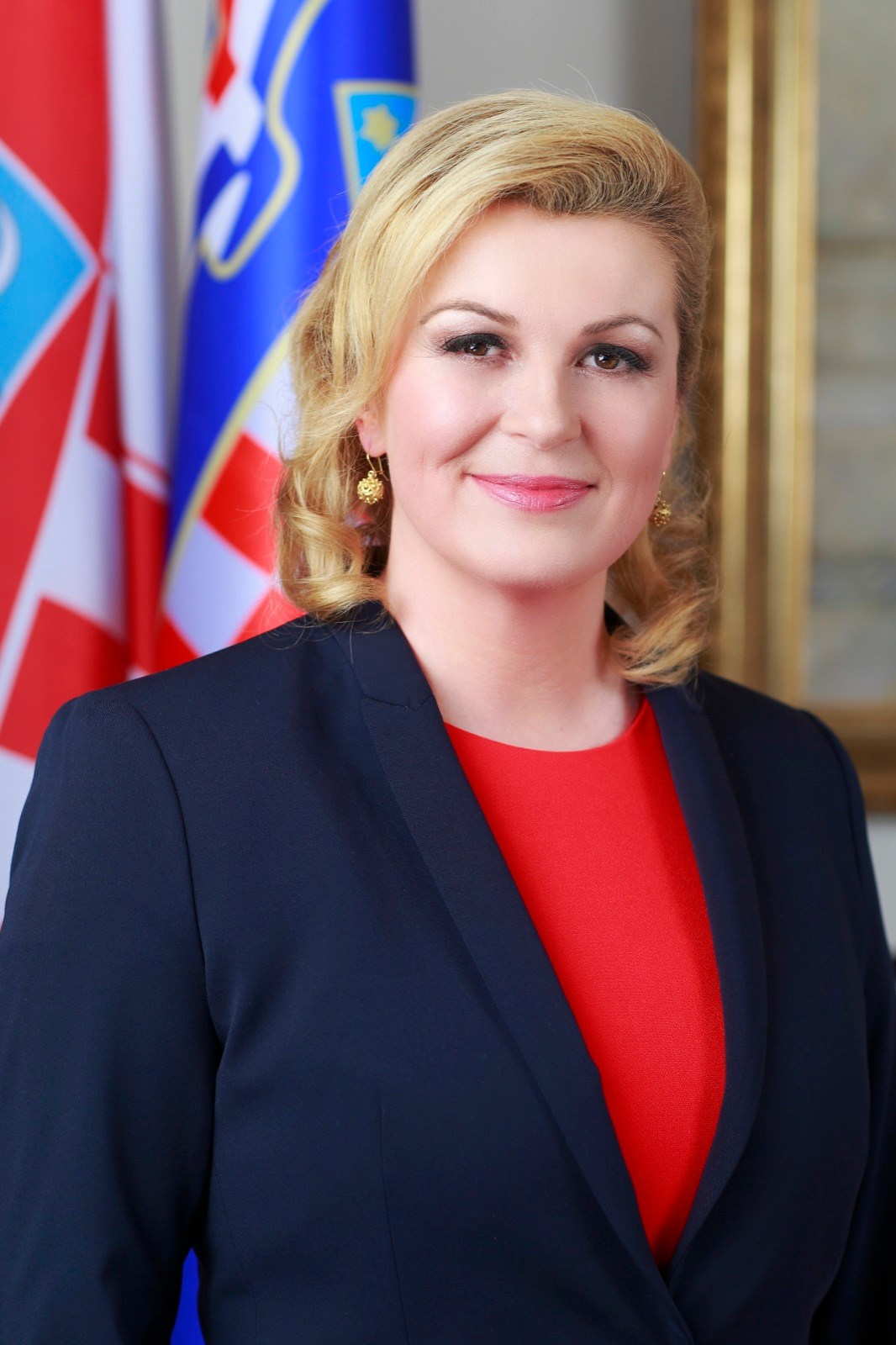
Kolinda Grabar-Kitarović is Croatia's former President who has faced down Vladimir Putin at the negotiating table and understands what it's like for Croatia to face a much larger invading force.
Episode Summary
Croatia’s former President Kolinda Grabar-Kitarović on several occasions faced down Vladimir Putin at the negotiating table. But her experience of the Russian leader might not be what you may expect. Her country Croatia, also knows a thing or two about facing a much larger invading force - which is perhaps why she has been invited to the Ukrainian capital Kyiv, so regularly. She sits down with One Decision to discuss what Putin is like close up and what historical parallels Ukraine might draw from the Croatian war of independence against the former Yugoslavia.
Listen & Subscribe
- Watch on YouTube
- Listen on Apple Podcasts
- Listen on Spotify
Transcript
INTRODUCTION
Mcfarlane: You're listening to One Decision, the podcast that looks at the choices made that shape our world. I'm your host, Julia McFarlane. Today, we're taking a look at a country in Europe fighting for its freedom after its independence and sovereignty was denied by its far more powerful, aggressive neighbor who suddenly and without warning launched a full scale invasion, destroyed entire cities, committing alleged war crimes, occupying its territory with its army that vastly outnumbered its own. Undeterred, the small, overpowered, and outnumbered nation fought back, its citizens determined to defend their homeland. Might sound like I'm talking about Ukraine. Right? Actually, this is Croatia, and the period is the early nineteen nineties as the small European country fought its war of independence against the former Yugoslavia. You'd be surprised how many parallels there are between the Ukrainian experience today and the war fought by the Croats back then. Croatia's former president, Kolinda Grabar-Kitarović, was in office until 2020. No longer head of state when Russia launched its full scale war against Ukraine, but she had found herself going head to head, one on one, with Vladimir Putin himself during her time in office. How he behaved with her and how he dealt with her was one of the most revealing and interesting things I've ever heard about the Russian president, as she tells us in our discussion. We'll get to that. But first, it was earlier this year when she joined my co host, Sir Richard Dearlove, the former chief of Britain's Secret Intelligence Service, on a trip to Kyiv to hear from Ukrainian officials about how the counter offensive was going. And in fact, she'd just come back from a more recent trip from the Ukrainian capital when we all caught up with her earlier. I started our discussion by asking her about what lessons can or should Ukraine take from the Croatian war of independence thirty years ago, and what parallels she could observe from her perspective as a Croat, watching what must look so much like her own nation's war for self determination.
INTERVIEW
Grabar-Kitarovic: Indeed, this aggression against Ukraine looks very much like aggression against Croatia in the early nineties. It also started with uprising of a local population, which was motivated and stirred from Belgrade and supported by military means, and it developed into an open aggression where the so called Yugoslav National Army and the Serb forces actively fought war against Croatia, occupied part of our territories. And, of course, it took Croatia a few years in order to be able to liberate the occupied territories to completely reintegrate them into its territory under its rule, and to work on a path that is a very difficult one, and that is the post conflict reconciliation and rebuilding, which involves so many difficult issues, including what you have mentioned, and that is war crime issues, that is working towards building a common future together between people who were on different sides of the line previously, but also dealing with reconstruction, rebuilding, demining. Now thirty years after the war, Croatia is still not landmine free today. So, so many issues where Croatia and Ukraine really share so much of the same experience.
Mcfarlane: I think that's so interesting. And you've mentioned a number of areas of this I wanna get into, but since you said that it took a good few years for Croatia to liberate its occupied areas, in that case, I assume you're a bit more sanguine in that case about the state of Ukraine's counter offensive and everyone else in the West is thinking, oh, one year on, a year and a half on, they still haven't pushed the Russians out. But you have memories of it taking a while to liberate Croatia. Are you a little more relaxed about the state of Ukraine's counter offensive? Or are you a bit concerned, given the fact that unlike Croatia, that largely had to fight on its own, Ukraine is getting so much support from the West, and surely this should be taking less time.
Grabar-Kitarovic: I cannot really say that I'm a little bit more relaxed, but yes, I'm perhaps a little bit more realistic because I know what it takes. By now, Russians have really fortified their defenses. We're talking about these deep zigzag trenches, wide trenches, the so called dragon's teeth, and other physical barriers, minefields. We're talking about difficult terrain to fight in. We're talking about urban warfare once you get into the settlements. So I know what it takes. And before the counteroffensive started, I was actually being one of those voices who was warning about managing expectations from Ukrainians. Yes. It will be huge success, and I would very much like for them to be able to get to the Sea of Azov. But we have to be realistic that in these circumstances, it will take probably several waves of these counteroffensives to be able to achieve their goals. And every breakthrough that they make, such as the village of Robotyne, is a significant one. Perhaps, you know, we're talking about a very small space in terms of square kilometers, but nevertheless, it's significant because it will boost the morale of Ukrainians who are fighting for their freedom, for the liberation of their country. And we have to be realistic because so many lives have been lost and so much equipment. And speaking about equipment, in order to be able to breach through those lines, Ukraine has to have the right kind of capabilities. If you look at Croatia's road to the major offensives and then ultimately to the peaceful reintegration of the last remaining occupied area of Eastern Slavonia in 1998, it took us several strategically planned smaller operations that led to the big one. And one of the reasons why that operation lasted for a few days only and the number of casualties during that operation was minimal is because based on an agreement with Bosnia and Herzegovina, by conducting joint military operations with the Army of Bosnia and Herzegovina, we were able to bypass those same defenses or similar defenses that the local Serbs and the paramilitary had raised towards Croatian territories. So we came from the back. Ukraine cannot do that through the Black Sea. So they have to either penetrate through or they have to jump over, which means aviation. So we're talking about supersonic aircraft, fixed wing aircraft of the fourth generation. We are talking about long range missiles, but also a lot more ammunition, artillery, etcetera, because this is honestly brutal warfare. The one difference between Croatia's war of independence or Croatia's war of liberation is that most of the time, we did have a ceasefire agreement that held for most of the country apart from the frontline, where there was shelling and there were casualties every single day. However, this in Ukraine is on a much larger scale. And, of course, Serbia at the time or Milošević's Serbia, I don't want for people to think that I'm talking about Serbia today, but Milošević's Serbia was no Russia. They did not have the kind of capabilities, the strength, the position in the world. So they were not threatening the entire Croatian territory. And this war is compounded by the fact that the whole of Ukraine is under threat, that there is this intention to wear out the population. It's a war of attrition. I go to Ukraine regularly. I just came back last Friday from my most recent trip. There are air raids in Kyiv and in all of Ukraine every few hours. They are trying to wear down the population, take the precious time for decision making. So Russians are weaponizing everything. And in addition to trying to wear out and or wear down Ukrainians, they're also trying to wear down our support. So the attrition is also aimed at our collective will to continue to support Ukraine and to take away the precious resources that we can provide to Ukrainians in order for them to be able to fight. But most credit really goes to Ukrainians because it's their bravery, it's the innovation, the ingenuity, their fighting spirit, the motivation that is really the key to the success of this war.
Dearlove: Kolinda, when we were in Ukraine together at that point, and I'm sure subsequently, you were focusing very much on the mining issue, which has turned out not just to be, you know, hugely significant in the military capability of both sides, but the predictions about the problems that Ukraine would face in the long term because of the massive extent of mining and the current state of demining technology. I mean, how, given that we're now another few months onwards, do you think it's changed? It looks to me as though the mining aspect, if anything, has got worse because the Russians have just used apparently hundreds of thousands of mines, and that is a very key part of their defensive position.
Grabar-Kitarovic: Absolutely, Richard. And the mining actually will be a moving target, what I said during our visit to Kyiv and what I keep saying, because more and more mines and other IEDs are being laid in the ground, and they're polluting the territory. After the Kakhovka Dam incident or blowing up of the Kakhovka Dam, it also created an ecocide. It put people's lives in danger, animals, but also the entire territory that was contaminated with mines at a time, and it continues to be contaminated. But Richard, we're putting really a lot of effort into that. We work together with GLOBSEC, and we will continue working in the context of GLOBSEC, but also I'm very much engaged personally, internationally, and with Croatia because we have a very similar experience in that field as well. I mentioned earlier, we're still not mine free. So decades after the war, we're still clearing mines on Croatia's territory. Meanwhile, we have developed expertise and technology that can really help Ukraine. It's just that our capacities at Croatia are rather small, so we're looking at ways how we can increase production of these demining robots to save human lives and to be able to continue with demining because I see that people are very impatient to go back to their land, especially farmers. And then, you know, they use these methods that they do at home, and it's always very, very dangerous when you send a person into the minefield to do the job that nowadays robotics, the machine can do. And so we do have that technology, and we're going to continue to raise awareness about that issue around the world.
Dearlove: On the technological side, because it struck me during those discussions we had that we're almost all waiting for some big technological breakthrough. We're still, I mean, robots save human lives, but I just wonder, is there on the horizon anything new that might make the task much, much simpler? Because it's so complicated. It's so slow. It takes years just to cover small patches of land with great thoroughness. And then you mentioned the question of farming and farmland, which, of course, is a crucial strategic importance to Ukraine in the medium to long term. You know, because a lot of the cultivated land will be open to this threat of mine explosions when it's being cultivated.
Grabar-Kitarovic: Absolutely, Richard. I mean, you know, I have no doubt, unfortunately, that it will take decades for Ukraine to demine the territories. But that's why we need to keep the focus on several different aspects. First of all, I think that mine awareness in Ukraine, teaching people about how to protect themselves from landmines and other IEDs is crucial because we want to save human lives. And again, when farmers go back, unfortunately, we had so many casualties in Croatia because they were impatient and then they tried to demine by putting their land on fire or sending animals or driving a tractor back and forth. It does not work. It's a very complicated issue. So what we have been doing is working with Ukrainians in order to explain what it takes. First of all, the survey, the nontechnical and the technical survey. There was a little bit of a false hope that everything can be done by drones. Unfortunately, it cannot because of the configuration of the land, etcetera. The technical survey needs to be conducted on ground as well. But by conducting non technical surveys, we can already eliminate a lot of areas because right now we're working on the assumptions that everything was mined. And then working on the priorities that are in line with Ukraine's national priorities will be very important. You mentioned farming as one of the basic areas of Ukraine's economy, but also it's extremely important for the rest of the world. It's, you know, food is one of the things that Putin is also weaponizing. And the grain deal that unfortunately fell through and the fact that getting the grains out of Ukraine has become so much more difficult. This is another argument that he will continue to use in other countries of the world to try to prove that sanctions against Russia, and this war in Ukraine that he started completely unprovoked by Ukraine is to blame for, unfortunately, famine that we will see in parts of the underdeveloped world, especially in Africa.
Mcfarlane: Madam president, can I ask you on that grain deal? Because your ministers have been talking to their Ukrainian counterparts on trying to figure out a way of solving this. And there was talk that maybe Ukrainian grain might be able to be shipped via the Danube River and then sent off from Croatian ports. This got a lot of buzz in the media, but I wonder if it's really feasible. I mean, your port that was proposed, it's called Vukovar. I read that there are some doubts on its capacity. It doesn't have the capacity of holding very much freight. It doesn't have large storage silos that could hold grains, just one at around 10,000 tons capacity, I read. The rail networks in Croatia, they're not electrified and they're not in a very good condition. And then the Ukrainian farmers would hardly be compensated, because a number of people required to take part in this long transportation over this distance would claim a fee. And I thought it was very interesting, because one of your former economy ministers told European media that this announcement was something that was more a symbolic announcement, that Croatia above all wanted to express its sympathy with Ukraine to show that it's on Ukraine's side supporting the country. It's more of a symbolic gesture of support. Do you agree with that? Or is there actually a way that this could be a viable solution to the grain crisis?
Grabar-Kitarovic: You're right about the capacities right now, but we're talking about North Adriatic ports. So we're talking about a combination of routes. We're talking about Trieste in Italy, Koper in Slovenia, Rijeka in Croatia, Ploče in Croatia, Vukovar, which is on the Danube. And, yes, we do have a problem with railway, for instance, is that the tracks are not the same in Ukraine as in the European Union. So you need to either change the wheels or load and unload, but we're thinking of different ways of container shipment. For instance, Rijeka has a big container terminal. So to transport that grain via railway from the Hungarian border to Slovenia, to Italy, to Croatia, via the Danube River to use every capability that we have right now. I think it would be a really good opportunity for Croatia and for the European Union to invest into these railway systems in Croatia. They are electrified, but unfortunately, the systems are different in certain parts of Croatia. The problem is that they're rather slow, and definitely the transportation costs will have to be handled through some kind of solidarity plan. But this is a realistic thing.
Mcfarlane: The cost makes it hard to be feasible, surely, particularly on the Ukrainian side.
Grabar-Kitarovic: That's true. That's what Ukrainians are saying. And I understand that with any subsidies, the Polish, the Romanian, other farmers would get upset. However, that's why through the solidarity routes and solidarity schemes in the European Union, we have to invest in a smart way that we transport the grains. Because after all, we're talking about parts of the world being completely dependent on us for the basic sustenance for food. And we don't want the rest of the world to continue to suffer from the consequences of Russia's aggression against Ukraine.
Dearlove: The other central European initiative which was certainly discussed during the visit that we both participated in was the issue of moving back from vulnerability, either like tank repair facilities, manufacturing facilities for artillery shells. So for example, in Slovakia, in Poland, in the Czech Republic, there would be facilities relatively close to Ukraine which could be used, would not be vulnerable to Russian attack. And that made a huge amount of sense. Really wanted to ask you what progress those initiatives have made because there was a lot of will and political support for them, but it's easy to talk about them. Implementation is always a much bigger problem, and I just wondered how far they had got.
Grabar-Kitarovic: What I can say is that especially after Vilnius, you know, when we talk about Central Europe, I don't call it Central and Eastern Europe because really Belarus and Russia, I think, are Eastern Europe. So Central Europe —
Dearlove: I agree with you, by the way, on Central Europe. I've always called it Central Europe since I lived in Czechoslovakia when it was Czechoslovakia.
Grabar-Kitarovic: Thank you. Thank you, Richard. So there's very much awareness that this is about our security. And as you know, for years and years, we were trying to argue this with both the European Union and with NATO about the reality of Russian threats and the danger of overreliance on Russia, especially in the energy sector, but in other sectors as well. So, finally, we are deploying troops. We are building the appropriate facilities. We need the logistics, as we said, and we also need to build the production in the European Union in particular. But this war has shown that the reality of a territorial war in Europe is quite realistic. So we have a combination of the first world war trench warfare, second world war artillery exchanges warfare, and modern warfare where Ukrainians have proved to be particularly skillful in using and adapting our own technology. So even before this war broke up, we were arguing for the need to invest more. Now, of course, the producers, the industry is asking for assurances that if they convert to production of artillery shells, etcetera, that it will be a long term need. And we're all hoping that the war in Ukraine will end soon, but realistically speaking, I'm afraid it's gonna go on for a while just, you know, based on the experience that I had in so many wars, including in Afghanistan and in my own neighborhood, and with the conversations that I have with everyone in Ukraine. Because obviously Ukraine will not stop until they have, rightfully so, reintegrated all of our territories that we have recognized as Ukraine. What I'm encouraged about, Richard, is also, you know, we had a meeting with the minister of strategic industries, and I continue to communicate with him as well, is that Ukraine themselves are very much interested in Ukraine based productions that they would provide for the facilities and the way forward. I think they're doing an incredible job. And, to cut a long story short, when this war ends, and already actually, as a matter of fact, the Ukrainian armed forces are by far the most combat experienced and the strongest forces in Europe, and I would dare say in most of the world. And the way that they have been developing different technologies and putting all kinds of innovation and all techniques combining them, putting them to use. There's so much that we can learn from them. I still would want to focus on our own countries providing for our own needs and for Ukraine needs. However, I think that a combination of this cooperation with Ukraine will be the way forward when it comes to supplying the needs for the Ukrainian armed forces. However, we should have no illusions about the future. Russia will remain a threat for decades to come. So, obviously, with the fact that the territorial warfare has become reality again in the twenty first century, we have to be ready for that, including with the proper supplies for our own armed forces.
RUSSIAN INFLUENCE IN THE WESTERN BALKANS
Mcfarlane: We've been talking a lot about Ukraine specifically, but I'd like to just shift it slightly to talk about Russia. And I think what you're saying about the need for Europe to really wake up and realize that it has to be combat ready, given Russia is likely to be a threat in the decades to come. I did want to ask about, from your position, from your point of observation on Russian influence in the Western Balkans, because it's an area that the Russians have long seen as a point of vulnerability, a fragile point for the EU and NATO's sphere of influence. There has been a lot of progress in the Balkans since the war, countries, members of the EU and acceding to NATO and other countries on the way to member status. But there has been some backsliding in some countries. There's been what I've read as enlargement fatigue in the EU, which is sort of dimming a lot of those countries' prospects for joining either NATO or the EU. And as a result, there has been an upstep in both Russian and Chinese influence in the region. We had president of Kosovo on the podcast recently. We've looked at other areas in the Balkans that have started sounding alarm bells at growing Russian influence. What is your viewpoint? Is Russia sort of stirring the pot in the Western Balkans? What are you concerned about?
Grabar-Kitarovic: Julia, you're absolutely right on all of these points. And people will know that for years, in all of my capacities, including when I was at NATO as assistant secretary general for public diplomacy, I was arguing for a faster accession of Croatia's neighbors both to the EU and NATO. There was a lot of discussion about Bosnia and Herzegovina, whether they should get MAP or not because they did not formally fulfill some of these criteria on registering former military properties, etcetera. And I was trying to explain to everyone that we just cannot let it go, that this was an excuse that those who opposed NATO and EU accession in Bosnia and Herzegovina were using to their favor to keep the country away from the membership. In Bosnia and Herzegovina, just like in some of the neighboring countries, you still have these old elites who will claim they want for their countries to accede to both of these alliances or organizations, institutions, whatever you wanna call them. But most of them will not want that because they would not be able to function under circumstances of transparency. They would not be able to continue their political careers, and some of them, quite honestly, would end up in jail. So they know that the public opinion is still on the side. We want EU and NATO membership, so this is what politicians will tell you, but they will do anything to try to slow the progress. And I thought it was simply in our interest to move these countries, even if not prepared completely formally towards the membership in both. If you look at Bosnia and Herzegovina a few years ago, the MAP, the membership action plan, was one of the few things that everybody could agree upon, including Dodik, who today is so pro Russian, and so pro Putin and actually travels to Russia, and he doesn't even hide it. He travels to Russia openly, and he receives his instructions from Putin or from somebody else in Russia. But back in those times, the MAP, and I was telling everybody at NATO because I think that the rest of NATO and the rest of the EU should really have taken into account the opinion of those of us who are closer a little bit more on Russia, but also on the neighborhood. I said, look. This is the one thing that the country agrees upon. The armed forces, at least at the time, were the only factor that kept the country together, that was an inclusive factor. And by giving MAP to Bosnia and Herzegovina, we would have had a degree of control, quite a high degree of control, on where Bosnia and Herzegovina goes security wise and military wise. Unfortunately, we've lost that opportunity because Republika Srpska has now made it very clear that they don't want NATO. They don't want the EU. Now, as far as Russian influence goes, we all know that the cause of Russia's aggression that started back in 2014, and Ukrainians will argue with that. They'll say it started a lot earlier, but it started within 2014, and it continued with the open phase in February of last year. We know that the cause is not NATO. It's not NATO enlargement. Putin said it very clearly that Finland's and Sweden's accession is not a problem for him. Ukraine's accession is a problem because he considers Ukrainians to be Russians, and he has said so so many times that Ukraine is not a sovereign country, that it can only be sovereign in conjunction with Russia. So he is recreating the spheres of influence, but not only the spheres of influence, I would dare say the control, the spheres of control as well because he's going much beyond the traditional spheres of influence that the Russian empire had, for instance, in the Balkans. The Russian empire was never interested in Croatia. In Bosnia and Herzegovina. It was always east of the River Drina that the Russian empire had their own interests. But with Putin, he very openly said in one of the private conversations that we had that he unfortunately let Slovenia and Croatia get away and become EU and NATO members, but that he wasn't gonna let go of the other countries. That was before Montenegro's accession to NATO, which very telling comment, which proved to be the case in point because they literally tried to provoke a coup d'état before Montenegro joined. So in my opinion, we really, really need to embrace all of these countries and help them. I'm not saying they should accede without fulfilling the criteria. No. That's not good. But we should not be losing, as we say, the hearts and the minds of the people because lack of actual progress to EU and NATO membership is creating a dangerous vacuum that is being filled very skillfully by Russia with disinformation. Look, they don't want you. Why would you wanna be there? Come with us. Or with some other third parties who are not necessarily benevolent to the region of the so called Western Balkans. I remain very much concerned about Bosnia and Herzegovina. Most of all, Kosovo, not as much because there's a NATO mission, there's an EU mission, there's heavy international presence in Kosovo, but Bosnia and Herzegovina is very volatile. And I have to say that is my biggest concern when it comes to the stability of the region. And, you know, quite honestly, if I were Putin, what would you do to stir the attention away from Ukraine? You create trouble somewhere that is not directly on your borders where you cannot be directly accused of, but that is important enough for both the EU and NATO to at least take away part of the attention and part of the resources that are today used in Ukraine.
Dearlove: Kolinda, your successor in Croatia, Milanović, has made some quite worrying statements in relation to Putin and Russia. I mean, is this local politics, or does he genuinely hold those views?
Mcfarlane: Can we just spell out for our listeners what exactly he has said? He has said, I'm against sending any lethal arms to Ukraine. It only prolongs the war. He said, It's clear that Crimea will never again be part of Ukraine. And what I found most shocking was he appeared to compare the annexation of Crimea by Russia with the independence of Kosovo from Serbia. He said Kosovo was taken from Serbia by force. It was taken out. It was a part of Serbian territory and it was taken. What do you call this? Extraction. Now coming from someone who was Croatian, who has a history with this, I know they're not present day Serbia, but the Yugoslav Serbian army, I am so confused by his comments.
Grabar-Kitarovic: I normally refrain from commenting on my successor out of politeness, out of political culture, and I also don't want for people to perceive this as, you know, me taking personal battles with somebody who was running in the same reelection. I did not win that, so obviously our opinions do not match in many areas, and he's Croatia's president. But what I can say is that, you know, speaking from my personal experience, yes, what the president says is incredibly important for public opinion. However, the executive powers are very limited, so there is basically not much that the president can do to prevent the government from sending aid to Ukraine, which Croatia has been doing. The point that I want to make is that most Croatians understand what goes in Ukraine, and they see the parallels. Yes. In Croatia, there isn't that much awareness of what Russia was doing in Eastern Europe during the times of the Cold War because we were the former Yugoslavia, albeit communist, was a nonaligned, so there wasn't much of a relationship with Russia and not much Russian influence. We had our own problems with our own communists. But people remember, and they sympathize and they feel the empathy. So the majority of the Croatian population supports Ukraine and support Ukraine's right to self defense and territorial integrity. And the statements that the president makes, of course, you know, they sort of create a precedent because we're talking about a NATO country leader. So, yes, there is danger to it. But, realistically speaking about the efforts, I mean, the government has been very adamant to help Ukraine in every way.
Mcfarlane: But these comments are damaging, though. I mean, you mentioned, you know, he's speaking as the head of a NATO country. He said that he would veto the admission of Sweden and Finland to NATO if he could.
Grabar-Kitarovic: Well, we actually saw the result of that. So, again, I wanna refrain because, ultimately, there was no impact of that. There was no way that he could veto because the constitution is set in the way that he cannot take decisions on his own. So, yes, maybe he can block some initiatives that I mentioned, but we can continue to work on supporting Ukraine in what we do best, what I already talked about.
Mcfarlane: Tell me, I mean, are there parts of the Croatian population that perhaps have sympathies with Russia? Is there a part of the demographic that does take Russia's side? I mean, the comments by the president, I'm just wondering how representative these comments are of his population. If there is a pro Russian constituency in Croatia rather than Ukrainian support, because I'm sort of wondering why he has gone out on such of a limb to make these kinds of statements, because I would have thought that they would be largely out of step with the Croatian public. But tell me if I'm wrong.
Grabar-Kitarovic: Yes, absolutely. And I'm also wondering why he has made those statements, and I'm wondering who those statements actually benefit. And as a matter of fact, you know, not as a former president, but as the Croatian, what bothers me most is the thinking that we should — this isn't our war, and we should stay away from it, and we will protect ourselves in that way. Well, not true. Not true. This is our war. Ukrainians are defending our values. Again, this isn't about NATO enlargement. This has much deeper roots, and I already mentioned that from my personal conversations. I have really detected that Putin wanted to have a much stronger hand in Croatia as well, which traditionally was not part of their sphere of influence. I'm not saying that his intents were malicious at all times. I think that his way at the time was trying to win Croatians over through more cooperation, providing gas, etcetera. But the ultimate goal is to have a hand and to try to kind of put Croatia in the middle in between NATO and the EU and Russia. And, of course, in those times, even when I was president, we had to deal with Russia. We had our own bilateral problems with Russia, economic and many other issues, but we knew where we belong. We clearly, a vast majority of the Croatian population has chosen the EU and NATO. And as a democratic country, of course, we like to question everything. The closer we got to the goal of the EU membership, the more we question it. Do we need it? Because we had put our country in order. We had achieved the goals that we had wanted back in the nineties. So, yes, you know, these statements are perhaps confusing some, but not most of the people. There is no pro Russian constituency in Croatia. There's politicians who will not be really openly in favor of Russia and in favor of what Putin is doing in Ukraine, but who will try to put it in the terms of, okay, you know, we should not pick a fight there. But most of the Croatian population really supports Ukraine's right to self defense, and they know what this is all about. Those who are openly pro Russian, I would dare say they are stirred by economic interest, and that goes back to the control of the energy sector. I have said it publicly on so many occasions. When I talked to Putin, our biggest disagreements were not NATO enlargement. He would even accept that in the press conferences after our meeting in Sochi in 2017. I would openly say that Croatia supports sovereignty, territorial integrity, and political independence of Ukraine. He did not even argue with that. He did not mention that. Our biggest disagreement was energy, the LNG terminal in Krk, which he was so adamantly against. He tried to explain to me that it would not be economically sound for Croatia, that the LNG gas would be much more expensive, to which I said, with all due respect, mister president, but I'm talking about geopolitics here. I am trying to provide for Croatia's independence from any source of gas. And I'm not saying that you would do it, which later happened, but I have seen instances before in our history where Russia would turn off the pipes to Ukraine and then Croatia would be without gas. So my interests were elsewhere. But I am convinced that arguing for the LNG terminal in Krk, this government now in power, which supports Ukraine very adamantly has put to practice. So we do have that LNG terminal, and it will be expanding. That LNG terminal was kind of the biggest sticking point in that relationship with Russia and was cause of probably hybrid actions during the pre election campaign, and that contributed to the election results as they were in 2020.
MEETING PUTIN
Mcfarlane: Well, madam president, on that, I did want to ask you because you met with Putin, I believe most recently in 2018 in July during the World Cup, a few months actually after the Salisbury incident in the UK and Croatia expelled one Russian diplomat in solidarity with the UK, part of a number of other European nations who did the same. You also met with Sergei Lavrov, as well as President Putin in the Kremlin. You talked about the issues that affect your country, mutual trade investments and improving relations since 2014. How did you find him personally to deal with? What kind of a man was he? And I'm just so curious about the dynamics of how he dealt with a female head of state. Like, what was he like? How did he treat you?
Grabar-Kitarovic: A really good question. And I know it's very in vogue now to vilify Putin, but in that sense, when it comes to my meetings with him, I cannot complain. I first met him back in 2007 when I was Minister of Foreign Affairs, and he came for a regional conference here on energy. And I talked to him over dinner. It was mostly about sports. He was very much interested in sports. But it was, you know, throughout the years, it was very interesting to kind of keep track of his transformations because his narrative in the early two thousands was almost pro European. And then he gets back to the restoration of the Russian Empire of Mother Russia, which ultimately has become his goal. So we met in Sochi 2017. It was a very long meeting. They gave me the option of coming to Moscow or to Sochi, and I chose Sochi because Moscow would have been a state visit where you have to pay respect to the Russian military, which already was involved, although not admittedly so, in Ukraine. So in Sochi, we had these long meetings, and lunch and discussions. And so when we were notified to come to the residence, when I arrived, he was actually waiting outside with a bouquet of flowers. So I cannot say, I cannot complain like some other people that I was waiting, I was made waiting for him or something. Also, was not misogynistic at all. He conducted himself in a very diplomatic manner. And now with our meeting in Moscow in 2018, that was really just a courtesy meeting. I went to the Kremlin just like President Macron. It was the final. So for me, was sports. I was in a special mood. You know? Croatia had made it to the World Cup finals. I had been a huge football fan since forever. I played football as a girl. So I was, you know, I was excited. I was nervous. I was afraid. I was scared what was gonna happen. So, you know, that was rather a courtesy meeting, and I had met with Medvedev because honestly, I was a little bit afraid because it was Croatia that had kicked Russia out of the World Cup. And there was an incident. There was that incident in the locker room with Slava Ukraini that one of our — and we were, you know, the footage came out of our locker room celebrations after the victory over Russia. So that was a bit of a concern, but it turned out quite an event. But my last meeting with him, the last time I saw him was in January 2020 in Jerusalem on the occasion of the anniversary of the liberation of Auschwitz, where we went. And as I laid a wreath on behalf of Croatia and I was going back, it was a few people who stood up in the front row to say hello, including now king Charles, who used to be prince Charles, which I very much appreciate because I still remember Charles and Camilla's, if I can say so, their wonderful visit to Croatia and what wonderful people they are, so much different from the public perception. But also Putin was one of the people who stood up as I was going back to my seat. And he told me — this is, I don't think I ever told anyone this publicly, but he stood up and he invited me to Moscow. And I said, well, mister president, you do realize that I just lost an election. Right? And he said, yes. I do realize, but I still want to talk to you. It never got materialized because the COVID happened. I have no clue on what he wanted to talk about. But again, I did not feel misogyny in his relationship. What I did feel is, and that is my personal impression, is that he feels that towards women, he has this kind of an old fashioned thinking of being a gentleman and being always kind and polite to women. And I think that with most female heads of state and government and female officials who talk to him, he tried to behave in that respect, in that old sense of what he defined as the relationship of a man towards a woman. And he was just sometimes, you know, talking to women, he could not take the kind of a hard line that he would take with some male leaders. That's just my personal impression.
Mcfarlane: That's fascinating. It sounds like he had a bit of a soft spot for you, Madame President. I mean, Richard, have you ever been greeted with flowers by president Putin?
Dearlove: No. But, I mean, my meetings were a long time ago with Tony Blair. And, you know, it was when, he had a different view of him, he had a different view of us. There was elements of courtesy and correctness in the meetings. This was before the agenda changed. So in a way, I recognize some of the things that Kolinda is saying about things that were buried in his personality and how he might behave in certain circumstances. I mean, when we went to Moscow, we were treated with great respect. But, you know, it was a different time, different agenda, different relations. And it was before things went belly up, you know?
Grabar-Kitarovic: Exactly. And also, you know, since 2020, I really cannot say how he changed because I had absolutely no contact with him meanwhile. And, you know, some of my colleagues from Central Asia, etcetera, who still maintain contact with him, they say that indeed he has changed. So I don't know, but yes, there was an element of courtesy. I don't know whether I can say respect, but if you were not offensive, if you were not trying to humiliate Russia and, you know, use the opportunity for some personal purposes of promotion, but rather looked at the situation realistically, okay, these are the issues that we have to deal with, and we have to find some kind of common ground. And if we don't, we agree to disagree, but our agenda is not trying to humiliate anyone. So he would appreciate that. Now, you know, what is happening with him again? I have no clue.
Mcfarlane: Thank you so much for sharing with us. So many interesting things, and you've left us with so much food for thought. It's been an absolute joy to have you on the podcast. Thank you. Thank you very much, Kolinda. Maybe we'll see each other again in Kyiv soon. Okay. That's it for this week's episode of One Decision. We drop new episodes every Thursday. Like and subscribe so you never miss an episode. Drop us a line. Tell us your thoughts. What decisions have impacted you and where you live? You can write to us. Our email is 1decision@1decisionpodcast.com. From me and the team, thank you for listening, and see you next time.