Episode Info
- Season22
- Episode3
Hosted by Christina Ruffini and Sir Richard Dearlove
Guest
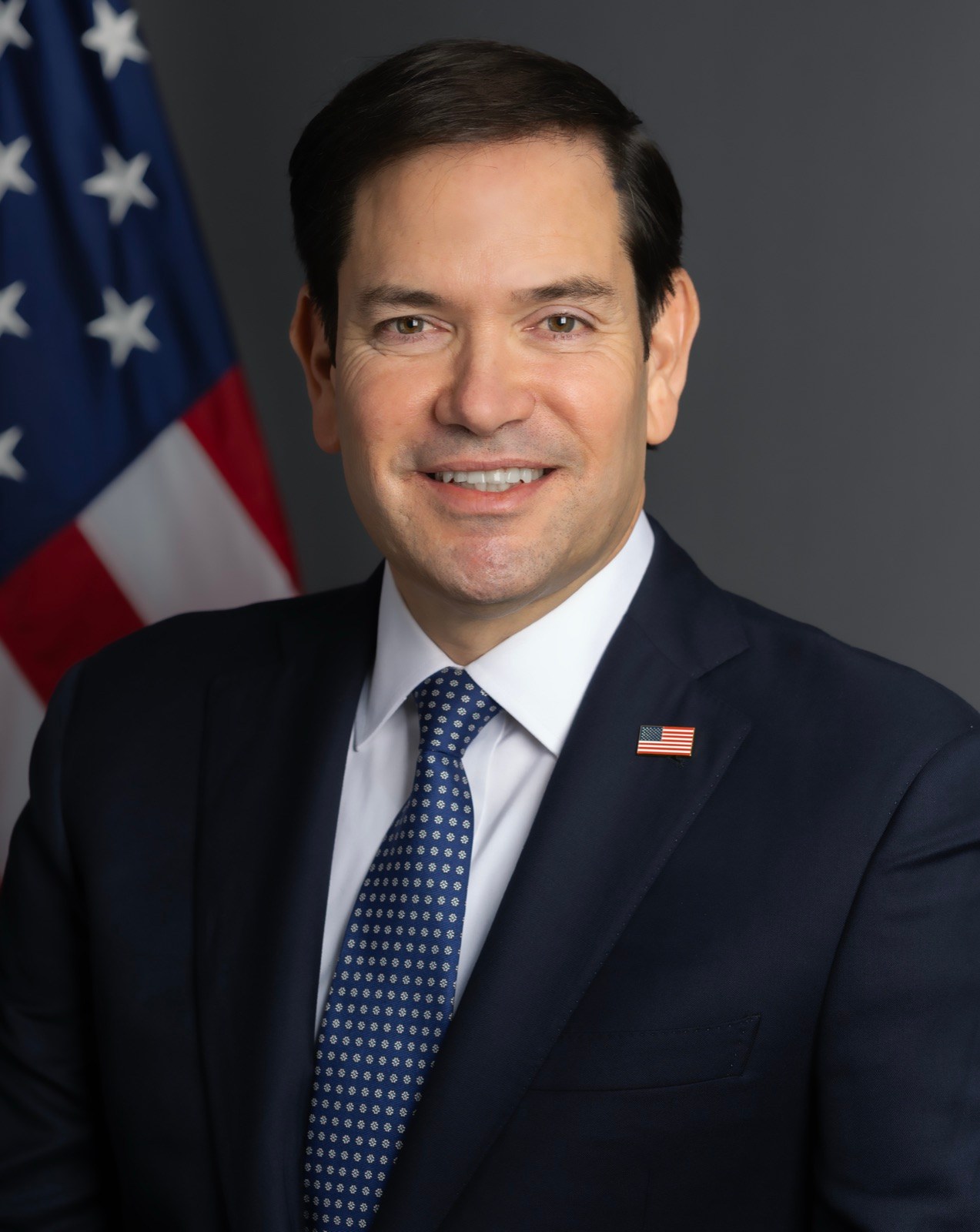
Senator Marco Rubio
Senator Marco Rubio is a Republican senator and one of the United States Senate's most outspoken China hawks, criticizing Beijing's human rights practices and warning about its dominance in the semiconductor industry.
Episode Summary
Republican Marco Rubio is one of the United States Senate's most outspoken China hawks—criticizing Beijing's human rights practices and warning about its dominance in the semiconductor industry. He's endorsed a candidate in the 2024 presidential elections, throwing his support behind former President Donald Trump, who started a trade war and recently threatened new tariffs on Chinese imports. Guest host and BBC Correspondent Katty Kay and One Decision's resident spymaster Sir Richard Dearlove sit down with Senator Rubio to discuss the U.S. relationship with China under the Biden administration and how it could change if Donald Trump returns to the White House, and concerns that the ex-president could strike a deal to end the Ukraine war on Moscow's terms that would embolden Russian President Vladimir Putin's imperial ambitions in Europe. They also discuss what U.S. support for the war in Ukraine will look like this year, the collapse of property giant Evergrande, and the implications for the Chinese economy. Katty and Richard discuss the drone attack that killed three American soldiers in Jordan and what the U.S. response may be.
Listen & Subscribe
- Watch on YouTube
- Listen on Apple Podcasts
- Listen on Spotify
Transcript
INTRODUCTION
Kay: You're listening to One Decision, the podcast that looks at the choices that shape our lives. I'm Cattie Kay from the BBC, a journalist and correspondent,
Dearlove: and today, I am your guest host. And I'm Richard Dearlove, former chief of British intelligence, otherwise known as MI6.
Kay: Each week, this program explores some of the biggest choices and issues that have global impact. We hear from key players who are making, informing and shaping the decisions that impact all of us. Richard, it's very good to be with you. I have listened to you many times, so it's a treat to be on the program with you. Well, welcome. It's great that you're with us today. Thank you. And today we're joined by Marco Rubio, the Republican Senator from Florida, who sits on the Senate Foreign Relations Committee, on the Intelligence Committee, very well placed to answer lots of questions about what's going on around the world this week and has endorsed President Trump. So sits on that side of the US political spectrum for those who are interested. But before we get to our conversation with Marco Rubio, and particularly we focused on China and Latin America, areas of the world that he's put a lot of time into and Ukraine, I wanted to get an update from you on what you think about this drone strike that killed three American soldiers in Jordan. First of all, you know, just give us a picture of what you think from an intelligence perspective went wrong. How did this happen?
Dearlove: Well, I think something definitely must have gone wrong because the sophistication of US air defense of these sites that they've got across the Middle East is very practiced. So the press are reporting, or there's a rumor or press story going around, that the drone was mistaken for an American drone, which would of course be part of their aerial surveillance and early warning system. So it looks as though someone misread something, and I think that probably explains why the attack was successful, because, you know, the countermeasures are there and normally they work. And, you know, one seen in Ukraine, for example, with the intensity of attacks using drones, how effective countermeasures can be. But there was clearly an error or a slip up, something went wrong. I mean that's my diagnosis there, I've got no inside information but I think one has to reach that sort of conclusion. And of course, it's tragic that something did go wrong and you have three dead American soldiers as a consequence of it, which is tragic for those families.
Kay: So now it ups the ante on the administration to respond more forcefully than it has done up until now. The president has said he blames the Iranians for this and is weighing the response, but he doesn't want to escalate the situation. What do you think the options are on the table?
Dearlove: Well, you know the system in Washington as well as I do, and the president will be given a number of options, you know, which will go from low gear to high gear response, and there will be three or four or five different things that he can do. I mean I think there's a growing concern certainly in Europe and in the UK and I think to an extent in the US that you know Iran is pulling the strings. And okay it's difficult to interpret the extent to which Iran controls these movements. And in this particular case, I'm sure the initiative came from Iran and the drone was certainly Iranian built, so that's what I would judge. And I think that'll be confirmed. So the president can either strike the sites where these militia groups are situated. I think they're mainly either in Syria or in Iraq. Or, you know, they can go further and start looking at specific Iranian targets. And I think there's a general expression of a reluctance, you know, to escalate and towards a direct conflict with Iran. So I mean, I would expect that the strike initially to be limited, but I mean, don't forget that Trump killed with a strike Qasem Soleimani, who was a hugely important figure in the Iranian regime, and of course the anniversary of that strike was very recent and accompanied by a terrorist attack in Iran. So there is a precedent for going after the infrastructure of the Iranian IRGC, the Iranian Revolutionary Guard, which is the organization which coordinates all these militias and is pretty much trains them, supplies them, directs them, and is the sort of brains behind them. So we'll see. I think that there'll be a lot of pressure on Biden to maybe go after limited, but one or two perhaps crucial Iranian targets. We'll see.
Kay: Yeah. I mean, you've even got Senator Lindsey Graham in the Senate, one of the more hawkish members of the Republican Party in the Senate, saying he has to strike inside Iran, that striking proxies is not good enough. I assume Senator Graham means striking assets outside of Iran isn't good enough either. I want to get to Senator Rubio and we'll get to that in just a second. But if you're sitting in Langley and you're Bill Burns at the moment, the director of the CIA, what are the kind of downside risks that you're looking at of striking Iranian assets directly inside Iran? What are the potential fallout of that? You provoke an escalation.
Dearlove: I mean, let's bear in mind that if you go really back to sort of basics and try to understand the situation in the Middle East, there's an ongoing conflict between Sunni and Shia. So despite the attempts recently for some sort of mediation between Saudi Arabia and Iran. That is by no means, let's say, a settled conflict. So you could see a situation if there's a strike inside Iran, let's say you hit an IRGC training camp where we know the militia are being trained, which is probably one of the target options that the president's been given. The Iranians can respond by hitting strategic targets in Saudi Arabia, in which the Americans have a big interest. So you could see how quickly the whole thing could escalate into a much more general Middle Eastern conflict. And of course the consequences of that could be massive because the price of oil will shoot up initially, the price of Brent crude will probably go up to 120, 130 maybe. And of course this side effect of that as well is a benefit to Russia because it increases the cost of their oil even given the limited markets that they have. So I think there'll be a degree of restraint but a hard response and probably it'll be against militias that are cited outside Iran. But let's see what happens.
Kay: I think that's right. And the White House is very focused as well on trying to get this hostage kind of ceasefire packed through with Hamas and the Israelis and the Egyptians and that any direct strike in Iran or escalation could jeopardize that too. So there's a lot of reasons the White House is going try and resist, I think, doing tough, just tough enough is the phrase that's being used in Washington at the moment. Okay, let's bring in our guest Senator Rubio from the Intelligence Committee and the Foreign Relations Committee, a very powerful figure in the Republican Party when it comes to America's role around the world. Somebody who's been very engaged in American leadership issues. And we wanted to speak to him particularly about where we are at the moment with China and Ukraine and Latin America.
INTERVIEW WITH SENATOR MARCO RUBIO
Kay: Senator Rubio, thank you so much for joining the program.
Rubio: It's a pleasure to be with you. Thank you for inviting me.
Kay: So today we want to look at a range of issues that you're interested particularly, Senator. We'll talk about China. We'll also talk about Latin America. And I know that Sir Richard wants to ask you a little bit about Ukraine, which is at a critical juncture, both there and here in Washington at the moment. But let's start with China. A court in Hong Kong this week ordered the liquidation of the Chinese property giant Evergrande. The implications of that are likely to ripple across the Chinese economy, which is already underperforming. And I was just wondering if you think we're at a turning point in China in terms of the economy and what that might mean for the global economy as well.
Rubio: Well, I think there's a couple of things at play here. The first is that the system of economics that China has followed for the last twenty five or thirty years, it's hard to argue that it hasn't led a country that was once a developing country, has rapidly expanded its economy, pulled millions of people out of rural areas and into urban areas. It's created wealth and national champions. Now, it did it through a combination of factors. One is it sort of took advantage of the rules of international trade, where they took all the benefits of it and none of its responsibilities. They were able to provide cheaper labor so that foreign entities would invest production capacity inside of China, but they didn't respect intellectual property rights. So once they figured out how you did what you did, they would replace you with their own companies. They've chosen national champions, companies that they've sent out and abroad and have subsidized and told them go out and capture market share, become the dominant player in this field, and don't worry about making a profit. The problem with all of that is that it has led to a lot of growth, but two things happen. The first is at some point, you grow to a more developed economy, and it is difficult for developed economies to grow at five or 6%. The other is that it's created tremendous inefficiencies inside of these companies and corporations that are national champions in China. So even though they've captured this market share, they haven't because they haven't been driven by free enterprise, they haven't had to compete, and they're not as efficient. So they've made some investments that don't make sense. The third is demographic. They are going that we know, they know for a fact that they did not produce enough children to remain as productive, which is why they're so focused on advances in technology that will allow them to get more productivity. And the fourth is that it's not a very transparent system. It's very difficult to actually know what the actual numbers are, even what the health of some of these companies are, because they don't have the same transparency requirements that you need in the West, for example, to be publicly traded. So there's no doubt that China is beginning to confront some internal challenges. That said, they are still the world's second largest economy. They still have a lot of people. They still have tremendous size and capability, and they're going to be a world power for the rest of our lifetimes and beyond. But some of them are facing some economic challenges, which frankly could be worse than what we know. We just don't know. And I think it does have the potential. There is some dramatic developments here to curtail or in some ways impact their ability to continue to pursue their goal of becoming the world's dominant power in the next two, two decades.
Dearlove: Senator, I was speaking last week to Alexander Downer, the longest serving Australian foreign minister who's now living in the UK, and we were between us theorizing that this moment may be peak China and that, you know, the projections we've made about China perhaps are rather incorrect. And the prospects for China across the board for many of the reasons that you mentioned really don't look so good anymore. And maybe China's beginning to take account of that and reposition itself. What I mean by that is it may be it's not being quite so forcefully confronting the United States in terms of its bilateral relations. Do you think that's the case or not?
Rubio: Well, I think there's another possibility, and that is that as they face some of these domestic pressures, they turn to nationalism, they turn to foreign adventures and things of this nature to sort of compensate for it. And so I have not, I continue to see China executing on long design plan to challenge a world order that they think is controlled by and written to the benefit of Western countries, in particular, the United States, our European allies, Japan and South Korea and others. I still continue to see them aggressively pursue that in both rhetoric and action. Obviously, they're facing some internal issues that may limit how quickly they move on some of these things, and it may temper how adventurous they may become. But I think there's an alternative fear here, and that is, to some extent, that a government who perhaps is not able to deliver economically on some of the promises and needs turns to something like bringing Taiwan under its mandate as a way to sort of rally domestic support at a time when maybe that's flailing. I think there's some elements of that with what Putin has done with Ukraine.
Kay: What does that mean for US policy? What we've seen under President Biden is largely a continuation of President Trump's policies of tariffs against China. In fact, you've had expansions of export controls to China. Is there much daylight between the current administration and we are facing a November election were the administration in Washington to change and President Trump would be reelected. Do you think there's much daylight between President Biden now and President Trump in his second term were he to win one?
Rubio: I believe that there is. And one of those points of daylight is the fact that they're conflicted within the Biden administration. So for example, on the one hand, they claim they want to challenge China, and they most certainly want to develop the ability for the US and our allies to have diversified supply chains, not be overly reliant, and allow China to dominate certain fields, technologies that are gonna be critical to the twenty first century. But then they have these dueling mandates that they want to meet that cannot be done in the time frame they want to do them without depending on China. So we're going through an argument now about the building of electric charging stations in the US and whether or not US taxpayer dollars should be involved in subsidizing the construction of these facilities using Chinese technology. It is, in essence, a direct US subsidy to these Chinese industries. You talk about these solar panel and renewable mandates, to meet the time frame that some want to impose and that some in the Biden administration want to impose would require you to depend on the manufacturers in China. I think there's other voices there that seek to stabilize the relationship and maybe not be as conflicted. So there's the trade and economic, and then, of course, John Kerry and the climate folks. And I think oftentimes what they want to do is in direct conflict with the second goal, which is to develop some level of independence from reliance on Chinese productive capacity. And I see these crashing into each other. And I think that is one point of daylight between what happened under Trump and what's happening now under Biden that in some ways, leave us worse off, not better off.
Kay: Do you see any congressional action coming up? You mentioned some of the tech restrictions. The Chinese, we know, have been getting around some of those tech export controls. Do you see any congressional action? Are there any hearings? Are there any bills in the works that would prevent China getting access to US tech that advances semiconductor production in China?
Rubio: Well, I hope so, but right now I haven't seen it. When that bill passed, and I was an early proponent of industrial policy when it came to things like semiconductors, I ended up voting against the final bill because it didn't have security restrictions in place. In essence, it poured billions of dollars into research and facilities, taxpayer dollars, but had insufficient security to guarantee that whatever we were making, whatever these facilities were, wasn't gonna be stolen or undermined because some company in the US that is actually a front for Chinese investment gained access to it. And I think, unfortunately, now we have multiple examples, some in the public domain, though not all, that that's exactly what's happening. We want to close loopholes like this. We see it in unrelated matters. You know, we've filed a bill about the slave labor in Xinjiang that presumed that products that were made there were made by the slave labor of Uighur Muslims. But now they have found a way to circumvent that through what the minister of this rules were. If it's under a certain amount, you don't have to scrutinize it, or simply by shipping it via a third country, and therefore it looks like the product is coming from Vietnam, for example, and not from China. Those are loopholes that we need to close. The problem we have is that we have industries that benefit from those loopholes being exploited who are lobbying against any congressional action, as they did against the Uighur bill that we got passed initially. I hope there'll be some congressional action. Unfortunately, I think until some of these abuses have been exposed and we've paid the price for some of these abuses, it may be tough to get people to act because there is a concerted and organized lobby in the American corporate space that is working hard to keep these things from passing.
UKRAINE
Dearlove: Senator, one of Trump's sort of foreign policy achievements was certainly resetting relations with China and getting globally, you know, the world to think about how they manage their relationship with China. And that's had a huge and enduring influence, you know, on European governments, on the Biden administration. But one of the things, I'm speaking here as a European and a former head of intelligence that really worries me is the whole issue of Ukraine. Now you're on the Senate Intelligence Committee. You know, pretty well, I think, what the military situation there is. I mean, Trump's apparent policies, I mean, okay, we can't use more than apparent policies on Ukraine, seem to me extremely worrying. And definitely here in Europe, this is a source of huge anxiety that if a premature deal is done with Putin that yields him a chunk of Ukrainian territory, then you know we might have a predatory Russia on our hands looking at other advances in Europe. The issue of you know security I think is a global one, it applies as much to the United States as it does to Europe and to the UK. So I mean how could you, as having declared your support for Trump as a presidential candidate, how could you reassure, let's say, Europeans on this actually crucial security point?
Rubio: Well, I don't presume to speak for former president Trump. I hope he future president Trump. I don't. But I can tell you what I do know pretty well, and that is that I think Trump, based on what I know about him and what I know about him now, would view an all out Putin victory in Ukraine under his watch to have been a failure, to have been a show of weakness. And so I don't think, no matter what the rhetoric may sound like, and he's been pretty opaque about what it means, and I think deliberately so, I don't think he is someone that sort of views that any sort of Putin victory in Ukraine would be something that he would be in favor of. Now here's where I think the situation in Ukraine stands, and that is it's pretty clear, and I think it's obvious to Vladimir Putin, that he is not going to achieve the strategic objectives that he had in mind in February 2022 when that invasion started. He's not going to conquer Kyiv, you know, and take over. So that's not gonna happen. I think he has settled into the belief that holding on to the territorial gains he has made and compelling neutrality on Ukraine, meaning not joining NATO, not becoming a member of the EU, is victory, as he defines it. I think he feels as once he makes it past his fake elections in March and because he controls the media inside of Russia, he can sustain domestic support for his efforts and for whatever he determines to be victory. I think he feels pretty optimistic that he's going to be able to achieve that, and I think he's counting on a loss of interest on the part of the West in terms of being supportive. So what I would say is that I think this is headed to a point in time, and I would be surprised if that's not even happening now with some back channels, where in fact the Ukrainians and the Russians will both realize that at least their maximalist aims in this regard are probably not achievable for either side. And so some of that process is going on. Now my guess is that the stronger hand Putin feels he has, the higher his demands may become in any sort of agreement like that. And so I do think it's premature to talk about it in detail, but that's where I think we are headed. I think for the United States and the West in particular, we find ourselves in a catch 22, particularly the United States. Let me just speak about the United States. On the one hand, I think China, as an example, would love nothing more than for the United States to be depleted in our efforts to continue to put 60 billion, 70 billion, 80 billion dollars into this effort every nine or ten months. On the other hand, if we decide not to do that, I think they are prepared to go around the world and say the United States is no longer able or willing to live up to its commitments. For example, they would message to the Taiwanese that if the US wouldn't even provide weapons for Ukrainians to fight for themselves, how are you counting on them to actually come and defend you if we come after you? So you might as well cut a deal with us, the best deal you can, because it's a fait accompli. So I think we have to find a policy moving forward that doesn't deplete us and, at the same time, preserves our credibility on the world stage and does not allow Putin to be rewarded in a way that would encourage others to take similar action. And I don't think it's a coincidence that Trump had announced we were withdrawing from Afghanistan, but you saw the way in which that withdrawal happened so chaotic with devastating and damaging imagery. I don't think it's a coincidence that from the moment that happened, we have Ukraine, we have what's happening now in the Middle East, which continues to escalate. We have North Korea becoming increasingly aggressive in firing rockets over Japanese and South Korean airspace and the potential of Taiwan as well. And who knows what other developments are out there? And I do think that any time that adversaries believe that the US and the West and our allies in the West are incapable, unwilling, or spread thin, it invites adventurism. And so I would say, certainly, if he's listening to me, my advice is to ensure that nothing that happens with Ukraine beyond the moral values, our moral arguments, which are strong about one country shouldn't be invading another and by force compelling them to do these things, would be the argument that do not do anything that encourages adversaries to believe they are able to do things that in the past they were not willing to do, because that's how you find yourself in the major conflicts and that's how you find yourself in major wars.
Kay: So, Senator, we're in a position at the moment where a deal that couples funding for the southern border on immigration is tied up with funding for Ukraine. From an outside perspective, the coupling of those two things might in and of itself be both worrying and perplexing. Is there any way America could decouple those things? Because it doesn't look at the moment like a deal on immigration is going to get through the House of Representatives, which presumably leaves future aid to Ukraine from America in jeopardy. If the immigration part of this deal can't get through the House of Representatives, is America about to stop giving aid to Ukraine?
Rubio: First of all, it can never be zero. It will not be zero no matter what, simply because much of the aid we've provided to Ukraine is out of our own weapons stockpiles that we have to restock. And so at a minimum, we have to at least buy back or buy to restock the weaponry that we have shared and provided because we need it for our own defenses. So I would say that decoupling came about as a result of this. Americans are saying we have had 8,000,000 people enter the United States illegally in the last three years. And by the way, this mass flow of people across borders is not a US phenomenon. Obviously, Europe has been roiled by this as well. The UK has been roiled by this as well. So this is impacting multiple countries around the world as we've seen mass migration movements. And I think a lot of people are saying, and they say to me, how is it that we can find $60,000,000,000 to help a foreign government but we can't even help ourselves? And so that's where this coupling argument came. The challenge here is that the genesis of our migratory crisis in the US, where it really took off, is when Biden made executive decisions, executive orders to repeal some of the measures that Trump had put in place. And that really is what set this off. And so the first step to reversing this crisis is to reimplement those things. And I think that's what the realization has become. That doesn't mean there aren't changes we can't make to our immigration laws that wouldn't improve them. But what would really have the most dramatic impact is something Biden has had three years to do and refuses to do. Now where we're headed is, I think, if you put it up for a vote individually, there's probably enough votes in the House and Senate if it just allowed to be a free vote to continue aid to Ukraine, maybe not at the same exact level as what's been proposed, but to some level, it's satisfactory. And then not to mention Israel and the Asia and the Indo Pacific region as well, which is all tied together. And I think that's probably where we're gonna wind up when it's all said and done. I will say this, and I do think it's been a failure on the part of our administration. They have not done a good job of doing two things, arguing and convincing the American people why the outcome in Ukraine is not simply some regional conflict, but it's in our broader national interest. And second, has not outlined what strategy, what is the end outcome that we are trying to help Ukrainians achieve. And that argument has not been made as well. And that's one only a president can make, to be frank. So I've shared this directly with the president because no matter what happens now, I don't think anyone would argue that this is the last time that Ukraine is going to need assistance in this conflict. And I think if it's been hard now, it's gonna be nearly impossible next time if we can't convince the American people that it is in our broader national interest as a country, they are at stake at some level, and that there is an endgame in mind that we are helping to bring about.
MIGRATION
Dearlove: Senator, the problem of migration is really one of the big defining issues for both American and European politics. I mean, it's very clear here across Europe the influence it's having on the political voting patterns in a number of countries. How do you think that this issue as it were can be deflected from the mainstream if it can, so that it becomes not a peripheral issue. It's gonna play an important role, but not to be really so central in defining how our politics are playing out because it really has been hugely disruptive and continues to be and I think you're having the same problem in the States. It doesn't seem that there are magic answers but do you have a formula which you favor which can as it were put it back into a proportionate place?
Rubio: Well, a couple of points. Migration has always existed, and it will never be zero. I think so many people in such a short period of time into any country or society is going to create tumult in that society. Where it really becomes problematic in politics is when people begin to feel this way, and they feel as if those in charge are ignoring it. They're not addressing the issue. In fact, in many cases, diminishing it as an issue at all. And it particularly becomes difficult in the West because of our moral values of the belief that we have an obligation to help the less fortunate and those who are going through difficulties. The problem is that that always has to be tempered with the reality that no nation on earth, no matter how wealthy, how advanced, or how compassionate for that matter, can assume and absorb millions and millions of people from halfway around the world in short periods of time or at all for that matter without their creating a societal pushback. And we're seeing it here in the United States. And for a long time, there was a denial that this was even a problem and that that's even happening. And then there was the accusation that anyone who says it's a problem is somehow motivated by xenophobia or hatred or bigotry or racism. And only now that this crisis is reaching major metropolitan areas like Chicago, like New York City, like major airports where hundreds of migrants are living in these airports, and it's now impacting people far from the border. Are we starting to see this desire to address it three years later? I think the best way to remove it from a divisive issue in our politics is to begin with leaders that all agree and acknowledge that it has to be fixed. And one of the things that's causing migration at this mass level is when you have policies that incentivize them. When people realize that if they get to the border of the United States, they will be allowed to cross, they will be allowed to enter, they will be released pending a court hearing way down the road that they're not going to show up for, you have created an incentive for more people to come. The more people are successful doing it that way, the more people will come. And so in essence, you are incentivizing the creation of a migratory network, of migratory pathway, and you're luring people into that and into the hands of these evil cartels. And then I have to say it, because I'm not gonna venture to guess, but if you put 8,000,000 people from anywhere on the planet, they're not all going to be saints and angels. There are going to be bad people embedded in 8,000,000 people. You take a cross section of 8,000,000 people from anywhere in the world, there will be people there that are not just fleeing for a better life. They're fleeing the law. They're criminals. They have ideologies that are dangerous. And, eventually, there's going to be something that happens as a result of someone who came across that border illegally, and then we're really gonna be in a very different place when it comes to this. So I think we've gotta get rid of those things that incentivize so many people to come so quickly and illegally across the borders of any country, including our own.
CHINA IN LATIN AMERICA
Kay: Talking of incentives, we've seen in the last few years a quite dramatic expansion of the number of Chinese migrants moving into Latin America, some of whom are coming across the border, but many more are staying in Latin America itself. What kind of impact is that movement of people having on Latin American economies? If Chinese are moving in, setting up their own businesses, changing local economies, making it harder for local artisans to do their business, what kind of impact does that have on the US and the US border?
Rubio: Well, first of all, in some of these countries, it puts tremendous pressure on them because their economies are even more vulnerable to disruption, even more vulnerable to influx of labor that those native born citizens can't compete with. So it creates additional pressures on that and it fuels additional potential populism. The other phenomenon that's happening is as the Chinese get these contracts to do work, they don't simply get the contract to do works. Their companies bring their own workers. They bring their own workers to do and work on these projects. And then what happens is the project ends and these workers decide, maybe I don't wanna go back to China. Maybe I'd like to stay somewhere here or somewhere closer and maybe even use it as a way to get into the United States. So we're seeing a lot of that happening as well. But as far as the countries are concerned that you speak of specifically, it's difficult, you know, for any country to absorb people from halfway around the world. It was bad enough that they couldn't get hired on the project that the government cut a deal with China on. But now these people are entering the workforce and competing, you know, lower labor costs against people from that country, and it starts to create a lot of internal friction in these societies as well as create incentives for migration. If the working class in those countries can't make ends meet, they have reason to leave as well.
Kay: And we saw a very similar pattern with China and Africa of the Chinese moving in, propping up authoritarian regimes, bringing their own people, sweeping up commodities. And frankly, you know, the US was just slow to spot it and slow to respond to it. Having had the example of Africa, do you think America is doing any better in responding to China's expanding trade relationship with Latin America, which has now moved from commodities to more strategic sectors. Is the US doing enough to protect itself against that? I mean, we should have learned right after Africa, but I don't see much indication that it's doing enough in Latin America either.
Rubio: I think it's doing more. It's not enough. And it's not enough for a couple of reasons. The first is the Chinese come in and they basically offer free money. Here's a $4,000,000,000 for a road or a stadium or a series of libraries or what have you. And here's a 10,000,000 or $15,000,000 for you and your friends under the table to benefit you directly. It's hard to compete against that. So that's the first thing that we've seen happen. What I do think is that there's been some growing awareness on the part of some of these governments at the vulnerabilities of debt trap, at the vulnerabilities in technology if they're embedded in your system. The flip side of it, and some of these companies will make this argument, is that, for example, they need to develop their 5G networks. And the only cost effective company on the planet that offers not just 5G, but all the suite of goods that come with it, safe cities and surveillance technology, the only one they can afford is the Chinese one because it's at a lower price. It comes with economic incentives attached to it, money to pay for it, loans, and often it comes with bribes. And so what happens is these projects get embedded into those countries and societies, you know, and then now they've got contractual rights. And the other thing we've seen is the exploitation of raw materials, the lithium grants that they've gotten in places like Chile and the like. So I think there's a growing awareness on the part of some of these governments about the danger it poses, but they face the cross pressure of needing to create economic development. And for them, it's oftentimes difficult to walk away from billions of dollars of what they view as free money that they can get credit for and that the populace will reward them for in the short term, and that oftentimes are incentivized by bribes as well in how they're getting these projects. And then once they get themselves into this situation, it's difficult for future administrations to extricate themselves from it because they either have contractual rights or because now they're embedded in your system and you need them for replacement parts and upgrades. And because we don't offer a lot of competition either. I mean, most of our companies can't, by law, go down there and compete by offering better bribes, as an example. So I think the lack of alternatives has also been a challenge. So I think there's more awareness, but we're still not doing enough. And there are still a bunch of places where you're very concerned that they could expand their trade grip.
FENTANYL AND AI THREATS
Dearlove: Senator, one of the issues you've taken a great interest in and had some success is Chinese production of fentanyl and the extent to which, you know, you saw Chinese cooperation in suppressing, you know, criminal production and export of fentanyl. I mean, do you think you've got some, you know, genuine response there from the Chinese leadership? Because in a way, you could also see it as a sort of socially damaging initiative which could be discreetly encouraged on the part of China because of the problems it's creating in the United States.
Rubio: I would think it'd be naive if they didn't view that as something that weakens America and therefore is good for them in the long term. I think it'd be naive to believe that they don't view it that way. I think they view that issue as one that's not their problem. It's our problem. They are willing to use it as a leverage point, as an easy give in a negotiation, maybe arrest a few people, crack down here or there. But the bottom line and at the end of the day is that today, it remains the case that there are companies inside of China that not only produce fentanyl but produce all the precursor materials with fentanyl who openly ship it either here domestically to the United States in ways that we're not tracking and openly have trade relationships and commercial relationships with criminal enterprises and cartels in Mexico who are producing fentanyl, which is extremely cheap to make and extremely profitable when you sell it. On a per volume basis, it's the most lucrative and profitable drug ever produced. And so I don't think that there has been a sincere effort on the part of the Chinese to disrupt it. Frankly, I don't think they see any benefit in disrupting it for them, other than now and then, you know, maybe doing some symbolic act as part of some way to show that they're seeking stability in the relationship. An easy give, but one they don't follow through on. And frankly, it's one that we're going to continue to confront here in the years to come because it's not just the Chinese. It's their partners in these Mexican cartels who are working hand in hand.
Kay: The Trump administration did one deal, and the flows sort of seemed to stop coming into America by post. They just went through Mexico instead. The Biden administration got to another agreement last November with Xi, and let's just see whether that actually makes any impact. I think you're right. It's very hard to stop the flows. They seem to find other ways. A bit like AI attacks on the United States or the potential of AI threats to the United States. And I was just wondering, we've had a week in which there was a fake robocall of President Biden telling people not to vote in the New Hampshire primary. And then we had Taylor Swift having explicit pictures of herself being spread all over Twitter. What could America do more to protect itself from AI threats, whether they come from China or from elsewhere? Does there need to be, for example, I don't know, some sort of government agency that is looking at this seriously as a threat from outside sources and external access?
Rubio: This is a new issue. So I don't think, I can't tell you that I have sitting here in my pocket the easy answer to something that's brand new. At the core of it is that it's not that it's AI, it's the ability to generate content that looks real, but isn't real. And one thing is what a sophisticated nation state could come up with. The problem is with AI and this content is that it's being produced by technology and capabilities that are available off the shelf. I mean, almost anybody, if you knew where to look, could find tools to generate AI videos and pictures and things of this nature that look very realistic. And so I think there's a couple of things that are, I think one of the first steps is simply awareness about it. Like if you see something somewhere that looks sort of over the top, almost unbelievable, maybe it is. And so I just think we have to make people aware of that fact and understand that that's a fact. And, look, clearly, no one wants, you mentioned Taylor Swift. I mean, the fact that people are putting out explicit pictures of her that aren't real, I imagine, is devastating and troublesome and problematic at the individual level and for society as a whole. And so I'm glad to see some of the tech companies have worked hard to prohibit those searches from happening. But at a broader level, what I worry about is things that could create, you know, a video of something that is expertly designed to inflame the population of a country on a preexisting tension point. Something that's already divisive in the country, some video that's put out there. I think back to 2020 when we were having in the aftermath of George Floyd, you know, some video that's put out there showing the police brutalizing someone in ways beyond anything you could imagine and that the media would be reporting it as accurate or that it would be spreading online as accurate when, in fact, it never happened and that therefore leading to riots and worse riots and real division in the country. I worry about things like that. I worry about videos and efforts to undermine candidates on the eve of an election and things of this nature. It really begins with awareness and then some ability to identify what isn't real and label it as such as quickly as possible. And frankly, it'll require the media and these platforms to also be very careful.
Dearlove: Senator, can I ask you a general question about the Senate Intelligence Committee? Without asking you to be indiscreet, what's keeping you awake at night given your privileged position?
Rubio: Look. Anytime people are shooting at each other, anytime armed groups or nation states are firing at each other, the risk of escalation is very real for two reasons. The first is because some in it, whether it's because of a decision made by a field commander or an outcome you didn't anticipate, those strikes may cross a line. And so we now face a situation, for example, where, don't get me wrong, Hezbollah wants to destroy Israel, but they don't want a war right now, and Israel probably prefer not to have a war with Hezbollah. Yet they may very well arrive at one because they are both having to confront one another in a way that could rapidly escalate. I think about the situation with the Houthis and them targeting commercial vessels. You think about the strikes that just killed three Americans and wounded 20 others that were conducted in Jordan by these Iranian backed groups that will elicit a US response probably and hopefully directly against the Iranians. But I say that with the understanding that that itself could trigger a response that could rapidly escalate. I worry about North Korea, where you have this Kim Jong un that's now firing weaponry in a way that could lead to a response if misinterpreted or if he hits the wrong thing. Obviously, we understand that if the Ukrainians conduct an attack that somehow crosses some line in Putin's mind, it could lead him to begin to target other countries where that he thinks has provided logistical support. Or frankly, hits a target inside of a NATO country that maybe didn't mean to hit, but it got there and now there's a response. So that's what keeps me up at night. We have a lot of irons in this fire, stoking these fires. And eventually, unless it's tamped down, one of these fires can emerge into a full blown inferno and very quickly wrap us up in a conflict. So I don't want to be alarmist, but at the same time, I recognize that we have a lot in many parts of the world, we have a lot of tension and a lot of armed conflict going on, any of which could quickly spiral and trigger much broader conflicts. We saw how the October seventh attack in Gaza has now spread to the Houthis, which nobody anticipated in the Red Sea. And these Iranian groups targeting Americans in the region as well. And how quickly this could spiral out of control, and suddenly we find ourselves in the midst of a much broader conflict that will have dramatic implications, not just on security, but on our economy.
Dearlove: And on that cheerful note, Senator, thank you. Thank you very much, Senator. It was a pleasure.
Rubio: Thank you. I appreciate the time.
ANALYSIS WITH SIR RICHARD DEARLOVE
Kay: What stood out to you, Richard, from Senator Rubio's interview? I thought that was fascinating.
Dearlove: Well it's absolutely fascinating. He's certainly amazingly fluent and well informed and good on the things that he knows about. Obviously he's got a very strong interest in Latin America and in China and he's been very forward on commenting on those issues. I mean what I found surprising was the way he treated Trump's presidential ambitions almost with normality, you know, he didn't reflect to a great degree, you know, the anxieties that some of us have. And I thought what he said about Ukraine was particularly striking. I got the impression actually that he felt that the US should be continuing to, he didn't actually say that, but he did show a degree of sympathy, and he made an interesting comment which really was saying that Trump would have never allowed Putin to get into a situation where he could claim victory in Ukraine. I mean, I'm not sure I'm reassured by that, but it was an important comment coming from somebody who's immensely well placed. And I thought when I asked him right at the end, you know, what kept him awake at night, I thought that was very, he ran through the various military conflicts that the US are watching closely or involved in, and of course underlined the fact that one of them could reach flashpoint and become a much more serious far than it is at the moment.
Kay: Yeah, I mean, another reason why the administration doesn't want an expansion of tensions and war in the Middle East is because they are kept awake, as Senator Rubio said, by so many other conflicts at the moment. I was also struck by how hawkish he was on China and trying to kind of draw daylight between President Trump and President Biden when actually Biden has pretty much followed Trump's policies. And my sense is that relations between the US and China have kind of improved over the last six months, but he was taking a much more hawkish position. And we know that President Trump has raised the prospect of across the board tariffs on Chinese imports. And I wondered if that kind of hawkish position was a reflection of what might be coming.
Dearlove: It was fascinating because the Chinese definitely, I think in the last eight to ten months have stepped back from confrontation with the US. There have been various high level meetings to, let's say, de escalate the tension between the two sides. And the commentators here in the UK that I sort of trust on China say that, you know, China seriously overplayed its hand and is having second thoughts. But you're right, I mean, Rubio wasn't giving them much credit and was taking a very hard and a very tough line. So, you know, it may well be that that's what is intended by the Trump administration. But there's no question that I think if you look at Trump's foreign policy, I would say, you know, it was an achievement to get the West to rethink its relations with China.
Kay: He sounded quite optimistic, or at least he, as you said, sounded like he thought it was a good idea that America carry on supporting Ukraine. I don't know from the sort of domestic politics here, whether that optimism is well founded, given that this bill is tied up, as we said, with the immigration politics in Washington and might not get through the House of Representatives, might not even come to a vote in the House of Representatives. But I imagine that would be good news to European ears, wouldn't it? That's what they would want to hear.
Dearlove: Well I think, you know, very good news for the Europeans is they're trying to force Hungary's hand and, you know, make sure that Hungary doesn't sort of prevent this massive subvention which the Europeans are preparing to give to Ukraine. But there again, I mean, Rubio didn't come across, let's say, as a really enthusiastic supporter. He's saying, you know, support would continue, but he didn't make it sound as though the Republican Party would really step up big time and give huge subventions. It was sort of more of the same, we'll see. It's worrying from my point of view.
Kay: So Richard, thank you very much, I enjoyed that a lot.
Dearlove: Cattie, it was great. And you asked some very, very probing questions, you really got him talking in a most informative and interesting way.
Kay: That's it for this week's episode of One Decision. We drop new episodes every Thursday.
Announcer: Like and subscribe so you never miss an episode. Drop us a line. Tell us your thoughts. What decisions have impacted you and where you live? You can write to us. Our email is 1decision@1decisionpodcast.com. From me and the team, thank you for listening, and see you next time.