Episode Info
- Season27
- Episode8
Hosted by Christina Ruffini and Sir Richard Dearlove
Guests
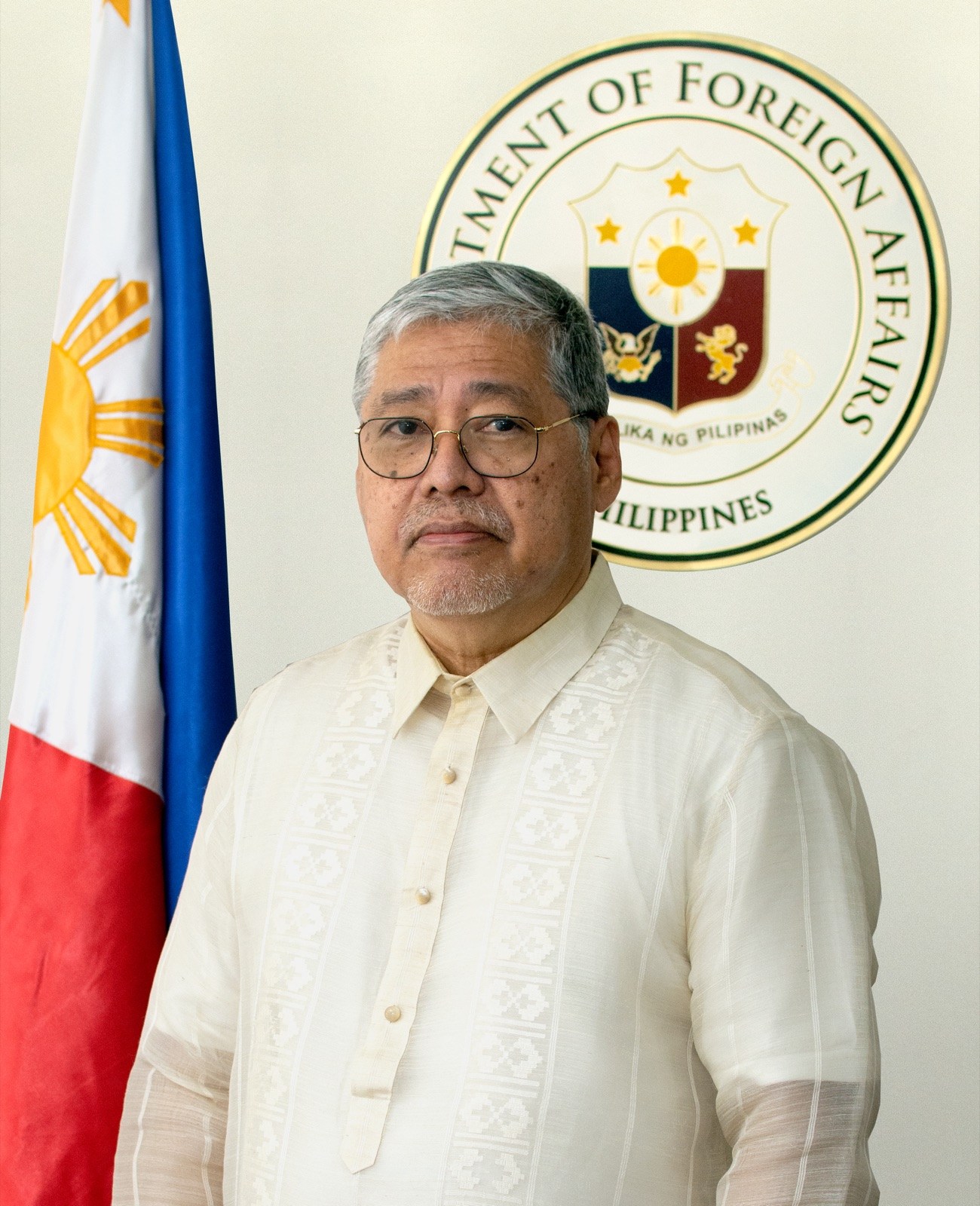
Enrique Manalo
Enrique Manalo is the Philippines' Foreign Secretary discussing escalating threats across the Pacific region and concerns about U.S. reliability as an ally.
Alexander Yui
Alexander Yui is Taiwan's Representative to the United States discussing escalating threats across the Pacific region and concerns about U.S. reliability as an ally.
Episode Summary
During the high-level week at the United Nations General Assembly (UNGA) in New York City, world leaders are gathering to discuss a world in crisis. One Decision's Christina Ruffini spoke with the Philippines’ Foreign Secretary Enrique Manalo and Taiwan’s Representative to the United States, Alexander Yui. They discussed the escalating threats across the Pacific region and the concerns about the reliability of the United States as an ally. Stay tuned to the One Decision feed for more interviews with world leaders from UNGA.
Listen & Subscribe
- Watch on YouTube
- Listen on Apple Podcasts
- Listen on Spotify
Transcript
INTRODUCTION
Raffini: I'm Christina Raffini in Manhattan for the UN General Assembly. So police sirens and motorcades have, as usual, descended on the East Side of Manhattan for the annual assembly of world leaders. This year, there's a couple topics that are coming to the top of everyone's mind. Of course, conflicts in the Middle East and Ukraine, but also the global power shift away from countries like the United States and Russia towards rising powers like China and even medium powers. And it's really changing the way bodies like the UN navigate, define themselves, and also questioning their relevancy. So we questioned their relevancy and posed a bunch of other questions to a lot of world leaders as we ran around the city this week. But first, we wanna bring you two interviews we did with powers in the Pacific. You might remember the last three administrations have said here in the US that they wanna pivot their focus away from Europe and the Middle East and towards Asia. So we spoke with Philippines foreign secretary Enrique Manalo. Do you think the US would come to the defense of the Philippines? Of course, I believe it. Do you think China believes it?
Manolo: Perhaps.
Raffini: And the representative to the US from Taiwan, Alexander Yui.
Yui: Dictators are not rational. They'll do whatever they think is right. They don't care about people's well-being. They don't care about people dying. They just think what's best for themselves.
Raffini: We spoke about multilateralism, the role of bodies like the UN, and, of course, China, and how their countries are navigating the increasingly turbulent waters in the Pacific, both metaphorically when it comes to politics and literally as they grapple with the impacts of climate change. We're gonna have more interviews with world leaders coming up on a special episode of One Decision Podcast. Let's pivot to the Pacific. First of all, thank you for making time for us. I know it's an insanely busy week. We really appreciate it. I was googling you, I'm not gonna lie. And you have been working in some capacity at the department of foreign affairs since 1979. Is that accurate? So this is technically the second Marcos that you've worked for. You started in 1980, right? When you joined, his father was president. So in the arc of that time, as someone who's been working in diplomacy all that time in the Philippines, what has that been like? What are the, you know, talk us through what some of the major changes are you've seen both in foreign and domestic policy. I mean, it must be pretty massive.
INTERVIEW: PHILIPPINES FOREIGN SECRETARY ENRIQUE MANALO
Manolo: In the past forty years, I mean, it's a completely different world. So we obviously had to approach things, different things, in different ways. For example, when I joined the Foreign Service in 1980, it was basically almost the height of the Cold War. So in many ways, it was a simpler world. You were either, you know, in the West or the East, and basically your policies were determined in, you know, in that context.
Raffini: I mean, everybody talks about how dangerous things were during the Cold War. Do you think in a way it was more stable, safer than what we've got now, more predictable?
Manolo: Well, yeah, in that sense because in the Cold War, as I said, there were just two sides. And they had developed through the years, I suppose, certain rules or guardrails where they knew that, you know, there were certain limits to what they could do. There are areas they knew which were in their sphere and then another area which is not. And kind of norms even within that chaotic, there were norms of behavior and, you know, what they could do and what you could not do and limits because if they took another step, then it would erupt into something worse. Then, of course, in the nineties, you had the collapse of the Soviet Union and what they call the unipolar world. And for example, the UN probably had its heyday during the nineties because, I think, when I was there, I was also here in the nineties. That's when the UN was probably in the best position to live up to the charter, the provisions, because basically there wasn't any more Soviet Union and the Security Council began to operate the way the framers thought it should operate. But then, of course, later on the world changed again. The naughties, 2000, and then now you have, I think, the biggest development is the rise of China. And then, of course, in the last few years, the world has changed again. And now we have, in many ways, a lot of uncertainty. We don't have those rules as we had before.
Raffini: So what does that mean for the Philippines? How have you found yourself? You know, what was your position? Where did you feel you were in the Soviet versus US world? And now, you know, now it's Russia versus China versus the US versus fill in the blank?
Manolo: Well, of course, the Cold War, we were aligned with the West, the United States. It was quite clear. And of course, we had some intervals in the seventies. The father of President Marcos decided to open relations with China and then even with the Soviet Union. But still basically we were aligned with other countries with the West. We had the ASEAN, etcetera, but essentially that was the configuration. But then we had the nineties where there wasn't any more East and West and so naturally we started branching out to other countries. We are now dealing with countries based on our own national interests and our independent foreign policy, which we still maintain up to now. But, of course, also developments then again took place. We have now a much different China. The China of 2024 is no longer the China of even 2000 or 2004. The world has in many ways become more complex because though there are rivalries, it's not as simple as it was during the Cold War. Because in the case of the Philippines and many countries, we have extensive relations with China, especially on economic relations. So it's not a simple case because in the Cold War, we didn't have that much relations with the Soviet Union, especially economic. It was focused mainly on the West. But now we deal with all countries, and then China especially is our biggest trading partner. But, of course, we're facing security challenges in the South China Sea, so that adds complexity to our situation. And it's no longer a simple case of siding with one side or another. So we really have to think of our own interests and see the best deal we can get and who we can deal with in order to promote our interests.
Raffini: I mean, but the China relationship is especially tricky for you, obviously, because of proximity, because of South China Sea. What do you do with that issue? Is it intractable?
Manolo: Well, you know, it's really a big challenge. We're not posing a security threat to China, nor are we in a position to militarily take on China. And at the same time, as I said, we want to maintain our trade or economic relations with them. At the same time, given the fact that China is China, we have no choice but to reach out to other partners and like-minded countries, which is exactly what we're doing. Of course, the United States is a treaty ally. We have a mutual defense treaty, so obviously, we will always have these close relationships, especially in the military sphere, defense, and also economic. But we're also branching out now to other countries in the region, especially Japan and Australia, Korea, and Vietnam, and even within the ASEAN. We are trying to find countries with whom we feel are like-minded and are also, let's say, viewing the situation in the region the same way. And those are the countries that we're seeking to partner with. That in some ways promotes our own security and our ability to deal with any challenges. But we seem to have a common view now among many countries, at least in the political front, on the importance of respect for international law, rules-based order, and I think that's also one of the foundations which underpins our relationships and the need for economic growth and economic partnership.
Raffini: I wanna ask you about these medium-range missiles that the US has in the Philippines. You guys did this joint exercise with the US, which is, you know, common, these military exercises with allies, and then they left this system there. And that's been quite controversial. China has not been quiet about the fact that it does not enjoy having these where they currently are. Are they gonna stay?
Manolo: They're actually there. I've been told by our defense people, they're there temporarily.
Raffini: I mean, sure, but what is temporary? Is temporary a year? Is temporary two years? Is temporary until China stops ramming your coast guard ships?
Manolo: There as long as we think it, you know, answers our interest. But when I say temporary, they're not gonna be there permanently. The point is they're not aimed at any country. They are aimed more for the potential defense or use of the Philippines. We don't comment on what other countries do, on what missiles they put up. I won't talk about China, but obviously, we're not the only country with defensive missiles. And the Philippines has no intention of trying to stoke any tensions anywhere, in any region. Our aim is to see how we can promote partnerships. But I think one issue too is that China, unfortunately, tends to view every action, for example, taken by the Philippines as an action at the behest of the United States. So they're quite fixed on the US-China rivalry. And any action that we do, whether it's sending a supply ship to one of the shoals in the South China Sea, having a couple of missiles there or even having some sites, which are really meant for humanitarian purposes, everything is because it's US-led kind of activity, and then we're just doing it because the US has asked us to do it, which we have said emphatically that is not the case. They have to realize we have our own national interests to look after and our own concerns, and we have to ensure security on all fronts, defense, economic, etcetera.
Raffini: Have you seen an uptick in these incidents in the South China Sea with Chinese coast guard boats, you know, firing these water cannons, ramming your ships? Has there been more of that since this missile system went in?
Manolo: I wouldn't relate it to the missile system, but certainly there has been an uptick since last year.
Raffini: They were already on the rise, right, even before this military exercise?
Manolo: I don't think that's the reason that these incidents have occurred. The incidents really took, really increased, I think, early last year.
Raffini: Do you know what precipitated it? Was there any particular spark?
Manolo: The one that really made the news last year was when we resupplied our World War Two vintage naval vessel, which was the Sierra Madre.
Raffini: Can you explain that for people who don't know why there's a World War Two naval vessel hanging out in your territory?
Manolo: Well, I think twenty years ago, the Navy decided to beach it on the shoal. And it's been there for, I think, over two decades. It was last year when for some reason China decided to prevent our resupplying that ship because we have about 20 to 30 marines or naval personnel who are actually living in that ship.
Raffini: You basically use it like as a base is the wrong word, but like a facility. Right? Like an outpost kind of?
Manolo: It's a kind of an outpost. And they're there. And it's within our exclusive economic zone. We have perfectly legal rights to be there in accordance with the UN Convention on the Law of the Sea. We have signed that convention, so has China. And it's within our exclusive economic zone. So we have rights to be there, and we have been there. But last year, all of a sudden, China got more aggressive and started trying to prevent us from resupplying our military personnel there. Since it's within our rights, we continue to do so despite that, but we have tried to avoid any kind of action that might trigger or escalate the situation. But it got fairly bad recently in one mission where there was also ramming, and actually one marine or one naval personnel actually got hurt.
Raffini: Lost a finger, right?
Manolo: He lost his thumb. That, I think, created a situation where tensions escalated further and also the concern that if we had another incident like this, it could lead to something more.
Raffini: There's this 1951 defense treaty. And then when President Marcos went to the US in 2023, right, it was updated a little bit. So the guidelines say that an armed attack anywhere in the South China Sea on either party's armed forces, which includes both nations' coast guards, aircraft, or public vessels, would invoke mutual defense commitments. So, technically, at this point, could you invoke this treaty if you wanted to? Based on the, you know, the attacks that you've received on your vessels in the South China Sea, could you trigger this treaty under the way it's written right now?
Manolo: Legally, I'm not a lawyer. Of course, you could trigger it or seek to trigger it on any occasion, but obviously you will need the two parties to agree. In the treaty there are of course certain procedures that have to be followed. These of course will have to play out. It's always there, the possibility. It's important that other countries are also aware of that. Well, we've had for some years also, on and off, clarificatory talks with the United States to clarify certain of the certain provisions within the treaty.
Raffini: What the threshold would be?
Manolo: Yeah. Or the meaning. So it's also important. But I think the treaty serves a purpose. It's there. And the United States has made on a number of occasions statements that, you know, their support is ironclad and that they will do it, and they will support the Philippines on this point.
Raffini: Do you believe that? Do you think the US would come to the defense of the Philippines?
Manolo: Of course, I believe it.
Raffini: No doubt?
Manolo: Well, I don't think there's room for doubt.
Raffini: Do you think China believes it?
Manolo: Perhaps.
Raffini: I mean, just watching the US and its treaty commitments and other nations around the world, does it make you nervous at all that there might not be a political will domestically for the US to get involved in a conflict in the Pacific?
Manolo: Well, I think that would really be a decision to be made by the United States government. As far as we're concerned, we have the treaty, and if we felt that a certain situation required us at least to propose triggering it or triggering it, then we would do so. But let me just say on the South China Sea, for example, we've made it perfectly clear that the Philippines wishes to resolve any disputes or any incidents. We wish to resolve it through peaceful means, diplomatic means, and in accordance with the rule of law. And that's always been our approach to all of these incidents.
Raffini: We're at the UN. You've been here many times over the years. Looking at the world now as it stands, are you more concerned, less concerned? Does it feel like we're at an especially dangerous time, or do you feel like this is just a different brand of the same drama we've been dealing with forever?
Manolo: It's a challenge. We face many issues which we need to address, and I think, for example, one of them is climate change. For example, in the Philippines, climate change is now one of the top priority issues. In fact, President Marcos is the first president who ran on the policy of addressing climate change. I mean, he made it a really number one priority. That's a challenge for us, and it's a global challenge. All countries face it. It's more important now in many ways that we have a UN which really tries to address these issues. But that requires cooperation among the countries concerned, especially the big powers and the Security Council. I think all the more reason to try and find ways of working together to address these challenges, which I think are quite concerning. But nevertheless, there's still optimism. I'm not losing all hope that there are still ways forward provided there's the political will to do so.
Raffini: Thank you for talking to us. We really appreciate it.
Manolo: Thank you. Pleasure and nice reminiscing about all these years.
INTERVIEW: TAIWAN REPRESENTATIVE ALEXANDER YUI
Raffini: Thanks to secretary Enrique Manalo from the Philippines. Now we also spoke to a neighbor in the same region that has some of the same problems but under slightly different circumstances. We spoke to the representative to the US from Taiwan, Alexander Yui. He was talking about how important it is to have the US as a player in the region, something both countries mentioned. But in Taiwan, the situation is much more complicated as the US does not officially have official diplomatic relations with this country. So Bill Burns, CIA director for the US, said that he thinks China will try to invade or take military action against Taiwan in the next five years. Do you agree with that assessment?
Yui: Well, the possibility is real.
Raffini: Is it increasing?
Yui: Yes. The People's Liberation Army, they've increased their capabilities. They're spending a lot of money, a lot of resources on modernizing, and they're conducting a lot of exercises to prepare for that. Actually, about two weeks ago, the PLA had landing exercises right across from Taiwan. You know, it's a threat. It's a show of force. It's a menacing posture. Chairman Xi Jinping has also publicly stated that he wants his army to be ready to invade Taiwan by 2027. And he says, but why 2027? Because that's the hundredth anniversary of the founding of the People's Liberation Army. So whether they will attack on that date, not necessarily, but certainly it's a target that we should be ready by then. And they are doing all the preparations to be able to do that. And they have been increasing their aggressive postures against Taiwan by having their military machinery around Taiwan constantly. And that's a threat.
Raffini: What kind of actions are you seeing? We spoke to the Philippines earlier this week and they were talking about, you know, I know that 60 Minutes correspondent who was on the boat that got rammed by the Chinese. Are they doing that to your naval vessels as well?
Yui: It's mostly flyovers and just encroachment. And there used to be this median line where we both respected it, so our planes will not cross our side of the line, kind of an invisible barrier. And so the naval ships, you know, which is just a natural, you know, it's an invisible line, but we all respected it. But after speaker Pelosi's visit to Taiwan about two and a half years ago, they unilaterally said, there's no median line. So they've been crossing that line constantly, and they're flying their planes to our air identification zones. Not to our air space yet, but they're very close, and every day there are scores of planes coming in passing through the median line. So they're trying to create what they call a new normal. You know, if you talk about moving goalposts, they're the ones moving the goalposts. You know, it used to be there and now they say, okay, this is not, because since they claim Taiwan as their own, so they're saying, actually, this whole Taiwan Strait body is actually internal waters. So that's why many countries' naval ships make freedom of passage navigations through the Taiwan Strait to show Beijing, the PRC, that they don't agree that this body of water is their own domestic water. Actually, it's an international shipping lane, a very important shipping lane.
Raffini: A couple years ago, I think I would have said, I don't believe that Mainland China will invade Taiwan. It doesn't make sense. It's not rational. And then I watched Ukraine. How has the war in Ukraine impacted how Taiwan views its security?
Yui: It has impacted our civilian population. We as government, you know, we were very well aware of China's ambitions and preparations. As you mentioned about your experience, we were warning our diaspora who are living in Ukraine before the invasion. We were actually calling by phone to each one of them saying, war in Ukraine is almost unavoidable. You should leave while there's still commercial flights. And they wouldn't, you know, they'd say, oh, don't bother me. And the day before the invasion, I remember there was this blogger. It's a lady, and she was filming the streets of Kyiv. She says, look, restaurants are full, bars are full, theaters are full, life goes on as normal in Kyiv. Actually my life is probably better than in Taipei so Foreign Ministry stop calling me, don't bug me. That was her YouTube message. The next day bombs fall, she calls, I'm ready to leave.
Raffini: But watching that conflict and the world's reaction to that and the US's growing fatigue and political divisions about helping that ally and funding conflict, does that concern you about the reliability of the US if Taiwan were in a similar situation?
Yui: No. The United States has been a very reliable partner and actually there's been a lot of propaganda and what is called doubt America theory that is emanating from the PRC into the airwaves and TikToks and, you know, social media to try for the Taiwanese people to start doubting United States' determination to help its friend, you know, a partner. Not an ally because we're not, but a partner. And, you know, the United States has been very steady and solid, and the support has been bipartisan. Republicans and Democrats have been in unison.
Raffini: Mike McCaul, like high-profile Republicans. Are those visits helpful or are they antagonistic? Do you want those visits, even though it ratchets up the rhetoric?
Yui: I mentioned already twice speaker Nancy Pelosi visited Taiwan as a reason the Chinese have been reacting very aggressively against Taiwan in the military sense. And people ask me, mister Yui, your ambassador, are you, the government of Taiwan, sorry that you invited miss Pelosi to come to Taiwan? My answer was obviously no. First of all, it is not up to the PRC to dictate who can come or cannot come to Taiwan to visit. Especially the United States Speaker of the House should not be dictated where she can or cannot go because again we're not under PRC's jurisdiction and for the PRC it's just an excuse. Newt Gingrich as a speaker, he was in Taiwan before, so why didn't they react when he did? Why? Because now they're militarily fortified. They have ambitions, and they're doing it. They're just trying to find excuses. For example, when we conducted free presidential elections this January, and the candidate that they didn't like, president Lai Ching-te, he won. They also started conducting added military maneuvers around Taiwan as a show of punishment, or they disagree with the Taiwanese people's choice. And it also even took one of our allies away from them again as a show of not being happy. But dictators are not rational. They'll do whatever they think is right. They don't care about people's well-being. They don't care about people dying. They just think what's best for themselves. So that's why a conflict in the Taiwan Strait is possible because Xi Jinping, the ruler of China now, is a dictator. He'll be president for life. He changed the constitution so that he can rule forever. He'll probably rule until his, you know, health fails, but that's why we have to be ready. We have to strengthen our deterrence. And then our friends, United States and many countries, they have to also voice their warnings against China saying, you will not do what Russia did to Ukraine because there will be consequences to Xi, you know, in their meetings. And that's why it's important the visits that we call codels, you know, congressional delegations that they arrive to Taiwan because it's a show that the United States from different sides, bipartisan, bicameral, supports Taiwan as who we are. We want to preserve freedom. Democracy, our way of life is important. We've evolved also from an authoritarian regime into a democracy. We're a full-blown democracy, and the support that we get from United States, from Congress, from the executive side, from the people is important because it shows the PRC, especially Xi Jinping, that people actually care about Taiwan. So not only the military preparation is important, but also the voice, the bills passed in Congress, your visits, your presence in Taiwan is important because, again, it shows the world, shows Xi Jinping and to the world that we're not alone.
Raffini: Do you think vice president Harris or former president Trump would be a better ally for Taiwan?
Yui: The support that we get from the United States is bipartisan. Therefore, whoever will be in the White House in January next year, the general aspect of support for Taiwan and generally the current situation between United States and the PRC, China, will not change. So whoever is in the White House next year, the support for Taiwan will continue to be there and the pledge to follow the Taiwan Relations Act and the Six Assurances that was given by president Reagan then to Taiwan will continue to be there. We don't expect any changes. President Trump during this campaign, he has mentioned Taiwan a few times. Sometimes it's a little critical.
Raffini: Apparently, you've stolen all American chips according to one of his campaign statements. He said you've stolen chips and jobs.
Yui: But, no, actually, the chips—
Raffini: But that doesn't concern you?
Yui: No, not at all. Because I've said Taiwan and United States were actually perfect partners. The chips went to Taiwan because the semiconductor manufacturing then was of little interest to United States manufacturers because the cost, you know, the revenue per chip is actually very, very slim. It's cents per chip. The founder of Taiwan Semiconductor Manufacturing Company, TSMC, which is the largest semiconductor—
Raffini: He's still alive, right? He's like 98.
Yui: He's 90, yes. So he had proposed his version of how to manufacture semiconductors. He presented his plan to the board, Texas Instruments, and they rejected it. He said, no, this is, we're not interested. So Taiwan said, well, why don't you come to Taiwan? We'll take it. So he did it, and he founded TSMC. And now, TSMC produces the majority of the chips in the world, especially the high-end chips are mostly produced by TSMC. But we're natural partners in the sense that United States is very good at designing the chips, NVIDIA, AMD, etcetera, and we're very good at manufacturing the chips. So it's a natural bond between the two sides. But I think the symbiosis between Taiwan and US industries, it works well. We each have our responsibilities and we share and we make sure that this vast technology of semiconductor manufacturing, especially the high-end manufacturing, stays on the good side, you know, those that respect freedom of democracy, intellectual property, rule of law, and make sure that the next industrial revolution, which is already in the process, is artificial intelligence, is here to stay. Yeah, but we're the ones who lead in, you know, US and Taiwan. We're not stealing any jobs away. Actually, with this collaboration, we're creating jobs between ourselves. And we're also at the academic level, universities, we have created this union between our universities so we create these talents for manufacturing semiconductors, for AI, for quantum, for biotech, etcetera. So I think it's actually a very productive relationship that we have.
Raffini: The American public doesn't have a really high tolerance for foreign wars. Look at, you know, Afghanistan. Look at Ukraine and this political divide that's happening over Ukraine funding. If you were to tell the average American why they should care about defending Taiwan, what would you say? What's your best argument?
Yui: The very direct answer is it does have to do with their daily lives. Every electronic device that you own in your house has a Taiwan chip in it. Even your car, you know, anything that runs on electricity has a Taiwan chip in it. A disruption of the supply chain will cause a breakage of machines, not be able to run because there'll be no chips. But if something happens in Taiwan, our ports will be closed, but so will the Chinese, so will the Japanese, so will the Korean ports, you know, a large percentage of trade goes to that area. So just by that itself, you should think we should try to avoid a war from happening. That's why it's not about whether we should go to wars. We should try our best to prevent a war from happening. The best way is to have good deterrence and good advance warning to Xi Jinping in Mainland China saying, don't do that because there will be dire consequences to you, to the world. We should stop having a war and don't try it. And we're not trying to go to war. We're not trying to start a war. We're not trying to declare independence because we already are independent. We're, you know, we call ourselves Republic of China. People know us as Taiwan.
Raffini: Thank you very much, sir. I know you had a very busy week. Appreciate you taking your time.
Yui: Giving me the chance to talk to your listeners a little bit about Taiwan. But we're very happy and very comforted that the United States supports Taiwan because we're like-minded in our values and I think that speaks volumes. Thank you very much.
CLOSING
Raffini: And with that we're gonna end where we started. Thanks for staying with us. We're gonna drop more interviews later so stay tuned to the feed or check out all our content on 1decision.com. I'm Christina Raffini in Manhattan. For me and the whole team here, thanks for listening.