Note: this podcast contains explicit content.
Episode Info
- Season4
- Episode5
Hosted by Christina Ruffini and Sir Richard Dearlove
Guest
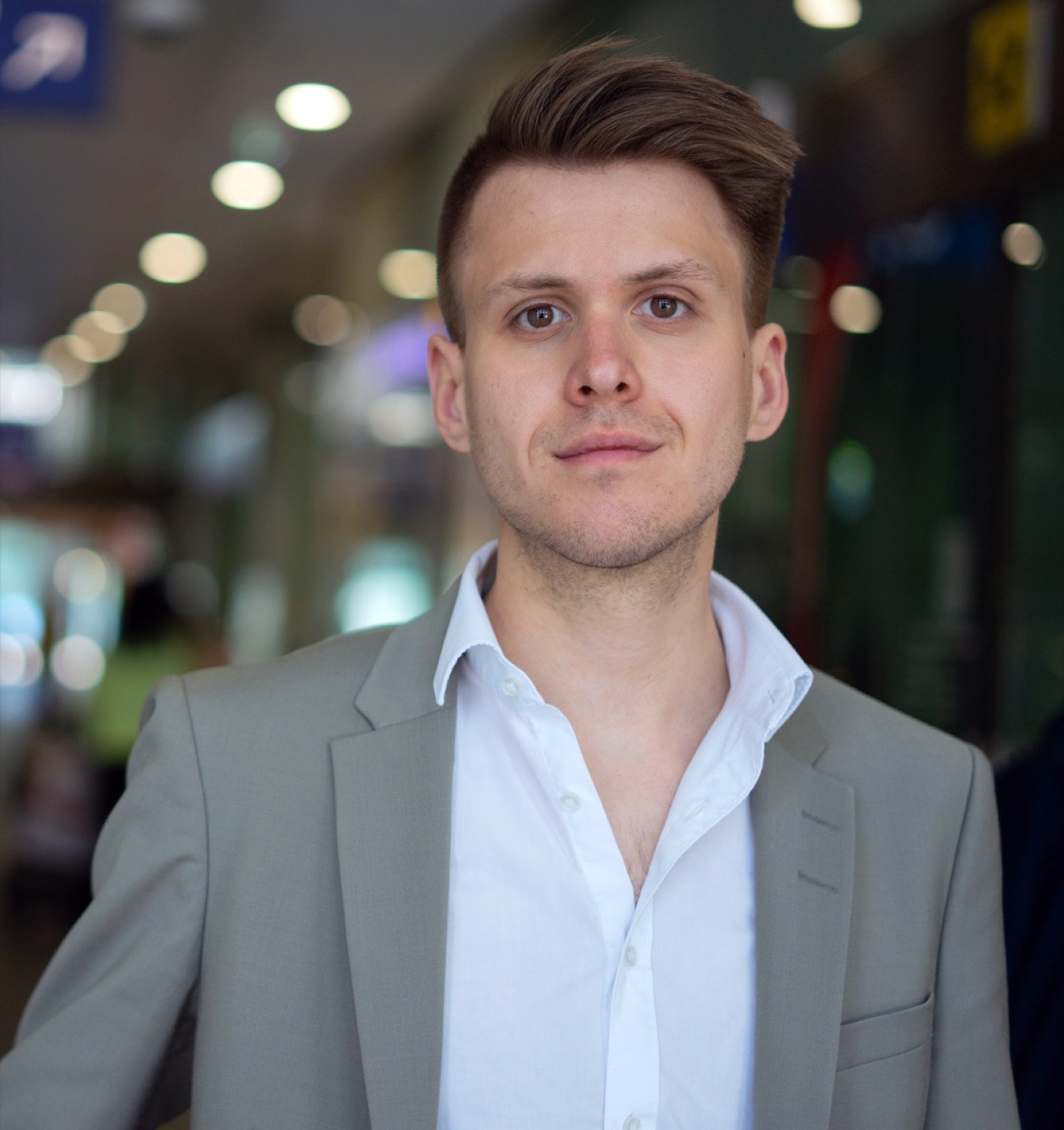
Max Lucks
At age 24, Max Lucks faced death threats from the Far Right on the road to the Bundestag and is one of the fresh faces of Germany's youngest-ever parliament.
Episode Summary
Max Lucks faced death threats from the Far Right, on his long road to the Bundestag. At 24, he is now one of the fresh faces—and consciences—of Germany’s youngest-ever parliament. He speaks candidly on what’s coming—and what he wants.
Listen & Subscribe
- Watch on YouTube
- Listen on Apple Podcasts
- Listen on Spotify
Transcript
INTRODUCTION
Kosinski: Welcome back to One Decision. I'm Michelle Kosinski. We've all decried the current state of politics in our country, and with few exceptions, it doesn't matter what country we're in. There are major political shifts, grueling decisions, even multiple coups around the planet right now. And of course, it's infinitely easier to complain about it than it is to try to do something or even more so to throw our own hat into the ring. So today we're talking to someone who did make that epic decision at the ripe old age of 24. Actually, Max Lux was only 21 when he ventured down that tricky path. And now in Germany, as we watch the sunset of the Merkel era, Max is one of the very fresh faces of the new guard. He is young, green, gay, and elected. But first, let's check in with someone else who's dealt with the trials of serving his country, Britain's former head of MI6, Sir Richard Dearlove. Hi, Richard. So Max Lux is now part of the young blood flowing through the youngest parliament Germany has ever seen.
Dearlove: I think I'm enthusiastic about having younger politicians. But if I think back to what I was like when I was 21 years old. So on the one hand, I think it's a positive. On the other, I have reservations.
Kosinski: Very diplomatic, Richard. I think the youngsters might say that after sixteen years of Angela Merkel, it's time, bro. And would you agree that she's been a great leader?
Dearlove: She's remarkable. I have huge admiration for her. I'm not sure I'd use the word great. The reason she isn't great is that she's avoided a lot of controversial decisions and she's very good at kicking subjects on, away from decision making.
Kosinski: I think that's so interesting, especially on One Decision podcast, that you say she's avoided making some tough decisions?
Dearlove: Well, she took one very decisive decision, which was on immigration into Germany, and I think that that really burnt her hands. But since then, the crucial issue has been the future of the European Union and how it should develop, and she's really knocked that argument on down the road without resolution. And the other issue that she's managed to evade is the German constitutional court taking decisions about the future of the European Union, which in a way drive horse and cart through the authority of the Commission when it comes to making fiscal policy. But she's been extraordinary in the way she's held the grand coalition together, and I think most of her energy has gone into holding the grand coalition together, which has meant not being controversial. I mean, we all know her nickname, which is mummy, Mutti. She's been the stable factor.
Kosinski: So now the Green Party in Germany is a legit part of the government for the first time. Will there be palpable change?
Dearlove: I doubt it. The moment that you put the Free Democrats into the mix and their support is crucial, you slap a brake on the policy that the Greens can implement. It will change the discussion about the future of Germany, but I think because the coalition is so complex, I wonder what they'll be able to push through. Okay, thanks Richard.
INTERVIEW WITH MAX LUX
Kosinski: So even though many expected early on that Angela Merkel's center right party would prevail and produce the next chancellor, after September's election, we now have a cluster of three liberal but very different parties that after weeks of negotiations have just managed to bang out a coalition with social democrat Olaf Scholz, the new chancellor elect. And the Green Party, the climate activists are among them, holding nearly a sixth of all seats, the third largest party. That is where we find Max Lux, who's just started his first job out of college as a lawmaker. Welcome, Max.
Lux: Thanks for the invitation.
Kosinski: All right. So first, tell us a little bit about yourself. Where did you grow up?
Lux: I grew up in Bochum. It's a city in Western Germany. And yeah, a couple of years ago, I was one of the two national spokespersons for the Young Greens of Germany. And this position comes with quite a lot of public and media exposure and a lot of responsibility. And so I asked myself a few years ago, oh, maybe I should run for parliament. And this is a bit surprising for some correspondents in the capital because they don't believe a young man so far away from Berlin gets elected to the parliament. This is crazy.
Kosinski: Bochum is a tidy medium sized city in North Rhine-Westphalia with a long history, but a modern look built on mining and steel. Max wasn't at first politically inclined, but at 14 years old, he joined the Young Greens when his local train station was going to be shut down and he wanted to join the push to keep public transportation running. Is anyone else in your family an activist or politically involved?
Lux: No one of my family is a member of a party. My family is a bit more like conservative social democrats and not as green or left or something like that.
Kosinski: So what did they think when you teamed up with the Green Party at the age of 14?
Lux: They were a little bit shocked about it. But then they thought it's a good thing and it's good for me. So they decided to support me in this.
Kosinski: Did they try to talk you out of it?
Lux: Oh, sometimes. They are sometimes like, oh, the Green Party makes everything more expensive for us. Why are you a member of it?
Kosinski: Max studied social science at his local university and hadn't even finished his degree yet when the thought of a political run struck. He felt that the views of young Germans were underrepresented. And as a young gay man, civil rights are deeply important to him. In fact, a turning point came when he was visiting Istanbul in 2016 and was arrested during a large pride demonstration that was banned. Propelling him to not just stand up for the rights of people and the planet, he realized it was necessary to fight for them.
Lux: My generation has shown in recent years that we are political, that we fear for our future because of the climate emergency and that we are willing to go onto the street to demand that politicians make radical change in the way our economy is running. But, you know, we also realize that that is not enough to demand change.
Kosinski: Was there any moment that was particularly revelatory to you about, oh, wow. Like, I'm in the big time now.
Lux: There were a lot of things that opened my eyes in this way. And when I walked around the streets in my hometown and young people came to me and were like, oh, can we take a photo? We didn't believe someone of us can do something like that. This was crazy.
Kosinski: The process of running, though, takes years. First, you have to gain the support of your local party, then win a regional vote, then you have to get voted onto the state's list of parliamentary contenders. For Max, a three year quest. At every step, he was the youngest. Is it tough to enter politics at your age because you don't really have a record? You know? You don't have big accomplishments publicly that you can share. Or but then again, you're too young to have really screwed things up either for the most part.
Lux: Yeah. I think so. I think four years ago, this wouldn't have been possible. But after 16 years of Angela Merkel, it was clear that something has to happen in politics. But it was quite a lot of work to convince some people about that who asked sometimes, did you ever work? And I worked my whole life. Worked from being 16. I worked my whole study time. I always worked to live from my own work. And now you say I didn't work. The party primary process was during the corona pandemic. Young people were really left behind in that. Many of my friends lost their jobs and didn't know how they get food. And the rent got higher and we lost almost everything. And now we are going to take something from this society. And this is to be heard.
Kosinski: What was the hardest part of the campaign trail?
Lux: I think it's believing in yourself because you get some offense in your face sometimes. You get a lot of hate from the far right and you have to stay and keep fighting. And this is very difficult because when you're running for office, you don't have money. So you have to do everything on your own. And then you open your mail and find around a 100 mails from the far right, like, oh, you're a faggot, go home. And so sometimes this is really hard and you really need good friends and a good partner and a good family who are like, okay, Max, come down. It's all fine. You can just drink a beer with us and everything will be good.
Kosinski: Oh my gosh. And how much did running for office cost? Did you have to use your own money?
Lux: It was like half money from donations and from the Green Party for my campaign. And it was like €40,000, I guess. This is the lot.
Kosinski: Well, that's so substantial. That's crazy. At what point did you start to realize, I could really win this?
Lux: I think that was the point when I was elected on the state's parliamentary list for the election. I thought, oh, wow.
Kosinski: And on election night, describe that feeling.
Lux: Yeah, my day was like, I was so tired. It was so hard. And then I went to the voting station, and then I went to the party of my party. And then the polls came in and it was very clear that I'm in with that result. It felt a bit like fun, but it also started directly to feel like a really, really huge challenge you are in.
Kosinski: Yes. Like, oh my gosh, now it's real. Now I have to do this.
Lux: Yes, really. And it is exciting, but it's also humbling at the same time.
Kosinski: Max is a tall, boyish faced blonde guy with a fabulous head of hair, always great in politics, right? That he wears swooped over to the side. You can often spot him with his backward baseball cap, a gray hoodie, and riding his purple bike to work, which is now at the Bundestag. His Twitter page shows him with friends at a pride rally. So not exactly your granddad's German politician. What is it like for a 24 year old just out of college to immediately start the job of lawmaking for Germany?
Lux: It is quite unreal. It's hard. We have a lot of hard work to do. For example, today, we talked about the new law for the corona pandemic in the parliament. And then we had also to debate about the crisis at the border of Poland and Belarus. And I sit there today and were like, oh fuck, there are very, very tough decisions to make now. But I think we made good decisions. You know, this night I sit here for five hours in my office to tweet texts about the laws to make a good decision today.
Kosinski: Your decision to run will lead to so many tough decisions, I'm sure.
Lux: And this is when it feels so crazy to do this, but it also feels good because the parliament hasn't only become younger. It has also become more female. It has also become more diverse. It has also become more gay and parties are realizing that the society wants to be represented. It's a bit like watching a piece of history and making it.
Kosinski: Is there skepticism among the public and among other members of parliament that all of these new young faces won't really know what they're doing, and they'll go for sort of the shiniest object without thinking things through?
Lux: Oh, yeah. There is a kind of polarization about us, a lot of negative opposition to us, but also a lot of support to us. This feels really good.
Kosinski: What do your friends think about you being a public official now?
Lux: Sometimes they call me and ask me, like, what did you do? Why did you do that? And sometimes I wake up in the night and call them and were like, why did I do that? But they are very happy with that, but they also are good in holding me accountable, I think.
Kosinski: Do you think that people your age feel like Germany is headed in the right direction or has been headed in the wrong direction?
Lux: I think at this election, young people thought that Germany is going in a very wrong direction. We had a grand coalition, and they always fought every day about their own coalition and they didn't do anything. We weren't really good in fighting the pandemic. We weren't really good in fighting climate change. We have actually the biggest social injustice in Germany since 1990. And this is why the strongest party of young people became the Green Party and the Free Democrats. I think a big problem. This was in Eastern Germany. We see the far right is strong there. Also the people are left behind and are maybe open for the far right. And this is something we have to fight, for example, by doing more for social justice.
Kosinski: What has surprised you most about your new job?
Lux: Oh, that's a good question. I was really surprised about how older colleagues feel to us as younger colleagues and how supportive they are and how they try to make us become a full part of this parliament. And I'm also surprised about what kind of state institution the parliament is. You know, if you want to get a key for your office, forget it. I think I will have to wait four years for a key because it's such a difficult way to get something like this.
Kosinski: And the worst part of your new gig?
Lux: Being away from home. I'm doing politics from 6 a.m. to 11 p.m. or sometimes longer. So you don't have free time and you only have political friends. So it's very, very good to come home sometimes.
Kosinski: What is this like for your family that you now represent them?
Lux: They are shocked. They are still shocked, and I think that they will need years for that.
Kosinski: Do they treat you differently now? No. So do you feel like you went from age 24 to 34 overnight or do you still feel like a 24 year old?
Lux: Oh, it depends on the day, I think. Sometimes I'm just lost like being 14. Sometimes I'm confident with 24 and sometimes I manage to be like 44. I think it's important to stay the same and to really represent who you are. But yeah, sometimes I feel a bit older.
Kosinski: Max has been adjusting to all that comes with political life, like feeling he always needs to be on his best behavior, that somebody could call him out if he lets his guard down or makes a mistake. But he has found an apartment he likes and can bike to work, along with another new young parliamentarian who skateboards to the Bundestag. Though Max has found a downside to youthfulness.
Lux: Every day I get asked at the entrance of the parliament, are you a trainee? This is not the entrance for trainees. It's an entrance for members of the parliament. At first it was very funny to me, but now I'm like, okay, you see me every day going in and you ask me, I'm in so many newspapers, I'm on the television and you ask me if I'm a trainee. Where do you live? You know? But it's okay. It's okay.
Kosinski: The job will by no means be easy. In the past, the Green Party was far less flexible even in who they would work with. Now they have to find consensus. Okay. How are those talks going? What are the sticking points? What are the biggest issues?
Lux: There are no sticking points. There are only bridges we can build. No. I think, you know, if you look into the party lines and ideologies, you find a lot of differences, especially between Social Democrats and the Green Party on the one side and the Free Democrats on the other side. For example, by making our social system ready for the future and by getting more people into the state's health insurance, for example. There's a big difference if you just look into the party line of the last few years it's very difficult. But I think that there's really a kind of force to all three parties to build this government, to find compromises and to define a new way of making politics. And this way of making politics shouldn't mean to talk bad about each other. It should mean to talk good about each other, to trust each other and show the trust of the government from all the party lines. And I really think we can make something new with it and we can fight a lot of things that have to be done, for example, the pandemic. But a lot more we have to do, we have to fight climate change. So important that we find a compromise to control arms export of Germany. Until this year, the arms exports of Germany were uncontrolled by the parliament. They were controlled by the government. And I think it sounds a bit like middle age or something like that to me. And now we are taking this control to the parliament. I think this is where these parties find common sense over lines that we want to renew democracy, that we want to make the parliament stronger, that we want to believe in people.
Kosinski: This is so refreshing to hear. And how will Germany definitely be different now? I see that the minimum wage rises and the voting age lowers from 18 to 16. More housing will be built. Immigrants can apply for citizenship after five years. Carbon neutrality ideally by 2030.
Lux: This is a very young and ambitious agenda. We will do more to tackle the climate crisis. We will invest more in local communities and local jobs. And we will fight for human rights in the world. We are going to stop delivering arms exports to every kind of state in the world.
Kosinski: We just saw COP26, the UN climate conference wrap up with as many disappointments as points of pride. So what will Germany do when other large countries don't step up?
Lux: Showing that it's possible to build a good society by fighting climate change.
Kosinski: So what about those who say, okay, well, these young idealistic lefties coming in, they have big dreams, but it's gonna be really, really expensive. You know, maybe something your parents would say. So how will Germany be able to afford this agenda?
Lux: I think the most expensive thing is to do nothing. And yes, that will cost money, but I think it's better to invest now than investing a lot more money in future. And we have good finances in Germany, in our state's finances. So I think there's a possibility to do this.
Kosinski: Are there certain things that the Greens won't compromise on? I know that the party wanted, like, a 70% reduction in greenhouse gases by 2030. Are you willing to move on that?
Lux: Yeah. We will try to become, for example, independent of the gas. Germany is mainly importing gas from Russia. And I think the discussion may be on Nord Stream two, excuse me. We can import gas much cheaper from Norway or from the Netherlands. Germany has to become independent from Russian gas, and this is what we try to do.
Kosinski: Germany has a lot looming. Another wave of COVID, canceling nuclear energy just as it needs more energy than ever. Prices surging and Europe worried about possible winter power shortages. The hugely controversial Nord Stream two pipeline is in place against the wishes of the US, Ukraine and others and could soon start bringing in Russian natural gas for distribution, leaving many fearing that Vladimir Putin will have his thumb on that spigot like a weapon.
Lux: The only beneficiaries of the deal are Putin and the Slovak regime. And I think we can't support this regime. And we can't support this regime by looking to Belarus and Poland today. We have to fight this regime of Russia.
Kosinski: Do you think there's a chance that Germany won't, now that you have a new parliament and you'll have a new chancellor, is there a chance that it's not opened?
Lux: Yes. There is a chance.
Kosinski: What do you think the odds are?
Lux: I don't know. I really don't know. If I would know, I weren't allowed to tell. If I could decide it by myself, I wouldn't allow Nord Stream two.
Kosinski: And what do you think will end up happening with that?
Lux: Hopefully, nothing.
Kosinski: Only days after Max told us this, that he feels there is a chance Nord Stream doesn't open anytime soon, which sounds incredible, especially given Europe's need for energy now. The country announced that it is suspending approval of the pipeline, making its operators first form a German subsidiary company, then reapply for certification, which could take several months, then the EU has to review it. Interesting. Max also says that there's nothing his Green Party is not open to compromise on, and that being hardened in the past was a failure. Is there anything that you feel like your party could do better, or are you guys angels sent from heaven?
Lux: We are gonna save the entire world. No, I think a party is interesting when you're not always sharing the same opinion. We have people like me who are more left. We have other people who are more conservative, but we all share the same beliefs that we have to take the climate crisis.
Kosinski: But is there a worry that if you try to do too much too soon, like in the shift to renewable energy, that it could backfire or that it could put Germany at a competitive disadvantage?
Lux: For example, looking at the solar energy or the wind energy, Germany was leading in this for many, many years. But under restrictive laws in the last years, the solar and the wind energy in Germany were kind of destroyed. And now we have to build it back.
Kosinski: He says expect efforts to cut red tape for renewables. How quickly can Germany get rid of coal?
Lux: So 2030 latest, I think.
Kosinski: Now one thing that the left often wants to do is remove some spending from the defense budget and put that in other things like domestic programs. But at the same time, you see, like, tensions in the world rising. How do you reconcile those?
Lux: I think we have to have the army that can work on the one side, but we also have to, for end policy, put enough money in humanitarian aids, for example.
Kosinski: Angela Merkel really believed in talking to rivals. Even with strong tensions between the US and Russia, for example, she was the one to say, we need to deal with them. We need to talk. Do you think that was the right thing? Or do you think she gave Russia too much space?
Lux: I think it's good to talk to everyone, but we have to be clear. And I think we can be a bit more clear than Merkel was.
Kosinski: What do you think will be the biggest change in Germany's foreign policy?
Lux: More de-escalating, and we'll be more independent, and we'll watch out more for human rights.
Kosinski: How have the discussions been so far among the party members on all three sides? Has it been contentious? How would you describe how those discussions have been behind closed doors?
Lux: Constructive and sometimes hard, but also good. And, you know, it was really like finding what is the way we can go and not what is the thing you want and you want and you want. It wasn't like showing a cake. It was more like making a cake. And this feels really good.
Kosinski: So how long do you think it will take for you to become very jaded and have a bad attitude? One year, two years? Just kidding.
Lux: Four years, I think.
Kosinski: Alright, Max. Great talking to you. Good luck forming a German government and stuff. Thank you very much.
ANALYSIS WITH SIR RICHARD DEARLOVE
Kosinski: Let's bring back our favorite ex-spymaster, Sir Richard Dearlove. A wind of change blowing in Germany.
Dearlove: It was amazing reading your interview. Congratulations. It was a great interview.
Kosinski: Oh, I'm glad you liked it.
Dearlove: And so it's very interesting because this young man is, well I love idealists, I mean he's so idealistic, you have to admire him. And he worked incredibly hard, you know, to get through the political system, which is quite complex, to run, you know, to get elected to the Bundestag. Deal and bully for him, but I'd be very interested to see how his political development is influenced over the next ten years. And of course what Merkel did was massively complicate Germany's energy policy by her banning of nuclear power. And this question, which of course goes very closely into the climate change issue, is tied up with the whole future of the German economy. And I mean my question to this young man is, are you a fundamentalist? Well he's obviously a fundamentalist, so it's like having a religious belief. He believes in the green political program. But were he in ten years time to be a minister in Germany, what then would be his attitude to solving the whole problem of the German energy system? Because the practical answers are not at all compatible with his beliefs, and they are beliefs rather than political views.
Kosinski: But do you think it's time for Germany to have this infusion of we can try that, we can change that?
Dearlove: Well, it will certainly change the nature of the debate, and let's face it, there's an aspect of German politics and business which is quite, I would say, coagulated. So I think it's probably very good for the German political system to have this injection of very radical youthful voices, and to that I don't object at all. I think it's exciting. And of course the practicalities of power, practicalities of day to day politics will mediate their views over time. I think where they will have a bigger impact is at the local level. I mean they might be able to achieve some really decent improvements in the life of their voters. What else is policy about?
Kosinski: True.
Dearlove: And what's interesting is the finance minister will be a Free Democrat, which is a very powerful position. You will get a rather traditionalist monetary and fiscal policy which will of course keep a lot of the business sector which is powerful, reasonably happy. They're all going to have to make concessions in order to make this coalition work at all. I find it absolutely fascinating because in the UK we had one coalition government recently which was an absolute disaster in my opinion, we don't have coalition governments in the UK, so watching this being implemented, you're an observer or an interested observer of European politics, which I am very much, it's gripping.
Kosinski: Yeah. These coalition governments, though, I when you try to cobble it together, it's just sort of saying like, okay. Well, our society is totally split, and now our government is too. Good luck, everybody.
Dearlove: Yeah. I know what you mean, but I think that what it means is that, you know, political change is more geared to social change, which happens gradually over time. The big changes in Germany happen so slowly.
Kosinski: Good point. You know, I was really intrigued when Max Lux said there's a chance that the Nord Stream two pipeline never opens. Well, that really, really surprised me.
Dearlove: Me too. I didn't think he'd go there either. Where is the energy going to come from if they're going to zero carbon? It's certainly not going to come from renewables because renewables generate such a small proportion of the energy needs of this massive industrial economy that the Germans have got. Yeah, I thought that was very interesting. That reply encapsulated for me his naivety about the real problems that the German economy face over the next ten to fifteen years, which I'm sure he'll learn about and understand and realize that there are a limited number of answers. I mean, good for him that he was saying no to Nord Stream because I'm not crazy about Nord Stream either, but that's for geopolitical reasons and how we deal with Russia.
Kosinski: Is there a chance in hell that it never opens?
Dearlove: Unlikely. But having said unlikely, what's happening on the Polish, Belarussian border at the moment must be worrying an awful lot of people in Germany.
Kosinski: For sure.
Dearlove: I think the Russians probably on this one need to back off because the consequences for them could be that Nord Stream they need to be really careful.
Kosinski: Yeah. I think Lukashenko has already overplayed his hand, threatening outright to cut off gas to Europe. And then Russia comes in and is like, oh, oh, no. No. No. No. No. No. It'll be fine. We'll supply.
Dearlove: I think the Russians have got themselves into a situation supporting Lukashenko.
Kosinski: So why do you think the US backed off of its opposition of Nord Stream so much?
Dearlove: And I really don't quite get that. I don't understand what the deal was with Merkel, why I'm disappointed that the US lifted their opposition to it, and there's no question that Putin has used or is using Russian gas supplies as a political weapon. He says he's not, but of course he is, and you only have to look at Russian policy. The price of gas is unquestionably going to remain at a very very high level. So really we're almost deliberately arming the Russians to exercise significantly greater strategic influence on the European continent and beyond. Agreed. I mean, Germany's attitude to Russia is subtly different, and always has been from the rest of Europe, because of its economic involvement in the former Soviet empire and, of course, its own economic relationship with Russia. But I think that the wider interests are such that we should never have got ourselves into this situation.
Kosinski: What do you foresee changing in Germany's foreign policy? Anything?
Dearlove: Well, if anything, it will become more benign. But you know what I would like to see in Germany is a bigger commitment to NATO. I would like to see German armed forces with a realistic operational capability, which they haven't got at the moment. I would like to see a more politically engaged Germany rather than an economically engaged Germany. I think the emphasis will be in the direction of what the Greens think is a good foreign policy, will be emphasis on humanitarian issues, human rights issues, ban on the export of military equipment, less NATO expenditure, I mean all sorts of areas. Germany's role is so crucial to the security of Europe, and at the very time when the Russians are misbehaving and the Chinese are taking a much more strategic interest in the European continent, we need a much more savvy, critical, engaged government in Germany than a traffic light coalition will probably look like, and I think that's a big loss to Europe as a whole. But, you know, maybe they'll surprise us and be more realistic.
Kosinski: And when you hear a young, idealistic, new member of parliament, freshly elected, talk about Germany paying more attention to human rights and changing the way energy is delivered to people and caring about the climate. Do you buy it?
Dearlove: I don't at all. Well, it's understandable. I probably would have said similar things when I was 23, one that goes into the world with a great sense of idealism. I don't want to knock young people because my experience in Cambridge, you know being the head of a college which is producing probably a lot of future leaders in all sorts of areas, and they were admirable, wonderful young people.
Kosinski: Yeah. The fact that someone in their early twenties would even run for office right now when politics everywhere is so toxic, it makes me very happy that they're willing to do it.
Dearlove: And it's great because you need good and well intentioned people. Yeah. Even if slightly naive in our political lives.
Kosinski: And politics seems to be increasingly a dirty, thankless place where it turns people away from serving humanity, really.
Dearlove: And you get the wrong type of people in politics, and we've all seen the consequences of that.
Kosinski: Right. Absolutely. Not mentioning any names. Well, I caught that you foresee a very tough filled future for English politics when you mentioned all those Cambridge kids. Well, they're really happy. Yeah. For sure. To be honest with you, I think I would rather see, I don't know, at this point in time, the youngest parliament ever coming into Germany than the oldest ever parliament. But I'm not sure because it's kind of like at the same time, this could be when the world needs experience. So I don't know. There's a place for everyone, I guess.
Dearlove: There's a place for everyone, a combination of wisdom and youth.
Kosinski: Yeah. Yeah. Maybe that'll be the key. Old toffs and young toffs.
Dearlove: And that's it.
Kosinski: Just kidding. Great chatting with you, young man. And thank you for joining us here at One Decision. Follow us wherever you find your podcasts and on social media. I'm Michelle Kosinski, and we'd love to hear your ideas too at One Decision.