Hosted by Christina Ruffini and Sir Richard Dearlove
Guest
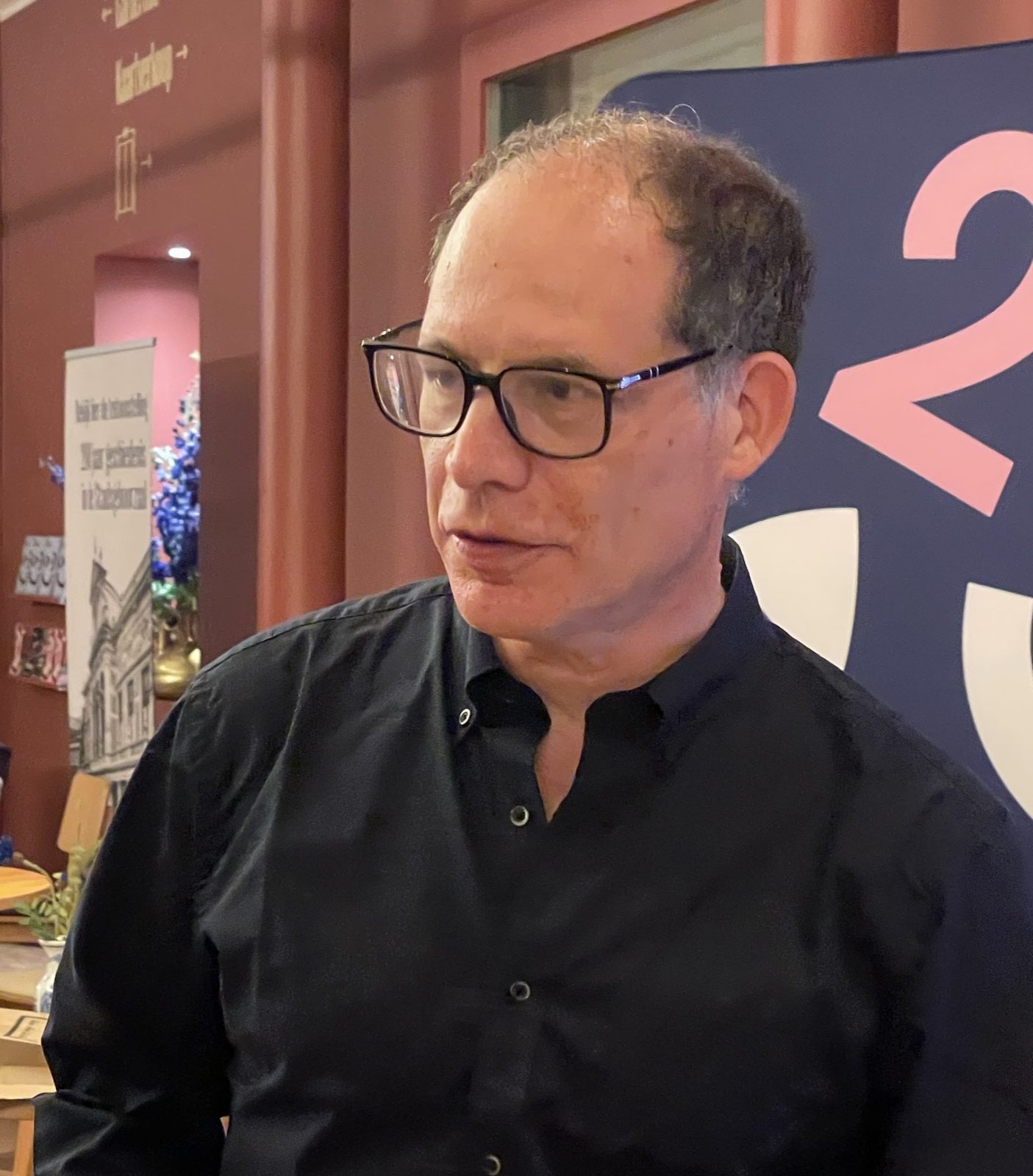
Simon Kuper
Simon Kuper is a Financial Times journalist who has covered every World Cup since 1990.
Episode Summary
Football can be geopolitics by other means. Financial Times Journalist Simon Kuper has covered every World Cup since 1990. This week, he joins Sir Richard Dearlove and guest co-host Baroness Ayesha Hazarika to unpack how football and geopolitics collide.
Kuper explains why he thinks FIFA president Gianni Infantino runs the organization like an autocrat, how U.S. President Donald Trump's red card intervention echoes historical precedents set by Mussolini and Brazil's military government, and why hosting a World Cup brings prestige but rarely economic benefit. The conversation also covers the KGB's use of Soviet football clubs for cover during the Cold War, football's role in the anti-apartheid struggle in South Africa, why China's investment in football hasn't paid off, and how France's multicultural national team has become a flashpoint in its domestic politics.
Plus, in Brief: Russian strikes on Ukraine ahead of the NATO summit, German prosecutors' Nord Stream allegations against Ukraine, deepening Russia-China military cooperation, and reports of Trump pushing for a "master list" of intelligence assets.
In this episode:
(00:00) World Cup Geopolitics Football & Global Power
(00:45) England's Surprising World Cup Victory
(03:05) Football As Geopolitics Explained
(03:24) Russia-Ukraine War Intelligence Analysis
(11:12) Trump CIA Spy List Dangers Exposed
(14:25) Andy Burnham Northern Devolution Power Shift
(19:10) Simon Kuper On The Geopolitics Of Football
(23:07) FIFA Corruption Infantino's Autocratic Control
(28:00) Jules Rimet World Cup Origins Peace Vision
(30:23) 1954 World Cup Rebuilt German National Identity
(38:42) KGB Soviet Football Cold War Espionage
(47:53) Argentina 1978 World Cup Junta Propaganda
(49:52) Qatar 2022 World Cup Human Rights Backlash
(1:02:49) Reflecting On Football Power, Politics, & Identity
Show Notes:
Soccernomics: Why European Men and American Women Usually Win―and American Men Don’t (Yet) | https://a.co/d/07dBzyak
World Cup Fever: A Soccer Journey in Nine Tournaments | https://a.co/d/0g5raBr3
Football Against The Enemy: https://a.co/d/04OUzQgR
Hosted by Sir Richard Dearlove (former MI6 Chief) and guest co-host Baroness Ayesha Hazarika (House of Lords)
Listen & Subscribe
- Watch on YouTube
- Listen on Apple Podcasts
- Listen on Spotify
Transcript
COLD OPEN
Kuper: Gianni Infantino has managed to gain full control of FIFA, and he runs it a bit like Putin runs Russia.
Dearlove: It was an aspect of the Cold War which was both serious and highly amusing at times. The Soviets also used these teams to use them as cover, so they could bring the officers with the team who could nip off during the visits and do other things.
Hazarika: How important is football and performances at the World Cup to a country's geopolitical standing and their identity?
Kuper: It's very weird to have this international hierarchy in football where Argentina is at the top and China doesn't exist.
Dearlove: Just quick speculation — England versus Norway?
INTRODUCTION
Hazarika: Hello and welcome to One Decision. I'm your guest co-host Ayesha Hazarika and I'm joined by my co-host and former head of MI6 Sir Richard Dearlove. Richard, hello, how are you?
Dearlove: Hi Ayesha. I'm very well indeed and full of considerations about football forced on me by my grandchildren.
Hazarika: We're all slightly bleary-eyed because we were up watching the football, where England somehow managed to beat Mexico. What do you make of that?
Dearlove: Well, it was a surprising result given that Mexico hasn't lost in that stadium for I don't know how many years. And usually the atmosphere is so partisan that I think it's very difficult for any team to play against Mexico in those circumstances.
Hazarika: I think it's one of those sort of vintage games really. It felt like the odds were very much stacked against England. And given that England has — even though they've got this far — they haven't really put in a particularly lustrous performance. But fair play to them, they absolutely knocked it out of the park last night.
Dearlove: Yeah, they did. I always have a sense of fragility when I'm watching them — that they're not going to make it.
Hazarika: Well look, at least your an England fan. Imagine what it's like for me being Scottish, Richard. We were so excited about making it to the World Cup and then sadly it was not to be. But we had a good time. The Tartan Army had a good time.
Dearlove: I've just been in Boston, so I have recorded personally the reaction of Boston to the Scottish fans, which was incredibly friendly and positive. They all thought that they were completely wonderful. And although they drank Boston dry — which is quite an achievement given its Irish reputation, Boston. I think they also acquitted themselves very well. There were no incidents of hooliganism or bad behavior. And I heard so many compliments from Americans saying what a terrific group they were. They did a lot for Scottish diplomacy.
Hazarika: They did. Well we all have World Cup fever here. Our interview today explores how football is geopolitics by another means. Subscribe to our YouTube channel or wherever you listen so you don't miss out on any of our interviews. But first it's time for In Brief, where we make sense of some of the biggest geopolitical news. Sir Richard, let's begin with Ukraine, because we've learned that Russian strikes have killed at least twelve people and injured another sixty-four in Kyiv. And this is Russia's second major attack in recent days. What are your thoughts on this?
IN BRIEF: RUSSIA'S MISSILE ATTACKS ON KYIV
Dearlove: Yeah, it's clearly quite a serious escalation. What Zelensky said this morning was that in fact the missiles fired at targets in Kyiv all got through Ukrainian defenses. They were missiles rather than drones. And the explanation that Zelensky gave was that they haven't got enough missiles to shoot down the incoming missiles, because obviously it's different from shooting down a drone. So Zelensky I think is preparing himself politically for the NATO summit, when he's obviously going to make a big pitch to NATO partners of Ukraine to up their supplies of missile defenses — anti-missile missiles. But I think the other aspect of this clearly is that there's an element of desperation in Putin's approach to the war now. There is clear evidence of criticism inside Russia of the war effort, and it's not going well for either side. It's going particularly badly for the Russians in Crimea because of the drone offensive that the Ukrainians have mounted there. And of course there's also this continuing assault by the Ukrainians on the infrastructure of fuel and energy supplies in Russia — and the rather remarkable attacks they've carried out recently as far away as the naval base adjacent to St. Petersburg and then also in the suburbs of Moscow. So yeah, things are not looking good for either side. I think in the next six or eight weeks there are clearly going to be developments.
IN BRIEF: GERMANY ALLEGES UKRAINE BOMBED NORD STREAM
Hazarika: Talk to us about your thoughts about German prosecutors alleging that it was Ukraine who ordered the bombing of the Nord Stream pipeline. And what does it mean for Germany to be supporting Ukraine on the battlefield while making this allegation against Ukraine?
Dearlove: Yeah, I think this is an awkward one. What I would say is there is the war and there is the law. And in German minds I'm sure they're able to keep the two separate. Obviously the Ukrainians took a significant risk in attacking the pipeline and ultimately they broke German law in doing so. And if the Germans caught them at it, they really don't have much option but to prosecute a legal case against the group or the individuals that committed the attack. I don't think it would work in the German system for them to be given a sort of political let-off, because it was such a high-profile event. And similarly, if the Russians were to attack a target in Germany — which they have done — and get caught, they too would get prosecuted. So I think in a way it may seem anomalous. But if you look at the issue of process within the German constitution and the execution of the law, I think the two can be, as it were, pursued in unison. It's not as though they carried out the attack on the Nord Stream pipeline with German approval, which might have made it legal — but it would have been hard to imagine the Germans agreeing to it. So it is anomalous, but it's understandable, I think, in terms of the way Germany would approach these problems.
Hazarika: Do you think there'll be at some point, particularly at the NATO summit, an awkward conversation between Merz and Zelensky?
Dearlove: My guess is they've had that already. Merz probably said to Zelensky: look, we can't stop the legal process, Germany doesn't work like that. And I think the German government will be particularly sensitive to that given Germany's postwar history — we all understand the circumstances. So I bet you Merz has already squared it off with Zelensky, and Zelensky said: fine, you do what you have to do. I don't think it detracts from the strategic relationship between Germany and Ukraine.
IN BRIEF: RUSSIA-CHINA MILITARY COLLABORATION
Hazarika: And there was an interesting story about revealed documents which really shone a light on the extent of collaboration between the Russian and the Chinese military. It looks like there is a lot of collaboration going on, particularly around military training. How worried are you about that?
Dearlove: Yeah, I think this is very concerning because clearly Russia's prosecution of the war in Ukraine to an extent depends on Chinese support. But I'm not sure who's giving the training to whom, because at the moment one of the side effects of the war in Ukraine is that we're training the Russian military in how to conduct modern warfare. It's become a laboratory of conflict in the twenty-first century with all these new elements — drones in particular. So is it the Russians giving the benefit of their experience to the Chinese, who have spent a massive amount on rearmament but have armed forces — an army in particular — which completely lacks battle experience and could by no means be described as battle-hardened? I'm sure that the relationship in both directions is probably quite important. And I think it shows that the relationship is more than one of convenience. I wouldn't call it a strategic alliance, because clearly China is something of a restraining hand on Russia in some respects — like the threat of the use of a tactical nuclear weapon. It would be interesting to see how far Xi is prepared to take this support, particularly if he comes under more pressure from the Americans to not be so open-handed strategically with Russia. And I think everybody more or less takes the view that without that Chinese support, Putin would be in a much more difficult position in Ukraine than he is. IN BRIEF: TRUMP'S DEMAND FOR A CIA ASSET LIST
Hazarika: Speaking of the Americans — something which I’m sure you’ve got really important thoughts on. There are reports that Donald Trump is pushing for a master list of spies, a master list of foreign intelligence assets. What do you think Trump's motives are here? And what do you think the potential consequences or unintended consequences could be?
Dearlove: Well, if you have my background and were a career intelligence officer, you will instinctively understand how it is absolutely in nobody's interest for an espionage agency like CIA to give a list of the identity of its assets to the head of state. What on earth would be the purpose in doing so? Actually reading the small print, I'm not sure that is what's being demanded. Tulsi Gabbard's successor is clearly very ignorant of the world of intelligence, and that seems to be what he's talking about. But then on the other hand, if you read carefully the commentary — some of which I've read — it's talking about the listing of threats and potential assets. So I think what it may boil down to is you list the threats which dictate your intelligence requirements, and then you point to — let's say the Chinese or the Russian assets that you're spying on — which could answer the intelligence requirements. But if I were still head of MI6, and the Prime Minister came along and said to me: tell me who your top spies are — I would have said: Prime Minister, it's not in your or the national interest to know their identity. And it's better that you don't, because this knowledge is confined to very, very small groups of people. The idea that these assets are known to CIA – they’re known to tiny little compartments, and restrictive security, Chinese walls — that's how you protect and preserve these assets. Did Stalin know that Philby was working for MI6? Let's turn it around to the Cold War. I very much doubt it. He may have understood that there was a penetration of MI6 at that time. I very much doubt even Stalin would have known the details. And it shows a severe misunderstanding of what the American interest in their own intelligence community is, for this to be a basic issue of knowing identities. I could write an essay on this. IN BRIEF: UK POLITICAL TRANSITION — BURNHAM AND DEVOLUTION
Hazarika: Well, it is extraordinary as you say it. Well, let's move now to the UK. We are in this sort of hiatus period where Keir Starmer has resigned as the Prime Minister. We are waiting for our new Prime Minister to arrive. It's pretty much ninety-nine percent going to be Andy Burnham. He made a big speech where he set out a sort of grand central idea for his government, which was devolution. He of course is the former mayor of Manchester and he's got this idea of wanting to move power and decision-making away from London. He wants to have a Number Ten in the north in Manchester. What do you think about this, Richard? And also, do you think it would be possible to, for example, locate MI6 to the north? We have GCHQ in Cheltenham. Do you think that could work as an idea?
Dearlove: Well, this idea of king of the north and developing Manchester as a center — it isn't actually new, it's just been repackaged. George Osborne was saying pretty much the same thing. Boris Johnson was saying it too. And it's about developing the northern economy and trying to balance the value of the local economy between North and South East. And I think that's understandable. How Burnham is expressing it is very much based on his own experience in Manchester. And what I understand from what he said is he will have a department in Manchester controlled directly by Number Ten, which will focus primarily on the issue of economic growth nationally — not just in Manchester and the North. And I think in a way that's practical, it's sensible, and it follows a policy of devolution of government departments which has been ongoing for fifteen or twenty years. So you've got quite a lot of government departments located outside of London. GCHQ, unusually for the intelligence community, has its home in Cheltenham. But it does actually have a very big office in London as well, which isn't advertised, because it needs to be close to ministers, it needs to be close to the Ministry of Defense, it needs to be close to its principal customers. So I can see, for example, SIS — if the Prime Minister's going to be spending a lot of time in Manchester — having what the French call an antenne located somewhere in Manchester. That would make a lot of sense. You need to be near your key interlocutors and you need to be near or connected to the levers of power. So all of that I find not as surprising as the media like to advertise it after Andy Burnham’s speech. So I'm a little skeptical. If you ask me personally as a voter, I was disappointed at Andy Burnham's speech because he didn't mention defense, he didn't mention Europe, he didn't mention immigration, and he didn't mention welfare. So it was a political, ideological speech, but it lacked the day-to-day content which most voters are concerned about. And I can see why he was careful in what he said, because he's not yet elected Prime Minister, so maybe we'll hear more about those specific topics. But I wish he'd been a little more grounded and a little less ethereal in his approach.
Hazarika: I suppose that they’ll be putting – I think that he and his team are working very hard at the moment to try and get that flesh on the bone, because they will have to answer these very difficult questions very, very soon. He's expected — if nobody challenges him — to become Prime Minister around the 17th to the 20th of July. So we'll likely hear more of that detail, and that's certainly what the public and we in the media will be pushing for as well. And now it's time for our big interview. The World Cup is a unifying global celebration. You hear stories of Scots drinking Boston dry and tourists in Texas raving about ranch salad dressings. But the World Cup is never fully divorced from the broader geopolitical context. Football can be politics by another means, serving to highlight or channel underlying political tensions and rivalries. Financial Times journalist Simon Kuper has reported on every World Cup since 1990, including this one. He's the author of several bestselling books, including Football Against the Enemy, Soccernomics with Stefan Szymanski, and World Cup Fever. He writes frequently about the connections between football, politics, and geopolitics, and we're very pleased to have him here with us today. Simon, welcome to the show.
GUEST INTRODUCTION: ENGLAND'S CHANCES
Kuper: Delighted to be here. Hi.
Hazarika: So where are you joining us from? Tell us where you are and what's been going on.
Kuper: I'm in Mexico City, my first ever time here. I was obviously here to cover the Mexico-England game, which was on the Sunday night. I'm speaking to you the morning after with not much sleep. And I did manage to have a few glimpses of the city, but mostly I've been watching World Cup football here.
Hazarika: We just gotta have a quick chat about the game. Did you think England were going to do that well? I mean, people are just going crazy here in the United Kingdom. Do you think England could do it, Simon? Do you think England could win the World Cup?
Kuper: I hate to be a negative cynic, but a lot of people have described me as that. I don't think England were particularly good. They have this one incredible strength — Jude Bellingham and Harry Kane both have this fantastic sense for goals, are world-class players. Scoring goals is the basis of football. What England can't do is create many chances through passing. They don't defend very well, and they do this terrible thing when they're defending a lead — it was extreme last night because they were down to ten men — but they stop keeping the ball and they just hoof it long, which means giving it to the opponents every time. They got away with it yesterday, partly because Mexico is not a great team, but it does not bode well. If you do that against Norway, it will not end happily, I think.
Dearlove: It seems to me that they have some great individual players, but they're not really cohesive as a team and they seem to be incredibly vulnerable to catastrophe which falls on them quickly and unexpectedly.
Kuper: Yes. The secret to keeping things quiet in football is keeping the ball. So Spain don't really defend — it's just that when you're trying to score against them, they have the ball all the time, they pass it to each other. There's only one ball on the field. If you have the ball, the other team can't score. Now having the ball is something England are not very good at.
THE SOCIAL CLASS PROBLEM IN ENGLISH FOOTBALL
Hazarika: Simon, you've developed a theory that one factor holding England back is that English footballers are drawn disproportionately from quite a shrinking social class. I thought this was really interesting. Tell us a bit more about your theory.
Kuper: For Soccernomics, we looked at the professions of the fathers of England players, which is a fairly classic kind of sociological way of gauging people's class. So both in the nineties and around 2020, they're drawn very much from the working class. The fathers were things like security guards or construction workers — those are the two main professions — or not having a clear job. And that's fine. Obviously it's great that those people from the working class are being recruited, given a chance to play top-level football. But what about the other classes? Because the working class sort of jobs that are largely unskilled — that's a shrinking part of the English population. And it seems that the other seventy or eighty percent of the population find it very difficult to find routes into professional football. So you're throwing away an enormous part of your talent base.
VILLAINS, CINDERELLAS, AND BEAUTIFUL LOSERS
Hazarika: Well let's move into the geopolitical elements. Simon, you've often talked about there being a champion, a Cinderella, a clown, a loser, a villain who emerges from the tournament. Any favorites for any of these categories?
Kuper: The villain of the tournament is always chosen, and this time it was largely clear in advance that — barring surprises — Gianni Infantino, the FIFA president, or Donald Trump would be the villain of the tournament. But Trump sort of ignored the World Cup for the first three or four weeks. So they're very much the villains of the World Cup. The Cinderella of the World Cup is a very important title, because most countries are not good enough or too small to really be aspiring to be world champions. So the smaller countries are playing to be the Cinderella, and this time it was very much Cape Verde. They didn't just draw every match they played against much bigger, stronger countries — they also played beautiful football. They attacked, and they held both Spain and Argentina to draws until Argentina beat them only in extra time with Messi. So those titles are extremely important. Then there's the title of beautiful loser — the risk is that France will win that. France are the most beautiful team here. Very often the most beautiful team doesn't win.
Hazarika: What about Scotland?
Kuper: I think there's a fan prize. I didn't mention it in the book — should have occurred to me. But Scotland win the fan prize for best fans, although Norway are very hot competition. I think Norway definitely gets silver there.
TRUMP, FIFA, AND THE BALOGUN RED CARD
Hazarika: You mentioned it there. Let's just talk about this sort of extraordinary interaction between Donald Trump personally appealing — Simon, what do you make of this? I mean, this is pretty unprecedented.
Kuper: There are a couple of small precedents. So the Brazilian government in 1962 was very similar. Their star forward Garrincha had a red card, was sent off in the semifinal, so he couldn't play the final. They didn't have red cards at that time — they just said you're off. And so the Brazilian government appears to have intervened to boost its political popularity, and the suspension was reversed. Garrincha played the final, was brilliant, Brazil won. Mussolini in the 1934 World Cup was a guy who frequently intervened in football — he was sort of the president of FIFA in effect during that World Cup and would also put pressure on the Italian team to select certain players and not others. So not totally unprecedented, but extremely bizarre. This will live on in the annals of World Cup history that a US president does this. And of course it corrupts the game on the field. People assume it's corrupt off the field, that money is disappearing into pockets. People like to think — often wrongly — that what we see on the field is fair. Of course it's not fair if a US president can call his buddy and get a player put in who shouldn't be allowed to play.
WHAT'S WRONG WITH FIFA? INFANTINO AS AUTOCRAT
Dearlove: Simon, what's wrong with FIFA? I mean that's a very wide question. But you've got the sort of Blatter-Platini background, which had a strong whiff about it of being, let's say, disreputable. And then Infantino seems to be an extraordinary character. Why is it that FIFA can't present a more admirable leadership in a sport which is globally so important and so dominant over other sports — you would have thought that they would at least have had a collective conscience which affected the choice of leadership and the direction of FIFA?
Kuper: You would wish, yeah. I think the basic problem is that FIFA is totally unaccountable. So it operates in Switzerland as a kind of private club, almost like a hunting club. The Swiss have never particularly regulated it, allowed them to do what they want. The countries who are members of FIFA — sometimes they complain, especially the Europeans — but what can you do? There are two hundred national federations who vote for the FIFA president, and many of them are run by a single guy who's been president for decades. So the setup is to distribute the World Cup money. The men's World Cup money is essentially the only income FIFA has. They distribute it to these national federations, often to the president himself. And in return, those presidents elect the FIFA president. Infantino has got a lock on that system. So it's not just an unaccountable private club with a cash box, but it's now also an unaccountable private club run as an autocracy. Infantino has managed to gain full control of FIFA in a way that Sepp Blatter didn't quite. And he runs it a bit like Putin runs Russia — it's his whims, his decisions, or like Trump would like to run the US. It's very much personalist rule. People at FIFA often don't know where Infantino is. If you want to follow FIFA's decision-making, his Instagram account is often where the big things are announced or explained, if they're explained at all. JULES RIMET AND THE ORIGINS OF THE WORLD CUP
Hazarika: Simon, tell us about the origins of FIFA and the founder of FIFA, Jules Rimet, and how his experience of the First World War shaped this vision that he had for the World Cup.
Kuper: Jules Rimet is a man that most football fans only know by name because he gave his name to the first World Cup trophy — much later in his life it was named after him. And it's in the famous Three Lions football song: Jules Rimet Still Gleaming. That refers to the trophy, but nobody really knows anything about the man. And so when I wrote World Cup Fever, I thought: I'm going to find out about this guy. Who is he? Because he was French, he spent most of his life in Paris. The very little that's written about him or by him is in French, not translated — but I live in Paris and speak French. So I went and found him. I started with his grave, neglected in a suburban cemetery. I don't think anyone had been to see it for years and years before I came over. And so who was this guy? He's from the countryside, he comes to Paris to follow his parents who become grocers in Paris. He's not from a wealthy background, and studies law, makes good. And he's never interested in playing football, but he wants to be a football administrator. And even during his four years at the front in World War One, he volunteers. He's forty years old when the war starts. He has three young children and a wife, but he volunteers for the front. It's amazing he survives. He wins the Croix de Guerre three times — the great French military decoration. And he comes out of this terrible experience thinking: we need peace between peoples, and football will bring peace. Especially between the French and Germans, who of course were the ones who were always starting the wars in those days. And so he then becomes president of FIFA about two years after the war, and he creates the World Cup. FIFA had had the idea of the World Cup from the beginning. They're founded in Paris in 1904, before Rimet becomes a big figure. And they'd always thought we should have a World Cup. And under Rimet, it actually happens. First one, 1930, in Uruguay. FIFA has no money, partly because they've been wiped out by the crash of 1929 — their treasurer had put all their money in the stock market, ill-advised. And so they find Uruguay willing to pay for the whole thing, the whole World Cup. So they have the first World Cup there. And the host pays has always remained the principle of World Cups.
THE 1954 WORLD CUP AND GERMANY'S POSTWAR REBIRTH
Hazarika: Talk to us a bit about what the World Cup was like after World War II, particularly the 1954 World Cup, which was played in Bern. Why was that so significant? And what did that do for Germany, just coming out of the Second World War when Germany was going through a very difficult time and people had very understandably controversial views about Germany?
Kuper: Yeah, so the 1954 World Cup is absolutely central to the foundation of the German Federal Republic. It already exists — it's founded in 1949. But in postwar Germany you're not allowed to be proud of being German. You can't express patriotism. All these things are of course taboo post-Hitler. And it's a country with a very deep shame. It's in the rubble, it's gone through extreme poverty near starvation. Germans feel mostly terrible, and they've also suffered enormous losses of people — families have been decimated — and they can't really talk about this yet. And so the 1954 World Cup comes along, and the final between West Germany and Hungary is played in the mud of Bern in Switzerland. There's been a rainstorm. And so it becomes a very physical game in the mud. It reminds many people watching of World War I, actually — that kind of sodden, trench-like image. And the West Germans win partly through new German technology because they're wearing new studs provided by the Adidas company, which allow the Germans to remain upright on the wet grass while the Hungarians are falling over. The brilliant Hungarians, the great team of that era. And Germany win 3-2 — a very dramatic match, a bit like England-Mexico. And in the stadium after the game — it's in Bern, just by the German border, so the stadium is full of West Germans — they sing the forbidden verse of the national anthem. They sing Deutschland über alles, which is not happily accepted by the leaders of the new Federal Republic, who want to denazify Germany. But there's just immense popular fervor. The team goes by train back to Germany. At every station they're greeted by thousands of mad fans. In East Germany, people are celebrating too because they see themselves as Germans and they see this as a victory of Germany. And they come back and it's a new kind of German patriotism. It's a patriotism that is not about war, it's not about fighting, it's about being good at football. And later of course the French, the English, the Dutch — everyone adopts a kind of football patriotism like that, which is a very safe outlet for your patriotism. But the Germans do it first and they needed it most, because whereas the English and French were allowed to be proud of so many things about their country, the Germans had nothing.
FOOTBALL, SOFT POWER, AND GEOPOLITICAL IRRELEVANCE
Hazarika: How important is football and performances at the World Cup to a country's geopolitical standing, their political standing, and their identity?
Kuper: I don't think soft power counts very much in the world we live in. So England has enormous soft power through the Premier League. I think in one ranking of brands the Premier League was bigger internationally than Oxbridge, the BBC, or even the Royal Family. Whatever the exact proportions, a lot of people think of England through the Premier League — which is high class, beautiful, traditional, with the clubs having been there a hundred and fifty years, and also welcoming to the world because all the Premier League teams have players from all over the world. So it's great for England's image. France, the best football country of the last thirty years — great for France's image. But in international geopolitics, as Sir Richard knows much better than me, it's hard power that seems to count. So nobody cares, when it comes to Gaza or Iran, that England or France have footballing soft power. They just don't figure at the table because they don't have hard power. In terms of national cohesion — I live in France. France is very short on national cohesion, it's a very divided country. Many of the divides are around race and immigration. And so in fact this brilliant French football team, which is largely non-white, is actually a focus for very divisive partisan debates about should France be a country of immigration? Is it true France or white France, which many far-right voters believe? And so the national team sadly has not managed to end these divides at all.
Dearlove: Supposing France wins the World Cup — which is possibly, I mean they're possibly ahead of the list in terms of favorites to win at the moment. You've got a very potentially divisive presidential election coming up in France. Do you think the soccer effect, if they were the winners, would leach into French politics in any way? You rather suggest in your earlier comments that it hasn't and that it wouldn't.
FRANCE'S MULTICULTURAL TEAM AND THE FAR RIGHT
Kuper: I don't think it will. We've been here twice before. In 1998, a multicultural French team — known as the Black-Blanc-Beur team, the black, white, and Arab team — wins the World Cup. And people at the time are saying: this will put an end to the far right. This is an image of a multicultural France that wins and the far right is now shamed, because Jean-Marie Le Pen, the far-right leader, even then had been attacking the team. He said: they bring a bunch of people over from Africa and they call them the French team. And the players would attack the far right. Zidane, the greatest French player of the era, very rarely spoke, but he did a couple of times appeal to French people not to vote far right. 2018, they win again — multicultural team, wonderful players, no scandals. And a few months later Emmanuel Macron is embracing the team at the podium, literally hugging and kissing Mbappé. And a few months later you have the uprising of the Gilets Jaunes, the Yellow Vests, and Macron becomes terminally unpopular. So I don't think another World Cup win would do anything for France. What you see now is that the team is in overt conflict with the far-right Rassemblement National party. Various players had spoken out against the far right. And now Mbappé, the captain and iconic player, has too. He said in an interview before the World Cup that he knows what happens to people like him when a party like that wins. And he's come out against the far right — which is a very brave thing to do, as it's the biggest party in France. And the far right attacked him and jeered that Paris Saint-Germain won the Champions League after Mbappé left, and so on. So actually the far right is happy to be in conflict with the team because the players are great, but they're also largely not white. They're multimillionaires, which in France is always suspect. And many of them are expats — they live outside France, like Mbappé — which again to many French people seems like you're forsaking the country. So the far right likes to have Les Bleus, the football team, as an enemy.
Hazarika: There's a real cultural and political clash there. What do you think ordinary French citizens feel about this, Simon? When they see France doing well — yes, it's a very multiracial team — but is the general feeling from the people that you see when you're going around watching and reporting on this in France that there is pride in the team? Or do you think that pushback against the team is seeping into the citizens of France?
Kuper: For most people there is great pride in the team. For a lot of people — and this is shown in surveys — they feel there are too many non-white players or players of immigrant origin in the team. And even after they won the World Cup in ‘98, more than a third of the population said — in a very significant national survey on racism and tolerance every year by the National Committee for Human Rights — more than a third of the population said around two thousand that there are too many people of immigrant origin in the national team. And some people are obsessive about it, not many. A lot of people feel this, that it's wrong that there are only a couple of white players in the team. So it's a horrendous and very sensitive issue in France that can't easily be spoken about.
FOOTBALL UNDER THE SOVIET AND EASTERN BLOC REGIMES
Hazarika: Gosh, so interesting. Now, Simon, I want to pivot the conversation to looking at football as an extension of the state. Talk to us about the USSR and because its empire had this very interesting soccer culture system that very much reflected the political character of the times. And given that we're sitting here with a former head of MI6, talk to us about the Dynamo clubs and their links with the KGB and the Stasi and other Eastern Bloc secret police services.
Kuper: Yeah, so each big Russian club — except maybe Spartak Moscow — was attached to an institution. CSKA Moscow were the team of the Red Army, and the Dynamo clubs were linked to the Ministry of Interior or the KGB. And this was true all over Eastern Europe. So later Dynamo Berlin became the dominant team in East Germany, sort of sponsored by the head of the secret police, Erich Mielke. And in the Soviet Union, the secret police chief who was most interested in football was the terrible Lavrentiy Beria — who was Stalin's secret police chief, who Sir Richard will know all about. Beria loved football. He had played it, but not very well. And so he takes it as his mission to make Dynamo Moscow the best team in the Soviet Union. And this requires neutralizing Spartak, which is a team not really attached to any institution and therefore slightly free of some of the constraints of Soviet society, where the brilliant four Starostin brothers are the dominant figures in the club. And so he has them sent to Siberia at one point. They're not killed because they're too popular to be killed — whereas poets of course are killed. And so this is one of those pre-Trumpian examples of extreme interference in the functioning of football by politicians.
Dearlove: The Soviets also used these teams when they were traveling overseas to attach KGB officers to them — not just as minders, but to use them as cover, so they could bring people along with the team who could nip off during the visits and do other things. I remember this was a sort of constant problem of tracing all these people attached to Soviet teams, looking them up in indices in the days before it was done automatically, and finding out which members of the KGB were there, what sections they came from and what on earth they were up to. So it was an aspect of the Cold War which was both serious and highly amusing at times.
FOOTBALL AND THE ANTI-APARTHEID STRUGGLE IN SOUTH AFRICA
Hazarika: We've talked about oppressive regimes using football and connections with different clubs. But you've also written very poignantly about football in South Africa, particularly the importance of football under apartheid. Can you tell us a bit about the role that the game played as part of the anti-apartheid struggle?
Kuper: Yeah, I think that for many black South African men, football was a place of freedom, of self-expression, and of greatness and beauty. And it was a very isolated country during apartheid, and especially black people — almost none of them ever went abroad. People had very little idea of the world. It was like being on the dark side of the moon or living in North Korea in some ways. And so they made their own football, and their football was about tricks on the ball and showing off, we would call it, and dribbles and flicks and feints. It wasn't so much about winning. And this was played out by the two great teams of Soweto — the Kaizer Chiefs and the Orlando Pirates, who are still the two dominant teams of the whole of Southern Africa. And so it's this thing of beauty that was very much created by and for black people, but white people were always welcome. The teams always had a couple of white players. They were always kind of welcomed in the townships. The very occasional white person who'd come and watch a game was made to feel at home. It was a kind of expression of South African pride. In a country where black people were humiliated all the time — every day, from essentially the moment they were born — this was a place where you could hold your head up high.
THE DECLINE OF LATIN AMERICAN FOOTBALL
Dearlove: I was just going to go into a more general question. What I'm looking at is a sort of regional performance of teams. Why is Latin American football — which has been pretty dominant for a long period of time — seems to be in retreat? Their teams have not really distinguished themselves in this World Cup. And I must say, watching Paraguay play, I thought that was an exhibition of extreme cynicism. Is it that other teams are getting better, more professional, and that the Latin Americans have in comparison sort of stood in the same place and not improved? Is there a general explanation or is it just cyclical?
Kuper: I think there is a general explanation, and it's very true that Latin Americans have faded from having dominated the World Cup in much of the 20th century. In the 21st century, only one Latin American team has reached the top three of the World Cup since 2006 — and that's Argentina with Leo Messi. All the other teams in the top three since two thousand and six are Europeans — all of them except Croatia, Western Europeans. And so Brazil has totally faded away. Brazil has now been knocked out, I think, six times in succession by often quite small European teams. So what's going on? Western Europe has discovered the secret of football because we have this great information exchange. It's the one unique selling point of Western Europe. We're all very close to each other, so we interact a lot and we exchange information and we have different national traditions. So in every field — whether it's education, football, or recycling — the French, the Germans, the Dutch, the English do everything a little bit differently from each other, so they can learn from each other's ideas. And that's what's happened in football. So the English from the 90s began to learn the European way, so they now play mostly more like a passing, collective, highly physical Western European team. Football is about space — you create space when you have the ball, and you have to shrink space when you don't have the ball. So it's a game that's geometrical, it's about geometry. And the Western Europeans have figured this out better than anyone else. And so even a team like Morocco, which has done well at this World Cup, almost all their players were born and raised in Western Europe. These are Moroccans from the European diaspora, because they're the best Moroccans at playing football because they learned it in Western Europe. So through this information exchange in Western Europe, we've arrived at the best way of playing football, which is why a country like Norway, with a population of I don't know five million people, can beat Brazil.
CHINA: WHY CAN'T THEY PLAY FOOTBALL?
Dearlove: Where is China? Given China's attempt to build sports teams — particularly in relation to the Olympic Games and other events — it's quite surprising, given China's methodology and willingness to invest large resources into their international success, that they're not making much impact on soccer or football.
Kuper: Yeah, zero impact. It's very weird to have this international hierarchy in football where Argentina is at the top and China doesn't exist. Xi Jinping is a big football fan, apparently a Manchester United fan. And he did want to improve China's standing. So at one point about a decade ago they had this plan — they were going to host the World Cup and win it by 2050 or something like that. And they did build quite a lot of football fields, which didn't exist hardly in big cities. And it didn't work. China kept losing to tiny Asian countries and they gave up on it. The state media doesn't talk about it anymore. And they don't seem to want to host a World Cup. They have had great success in Olympic sports, where China went from nothing in the twentieth century to being around the top of the medals table every time at the Summer Olympics now. So what's the difference? I think with sports like rowing and weightlifting you can select kids age two based on their body shape and their parents' height and weight. And then you pick out those few kids and train them up in specialist academies with specialist coaches, and you end up with good rowers or weightlifters or whatever. And in football it doesn't work that way. Body shape doesn't foretell ability. I mean, look at the best player in the world — Leo Messi. And you just need to get loads and loads of people playing for many hours, and then when they're eighteen you see how good they are. So you need football fields everywhere — which in Western Europe we have more than anywhere else. And you need good coaching. And the thing about football as well is it's an autonomous game. The players decide on the pitch. People talk too much about managers. Mostly football is the player making instant decisions — mostly: where should I be now? Because for 88, 89 minutes the player doesn't have the ball. So his decision all the time is where should I be? What is the geometrical demand on me to create space or shrink space? And so you need autonomy. You need football fields everywhere, you need parents willing to let their kids spend many hours playing football. And China doesn't have those things.
THE 1978 ARGENTINE WORLD CUP — JUNTA LEGITIMACY
Hazarika: Talk to us as well about how the Argentine junta hosted that 1978 World Cup and used football to win international legitimacy. Was that successful as an effort by them?
Kuper: Yeah, so the junta finds itself hosting the World Cup in ‘78. Argentina had been given the World Cup before the junta took over, and then they take over and they have the World Cup. And they think: this is great, it's going to unite Argentinians, it's going to show the virility and strength of the Argentine nation — very similar to the way Mussolini thought of Italy's World Cup in 1934. And we have to win. And so General Videla, the head of the junta, visits the Peruvian team in the changing room with Henry Kissinger by his side to give them a talk before Argentina play Peru. And it seems the Peruvian players feel some threat, and it would be better for them to lose — and they lose 6-0. So it's both about internal projection — about getting all Argentinians on the streets chanting Argentina, and then the junta will be strong. They believe in this very naive way. And it's also about making the world feel that Argentina is a great country — the Argentina of the junta is a brilliant, wealthy, healthy, anti-communist place. And the internal projection works reasonably well. Argentinians are on the streets, and for a few weeks it does stop people thinking about the horrendous regime and the thousands of people it's disappeared. Then of course when the World Cup ends, people move on to other things. The international projection didn't work for the junta because organizations like Amnesty International said: look, we're not going to call for a boycott of the World Cup in this horrible country. We're going to do what Amnesty and other NGOs did in Qatar in 2022 — we're going to use the World Cup to spotlight the abuses happening in Argentina. So in 1978, suddenly Europeans are reading at the breakfast table about all these disappeared people in Argentina, about all the crimes of the military regime — which were never front-page news in Europe until Argentina gets a World Cup. So World Cups can really rebound on hosts, because it's a reason for the world to pay attention to your country. And when they pay attention, they might not like what they see. Qatar experienced something similar.
QATAR 2022 — DID THEY REGRET IT?
Hazarika: Just talk to us about the Qatar experience in 2022. Do you think they regret hosting it?
Kuper: I think to some degree once they had it, they did think: gosh, this is really having all sorts of negative effects we didn't think of. We just had to get through this. They hadn't expected much of the world's media to suddenly be saying: did you know that Qatar has this inhumane kafala system where workers from the Philippines or Kenya come in and their passports are taken away and they're essentially property of their employers? And many construction workers die — usually not building stadiums, but building other things. And so the Qataris did get a bit of a shock. I did speak to one senior Qatari official who said to me: look, most of the criticism we're getting is from the British, the Germans, and the Scandinavians. The British and Germans we don't worry much about because in the end they always come and buy our gas — they know they need us. So in British media we're always being abused, but in the end the British government always needs Qatar, same in Germany. And the Scandinavians — we don't really have any relationships with them, so we don't really care. And the global south to some degree rallied behind Qatar. It was seen as a kind of non-white country that was picked upon by the great Western powers because they felt the World Cup had been taken away from them. And there is some truth in that analysis. But I do think Qatar went through a lot of unpleasantness they hadn't expected and they did deserve. And they also had to build this essentially massive new city. They built eight stadiums for the World Cup, they built a subway which they may not have built without a World Cup. So it was an enormous effort to turn a small town for Qataris into a city of I think one or two million, inhabited ninety percent by foreigners. I'm not sure that's what they wanted to end up with.
SHOULD THE BALOGUN DECISION ESCALATE?
Dearlove: Can we just go back to the Balogun decision? I heard a few hours ago that UEFA in particular have completely condemned the decision and that maybe there'll be some legal proceedings. Is this going to escalate into a bigger row, or is it just going to be one of those incidents which makes a lot of noise at the time and then is largely forgotten and everyone passes on? I also heard, for example, at the start of this World Cup that Ronaldo was on a three-match ban and that FIFA actually removed that or reduced it to a single match ban so he would appear in the first Portugal game because of his star quality. So there do seem to be a number of soft edges around this sort of issue and it's difficult to make a sort of black and white conclusion.
Kuper: Yeah, FIFA often will waive rules when they feel like it. And you're right about Ronaldo — the same happened for Argentina's Nicolás Otamendi and Ecuador's Moisés Caicedo, who also had red cards and shouldn't have played at the beginning of the World Cup. So yeah, FIFA makes its own rules and the Balogun case is an example of that. But this is also bigger. To have a president of a country intervene for his country — where does it end? Does Putin get to say: well, Russia lost a qualifying match and it didn't qualify, but you know what, let's just put Russia in the World Cup? This is terrible. It's absolutely disastrous for the image of the World Cup and FIFA. And I also think that Trump isn't done. I was surprised that he didn't interfere in the World Cup, barely mentioning it for the first three or four weeks. Now we're in the closing stages, there's more excitement. I think Trump is from now on going to be involved. So I think the Balogun affair is Trump's entry into the World Cup.
WHY HOST THE WORLD CUP?
Hazarika: Where's it going to go? I just want to ask you, Simon — why would any country want to host the World Cup? Because I think there's always this assumption that it will bring amazing economic benefits, but it doesn't actually do that in reality. What's in it for countries? What's the appeal?
Kuper: Yes, absolutely — there are no economic benefits to hosting. Many academic economists have studied this. Stefan Szymanski and I write about this in Soccernomics. Hosting a World Cup does not increase your GDP, it does not increase foreign investment, it does not increase jobs in your country. You will get some visitors for the World Cup and they will displace visitors who don't come because there is a World Cup. So think of all the people who this summer would have wanted to go on holiday in New York or Miami or Vancouver or Boston — they're thinking: there's a World Cup on, prices will be high, there'll be a lot of intrusive security, I'll go somewhere else on holiday this year. So you saw that Athens, when it hosted the Olympics, had a fall in tourism because the usual visitors to Greece didn't come that summer. So there are no economic benefits. There are sort of prestige benefits which — if you're Putin in 2018, where you don't care about improving the well-being of ordinary Russians but care about prestige — you treat it as a coming-out party and an acceptance of Putin's Russia by the world, which it was. And so there are different reasons to host the World Cup. The good thing about the US, Canada, Mexico is they had all the stadiums already. They didn't have to build anything. They didn't have to build airports or roads to the stadium, the way South Africa and Brazil spent fortunes. And South Africa is now left with all these white elephant stadiums that just cost a fortune even in maintenance to taxpayers. The benefit I would say is happiness. We show in Soccernomics that if you look at happiness studies — in the European Union they've been asking for decades: what is your life satisfaction on a scale of one to ten? — we have data going back fifty years. And you see that after a country hosts a World Cup or an Olympics, the happiness of its citizens tends to rise. And it's because of this community effect. Everybody's together, everyone has a thing to talk about. For once we're watching the same thing on TV, whereas normally we're all watching different things on our own devices. And so even lonely people get drawn into the national conversation. So you see there's a fall in suicides in European countries playing in a World Cup or European championships. So the community effect actually lasts beyond the World Cup. I think the Scots have experienced an extreme version of that — and always do when Scotland plays in a World Cup, the rare times. And so that makes it worthwhile.
THE EXPANSION TO 48 TEAMS
Hazarika: You just mentioned the phenomenon of the white elephant stadiums. Is that why we are seeing this trend for countries to co-host the World Cup?
Kuper: It's partly that — countries are reluctant to host because they've learned you end up with all the stuff that you don't need. And the demands of quality of stadiums have risen and risen. But it's also that the World Cup has gone from 32 teams to 48. I'm not sure that even England could host a World Cup now, and England has one of the two or three countries with the best football stadiums in the world. So you're almost forced to co-host. And I think pretty soon we'll go from 48 teams to 64.
Hazarika: What are your thoughts on this expansion of the number of teams?
Kuper: I think on balance it's probably a good thing. You have teams like Cape Verde, Iraq, Jordan, Uzbekistan that would never qualify with 32 teams — and with 48 they're all there. So you're spreading the joy of the World Cup to more places. Otherwise it becomes a bit more what it always was — a European-Latin American duopoly where the rest of the world has a few cameo roles and then disappears. And the new teams have actually played pretty well, especially the ones that use their Western European diasporas. Cape Verde, Morocco did it before them. If you have a lot of people from your country who emigrated to Western Europe and you have a diaspora you can recruit from, you're likely to have a strong team. Congo did it that way as well — their brilliant defense was composed in part of Englishmen of Congolese origin.
THE NEXT GENERATION: YAMAL, OLISE, DOUÉ
Dearlove: Rather a specific football question — but who are the emerging stars now? Who are going to be the superstars that will replace the sort of Messis — and I know Mbappé's not that old — but you’ve mentioned Lamine Yamal as one who we should keep an eye on. Obviously Bellingham is still pretty young. There's this young chap Olise who plays for France. Who is there? Is there a sort of group that you're able to identify who are going to be the huge names of the next decade?
Kuper: To some degree they already are. Lamine Yamal — 18 years old, plays for Barcelona and Spain. He hasn't yet been brilliant at this tournament, he's coming back from injury, but we know he's a brilliant player. He's already won league titles with Barcelona. He won the European Championship with Spain, beating England in the final, a few days after he turned seventeen. Amazing. And so Lamine, if he can get over his injury problems — because I think his young body has been subjected to too much football — he will light up the next decade. He comes from Barcelona like Messi. He is better at his age than Messi was at that age. So that's enormously exciting. Michaël Olise, the new French star — he's already known for his brilliance at Bayern Munich, certainly over the last year. He's actually an English boy. He's a Londoner. He grew up in Hayes, near Heathrow. His mother is of French Algerian origin and would speak to him in French. His father is a Nigerian former cricket international. And so of course it's a very normal London story. There are families like this all over London. He could have played for Nigeria, Morocco, England — where he learned his football, spending seven years in the Chelsea academy. He chose France. He's, for me with Messi, the most glorious player at this World Cup. Michaël Olise can do everything. He is like Zidane, but he has things Zidane doesn't have, like acceleration. And I can't remember seeing someone so exciting in many years. And I'd also mention the great young French forward Désiré Doué, who can barely get into the front line because they have three of the best forwards in the world. But Désiré Doué — by the age of 20, he'd won two Champions Leagues with Paris Saint-Germain. He helped France beat Paraguay. These are players I would watch.
ONE DECISION TO WATCH
Hazarika: Well, Simon, we're coming to the end of our time together and we just want to ask you one final question — what is the one decision in FIFA history that you think mattered the most to geopolitics?
Kuper: It was the creation of the World Cup. Nobody would care about FIFA but for the World Cup. And it's at a congress in Amsterdam in nineteen1928 that they say: okay, we're going to hold a world championship, a competition that's open to all nations. And of course by all nations they only mean the white nations of Europe, North and South America — they don't regard the colonies as nations, something that would be very slowly rectified over the decades. But that creation of the World Cup, and then having to work out how to host it, how to pay for it, actually does impact geopolitics.
ENGLAND VS. NORWAY PREDICTION
Dearlove: Just quick speculation — England versus Norway?
Kuper: Gosh, only fools predict results of football matches. I have no idea.
Dearlove: Two very different teams.
Kuper: Two teams both riding on a great goal scorer. England and Norway — neither of them is a great team. Both of them have a great goal scorer in Erling Haaland and Harry Kane. A great goal scorer — Argentina have the same with Messi — can change a team's destiny. And England then also have Jude Bellingham, so England have two great goal scorers that could just potentially swing it. But watching them defend against Mexico, I was not reassured.
Hazarika: Okay, I have to do a follow-up question to that. I know we don't like to do predictions, but give us — who do you think are the top two countries in contention to win?
Kuper: By the time this goes out I might have already been proven wrong. But I would say France and Spain — except that they would meet in the semi, so they can't both be in the final. From the other side, you'd look at England, Norway, and Argentina as providing one team in the final. I think it will be between those three. And if I had to bet, I'd bet Argentina. So my prediction would be a repeat of 2022 — a France-Argentina final. Caveat: my football predictions are always wrong.
Hazarika: Well look, Simon, that has just been the most fascinating conversation. We've learned so much and we've covered so much about the game, the geopolitics, the economics, and of course the history and how intertwined the history is, particularly after the First World War. Thank you so much for your time.
Kuper: Great pleasure to speak to you both.
Dearlove: Thank you, Simon.
POST-INTERVIEW DISCUSSION
Hazarika: Well, what an absolutely brilliant chat. Richard, what are your big takeaways from that?
Dearlove: Well, I think Simon Kuper is the most intellectual football — I wouldn't say commentator – analyst. He thinks about football in its larger framework. And I thought the historical notes that he injected — going back to, for example, the German team in Switzerland in 1954 — some of these observations I think are geopolitically important. And they do show the linkage. And they also sort of evoke a bit of emotion about the framework of the World Cups and how variable those frameworks have been historically. Now I must say I really enjoyed listening to his analysis, because even when he's talking about individual players and he’s talking about football as a game of space and making those types of observations, they're also quite an intellectual way of thinking about the sport. And I don't know another writer or commentator who does quite what he does. I think he's pretty unique.
Hazarika: I couldn't agree more. I think that's a brilliant analysis of him. I mean — full disclosure — I am not a huge football fan at all. I'll watch in big matches. And I was sort of thinking: am I going to really enjoy this conversation, am I going to really get into it? And my goodness, I feel that was so engrossing. The way he joined up all the different elements of it — the economics, the strategy, the game, the history, the geopolitics, the emotion, what it does do for a country, what it doesn't do for a country — was so interesting. And he's just made me look at football in a completely different way now. And it is — yes, of course it's an incredibly potent, beautiful game — but my goodness, Richard, it's actually so important to our cultural identity, to politics, to how a country feels about itself.
Dearlove: Yeah, I mean — a classic example of that is his interpretation of the French team and its position politically in France at the moment. I thought that was hugely insightful and also made some really crucial political points about the social and political situation of France at the moment. And I just don't think there are many sports commentators who are capable of doing that. And Simon certainly is. It's a remarkable insight, and I think our listeners will find that podcast engrossing, because I don't think you're going to read anything similar. You certainly aren't going to find many podcasts similar to that.
Hazarika: Well, that's all for this episode. Join us every Thursday for conversations about world events that go beyond the usual headlines. Subscribe to One Decision on YouTube so you never miss out on conversations putting the global news in context. Email us at hello@onedecision.com and we may just respond to your comments, questions, and theories on the show. For more conversations with leading decision makers and thinkers, check out onedecision.com where you'll find additional commentaries, conversations, and explainers. I'm Ayesha Hazarika. Thank you for listening.