Episode Info
- Season4
- Episode4
Hosted by Christina Ruffini and Sir Richard Dearlove
Guest
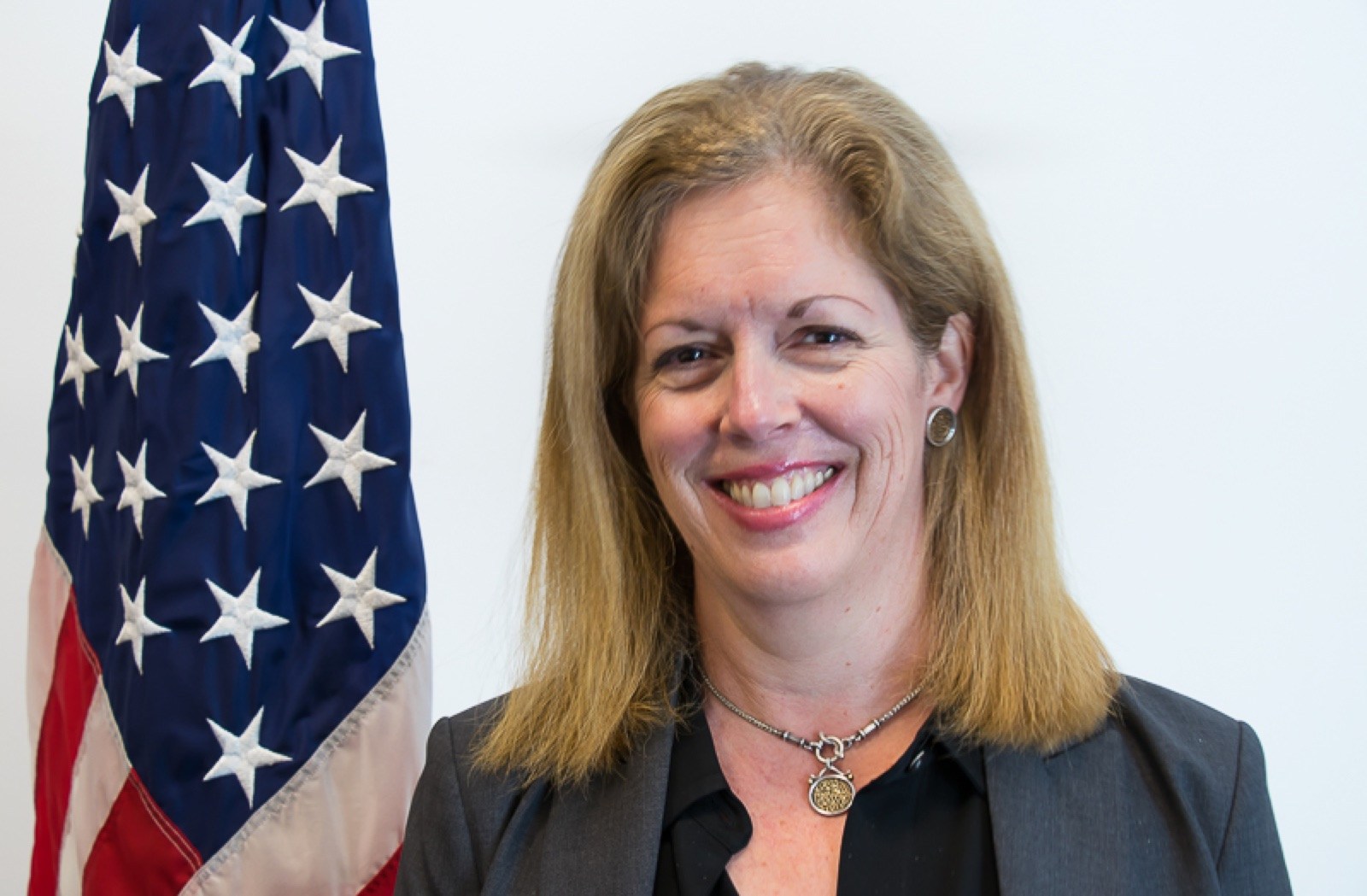
Stephanie Turco Williams
Stephanie Turco Williams is a U.S. Ambassador who led fractured Libya through its dark days after war and now sounds the alarm about democracy needs.
Episode Summary
US Amb. Stephanie Turco Williams led fractured Libya through its dark days after war. Now, it’s on the cusp of a first-ever presidential election. But she is sounding a very loud alarm to the US and others—that democracy still desperately needs something.
Listen & Subscribe
- Watch on YouTube
- Listen on Apple Podcasts
- Listen on Spotify
Transcript
COLD OPEN
Kosinski: Next on One Decision.
Williams: You're sort of careening towards, you know, national elections, and you have no guarantees that you're going to be able to do these safely. There's an urgent need for international mediation.
INTRODUCTION
Kosinski: Welcome back to One Decision. I'm Michelle Kosinski. What's going on in Libya these days? You were just asking yourself. Well, a lot. After years of civil war, decades of dictatorship plus foreign interference from seemingly everywhere, the country is poised to hold elections in a matter of days starting December 24. The first time Libyans will elect their leader ever. Remember, Muammar Gaddafi took over in 1969 and wasn't opposed till 2011. So how did we get here? Today, we have the deeply inside story of this enormous decision in a peace process led by American diplomat Stephanie Turco Williams. Her journey through it is quite amazing, but she is worried, now challenging the United States and the world to act right now and help Libya emerge into democracy when in more and more parts of this planet, it is slipping away. First, let's check in with our analyst extraordinaire, Britain's former spymaster, Sir Richard Dearlove. Hello, Richard. You know, just weeks ago, I was talking to an expert, a former US diplomat, about the chances that these elections in Libya actually happen. He gave it 60%.
ANALYSIS WITH SIR RICHARD DEARLOVE
Dearlove: That's not good. I think the situation is still extremely fragile and complicated. My reaction to 60% is that's quite a high probability. I can see it being postponed, postponed, postponed. They'll have too many candidates. There won't be a clear mandate for anyone. The country's been so disintegrated.
Kosinski: Right. Well, after so many years of dictatorship. And you got to know Gaddafi.
Dearlove: I was the guy who flew into Libya privately when he made this offer of disarmament. And we went in, you know, to his desert compound in the middle of the night and had this extraordinary, surreal negotiation with him. And you realize what a bizarre personality he was and what a bizarre impact he had had on the whole country. Was he able to have a normal conversation? I wouldn't call it a conversation. He riffed for about an hour nonstop. He was not used to having to argue. He was not used to having a discussion. What he said went. And no one had told him not to be an idiot and no one had actually challenged him. So he had all these weird ideas. He spent, you know, three quarters of an hour, you know, talking about the iniquities of Saudi Arabia and what a dreadful place it was. And he was irrational. I mean, there's no other word to describe it. And he looked really weird too. He had a very swollen face, and he seemed to have
Kosinski: one hand on reality. You must have walked out of there with your head spinning. Yes.
Dearlove: But the mere fact that the meeting had happened and, you know, it was in the middle of the desert. We were all freezing cold. He was sitting there in a great camel blanket. Anyway, it was probably one of the strangest experiences I ever had. But part of it was we had to insist that he had an incipient nuclear program because they were in the process of purchasing Pakistani technology. And of course, he absolutely denied that they had this. So our job was to say to him, look, we know you've got it. We know an awful lot about it. And it happened. I mean, they were disarmed. It was extraordinary. History made.
Kosinski: Okay. So fast forward decades. A few weeks ago, out of God knows where, comes his son, Saif Gaddafi. All dressed in some kind of religious looking garb, looking a lot like his father actually, and announcing he wants to be president.
Dearlove: Yeah. Well, it's crazy. So he came out frequently to London and to Europe, you know, with all these promises that, you know, Libya was gonna change, it was gonna be different. He was quite polished.
Kosinski: I don't think anybody was sure whether he was still alive or not. Do you have any idea where he's been the last several years? I don't know. There was a rumor that he was in Mali, I think. But the fact that there was no political agreement in Libya on who could even run in these elections, the guy is wanted internationally for crimes against humanity. It raises the question that I hear again and again from people at NGOs. Is there enough of a culture of democracy there to have an election that will be accepted?
Dearlove: It may be that they can coalesce around a single candidate who then can provide some sort of leadership in this massively disintegrated country. I think a parliamentary election is altogether a different problem. That's where one raises questions of just whether it's a sensible thing to try to do. Maybe if you can survive decades of Muammar Gaddafi, this country can handle anything. And I could tell you more stories about my visit. We flew into Libya in an unmarked plane. The airport was deserted. And after about half an hour, a couple of guys in jeans walked across the tarmac and they said, oh, he's down in Sirte. And we said, what? We were told to fly to Tripoli. Then off we flew to Sirte and then we were just driven off to the middle of the desert. We could have been going anywhere. Anything could have happened. We really did arrive in the middle of the night in this encampment with all these Amazonian ladies guarding the place. And the first thing we were offered was a glass of fresh camel milk. And my interpreter said, you know, Richard, don't drink the camel's milk. I had a tiny sip and then, you know, politely put it to our side.
INTERVIEW WITH STEPHANIE TURCO WILLIAMS
Kosinski: Richard, the life you have led. Let's bring in now another fascinating human who played an incredibly impactful role there. Stephanie Turco Williams was a veteran US diplomat, then in 2018 became the UN's deputy head of political affairs for its mission in Libya. Today, we find her in the South of France. Not a bad transition. Welcome, Stephanie.
Williams: Thank you so much, Michelle. It's great to be with you. I'm basically, you know, semi-retired, doing a bit of advising here and there.
Kosinski: She's also working on a book with the former UN Special Envoy to Libya, with whom she managed to broker the ceasefire there and build the foundation for these upcoming historic elections. So you joined and then led that process. What made you want to be a part of it?
Williams: I jumped at the chance because I found, you know, the conflict to be very interesting, very complicated, and very worthy of international mediation. Look, I had spent twenty four years as a US diplomat, I had served in Iraq, I had served in the Arabian Gulf, and then I was asked to head the US Embassy to Libya. So I spent more than two and a half years in the United Nations, but I took over as the acting envoy from March 2020 to February of this year.
Kosinski: So your decision to head that effort led to an actual ceasefire and a move to elections. You could say that it was a huge success.
Williams: So it was — things were going, I think, quite well through the early part of this year.
Kosinski: And what was that like? What was the exhilaration of it versus the pain of it?
Williams: Well, it was wonderful to live in Libya. So I got to spend a lot of time with Libyans, and I was really grateful to listen to them. What do you love about Libya? It has so much potential because it has a quite a small population, only 7,000,000 citizens, and the ninth largest oil reserves in the world. And it is just perfectly positioned on the crossroads of Africa, the Middle East, and the Southern shores of the Mediterranean. Of course, you know, it was a really fraught period because we spent really more than a year planning for a large national conference that was to take place in April 2019.
Kosinski: That came to a screeching halt in the face of a major military offensive by a key Libyan figure, the warlord General Khalifa Haftar. Remember, during this period, Libya is still split in two with the UN recognized government in the West and Tripoli. And General Haftar along with the House of Representatives operating in the East, not to mention other factions. But Haftar went for broke. He attacked
Williams: the capital, Tripoli, just ten days before that national conference was to be held. So that threw the entire mediation into disarray.
Kosinski: Stephanie says it also led to a complete collapse of the already shaky international consensus on how to deal with Libya, that the UN Security Council became entirely dysfunctional on it. Some member states actually sided with the warlord Haftar even though he was attacking the UN backed government. A real mess. Last year, they got Angela Merkel to host an international meeting to iron things out.
Williams: What we really emphasized was the economic dimensions of this conflict over the country's oil resources. And this was all happening, by the way, while the conflict was raging. And there was this extraordinary foreign interference directly in the conflict. It was and remains in a sense an internationalized civil war.
Kosinski: Was this the most difficult project you have ever worked on?
Williams: Yes. Libya, it didn't so much as divide after the revolution of 2011. The country shattered into thousands of different pieces. When you put yourself back there in that process, which of course was not very long ago, did anything surprise you? That it was the military actors who came together initially. They sort of led the way. There's an irony here because, so you had Mr. Haftar supported by a number of countries, Egypt, Russia, the United Arab Emirates, and to a degree, France. And then you had the UN recognized government basically, you know, at least materially supported by Turkey. And once the Turks, you know, came in with their drones, their military equipment, their advisors and their mercenaries, because both sides have mercenaries, they were able to balance the field, were able to push Mr. Haftar away from Tripoli and back into Central Libya. And so, you know, the shooting stopped basically in June 2020. And that really provided an opportunity for the Libyans to come together again. And it was the Joint Military Commission. And it was very clear to me, from the beginning that they were serious, whereas previously, they had not even agreed to be in the same room. And in fact, for about a day and a half, they asked to meet alone without the presence of any internationals, which I wholeheartedly endorsed as the UN mediator.
Kosinski: It worked. After that brutal war among countrymen and mercenaries,
Williams: they produced a ceasefire agreement just over one year ago. My sense was it was the degree of the foreign interference in the country that had somehow crossed the line for them. And it was such a violation of their sovereignty and their dignity that they believed it was time to put aside their differences.
Kosinski: You reached the right point, but I guess you could say for all the wrong reasons. It's like when the foreign backed armies were finally matched, then it's like, okay, now let's talk about not doing this anymore.
Williams: Well, I mean, the reality is Mr. Haftar had really the strongest array of foreign backers in his offensive, and he couldn't conquer Tripoli because what his actions precipitated was the largest coming together of the armed groups in Western Libya, because they were determined not to allow the country to slip back into a military dictatorship. They'd had forty two years of Gaddafi. They didn't want to, you know, return to the past. So he miscalculated, you know, he told his foreign backers, don't worry, I've got this thing wired. I will take, you know, Tripoli in a couple of days, there won't be any bloodshed. I mean, that's how, for instance, he got, you know, Mr. Bolton's so-called green light in a phone call they had. Right, when the military leaders came together, they really pleaded with me to unify the country's institutions, you know, you had a divided Central Bank of Libya, and you had — oil was weaponized in this conflict. So they said, you know, please form an interim unity government, you know, in advance of national elections.
Kosinski: Yeah, And I have to say, love that amid all of these warlords and strongmen and self proclaimed generals, you're a woman, and they're asking you to help them unify their country.
Williams: Well, and I have to say, I'm glad you brought up the role of women because for me, the role of women, particularly in the political talks, was absolutely vital. Admittedly, it was difficult to have women at the table in the military talk, at least initially. There was a lot of resistance from the sort of, I called them the dinosaurs, who were all male. Out of 75 participants in the political process, we were able to select 17 women. And these women, they were the legal experts, the constitutional experts, human rights. But it was really their decision as a women's block to come together to do things, to introduce a proposal that the interim government needed to have not less than 30% representation of women in senior positions, like ministers or deputy ministers. You know, as we speak, there are five women ministers in Libya, including for the first time a female foreign minister and a female justice minister.
Kosinski: This is amazing. It truly shapes the future of these lives and their children. How did this process change you going through it and coming out the other side?
Williams: Well, what changed me and what struck me, it's very difficult to navigate in a country which has seen so much trauma. Of course, the forty two years of dictatorship in which terrible human rights abuses were perpetrated, and you had this, you know, quixotic leader. A colonel who controlled the media and who had a vast and sprawling intelligence and security service to the point that, you know, Libyans were afraid to have discussions in their own homes because they didn't know even amongst, in their own families or wider social networks, who was reporting to the regime. And here, the other approach that we took was to invite into the political tent supporters of the former regime. And in previous, you know, international talks, they were not welcome at the table. For the first time in the talks in November 2020, you had diehard revolutionary supporters sitting with former regime supporters. These people had not talked to each other for ten years. They refused to sit in the same room. So to me, that was encouraging. And the discourse that was being used at that time, I think it's much more fraught now, but it was really the philosophy of, it is only if we come together as Libyans and compromise for the sake of the country that we can begin to move forward.
Kosinski: That's a big deal.
Williams: You know, accountability is very important in the Libyan context because there have been serious, you know, human rights abuses which have, you know, not seen any measure of accountability for those who have perpetrated these crimes. There's been zero accountability for the killing of our own employees in Benghazi in August 2019. And I was the senior UN official on the ground. So, you know, that was really, really trying. As you're leading this process, what was the most difficult part for you? There was a lot of tension around the selection of the unity government because, again, this goes to the mistrust. It's what I call the democracy paradox in Libya. Every poll indicates overwhelming majority of Libyans want national elections. But there's a fear that it would be one election, one time. The other part of the democracy paradox is parliament that was elected in 2014 and the remnants of the parliament that was elected in 2012 who behave in undemocratic ways in order to stay in office as long as they can. This unfortunately, you know, in some senses has come true in the last five or so months where there was no political agreement around an electoral framework. And, you know, it opened the way for the candidacies of, you know, frankly, people who have the potential of driving more conflict in Libya, of really polarizing the societies. You know, we sort of, we were able to get the national unity government into place, and now you're sort of careening towards, you know, national elections, and you have no guarantees that you're going to be able to do these safely and that you can guarantee, in fact, free and fair elections in all parts of the country. There needs to be, you know, very swift international mediation if the goal is to maintain the date of elections on the December 24, which is the date and marks exactly seventy years since Libya was granted independence by the United Nations. Can elections happen on December 24? You know, there's a public demand for elections. And that's clear. I think they are technically ready. But because there was no political agreement that sort of led to a flawed process of producing this electoral framework. Now, it's never too late to mediate. Okay, so people just shouldn't just give up and walk away and say, oh, this is hopeless, you know, because let's face it, there are countries who are interested in either seeing elections fail, or seeing elections not take place at all. There's an urgent need for international mediation to address the gaps that are still present. Now, there are some who say that, you know, not having elections on December 24 will drive conflict. And there are those who say having elections on December 24 will drive conflict. But how do you begin to address that dilemma is through vigorous mediation.
Kosinski: And look who's running. Khalifa Haftar, Gaddafi's son, and he's wanted for war crimes. The interim prime minister's running even though he promised he wouldn't. Why is this allowed?
Williams: And that is again only going to, you know, drive, you know, suspicion and doubt. What needs to be preserved in Libya is this peace that we've seen really since June 2020. This is the first period in many years where Libyans are not killing each other. It's very important that this fragile peace is preserved, but certainly there's been a lot of polarization, you know, since these gentlemen have announced their candidacies. You've seen moves in Western Tripoli to close polling stations or offices in Misrata and Zawiya. That's why you need quick mediation. Mr. Haftar, even just a few years ago, you know, declared that Libya wasn't ready for democracy. So I think people are justified in being skeptical of what his ultimate goals are.
Kosinski: Summarize for our listeners why Libya has been in such chaos. Like, why hundreds of armed groups?
Williams: There was really no strong military institution under Gaddafi because here's a gentleman who took power via a bloodless coup. So he wasn't about to empower, you know, the military. He, you know, basically tried to fragment the military and to disable it as a force that could challenge his rule. And then during the uprising, there were a plethora of armed groups that emerged that were then supported by some foreign countries. There were plenty of weapons already on the ground as a result of, you know, during the Gaddafi era, and more weapons poured in. A free for all. The state tried to co-opt the armed groups basically, you know, buy them off, put them on the payroll. And what happened was, their numbers just exploded. These groups turned from protectors of the state and of the revolution, to predators of the state, you know, trafficking, drug smuggling, oil smuggling rings. And then on the other side, you have, you know, Mr. Haftar, who confronted what was an extremist uprising in Eastern Libya, but his forces had committed just unspeakable atrocities.
Kosinski: Why has Haftar gained such support, including of governments like France, for example? For five minutes, the Trump administration was into him.
Williams: For many countries, it's the counter terrorism lens. Now in the case of Libya, so you have ISIS, you have Al Qaeda, and you have some forces in the East.
Kosinski: Was Haftar ever a legitimate counterterrorism partner for any of these people?
Williams: Yes. I mean, I think in the sense of in Eastern Libya, and certainly, you know, for, let's say for Egypt, controlling their border with Libya because there was a complete security vacuum.
Kosinski: Well, do you think that there is even going to be an election on December 24?
Williams: That's not for me to judge. It is never too late to mediate in Libya.
Kosinski: Well, you don't sound very confident.
Williams: It's not a matter of confidence or lack of confidence. You, my friends, are a diplomat. No, I'm a realist. So I hope that there are the key members of the international community — sort of this is all a wake up call to them and that they quickly engage.
Kosinski: One of the biggest issues for this entire time has been how do you get rid of all of these foreign fighters? Tens of thousands of them. However, when you have a force like Turkey propping up the UN backed government at one point. How can you say that's a bad thing? Like, somebody needed to support that government.
Williams: Yeah. I mean, Mr. Haftar, you know, imported mercenaries from the Wagner Group, and these are highly experienced fighters, you know, and the lethality of the conflict increased and they were coordinating, so you had, you know, the mercenaries on the ground coordinating with drones that were exacting, you know, enormous damage on the government forces. And there was a period really when we thought that Tripoli would fall within weeks.
Kosinski: But if the Turks had not shown up to back that government, what would have happened? I think it's entirely possible that Tripoli would have fallen. So in that sense, like somebody had to do it otherwise, hello, Haftar.
Williams: Right, the misery that that would have produced — street to street fighting. This beautiful capital would have been utterly destroyed. Obviously, the killing of civilians, the targeting of hospitals, it would have been a protracted, bloody conflict.
Kosinski: So the Wagner Group, these Russian mercenaries suspected of ties to the Kremlin, who paid for them?
Williams: The Pentagon produced a report last fall. There was evidence that some of the funding for Wagner came from the UAE. Now who's funding it now? What I do know, so you, you know, you have those forces — you have large numbers of Sudanese and Chadians. And of course, now you've had this paradoxical event in April of this year, where the Chadian forces, who primarily were recruited by Haftar, had all come together and decided, okay, we're done in Libya. Let's go home and overthrow our government.
Kosinski: So if Russia was ostensibly supporting the UN backed government, but also sending in these mercenaries in the Wagner Group, how can they play it both ways?
Williams: Well, they're not the only ones. I mean, international hypocrisy is a — you know, that's the one thing you can guarantee in Libya, openly violating the UN arms embargo. And so there is this, we support the UN recognized government, but, you know, we're actually kind of in the tank for this other guy.
Kosinski: Why though? And like, what is it about Haftar that has gotten everyone's attention, including, like I said, for a few minutes at least, the US government? I mean, do they see him as the person with the most ability to ultimately end the mess?
Williams: Different countries have their own agendas. For the Russians, a lot of this is them demonstrating that when the US or other powers go in and, you know, overturn the apple cart in the Middle East, you know, look what happens. Chaos ensues.
Kosinski: What is the harm and the danger of having all these foreign forces mixed together?
Williams: I used to describe it to the Libyans. You've invited these, you know, these people for dinner. You think that they're just your guests for dinner and that they're going to go home. And now they've moved into your house and soon they're going to take over your house. So, they're here pursuing their own national interests. When the level of the forces rose to like somewhere in the range of 20,000, you know, in 2020, it just became too much for the Libyans to absorb and accept. Originally, the ceasefire called for them to depart within ninety days, and they just, you know, refused to do that. And here I would like the US to step up. The US has to use its convening authority and its moral weight with all of these players. There's no other international player now. I mean, Mrs. Merkel, Chancellor Merkel is, you know, is departing the scene. She was an incredible moral force in the Berlin process. You know, who's going to now step in and fill that void? Does the US seem engaged and ready to play that role, though? I had high hopes originally. I'm not sure that Libya is very high on the priority list in Washington.
Kosinski: How many Wagner Group guys do you think are there?
Williams: I would guess maybe 2,000 to 3,000.
Kosinski: Just the other day, Haftar said, at the request of France, we're sending home two to 300 mercenaries. But it seems incredibly unlikely that these up to 20,000 foreign fighters are ever gonna leave.
Williams: I believe that it is only a democratically elected sovereign government that is going to be able, you know, to negotiate these arrangements.
Kosinski: And Libya has been plagued by another powerful force, disinformation. Threats against candidates, against women who took part in peace talks, plus hundreds of Facebook pages pumping out lies and anger. A Stanford University report recently tied, yes, Russia, to some of this through its notorious Internet Research Agency. Is Libya ready for this election?
Williams: I think it can be made ready. It has to be done very, very, very quickly.
Kosinski: I feel worried that, okay, maybe Libya can accomplish an election, but nothing after that. Is the alternative here, are we going to allow Libya to split back into dysfunction, to authoritarianism?
Williams: But this also gets to this approach among some in the West that Arabs aren't ready for democracy. I mean, I think this is very orientalist, first of all.
Kosinski: I think so too. But then you also have the point of view from the Middle East and other parts that you can't impose democracy, that not everybody wants that.
Williams: You certainly can't, but there are green shoots of democracy in that country. There were elections that were held 2012. There were, you know, elections that were much more fraught in 2014. But we can't just throw the baby out with the bathwater and say, okay, these people don't get to have elections. They're in a battle between the forces of democracy and autocracy. You know, this is why ensuring that there is a free and fair election in Libya is so important. And everyone needs to get in the harness, you know, to make that happen. And you can't just sit back and say, well, the Libyans will decide this, or we'll let the Libyans make the political agreement. If the Libyans could have agreed, you wouldn't have needed international mediation in the last ten years, for goodness sake.
Kosinski: Yeah. And the process that you led, is there anything that you would have done differently? Or is there something that you feel could have been done better?
Williams: That's a really good question. Yes, of course, there are things that we could have done better. There was a great momentum, you know, in the country. And we put deadlines into the roadmap, which were then — everyone blew past those deadlines. I think that something more solid could have been baked in.
Kosinski: Stephanie says a lot of the dialogue and shoring up of institutions just didn't continue or not fully as we quickly approached December 24. Could it be the eve of functioning democracy or another era of turmoil?
Williams: I think the Libyans need to rediscover the spirit to compromise for the sake of the country. And like you, I remain an optimist.
Kosinski: What do you think needs to happen right now? What could somebody do in these last weeks before an election?
Williams: I think there has to be immediate international mediation. Again, if you force elections, you could actually empower the forces of authoritarianism. And that's certainly not in the interest of the United States and, for most importantly, the Libyan people. Alright, Stephanie. It's so good to talk to you. Alright. Take care.
FINAL ANALYSIS WITH SIR RICHARD DEARLOVE
Kosinski: Let's check in again with Sir Richard Dearlove. It's telling when the broker of the peace leading to the election will not say whether she thinks it'll happen. Quite telling.
Dearlove: You have to create sufficient momentum for the Libyans to do it themselves.
Kosinski: And I guess the question mark that she's left is have they achieved that? Yeah. She also called for very fast and intense international mediation. But why do you think nobody's just swarming the place and with offers of help, and we can get you through this?
Dearlove: Because it's such a mess. You've got Turkey and Qatar on one side, and then on the other side, you've got Egypt and the UAE and, you know, this strange group of Russian mercenaries hanging around in the background looking rather threatening. You can see why people don't want to get in there.
Kosinski: Would you say you're optimistic or pessimistic about this going forward?
Dearlove: I think Libya's primary tragedy may have run its course. Maybe we will now see small steps towards putting the country back together, but it'll take ten, fifteen years to do it. But maybe this is the start of that process. Well, that is optimistic coming from you, Richard. Good chatting. Take care. I'm going off to have my glass of wine now.
Kosinski: Oh, not warm camel milk? No. Not warm camel milk. I badly mean it. Okay, Richard. Sounds pungent. And thank you for joining us. I'm Michelle Kosinski. Follow us wherever you find your podcast and on social media. We'd love to hear your thoughts as well here at One Decision.