Episode Info
- Season14
- Episode6
Hosted by Christina Ruffini and Sir Richard Dearlove
Guest
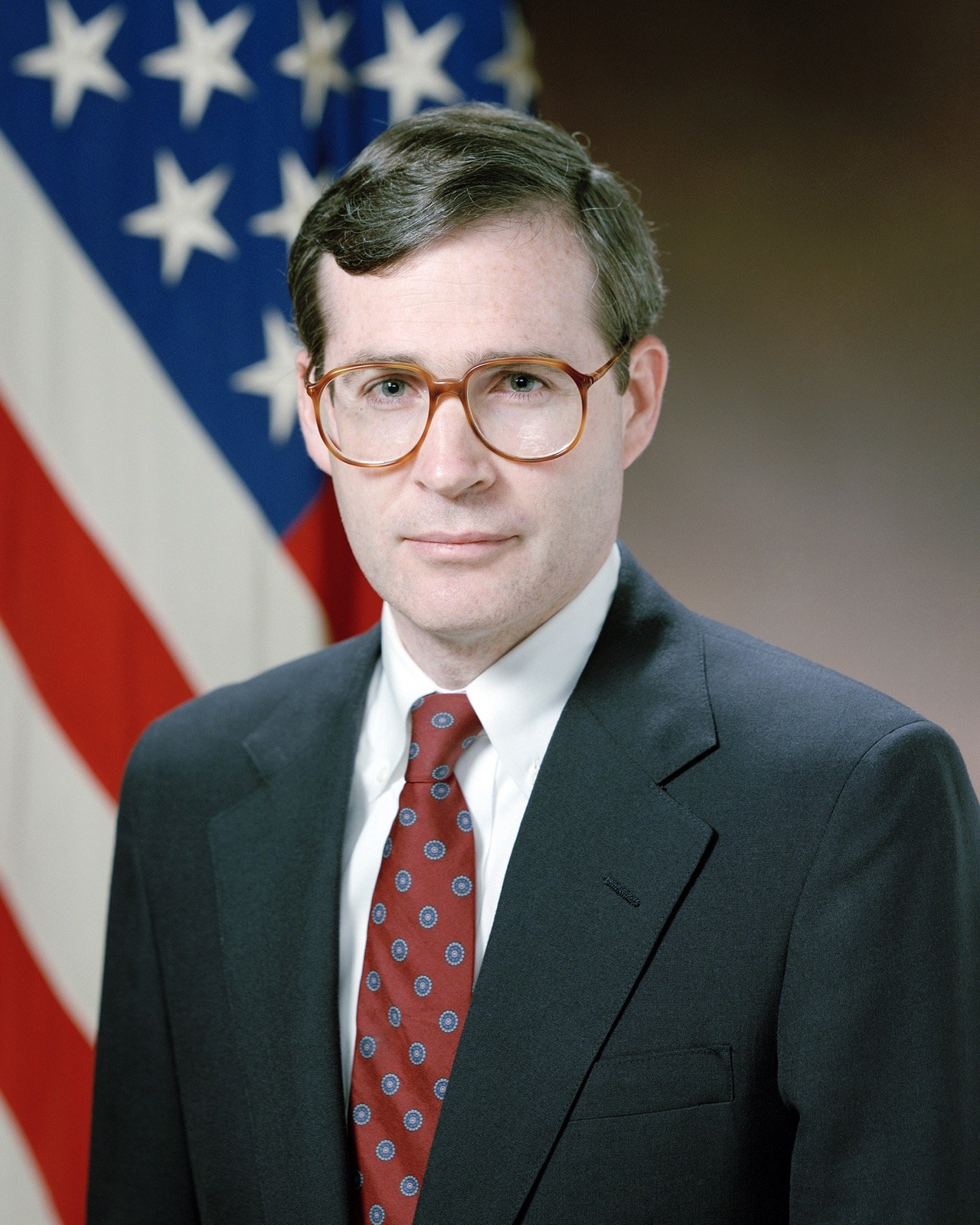
Stephen Hadley
Stephen Hadley is a former National Security Adviser to President George W. Bush discussing the division developing in the Republican party over Ukraine support and bipartisan American values.
Episode Summary
Republicans in the United States are divided on how much support to provide Ukraine in the fight against Russia's invasion of its territory. Florida Governor Ron DeSantis has courted controversy by pursuing Trump’s base, arguing that supporting Kyiv is not in America’s national security interests. He’s been deeply criticized by senior figures within his own party for doing so. What is driving this divide in the party? What are the politics of transitions when it comes to important foreign policy commitments? We speak to Stephen Hadley, former National Security Adviser to President George W. Bush, about the division developing in the Republican party, what remains of bipartisan American values, and how he feels about the war in Iraq, 20 years since its beginning.
Interested in hearing more about the decisions behind the Iraq War? Tune in to hear our interview with former Spanish Prime Minister José María Aznar: pod.fo/e/1620f0
Listen & Subscribe
- Watch on YouTube
- Listen on Apple Podcasts
- Listen on Spotify
Transcript
INTRODUCTION
Mcfarlane: You're listening to One Decision, the podcast that looks at the key choices made today that will shape all of our lives. I'm your host, Julia McFarlane. We're a little while yet from the official start of the US presidential election 2024, but don't let that make you think the race hasn't already begun. We've already had candidates declaring they are running from former president Donald Trump, former governor Nikki Haley, and tech CEO Vivek Ramaswamy, all leading what is likely going to end up being a crowded Republican field. One leading contender who's yet to officially declare is the Florida governor Ron DeSantis. A key supporter of president Trump during his time in office, DeSantis is now seen as Trump's main rival for the Republican nomination. And while many potential candidates and leading Republican figures have expressed muscular support for Ukraine in the war against Russia, both Trump and DeSantis have recently spoken out against the scale of US funding for Kyiv. There's a deep debate taking place right now in the grand old party, a party riven by its complicated legacy of former president Bush and the war in Iraq, which has shaped probably more than any other event, public opinion in America about its role in the world and its appetite for foreign intervention, especially when it comes to conflict. Well, we thought it would be a good idea, particularly at a time we are marking the twentieth anniversary of the US invasion of Iraq, to talk to president George W. Bush's national security adviser at the time, Stephen Hadley. He's just released a book about the Bush Obama transition called Handoff, the Foreign Policy George Bush handed to Barack Obama. In Declassified Memos During a Time of Transition, it explores the peaceful transfer of power in the highest office in the land and one that involves two political persuasions working to find commonality in what American power means abroad and how that power must be used. It's a question still being fought over today. Let's get right into the discussion.
INTERVIEW
Mcfarlane: So first of all, on the question on Ukraine, the US has sent more than $113,000,000,000 to Kyiv. I mean, more than half of that has been military aid. And the issue of what the US's role should be regarding Ukraine and where the boundaries of that role extends is growing to be a bigger and bigger part of the upcoming US presidential election, which will take place next year. I mean, we've already seen some Republican candidates and expected candidates already start to set up their stalls on foreign policy, and where they stand on this crucial issue is really at the forefront of that. And we have to discuss recent comments made by Ron DeSantis, who said in a statement to Fox News, while the US has many vital national interests securing our borders, addressing the crisis of readiness within our military, achieving energy, security, and independence, and checking the economic, cultural, and military power of the Chinese Communist Party, becoming further entangled in a territorial dispute between Ukraine and Russia is not one of them. The Biden administration's virtual blank check funding of this conflict for as long as it takes without any defined objectives or accountability distracts from our country's most pressing challenges. F-16s and long range missiles should therefore be off the table. Now those comments caused quite a stir in Republican circles. We had senator Wicker, a ranking Republican on the Armed Services Committee, saying DeSantis' Ukraine comments are troubling. I would prefer to have a president that understands that what happens in Europe vitally affects us, particularly among our allies. Senator Cornyn of the Senate Intelligence Committee said that he was disturbed by DeSantis' stance. And Lindsey Graham, he said to those who believe Russia's unprovoked and barbaric invasion of Ukraine is not a priority for the United States, you are missing a lot. Graham even compared Putin to Hitler, saying those who miscalculated Hitler's intentions have paved the way for a wider war and missed many opportunities to stop him early on. Now is not the time to repeat past mistakes. Stephen, we are talking to you amid a really interesting moment for the Republican Party as it's clearly trying to work out amongst its members and amongst its leadership what the future of the Republican Party wants to do when it comes to not just Ukraine, but America's role and its leadership in the world. Where do you fall on support for Ukraine? And as a former Republican White House official, what did you make of Ron DeSantis' comments when you heard them?
Hadley: Well, I think his comments were unfortunate. It's interesting that a number of people who are either declared or interested in running for president also disavowed his remarks. Nikki Haley did, former Vice President Pence did, Chris Sununu, governor of New Hampshire. It's been pretty interesting to see how many folks have stepped away from this position, is echoed by former president Trump and governor DeSantis. It is more than just a territorial dispute. It's a case where one country has invaded its neighbors in defiance of widely accepted norms of respect for sovereignty, for territorial independence, and for not changing borders by use of force. These are principles that are pretty universally accepted. They're part of the UN framework. Even China, who has been giving some cover to Russia in this war, makes very clear that it still accepts those principles. Why do these principles matter? Because if you do not enforce these principles, then basically might makes right and takes over as the principal organizing principle for international relations. And the problem, as we saw when Putin went into Georgia in 2008, we said in the Bush administration at the time, if Putin does not pay a strategic price for what he's done in Georgia, tomorrow, it'll be Ukraine. And after that, it could be the Baltic states. And if Putin tries to do to the Baltic states what he's doing in Ukraine, Baltic states are members in NATO. We have an obligation to come to their defense, and that means a war between Russia and NATO. That's not good for anybody. At this point, the Biden administration has said, we're gonna provide military assistance to Ukraine, economic assistance in Ukraine. The Ukrainians are fighting for their freedom, and are in the fight and doing surprisingly well, but Biden has said that we're not gonna put US troops or US forces on the ground. That's a pretty good red line, if you will, that the president has established. And I think he's right to provide everything we can to the Ukrainians because if the Ukrainians can defeat Russian objectives in Ukraine, that makes it much less likely that Putin will try to do other similar operations against Poland, against Baltic states, which are our treaty allies and for which would provoke a war between NATO and Russia, which is something nobody wants.
Mcfarlane: Stephen, you've characterized Ukraine's fight as a fight for freedom. That is particularly the bit I wanted to pick up on, that the Ukrainians are fighting for their freedom. And that is surely the idea of freedom, of sovereignty. Those are surely keystone Republican values and principles, is it not? Why is it do you think that this MAGA part of the Republican party have been captured by the idea that, you know, the Ukrainian fight is not one that the US should support? Why is it that they are really for all intents and purposes siding with Putin in this conflict?
Hadley: Well, that's a very good question and let me try to answer it. It's a difficult one. I think a couple things. One, there's always been an isolationist strain in the Republican Party. There's on the right there's been an isolationist strain within the Democratic Party on the left. And it's understandable. You know, Americans wanna take care of business here at home, and they should. But America has been willing to engage abroad when it's been clearly explained by the president that what happens overseas can potentially affect things here at home. That was certainly the case after 9/11 where we saw that what terrorists were organizing and plotting to do on the other side of the world ended up killing close to 3,000 folks here on a single day on 9/11. So the case needs to be made to the American people that what happens in Europe matters not only because it threatens Europe, our closest ally, but also potentially could threaten Americans here at home. Secondly, there is this debate which you're familiar with between the so called idealists and the realists. Do we fight for American values or do we fight for American interests? And president Bush was always of the view that the difference between those was overstated, that a world based on American values, freedom, democracy, market economy, rule of law, respect for human rights, is very much in our interest because it's a world that will be more stable, more secure, and less threatening to the United States and more congenial for the American people. So again, this is another strain, the realist versus the idealist. There has been that tension and again, once again, I think it falls to the American president to explain to the American people why what we're doing in Ukraine matters. It's both consistent with our values. That's the case that needs to be made, and that's the case that president Biden quite frankly needs to be making too.
Mcfarlane: We spoke to your old colleague, Bob Gates, last year. And when we asked him what was the greatest security threat facing the United States, whether it was Vladimir Putin, whether it was president Xi, whether it was AI or any of the other issues on the horizon, he said that the greatest threat facing the US right now was found in the square mile between the capital and the White House. I mean, if you were a Republican candidate for the presidency, if you were considering laying out your agenda for the country, would you be more concerned about domestic divisions in the US rather than foreign policy issues? When it comes to Vladimir Putin and rising China, what do you think would be the more pressing concern for you?
Hadley: Well, that's a very good question. I guess I would say both, but what I would say is I think Governor DeSantis is right in this sense. He's listed a number of domestic issues that are real issues and need to be addressed. And I think one of the real issues is if we are not strong at home and if we do not address the grievances that a lot of Americans have who feel that globalization victimized them, that immigration threatens them, that their politicians have betrayed them, and that the elites have ignored them. I mean, these are real grievances and they reflect problems of the problem we have of drug abuse and borders and all the rest. These issues need to be addressed. We need to fix our platform at home, which means we need to be producing inclusive economic growth. We need to get our political system so that it addresses issues like entitlements, social security, immigration, securing our borders. We've known what the solutions have been. We've got to reconnect Americans so that they have confidence once again in America's democratic institutions that our values of democracy, freedom, human rights, rule of law, market economics really are the right ones. If we address these domestic issues at home, we have a firm platform from which to engage the world and to provide the kind of engagement in the world that America has traditionally done, which has dramatically benefited the American people. If you look at the international order that emerged after World War II, which was largely based on our values, it's ushered in a period which for most Americans has been pretty remarkable in terms of stability, security, prosperity. So we've got to address these issues at home, but if you're the United States you can't do one or the other. We've got to both address the issues at home while at the same time we pay attention to the kinds of challenges that Russia's invasion of Ukraine yet again in 2022 represents.
Mcfarlane: I sense hope and optimism from you, Stephen, which is encouraging to have an adviser of your stature. I tend to get more cynical as the years go by. So I wanna ask, do you think it's not then too late to convince the Republican Party, for GOP voters, not to make the party one of isolationism and non interventionism, a party that still believes in the importance of the role of American leadership going forward despite some candidates like Ron DeSantis, like president Trump trying to make the Republican party the party that rejects globalization and puts America and only America first?
Hadley: I think we have to have a debate within the party. I'm encouraged by the fact that still the American people as a whole support our engagement in Ukraine. The administration's been pursuing it. I think that's a hopeful sign because I think most Americans then understand what is at stake. That support is very high among Democrats, less so among and still quite high among independents. It's within the Republican Party. So the Republican Party has to have a debate about this. But I think the vision particularly of Ronald Reagan, which people are beginning to talk to and remind Republicans about as being the roots of the party, I think ultimately that that debate can be won by those who argue that America still needs to be engaged in the world and that the kind of principles that are at stake in Ukraine are worth supporting the Ukrainian people and fighting for them. Remember, US forces are not engaged on the ground. This is a Ukrainian fight, and they are very much engaged in that fight. And what we're doing is to enable them to resist Russian aggression, reestablish those principles of sovereignty, respect for territorial integrity, and the like, and preserve their own nation and preserve their own freedom and democracy. And that's, I think, a cause that is worthy of our support.
Mcfarlane: You say US troops are not engaged on the ground. Should they remain not engaged? And what's your position on sending jets to the Ukrainians? The Poles and the Slovakians, they have now announced that they're sending MiG-29s, these Soviet designed airplanes, which the Ukrainians already know how to fly. They've announced that they're gonna be sending those MiGs over to Ukraine. The Brits have been training Ukrainian pilots how to fly modern NATO jets, and the prime minister has said that this is because, you know, the Ukrainians have more pilots than they have aircraft to fly. So, you know, it's quite a good idea to get some of those pilots who are free over and able to fly NATO jets in the future. So the Brits have been trying to cover themselves on that. But what do you think the US is waiting for? Do you think the US should send jets to Ukraine? Do you think perhaps maybe the Brits should take the plunge and perhaps the US may follow suit shortly after? What's your position on that?
Hadley: Well, you know, it's a good question. We've seen a pattern, and it's a regrettable pattern, where the Ukrainians ask for something, the administration says no. They ask for it again and says no. Months pass, and finally, they ask again and the Americans say yes. And only at that point do we start pulling together the equipment they need and training their people to use that equipment. Well, that's a crazy way to do this. I think we have to recognize that it is likely at some point if this continues that we will seriously consider giving aircraft to Ukraine. In light of that, we should start training the pilots now. The advantage of what the Poles are doing, and I think the Slovakians are doing, is they're giving them Soviet era aircraft or Russian made aircraft that the Ukrainians already know how to fly and are already trained up on pretty well. And that makes a lot of sense as a stopgap. But I think we get tangled up on specific weapon systems. I think what the principle ought to be is Ukrainians are in a fight for their life. They're trying to put together a counteroffensive this spring, which will be very important to try to put some of the Russian gains at risk and give Putin an incentive to actually stop this terrible war. It's in our interest to support that. So what we ought to figure out is what do the Ukrainians need to mount a successful offensive? And that's what we ought to give them, and we should have given it to them six months ago and get their people trained up on it, get it in country so it can get to the front line and start having an effect. So I've said before, I think we're about six months late from where we should be. But that's water under the bridge. Let's start getting it right now going forward.
Mcfarlane: You mentioned the spring offensive, and it has been a little bit of an anticlimax in that it is more of a continual plodding on of the current battlegrounds. And one of the key areas is this small city of, I mean, when it comes to Bakhmut, the Russians have been relentlessly attacking this city, and the Ukrainians have been defending it to huge, huge cost. I mean, it's apparently strategically unimportant, but what it is is a really strong and potent symbol of Ukrainian resistance and one that Moscow has increasingly obsessed with extinguishing. The Wagner group of mercenaries, they're at the forefront of this effort, and so there are also sort of intra Russian angles to this fight. Given how much money the US has been spending on the Ukrainian defense, should Washington have a say in the prioritization of this city? And do you think the Ukrainians really should be persuaded to withdraw, to pull out of Bakhmut, to regroup elsewhere, or do you think the thing to do is that the US should really step up its support for Ukraine so that the Ukrainians can finally push the Russians out of Bakhmut?
Hadley: So another good question. Couple things that come to mind. One, should we offer our advice to the Ukrainians? Of course. We ought to offer our advice. But in the end of the day, these are decisions the Ukrainians have to make because they're the ones who are fighting and dying in this war, and that makes a difference. And it is their country after all for which they are fighting. What they say is that in addition to the symbolism that you rightly point out, Bakhmut is also important because, one, it is occupying and in some sense setting back some of the most experienced Russian troops. They are, I mean, it sounds a terrible thing to say, but they are chewing up a lot of good Russian troops in this fight for Bakhmut. That's one of the things they say. Secondly, they say it keeps the Russians tied down in Bakhmut so they can't be expanding their offensive effectively in other areas. And the third thing they say is that it's important to tie down the Russians in this way as they prepare for their own counteroffensive. I can't judge those from the military standpoint, but I think your question is right. America should offer their best advice. But in the end of the day, these are decisions the Ukrainians are gonna have to make because it's their country, and they're the ones that are doing the fighting and the dying.
Mcfarlane: Stephen, I have to talk to you about the Xi Putin summit that's been going on this week. Some very interesting optics are playing out from that. Also, including the news that China has apparently been sending a thousand assault rifles, drones, and body armor to Russia, aiding it in its war effort against Ukraine. Beijing has had to play a very difficult balancing line when it comes to whether or not they're sending lethal aid to Russia. They've insisted that that's not been the case, and there has been for a while now concerns that they may have been sending dual use things that could be used as lethal aid. But the revelation that they're sending a thousand assault rifles, drones, and body armor, I mean, I'm no military expert, but Russia, I mean, first of all, it's not like they're short of, you know, Kalashnikovs and assault rifles, but a thousand hunting guns is hardly a strong show of solidarity for the Russians. They share a long border. If the Chinese wanted to send tanks or missiles or anything to the Russians, it would be within their power to do so, would it not? Do you think the idea of incurring sanctions is what's stopping this, or do you think we're likely to see perhaps Xi stepping up support for Putin? And what do you think the impact of that would be, and how should the US respond if we start to see that down the line?
Hadley: So what we know is that the Chinese have upped their trade with Russia. They are selling a lot of stuff that Russia needs. Some of that is dual use as you point out. The administration has said that they have evidence that the Chinese are thinking about supplying lethal weapons that would make a difference on the battlefield. But the administration says so far there's no evidence that they have done so. There has been the kinds of press reports that you described. Again, I think the administration's concluded that that does not cross the line in terms of supplying the kind of weaponry that would require a US reaction. I would be surprised if the Chinese right now supply the kinds of tanks and other things you were talking about. One, I don't they might contemplate if Putin were actually to lose, or to be threatened in his control in Moscow or his operation to be threatened with defeat. That for the moment is not the case. And secondly, Xi Jinping is trying to present himself as the mature grown up in the room, as the one who really is seeking peace, one who's really trying to has put forward a peace plan, wants to end this war and the impact it's having on the global economy and the global South, and particularly in terms of inflation and access to agricultural goods and the like. And he's putting all the blame on the United States. This is the United States that's supplying weapons. It's the United States that's using the Ukrainians in pursuit of an American agenda against Putin and against Russia. This is his propaganda line. It's part of what he's taking to the world. And I think it's difficult for him to maintain that propaganda line, if you will, if he then starts becoming a weapon supplier to Russia. I think he also knows that if he were to do that and were to cross that line, the Republicans and Democrats in Congress would probably very quickly unite at serious sanctions against China, which at this point he doesn't really need or want because he's trying to get the Chinese economy going again. He's been battered by COVID and by quite frankly a lot of policies that have been business unfriendly and not of the Chinese Communist Party that have diminished their economic growth. He's trying to get economic growth back again. And given the trading relationship between China and the United States, it's not in his interest to have congress of the United States suddenly come across with lots of sanctions against China.
Mcfarlane: That makes a lot of sense. We're running out of time. And so I wanted to just zoom out a little. I read that towards the final years of the Soviet Union and during its demise, you represented the defense department on arms control matters, including negotiations with the Soviets and then Russia on matters involving NATO in Western Europe on ballistic missile defense and on export and technology matters. You wrote in 2008, the United States is already working on many of these ideas along with Russia and other international partners. We've moved away from plans for the massive retaliatory nuclear strikes on short notice that were the relics of Cold War thinking. We've come quite the way from the climate of the negotiations that you were involved in back with the then FSU to where we are now. Is that kind of collaboration and cooperation with Moscow consigned to history, or do you think it could be resurrected perhaps if Putin were no longer in the picture? And to that, what do you make of the latest developments on the new START arms control treaty and the fact that this crisis with Ukraine has halted cooperation between Moscow and Washington on limiting nuclear proliferation?
Hadley: The book that you referred to at the beginning of this podcast called Handoff, the foreign policy George W. Bush passed to Barack Obama. The book was out February 15, and it has a section on Russia. What is remarkable is how different the Russia that George W. Bush confronted with the Russia you see today. The Russia we confronted and the Putin we confronted was one that wanted to be part of the international system, wanted a positive relationship with the United States, and we did a lot of cooperation with the Russians. I'll give you one example. We had a thing called the checklist where US cabinet secretaries sat down with their individual Russian counterparts and developed a joint project that the two of them agreed to pursue and that they would report on each quarter in a joint report to the two presidents, president Putin, president Bush. That kind of cooperation you wouldn't see today, by any means. Why did it end? It ended, I think, for two reasons. One, we thought this was an opportunity to bring Russia permanently into the West, the fall of the Soviet Union, the trauma that that imposed. And president Bush used to say to president Putin, Vladimir, this is your opportunity to bring Russia permanently into the West. And Putin would say, mister president, that's what I wanna do, but there are dark forces in Russia that need to be managed. You need to let me do it my way and in my time. And what we found was that Putin didn't wanna do it. And over the course of the Bush administration and thereafter, he became more authoritarian. Secondly, he was spooked by the color revolutions of 2004, 5, and 6, the revolutions in Georgia, Ukraine, Kyrgyzstan. We thought they were bringing to power democratic regimes that would be good neighbors for Russia. Putin thought it was a CIA operation to put on his border countries that were hostile to Russia as a dress rehearsal for destabilizing Russia itself. With that, we really lost Putin, and he moves into Georgia in 2008. I don't think Putin is recoverable. I don't think he's gonna go back. I don't know what follows Putin. One can only hope that at some point, politics within Russia takes the kind of turn where there is another government that is willing once again to try to pursue a positive relationship with the West, which was on offer to president Putin and which he really decided not to take.
Mcfarlane: Stephen, your time in the White House coincided with a period that saw the largest single enlargement of NATO in the history of the alliance. And that was 2004 when seven Eastern European countries, including three former Soviet Baltic states, joined NATO. You said recently in an interview to Radio Free Europe that Vladimir Putin himself provoked the events that led up to last year's invasion of Ukraine, pushing back on one of the Kremlin's central arguments that it was actually NATO's eastward enlargement, which inevitably caused the war. Why do you think that that argument about NATO expansionism threatening Russia, why do you think it has found so much favor with certain voices in the US despite the fact that it is a line propagated by the Kremlin and its sympathizers? You know, and curiously, you've mentioned that this sort of line of thinking is something that unites both the left and the far right. We've got Tucker Carlson of Fox News, and then Jeffrey Sachs, who's a liberal economist, both using the example of China convincing Mexico to join an anti American security alliance. Yanis Varoufakis, who's a self described libertarian Marxist, is another who agrees with Tucker Carlson on this sort of line of reasoning. Why do you think that this argument about NATO has found fertile ground in certain areas in the US to spread?
Hadley: I'm not sure people have focused really on the history. You know, Bush said, and you mentioned it in your prior question, Bush said very clearly that we no longer view Russia as an enemy in light of the end of the Cold War. Bush was willing to reduce our strategic nuclear force levels unilaterally to show that we no longer viewed Russia as an enemy, but Putin decided he would bring down his forces as well. We had really made an effort to incorporate Russia into the international system, to do cooperative projects with Russia, to have a very close and constructive relationship with Russia. But we were uncertain given Russia's history whether that was gonna work. So we hedged. We did expand NATO and bring central and eastern European countries that had been under the Soviet thumb, imprisoned in the Warsaw Pact, and desperately wanted to come west and join NATO and join the EU. And we thought we couldn't say no given the history they had been through, but that also it was a hedge in the event that Putin did not take the constructive relationship that was on offer and join the Western international system. I think in retrospect, given what has happened, it's a good thing that we did expand NATO because it is that NATO that I think is deterring Putin from doing something more aggressive in Europe. It is not lost on anybody that the two countries that Putin has invaded, Georgia and Ukraine, were not members of NATO. Secondly, in parallel with NATO expansion, we tried to make it clear that NATO was no threat to Russia. Both the Clinton administration and Bush administration established NATO Russia councils. Russia actually had representatives in the NATO headquarters in Brussels. So it was an effort not to be aggressive, to convince Putin that NATO was not his enemy, but we did hedge. And I think in the end of the day, it was the right thing to do given the direction that Russia has taken since the end of the Bush administration.
Mcfarlane: Stephen, since your book, Handoff, the foreign policy George W. Bush passed to Barack Obama, that is coming out here in the UK next month. We're currently, and I promise you this is the last question, we're currently marking twenty years of the Iraq war. I wanted to ask you how you've been remembering Iraq and its legacy and how you think history will remember George W. Bush and Tony Blair in hindsight. I mean, what would the world look like now if Saddam Hussein had never been deposed? You know, would we have seen the Arab Spring, what it's done to Syria and its president now deeply indebted to Vladimir Putin, the response to the Iranian regime to the cycle of protests there, the axis deepening between the Westerners' allies and Putin and president Xi. How do you think the Iraq war has changed American leadership in the world and all of the chess pieces on the global stage that have moved ever since then?
Hadley: Well, it's a very fair and challenging question. I think the answer is we don't know yet. And that sounds like a cop out, but it's really a work in progress and let me sort of say what I mean by that. First of all, the Iraq War was very controversial at the time. It remains controversial. We need more time, I think, to pass before we can really make judgments, and we need to know how this works out. You know, Iraq is very interesting because you think about the challenges it's faced, the recovery from the regime of Saddam Hussein, the recovery from the invasion 2003, our failure until the surge in 2007 and 2008 to stabilize Iraq, which had a huge cost in terms of Iraqi suffering and the deaths and injury of the coalition. So that was that was our bad. But we did stabilize it after the surge and president Obama pulled our troops out in 2011 and Iraq was a sovereign state making its own future. And then, of course, because of the Syrian civil war, Al Qaeda reconstitutes itself as ISIS. ISIS takes over 40% of the country in 2014, and the Iraqis take four years until 2018 to push ISIS out and reestablish control over their entire territory. So in addition to that history, you have the ravages of climate change, you have the ravages of COVID, you have the meddling of Iran. You have the fluctuation in oil prices. Yet in spite of all of that, Iraq still stands. It has had at least six peaceful elections and successful peaceful transitions of power to new governments. Yes, the enthusiasm of Iraqis for the democracy has declined a bit over time. Yes, there is corruption. Yes, the government is not providing the services that they should. But Iraq today stands as a vulnerable, but nonetheless democratic state in which Sunni, Shia, and Kurds are working together to build a common future. Yes, there are tensions between those three groups, but it's different than what has been the norm in the region, which is either Sunnis beat up on Shia, Shia beat up on Sunnis, and both of them beat up on the Kurds. So I am hopeful that in the end of the day, the Iraqi people, despite all the burdens and challenges they face, will establish the principle that those three communities and other minority groups can work together in a democratic framework to build a common future. And that is a very good lesson and good example for the Middle East, which still sees uprisings from time to time in the interest of greater freedom, democracy, rule of law, and human rights. And you saw that in the overthrow of the oppressive leaders in Algeria and in Sudan, it is still a work in progress, and I'm hopeful in the end of the day, the Iraqi people will have a bright future that they themselves will have made.
Mcfarlane: It's good to end on a note of optimism. We covered such a huge amount of ground, and what an interesting time to have a conversation about American leadership and the future of its role in the world. And I guess we'll see that debate continue to evolve and shape up as the election comes underway. I'm always so enthralled by US election cycles, how they really get going two years before the American public go to the polls. Whereas in this country, we only really start election season three months before our vote. So you guys, you take it a lot more seriously, it seems, than we do. But, listen, thank you so much for your time. It's been fascinating talking to you.
Hadley: Julia, thank you very much. It was a pleasure to be with you, and thanks so much for the opportunity.
OUTRO
Mcfarlane: At dawn on the 20th of March 2003, America and its allies launched Operation Iraqi Freedom, with more than a quarter million soldiers invading Iraq from its border with Kuwait. Just two months later, the Iraqi army was defeated and the regime of Saddam Hussein overthrown, but no weapons of mass destruction were ever found in Iraq. Recently, we sat down with the former Spanish prime minister José María Aznar, who's been reflecting on the anniversary with guest host Helena Humphrey. He is one world leader who still defends his decision to back the war. There's a link to the episode in our show description for you to listen to if you'd like to hear more about the legacy of the Iraq war as the world marks its twentieth anniversary. That's it for this week's episode of One Decision. We drop new episodes every Thursday. Like and subscribe so you never miss an episode. Drop us a line. Tell us your thoughts. What decisions have impacted you and where you live? You can write to us. Our email is 1decision@1decisionpodcast.com. From me and the team, thank you for listening, and see you next time.