Episode Info
- Season12
- Episode5
Hosted by Christina Ruffini and Sir Richard Dearlove
Guest
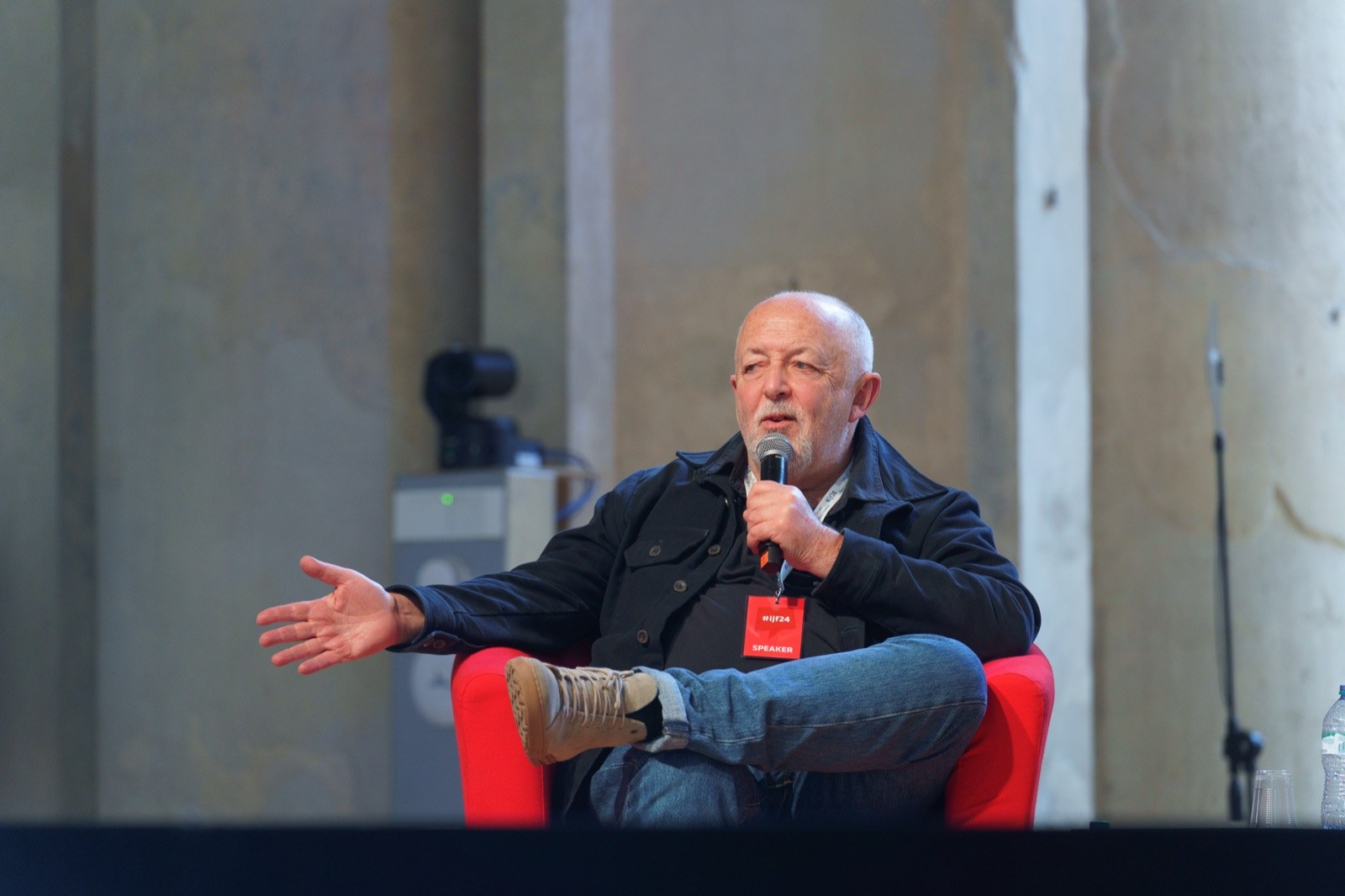
Jeremy Bowen
Jeremy Bowen is the International Editor at the BBC and was embedded with troops as government forces retook control of the occupied city of Kherson.
Episode Summary
Jeremy Bowen, International Editor at the BBC sits down with One Decision shortly after returning from the Ukrainian frontline, having been embedded with troops as government forces retook control of the occupied city of Kherson last month. A huge victory for Kyiv and a humiliating setback for Putin, who has this week admitted on television that his 'special operation' is likely to take a long time to complete, and tried to downplay rumors swirling of a second mobilization for more soldiers to join his invasion. Meanwhile, United States intelligence says that the Russians and Ukrainians are likely to pause the fighting over the bitter winter period - though aerial bombardment on Kyiv and other Ukrainian cities is causing devastation for civilians facing freezing temperatures with no heating, water, or electricity. The United Kingdom's Defence Ministry says that the Russians may be preparing to attack more cities close to the areas they control in the east of Ukraine. As always, we will have an analysis by One Decision's Sir Richard Dearlove, the former chief of MI6.
Listen & Subscribe
- Watch on YouTube
- Listen on Apple Podcasts
- Listen on Spotify
Transcript
INTRODUCTION
Lockwood: One Decision has been selected as a finalist for the first annual Signal Listeners' Choice Award in the category best conversation starter. Please go to One Decision's Twitter page at 1decisionpod to vote now. The deadline to vote is December 22, and the episode in the running was Lithuania and the Two Goliaths, the tiny Baltic nation taking on Russia and China. Without further ado, back to the show. You're listening to One Decision, the podcast that looks at the choices made that have shaped our world. This week, we return once more to Ukraine and Vladimir Putin's invasion of a sovereign country on the doorstep of the European continent. We're going to look in particular at what Moscow described last month as the difficult decision to withdraw forces from the southern Ukrainian city of Kherson. It signaled a major retreat and a significant blow to Putin who previously declared Kherson part of the Russian Federation earlier this year. Well, back in Moscow, Putin this week announced that his so-called special operation would likely take a long time to complete. He also tried to quell rumors circling of a second mobilization, which he denied was necessary, adding that half of the 300,000 Russians who've been called up for military service so far are already present in Ukraine. Meanwhile, France's Emmanuel Macron and Germany's Olaf Scholz are working this week to try and persuade Hungary's Viktor Orbán to lift his veto on an EU fund for Ukraine, totaling some €18,000,000,000. It comes as Kyiv has complained that the flow of military aid from the West has been too slow to help them capitalize on the faltering Russian front. Well, the BBC's international editor, Jeremy Bowen, joins us to share what he found when he was embedded with Ukrainian forces on the ground last month as they advanced to retake the city of Kherson.
INTERVIEW WITH JEREMY BOWEN
Lockwood: So I'm delighted to welcome to podcast, the BBC's international editor, Jeremy Bowen. Jeremy, it's so lovely to have you join us because not only were you one of my biggest journalism heroes back in the day when I first started out, I'm lucky enough to call you my good friend for ten years now and counting since we first met in London, I think, the beginning of the Syrian uprising. And such is the nature of our jobs. It's been super fun to have seen plenty of you in London, but also to have a pint here and there with you in the field, Beirut, in Jerusalem, and all over the place. But most recently, you've been covering the war in Ukraine, which is, of course, the story of the year, really this year it seems. And so I wanted to start off with that. And the most significant development so far, I think since Russia made its advance at the start of the invasion this year, has been the fall of Kherson, or rather the liberation of Kherson. That's the city in the South of Ukraine, quite close to Crimea. And that was the Russians' biggest prize since they invaded back in February. And you were there on the ground as the Ukrainians this autumn managed to push the Russians back after they announced they would retreat and pull back outside of the city and hunker down in some of their strongholds that they've held in the east of the country closer to their border. Now Kherson, it's a city that was occupied by the Russians for several months, and the citizens there, they did what they could to resist and get by with everyday life. And some of the stories and the reception upon Ukrainian soldiers and journalists such as yourself going there for the first time since the Russians left, has been really quite moving and quite powerful to see. So I wanted to ask you to, first of all, talk to us about what the conditions were there that you saw, and what people told you about life under Russian occupation.
Bowen: Well, what I'd say is, and by the way, very nice to be here. Thanks for asking me. What I'd say about Kherson is that it wasn't at that point very damaged when the Russians left. There hadn't been any significant fighting for control of the city when they advanced. In fact, in the couple of weeks before the Russians pulled out, I was in a lot of contact with people inside the town talking to them. Then, of course, when it opened up and we were able to get in, I did a lot of talking to people there also. And quite a few people were very, not just disappointed, angry that the Ukrainian authorities disappeared when the Russians advanced. There was no kind of heroic fight for the city. They said they were suddenly left on their own. No army, no fight, and a feeling that everybody got out and left them to it. Now during the long months of the occupation, the thing about occupation is that it's a very poisonous thing. And to start with, there were some very noisy and brave demonstrations against the Russians. And the Russians looked a bit bemused to start with, and then they started cracking down. They made examples of some people. For example, there was a priest who buried a dead Ukrainian soldier, and he was taken off and tortured. Then over last summer, quite a lot of people were able to get out if they wanted to. And what some residents who stayed on said to me was that most of the people who left were those who were really against the Russian occupation. And a few even said, look, we were left surrounded by sympathizers to the Kremlin. So the minute that we managed to get in and stopped our vehicles and got out and started working, it was interesting that literally within a couple of minutes, there were people coming up, particularly to our Ukrainian producers and saying, you realize how much collaboration went on here. You realize that there has to be a reckoning. One even said people are so angry that there'll be lynchings if these people aren't dealt with. So one of the things that the Ukrainian authorities did when they went back into the city was immediately start a hunt for collaborators. You know, occupations make heroes of some from their perspective, but they also make villains of others because people have to make their own accommodation with the occupying power. And where an accommodation with power goes into active collaboration, well, that can be a matter for debate.
Lockwood: That's so interesting. I was going to ask you if there had perhaps been a shift of the public mood in a town that is located close to Crimea, that there will have been people there with lots of close ties to the Russians, perhaps lots of mixed families and things. And the fact that the people of Kherson felt abandoned by Kyiv. From what you were able to gather, how has that changed the mood of the city?
Bowen: Well, I think there were people there who weren't devastated that the Russians had arrived. What they really wanted was a bit of a peaceful time. There were others who are absolutely horrified by it and saw it as awful repression of their legitimate independence culturally right along the Black Sea Coast. Those cities, Mykolaiv, Kherson, Odessa, they are predominantly Russian speaking cities. And the politics of language are interesting in Ukraine. And increasingly, people who support Ukrainian independence, even if they're native Russian speakers, are doing all they can to speak Ukrainian as much as they can. I've got a Ukrainian colleague who said, look, we speak Russian at home in my family, but out and about, I always speak Ukrainian because it's a political statement. So yeah. So there were people there all on the coast who were horrified and were badly treated, and others, I think, who were prepared to, at the very least, just live with it.
Lockwood: So I wanted to ask you about some of the latest updates. And this interesting news from the commander of Ukrainian ground forces said this week that the Russian mobilization has increased the threat from Russia now, with better trained soldiers arriving on the front lines. However, he noted that the Russians were using a lot of old equipment, because they are struggling to replenish what they've already used on the battlefield with little means of replacing it all. And they're only making slow progress around one of the current hotspots of the conflict, which is the town of Bakhmut in Eastern Ukraine. And the British Defense Ministry also has said this week that they think that the Russians, their next plan is to try and encircle this town and push and take it. And a really small town, but what would be so useful for the Russians if they were able to take Bakhmut, is it may help them as a staging ground to launch attacks on bigger cities in the area such as Kramatorsk and Sloviansk?
Bowen: Yeah. Well, I've been to all of those places, and in my last trip to Ukraine, which is my third this year, I spent quite a lot of time in Bakhmut and in and around Bakhmut. And I was there in the summer as well, so I'm able to make a comparison. Back in the summer, it was being shelled. They were starting to be shelled at the time. The main fight was for the neighboring town, Severodonetsk, which later fell. Bakhmut now, even back in the summer, it was pretty miserable. Many people had left, but it was still functioning as a city. Trolley buses were running. Few shops were open. There were even people going around cutting the grass even when the place was being shelled. But now it's largely abandoned. There are civilians, but it's completely miserable because it's cold out there. The military control it. There are these first World War style trenches outside it. I went out into some of the hinterland of Bakhmut to artillery positions, which are so muddy and miserable and cold and wet. It is an important town. There have been people saying, oh, it's not that important. It's just symbolic. I think that any victory for Russia right now would be important. The Wagner Group, these mercenaries are leading the fight there, apparently. As for the armaments of the Russians, yeah, I mean, they've been burning through it in the same way that the Ukrainians have. Difference is the Ukrainians have had NATO to replenish things. Even so, there's been a lot of reporting in the last couple of weeks about and announcements from governments about just how much the Ukrainians are burning through. So they too are short of weaponry. They're using, for example, more 155 millimeter, which is heavy artillery shells per month than the US factories produce per month. So I've spoken to some recently retired generals who say, to start with, countries, NATO countries supporting Ukraine, were able to run down their stocks. But now it's a question of cranking up the factories to make new ones because they're getting to an unsustainable level. Even the Americans are struggling a bit with their enormous stocks of weaponry and massive defense budgets. So you can imagine the state of the Russians. Now I've seen reports saying that the Russians have put their arms factories onto twenty four hour three shift, twenty four hour working, that they are trying to crank it up. When I see reports from pro-Ukrainian governments saying that the Russians are really struggling militarily, I take them with a huge pinch of salt because, yes, the Russians have had loads of setbacks. But the point is that Putin is not gonna change his mind about how this is gonna go. Putin is gonna continue, and they are mobilizing more people. The question is whether the men they bring into the army, whether they are well trained, whether they are well equipped. And there are questions too about their supplies of missiles, supplies of drones. They're being supplied by Iran. And that's not as strange as it may sound because the Iranians have very advanced drone and cruise missile technology and ballistic missile technology come to that. And they have a lot of them by all accounts. So the Iranians want to earn some money as well. So it's all around a good deal for everyone, except perhaps for their enemies. So, you know, the whole thing about this is that it's got all the ingredients for a long grinding conflict. And anybody who thinks that suddenly there's gonna be this enormous hammer blow from the Ukrainians, it's not gonna happen any time soon. They don't have the combat power to do that.
Lockwood: You said a moment ago that this war is not one that's going to be over anytime soon. And the BBC reported last week that the fighting in Ukraine has been slowing down, and this is likely going to continue in the coming winter months, an assessment that was according to US intelligence agencies. And the director Avril Haines said she believed that both sides would use this winter period to refit, resupply, and reconstitute for any counteroffensive in the spring. Jeremy, does a slowdown over winter until the spring, does that favor the Russian side or the Ukrainian side?
Bowen: Well, it's hard to say. I don't really know. I mean, to talk it through, to argue it through, you could say that the Russians have improved their position by withdrawing from Kherson. They were not driven out of there except by the prospect that they might be driven out of there. You see what I mean? Because as well as occupying the city, they occupied a large pocket of land around it, a big salient. And while the Ukrainians were taking back villages, it was just small slices. It was salami slicing. But it seems clear that the Russians decided that fighting for that salient, there wasn't much point in doing it. And once it became clear that they were not going to advance further down the coast towards, first of all, Mykolaiv and then onto Odessa, the purpose of holding Kherson, in a way, went away. So for them, withdrawing across the Dnieper River, which is a very large body of water, and going into prepared positions, which by all accounts are made of concrete, it makes it very much more difficult for the Ukrainians to attack them. So from that point of view, you could say that a period of resting up might well favor the Russians. On the other side, the Ukrainians have, you know, big issues themselves with training, with supply, needing to build up stockpiles if you're going to have an offensive somewhere on the military side of things. You have to build up ammo, vehicles, trained units, make plans. And it was clear around Kherson that they had none of those things. They had guys in the field, but it wasn't a big buildup going on there. So equally, the Ukrainians need to train people. In the early months of the war, that big fight around the capital, they lost a lot of their trained best people. A lot of the men who were working as instructors and who were experienced were killed around that time. And I've spoken to people involved in the training who say that, well, the troops are very motivated. They know what they're fighting for, unlike the Russians. A lot of them don't have a great deal of training. And so they get the very much the basics, and then they get pushed into the field. Things like their combat first aid training is very deficient. They lose wounded men who had been hit with survivable wounds. So that's something which is a real problem for them. So there's loads they need to do. But is it going to work out that it's as slow as those intelligence estimates say? Well, they've got more sources than me. So, yeah, maybe. But the other thing is that right now, it's very hard to move in those frontline areas because it's so muddy. But if it's a hard winter and once the mud freezes, actually, it's possible to be more mobile. And then things may well continue, but we'll see. I think that at the moment, for this round, if you like, the Russians could freeze things now and say, all right, well, we'll keep that land bridge that we've got between Russia through parts of Donbas down to Crimea, then that might be quite good. They might accept a ceasefire on those grounds, and then maybe strengthen themselves for another go in a year or two. I mean, this is speculation on my part. And the risk of that is a major reason why there's no opening for diplomacy because the Ukrainians are well aware that the Russians might like to bank what they've got and just live to fight another day. One thing that even though the Russian army has had a lot of setbacks, it's absolutely clear that Putin will not throw up his hands and try and get out of this, that his idea will be, I'll keep pushing. I'll weaken the home front by Russia hitting the electricity grid. That will cause pain for the people. They probably won't come out and demand that the government falls, but it weakens them, and it's very debilitating on the home front. And who knows whether it might ultimately push the government into maybe going in for some kind of negotiation, particularly since there are some serious questions to be asked about the degree to which NATO members want to keep on backing Ukraine. President Biden, definitely, and, of course, the Americans are the most powerful military force in the world by miles. So that's very significant. The British, certainly. Poland, certainly. The Baltic States, certainly. Italy, maybe not. Germany, well, they can see the economic problems. France, trying to encourage diplomacy. So NATO is not monolithic on this. So Putin probably reckons, let's open a few fissures. Let's keep trying to push. You never know what's gonna happen. The important thing is we will stick with it.
Lockwood: I wanted to pivot slightly because there is something that I think is really important. I think you've mentioned that you've reported perhaps more than 20 wars in your time. Something like that. As a BBC—I can't count—
Bowen: You've lost track. But yeah, something like that. Yeah.
Lockwood: I mean, you've really been put through the ringer for your job. You've been shot at. You've lost friends of yours more than once. I seem to remember you got shot in the head with pellets in Egypt once, whilst you were reporting. I really hate to ask you this, because I think it's frankly so offensive, but since we're now living at a time of huge disinformation, and it seems like it's no longer enough for journalists to simply do their jobs as hard as it can be from the field, and particularly you have one of the hardest jobs in journalism, doing your work from the ground, but you also now have this other sort of workload, which is combating disinformation, and conspiracy theories. And there were these false claims, lies really, I don't know why we tend to use that phrase in the media, false claims, they were lies earlier this year that you had been staging reports on the front line. And that was all because there was a civilian was seen in the background of one of your pieces to camera with a bag, with a shopping bag. And the actual truth was that you were on this bridge in Irpin just outside Kyiv, where hundreds of civilians were fleeing Russian bombardment. And yes, some of them were carrying all of their worldly possessions in shopping bags, which is a part of the nature of war. Now, obviously this kind of thing is so disheartening and such a pain to deal with, but what do you think needs to be done about this? And I've noticed in some of your recent reports from Ukraine, you are extremely transparent about the difficulties that you face in reporting. In Kherson, you did a piece to camera explaining that restricted access coming back into the town meant that you had to sort of piece together what was happening in the offensive, when the Ukrainians were trying to downplay their attack as the Russians withdrew, and you could tell that they were not being completely forthcoming with you. And that was part of your report. And so the dangers of lies and conspiracy theories and false narratives, I mean, you have your hands full on the front line, clearly. Is this something that media and social media companies need to address? Is it something that governments need to legislate? Should we start teaching critical thinking in our schools? I mean, what do you think needs to be done about this?
Bowen: Well, on those wider points about government legislation that you mentioned, I mean, that's for governments to decide. The way that the tech giants are or are not regulated is, you know, it's another matter. As for journalism itself and what I do, yeah, I was severely trolled by people who came up with this idea that I was somehow faking it, which was complete rubbish. And to start with, I thought I'd ignore it. But when I saw that one of the tweets had tens of thousands of likes, I thought I'd better do something about it. And I did put out a tweet saying it was a load of rubbish, which, well, I got an awful lot of likes. Didn't get as many likes as the original accusation. So, I mean, there are people who will believe anything. The only way that people like myself can, I think, combat it is try and be transparent. If we don't know things, we say we don't know things. As for that particular incident, yeah, that woman was standing up with a shopping bag. She had been kneeling down beforehand, and she was about thirty years older than me, and I think kneeling down was quite difficult for her. Plus, by then, by the time they got across the bridge, they'd walked through hours of being shelled. So I think the novelty had kind of worn off by then. I think they got very fatalistic and thousands of people were crossing through there and the world's media covered it. So what was interesting about it was the number of people who seemed to believe that lie. And I think that maybe is because there is an awful lot of fake news and conspiracy theories washing around the place. So what can we do about it? Well, you know, at my level, I'm concerned that my pieces are credible. I do my best. I think not only must you be credible, you must be seen to be credible. And that means exposing some of the way we work, exposing things we don't know, talking about the restrictions that we face. So, yeah, we've just gotta be—I personally think this is a great time to be in the mainstream media, even though we get a lot of flack from some people. Because when there is so much information around, you need someone to guide you through it. And the way you guide people through it in a credible way is to show how you work, explain when you know things and when you don't know things, keep on with stories, follow them through, be consistent. Try and build credibility in lots and lots of small ways and might win some arguments. When I started in journalism, sometimes just getting a few facts and a bit of information was a real challenge. Now the challenge is finding your way through all the information that's out there.
Lockwood: That's one big difference. The BBC's international editor, Jeremy Bowen. Let's turn now to my co-host, Sir Richard Dearlove, the former chief of MI6, Britain's secret intelligence service.
ANALYSIS WITH SIR RICHARD DEARLOVE
Dearlove: I think Jeremy touched on a lot of interesting issues, and he's done, I think, a fantastic job in looking, and giving a really strong first hand account of what it's like to be near or on the front lines. And I think what's useful about Jeremy's reporting is that in a way it brings you down to earth, and reminds you that there are no magic solutions. And although the Ukrainian military have done miracles, they've done phenomenally well. They're still up against a massively difficult opponent, and the Russians may not have any quality. I think I've said this before, but they have depth and they have quantity. And it doesn't look as though they're going anywhere very quickly. So I think what's striking is that there doesn't look to be an easy or quick way out of the conflict. So expect it to continue. And everybody is saying we're heading for a frozen conflict and not much movement until the spring. I just wonder about that. I have a sort of feeling that the Ukrainians are again misleading us deliberately and that maybe they're going to mount a massive winter offensive because the Russians will be at a huge disadvantage in the wintertime. The Ukrainians will be fighting on their own territory. By all accounts, Ukrainian soldiers are better clothed, better equipped at the moment. And it may be that they have an advantage in the winter, which would evaporate come the spring when they've allowed the Russians more time to consolidate their defensive positions. So I have this feeling we might be sitting on the edge of another big offensive, but that would depend also on the Ukrainians having the resources. I mean, Jeremy put his finger on one thing which was really important, which is that the Russian weapons manufacturing capability is mobilized and running continuously. Whereas in the West, and let's face it, it's the West that's supplying, for example, the shells for the heavy artillery, the 155 howitzers, they're having difficulty obtaining supplies because the West manufacturing system is not up and running at the same speed as the Russians. And I mean, bear in mind, and people forget this, the lesson of World War Two, that one of the reasons that Stalin managed to defeat the power of the Nazi military or the German Nazi military was that Russia in the end out-produced Germany by really running every bit of their economy hot in terms of arms manufacturing. And they just had more and more tanks, more and more artillery. And I'm sure that there's a lesson in there for Russia now in Ukraine.
Lockwood: That's interesting, but the Russians, correct me if I'm wrong, but they're not entirely self sufficient in the production from start to finish of weapons. I remember reading that one of Putin's failures when it came to the shortcomings of the Russian Armed Forces was that they had not yet managed to wean themselves off the parts needed for a lot of their missiles, a lot of their tanks, a lot of their military tech, parts which they purchase from Western origin. And, you know, I guess it's not quite the same situation for the Iranians who are able to amass a pretty hefty arsenal, having had to operate for years outside of the Western markets because of sanctions. But the Iranians themselves, they can't single handedly re-equip Russia to the extent that the Russians need in order to continue this war at pace. And we've seen in the last few weeks, the US have further put the screws on the Iranians, specifically because of what they're doing, helping the Russians with their military aid, and they've announced a lot more sanctions, specifically citing the links with Russia and the many Iranian drones, the kamikaze drones that have caused quite a splash as they've turned up on the Ukrainian battlefield.
Dearlove: Yeah. Well, I think that the problem for the Russians is in the area of sophisticated weaponry where they're using chip technology, which they don't have the ability to manufacture themselves. And I'm not an expert in this area, but my understanding is, like, the guidance on the cruise missiles and that sort of thing is where they will have problems in terms of the supply of the necessary parts. But I did read somewhere that recently a captured or crashed weapon from the Russian side that the Ukrainians obtained, they were able to look at it and work out that it's of recent manufacture, and there's a certain amount of stuff in it which shouldn't be there if the embargo was working. So you have to sort of bear in mind that there are always people in time of war who want to make a lot of money out of evading the embargo. So I'm sure the Russian intelligence, particularly military intelligence, is working hard to source supplies outside Russia, essentially, of course, illegal, but they'll be clandestine and to an extent they'll be successful. I think on the Iranian side, I think a lot of the Iranian weapons, although they're very effective, are pretty low tech, if you see what I mean. And the Iranian sort of attack drones that the Russians were using, I think, equate very much like V2 rockets in World War II. They've not got very sophisticated guidance systems, but they're low tech, they're difficult to intercept, and they work. So the Russians have probably used them quite effectively. I think there's a real issue here for everybody observing the conflict, which is how drones are being used. And I think that we are into a new type of warfare. And there's no question that the Iranians have been hugely inventive in buying stuff which more or less you can buy on Amazon for a few thousand pounds, tweaking it, adapting it, and making it into effective, I wouldn't say much weapons systems, but for example, observation systems that can help target artillery.
Lockwood: I'm glad you brought up that drone attack because there has been satellite imagery this week following damage from a drone attack on this Russian city of Engels. I'm not sure how to pronounce it. And the Ukrainian officials have not commented on whether this drone attack close to the Ukrainian border, whether it was something that they were involved in, but everyone's assuming that it was a Ukrainian drone, apparently damaged a long range bomber. And it's interesting, and you mentioned asymmetry. There is a bit of an asymmetry here because the West, which is so sort of terrified of escalation from Russia and of provoking escalation from Russia, they have—a lot of countries have said that they will only give Ukraine military aid on the proviso that the Ukrainians do not target inside Russian territory, and they do not use those weapons inside of Russian territory. And so you have obviously the Russians very much inside Ukrainian territory, very much attacking Ukrainian cities, but the Ukrainians are sort of, they're not allowed to do the same, even though they are legally entitled to do so in response to an attack on them. But the West is sort of constricting them, and yet there have been several now drone attacks on Russian sovereign territory, which a lot of people will attribute to the Ukrainians. Do you think that they are escalation from the Ukrainians? And what happens? Because this is the thing that the West is so terrified about.
Dearlove: I think the key for the West really is that the weapons that are supplied to Ukraine, as you mentioned, shouldn't be used to attack inside Russian territory because that might be seen, you know, as an escalation by the Russians and broaden the conflict, which everyone's trying to avoid. But I think that the Ukrainians clearly have been very inventive and I think are using tweaked drone technology, which they have the ability to adapt and use. There's no question that these attacks are being carried out by stuff they themselves have developed. I don't think strategically they're hugely significant. But on the other hand, I think that in terms of messaging and morale, both on the Russian and the Ukrainian side, they are very significant indeed because the Ukrainians can extend that feeling of insecurity inside Russian territory. And now what the Russians are obviously finding that for a small drone armed with an explosive device that can fly at a very, very low altitude, it's very hard to have the countermeasures to pick them up. I mean, the best options they've got probably are to interfere with the communications to the drone rather than trying to shoot it down. So I'm sure that the Russians will be deploying sort of jamming systems and other such systems around strategic airfields to protect their aircraft. But, you know, the Ukrainians, I'm sure, will escalate this. And there will be a lot of military specialists watching this very closely and thinking. And of course, the other factor is if you swarm your drones, you've seen all these light shows, I'm sure, where you've got three hundred, four, five hundred drones in the sky doing these amazing light patterns and light shows. Well, you can use exactly the same technology militarily, which is quite troubling.
Lockwood: That's such a curious thought. I've never thought about it. But I couldn't help but smile a little when you mentioned jamming devices because it just brought me right back to around this time several years ago and the run up to Christmas where I spent many, many freezing days outside Gatwick Airport, because some rogue chap with a drone grounded hundreds and hundreds of flights. And the whole might of the British Army were not able to do anything about it. And they had even tried jamming technology. And, you know, God help us if Putin ever decides to send drones into the UK, because I think he'd probably find a very soft target at the seat of British power.
Dearlove: It's gonna shift a lot of military technology, what's happening. Because the other example is, you know, the Ethiopian government fighting in Tigray used drones extensively, and this had a significant influence on the outcome of the conflict with the Tigrayans signing this ceasefire and really signing a deal at significant disadvantage to themselves. But it was because the Ethiopians were using drones against them so successfully. I mean, I was very struck by your interview with Jeremy. I thought it was excellent. His comments on Kherson and the whole question of occupation and the aftermath of occupation and the people who clearly had been sympathetic to the Russians, the way they were being treated. And I think, you know, all of that aspect of warfare, which, of course, is exactly what happened in occupied France with Vichy, and the aftermath of Vichy. It took France, well, I would say years to recover from occupation and the sort of settling of scores that occur in those circumstances. And I thought he brought that out very sort of sympathetically in a very graphic way without overdramatizing it and over exaggerating.
Lockwood: One thing I did want to ask you, since we've been talking about escalation and what the Ukrainians may or may not be able to do with the remaining hardware that they have. And one thing that I think was interesting was this week related, the UK announced that it was signing a new deal with the Swedes to purchase a lot more anti-tank weapons, and it's to replenish their stock. And of course, a lot of countries have donated to the Ukrainians in terms of weapons and missiles and anti-tank weapons, they've donated out of their stock reserves. And when that stock starts to run out, a lot of these armies, a lot of these national forces around Europe, which are arming the Ukrainians, they're going to start looking at their own defenses and think, hey, we've given a lot to the Ukrainians, but now we need some more stuff for ourselves. There is a possibility that despite, even if the will to support Ukrainians continues, there will be that lag. Because as you said earlier, there is not the same speed of production in the West as there is in Russia, with Putin ordering factories and producers to be on a war footing and producing as much as they can in twenty four hour shift cycles. And so what do you think the Ukrainians are able to do logistically with a slowdown in their arms, and particularly this question about escalation dominance, the Russians have, and the West is so reluctant to encourage the Ukrainians. And there have been a lot of people saying that escalation dominance is really quite integral to winning on the battlefield.
Dearlove: Yeah. I think one has to understand that a war like we're observing is much to do with logistics as it has to do with actual conflict. And therefore, the issue of effective supply and supply that is carried out efficiently and with a degree of security is vital to the outcome. One of the reasons why the Ukrainians have been successful is that they have managed to disrupt quite heavily Russian supply lines. But in my understanding, as Jeremy Bowen gave us to understand, is that in some cases, you know, they are lacking, the Ukrainians are lacking essential kit, particularly ammunition. I think that probably in some western factories, my understanding is that we're gearing up to full scale production. And therefore, some production lines have a clearance, you know, to run hot and to run on a pretty much twenty four hour basis. So it may be over time. But you've still got to get the kit to Ukraine. You've then got to get it forward to the units who are going to be deploying it. So these issues are pretty complicated. On the other hand, so far, it looks as though the Ukrainians have been far superior in the way that they've organized their logistics, bearing in mind they're in their own country. Therefore, it's probably easier for them to do. But the outcome of the conflict may be decided by who is most successful in this respect. There's no question, I think, that the Russians, for example, are running out of some weapons, therefore, are falling back on some very old model kit, which they're having to take out of store and refurbish. So the whole thing is becoming quite complicated for both sides. Just to reemphasize, my feeling is we may be about to witness, and this is purely a guess, it's sort of an instinctive guess that the Ukrainians may be gearing up for a winter offensive. And if the ground freezes and that's crucial, then you may well see that happening.
Lockwood: Fascinating. Well, we'll wait and see. Well, the last thing I wanted to ask you was that this week we had a rare update from President Putin, who was speaking via video link at a meeting of his Human Rights Council, and he made a few claims. What I thought was interesting was he appeared to try to downplay what's been rumors swirling of a second mobilization. And he said that that's not going to happen. He said half of the troops, half of the 300,000 people who've been called up for their military duties were on the ground in Ukraine. He also said that he was committed to this special operation, which he's still calling it, and that it may take quite a long time. I mean, the mobilization is deeply unpopular in Russia, and clearly he's felt the need to address rumors that there would be a further calling up of people to military service.
Dearlove: I'm not sure that Putin can risk at the moment politically, I mean, you may be surprised to hear me say this, a further mobilization. It went down so badly, the previous one. Clearly, you know, a lot of young Russians crossed the border to avoid being called up. I would have thought that logistically, the Russian military probably have their hands full with those they did try to mobilize. And the whole training and preparation of those additional troops would put massive pressure on them once again logistically. So I'm not particularly surprised to hear Putin actually say that publicly. And he probably thinks, as the Russians dig into prepared defensive positions, that for the moment, they can hold the line. And of course, if Putin is playing for time, then, you know, the longer the conflict goes on, the more that is, I think, an advantage to the Russian side, because they do have such depth. And it's going to be more and more difficult for the Ukrainian military to make serious advances the longer they leave the Russians in place and the more they prepare themselves to defend what they've won. I think the most likely scenario, despite my prediction about a new offensive, is that we do see something of a not a cessation of hostilities but a reduction in hostilities, you know, with the odd flare up and then maybe a new campaign in the spring. But if there were to be an offensive now or within the next month and the Russian line collapses, then I think the consequences of that could be far reaching, and they would be, I think, disastrous for Putin personally. So we're at a sort of tipping point at the moment in the conflict.
Lockwood: That's it for this week's episode of One Decision. If you enjoyed this episode, do subscribe to us so you never miss a show. We drop new podcasts every Thursday. And if you're feeling generous, do give us your vote. We've been shortlisted for the Signal Listeners' Choice Awards for best conversation starter for our episode earlier this year on Lithuania, taking on the two Goliaths of Russia and China. Head on over to our Twitter page one decision pod for the link to vote. We'll also put it in our show notes as well. From me and the team, thanks so much for being with us. See you next week.