Hosted by Christina Ruffini and Sir Richard Dearlove
Guest
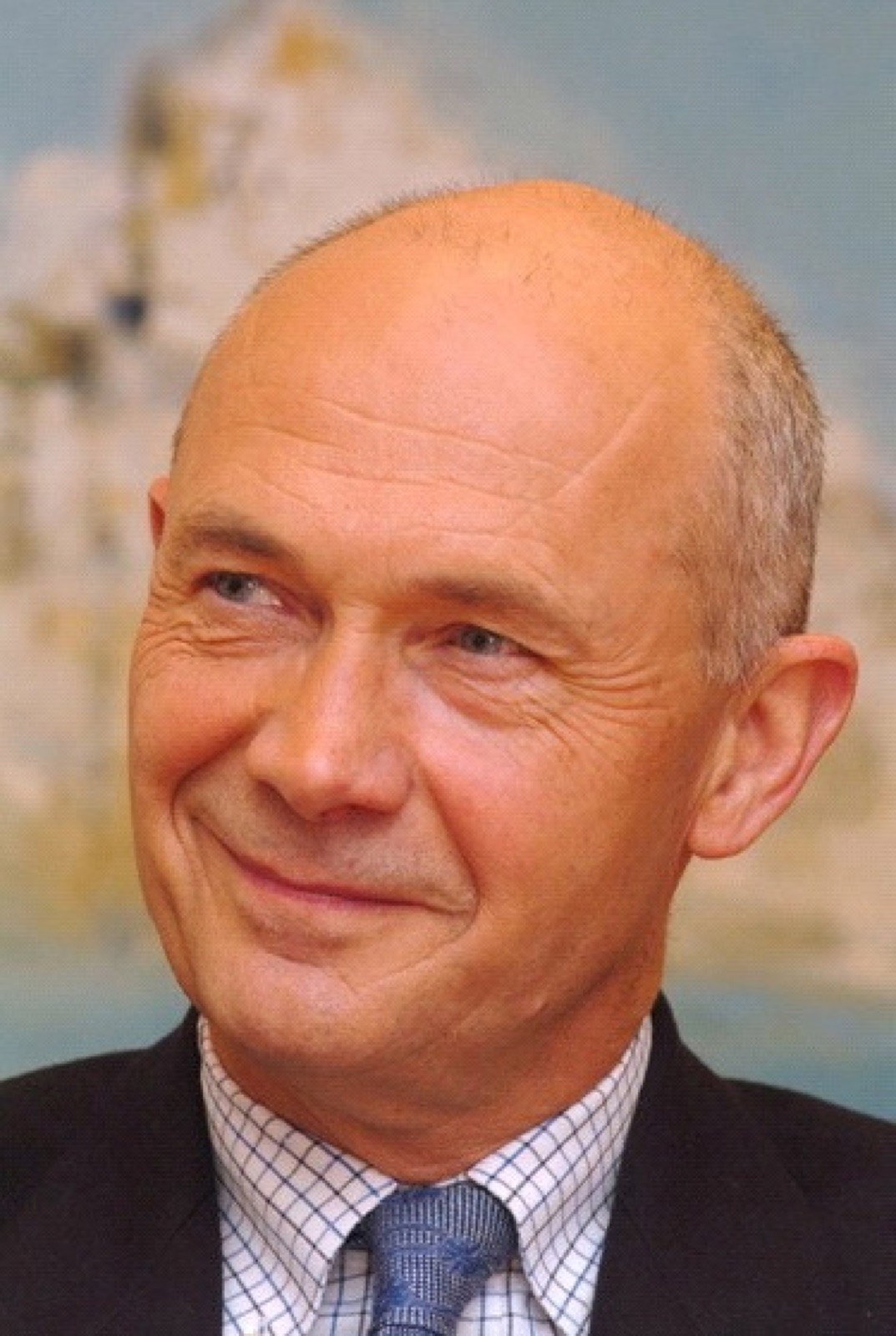
Pascal Lamy
Pascal Lamy is a former Director-General of the World Trade Organization.
Episode Summary
In this week’s episode of One Decision, hosts Christina Ruffini and former MI6 Chief Sir Richard Dearlove sit down with Pascal Lamy, former Director-General of the World Trade Organization, to discuss how tariffs, President Trump, and resurgent geopolitics are reshaping the global order. Lamy argues that the “rule of force” has replaced the “rule of trade,” warns that U.S. democracy itself may now be Europe’s biggest risk, and explains why the EU must move toward political and defense integration—or face decline.
Episode produced by Situation Room Studios. Original music composed and produced by Leo Sidran.
Listen & Subscribe
- Watch on YouTube
- Listen on Apple Podcasts
- Listen on Spotify
Transcript
COLD OPEN
Lamy: I don't think tariffs is the main problem with the US. What is? I think democracy is the main problem.
INTRODUCTION
Raffini: Hello and welcome to One Decision. I'm your host, Cristina Raffini with Sir Richard Dearlove. Last week we went to Warsaw for the Warsaw Security Forum in Poland where we spoke to several European and American leaders about a range of security issues including the state of the war in Ukraine and what Russia's recent aggressive actions in Europe really mean for the rest of the world. One Decision was an official media partner of the conference and talked to a lot of different leaders about the situations. Today we're going to conclude our coverage of the forum with an exclusive interview with Pascal Lamy. He's the former director general of the World Trade Organization. As we know, in addition to security, tariffs and the US's current economic policies are also on a lot of minds of world leaders. So we asked him about the impact of those actions, about China's role in global trade, the threat of European security on the global economy, and why he believes Brexit was a mistake. Let's take a listen. Welcome to One Decision. I'm here, I'm Cristina Raffini. I'm here, of course, with my cohost, Richard Dearlove, and our guest right now is Pascal Lamy, who is the former director general of the World Trade Organization and has many, many other titles and roles, which we will get to, in a second. But look. The first thing I wanna ask you, sir, first of, thank you for being with us. And, I just wanna ask you, tariffs. How are we, how are we feeling about America's tariffs? What are your opinions, and is this gonna work?
INTERVIEW
Lamy: Well, we have a tariff problem with the US. I think you're not alone in that. Yes. And the US president has a tariff problem with everybody. It's a long list. Yes. This being said, the US is 13%, 13% of world imports. And as long as the remaining 87% will keep cool headed and won't let themselves contaminated by this protectionist folly, the world trade is not upside down. There is a bilateral problem between the US and those who trade with US. Like most economists, I believe the first damage of this tariff will be for the US.
Raffini: You said you think this will backfire for the US?
Lamy: Absolutely. Although given that the US economy at large and the US financial system at large is important for the world, this will be bad for the world also, but in a lesser proportion. The question is, how long will it take for this to appear in the US economy and what could be the political reactions to that? This for the moment is very unclear.
Dearlove: Can I ask you a broader question? We see a breakdown, I think, in, let's say, international consensus mechanisms. So we see a weakening of organizations like the UN and the EU. So are we actually entering a period when you have the emphasis on nation states and nation state interests rather than the sort of consensus mechanisms which characterized the post war global security system?
Lamy: Yes. We are in a period where the previous balance between geopolitics and geoeconomics was tilted on the side of geoeconomics with a rather well oiled, although far from perfect multilateral system based on economic integration. We are back to a world where geopolitics have taken back the upper hand on geoeconomics because of violence, because of force. This is what happened with the Russian invasion in Ukraine. This is what happens when mister Trump monetizes the US strategic protection. This is what happens when Israel invades Gaza, whatever origins these issues have. So we are back, in my view, to a world where the rule of force is predominant. How long will this take? Will this abate at some stage? Or will it get worse? I don't know. But what I nevertheless believe is that the infrastructures of globalization, given what they are, globalization will still be there. I don't believe the economic global system, let's say global market capitalism, will de-globalize. Globalization will change. It is changing. If the minimum wage in China changes, globalization changes. If the US surround themselves with a 20% tariff fence, globalization changes. It moves, but it adjusts. And this is, in my view, what will happen.
Dearlove: But the crucial player, in part, at least, but in significant part is really China. And we do not seem to have a consistency of policy globally in how to, as it were, organize our relationships with communist China. We're all over the place, particularly in Europe. You get massive disagreements amongst the different nations. United States in one place, UK in another place. And to have a global security system, you have to accommodate China in some way.
Lamy: I agree with that. Although we have a major world power now that has a political system which is called communism, whatever shape it takes, at least a communist state led market economy. On the other side, we unfortunately have a US which seems to be drifting away from democratic standards, and that's a big worry for us in Europe.
Raffini: It's a big one for us in the States too, to be clear.
Lamy: I hope so. But I don't see a lot of signs of that at this stage. As a European, I'm among those who sometimes would like the checks and balances to work as I was told at school. A little better. Work, but for the moment, that's not the case. So you're absolutely right. If we have a China which remains what it is and the US that drifts away from democracy, Europe will have to cope with that and it is a big challenge notably given the fact that for the last fifty, sixty or seventy years, we've benefited from a sort of free US strategic protection, which mister Trump now monetizes. You now have to pay for the US protection, and that's a big change. And I think this will lead to the EU taking more of its own responsibilities for defense, although it will take a bit of time.
Raffini: Do you think it was a mistake to let China into the WTO?
Lamy: No. Whatever danger you believe China represents for us, and there are many different views on that, I fundamentally believe that a globalized China is much less dangerous than a non globalized China. My knowledge of history shows that autarkic powers are much more dangerous than economically open powers.
Dearlove: You mentioned European defense or European defense policy. I mean, personally, I'm a big believer in European defense, but I'm very skeptical about the ability of Brussels to run successfully a European defense policy. How would you, as it were, mix NATO with that? And I'm thinking of organizations like PESCO and, you know, the other bits of European defense. And I'm sure you're aware that in the UK, there is significant skepticism, although not entirely about this issue. Because it seems to me getting the security of Europe right in the current climate is probably our most pressing geopolitical issue.
Lamy: I agree with that, and I've been involved in European matters for now more than forty years since I joined Brussels as chief of staff of Jacques Delors on the 1st of January 1985. That's a very long time ago. And that's something of a conversation which for a long time was a totally conceptual one. The ones that have made this conversation a real one are mister Putin and now mister Trump. EU now has to realize that, a, there is a formidable threat on its eastern side, and what happens in Ukraine is the evidence of that. And we have good reasons to believe that the US might monetize so much their protection that we better have our own at the end of the day at a lower cost for us. Now this will take time. Of course, the UK has to be part of that. I've always thought Brexit was a huge mistake, like two thirds of my British friends, if you look at the polls. And the reality is that in what really matters for the future of European integration, starting with defense, the UK has to be part of the game. So I have absolutely no doubt of that.
Dearlove: Now why is von der Leyen not excluding the UK from the European Defense Fund then?
Lamy: As we all know, there are two countries in Europe who knows what a battlefield in the twenty first century is, UK and France. I agree. Poland is joining. Yeah. Ukraine will be the strongest military power, if and when this war ends, on its eastern border. So this will change, but it's coming. Whether it's coming quick enough to help us making sure that Ukraine won't lose remains an open question.
Raffini: What do you think the plan B is for European economies, for global economies if the US does not change its mind about this isolationist tariff policies? What is the plan B? You said you think the WTO and Trump can exist in the same world. What does that look like?
Lamy: I don't think tariffs is the main problem with the US. What is? I think democracy is the main problem. If the US were to turn to illiberalism, we have some ground in Europe at this stage for negative repercussions to come to us. We already have a number of forces which are of an illiberal ideology. Let's say 25% of European public opinion today would not be unpleased like Trump regime. So that's problem number one. In Germany, we have a, you know, far right. In France, the AfD, absolutely. This is problem number one with the risk of contamination. The second big risk of contamination is on debt. US is a relatively small trade power, but it's 50% of all finance. So if the big beautiful budget would lead to a debt shock, then we, Europeans, would be contaminated as we were, by the way, in 2008 with a subprime crisis. The third big threat is Ukraine, and tariffs, in my view, only comes on the fourth place.
Raffini: You talked about, when we were talking about economic concerns, tariffs, you said your bigger concerns for the US are democratic in nature. But Sir Richard was also talking about kind of the degradation of multilateral institutions. And I'm wondering, you know, as you see the US kind of step away from some of these global leadership positions on democracy, on human rights, on even prevailing economic wisdom, do you think Europe is prepared to step up and take that leadership role? Is that something Europe is able, capable, and willing to do?
Lamy: I think Europe will have no choice. I mean, European integration is about interest and values which we have in common, which we believe in. This world fifty years ago, we thought we had to do that together in order to be stronger. I think what was true fifty years ago is five or six or seven times more true today. So I have no doubt that if Europe wants to remain with its identity, with its way of living together, which has to do with its very specific mix of values and interests, yes, Europe will have to step up its game. Now whether this is happening or not, I can see signs of that. My question is whether we will accelerate enough European integration for this to remain true. After all, if, again, if US depart from the standards of democracy, there will be not much left on this planet for democracy. Europe, Japan, Korea, Australia, New Zealand, Canada with question marks elsewhere. That's a reason to try and be stronger together on this corner even if it was to become a small corner.
Raffini: But, you know, you talk about that fifty years ago that was the prevailing wisdom. I would argue even twenty years ago when I was in school that was the prevailing wisdom. You know, you had this McDonald's theory that two countries with McDonald's had never invaded each other and then that was blown to hell when Russia invaded Georgia, and that all happened. But what do you think, you know, looking over, you're so knowledgeable in this area. Looking over the last couple decades, what has been the biggest factors in changing that we're all together kind of ethos when it comes to international relations? Has it been a few bad actors? Has it been circumstance? Has it been kind of a conflagration of all of the above? Or is it impossible to pinpoint?
Lamy: No. I think, I mean, that's a very good question. Why has the western world in a way been so badly hit? I think there's a conjugation of factors. Technology is one. Democracies don't work the same way with social networks as they would do with printed media or classical radio or TV channels. Globalization has been efficient and painful, and in some countries, the painful part of that has not been properly addressed. It's no coincidence in my view that, for instance, in the US, who have a relatively weak social system as compared to their standard of living, globalization has been seen as hitting some specific regions, which gave to Trump ammunition to criticize these fancy globalizers. We also have a problem of speed of change, which has destabilized quite a number of western countries. Whereas when I speak to my African friends, they don't feel at all that this world is going too fast or that globalization is a bad thing. For them, it's something that they hope will keep moving. Plus the fact that truly in the Western world, social inequalities have grown. The inequality between countries has shrunk, but within countries, whether you look at revenues and even more whether you look at wealth, there is an obvious issue in the way global market capitalism has been regulated and I'm still on the view that we need to work on global capitalism in such a way that the pain it entails for the price of innovation and progress needs to be better considered and better treated.
Dearlove: A final question about Europe where you clearly still spend maybe a majority of your long and brilliant career. You mentioned European integration. I mean, are we really, are we talking about more intense economic integration, or is political integration still on the cards? Or do both go hand in hand?
Lamy: We need to keep integrating economically, including, for instance, in defense. Yeah. And this is not possible without a higher degree of political integration. Now political integration has always been more difficult than economic integration. That's why the UK left, basically. You're absolutely right, but we now have no choice. Again, political integration with a sort of dream that would be the cherry of the cake of economic integration. That's not true anymore. You cannot today, the way the world is going, separate economic integration and political integration. So in a way, we have to cope with this anthropological difficulty, which is that we now have to share more of our dreams and nightmares, which is what a European defense policy is about. And that's something that's new in a way. We need to merge more mentally than before. This is what European integration, political integration is about. Not that it's something that we should dream of, like the founding fathers, but something that has become necessary if we want Europe to survive. And Delors used to say, and at that time, I'm not sure what he meant, but he used to say Europe has a choice between survival and decline.
Raffini: Well, that's where we are. I think we're all making that choice every day these days. Mister Lamy, hey, Dearlove. Merci, mille fois, and thank you so much for joining us. That was Pascal Lamy, former director general of the World Trade Organization. Thank you for being with us, and thank you for listening to One Decision. This, of course, wraps up our coverage from the Warsaw Security Forum, at least on the feed. But, of course, we've got a lot more over on our YouTube page, so please go check it out. We also have a really important conversation with Ukrainian prisoners of war, an interview with a special representative for the stolen children of Ukraine and many many more. I'm Cristina Raffini, thanks so much for listening.