Hosted by Christina Ruffini and Sir Richard Dearlove
Guest
Professor Chuck Freilich
Professor Chuck Freilich is Israel's former Deputy National Security Adviser.
Episode Summary
In this episode of One Decision, Sir Richard Dearlove, former MI6 chief, and journalist Christina Ruffini speak with Professor Chuck Freilich, Israel’s former Deputy National Security Adviser. Freilich explains why he no longer sees a two-state solution as viable and lays out a three-pillar alternative for Gaza and the West Bank. He examines the aims and limits of Israel’s campaign against Hamas, Israeli Prime Minister Benjamin Netanyahu’s political incentives, and what recent strikes mean for Iran’s nuclear program.
Episode produced by Situation Room Studios. Original music composed and produced by Leo Sidran.
Listen & Subscribe
- Watch on YouTube
- Listen on Apple Podcasts
- Listen on Spotify
Transcript
COLD OPEN
Freilich: The two state solution is supposed to be a vehicle to Palestinian independence. Those of us who want to see a peace agreement and who want to see a separation between Israelis and Palestinians have to start thinking in other terms.
INTRODUCTION
Raffini: Hello and welcome to One Decision. I'm Christina Raffini, joined of course by my co-host, Richard Dearlove. Today we're speaking with Professor Charles Freilich, former Deputy National Security Advisor for Israel, former delegate to the UN, and former advocate of a two state solution. In a recent article, he argues the time has come to move past that idea, saying the definition of insanity is doing the same thing over and over again and expecting different results. Thank you so much for joining us. I think this is obviously an incredibly complicated topic, but you have written articles and books about Israel, Israeli policy, intelligence. I do wanna talk to you because I think it's interesting that you for so long did advocate for a two state solution and now have changed your mind. So, I mean, just very briefly, just tell us where you stand on this and why you think others should come around to this way of thinking.
INTERVIEW
Freilich: So, as you said, I was a lifelong supporter of the two state solution until probably two, three years before October 7. And that just further reinforced the conclusion that I had reached beforehand. Now, this isn't because I do not want to see a two state solution, but I think the prospects of it happening are about zero for a number of reasons. But first and foremost, because we have outsettled ourselves of a realistic possibility and the Palestinians have out-rejected themselves of every possible proposal for peace. Israel and the US put some really dramatic proposals on the table in the early 2000s and again in 2008, which would have given the Palestinians a state on effectively 100% of the West Bank and Gaza with a division of Jerusalem, pretty much everything they were asking. And if they couldn't accept it then, I don't see that they can accept it today. I mean, who are the Palestinians today? There's the remnants of Hamas in Gaza. There's an ineffectual PA in the West Bank. And of course, this Israeli government isn't going anywhere on this. And it's unclear that the next one will either. Those of us who want to see a peace agreement and who want to see a separation between Israelis and Palestinians have to start thinking in other terms. The two state solution is supposed to be a vehicle to Palestinian independence. It's not some sort of holy objective in its own right. And what I've proposed is a proposal which has three components, each of which, by the way, could stand on its own as a separate diplomatic initiative. But putting them together, I think, creates a coherent whole. And I should also say, by the way, full disclosure, none of these three components are my own brilliant idea. They're all existing ideas. What is different is that I put them together and massaged it a bit. So, the primary component is the long standing proposal for a Jordanian-Palestinian confederation, meaning essentially two independent states that agree to share their foreign and defense policy. But in other ways, are independent, the Palestinians will have independence. Israel would feel far more secure in a situation in which Jordan was a partner and in the early years, let's say, the lead partner in ensuring security following an Israeli withdrawal from most of the West Bank.
Raffini: But it seems like the Jordanians don't really wanna take that on. Today,
Freilich: not a chance. There are ways of ensuring constitutional guarantees in the constitution of this new confederation that would ensure that the Hashemite Kingdom would remain Jordan in perpetuity. And as a matter of fact, rather than the starting point where you're absolutely right, the kingdom would view this as a threat, I think we can turn it into something which they would view as being a guarantee of their long term security. And if that doesn't happen, there's no way they'll agree to it. The second component is the idea of a multilateral land swap, which is designed to increase the size of Gaza. But let me say something. This is not a political statement. Gaza's population, which is about 2,200,000 today, doubles approximately every twenty years. So twenty years from now, we're talking about 4,500,000, and twenty years after that, 9,000,000. Gaza is not a viable area socioeconomically in its current borders. We can increase the size of Gaza's territory, which is where this idea of a multilateral swap comes in, and it would double or triple the size of Gaza. The Egyptians would do that. Israel would compensate the Egyptians for the territory that they had given to Palestinians. And then the Palestinians would compensate Israel for the territory that they got in Gaza along the West Bank border, allowing Israel to keep the, depending on which Israeli you want to talk to, five to 10% of the West Bank that it would have to keep in a final settlement in order to be able to keep over 80% of the settlers under Israeli control. The third component of this proposal is civil disengagement, not military. Civil disengagement from most of the West Bank, where Israel again says, We're going to keep X percent, 10%. We have no claims over the rest. We will withdraw the settlers. We will withdraw all civil control. The IDF will remain deployed for military purposes for as long as necessary until we reach a permanent agreement.
Raffini: Professor, I wanna ask you, have you gotten any engagement on this from the White House, from the Jordanians, from the Israelis? Is anybody picking up on this?
Freilich: Well, in Israel, I've encountered some considerable interest in the idea. And I think that's because the idea goes against the grain so deeply that two state solution, two state solution. It's become a mantra. The good thing is it's become a mantra that the whole world speaks about today, because that wasn't always the case. The bad news is that it's a mantra that everybody speaks about. So to break through with this is not easy. I have tried a couple of approaches to the administration and so far not broken through that way either.
Raffini: Maybe this podcast will do it. We do have some high profile listeners. Hopefully, they're listening now. I also wanna ask you, you know, we had this very strange course of events. Macron had come out and said that France was going to endorse Palestinian statehood. And then Trump was in the UK with Keir Starmer. And he had this very bizarre conversation on camera with Trump and Starmer where he said, oh, I'm fine with him. If the UK wants to endorse that too, that's fine. And now there seems to be this trend of European countries talking about endorsing Palestinian statehood. Do you think that's going to help or hurt the process of coming to a viable solution for these two peoples?
Freilich: No. I think that's an egregious error on the part of Mr. Macron and Starmer and a number of other countries. Not the decision or the substance, not the idea that they want to recognize a Palestinian state. That is motivated by good motivations. But I believe that the timing could not be worse and the context could not be worse. First of all, this would be an extraordinary reward for Hamas. You start a war with a horrific massacre, a war which we know now based on the captured war documents, Hamas documents, which was to be a war of annihilation. And had Iran and Hezbollah joined in as they were supposed to, I mean, that was what the scenario was all about. And so you do that, and what is the end result? The world, now after decades of refraining from doing so, recognizes a Palestinian state. Second of all, Hamas and the Palestinians as a whole, I mean, this is true of the PA as well, have to understand that a Palestinian state will only come about as a result of direct negotiations with Israel. And, unfortunately, we don't have the leadership on either side that's capable of doing it, but it's not gonna come about in this way.
Dearlove: I think most of us feel it was totally inappropriate that they should have made these declarations under literally domestic political pressure. In a way, I think it's damaging to the Palestinian cause that it's happened in these circumstances.
Raffini: But I also wanted to ask if if you think Netanyahu has so badly overplayed his hand here that that is why this has happened because, you know, the world was on Israel's side after these attacks. It was a horrific terrorist attack, but the response has been equally horrific in some ways. And, I mean, do you think these actions as they continue, you know, he's announcing that he intends to take over Gaza to, quote, remove Hamas. This has been this problem where this very amorphous end goal to this war. Can you talk about whether or not you think the actions of the Israeli government and Netanyahu have made Israelis and Jews safer or more in danger in the long term?
Freilich: First of all, just full disclosure, I am not a supporter of the prime minister. But I also think in the same way that I believe that he has to be held fully accountable for the catastrophe of October 7 and other failings, including the ones you're alluding to, I think it also deserves credit for the fact that Israel's security, at least from a military point of view, is incomparably better than it was just a year ago. The Iranian-led axis of resistance has been decimated. Hezbollah, first of all, and Hamas has been defeated militarily. It hasn't been destroyed, but it's been defeated. And Syria regime changed significantly because of Israel's actions, and Iran itself greatly weakened already a year ago. And then June, the brief war against the nuclear program. So he does get credit for that. There are two truths, there are two stories at the moment that are taking place. One is that Hamas is, to my way of thinking, the embodiment of human evil and should be destroyed. Trying to destroy Hamas is an appropriate objective. There's another story, maybe two other stories. One is that we've been trying to do it for almost two years, and we haven't succeeded. I said before, we've defeated them. They're a remnant of what they were, but we haven't destroyed them completely militarily. And all we've done is weakened them politically, not more than that. They're still in control of Gaza. Is this new bigger operation gonna achieve it? I don't know many people in Israel who think that the answer is yes. Most security experts, the chief of staff is against it. And the other story that's taking place at the same time with everything else is Mr. Netanyahu's five, six year long battle now to stay in power at all costs. And his willingness, until now, was to subjugate Israel's democratic system and its legal system to his own interests. And now it seems to be the lives, not just of Gazans. I mean, he's the prime minister of Israel, but Israeli soldiers and Israeli captives, the hostages. So I'd say on the one hand, there are serious strategic considerations, and on the other hand, there are outrages.
Raffini: It's been very interesting to watch the American Jewish population, especially here on the East Coast, just kind of divide itself and the differences of opinions and differences of, you know, two groups of folks can look at the same image and have a completely different take. I'm wondering what the conversations are domestically, what Israelis are thinking. I know Netanyahu is incredibly unpopular, kind of almost on both sides of the political spectrum. But when it comes to the actions in Gaza, when it comes to these images coming out, is there a lot of sympathy? Are people upset? Is the tide turning, or is it still a very divided conversation amongst Israelis?
Freilich: First of all, there is great division on this, as there is on almost everything else today. Israel's become a deeply polarized society with multiple poles. I think it's very hard for people abroad to understand because people have been watching the tragedy in Gaza for the last nineteen months of the twenty two since the war broke out. The war, for most people, ceased being October 7 and became the devastation of Gaza and now hunger or starvation. Israel is still very much living, I would say almost trapped, in October 7. Not only do we see much less of what's happening in Gaza, we see it, but much less. But to this day, the news every day, and in Israel, the news is omnipresent. It's not just the regular nightly newscast, but there are news magazines, news shows, talk shows endlessly. They're still dealing with various parts of what happened on October 7. They're still showing endless interviews with the hostages' families and the stories of the hostages and the fallen soldiers.
Raffini: Now is that because these media organizations align with a certain ideology and that's the talking points they want them, or is that just what people are intrinsically talking about?
Freilich: No. I'm even talking about the independent news organizations. It's not true of all outlets, but with the exception of them, I think it is true, and it's true of the three commercial TV stations. I think it's only in the last few weeks that people in Israel, and it's still a minority, are beginning to awaken to the fact that, oh, wait a minute, there has been a tragedy in Gaza. There isn't just one rite here. There isn't just one story. But still, there's a showing that only about a quarter of the people believe that there's a starvation in Gaza. Okay? And I'm sure if you ask people abroad, it's 90% or so.
Dearlove: Can I just ask on the issue of the starvation and, you know, the the aid issue? Because this is so potent in the West at the moment in observing Israel. My understanding is that between January and March 2025, almost half a million tons of aid went into Gaza in 25,000 truck journeys. And that if you take the UN's estimate of the sort of stockpiling of that aid to feed the population, it should have lasted until the end of June or mid July. There were sufficient supplies went into the country. I mean, how come the aid issue internally in Gaza became so politicized or, let's say, even weaponized? I mean, what's your understanding of what actually happened? Because the amount of aid that went in was massive up until the end of March.
Freilich: Well, I had an article that came out in Arabs, which showed that actually the UN, forget the Arab countries, forget the Palestinians, various UN agencies and international humanitarian organizations, in the first six weeks of the war, not the early 2025 that you're talking about, they were already talking about starvation, imminent starvation. One or two were talking about genocide. This was politicized from day one. Now, yes, they warned about something that happened, but it happened almost two years later. That's not an acceptable gap in assessments. In an assessment, you can be off by a month or two, you can't be off by almost two years with something like this. To me, by the way, it was absolutely clear from day one that this is exactly what was going to happen. It's not that I'm so brilliant, but that this is what Hamas has done, which is what I had tried doing, in every previous round. And so I thought that Israel should have taken ownership of the humanitarian issue from day one. The government didn't do that, and I think that was a severe mistake.
Raffini: Why didn't the Israeli government go in and say, Hamas has ruined your people. They've ruined your cities. You know, look what we can do for you. Wasn't that just an obvious thing to do?
Freilich: Well, first of all, I mean, there's been a change in international norms. Historically, when you fought a war, you did everything you could to devastate the enemy side, including the civilian population. Remember, World War II was all about strategic bombing of German or Japanese cities. And that started changing in the last few decades. And so here you're being asked to feed, to aid, to do more for the enemy population than its own government, which just attacked you, did. And of course, this was caught up. I mean, that's a hard thing conceptually for anyone, but here it was caught up in Israeli politics and right versus left. And they're starving our hostages, which they absolutely are. So why could we be feeding them, etcetera? Getting back to what Sir Richard was saying is that March to, I think it was through May or the beginning of June, Israel did try to cut back. There was never a policy of starvation. Those allegations are false. There was a policy of trying to exert some pressure, making life a little bit more difficult. I think, again, within reason, it's a legitimate approach. But it probably went a little bit too far, and Hamas has been stealing the aid right and left, and various militias and criminal gangs have been stealing it right and left. And so it hasn't been reaching enough of the people. And that's where the problem is. Israel woke up to it, I believe, a few weeks too late.
Raffini: What do you do to get away from this narrative of Israel essentially turned a military success into kind of a diplomatic disaster? How do you resolve this? If you're in an Israeli cabinet room, what do you do to try to reverse the self inflicted damage kind of here of losing the humanitarian narrative, at least globally?
Freilich: I think what Israel should be doing, and it's partly doing this now, is trying to flood Gaza with humanitarian aid. And then the question is, should Israel agree to end the war in exchange for the hostages? That brings me back to what I was saying before, but that means leaving Hamas in power. And for them, that means that they've won the war. It doesn't matter how devastated they've been militarily. It doesn't matter that Gaza as a whole is a big rubble pile today. They will declare, I don't think the Gazan people will agree, but Hamas will say, we won the war.
Dearlove: But hasn't the main Arab countries already amongst themselves passed a resolution saying there is no future for Hamas or no political future for Hamas in Gaza. And, I mean, that, in a way, is a big step forward, if correct. But I was also struck by these video clips of senior Israeli intelligence, security, and military people, which were made very recently, you know, saying that there should be a ceasefire and include my colleague, Efraim Halevy. I was very struck that they were taking that position. I mean, isn't Hamas in fact already defeated as a ruling party? Wouldn't they find it difficult to reconstitute their authority in Gaza, even if there are remnants that are left?
Freilich: No, I think otherwise. First of all, they are in de facto control of most of, politically, most of the strip today. Israel has gone in and out of the various areas. It hasn't maintained a serious military presence in any one area for long. And every time it's pulled out, they've started reconstituting militarily very quickly and started strengthening the political control. Who's providing whatever services are provided in Gaza? They are. And who controls food distribution? They do.
Dearlove: But they aren't being resupplied militarily because, I mean, Syria's gone. Hezbollah's gone. Iran can't resupply them. So they're a shrinking military capability.
Freilich: Absolutely. They can still fire the occasional single rocket, but they seem to have an inexhaustible supply of rifles and IEDs, things like that. The part of the tunnel network that's been uncovered, it's a multi story subterranean system of tunnels. So they still have a significant portion of what they had to begin with. It's a minority of what the war started with, but it's still there. And give them a little bit of time, and they'll rebuild that.
Raffini: Understanding everything you just said, and Hamas is certainly still a threat. But also going with what Sir Richard said, they have been militarily defeated and degraded to a point where, as as you just said, Israel's security is better than it has been in quite a while. How much of the continuation of this war at the tempo that it's going and these statements that Israel's gonna reinvade Gaza, how much of that has to do with actually the motivation of that is Israeli security? And how much do you think the motivation of that is Netanyahu trying to keep his job and stay out of jail?
Freilich: I think that there are two stories that are playing out at the same time. One is that there are still significant military considerations. And Israel is still a society, a traumatized society, and a society which have basically sworn that this isn't gonna happen again. Maybe it's gone a little bit too far in that. But, I mean, that's where the mindset is. And the other part of the picture is you're exactly right. This is Netanyahu being willing to do anything to stay in office. And the longer he keeps the war going, the longer he keeps his coalition together. And I think he's hoping against hope that he will succeed in completing the mission, so to speak. And that's his only hope of being reelected because all of the polls now consistently since October 7, it's almost two years, show that he has no way of forming a coalition after the next elections, and they must be held by law no later than next October 2026. But I think it's increasingly looking like they'll be spring of next year.
IRAN AND THE NUCLEAR PROGRAM
Raffini: Were you surprised that he talked Trump into doing what he hasn't managed to talk any other president to do, for the decades he's wanted this done and strike Iran? The result was not great, but it was much less than I think a lot of us anticipated, and maybe this was the right thing to do. I don't know. What is your take on that?
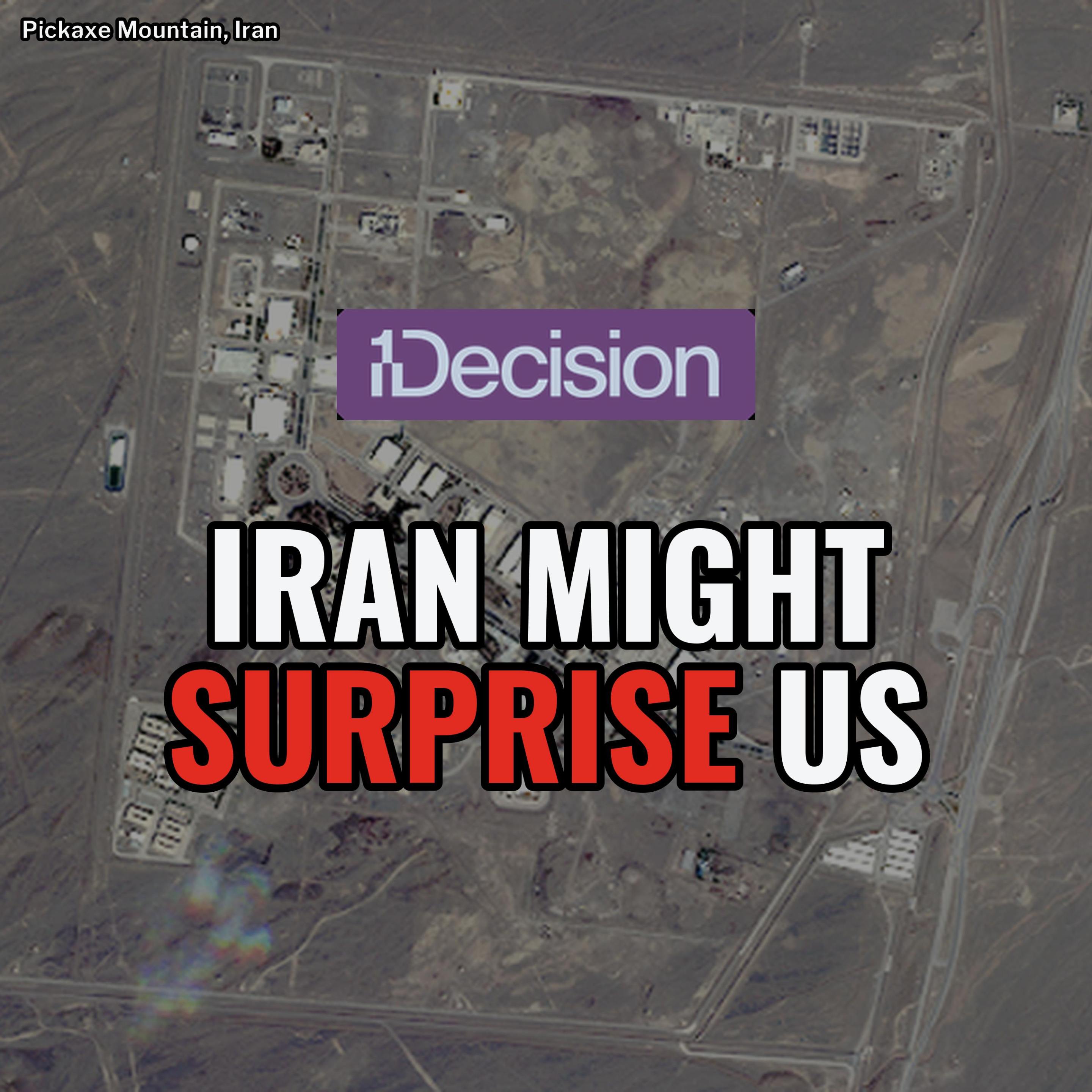
Freilich: Well, I think it was absolutely the right thing to do. And I think the result was very good, if not excellent. I think as time has gone by, the battle damage assessment, the assessments of what happened increasingly substantiate the fact that severe damage was caused to the Iranian nuclear program. And Fordo was put out of action. That's the nuclear enrichment site, the one deep underground. That was the toughest target, and it was at a minimum damaged severely. And the Natanz enrichment facility was essentially destroyed. And the Isfahan conversion facility was destroyed. Now, unless the Iranians have, which they might, but unless they have secret enrichment and conversion facilities, they cannot build a bomb. Can't be done, just technologically.
Dearlove: Now, considering how remarkably or unbelievably penetrated they were both by Israeli and American intelligence, and I would imagine by MI6 and others I'm not going to comment. But, you know, we all lived with this problem for so many years. It goes back a long, long way.
Freilich: Those of us who have been consumers of intelligence have a great admiration for the Brits. But they were clearly so penetrated, I don't know what term to use, unreal. It's hard to imagine that they have these facilities or that they can build them now secretly without getting caught. And so I think at a minimum, we've gained a year or two. That's the worst case scenario. And a more likely scenario, I believe, is that we've gained a few years of time. This whole battle against the Iranian nuclear program has been going on for thirty years now. It's all been about gaining time, whether it was through various intelligence operations, covert operations, some limited direct attacks. So we've gained another few years. The only solution to this is, of course, a diplomatic deal, because that's the only thing that can provide for a long term resolution of the problem. The Iranians so far haven't been willing to come back to the table. It's understandable, they just got hit pretty hard. And the question is whether once they get over the shock and can put some national pride behind them, whether they decide that they should come back to the table and reach a deal or not. They're going to have to make a critical decision after decades. Is this nuclear capability, which was designed to be the ultimate guarantor of their security, is that what it is, or is it actually the greatest threat to their security because it invites an Israeli and an American attack?
Dearlove: Well, I mean, I agree with your analysis of the importance of this program, but it seems to me that the program also was very much vital to the survival of the theocratic regime. I mean, we're coming up to a succession issue in Iran anyway, given the age of the supreme leader and the fact that maybe his son is a possible successor. Is the Israeli view that this is now fragile politically in Iran and that it's likely to have some significant regime change of some sort?
Freilich: I don't think anyone is willing to write a strong assessment that the regime's days are limited. We've all been predicting the imminent demise of the Islamic Republic just ever since 1979, and it hasn't happened so far. I don't know that it's going to happen anytime soon. If it does, it's not going to happen because of outside interference, intervention, I believe. The people of Iran are gonna have to decide that it's time to do it.
Raffini: We've kind of talked around it, but, you know, when it comes to President Trump's foreign policy, when it comes to some of these intransigent diplomatic problems, it can occasionally be a benefit to have the guy who doesn't give an F what the norms are and just does the thing, like striking Iran, for example. The two Democrats before him never would have done that because the political diplomatic establishment would have said there's it's too risky. There's there's too much involved. The backlash could be too strong. Trump either doesn't know or doesn't care and does it anyway. And you've talked a bit about how his rather insane pitch to make the Riviera of Gaza, it's not realistic and it's not helpful. But it also is kind of helpful because at least it got people thinking in a different way. What is your calculation, the risk benefit analysis of this kind of chaotic foreign policy coming from the US?
Freilich: Well, I'm not a fan of chaotic policy making anywhere, whether it's in the US or Israel or elsewhere. If there is any benefit to systemic or methodical policy planning processes, we should usually be pursuing them, because otherwise we're in a state of semi chaos. But occasionally, in certain circumstances, having somebody who's willing to break all the rules, just come in and smash things, sometimes it does work. I just think as an overall approach, it's certainly not a wise one. And coming from the United States, the leader of the world, the number one leader of the world, most of us look up to for leadership and others fear. That's not, I think, the way the US should be doing things. I think it was President Obama who said that great powers don't bluff. And I think they also don't do chaos. They don't do breaking things. They usually should be thinking about things very, very carefully.
Dearlove: I think it's not so much the impact of Trump's unpredictability. It's the consequence of countries having to rethink the international situation because of the way Trump behaves. And some of the outcome of that has been surprisingly positive. Look at NATO. It forces governments to think about their national security and their foreign policy in a way which would have been impossible if Trump hadn't, as it were, catalyzed the whole situation with his unpredictability. So there is a positive side to it. And, I know I'm in a minority saying that, but I think it's important to realize that this has created a dynamism, which is dangerous, but there are some aspects which could be judged at this moment as positive.
Raffini: Professor Chuck Freilich, thank you so much for joining us. We really appreciate you taking the time.
Freilich: Thank you for having me. It was a pleasure.
Raffini: That's it for this week's episode of One Decision. For more conversations with leading decision makers and world leaders, check out onedecision.com and our YouTube page where you'll find additional videos, commentaries, and explainers. I'm Christina Raffini. Thanks for listening.