Hosted by Christina Ruffini and Sir Richard Dearlove
Guest
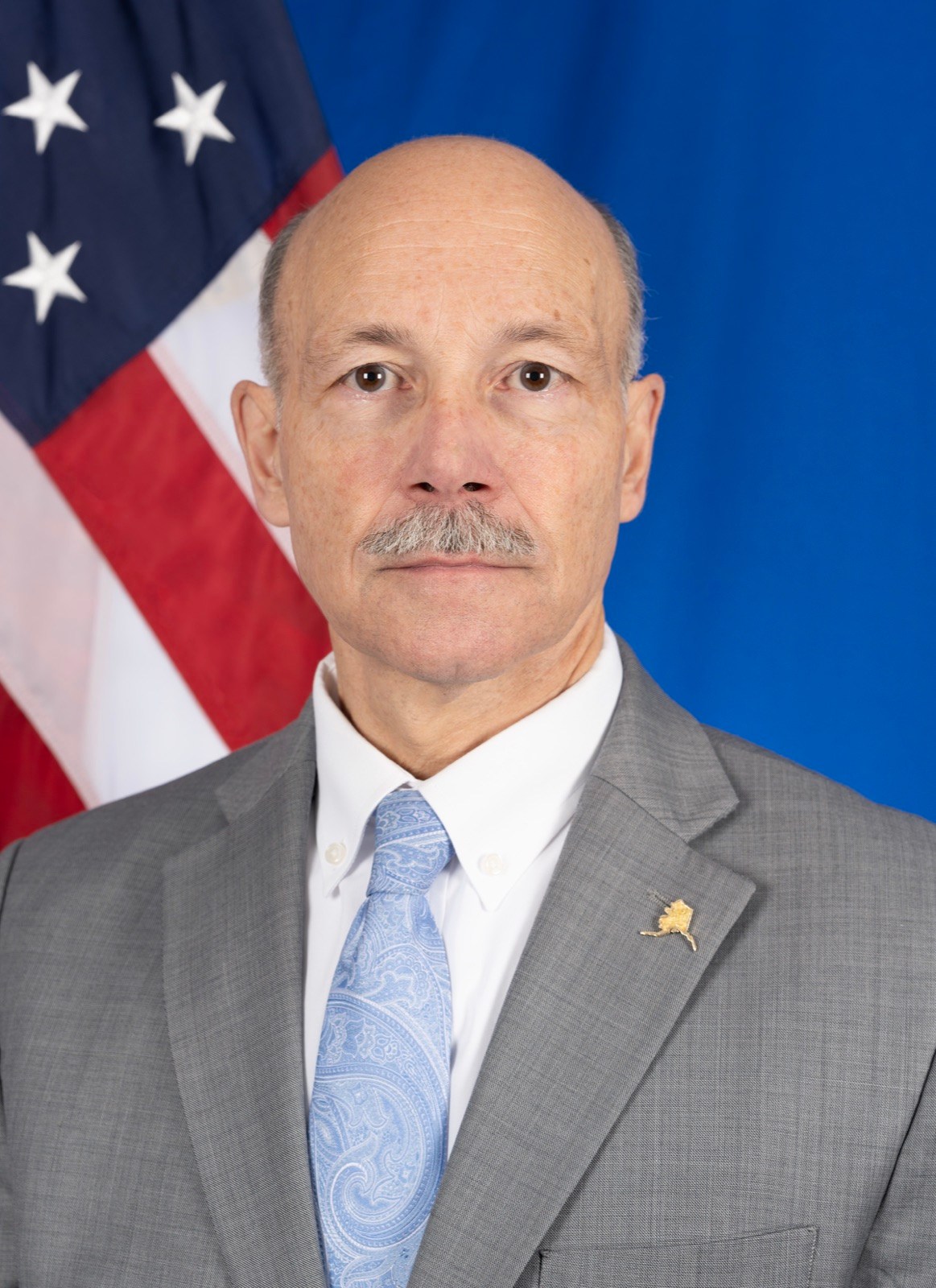
Ambassador Mike Sfraga
Ambassador Mike Sfraga is the first U.S. Ambassador for Arctic Affairs and is currently Chancellor of the University of Alaska Fairbanks.
Episode Summary
This week on One Decision, guest host Rosanna Lockwood and Sir Richard Dearlove, former head of Britain's MI6 sit down with Ambassador Mike Sfraga, the first U.S. Ambassador for Arctic Affairs, to examine one of the world’s most rapidly changing regions, the Arctic. Ambassador Sfraga, currently Chancellor of the University of Alaska Fairbanks, starts the discussion by outlining the seven forces reshaping the high north including rapid climate change, shipping strategies, and a desire for access among military global powers. The conversation explores the impact of Finland and Sweden joining NATO, shifting the balance of power along the northern region, complicating Russia’s long-term strategic goals. The group further unpacks Russia’s extensive militarization across the Arctic, including new bases, island fortifications, and the significance of its Northern Fleet on the Kola Peninsula. Ambassador Sfraga further explains why the Bering Strait is becoming one of the world’s most important corridors and why the U.S. needs infrastructure investments to challenge both Russia and China’s influence. The discussion also details the speed of Arctic warming and the effects on global weather systems, coastal communities, food security, fisheries, and even catastrophic storms now reaching Alaska.
Listen & Subscribe
- Watch on YouTube
- Listen on Apple Podcasts
- Listen on Spotify
Transcript
COLD OPEN
Dearlove: I think the most important development strategically is the joining of NATO by Sweden and Finland, partly because of the military capability of of the two countries, which is significant and really specifically designed to fight in northern conditions.
Sfraga: Russia has absolutely invested far more in their military. Of course, they're bogged down in Ukraine, but we should not be thinking that they do not have significant capacity to wage war.
Lockwood: I'm gonna shock listeners by somehow weaving that in later in the conversation because The Middle East does actually play a strange sort of observer role when it comes to Arctic conversation and dialogue.
Sfraga: I don't see a lot more shipping happening along the Northern Sea route as long as we have this war on Ukraine with Russia. It's a it's a it's a not it's not a business friendly environment for Russia and for the international community to invest in Russia at the moment.
INTRODUCTION
Lockwood: Hello, and welcome to One Decision. I'm Rosanna Lockwood, joined, of course, by my cohost, Sir Richard Dearlove. Sir Richard, good to see you. We're talking about the Arctic this week. Is that something that keeps you up at night?
Dearlove: Actually, yes. I'm really interested in it. I have a family connection in that my wife was born in Reykjavik, and so I've been to Iceland quite a lot, and of course, I've been to the northern parts of Europe quite a bit professionally in my past life Norway, Finland, Sweden, reasonably familiar with that part of the world, and it's really exciting going up there, but wow, harsh conditions.
Lockwood: There's actually so much to speak about when it comes to the Arctic and it gets somewhat sidelined, but do you think the Arctic is going to come more into vision in the coming years?
Dearlove: Yes, definitely. Partly this greater access because of the melting of the ice, but its strategic importance and the fact that it's unfortunately in a way being militarized. I mean, China and Russia are militarizing it. There's an American response. I think key question, I wonder whether Greenland really will at some point in the future join The United States even if it becomes totally independent of Denmark. There would be very strong reasons and a huge benefit to the Greenlanders if they were a state of The United States.
Lockwood: It does have a certain logic. Well, you mentioned Arctic warfare. We're gonna be speaking a lot more about that in the episode as well because Arctic warfare training has been a big part of British Armed Forces training for a long time. The US, of course, NATO forces around Europe, and of course, when it comes to Russia, one of the most heavily militarized nations in the Arctic and it just dominates that sphere of the world. So we're going to be talking a lot about Russia. In today's episode we're speaking with former Ambassador Mike Sfraga. He was appointed as the first US Ambassador to Arctic Affairs by President Biden. He currently serves as the interim chancellor of the University of Alaska Fairbanks. He is a keen geographer by training with decades of Arctic policy experience that's not really even doing him justice. He is the man to know when it comes to all things Arctic, especially from Alaska. Good to see you there, Mike.
INTERVIEW
Sfraga: Good to see you as well. Thank you for having me.
Lockwood: Listen. We have a lot to discuss, and I want to kind of start this episode, even though we've got a very informed sort of audience when it comes to One Decision, by giving those who might not be familiar with the Arctic a sort of a little intro into why it's important, why we're talking about it in this episode. So Mike, if you wouldn't mind, given your keen expertise in the area, can you just tell listeners who might be sort of new to the topic why we really need to care about the Arctic?
Sfraga: Well, thank you. There are a number of reasons why. I think there are seven primary reasons, and I'll just go through them very quickly. One, obviously, is climate change. It's reshaping the Arctic, and if you reshape the Arctic, you reshape the global weather and climate patterns. So, overall, it impacts the planet. The second would be an emphasis on commodities, oil, gas, critical minerals, all in the national, international narratives. The third would be commerce. There's much more shipping happening in the North. More will come as the ice shrinks in the Arctic Ocean. The fourth would be connectivity, and that's not just ports and Internet and those sorts of things. It's about really an interconnected planet. I think the fifth would be communities living in and around the Arctic are impacted to the good and to the bad. The other is the cooperation that's happened in the Arctic and the impacts of the war on Ukraine to overall Arctic cooperation. And then finally, I think it's competition. This growing militarization of the North because it's become a national security and it's become a homeland security issue for The US, but it's in our collective interest now because the Arctic Ocean is far more accessible and nature abhors a vacuum. And so there's a lot of activity in the North, and that activity can be very good. There's also security and other concerns related to more access to and from the Arctic.
Lockwood: I think that's a really sort of concise opener and really lays out what we've got to talk about here. I want to bring in Sir Richard here because on the geopolitics side, you mentioned there Mike, of course, the Ukraine war, which, you know, when we saw it beginning if we can say in earnest with Russia's invasion full scale invasion of Ukraine in 2022 of course after 2014 as well, what we've seen since then is quite a change when it comes to how we consider the Arctic and actions being taken there. I mean just to name a few things that matter, and Sir Richard I'm sure you've got a lot to say on this, you know Finland and Sweden joining NATO. We saw our guest here becoming the first ambassador to the Arctic for The US. We've seen Donald Trump saying he's going to acquire Greenland. We've got Zapad exercises by Russia this year firing missiles over Arctic seas. We've had Chinese and Russian bombers conducting joint patrols near Alaska. I mean that's just to name just a few things that happened in the kind of years since 2022 when Russia was for all intents and purposes kind of frozen out of a lot of the Arctic dialogue for political reasons. Sir Richard, what is the point where you would like to kind of highlight where the West and Russia are kind of, you know, where they're at?
Dearlove: Well, I think the most important development strategically is the joining of NATO by Sweden and Finland, partly because of the military capability of the two countries, which is significant and really specifically designed, particularly in the case of Finland, to fight in northern conditions. Of course, they have a formidable army for the size of the country because they still have military call up, military training, and this has changed the strategy of, let's say, the northern flank of NATO very, very significantly indeed.
Lockwood: Well, let's bring in Mike on the point you were talking there about NATO's northern flank as they're referring to it because when I hear that term, I think of the way that Russia considered a lot of what was happening on the eastern side of NATO as the eastern flank and they considered that an aggressive reason to invade Ukraine. So when I hear northern flank, is that potentially gonna be used as justification by Russia to mobilize more military in the Arctic? Talk to our listeners about why that could be such a risk.
Sfraga: Well, I believe that Russia has already increased their militarization along their northern flank, the Northern Coast of Russia, their Arctic Coast. They have built revitalized old Soviet bases. They've built new bases, not just along their coastline, and we have to remember how important the Arctic is to Russia, as important as it is to The United States and Canada and Iceland and Greenland and Norway and Sweden and Finland, can keep going. But they've already remilitarized old Soviet bases. They built more bases along their Arctic coastline, but they've done even more than that. They have militarized or remilitarized islands north of the Russian Arctic coastline from Franz Josef Land all the way to the Wrangel Islands, which is a stone's throw from Alaska. So it's almost like a sandwich effect where you have a northern coastline of Russia militarized and commercialized. We have to remember that a lot of freight for Russia runs throughout that Northern Sea rather than down the big Russian rivers for their own communities. It's one reason they have such a huge icebreaker fleet. It's a commercial commodities transport fleet, but it also has incredible influence which is why countries need more icebreakers and more presence in the North. But they've militarized islands north of their northern sea route. So in effect, you've created a sandwich here where you have a coastline militarized, a northern sea route for commodities and their other transportation of icebreakers and their naval fleets. And then north of that, they've militarized islands. So that northern idea of north to a Russian is very much a part of their DNA, but it is so critical to their economy, oil, gas, critical minerals, the largest nickel refineries and deposits there. So it's really a part of their commercialization, their commerce. But I would also add, in terms of a NATO context, the following. Russia's northern fleet is on the Kola Peninsula. That is their second strike capability. So if they want access to the Atlantic, they must run along the coast of Norway down the GIUK gap, which is what Sir Richard was talking about here, why Greenland and Iceland are so important to gain access to the Atlantic, which then gives them access to the Baltic, gives them access to the Black Sea. That's why from the Bering to the Black Sea, the Baltic, the Bering, the Beaufort, it is all connected, at least for those of us in the North. And we've seen with the war on Ukraine, the Black Sea is connected to the Arctic and the Arctic to the Black Sea as well. It's complicated. And I would say that Alaska serves as probably a western bookend for NATO. If you think about the North American Arctic and the Transatlantic Alliance, I would argue that the seven Arctic nations in NATO, they serve as a transarctic alliance, which I think could and should strengthen the transatlantic alliance.
Lockwood: How strong, in very simplistic terms, is The US versus Russia if something were to get to that sort of fever pitch? And when we say US, of course, we mean the whole Western alliance. And we know of course geographically Russia is not the bulk of the Arctic but we're talking at least half. In terms of military bases you've got the numbers right in terms of how many military bases and ports there are in Russia in the Arctic Circle versus The US, and is that presumably why Trump is making maneuvers in Greenland?
Sfraga: I think it's part of it, obviously. We have woefully little compared to what Russia has along their northern sea route, along their Northern Arctic Coast. There are no military bases on the North Slope of Alaska. We have very little capacity on the Bering Strait side, the Alaska side. There are no deep water ports in America's Arctic. I'll say it one more time. No deep water ports in America's Arctic. You can't park a gray hull or a big coast guard cutter anywhere. That's why we are building a port out in Nome, but we need a string of ports. One needs to be in Adak on the Aleutians. One needs to be in Nome on the Western Coast of Alaska. Need to fortify our current ports and piers in Anchorage and in Kodiak. What the Russians have done is they have a series of ports, military and commercial along their northern sea route and down along their coastline, which parallels the Bering Strait, which is why you see not just the Alaska delegation, but, yes, Senator Sullivan, Senator Murkowski, Representative Begich, all pushing for more security, more homeland and national security assets in Alaska because of the activity not just in Russia, but the activity as Sir Richard has noted and you noted, much more Russia in the Arctic, China in the Arctic, and Russia and China together in the Arctic, and that gateway is through and on the Bering Strait. That's why The US needs more capacity here. We have the largest concentration of F-35s, fifth generation fighters, I don't know, 15 miles from where I'm speaking to you. That's safeguarding the homeland, the North American Arctic, the Europeans, all of us, because of Russia, because of China. But if you look at a map, think about North Korea and their capability to reach The United States, North America, on and on and on. So, yes, it's an Arctic play in terms of what we build in The US and what we build with our NATO colleagues and allies, but it also more and more has become a Pacific theater, an Arctic Pacific theater, where China's activities in the North have increased with the support and help of Russia, and Russia has absolutely invested far more in their military. Of course, they're bogged down in Ukraine, but we should not be thinking that they do not have significant capacity to wage war. They do, especially out of their northern fleet off the Kola Peninsula.
Lockwood: Sir Richard, bringing you in here when it comes to Russia and, you know, necessarily China as well, but how do you begin managing that dialogue? Because the Arctic is essentially international space, and it's got to be cooperated on. How do you begin to manage that when you've got something like the war in Ukraine going on and Russia frozen out of a lot of dialogue and debate?
Dearlove: Yeah. I think, because it's such a strategic area for NATO and The United States, as Mike has explained, I think given, let's say, tension and communication between Russia now and the West, I think it's very difficult to focus on issues which are not immediately to do with Ukraine. So it's, as it were, pushed down the priority list, and I doubt at the moment it's given as much importance as it should be. Of course, it's complicated because you have Trump, let's say, wooing Russia, but at the same time saying China is the greatest threat in the medium to longer term. Actually, when you look at the Arctic, you have China desperate to be considered an Arctic player and locking itself into this new relationship. I mean, the question I wanted to ask Mike, the speed at which access to the Arctic is opening up because of climate change, I mean at what speed could you explain to our listeners, you know, how fast is that actually happening? I mean at what speed is the ice at the moment disappearing? Because I keep reading stuff that says that the warming in the Arctic is actually happening significantly faster than in other parts of the globe, and you know, you get a climate temperature change, which is very significant more quickly.
CLIMATE CHANGE IN THE ARCTIC
Sfraga: Well, yeah, you've read right. The Arctic is warming depending on where in the Arctic. It's not a monolithic, there's different Arctics, but it's four times plus the global average. So to put that in some places off a small bar, there are reports of seven times faster than anywhere else on the planet. So here are the implications. Over the last thirty to forty years, we've lost about 50% of the extent of the summer sea ice. So just if in your mind's eye, think about looking at the Earth top down, there's 50% less of the summer sea ice extent, which we always take in about September, there's less of that by half. The ice thickness is about 50% less than it was just decades ago, and the overall volume of ice in the Arctic Ocean is down about 70%. So, when you look at maps over time, in your mind's eye, just think about the entire Arctic Ocean, which is about half the size of the continent of Africa, it's probably one and a half times the size of The United States. Imagine that shrinking down. And so there's access. It changes global climate and weather patterns, but it's a ferocious cycle, Sir Richard, in that the darker the landscape, the more heat it absorbs. So the more ocean exposed, the more heat it absorbs from the sun, which just heats the Arctic Ocean even more. And that's an amplifying effect. It's just generating itself over and over. And that's what we see. This trend line does not look good if you want to have the stable climate we've all experienced, nor does it look good for coastal communities, whether they're in Alaska or on any side of the Arctic. Just in the last three to four years, the state of Alaska, the Western Coast of Alaska, and just a few months ago, the Southwest Coast of Alaska, experienced typhoons. The North is where typhoons and hurricanes used to go to die. They're not dying. They're being generated in the South Pacific, and they are moving north at a ferocious pace, hitting the Western and Southwestern Coasts of Alaska, and devastating dozens and dozens of communities that are subsistence communities. They live off the land. No road access. The only access is a barge or two, maybe in the summer, or air access. The other part of this is the permafrost. That permafrost is thawing in Russia, it's thawing in Canada, it's thawing in Greenland, and that has implications for it used to be a carbon sink, now it's not. That carbon and methane is being released, which is yet one more generator of making the planet warmer than it was just decades ago.
Lockwood: Mike, that's one of the reasons why we see other countries in the world that some listeners might be thinking, well, why are you talking about China? Why are you talking about The Middle East or other countries in Asia getting involved in Arctic dialogue, isn't it? Because it's not only shipping, perhaps we'll come back to that, but it's about the climate effects that happen, sort of the knock on effects around the world. Can you explain to us, you know, for those who are wondering why some countries from, for example, The Middle East might get a seat at the table in these Arctic discussions, how important is it?
Sfraga: Well, I think there's a number of factors. One, obviously, a changing climate impacts us all. What used to be a breadbasket may no longer be as productive. The other is just pure governance and politics. If, again, nature abhors a vacuum. I must say that the Arctic is governed. We know what Arctic states own, quote, unquote. The United States, Canada, Iceland, there are boundaries that are, for the most part, observed by all states. The activities we see with China and Russia mostly happen in international waters, mostly by international law, but it's the pace at which those activities and the type of activities being conducted by those two countries that are concerning. There are reasons why Japan and South Korea and Singapore and now The UAE and The UK and other non Arctic states, why they come to international conferences, which is quite different than a more formal organization like the Arctic Council, which is what I think Sir Richard was alluding to before about these seven nations, eight nations that form the Arctic Council. But there are reasons. The Japanese, the Koreans, they have a long, UK, Germany, long history of doing Arctic research, conducting exquisite research with partners from throughout the world. They have continued interest there. Japan and Korea, a lot of fisheries work. They're very worried about ocean acidification. Any change to the Arctic Ocean impacts food chains throughout the North and throughout the world. What's happening on The US Arctic side, the Bering Strait side, is very different than what's happening perhaps in the Barents or in the Baltic. And these are very different Arctics geologically and geographically, but they're also very different in terms of what activity you might see from Russia or China on the European side of the Arctic versus what we're seeing on the North American side of the Arctic, which is on the water, coast guard, naval activities, joint bombing missions, and the pace of those is concerning. The pace of those have picked up quite a lot, and so it's just this nesting doll of issues that we're seeing literally unfold between our eyes, and to Sir Richard's point, in the middle of a ground war in Europe.
ARCTIC SHIPPING ROUTES
Dearlove: You mentioned shipping, and I think it's an important point in terms of how we observe the region in the future. I was recently a keynote speaker at a big conference in London for the New York Shipping Index, and there was quite a lot of discussion of the northern route from China to Europe and the fact that the ships going that way will only take eighteen days as opposed to I can't remember how many days going the other way, but it's significantly more, particularly if there are, you know, piratic problems and they've got to go around Southern Africa. But one of the things that came up in discussion was the actual shipping experts saying that it's really quite a long time before that route will become commercialized and operative as a major trade route because of the lack of infrastructure, the fact that the ships have to be adapted to northern passage and the possibility of meeting significant ice and all the other things. So, I mean, how fast is this new factor in terms of world trade?
Sfraga: It's a wonderful question. I think to some degree, it's been hyped a bit about how wonderful a new route could be. It's totally unpredictable. You know, industry will tell us. Commerce will tell us. Lloyd's of London, they're just not going to insure ships that they believe will be at risk, either by ice, impeded by other countries. They want countries that run by the rule of law. They do not want to be extorted by some countries to run their ships through their territorial waters or what they claim to be. So, for instance, I don't see a lot more shipping happening along the Northern Sea route, as long as we have this war on Ukraine with Russia. It's not a business friendly environment for Russia and for the international community to invest in Russia at the moment. So although the geography is sitting there to perhaps exploit because of what I said before, the shrinking of the ice cap, in some ways, it's far more dangerous because icebergs are far more unpredictable than solid pack ice. We know that from, you know, Titanic and other incidents. But I think industry will tell us when the time is right.
THE AMBASSADOR ROLE
Lockwood: Seems like a very concrete step forward to deal with the underinvestment in the Arctic. From your point of view, it's actually, I hope you don't mind me saying, quite a tough nomination to get your ambassadorial role. You had to go for a couple of hearings and was there a sense of having to justify the importance of the Arctic before you became the first US ambassador to the Arctic?
Sfraga: Yes. Well, thank you for that. Yeah, there were questions about whether or not you needed a US ambassador for Arctic affairs. Obviously, I think The United States does. One of the few countries that does not have an ambassador for Arctic affairs. Non Arctic states have ambassadors for Arctic affairs. And in my discussions during the nomination, then once I took the seat, the position as I saw it and then conducted it, was a value add to our in country ambassadors. My role was to insert Arctic policy into US foreign policy, was to inform that within the State Department and within countries in the Arctic region, and in countries that have Arctic interests but are not in the Arctic. So my role, as I saw it, was to work in tandem, in cooperation with our in country ambassadors, all coordinated through the State Department, so that my expertise would be focused on Arctic issues or Arctic ripple effects or Arctic components of our foreign policy for that nation that that ambassador was in or overall for the Arctic. But I went a step further. I tried to connect our foreign policy to our posture in the North, and that's a much, much larger toolkit. It included parts of what is the Arctic Council, but it was far broader than that. It was everything from energy to National Homeland Security coordinated with State and Pentagon. I mean, you could keep going to all the issues. But I saw this role as one voice speaking for the nation's Arctic posture. We had, we came out with a new Arctic policy. My job was to project and reflect US policy related to the Arctic.
TECHNOLOGY AND RESOURCES
Dearlove: Mike, at the beginning in your list, very useful list of topics, so one of them was, I think, communications. I was wondering what the overall impact of modern technology is having on the Arctic.
Sfraga: Yes. Well, thank you, Sir Richard. It is a hostile environment for technology, for humans, for animals. It is dynamic, and it's really tough doing business here. Everything costs more. Everything breaks. At 40 below zero, things just break. My truck breaks at 40 below zero. So it's a really hard environment. What's interesting is the amount of fiber that has been laid in and across the Arctic, whether it's coastlines or between the Pacific and Alaska and the Arctic, between Northern Europe, even into points into Iceland, then Iceland serving as a bridge into The United States. You can go on and on. If you look at the TeleGeography map, you'll see a lot of fiber on the seafloor connecting the Arctic. And the reason is we have incredible speeds, and as you know, any millisecond you can take off of either data or information, that's money. And so there's a driver there. Also, there's disparity. So I sit on a campus that has some of the most advanced computing on the planet for a lot of reasons, but a lot of Arctic reasons as well. But if you go to my home, which is just a few miles away, I can't get Netflix. I can get Flicks, but I can't get Netflix. It is satellite delay. A lot of us are on satellite. So there are incredible technologies in place right now throughout the North, but it's disparate in a lot of places because the North is very, very different. Much more investment needs to happen. It needs to be affordable, reliable, and redundant, and that is really hard to do here. Now, there is an upside here, and that is the more data centers that are needed around the globe, you may pay less for air conditioning because, you know, we live in one. And so, northern communities, northern countries are thinking about ways in which to leverage the landscape, so that you can decrease the cost of data centers throughout the North that could possibly help with business and telecommunications and all the reasons we need data centers for, but you still need a transport out from these northern areas. And I think you might see industry come in and invest a little bit more knowing full well the cost of electricity. Just talk to any data center, pick your favorite US state. I don't know. I'll pick Texas for a moment because it gets really hot there. But they live down there in America where they have roads and reliable Internet, so it's a very different equation. So there is some upside. AI can help, but AI needs energy, it needs data, and that value equation may change in the future, so there could be opportunity, but there's still a lot of challenge before us in those areas.
Lockwood: That's fascinating. I'm so glad Sir Richard asked that, because it's not something I had thought about previously, but when you're thinking about tech development of AI and the use of chips and hardware increasingly advanced around the world, one thing we all know there is a race on for, of course, is rare earth minerals, and the Arctic is home to a lot of natural resources. Mike, can you just give our listeners a sense of what people are gonna be fighting for under the ground up there?
Sfraga: Well, you know, it's kinda begun. There are critical and rare earths throughout the North. The challenge for The United States, Alaska, Canada, Greenland, anywhere in the North, Norway, Sweden, Finland, is that in many places, there are no roads to where the resource is. So, even though a state like Alaska is rich in critical and rare earths, we don't have a road system up here. It just doesn't exist to go out and get the minerals. Same thing in Canada, looks very much like Alaska, and I would say same in Russia. I mean, this landscape is a desolate landscape. If you're looking at it in terms of roads and highways and connectivities, it just doesn't exist. So if a company wants to invest in building a mine because there's a really rich deposit somewhere, they likely are going to have to build a road to it. They're going to have to figure out how to bring energy to that. In Alaska, we burn diesel, a lot of it, because we just don't have the big access to natural gas or other big quantities of energy. And then you're going to have to pay a workforce, and then you're going to have to make it sustainable, and then you have to figure out, will you just take the resource out of the ground and ship it someplace else to be produced? Because that's a dirty business, and it's gotta be done right. And where does that go? Right now, China's got a lock on resource, mine, and production, and supply chain. And I don't think the rest of the world is in a good place when one nation controls a commodity or commodities like that. So what you're hearing and what we are seeing is a lot of interest by companies and nations in figuring out the value equation to getting to critical and rare earths throughout the North and everywhere else in the world where it's accessible, affordable, and reliable, and that's what we're seeing right now. Certainly, Alaska is a key to that. We are a big part of that.
Lockwood: That wraps up this week's episode. Thank you once more to our guest, former ambassador and chancellor Mike Sfraga. For more conversations with leading decision makers and thinkers, do check out 1decision.com, and, of course, our YouTube page where you'll find additional videos, commentaries, and explainers. I'm Rosanna Lockwood. Thank you for listening.