Episode Info
- Season1
- Episode2
Hosted by Christina Ruffini and Sir Richard Dearlove
Guest
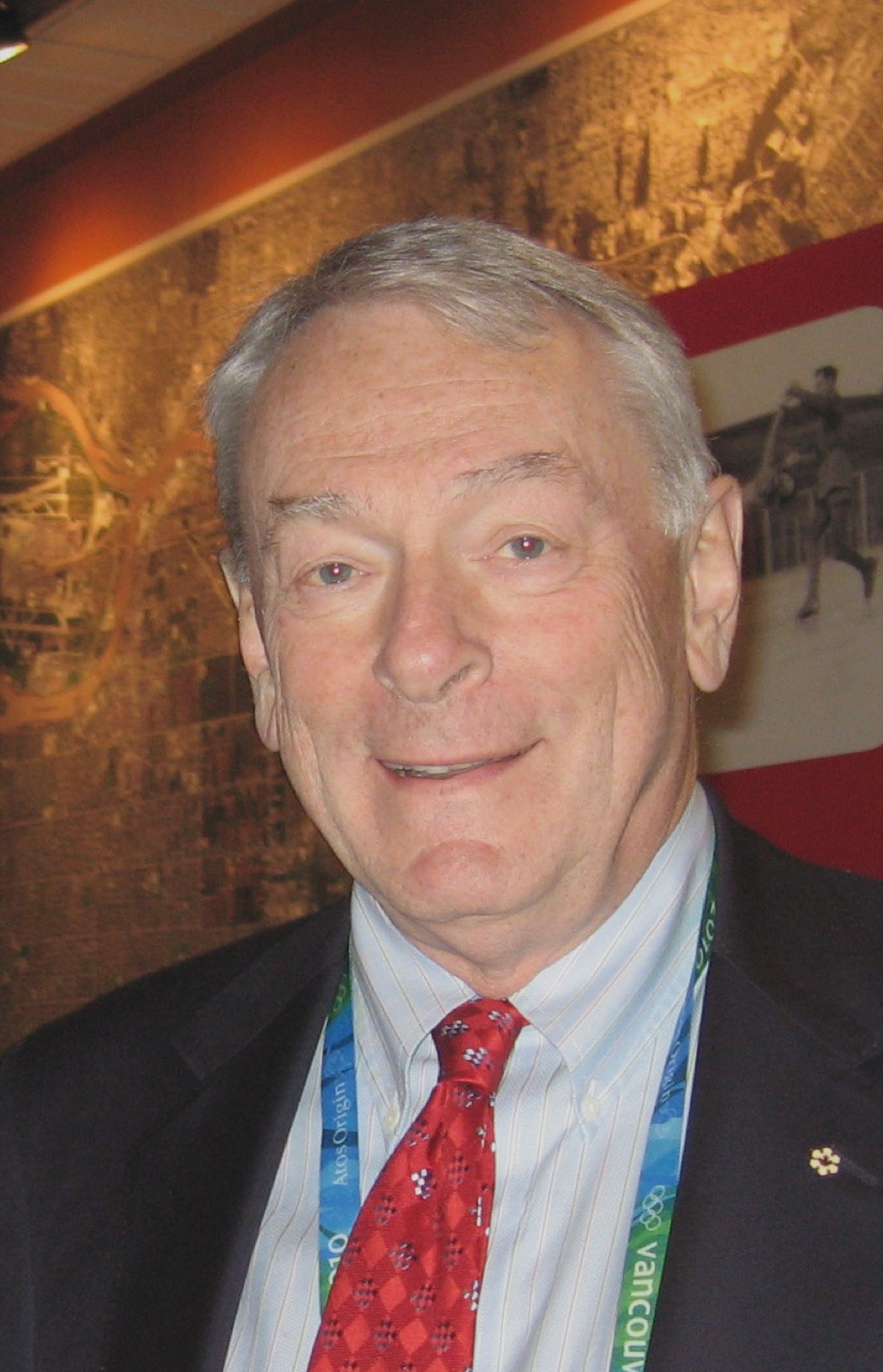
Richard Pound
Richard Pound is responsible for deciding where each Olympic Games should be held and faces consequences every time.
Episode Summary
It’s gotten increasingly tricky to decide where each Olympic Games should go. There’s always gonna be a reason why not. And he has to face the music, every time. Now, here comes China, with Richard Pound.
Listen & Subscribe
- Watch on YouTube
- Listen on Apple Podcasts
- Listen on Spotify
Transcript
INTRODUCTION
Kosinski: Hi, everyone. Welcome back to One Decision, where we delve deep into the kinds of choices you hope you never have to be responsible for. Or maybe you do. Either way, we're your inside roller coaster track through them. Sometimes there are zero great options, but someone has to take one of them. This episode, the moral and PR minefield that has frequently become the Olympics. Maybe you just enjoyed yourself a nice spate of sofa spectating there with the Tokyo games amid a raging pandemic where upwards of 90% of the local population at one point wanted them canceled. But have you wondered how that decision is really made of where to host them? Google no more. We are talking to the longest serving member of the International Olympic Committee, the IOC, an Olympic swimmer himself for Canada, Richard Pound. He was even named by Time Magazine one of the most influential people in the world. And he was one of those people who faced the decision to hold the next Olympics in 2022, if the planet still exists by then, in the People's Republic Of China. First, let's set the scene with someone we voted one of the most interesting people in the world who's made his share of tricky decisions. Former head of MI6, Sir Richard Dearlove. Welcome back.
Dearlove: Hi, Michelle. It's nice to be with you again.
Kosinski: So do the Olympics play a role in the game of geopolitics?
Dearlove: It's a huge opportunity to display, you know, your country at its best. So, of course, geopolitics come into it. That's certainly my my firm view.
Kosinski: Now Richard, I know your father was an Olympian and an extremely unique one.
Dearlove: Well, my father was in the 1948 Olympics, and they were held in London. And they were held really on a shoestring because it was in the aftermath of the war. My father was one legged. He had had an amputation as a child after a really serious accident and he walked on crutches, but he was a phenomenal athlete. He played one leg of tennis extremely well. He was a very good water skier. You know, as a family, if we went for a walk, my father would walk 10 miles on crutches without even thinking about it. That is very British. He was a very tough and hard man, but he coxed the British Olympic eight and they won the silver medal. And he was a well known figure in the rowing world because you know legs are quite heavy and actually if you remove one leg, he was quite light, so he was ideal. Now there's a minimum weight for a cox. If you're under the minimum weight, you have to carry weights in the boat. Oh my gosh. But I mean, the ironic story is that in the parade in the stadium at the beginning of the Olympic Games, when all the nations paraded through, the British Olympic Committee had banned my father from marching with the rest of the team because he was on crutches.
Kosinski: That is awful.
Dearlove: But anyway, he was a great one for propagating, as it were, the Olympic ideal.
Kosinski: So now China will host the Olympics once again next winter in Beijing. But it's happening at a precarious time in terms of China's unsportsmanlike behavior, you could say, in the world arena.
Dearlove: Well, it's attempting to achieve superpower status. And its ambition, I think, is to displace The United States as the primary power on the planet. And of course it's based on a completely different value system than the one that we adhere to in Western democracies. It's an attempt by the Chinese to rewrite the international order, which has governed generally world affairs since the end of World War II.
Kosinski: In so many ways, China seems willing to stop at nothing to win, whether it is stealing intellectual property, hacking, surveillance, incarcerating possibly millions of an ethnic minority, or choking free speech. It's fine with this.
Dearlove: Well, I think it feels it's impervious to criticism, external criticism, and it makes its own set of rules and it doesn't really see why it should follow the West's rules. But I think it's terrified of, let's put it like this, the virus of democracy.
Kosinski: But lately, we see more fear in the business community, for example, of angering China when, say, media companies want to make sure that their films are China friendly. Is the world letting China get away with too much?
Dearlove: Well, I think the world has been letting China have too free a run, and The UK is as guilty as any country, if not a bit more. But I think we have been insufficiently critical of China, the Chinese model. I mean, since the financial crisis of 2008, I think China's behavior with regard to the rest of the world has significantly shifted. And I think the catalyst for this was the Chinese assessment that American power was passed in zenith and Xi Jinping, as it were, made a move to make China very assertive. But I think what we're beginning to see now that China really has overplayed its hand and it's got its timing wrong and its assessment wrong. And I think everybody is sitting up and saying, hang on a moment, maybe we need to modulate our relationship with China much more carefully. Of course, it's very difficult to come up with the policy answers because it's not like the Cold War.
Kosinski: Do you think there's some risk to China hosting the Olympics in terms of security or even just the stage that it gets?
Dearlove: The last time they staged it, I do remember the opening ceremony. I mean, it was the most extraordinary statement of the power of the nation stage. And you can bet your bottom dollar that the Chinese will do it again in an even more spectacular fashion and it will be designed to impress, particularly in the developing world. I mean China's really damaged itself in the last few years, that's my view. It's ruined its soft power currency. I mean, Xi Jinping has massively overplayed his hand in my view. And internationally they're on a downward curve and it's not clear to me where it's going to stop. I would even go as far as to say, I think that Xi Jinping's leadership may be threatened at some point in the future, in the not too distant future. And the reason I say that is that all communist leaderships are factionalized, very factionalized. You don't see that from the outside, but there are huge tensions on the inside. Xi Jinping has spent a lot of time sort of rubbing out the opportunities that his opponents have politically.
INTERVIEW WITH RICHARD POUND
Kosinski: And I know you dealt with them quite a bit. Thanks, Richard. Now let's bring in Richard Pound. Great to have you with us. So fair to say the choice of Olympic hosts is always tricky?
Pound: It is always a difficult decision. Quite often, there are five candidates in the race, takes five rounds of voting to get a simple majority, which is what's required to win. So it's difficult and there are lots of competing interests. You want to move the games around if you can from continent to continent. It's not easy. Well, stakes are often high, but I remember when we were doing the 2012 games, had Moscow, New York, Paris, Madrid, and London. Wow. You could put all those names in a jar and reach in and pull it out and say, well, we're not giving it to somebody who can't organize these games.
Kosinski: Got it. Okay, so when were you grappling with this? What year was it? Normally seven years out. That means this debate started six years ago. Simpler times. Tons of cities want it in. Europeans, Americans. So each of these cities starts exploring the possibility of a bid. But then they look at the estimated price tag from the 2014 Sochi games and say $50,000,000,000. These cities put forward referenda to their citizens to see if they might buy into this. But one after the other they get shot down. No one could afford it.
Pound: We ended up with two finalists, if you will. One is Kazakhstan in Almaty, and the other was China with Beijing. And not easy. Both are different systems of government compared to what we're used to.
Kosinski: Boom, democracy's out, that democracy drops out. Boom, boom, boom, boom. You look at your dinner plate and you got Beijing or you got Kazakhstan. Were you thinking, Uh-oh, at that point, like, Here we go.
Pound: Yes and no. I mean, there was some static back in 2008, or before 2008 when we gave Beijing the Summer Games, and say, yes, you've got whatever the issue is, it's Tibet or Hong Kong or the Uighurs at this point. There will be some pushback on that from people that think we shouldn't do games in these countries. And they don't understand that we don't allocate the games on the basis of politics. You've got to make sure you allocate the games to a country that can organize them, and you're not making a political judgment. That's part of the ongoing problem of an organization like the IOC, which has to be inclusive of all of the countries in the world. When we knew that we were settling on either Beijing or Kazakhstan, that there would be some pushback. Well, was the interesting thing. You know, when tiny Kazakhstan, relatively speaking, comes within four votes of China, there's a message in there somewhere. It's not because your autocracy is better than the other guy's autocracy, just it was, I think, a message from a lot of individual IOC members directed at China saying, look, you're not as popular as you think you are, and this judgment, you know, 44 to 40 is not that you're only 10% better than Kazakhstan in terms of being able to organize these games.
Kosinski: So if you're an analyst in Beijing, should be saying to the leader, We've got some problems here, or some issues at least. Now, do tough conversations go along with these votes? Are you guys like arguing amongst yourselves about who gets it? No, there's a lot of discussion beforehand. Were there any conversations or things that stuck out to you that made the decision for you, either more difficult or easier?
Pound: I think we would probably have had more difficulties in the end if we had taken Kazakhstan, because we would have had a really, really insulted China on our hands, which has a lot of influence around the world. And so we knew it was going to be tough one way or another, whichever one we picked. And at the same time when you look at the two finalists you say, maybe we haven't got the selection process right here. Maybe we have to go about allocating these games in a different way, and we've changed that pretty dramatically for the last award of games. So that it's not just a here's your term sheet, bid against it, and we'll vote. It's let's sit down and see how we can make this work for you in your country and for us at the same time. And we can be a lot more flexible than simply having a made in Switzerland take it or leave it.
Kosinski: That's so interesting. That's been much more effective in recent years. So Richard, did you vote for China? Can you say who you voted for?
Pound: Our votes are secret. Everybody thinks you voted for them or everybody thinks you didn't vote for them.
Kosinski: Okay, so blink once if it was China. Wait, he blinked five times. Okay, very good, Richard, very good. So I know the thinking is we want this to be a global game, so we don't look at what huge problems might be going on in your country. And you know what? I think it's interesting because we always one great benchmark is the 1936 game in Berlin, right? So the 1936 games in Berlin happening during the Nazi era, and the game still went on then, even controversy was building. And so any other thing you could say, well, we had the games in Berlin in 1936, why not have them here? But now that we've entered the twenty first century and you look at what's happening in China with allegations of forced sterilization and possibly millions of Uighurs in these camps and allegations of torture, is it time that these things should play into the decision of who is awarded with the gift of an Olympics?
Pound: Well, our view is this: we have to accommodate all of the countries in the world, and we do that as well as we can. We have a pretty good record, you know, of every four years having a month with all of these countries together at the same time in the same place peacefully, competing, and we think that's a message that needs to be kept and not have that aspirational objective on our part of having a peaceful gathering with all these countries hijacked by other issues.
Kosinski: The committee knew even back in 2015 while debating that there was going to be serious pushback. Since then, China's behavior has only become bolder. And in today's world of calls for accountability, there are now calls for boycotts, for cancellation. US Speaker of the House Nancy Pelosi has called for all world leaders to not show up in Beijing, and the IOC will face far more scrutiny, especially if things go more wrong there.
Pound: If you look at these, the calls for we must boycott, that's not actually what they mean. They mean you Olympic athletes, you should have your rights taken away from you to make our point, and we understand it's not going to change any conduct on the part of China. It's a gesture, it will bring about zero conduct change, the same way the Moscow boycott in 1980 brought no conduct change on the part of the Soviet Union, and in the meantime you've trashed the lives and dreams and aspirations of all of these Olympic athletes from around the world and all of the billions of people that love to watch that peaceful exercise.
Kosinski: And it raises the question then, is there nothing that could go on in a country that is so bad that they shouldn't get the Olympics? Although, let's say something absolutely even more horrible than what's going on in China happened, then I guess the buffer would be the IOC members probably just wouldn't vote for that country, yeah? That's the safeguard of avoiding a place where something so terrible is going on.
Pound: Yeah, mean, the only times in the last one hundred and twenty five years where we haven't had the Games were world wars. There's a good reason for that. It's not fair to make everybody a hostage to another agenda. They're well meaning groups with well directed concerns, but they're all directed against the political decisions that are made in China, and it's a political problem. Countries around the world, they know how to send messages. I mean, it'd be very easy. No government would accept any invitation to go to China and invoke trade sanctions and all sorts of other things to get a message through. And believe me, China would hear those messages and that is more likely to have an impact on their conduct, which is really what you want.
Kosinski: For sure. Does it not piss off the committee that after Beijing got the Olympics in 2008, which doesn't really, it doesn't feel like that long ago, but they made some kind of lip service to, Oh yeah, you know, we'll pay attention to human rights. Since then, they've only cracked down on free speech and democracy and now this issue with the Uighurs, that it's only gotten worse. Does it matter to the IOC?
Pound: Does it matter? Yeah, of course it matters. I mean, the sense that we're all individuals and we all have our own views on this, but as an organization, when you're voting for the Olympics, the organization. Our philosophy is we're trying to show that it is possible to have peaceful gatherings, peaceful competitions even, between countries that may be almost at war or on very bad terms with others. Their young people can get together and see that it's possible. I remember when I went to the games in 1960 at the nadir of the Cold War, the Soviet Union, I mean these were all these two dimensional characters. It's not Soviet swimmers, they were just as nervous as I was. I mean some of them were throwing up before their races and all that, and all of a sudden you realize they're people, they're individuals, they're different, and they're brought up differently, and their access to the news and discourse is impacted, but they're people people you can deal with.
Kosinski: As a young man, did you feel weird being there during that time?
Pound: No, no, no. Was just a magic experience. It'll be a magic experience for those that go to China. I mean, the place is not as important the event and what the event stands for.
Kosinski: As far as these decisions go, how does this one measure up in terms of the difficulty of the choice, especially since it only came down to two cities?
Pound: It was difficult. I mean, it was difficult back in the vote for the 2008 games. Think Beijing won by two votes over Brisbane, Australia, or something like that. Was very, very close. And clearly, was the first time after Tiananmen Square that China was prepared to put itself forward.
Kosinski: Do all on the committee worry that a country like China uses the games beyond the purpose that it's supposed to be for?
Pound: Well, I think you'd expect them to put on a good show for their own audience. Is how they organize the Games next February going to change my personal view of China? No, that's not. And I think it's illusory to think that people are that easily manipulated in terms of their views on a country.
Kosinski: And the reaction that we've seen to this coming up in US Congress and the calls for boycotts and that sort of thing, was it more than you expected or did you fully expect to see these kinds of reactions?
Pound: It's generally par for the course. Initially, the call was we should boycott the games, and that doesn't mean we, it means our athletes. You're basically saying to them, We, the government, are so angry with the human rights situation in China that we're going to abrogate your human rights to go and compete in these games to teach somebody a lesson, and it just doesn't work. So I think the more mature view put forward by Mitt Romney and others is if it's government conduct that we're opposed to here, let's send the message from the people who matter, which is the government, and not force our own people to give up their Olympic dreams.
Kosinski: I guess you could say when there is so much that is controversial going on with China, the fact that the IOC chose it for the games reinforces what you're saying that politics don't play a role in the decision, right?
Pound: That's certainly been the dogma that we have endorsed. I mean, it is not a political judgment.
Kosinski: There's alleged genocide going on in this country. Once the Olympics are there and are happening, does the IOC ever address the controversy? Does it ever counter it with messages about the Uighurs or an acknowledgement of their rights? Is there any mention of any of that or would there be?
Pound: We try and keep governments out of the Olympics altogether. Governments are not invited to the Olympics. The president of China is the only government official who will say anything, and he has a scripted one sentence to utter which is written by the IOC, which he simply declares open the games and that's it. The government's involved in the sense of helping to provide security and that sort of thing. There's no operational or policy involvement of any government in any Olympic Games.
Kosinski: When you have you know, a government like China spending billions of dollars to put on this glorious show of humanity, but then in this province, tucked away in this province of their country, there are millions of people possibly being tortured. Does the committee ever worry that it just kind of that it taints the Olympics in any way? That it makes the Olympics look bad because it's staying out of it.
Pound: Well, that's the hard part of the decision. You know that abuse is going to come. You have to say, look, we've got to stick to our aspirational goal of what sport and the Olympics can do. It's not easy, not without personal difficulties in some cases.
Kosinski: The fact though that everybody else bowed out and you're left with China and Kazakhstan, does that tell you something about the cost of these games? That it ends up that the more autocratic governments are the only ones willing to take on the cost, plus they wanna make themselves look good.
Pound: Sometimes in the autocratic states, they're really only playing to their own home audience. We've had to sort of relook at how we allocate the games now because we were losing all of the developed democracies by reason of referenda.
Kosinski: Let's say the worst somebody could bring to criticize the decision, to compress it into a couple of words would be, but it's genocide. What would your message be to counter that?
Pound: You say it's terrible, but let's look at the root cause of this. The Chinese government, this is a political matter that is beyond the capacity of sport to solve, beyond the capacity of the IOC to solve.
Kosinski: Tell me in your words how you feel about the decision.
Pound: Well, the decision is we're going to have these wonderful Winter Olympic Games. They're going to be in China. They will be well organized. We continue to try to get the message out that sport can bring people together. You know, think about it, you almost don't even need language with sport. Let's look at the good and the glass is half full, it's not half empty here.
Kosinski: Yeah, and I guess time has proven that hosting the games doesn't ever change a government's behavior. What is the good that can come out of it for the people involved?
Pound: If you go to an opening ceremony, you end up with a much wider view of the world and these different people and the different colors, different languages, everything. It's a mind expanding experience.
Kosinski: You know, that opening ceremony, I get choked up every single time.
Pound: No, it's really quite moving. You can imagine if you're there in a team uniform, stepping onto the track behind your flag, that's big stuff.
Kosinski: What's your best Olympic memory, Richard, from being at the Games as an athlete? Is there any one thing that still gives you goosebumps?
Pound: Yeah, I saw the track and field. I saw Wilma Rudolph, a polio victim when she was young. I saw Cassius Clay.
Kosinski: And so you never forget that. And as an athlete at the games, how much is geopolitics on your mind?
Pound: Zero. Zero. One funny thing, we used to have a gymnasium in the village and sort of try and jump up and touch the rim of the basket, you know, and I had long arms so I could do it. Well, we were there one night and in came a Russian guy called Valery Brumel. And he was looking at this and he took about four steps back, wound it up, he kicked the rim. Landed on his feet. So you say, Oh my God, who'd have thought you could do that?
Kosinski: So there are all sorts of things. You go home with a thought of those Russian athletes as human beings, then that eventually can get into the fabric of society and change things as well, can't it? Or maybe that's just my very optimistic, nice way of looking at things.
Pound: No, I think it's an opportunity to acquire that kind of a viewpoint that you don't lose over time. And as I say, the Russians went from being these two dimensional villains to three-dimensional people that were nervous and you share something as an athlete.
Kosinski: So do you get used to the criticism or does it always hurt?
Pound: You get used to it to some degree. It may not change anybody's mind, but you at least add the dimension that they may not have thought about, in our case, which is the little islands of peace and calm every four years. That actually works. They say, oh yeah. Or you're taking away from athletes their dreams as a punishment by your government, again, they know is not going to work. So people often sit back and say, oh, I didn't think about that, so you make some progress.
Kosinski: Well, wherever the Olympics always is, it's that parade of humanity in the opening ceremonies. I get choked up right now just thinking about it, that you see the entire planet in all of its sizes, shapes, and colors, and all of its glory. Like, we're all human beings, it always leaves me with.
Pound: Yeah. And that's what you feel when you're there. You're certainly not there glorifying the domestic or foreign policies of whoever the host is.
Kosinski: Well, about start, every nation pools their money together. We build a massive floating platform out in international waters somewhere. We hold the Olympics there from now on.
Pound: Surrounded by plastic. You can imagine the discussion, and we often say, look, why don't you get out of this and just have a permanent site? And then you say, well who's going to maintain it? Well, everybody will maintain it. Can you imagine the discussion in the Congress about how much money are we sending to wherever this is? And that's one of the reasons that we've done our best to try and move them around.
Kosinski: Richard, thank you so much for taking the time. It was such a pleasure to talk to you.
Pound: Well, thank you. It's been fun.
ANALYSIS WITH SIR RICHARD DEARLOVE
Kosinski: Let's discuss a bit with Sir Richard Dearlove. So what do you think about this stance of ignoring all politics despite all the backlash that follows. Are you convinced?
Dearlove: Well, it's a very admirable ideal, but of course, the politics asserts itself in the majority of Olympic games in one way or another. I mean, I remember during the 50s and the 60s, when the East Germans were running these sports factories, which were of course based almost on chemical compounds. I mean, the East Germans used to sweep the Olympics in all sorts of sports because they produced these factory athletes, many of whom subsequently had ruined their lives and died young because their bodies had been so abused. And of course, this was all about the prestige of East Germany. And of course we all know what happened at the Sochi Winter Olympics. You can't avoid these terrible political interventions. And every country is tempted to use this to exploit somehow its reputation or its image. Personally, I think that the only solution to this problem would be to have a permanent Olympic site. And there are only two places you could have that. It would either be in Greece or in Switzerland. And, you know, one day I wouldn't be at all surprised if that's where we end up. And even having Tokyo 2020 at all is in a sense ultimately a political decision. It's clear that the Japanese government have gone ahead for purely domestic political reasons because Suga, the premier, really has a reputational relationship with the games and absolutely doesn't want to cancel, damaging to the Olympic movement in mind.
Kosinski: So the last time China hosted, even though it paid lip service to the human rights issue, you could say that things have actually diminished in China since they hosted last.
Dearlove: Well, it's not. It's got worse. I mean, this is the problem. The incarceration of the Uighurs in what we would probably consider to be concentration camp. I mean, it's awful what's happened.
Kosinski: When you see people really, really criticizing this and calling for action against the Olympics because of this decision, do you think they're overreacting to what one could argue is simply a backdrop to a major sporting event?
Dearlove: Well, don't think they're overreacting. The problem is that both sides of the argument have some quite powerful arguments in their favor. I agree. I do think in the case of a country like China, as it currently is, it makes one feel very uncomfortable that it's staged in the Olympics. You just cannot get away from that basic fact. Its behavior internationally is bad and getting worse. And we all cast our minds back to the 1936 Olympics. But from the 1936 Olympics, do we remember? We remember Jesse Owens being so phenomenally successful and the fact that his success infuriated various people.
Kosinski: Good point. Do you think it's ironic that the highlight of the games is supposed to be sportsmanship and fairness, but in international politics China projects the opposite of these ideals?
Dearlove: Absolutely. One of the things you have to remember about China is the Chinese do not really understand win win. They only understand we win, you lose. It's hard to reconcile that. It is, and I think between now and the next Olympics, it'll be interesting to see how this situation evolves because politically it certainly doesn't look as though it's going to get better. And one may in fact end up with a game which is pretty farcical because it's being boycotted. I mean, may get so bad that many competing countries may just say, look, we absolutely can't do this. And of course the Chinese will struggle very hard to make sure that that doesn't happen.
Kosinski: Was it the right decision in your opinion? Was it a brave decision?
Dearlove: Well, if I'd been on the Olympic Committee, I probably wouldn't have voted for China. But on the other hand, if you voted for Kazakhstan, that's a pretty strange thing to have done. So if you want to run the Olympics and you've only got that choice, the country which is going to do it efficiently and well, let's give the Chinese their due. But the political cost or the geopolitical cost of that decision is likely to be high, very high indeed.
Kosinski: Thanks, Richard. Great talking to you as always.
Dearlove: No. Well, think it's been a fascinating discussion.
Kosinski: And thank you for joining us on this episode of One Decision. I'm Michelle Kosinski. Follow us wherever you find your podcasts and on social media. Tell us about your favorite decisions that shape world events. We love hearing from you here at One Decision, where we delve into the minds of those playing for high stakes and whose decisions can shape our world and our lives in it.