Episode Info
- Season15
- Episode3
Hosted by Christina Ruffini and Sir Richard Dearlove
Guests
Valerie Hopkins
Valerie Hopkins is a New York Times Moscow correspondent and friend of detained Wall Street Journal reporter Evan Gershkovich, who left Moscow shortly after Evan's arrest.
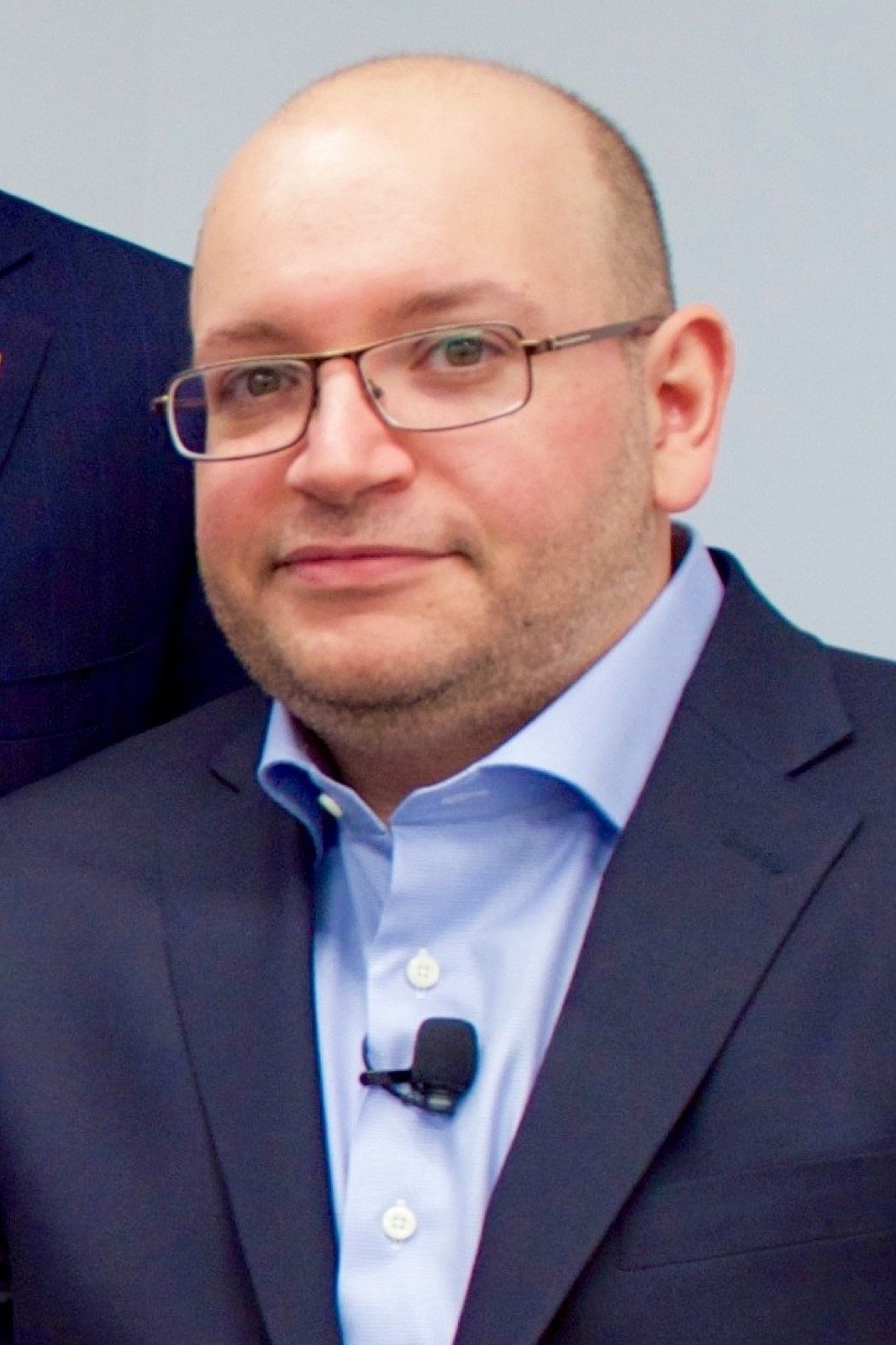
Jason Rezaian
Jason Rezaian was wrongly held in Iran on espionage charges while serving as Tehran bureau chief for the Washington Post and discusses hostage diplomacy with the Kremlin.
Episode Summary
Russia says it will “not tolerate pressure” from the U.S. over detained WSJ reporter Evan Gershkovich, a Russian senior official has warned. Washington has recently escalated his case, officially designating him as “wrongfully detained” - meaning he is now seen as a hostage. As Bloomberg reports that Putin himself personally approved his detention, there are growing questions on what price the U.S. is willing to pay to free yet another American taken by Russia. And with each exchange, does the risk of incentivizing Russia to claim more hostages grow? We speak with New York Times Moscow correspondent Valerie Hopkins, a good friend of Evan Gershkovich who left Moscow shortly after his arrest, and Jason Rezaian who was wrongly held in Iran on espionage charges while serving as Tehran bureau chief for the Washington Post.
Listen & Subscribe
- Watch on YouTube
- Listen on Apple Podcasts
- Listen on Spotify
Transcript
INTRODUCTION
Mcfarlane: You are listening to One Decision, the podcast that looks at the choices made that shape our world. I'm your host, Julia McFarlane. US officials have made a dramatic escalation over the case of Evan Gershkovich, The Wall Street Journal correspondent who's been held in Russia, arrested on charges of espionage, something that's not happened since the Cold War. Washington moved to designate him as wrongfully detained.
Blinken: Essentially, they're now classing him as a hostage. I think it sends a very strong message to people around the world to, beware of even setting foot there, lest they be arbitrarily detained.
Mcfarlane: That was secretary of state Tony Blinken speaking there. Gershkovich and other Western journalists have found it increasingly difficult to cover the Russian beat since Putin's reinvasion of Ukraine last February. But the risks and difficulties aside, until now, it's been far harder for many local Russian journalists to bring factual information to their fellow citizens. Many independent outlets have now essentially shuttered following a crackdown on press freedom and freedom of expression by the Russian authorities. Putin is trying to tighten his grip domestically as he struggles to control the narrative of his beleaguered war efforts over in Ukraine. By many accounts from the people who know him, his family and friends, Evan Gershkovich, who is of Russian heritage, loved the country that he covered. He did what he did to try and bring nuance and context to a much misunderstood part of the world. We spoke to one of his good friends, New York Times Moscow correspondent Valerie Hopkins, about Putin's war on journalism and getting the truth out in Russia.
INTERVIEW: VALERIE HOPKINS
Hopkins: Well, certainly, I mean, there's been a very repressive environment, in Russia for many years now, one that kind of has become increasingly repressive, and that process accelerated, of course, after Russia invaded Ukraine. It does feel quite often like there are just new milestones that can become a new normal. One of the things I discussed during a recent conversation with Evan was the news that a man riding on the Moscow Metro actually was arrested after the person sitting next to him saw content on his phone that was deemed to defame the Russian armed forces. So, you know, this is the type of environment in which we Moscow correspondents have been operating in recently. You know? I have to say that I've been incredibly astonished by the number of brave people who continue to remain in Russia, continue, you know, have found ways to adapt. I mean, pretty much all serious media outlets have gone into exile and are working from abroad. But there are people inside Russia who still contribute to them, you know, whether that's by sending photos or information. And it's incredibly brave, and it's incredibly important because it's already made access to information so much harder to get. The government also changed the laws about access to the information. I think, you know, it's classified an unprecedented number of its budget lines. Many of the debates in parliament are no longer being the minutes are no longer being released in full. It's becoming harder and harder to access information. It's becoming harder and harder to disseminate it as well. Absolutely. And I think that's why Evan felt so strongly about the importance of being there. You know, there are incredible Russian journalists, but because so many of them had to flee, there was a feeling that foreign journalists became a much more important source of information as people, you know, who we thought, could operate under relative safety and, you know, as long as they had their accreditation. So it's really a tragedy, I think, not only for the world and for the people who need to be informed, also for Russia, which will become more and more misunderstood. But it certainly speaks to the fear that the Kremlin has about any public displays of dissent. But I think that's largely due to the fear that, you know, right now, officially 20% of Russians, one in five, oppose the war, which is a very big number. And I think there's a fear that as the economy continues to struggle, as more and more caskets return home, that the message against the war would actually become more popular and become a big problem for the Kremlin. When did you first cross paths with Evan? Did you first meet him in Russia or back in The States? I met Evan shortly after I moved to Moscow, which was in 2021. He had been around for much longer. And I remember congratulating him when he started at the Wall Street Journal, which, you know, is basically his dream job and one that he was working towards for his whole career, I would say, and one that he was so excited about. And we knew each other socially then, but we did get close only after we both decided to return last summer. Many journalists had most foreign journalists had left Russia, including all of my colleagues. But I covered Ukraine for the first half of the year, and then I decided as well to return. And he was a core part of the circle that was, you know, trying to keep sane and trying to, support each other in what is a very emotional and very scary, frankly, assignment.
Mcfarlane: Yeah. I mean, I just so our listeners know, as I turned the topic of conversation to Evan, a massive grin came across your face and you looked so happy to be talking about him and obviously he is in quite a predicament right now. He's not in the best circumstances, but he clearly is someone who is hugely popular and well liked by the people who know him such that it brings a smile to your face just to talk about your friend. I mean, how do you think he's handling what he's going through right now?
Hopkins: Well, Evan is really strong. He's very tough. He has a very strong sense of humor, and I know that he's doing a lot of reading. And, you know, what we've been hearing from his lawyer and from the people that have been to meet him, they've said that he's staying very strong. You know? I work for the New York Times. Evan works for the Wall Street Journal. We should be, you know, these are the two very competitive newspapers. But Evan is a colleague and a friend, and, you know, he's been in Moscow since 2017. I came only in 2021. And he always found time to sort of give me advice or talk about my ideas or encourage me in what I wanted to do. And I've found that incredible. But also, you know, we're reporting on a country that considers us enemies and or considers us at least to come from what Russia designated an unfriendly country. I wouldn't say that that's how people we interact with treat us, but, you know, it's a very tense and pressure filled environment. And Evan was always ready with a joke, with, I don't know, funny stories over dinner. You know, we had a very small and devoted community of people who kind of looked after each other. And that was really, really important.
Mcfarlane: And just because, you know, a lot of people who'll be following Evan's story who don't work in the news industry, tell us a bit about the workload of a newspaper journalist covering the Russia beat right now. There's not really any time to moonlight as a spy, frankly. I mean, what is your take on these charges, which I don't think it's compromising any editorial objectivity to say they're clearly spurious?
Hopkins: It's frankly just absurd because we are under an incredible amount of surveillance. We are followed. They can surveil us in whatever way they want, whether we're out, when as soon as we leave Moscow. You do feel that you're constantly being watched. So the fact that they could follow Evan for so long and as much as they did and all of us, you know, and frankly know that we're just doing our work all the time, I find it quite absurd, you know. And right now in Moscow, foreign correspondents have their visas renewed only every three months. So there's always an opportunity if that was something that they suspected to simply, you know, not return not just not extend the visa.
Mcfarlane: So it's clear in your mind that the Russians know that Evan is not a spy. He's not been doing any espionage. We are just gonna say that he is so that we can use him to our advantage for other purposes.
Hopkins: I can only presume. I have no direct knowledge. But, you know, if they've gotten into his phone, they'll be sure to see all the emails with his editors discussing his stories, his assignments, you know. And he has a very solid track record of excellent journalism since he arrived in Moscow. So I think there's frankly no question. And I think, you know, the Russian propaganda machine has gone to overdrive trying to portray him in a different way, you know, to raise questions about him. But it looks pathetic.
Mcfarlane: What can you tell us about the mood in Russia at the moment? I mean, on a surface level, there is not widespread popular dissent against the war. It is becoming increasingly difficult and risky for Russians to voice any kind of negative opinion over the strategy, over the war, and over how Putin has handled the whole situation. But, you know, one thing we do know is we know that there have been so many Russians who've left. There's been an exodus of people. There have been a ton of men who are trying to dodge the draft. There have been, you know, a lot of videos captured of people angry in a lot of Russian towns where the conscription officers are trying to recruit people for the war. There are little bits eking out here and there. What can you tell us about the view from inside Russia?
Hopkins: I think a lot of things are happening at the same time. With Evan, we would always talk about how incredible it was to sort of feel, for the first time at least in my life, like you were watching a society change before your eyes. You know? In some ways, it feels like people because of this shrinking access to information and because of these increasingly harsh penalties for not toeing the line, it seems that some people are increasingly starting to support this and to feel hated by the West, to buy into the belief that the Kremlin is trying to to stamp out, that the West actually started this, that America was planning to invade. This is something I would hear quite often from Russians. On the other hand, I had many discussions, you know, in with hushed tones, whispered tones from people once they found out that I was not Russian, who said, okay. You know, please, you know, please know that we are I'm ashamed of this. I don't support this. There's just there's nothing that I can do. I'm not ready to sit in jail. This is why it's so important to be there. This is why I think nothing can make up for the everyday encounters you have with people. And I think that's why Evan really was committed to being in Russia, you know. He knew that having an accreditation and a visa were a unique opportunity when, you know, for most of the world cannot go there, most journalists can no longer get access to this country. And it is important. It's very important for the future of the world to understand what's happening there. But I do agree that I think there is certainly much more frustration and concern than is publicly visible. But some of that is, there is a very significant portion of the population that is sad this is going on, would probably not have chosen to start the war, don't necessarily feel a particular need to take Ukrainian territory, but still think that they should win now that it's going on.
Mcfarlane: How much information do you think is reaching citizens about exactly what is happening? I mean, there's been no shortage of reports of atrocities of absolutely unspeakable things being done to Ukrainian children, babies, pregnant women, elderly, disabled people, atrocities being carried out in, you know, towns that are now becoming synonymous with allegations of war crimes in Ukraine. How much of that is filtering through?
Hopkins: Well, I have one anecdote for you, which is that on the February 24, the anniversary of the outbreak of the war, I was walking around Red Square. There was a fun fair. It's a public holiday in Russia to commemorate veterans. And there were beautiful carousels, children were riding on carnival rides, and parents were drinking, you know, mulled wine. And I did approach two young men in their early to mid thirties, and I started to talk to them about the significance of the day and what they were thinking and tried to understand what they think about the war. And, you know, both of them said that if they were called up, they would fight. And I started to ask them about what media they consume and where they get their news. And I said, you know, what do you think when you hear about Bucha? Which, you know, as you know, is a Ukrainian town in the suburbs of Kyiv that has become synonymous with Russian atrocities. And one of them turned to the other and said, what's Bucha? And the other one said, oh, that's the Ukrainian propaganda. So, you know, he said, well, the, you know, the West uses it one way, the Ukrainians use it their way and, you know, but we don't believe that. So, you know, I don't know what's worse, not knowing about it or refusing to believe it. You know?
INTERVIEW: JASON REZAIAN
Mcfarlane: Someone who knows all too well how it feels to be an American journalist wrongly held on charges of espionage is Jason Rezaian. Jason was the Tehran bureau chief for The Washington Post until summer 2014 when he was jailed for a year and a half after being found guilty of espionage in a closed door trial in Iran. At the same time, Washington was negotiating with the regime on the nuclear deal, which was agreed and adopted in late 2015. A few months later, Rezaian was released from jail. On the same day, The US released more than $1,000,000,000 in frozen Iranian accounts.
Rezaian: I think in some ways, you know, I'm never that surprised anymore when this happens. It's been happening quite a bit. Both journalists, but other Americans and citizens of allied countries being taken hostage in countries like China, like Russia, like Iran. So I'm always sort of waiting for the next case. I guess one of the first feelings that I had was that frustration of how it was being framed. I've written about this before in the context of non journalists when they're arrested. I've pushed back against other news organizations and my own when they've headlined pieces in that way. You know, American journalist charged with espionage in Russia. Look. You know, I've engaged in a lot of conversations with colleagues, with editors, with other reporters, and I'm an opinions columnist now. So I'm in a different place where I can call these things out. And privately, when I've talked to friends and colleagues, the question is always, well, how would you wanna report it? Right? And what should the headline have been? Another American taken hostage in Russia is just as true as Putin alleges espionage against American journalists. Right? The pushback then is, well, we know that he's being charged with these crimes. We don't actually know that he's a hostage yet. Well, actually, he's not really being charged with any crimes. That's a front story. Right? That's a cover story that we are perpetuating and really just kind of giving a head start to autocrats to, you know, do their dirty work for them.
Mcfarlane: Yeah. I mean, just for our listeners, the issue that you specifically discussed in your op ed on the Washington Post was the way the media handled the news of Evan's arrest by putting in the headline in a lot of cases or featuring prominently the charge leveled by Moscow that he had committed espionage. And I think for a lot of people who don't work in a newsroom, there is a politics about headline writing that a lot of people aren't aware of. I mean, journalists often, the reporters who write the articles are never usually the ones who write the headlines. They often get changed by many people. And certainly, Jason, I'm sure you know, you as well as myself and many journalists will often have stories of taking umbrage at some headlines imposed on their pieces, such as the way that newsrooms work together. But the issue that you take is the sort of the lending of weight and credence to what essentially is spurious charges by the Russians. I mean, Evan is a full time correspondent for The Wall Street Journal. He has a body of work behind him. He has denied the charges leveled against him. He's appealed his arrest with the prominence of headline placement as a lot of media outlets have done. You said in your article that the journalists doing so are essentially behaving as stenographers for Putin. We're doing his work for him.
Rezaian: 100%. And, you know, it has a cascading effect. Right? Because when the headline in the newspaper, you know, reflects that line, then the next thing you know, talk radio is repeating the same headline. The cable news networks are repeating the same headline. One of the things with more experienced editors, when I confront them on this, the response is, in some cases very high profile people with decades of experience, the answer is, well, nobody actually believes that he's a spy. Right? So then why are you repeating the claim if we don't believe that? So what we explained very clearly in the article that, you know, there's nothing supporting these claims. First of all, you and I both know that most people don't get past the headline. Right? And if they do, they don't get to the end of the piece. Right? So if at the top, you're, you know, simply repeating the headline, then you're just literally just repeating back to people what Moscow is saying. Ultimately, that's not journalism. Right? That's not what we're here to do. We're not here to be neutral repeaters of everything that people anywhere in the world pronounce.
Mcfarlane: You were held for five hundred and forty four days, you know, almost a year and a half in Evin Prison in Tehran, a notorious prison. Also the prison where Nazanin Zaghari-Ratcliffe was being held, but a prison where the Iranians also hold max security prisoners. They hold people accused of terrorism charges, serious hardened criminals. And you were there for your crime of being a journalist as far as the Iranians are concerned, on a par with espionage. Evan is being held in the Lefortovo Prison, which is an old sort of KGB Soviet Union era prison, which is now used by the FSB to hold political prisoners and people who they put in maximum security facilities. What do you think it says about how these regimes treat journalists, treat people whose jobs are simply to report the truth with accuracy and reliability, that they put people like you and Evan in the same categories as enemies of the state, as terrorists, as hardened criminals?
Rezaian: I think it says two things. One, you know, it goes to show how thin skinned some of these authoritarian leaders are. And oftentimes, more often than cases like Evan and mine, it's local journalists, domestic journalists who are being treated this way and put in prison on, you know, crimes of allegedly disrupting national security or terror crimes, in some countries. And really all it is is they're guilty of speaking truth to power, of uncovering corruption, of exposing truths that the regimes in power don't want to see happen. That's not just happening in hardened authoritarian states like Russia and Iran and China. It's also happening in countries that kind of used to be democratic. Right? And so we have to really pay attention to that. I also think though that in a lot of ways it's designed to outrage and astound the rest of the world. And it works. You know, the fact that a Wall Street Journal reporter who has been known as a very effective reporter telling very human stories, nuanced stories from Russia, a place that we don't have a lot of insight into is now being held in a former KGB prison. Says something to the world. You know? And it's designed to outrage not only you and me and everybody else in the news media, but to kind of get public opinion working towards trying to resolve it. I mean, you know, Russia has no intention of holding Evan forever. They want something. It's not something that we talk about very often when we talk about these issues. For Evan to come home in the way that the world is set up right now without deterrence. You have to get The US president to act.
Mcfarlane: That's really interesting because I thought that you were when you were talking about how this move has been designed to outrage the world, I figured you were setting up for explaining that the Russians are wanting to make an example of Evan. And we've seen how BBC Russia has already journalists have been expelled from the country. A lot of Moscow based English language correspondents are now reporting out of Riga or other Baltic capitals and are no longer on the ground. But that's interesting that actually what you're saying is that essentially the Russians know that this is wrong. They want everyone to be collectively outraged about it and for this story to fill the news cycle and to be a part of the ongoing discussion and to stay in the discussion in order to get the Americans to do something about it and to essentially give them what they want.
Rezaian: Yeah. Both things are true. You know, the chilling, you know, impact that it has on all journalists is one part of it. It's a nice kind of consequence of it. And the outrage that holding an American hostage in the absence of any credible deterrence, why how does that bother? It's not a problem for the world to be outraged if there's no credible action that can be taken against him when it's all said and done. And this is my main argument, right, that bad actors, people who don't believe in the rule of law are going to keep taking advantage of this void of any credible deterrence or punishment until there is a credible deterrence and punishment for this behavior. It's just a no lose situation for Russia.
Mcfarlane: We've spoken briefly about how you were held for five hundred and forty four days in Evin. And in the course of this discussion, we've talked a lot about all the different levers at work and the difficult balancing line that governments have to tread with these highly sensitive cases. A lot of this gets played out in the public eye. Obviously, a whole amount of it takes place behind closed doors. But essentially, we can follow a lot of the time the ups and downs of how these negotiations take place. That's not really the case for when the case is yours, is it? I mean, take us back to your time in Evin. How did you spend the days? How was it for you? How much did you know of what was going on behind the scenes to secure your release? Did you ever think that you would make it out past a certain point when you had been there for months and months and months? How was it for you?
Rezaian: You know, a year and a half is a long time, so it went, you know, in a lot of different directions. In the first seven weeks, I was held in solitary confinement. And when I came out, the only times I came out were to be interrogated. My interrogators told me interchangeably that I was on the verge of being released, that I was on the verge of being executed and that I would spend the rest of my life in prison. That experience is designed to really disconnect you from reality and it works. So I had no window into what was going on then. They told me that they had reported in Iran state media that my wife and I had died in a car accident and that, you know, nobody was doing anything to follow-up on my whereabouts. While I found that hard to believe, you know, Iran does have one of the highest road fatality rates in the world. So, you know, that seemed plausible. Right? As time dragged on, you know, my interrogators would change how they treated me. You know, it would kind of go up and down. After I came out of solitary confinement, I had access to a television that had Iran's state television channels on. And, you know, I watched the news religiously, the nuclear negotiations were happening. There were a lot of speeches by Obama that were carried live on Iran's state television. There were press conferences that included Iran's president Hassan Rouhani and the foreign minister Javad Zarif. Oftentimes they were asked about me. Members of Iran's Parliament called for my execution on multiple occasions. It took me some time to realize that anytime the Iranian states people were, you know, bringing up my name, it was because of some action that was happening in the free world on my behalf. And over time, I came to understand that hearing my name on television meant that I was still relevant. And as we got closer to the implementation of the nuclear deal, I had, you know, a lot of hope that that would be the thing that got me out. I didn't have insight into any of the negotiations. I didn't know that they had been negotiating for me. That wasn't public knowledge. And when that last couple of weeks, before the JCPOA was implemented, I was on pins and needles because I knew that if I didn't get out then, I probably wouldn't get out. And I say that, Siamak Namazi, who is another Iranian American who was arrested while I was being detained, was not released as part of that deal. And he is still there, more than seven years later.
Mcfarlane: Do you think that you were taken with the express intent of being used to raise the stakes optically and politically for the Geneva talks, for the nuclear talks? Or do you think it was more a case of they took you and then decided how best to use your detention to their advantage?
Rezaian: I think that the people who took me, the intelligence wing of the Revolutionary Guard Corps, did not wanna see the nuclear deal happen. The ideologues in the Revolutionary Guard Corps wanted to do whatever they could to undermine that and arresting me and other people and other activities that they did during the time. And also after that helped undermine it. Right? But I don't think that they took me thinking, okay. We're gonna orchestrate, you know, some kind of deal. Actually, I think what happened was that, you know, Zarif and those in the executive branch of the government at the time kind of made a side agreement with their IRGC brethren to say, hey. Look. You know, this is creating a big problem for us, but maybe there's a way that we can work together and get something of value.
Mcfarlane: That's so interesting. So essentially what you're saying is there are factional rivalries in the Iranian power structure, and you just happen to be caught in the middle of all of that.
Rezaian: Yeah. Because I was an American citizen working for an, you know, American news media organization at the height of the biggest engagement, between those two countries in forty years.
Mcfarlane: Do you think that is essentially the same situation we are looking at now with Evan Gershkovich?
Rezaian: Pretty close. Pretty close. I mean, the only difference there's two big differences. One that might work in his favor is that The US and Russia have diplomatic relations and always have. Right? American diplomats are still on the ground in Russia. Russian diplomats are still on the ground. In The US, they can communicate with each other whenever they want. So that could work in his favor. The thing that was different was that there were people inside the Iranian regime and the American government that wanted engagement in 2014 between our two countries. And, you know, in Evan's case, The US and Russia are on opposite sides of a really nasty war. Right? And so I don't think that that dynamic is helpful to him, almost certainly not helpful to him. But otherwise, you know, the kind of the way we got here, is pretty similar set of circumstances. Both, you know, American journalists of the origin of the country that arrested us. Right? Evan is looked at, I'm sure, by the Russian public as a Russian guy, right, that happened to be born in America. As I was looked at as an Iranian who happened to be born in The United States. And that was something that was always used against me.
ANALYSIS WITH SIR RICHARD DEARLOVE
Mcfarlane: For regimes and countries that are hostile to The United States like Russia and Iran, dual nationals can very often be seen as fair game. Some even regard emigres who go on to live and work in the West as traitors, enemy collaborators. It's a practice that was rife during the Cold War when my One Decision cohost, sir Richard Dearlove, was working at MI6.
Dearlove: I think if you are an emigre, you go back to your family's country of origin, there is a tendency on the part of autocratic governments to regard you, you know, as one of their nationals even when you are absolutely not. And I can think of parallels during the Cold War. I mean I can remember when I was posted in Prague behind the Iron Curtain, there were some business people, British business people, working inside Czechoslovakia who were the children of emigres, were subject to significant pressure by the then Czechoslovak secret police, really, to be recruited as sources and agents. And when they refused, they almost certainly had to leave the country. And they were threatened with things like, you know, call up into the military because they were technically, you know, might be citizens of that country. I mean, there are all sorts of ways that this can be utilized. And, you know, it would be very interesting to know the extent to which Gershkovich personally had been pressurized by the Russians, because, you know, he would have been seen to them as Russian origin. There's no question they do have a different attitude to people who they think are originally of their culture, let's put it like that. And the Chinese are the same in a way in relation to ethnic Chinese.
Mcfarlane: The important thing to remember, as we've discussed, is that this is one detention out of many, and it's also one case making up part of a wider assault on the media, on journalism, and journalists on the ground in Russia. There have been fewer and fewer Western journalists being able to report. We've seen so many Russian, Indigenous Russian independent news outlets like Meduza, like Novaya Gazeta, a lot of places really be unable to work. A lot of them have shut it down. A lot of them have had to move overseas. Putin is essentially wanting to control the narrative inside of Russia. He's clearly by doing so, he is showing that he is clearly worried about the situation in Russia also coming to light and receiving Western attention and wanting to control the narrative of how popular his war is going domestically, but also to try and stop the flow of information about what is happening in Ukraine back to the domestic Russian population. What are the effects of the removal of independent journalists from the ground in a place like Russia? I mean, I would expect that for those who work in intelligence, that journalistic reports do have some use. Journalists are able to work out in the open in many ways a lot more than intelligence professionals. Sometimes they get better access. BBC Monitoring, which was basically an organization which read and watched the state news, radios, websites in the indigenous languages of countries around the world and created a kind of news stream from it. But there was the fact that those reports were pretty useful to GCHQ. And so it is difficult, particularly in terms of protecting the integrity of journalists' work when a lot of regimes misconstrue the role that journalists play and the journalistic work that they do and misrepresenting it as espionage which is what the Russians have done.
Dearlove: Yeah, I mean it's something that the general public probably doesn't understand sufficiently well. There should be clear blue water between news reporting and intelligence. And the reason I say that is that essentially what intelligence deals in is classified government information or classified policy information, which would be hidden or would be secret and would not, as it were, be accessible in the public domain. Obviously, to understand global events, news reporting is an essential ingredient, it's stuff which is supposedly, you know, totally in the public domain. It's not, you know, protected in any way. But that distinction that we make in liberal democracies, which can be blurred, I agree, but there is a clear distinction, is not made in autocracies like Russia and China, where control of the news and control of the media is an essential part of keeping control of the country. And I think the issue is further complicated by the fact that Russia and China use journalistic cover for some of their intelligence officers in the West. And this may not be well known. But MI6 never did that, did they? Absolutely not. Well, I should say I'm not going to comment, but in this case, I'm going to say that I think we were very careful. Look, everybody talks to journalists, but journalists are absolutely not spies and they shouldn't be contaminated by espionage. And it's very, very important for their safety that they're not. The problem is that there are overlaps. I mean, you have very, very influential journalists who have phenomenal understanding, and maybe there are conferences in which people get together, maybe the intelligence people are relatively anonymous there, because they want to hear these people with these great cultural insights talk about a country. But intelligence officers and espionage are dealing in basically stealing secrets, I mean I put it very bluntly, in order to try to bring out the difference. But then you get into a situation like Ukraine, where obviously there's massive journalistic involvement in the war, and then that is going to create some grayness in certain areas. When you have a crisis and a controversy in Russia, which is what you've got about the war in Ukraine, a journalist like the one on this occasion that's been arrested, it's probably obtaining insights which the Russian state would rather cover up. But the idea that he's involved in espionage is frankly completely ridiculous because he is absolutely not. And the Russians almost certainly know that he is absolutely not. And of course there's a further dimension to this because, you know, we've just been through a situation where we've seen this lady basketball player targeted by the Russian security arrested in exchange for somebody like Viktor Bout. Now, it may well be that the Russians have some plan, and I wouldn't put it past being an explanation for what has happened that they're thinking about some exchange. It might be 10 Russian officers sitting in a prisoner of war camp in Ukraine, for all we know. We just don't know, but somewhere behind this, I bet you, there is a Russian master plan. If you arrest the prominent US journalist, you immediately have got your trump card. Excuse the pun, I don't mean Trump card, if you see what I mean. I mean that in the real sense of trump card.
Mcfarlane: That's such a loaded word now these days. We need a new word. Did the prisoner exchange between Brittney Griner and Viktor Bout, do you think that didn't not set a precedent because prisoner exchanges have been done before, but did that perhaps send a signal to Moscow that detaining US citizens was a useful enterprise for a Vladimir Putin who is increasingly becoming on the back foot?
Dearlove: Well I think the answer to your question is it may have done. But I mean I fear that once you start making an exchange and the US government is under huge pressure to get Griner released. And okay, Bout had almost served out his sentence, saying he was coming out anyway. And they'd probably calculated that they weren't losing many equities by releasing in what was it, a year or eighteen months early. But I mean, this is one of the dangers. If you do a deal, it possibly, it may well, I was going to say probably encourages in the minds of the people on the other side, that you're going to be susceptible under sufficient pressure to another deal. And I think this is, you know, where we're going. I mean, do you know, do you pay terrorists ransom money? I mean, there are many obvious areas where this issue crops up. I mean, we're in a period now of confrontation with Russia. We're fighting a proxy war with Russia. I think if you're a journalist, it was a job to go there, but I think you have to understand when you go there that you are vulnerable.
Mcfarlane: Do you think it is a winning strategy? Do you think it's successful? The fact that Putin is basically trying to outlaw independent journalism in Russia for the intention of both concealing whatever possible dissent, any potential popular uprising, any rebellions against his mobilizations. Also clamping down on the inflow of information from abroad of what is happening in Ukraine back to Russians that could potentially ferment dissent. Do you think by kicking out all the journalists, all the independent foreign and local journalists who don't toe the Kremlin narrative that that'll work for Putin?
Dearlove: It's a winning strategy until it fails, and all autocracies fail badly in the end. But you know eventually it will end badly for the people imposing these rules because the truth eventually, whatever that is, will out. And you know, look how Stalin's life ended. You know, he had a stroke, fell off his couch onto the carpet, and because he was such a terrifying autocrat no one would go near him for thirty six hours, so he died in lonely agony, just as he should have done after the agony he had imposed on the Russian people.
Mcfarlane: That's it for this week's episode of One Decision. We drop new episodes every Thursday. Like and subscribe so you never miss an episode. Drop us a line. Tell us your thoughts. What decisions have impacted you and where you live? You can write to us. Our email is 1decision@1decisionpodcast.com. From me and the team, thank you for listening, and see you next time.