Episode Info
- Season18
- Episode3
Hosted by Christina Ruffini and Sir Richard Dearlove
Guest
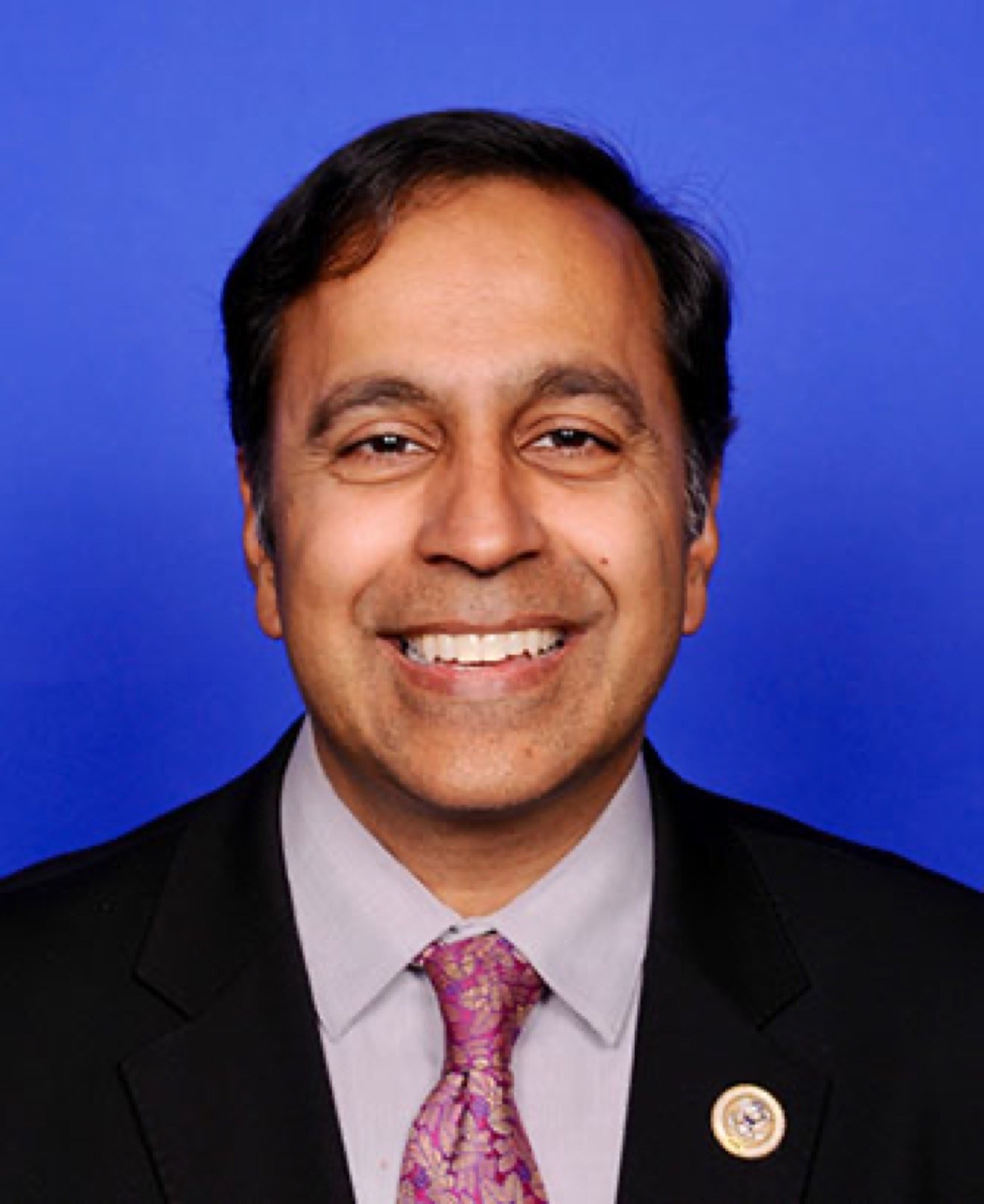
Congressman Raja Krishnamoorthi
Congressman Raja Krishnamoorthi is a Democratic congressman from Illinois who co-leads the newly formed Select Committee on the Chinese Communist Party tasked with analyzing strategic threats from Beijing.
Episode Summary
The newly formed Select Committee on the Chinese Communist Party of China in the United States House of Representatives is tasked with analyzing the multifaceted strategic threats coming from Beijing and increasing the American government's efforts to safeguard the homeland from balloons, hacks, and other aggressive acts. Congressman Raja Krishnamoorthi (D-Illinois), who co-leads the Congressional committee sits down with One Decision to reveal the ways in which legislators in Washington have found President Xi Jinping is destabilizing the economic, political, and geo-strategic interests of the United States and its allies, and what the West is and should be doing about it.
Listen & Subscribe
- Watch on YouTube
- Listen on Apple Podcasts
- Listen on Spotify
Transcript
INTRODUCTION
Mcfarlane: You're listening to One Decision, the podcast that looks at the choices made that shape our lives. I'm your host, Julia McFarlane. Every Thursday, along with my co-host, Sir Richard Dearlove, the former chief of Britain's secret intelligence service, we explore some of the biggest choices and issues facing our world, talking to the players and influencers who are making, informing, and shaping these decisions. Earlier this year, the US Congress established the House Select Committee on Strategic Competition between The United States and the Chinese Communist Party. It's a big and long title, but the Committee on the CCP, as it's more generally known, has been set up to scrutinize the nature of the threat from Beijing and hold the US government to account for how it's dealing with President Xi and his party. Ranking member Congressman Raja Krishnamoorthi, a Democrat from Illinois, has, along with the committee chair, been scrutinizing the many ways in which the Biden administration is handling that incredibly delicate and complex task of derisking from China. Spanning the fields of economics, technology, diplomacy, and geopolitics, it's an incredibly expansive and fascinating purview.
INTERVIEW
Mcfarlane: Congressman Krishnamoorthi, it's so great to welcome you to the podcast, to One Decision. Thank you so much for your time. The US-China strategic competition is sort of emerging as the defining foreign policy issue of this government and Congress. So help me understand the purpose of your committee, because you have the House Foreign Affairs Committee, you also sit on the Intelligence Committee. This committee was particularly focused, as I understand it, on the CCP threat, including on The US Mainland. I know you and Congressman Gallagher, the committee chair, have been looking at the issue of, for example, Chinese firms trying to build plants near air force spaces. There's also, of course, the spy balloon, the story that we love discussing on this podcast, economic espionage. Which of these issues are you most concerned about and which really dominate your committee's work?
Krishnamoorthi: So the legislation creating this committee asked us to assess the economic, technological and military risks associated with the Chinese Communist Party and how to basically deal with those risks. So if you think about those three buckets, we spent a long time on different topics related to each of those issues. You know, take for instance, the military ones. We're very concerned about military aggression against its neighbors, especially Taiwan. And so how do we make sure that we prevent conflict? How do we make sure that Taiwan has what it needs to deter conflict? On the economic competition, we spent a long time with regard to trade issues, investment in The United States, but investment also in People's Republic Of China. Also, you know, cyber theft and intellectual property theft. And then on the technological ones, we're trying to figure out how do we make sure that we maintain our global leadership and technologies of the future, whether it's artificial intelligence or quantum computing or nanoscale manufacturing and the like. So these are all topics that we've kind of spent some time on. And as we move forward, we'll hopefully come up with bipartisan legislation regarding each.
Mcfarlane: You touched upon a number of things, trade, investment, AI, quantum computing, some things I really, really hope we can touch upon later in the conversation. But can I just start with, because this is quite timely, President Biden is preparing to meet with the Japanese Prime Minister Kishida and the South Korean President Yoon Suk Yeol at Camp David tomorrow? This is to work on mending their relationships in the face of the adversity that they both face from China and North Korea. It's expected that they're gonna launch a series of joint initiatives on tech and defense. What do you want to see coming out of this summit? What will you be looking for? And is this the kind of public demonstration of commitment to US allies in China's backyard? Is this summit something that really needed to happen a long, long time ago?
Krishnamoorthi: Yes, yes. And yes, I think that this is something that is really important for our long term desire to create a rules based order in the Indo-Pacific region. There have been some tensions in the past between Japan and South Korea, especially stemming from World War II. But fortunately, they have started to deal with those issues in a productive fashion. And, you know, President Biden deserves tremendous credit for bringing the two together. And I'm really looking forward to what comes out of this summit at Camp David. But more long term, you know, what unites these three countries along with our other partners, friends, and allies in the region is a desire for peace. A desire for a region where everyone can fulfill their economic potential, but any differences that exist are resolved peacefully at the bargaining table, not militarily or coercively. And that's why we view what the CCP is doing, whether it's in the South China Sea or the Taiwan Strait or even in the Himalayas with regard to India as so disquieting and why we have to come together as neighbors, friends, partners, and allies, to basically say, look, you know, we wanna operate by the rules of the road, so to speak, in this region. And we wanna stand united against any aggression.
Mcfarlane: You mentioned our allies and how they're having to deal with Chinese expansionism in the Pacific region. I wanted to ask something that I am really interested in, which is the rather concerning number of Pacific island nations that have increasingly chosen to recognize China over Taiwan. Both the Solomon Islands and Kiribati have, in the last four years, switched recognition from Taiwan to China, both in 2019. Today, Nauru, the Marshall Islands, Palau, and Tuvalu are the only states in the Pacific now that maintain formal diplomatic relations with Taipei. I mean, China's making real inroads. It has more than half a dozen comprehensive strategic partners in the region. And we looked at the issue of China last year signing a security agreement with the Solomon Islands. The fact that they could very soon be sending troops and establishing a permanent base on the islands, less than 2,000 kilometers away from Australia. Can you talk to us about the situation with regard to the coalition building that The US is or perhaps isn't doing as much as it needs to in the Pacific with regards to, you know, solidarity against China and for Taiwan?
Krishnamoorthi: Again, I think the Biden administration deserves a lot of credit for bringing these island nations together, not just to address their security concerns, but also their economic development ones. In Congress, we've welcomed representatives of all these countries as well, with an eye toward how do we offer them alternatives to what the CCP might offer them in terms of the Belt and Road Initiative. I like to say that the CCP is almost like a predator creditor with regard to the Belt and Road Initiative. Some of these economic development programs might seem appealing at first, but once you look under the hood, so to speak, kick the tires and find out what the terms and conditions of these programs are and you start to have to deal with the financing of them, they turn out to be much more of a burden than perhaps the citizens of those island nations, those South Pacific Island nations would want. All that being said, we have to offer an alternative. And so we are now in talks with the Japanese, Australians, and others to figure out how do we come together and help to finance some of the important infrastructure needs of this region so that we have an alternative to Belt and Road. And at the same time, how do we forge closer security ties? So I'm looking forward to seeing those ties blossom. Finally, I would just say that the Chinese economy is in a tailspin right now for various reasons, you know, a 22% youth unemployment rate, a real estate market that's tanking and future demographic freefall where their population is shrinking, they're having to turn inwards and they are constraining even their own outlays with regard to Belt and Road Initiative. And I think that they're going to start to probably call in some of those loans that they've made. So for all of these reasons, I think that we have to put our front foot forward and be proactive.
Mcfarlane: Right. I mean, it's interesting because, you know, you talk about The US working with allies in the region like Japan. There is, of course, the AUKUS Security Pact with Australia, these big beasts in the region who The US is partnering to counter China, but something that the Chinese are doing is they are courting tiny nations, as well as big ones. They are trying to gather more friends, more economic partnerships with perhaps smaller nations who maybe feel like The US isn't looking at them because they don't have the economic heft of countries like Japan or India. And it's something that matters particularly in international institutions such as the UN, where you rely on state votes and the Chinese are sort of gobbling up solidarity from a lot of international countries who have not been obvious targets of US diplomacy. I mean, is this something that you feel the US government needs to change? Do you guys need to start, you know, wooing the little guys so to speak?
Krishnamoorthi: Well, I think we have to continue to talk to anyone and everyone in the region. I think President Biden is doing that now. And I look forward to kind of partnering with him through Congress on these initiatives. I just don't think we can ignore anyone at this point.
Mcfarlane: I'd like to ask about President Biden's recent executive order to block and regulate US investment into China. This was a move designed to blunt China's ability to upgrade its military. The Chinese Ministry of Commerce, obviously not happy about this, saying that they were concerned and reserved the right to take measures. This latest move, the executive order, comes a year after Biden signed the CHIPS Act into law, which was designed to reassure the semiconductor supply chain in America. Congressman, I wonder, these efforts to stop US money benefiting China, do these moves, the CHIPS Act and the executive order and all these sanctions and things, does it actually have a detrimental impact on the CCP and the PLA? Or are these moves simply rerouting the funding that goes towards China growing in capability and development? I mean, is it just The US sort of washing its hands of China's growth and growing dominance? And what does that achieve besides US lawmakers feeling better about themselves that they're less and less directly funding Chinese expansionism in tech and geopolitics and military capabilities?
Krishnamoorthi: Well, you put a lot of issues on the table. Let me try to tackle a couple of them. With regard to, for instance, the export controls that were imposed in October. Those were with regard to the highest powered semiconductor chips that, you know, the CCP and its affiliated entities are using to train artificial intelligence models in various spheres but most problematically in the military one, whether it's with regard to hypersonic missile programs or nuclear program or even with regard to perfecting facial recognition software that they use for surveilling the Uighurs as part of their genocide. So the reason why we're imposing those export controls is not so much about economics as it is about preventing the CCP from using those highest powered semiconductor chips to harm our national security or our values. And the same could be said with regard to the outbound investment restrictions that are being imposed on certain venture capital funds and private equity funds that are providing not only funding but also technical expertise and know how in those same technologies that, by the way, we're restricting with regard to the export controls. Finally, with regard to chips, that issue really stemmed from concerns that arose during the pandemic when, perhaps you experienced this in The UK but we did in The United States acutely, in terms of a shortage of semiconductor chips because much of it was being manufactured in the Far East and supply chain disruptions prevented any number of other items from being manufactured, whether it was dishwashers or automobiles. And it was soon recognized that we have to reshore or diversify our supply chains in semiconductor chips. And so that's why that particular program was put in place. And by all accounts, it's been very successful in attracting a lot of inbound investment for the manufacture of an ecosystem which unfortunately, you know, kinda left The United States some decades ago.
Mcfarlane: Well, I mean, you talk about blocking the Chinese from getting their hands on these advanced semiconductors, the technical expertise and know how that you mentioned. How damaging has that been for the CCP and the PLA? I mean, are these things that the Chinese can simply look elsewhere, buy from other countries? And if not, if none of the alternatives match the quality of The US exports, how long before other countries can provide the Chinese or is this something that they could even provide for themselves?
Krishnamoorthi: Well, those are good questions. What was really different about the nature of the export controls that the Biden administration put in place in October compared to some other past export controls was that it was done on a multilateral basis. So for instance, the leading chip manufacturers as well as the manufacturers of the equipment that makes these chips in The Netherlands, Japan, as well as in The United States, were all jointly, I guess, restricted, you could say, from providing this type of equipment or these chips to the CCP or their affiliated entities in the PRC. And so because of that, I think that these particular export controls have been effective. I can't get into classified information on this podcast, but what I can say is that this is not something that Chairman Xi Jinping is happy about to say the least. All that being said, we should not underestimate the ability of the CCP or entities within China to then innovate and, you know, kind of try to catch up, so to speak, in these areas. However, up to this point, they haven't been able to. I would respectfully suggest it's because the world's leading artificial intelligence and semiconductor researchers, innovators, and entrepreneurs are located in The United States and in allied countries or friendly countries. They don't wanna be in China. And that goes to a bigger question of, you know, if you're gonna have a repressive system, a place where people don't want to be or don't want to innovate, it's very hard for you to innovate. And that's the fundamental challenge that Xi Jinping is facing right now.
Mcfarlane: Congressman, just to underline, we accept and welcome any and all classified information disclosures on this podcast. So please feel free to divulge whatever you want. Something I know your committee is looking into is the issue of the dependence that US supply chains have on China for rare earth minerals. And following on from the CHIPS Act, Beijing announced earlier this summer that it was imposing restrictions on the exports of gallium and germanium. These are metals used in the production of a number of strategically important products, including EVs and microchips and military weapon systems. I want to just read you something that the FT reported at the time, because I'd love to get your thoughts on it. To the outside world, this was a one-two punch from Beijing. Firstly, it showed that China controlled the supply chain for dozens of minerals classified in The US as critical to economic and national security. It showed also that China was prepared to potentially use this as geopolitical leverage, highlighting an inconvenient truth for the West. China is responsible for the production of around 90% of the world's rare earth elements, at least 80% of all the stages of making solar panels, and 60% of wind turbines and electric car batteries. In some of the materials used in batteries and more niche products, China's market share is close to 100%. Their cornering of the clean tech supply chain has drawn comparisons to the high level of influence that Saudi Arabia enjoys in the oil market. Just as petrochemical production provides an immovable strategic buffer for the Gulf State, China's dominance over these clean energy sectors is adding to growing geopolitical competition and has the potential to complicate the world's fight against global warming. The stakes are incredibly high. Now on this side of the pond, we are still not out of the woods from the impact of Russia using energy dependency from the EU as geopolitical leverage, which it did after the reinvasion of Ukraine last year. The inflation and economic havoc that's been wreaked in many countries this side of the pond is ongoing. There is a lesson here, is there not, about the resilience of our supply chains. Is The US and the West, are we just too dependent on China with these critical materials to be trying to coerce it to change its behavior, given that it can so easily shut off the taps to these resources which we need in order to strangle us all, to quote the preeminent American Taylor Swift, we've bought a knife to a gunfight.
Krishnamoorthi: Well, I like Taylor Swift, and my house is full of Swifties. But here's my observation on this. You're correct that we are over reliant on the PRC with regard to especially the refining of rare earths and critical minerals. For instance, we mine critical minerals in The United States and then we ship it to the PRC to be refined and then bring it back here, which doesn't make a lot of sense. We have to have redundant supply chains and we're talking to our allies and friends and partners about this actively right now. With regard to those two minerals that you talked about, germanium and gallium, what's very interesting is that that has now created a demand signal for other countries to start producing these particular items. In particular, Germany for instance is now starting to manufacture some of these critical minerals because you know the CCP has threatened to cut off the supply of these particular items. And so the net impact is that it hurts the PRC, right? It hurts their own economy. And that's why I think that Chairman Xi Jinping is going to be very cautious about this particular tool because at a time when the Chinese economy is in an absolute tailspin right now, for him to basically deny his companies the ability to make money by exporting goods and services, I think is counterproductive to fixing their economy.
Mcfarlane: Is there like a contingency plan in the US government with regard to what if Beijing were to suddenly shut down all their exports of these rare earth materials, such as the ones The US need? I mean, do you guys have a plan in action for if something similar to what the Russians did with energy supplies to Europe? Is there a kind of cheat sheet for in the eventuality that the Chinese do something similar?
Krishnamoorthi: I'd have to, if I told you that I'd have to kill this podcast, that's the problem. So I can't disclose anything I know about that. But here's the main point which I think you're trying to get at, which is how do we make sure that we are prepared in the eventuality that, you know, the CCP uses its coercive means to try to get its way. We know that's how they do business. They've done it with Australia. They've done it with others, they did it with Japan at some point in the recent past, in rare earths and minerals. And so now that we've seen this movie, so to speak, we need to understand what are we going to do to avoid the same impact of such actions. And that's why we have to work with our partners and friends to avoid that.
Dearlove: I have a sort of fundamental question which I'm keen to ask the congressman. And obviously, my experience in terms of export controls goes back to the cold war. And the fact is that export controls were a relatively straightforward issue during the cold war because the economies of The Soviet Union and the West and the economies of communist China were not particularly integrated. So it was quite straightforward to exercise a very strict policy of export controls. But one of the things that I'm puzzled by now with relation to the leadership of communist China is, you know, we have an economy in China which is massively integrated with the West. So the whole issue of export controls becomes hugely complex because of the overlap between technologies which have defense relevance and the same technologies which are used massively, you know, in the domestic economy. And I applaud the measures that The United States have taken in relation to China. But how on earth do you police and enforce this? Because it was straightforward during the cold war, but it's very very complex and difficult now with American companies. And a lot of them must be confused as to what constitutes, you know, a breach of the regulations you're trying to put in place or the controls and what isn't. I mean, I'd be interested to hear your sort of approach because I think this is a very basic fundamental question because we have massively integrated economies now.
Krishnamoorthi: That's right. I think what is really important when you're putting export controls in place in this type of situation is clarity for private entities on what they can and cannot do with regard to the PRC. And I think the reason in part why the Biden administration's export controls imposed in October have been viewed as being effective is that they specifically told the entities, as opposed to in the past saying, oh, you can sell it for this purpose or for that purpose, saying you can't sell this type of item of this power to any entity in the PRC. And oh, by the way, you are not going to lose a competitive advantage here because your competitors are being similarly restricted, as well as the makers of the equipment that would produce these chips. And so I think the industry was willing to accept these because they have been clearly defined restrictions. But if they were not clearly defined, I agree. I think that those controls would be very porous and hard to enforce.
Mcfarlane: I had some specific questions with US companies and how they are engaging with China. This is something your committee really take seriously. Your committee chair, Rep Gallagher, said on Face the Nation earlier this year, we're hoping to have a conversation with the NBA, with Disney, with other companies that my constituents have voiced concern over. You and your colleagues, you've sent letters to the CEOs of Adidas, Nike, Shein, and Temu asking them all about forced labor and banned cotton products that they use in goods that they sell to US customers. It reminded me of the hearings, the Nike hearings a few years ago after the State Department designated genocide in Xinjiang. This is something that the Senate Foreign Affairs Select Committee have looked at before, and they've called out also Apple, Amazon, Coca-Cola, others. Your government, you've received such mealy-mouthed responses from all of these companies. What makes you think things will be any different now? Because the allure of the behemoth Chinese market is massive. I mean, you look at what's going on in Hollywood, the necessity of the Chinese box office in order for big blockbusters and franchises to make a profit. I mean, these companies, they're not listening to you. They're going around your restrictions. They are beholden not to US principles, taking a tough stance on human rights in Xinjiang. They're beholden to their bottom dollar and their shareholders. I mean, what is the US government going to do to force these companies to change tack with regard to China?
Krishnamoorthi: So interestingly, what we're finding is that in the private sector, they are finding it increasingly difficult to deal with the CCP's restrictions on their own without any word from the US government. And we're hearing this increasingly from many of the companies that you had mentioned. With regard to those that may not be complying with, for instance, the Uighur Forced Labor Prevention Act, which is a law that we have that prevents the importation of any goods manufactured in Xinjiang province because of a presumption that they were manufactured with forced labor by the Uighurs. What we're finding is that, for instance, Shein, let's just take Shein for instance, the fast fashion retailer that has been very successful online, they and Temu and others want to access US capital markets. And for them to be able to do so, they are going to need to comply with these laws and be able to show that they're complying with these laws and mere lip service or ignorance is not going to be tolerated any longer. So I think there are ways to get compliance. And finally, I would just say my constituents. You know, my constituents and for that matter, most Americans, I respectfully submit, they don't wanna purchase stuff that is made with forced labor. It's becoming a movement. We're seeing it increasingly happen, especially among young people, and I think it's gonna spread.
Mcfarlane: I admit I kind of conflated two issues, one of which is that the huge Chinese market that a lot of US companies want to sell to, and then also the huge Chinese workforce and manufacturing output that a lot of US companies also profit from. I guess, what can The US Government do to really force these companies to really buy into the cultural change really that you are trying to instill here, which is namely that China is a strategic competitor. You know, what we briefly talked about, how your colleagues have real issues with the trade, The US trade deficit with the Chinese, but then also the fact that the Chinese, they do not respect laws of human rights and things like that. How can you force these companies? Because they do everything they can to get around your export restrictions or your, you know, your acts on forced labor. Shein, from what I understand, there have been several letters sent from your committee to Shein and they are really not cooperating with some of the restrictions you're trying to get them to adhere to. Do you need to crack down on these companies? Do you need to take tougher action?
Krishnamoorthi: I think tougher action might be merited. And I think that there's definitely an appetite for trying to figure out, you know, who is flagrantly violating the laws and, you know, how do you make sure that they are treated appropriately so that they comply. Let me just point out a couple things real quick. One is we are also seeing a lot of non-PRC companies that are doing business in China increasingly diversify their own supply chains. They are moving their supply chains to Vietnam. Apple has migrated seven to 10% of the manufacture of iPhones to India. Why? Because doing business in China is not a walk in the park. It is increasingly fraught. Employees are increasingly facing unlawful detentions or exit bans where they can't leave the country. We heard from testimony from witnesses at a hearing recently, that people are disappeared and raids are happening to American companies. And so because of that, companies are rethinking their PRC strategy.
Mcfarlane: I just wanna talk briefly, if it's possible, about AI. Alexander Wang from Scale AI said, China is investing the full power of its industrial base for AI. This year, they're on track to spend roughly three times the US government on AI. AI is China's Apollo project. Are you concerned at the speed at which the Chinese are developing their technological capabilities when it comes to AI, quantum computing? Is this a new space race? And is this one that you feared the CCP with their access to a gigantic population and huge supply of workers, many of whom are not empowered, who are compliant? Of course their huge spending power, albeit their economy is not doing so great at the moment. Is this a space race that America may actually lose? And what will the ramifications of that be if it were to come about?
Krishnamoorthi: We can't afford to lose. I think it's just that simple. I think right now, most experts think that we have an edge, but I think that it's one of those things where we have to invest much more and up our game. We also have to do other things that make it more possible for us to succeed. So just fixing our broken legal immigration system where we are turning away the very researchers and pioneers and inventors, innovators who would otherwise develop our AI ecosystem. And so we have a lot to do here, even at the same time that we are contending with competing with the CCP.
Dearlove: Can I ask one final question, which is a rather large one? Is the objective of the policy to control China or to change China's behavior? I mean, the reason I asked that, I think, is obvious because the Chinese, I think, react very badly to both prospects.
Krishnamoorthi: I don't know that we're going to be able to change Xi Jinping's behavior, Sir Richard. I don't really think it's realistic to believe that we can modify his ideology. But what we can do is we can protect our own interests and we can set clear rules of the road to engage further our partners, friends, and allies so that we ourselves can, for instance, enjoy more security and economic prosperity. I think that's perhaps a more realistic goal in the immediate future. Perhaps in the medium to long term, we will see changes in the CCP, maybe through leadership changes and the like. But right now, I think we have to protect ourselves and the interests of our friends and partners and allies and of course our constituents.
Mcfarlane: I thought that was a great question to end on. Congressman, it's just so great to talk to you. Please come back. Thank you so much.
ANALYSIS WITH SIR RICHARD DEARLOVE
Mcfarlane: We managed to fit in quite a lot in such a short amount of time with the congressman. And I think it's interesting, the sort of the purview that this committee, specifically on the CCP, what they have. And it's an interesting committee because it's very bipartisan. It's clearly a very busy time for them. There was all those, there's a ramping up of incursions in the Taiwanese strait. There is this situation with the Chinese-US mil-to-mil communications has completely deteriorated. There is, you know, the stuff with the spy balloon and all of these Chinese police stations on US soil and this issue of the Chinese firms trying to buy up land that's close to sensitive US military sites. What do you make of how the US is handling the China threat, Richard? I mean, do you think they are sort of outpaced and outmaneuvered by the Chinese? Are they doing enough?
Dearlove: Well, I think it's taken the West generally, The United States in particular, quite a long time to get its act together with regard to China. And of course the irony is that it was Trump that started the policy change, and it's one of the areas, you know, where I think you have consensus in Congress between Democrats and Republicans, so they are willing to work together. I think the difficulty is that, well, the one I highlighted, I think the difficulty of implementation is huge. I mean, one certainly got a very sophisticated response from the congressman. And I think in a way he was implying he understands the policy has limitations. But on the other hand, there are massive overlaps between The United States commercial engagement with China generally, and what really are crucial defense issues. And I'm not clear in my own mind that it's easy to make the sort of separation and distinctions that he was advocating.
Mcfarlane: One thing that's quite clear in some of their recent committee hearings is that there does seem to be such a gap between the Republicans and the Democrats on the committee with regard to the role of diplomacy. And a lot of Republican members clearly are being quite vocal about what they see as sort of weak posturing by the Biden administration, particularly with regards to how they describe the Biden administration sort of running after the Chinese chasing them, Biden trying to ask for a Biden-Xi phone call that hasn't happened, Secretary Lloyd Austin getting rebuffed from his counterpart. They are very concerned at what might be sort of delays to sanctions in lieu of pursuing diplomatic channels. And it's really interesting because it is a very Republican ethos, this sort of peace through strength. I mean, do you think the Biden administration, do you think the Democrats are being too soft on handling China? Does it need to be handled a bit like Russia and Putin that you have to be strong in order for them to respond?
Dearlove: Well, I think the Chinese respect determination and strength. And striking this balance between, you know, taking a hard line but then maintaining dialogue, I think is very, very difficult. And you see that difference in the Republican attitude and, you know, the attitude of the Biden administration. I think they're inclined to try to have a dialogue with the Chinese on strategic issues, and of course, there has been that Blinken visit, and there have been contacts between the ministries of foreign affairs and state department. But on the other hand, you know, one could say that the only thing the Chinese really understand is a position of firmness and strength. And I think actually the Biden administration is not doing badly in terms of mixing those two issues, because it has been pretty indulgent in its relationship towards Taiwan. And I mean, Biden has actually said, and he's the only US president, I think, who said this, that, you know, were there to be a military escalation by China against Taiwan, there would be an American response. I mean, that isn't actually official American policy.
Mcfarlane: It's actually very funny because every time Biden says something about that policy, the White House have to run out and be like, no. No. No. That's not actually our position.
Dearlove: Well, of course, it isn't their stated position, but Biden said very clearly that The US would intervene with the strength of their naval representation in the Pacific.
Mcfarlane: So it's funny because they're supposed to maintain this strategic, what's it? Strategic ambiguity.
Dearlove: Ambiguity. Yeah. And Biden's not concerned with that at all. No. And there isn't meant to be, you know, there has never been a clear statement of policy that it's American policy to intervene where Taiwan is subject to, well, an invasion or, let's say, a blockade that amounted to an invasion. But Biden's, you know, taken a different line. So, I mean, I think there are quite confusing signals, and it's difficult to interpret exactly where this administration sits on that sort of key strategic point. But, I mean, the good thing about the policy is that deterrence as a policy depends on uncertainty. So the Chinese are sitting there not quite sure what line the Americans would take. And in a way, that's, I think, a strength of American policy towards them at the moment. You know, they might find themselves in a military confrontation with The United States, which, of course, is what the Chinese would very much want to avoid.
Mcfarlane: That's it for this week's episode of One Decision. We drop new episodes every Thursday. Like and subscribe so you never miss an episode. Drop us a line. Tell us your thoughts. What decisions have impacted you and where you live? You can write to us. Our email is 1decision@1decisionpodcast.com. From me and the team, thank you for listening, and see you next time.