Episode Info
- Season23
- Episode4
Hosted by Christina Ruffini and Sir Richard Dearlove
Guests
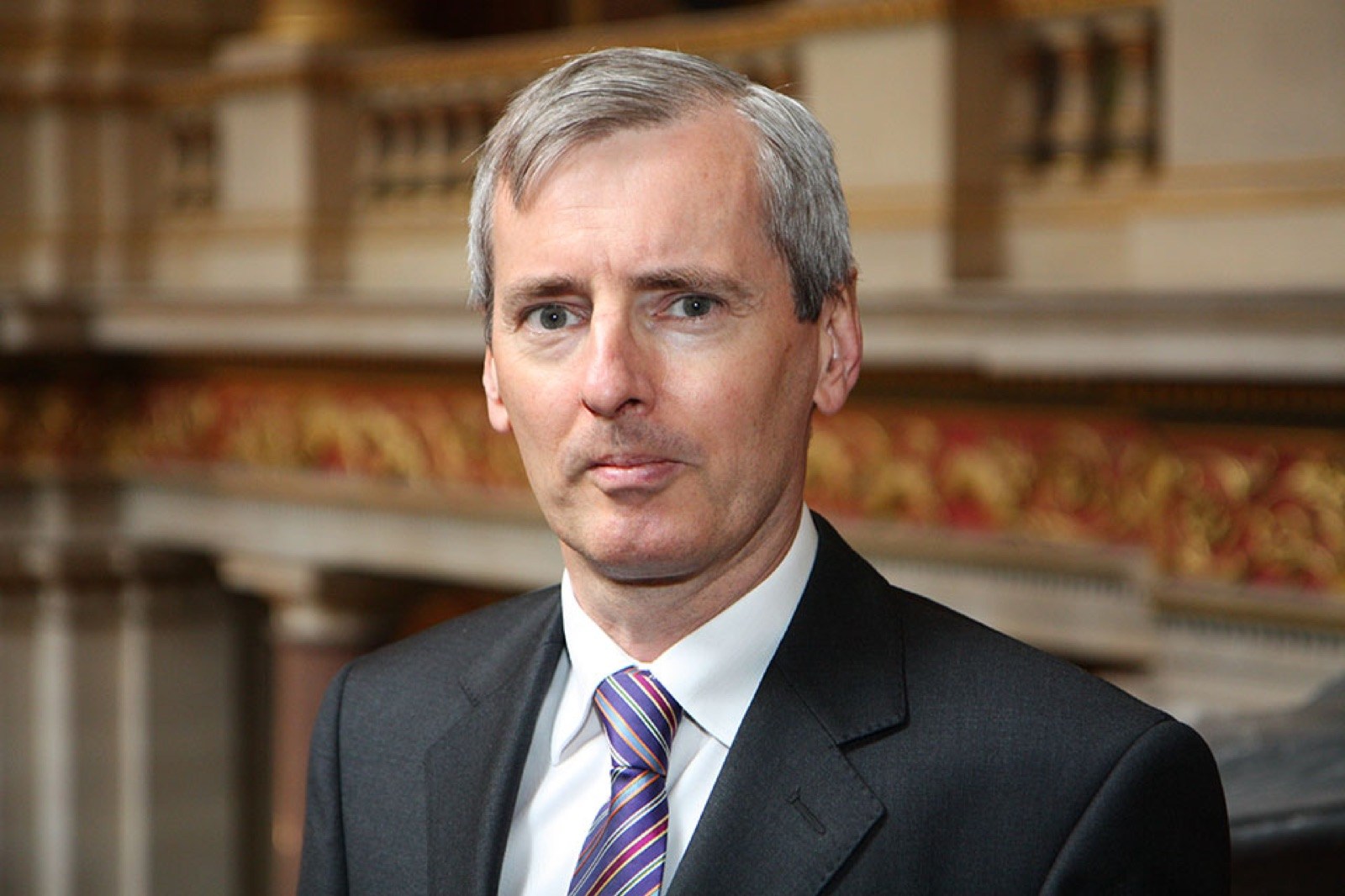
Sir Laurie Bristow
Sir Laurie Bristow is a diplomat who served two tours in Putin's Russia as Britain's ambassador to Moscow and as deputy chief of mission. Sir Laurie Bristow says relations between Russia and NATO are at their most fragile point since the Cold War.
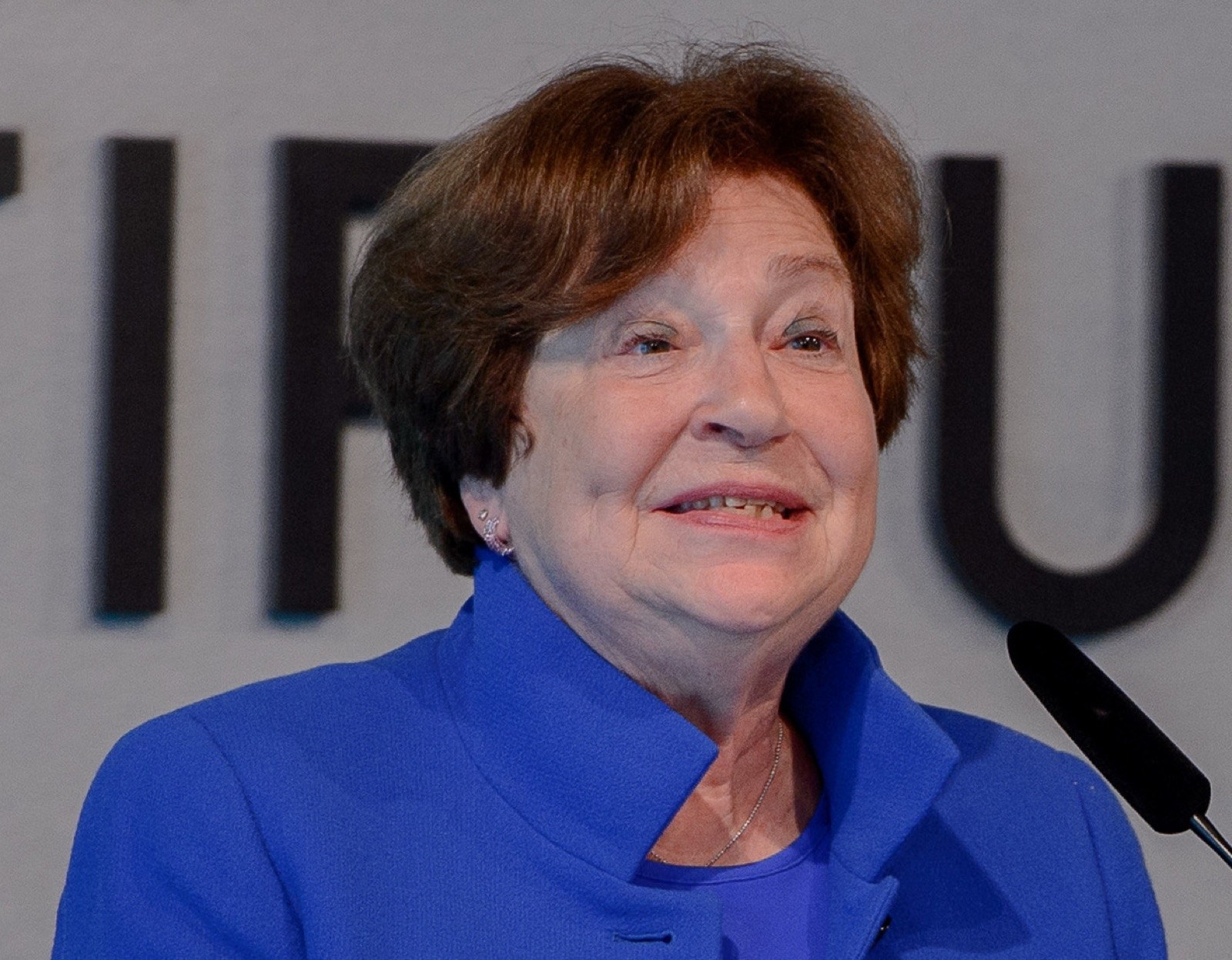
Dr. Angela Stent
Dr. Angela Stent is a former U.S. national intelligence officer for Russia and Eurasia providing readout of the Russian election results and warning of Russia's attempts to meddle in the U.S. election.
Episode Summary
This week, Vladimir Putin hailed a landslide win for a fifth term in an election with no real opposition, whose result was never in question. In a victory speech extending his iron grip on power, Putin warned that World War III between Russia and the West is not out of the question. Guest host and foreign affairs journalist Indira Lakshmanan and One Decision’s resident spymaster, former MI6 Chief Sir Richard Dearlove speak with Sir Laurie Bristow, who served two tours in Putin’s Russia as Britain’s ambassador to Moscow and as deputy chief of mission, about what to expect in the next six years from the longest-serving Russian leader since Joseph Stalin. Bristow says that relations between Russia and NATO are at their most fragile point since the Cold War. Indira also spoke with Putin expert Dr. Angela Stent for her readout of the election results. Stent, a former U.S. national intelligence officer for Russia and Eurasia says the reelection of Donald Trump could be a victory for Putin, and warned of Russia’s attempts to meddle in the U.S. election.
Listen & Subscribe
- Watch on YouTube
- Listen on Apple Podcasts
- Listen on Spotify
Transcript
INTRODUCTION
Laxmanan: You're listening to One Decision, the podcast that looks at the choices that shape our lives. I'm today's guest host, journalist Indira Laxmanan.
Dearlove: And I'm Richard Dearlove, former chief of British intelligence otherwise known as MI6.
Laxmanan: Each week, we explore some of the biggest choices and issues that have global impact. We hear from the key players and influencers making, informing, and shaping the decisions that affect us all. Richard, it's great to be back with you again. Nice to be with you, Indira. Since we last spoke, Russian president Vladimir Putin was declared the winner in a landslide reelection vote that was never in doubt and in which he had no real competition. In a victory speech, Putin warned of a full scale World War Three, and when asked about the possibility of a conflict breaking out between Russia and the West, here's what he said.
Putin: I think that anything is possible in the modern world, but I've already said this and it is clear to everyone that this will be just one step away from a full scale World War Three. I don't think anybody is interested in this.
Laxmanan: We spoke with two experts about what this means for Europe and The US, for the war in Ukraine, and for Putin's seemingly iron fisted grip on power. Coming up, we speak with Sir Laurie Bristow, a former British ambassador to Russia and also to Afghanistan, who was the UK Foreign Office Director of Eastern Europe and Central Asia, as well as the Director of Intelligence and National Security. But before we bring you our conversation with Sir Laurie Bristow, I spoke with Angela Stent, senior fellow at the Brookings Institution and author of Putin's World: Russia Against the West and With the Rest, to get her readout on the election results. So I wanted to ask first of all, this result of a landslide victory for Vladimir Putin came as a surprise to exactly nobody. But why is it so important to Putin and what seems like an autocratic system to still be endorsed in this rubber stamp election? Why was high turnout so important? Why not just endorse himself? Why does he have to have an election even?
INTERVIEW WITH ANGELA STENT
Stent: Well, first of all, you know, the only figures we have are from the officials. So we don't know if they're real figures. I mean, he allegedly got more than 87% of the vote and more than 70% of the population turned out to vote for him. We have no idea whether those are real figures. But still, he probably would have been reelected. So this is really a way of legitimizing him as a great war leader. This is all about acclamation. This is all about showing that, you know, he's leading Russia to victory against the West, that is threatening Russia. Otherwise, you could say, you know, why don't they do like the Chinese, don't have an election and just, you know, appoint people and they can all sit in their legislature and do whatever they want. But for him, he wants that popular acclaim. I was just watching a video of him having a big concert, a celebration of the vote, and you know thousands and thousands of people in Red Square all cheering and shouting and clapping. He wants that. And I guess a lot of authoritarian leaders like that.
Laxmanan: I'm curious, what are Putin's biggest concerns right now? He's seeing advances for the Russian side in the war in Ukraine. There seems to be perhaps a slackening of resolve from the West. We know this because there's this huge battle underway, a battle royale in the United States Congress. We still don't have the $60,000,000,000 support for Ukraine. So what is he worried about at this point?
Stent: Well, I mean, the main thing that he's worried about is staying in power and staying alive. I mean, a lot of this and again, this is not untypical for authoritarian rulers. He wants to remain in power. Now having said that, in order to do that, he wants to show that Russia could win this war against Ukraine. Right now the Russian economy is doing very well. I think it had the highest growth rate in Europe last year, but it's a war economy. That's the reason why it's doing so well. It's pumping out defense production. Later on that might not be the case and the economy might suffer more. And he probably isn't concerned, but he should be, about the fact that despite this landslide election, you saw the evidence that civil society is alive and well in Russia. You have thousands of people showing up on Sunday in Russia, many more thousands abroad at Russian embassies at noontime, basically supporting Navalny and the opposition. And you did have some acts of sabotage during the election, people setting fires to polling stations and pouring green ink in ballot boxes. So I think that he has to note and he should note that not everyone is happy with this war.
Laxmanan: It's hard to get behind the curtain of what's going on in essentially an authoritarian regime where it doesn't have a free press. I mean, the numbers are big of who voted for him, certainly. But you also point out that the economy is doing well. So I wonder whether a majority of Russians are just thinking, well, this is the devil we know. Everything's okay. Just keep going.
Stent: Well, so he's created a situation where there's essentially no alternative to him. All of the major opponents are either jailed, dead, or in exile. If you look at the only independent public opinion polls from the Levada Center, it looks as if a majority of people still support the war. On the other hand, about 50% of them also say they would like negotiations to begin. But the majority of Russians say that they would like the war to end, but that Russia should keep the territory that it has taken from Ukraine. So I think he's managed to sell that to them. People say that about 25% of the population remaining in Russia is actively opposed to the war. And then you have this kind of general apathy, people saying there's nothing else we can do, our lives are okay. And yes, the loss of life is bad, but the West threatened us and we're doing everything we can under our leader Putin to push them back. And so I don't see anyone at the moment emerging as a new opposition leader to Putin, and the disincentives for expressing your opposition in Russia are very great. Arrest, you know, jail time, you know, physical torture, and things like that. So I think it's gonna be very difficult going forward for someone to emerge with the stature that Navalny had.
Laxmanan: 2024 is a major election year for many countries in the world, including of course The United States. We know from intelligence analysis that Russia plays a major role in putting out disinformation, has done so in our own election back in 2016 and has done so in many other countries' elections. So what are your concerns about how Putin might get involved again in the US election for 2024 in spreading misinformation and lies or just trying to generally foment divisions in our electorate.
Stent: Well, so the Russians are already at it. And by the way, they did it in 2020 as well, not on the scale of 2016. But we know that they're already at it. Whether it's manipulating social media, you know, fake news, fake information, we already know that they're trying to stir trouble here or they're trying to benefit from all the polarization that we have in this country. You've even seen Putin trolling us. I mean, on the one hand, he gave an interview to Tucker Carlson where he praised president Trump. And then almost the next day, he gave another interview saying, well, actually, I'd rather deal with Joe Biden. He's more experienced. And so that's one thing that the people can take to the Trump people and say, look, you know, Putin favors Biden, things like that. What he really believes, nobody knows. But they're already doing this kind of thing, sending mixed messages and, again, using fake news.
Laxmanan: You know, you say what he truly believes nobody knows, but you are one of the world experts on actually trying to get inside of Putin's mind and understand his motivations. You know, I think about how Donald Trump has said that we need to threaten NATO allies if they don't pay their fair share, that he will encourage Russia to have its way and do whatever they want with them. Do you think that Putin is actually looking forward to a possible return of Donald Trump to The US Presidency and would that be helpful to him?
Stent: Well, I think the Kremlin would certainly prefer Trump partly because of the chaos that will ensue in this country anyway and they see The US as a declining power. On the other hand, in the first Trump administration, he didn't deliver a lot of what he promised them. They got lots of sanctions and the withdrawals from different arms control treaties. So I think they're quite clear headed that, again, a second Trump presidency might not be able to deliver concrete gains to them. But on the other hand, in terms of the weakening of the alliance, the possible withdrawal of The United States from NATO, and, again, the domestic chaos that would ensue from his reelection, I think that would definitely please them, and Putin would therefore think that Russia can use that to its advantage. So I think Russia is gonna be more difficult to deal with in the next six years. I don't see any change coming from Putin. You know, I don't see him saying, well, now I've done so well, I can rethink some of this and maybe reach out more to the West. I don't think we see that coming. There's no indication of that. I will just say one thing. We tend to assume that things will remain the same under Putin because we've seen how he's evolved over the years. But one thing that any scholar of Russia knows is that sometimes it can surprise you.
Laxmanan: So something unexpected could happen. I don't know what that would be, but we should look out for that too. Thank you so much. That's Doctor Angela Stent, senior fellow at the Brookings Institution in Washington and author of Putin's World: Russia Against the West and With the Rest. Thanks so much for joining us. Thank you. Now let's bring you our conversation with Sir Laurie Bristow. Laurie, thank you so much for joining us. We also have, of course, our in house One Decision spymaster, Sir Richard Dearlove, former head of MI6, will be joining us. So glad to have you here, Richard. Laurie, you were the British ambassador to Russia and before that, the deputy chief of mission, spending more than seven years in that country since Vladimir Putin came to power. So you know him and the public mood in Russia better than most Westerners. There isn't free media or free speech in Russia. So how much do we know about whether the Russians who handed him an overwhelming victory this week truly support their leader or his war in Ukraine?
INTERVIEW WITH SIR LAURIE BRISTOW
Bristow: It's worth just reminding ourselves as well that Mr. Putin has been in power since the year 2000, so getting on for a quarter of a century now. For a long time, I thought that the really important question of Russian politics now is actually how and when and under what circumstances Mr. Putin leaves office. So if you think about what are the points of maximum vulnerability for an autocratic unaccountable regime, it's that point where they have to hand over the reins of power to someone else. What I'm not seeing, either this year or in any previous year, is any inkling of how or when that process is going to actually happen. So, of course, Mr. Putin is now 71 years old. One of the great fears of Russian leaderships, as with Soviet leaderships, is of an unplanned transition when the time comes. And the longer he leaves the planning, I think the bigger the risk of an unplanned transition.
Laxmanan: Putin has managed to eliminate countless opponents ordering the killings of his critics both inside and outside of Russia. Of course, most recently, Navalny who died in an Arctic gulag. Nevertheless, hundreds of Russians were brave enough to place flowers at makeshift memorials for him around the country or attend his funeral and hundreds were arrested and thousands have risked visiting his gravesite. But I wanna ask you how feasible is it to be a dissident in Russia today? And do you see his widow, Yulia Navalnaya, taking his place as a rallying point for democratic voices?
Bristow: I think one of the most important things that Alexei Navalny revealed, you know, through his incredibly successful communication skills, use of social media, and all the rest of it, was the extreme violence and corruption and lawlessness at the heart of the Russian state under Mr. Putin. If we look at some of the other people who've died violent, mysterious deaths in recent years, I mean, one that springs to mind was Boris Nemtsov, a very, very serious politician who was part of the system in his last few years, coming out very openly against Mr. Putin. I mean, he was shot right next to the walls of the Kremlin nine years ago, pretty much almost to the day, the anniversary of his death was the date of Mr. Navalny's death. Navalny himself, you know, worth bearing in mind, reminding ourselves of some of the path that took him to the prison camp up in the Arctic, when he was poisoned with a Russian nerve agent, a Novichok nerve agent, under FSB surveillance on a Russian aeroplane traveling from one Russian city to another Russian city. There is no doubt really about what happened there. By some miracle, you know, the plane put down, he got medical treatment, he was allowed to travel to Germany where they ensured that he survived. He then made the incredibly brave decision to go back to Russia, knowing perfectly well that he would be imprisoned and would almost certainly die in prison, I would say, doing that. And I think one of the things that he was doing there, if you listen to the messaging in his social media to the Russian people, was trying to give people hope, hope in a different sort of Russia, a different future for Russia. This was explicit in some of the things that he was saying from prison. However, he died in prison. There's no doubt that the Russian state was responsible for it. But however, whatever the precise circumstances of his death, what the Russian state, what the Kremlin, what Mr. Putin meant to achieve there was to extinguish that hope in a different sort of Russia. And I think one of the things that we are seeing entirely expectedly through the election campaign is a narrative that says that Russia is simply unthinkable without Mr. Putin, and that without Mr. Putin, you know, Russia will fail.
Dearlove: Laurie, you've already, you know, referred to the narrative. And I think one of the things that you and I understand about Russia is that they're very clever at shaping the narrative, whatever the facts, if you see what I mean. And what I find it hard to comprehend is, although it looks as though Ukraine's going a little bit better, in fact, on the ground, it's still catastrophic. And that basic decision that Putin took to invade has had a massive cost for Russia and continues to have a massive cost for Russia. And look, some of the people around him, like Patrushev, who I remember very well, who I met a number of times, these are clever. Not nice people, but they're very clever. They're very astute. And I'm certainly of the view that there must be massive tensions inside that leadership group just because of the situation that Putin has created.
Bristow: Let's talk first about the way that information space is managed in Russia. So for most of the time that I was working in Russia, I wouldn't describe it as a free information environment, but there were at least elements of freedom. So for example, Echo of Moscow radio station, one of the things that marked the Glasnost period, the period of greater openness towards the end of the Soviet Union. And another one that I was particularly interested in was the Memorial NGO. So an NGO set up by Russian dissidents in the last days of the Soviet Union to document the crimes against the Soviet people perpetrated by the Soviet Union. I mean, they were opening up the records of the gulag and pursuing similar work with regard to human rights and freedoms in Russia today. Both of those organizations were closed down by the Kremlin within days of Mr. Putin's invasion of Ukraine in February 2022. I think there's no room for illusion about why that happened. What we've seen in the last couple of years, I think, is a turn towards not just authoritarianism, but increasingly totalitarianism in Russia, where the idea of an alternative Russia, an alternative view of Russia to the very violent and imperialist view that Mr. Putin and his accomplices put out is simply unthinkable. So I don't really see any evidence of cracks within the elite. And I would be very, very surprised if Mr. Putin left office through some sort of palace coup. I just don't see the circumstances for that happening. What I do think we all need to be thinking about is what conclusions the people around Mr. Putin who will need to succeed him one day, whenever that day comes, will draw from what's happened and what's the position it's put Russia in. My analysis is very similar to yours. I think they probably think they're doing relatively well on the battlefield right now. They'll do a whole lot better if the congressional package doesn't come through, and that's a serious point for us. There are real responsibilities, I think, for the Europeans and The UK to step up to here. But I think what Russia will be like at the end of this war, whenever it comes, is a violent, dark, bitter place that is marked by failure and is marked by isolation and by the destruction of the future of those people. And I think one of the things that maybe policymakers should be thinking about in the West now is what is our message to those successors? Things are being done that can't be undone, can't be ignored. War crimes, massive destruction, huge risks with Europe's and global security. But Russia is still going to be there when Mr. Putin is gone. So I think there is a question here about what kind of messages we are sending to a probably rather nasty and violent successor when the time comes.
Dearlove: The issue of Ukraine and the support for Ukraine. There is a theory, certainly quite strong in The States and to an extent in Germany, that a manageable war in Ukraine is less serious than Ukraine's defeat of Russia and the collapse of Russia, and that the security situation from that, as it were, apocalyptic result, you know, would be much, much worse than what we've got at the moment in Ukraine. I mean, I'm not sure whether I actually subscribe to that analysis, but I wondered how you, you know, from your sort of inside position, because it goes right back to the beginning of the Ukraine struggle when certainly, particularly, let's say, on Germany, it was no, no, no, then yes, then, you know, no, no, no again, and yes. And I mean, this happened with tanks, with F-16s, with all sorts of supplies. I mean, how do you view that theory?
Bristow: But it is a theory, I think. The first thing to say, of course, is, you know, the risks are very, very great, and they need careful managing. You know, we are dealing with the biggest war on our continent since 1945, you know, with the state that owns the world's largest stockpile of nuclear weapons and is led by the man it's led by. You know, we can't wish those risks away. And I think one of the real successes of the last two years has been the high degree of consensus within NATO in particular that this is a really serious challenge to the security of our continent, the Transatlantic space, and we have to respond to it. Moving on to the point about would catastrophic success be something we should be worried about? Well, first of all, I don't actually see that there is a path now to outright military victory for either side. I think a lot more people are going to be killed in Ukraine because of that, but also because I think there isn't a negotiation to be had with Mr. Putin, really, for as long as he's in office. But I just find it extraordinary, the idea that somehow making concessions to Mr. Putin, giving Putin something of what he wants, will make Russia less dangerous. I think actually the opposite is the case. However the war ends, whenever it ends, if it ends with Russia as the dominant military power in Europe, which is where it will go if we do not support the Ukrainians, that is an enormous problem for us, for The United States, for our European allies, and I would say for global peace.
Laxmanan: Laurie, what do you say to those who say that Russia is not wrong to worry about NATO expansion? Sweden has just officially joined NATO. The Baltic Sea is effectively now a NATO lake. Finland threatens Russian forces on the Kola Peninsula. What do you say to those analysts who say, we wanna keep the balance that we've had all along, we shouldn't be threatening Russia so much with the expansion of NATO right up to its borders?
Bristow: I think these arguments are really dispensed with by what actually brought us into conflict in February 2022. I mean, the bottom line is nobody was about to attack Russia. Ukraine wasn't even about to join NATO. The theoretical prospect has been there since the 2008 Bucharest summit. But Ukraine was not about to join NATO. Russia attacked Ukraine. Ukraine did not attack Russia. And the extraordinary thing, I think, about the Swedish and Finnish accession is that those countries jealously guarded their neutrality for generations. Almost the moment that the invasion took place, their calculations changed. That's on Putin. It's not on us or on Sweden or in Finland. Those countries, like the Central Europeans, joined NATO because they feared what Russia might be or become.
Laxmanan: Laurie, by some estimates, Russia has taken twice as many casualties in the Ukraine war as the Soviet Union did during its ten year invasion and occupation of Afghanistan, which ultimately contributed to the collapse of the USSR. What do we know about Russia's tolerance for pain in the Ukraine war? And could the cost of that war ultimately be Putin's undoing?
Bristow: So again, I think this is an extremely important question. I mean, the short answer is that, you know, the Russian state has essentially limitless tolerance for pain because it's not accountable to anyone. It's not a democracy. There isn't a free media. People who disagree with Putin's regime, many of them have left the country. Those who remain aren't exactly going to be protesting on the streets anytime soon because they know what that leads to. But I think there's another element going on here, which is Mr. Putin's calculation, we've seen again and again and again, that the West does not have staying power. That because we are democracies, you know, because we do have to respond to public concern, public opinion, and the public often wants us to direct attention and resources elsewhere, that they can wait us out. And that's pretty clearly, I would say, Mr. Putin's strategy now: to keep the Ukrainians under pressure on the battlefield, take maximum advantage of the fact that the Ukrainian armed forces are now really seriously constrained in terms of ammunition and material, kill as many Ukrainians as possible, and wait and see what happens in the West.
Dearlove: I went to Ukraine last summer on a sort of government arranged security visit with a small group. And at that point in time, it was absolutely clear, and it was before the NATO summit, that this issue of NATO membership was of fundamental importance to the leadership in Ukraine, and they wanted, you know, us to help them clarify, you know, what the status of their application to join NATO would be. I mean, what I personally would have said before the invasion of Ukraine is that I would have been completely opposed personally to the thought that, you know, Ukraine as a hinge between east and west could ever be a NATO member. I mean, what people are now saying, and, I mean, I think I share this view, when this war ends, I think maybe ends is the wrong term. Whatever happens, Ukraine is gonna have one of the largest, most battle hardened military forces in Europe. And what the Ukrainians are saying, of course, you can't afford not to have us in NATO in that situation because if we're outside NATO, we will be the Israel of Europe, and we're gonna be a complete pain for everybody. So, I mean, how do you, on your experience, because you must have seen Russian sort of attitude towards this, answer that. Because it is a conundrum, I think, still.
Bristow: I think there are a couple of really important questions for us, you know, for The UK, for The US, for our allies on the table there. One is around, if we don't do that, we are going to have to live with the consequences of what inevitably flows from that, which, as I said earlier, is a Russia that is the dominant military power in Europe. It's discredited NATO. It's discredited The US commitment to Europe's security and therefore, I think The US's own security. That sounds to me like a very, very big problem indeed. My second point actually follows from that. It's the value of this alliance to us. And I think what I would like to be seeing is politicians on both sides of the alliance getting this discussion onto grounds that says, why do we still have this alliance? What is the benefit to us from working with allies? The great thing about an alliance is that you have allies. The huge difference between us and Russia is that they do not. They believe that they have a partnership with China. That partnership to me looks very, very one-sided in China's favor. That's Russia's problem. They'll have to live with that. But the fundamental point is that they do not work through and with alliances. And I think that's one of their great weaknesses. The bigger picture, though, I think, is around the shifting tectonic plates around the great powers as Russia sees them: Russia, China, The US. And I think whatever happens in the course of the war in Ukraine, Russia comes out of this far, far weaker than Russia went into it with regard to both the West, but also with regard to China. My last point on this, though, also, and this is a pretty hard lesson for the West in all of this, it's about the impact and the consequences for the wider rules based international order. If the West believes that the rest of the world, particularly the global South, is standing unequivocally with the West against Russia, we are wrong. I think many countries have been very concerned by what Russia has done in driving a tank through the principles of sovereignty and international law and the UN Charter. But very few of those countries are prepared to take direct action against Russia in the form of sanctions because they see their interest differently and because they see the rules based international order, as we understand it, as we talk about it, as something that is in flux.
Dearlove: Well, I think that the bigger international order issue that Laurie's raising is a key one. Because I think, you know, before the invasion of Ukraine, one of the things that, you know, if you're interested in geopolitics, people were saying, I was saying, others were saying, was that, you know, we had to explore the opportunity for a new international order. The two key players, of course, are United States and China, and that effectively the order, the sort of Pax Americana post World War Two had already broken down and already disintegrated. It seems that Russia's behavior has, as it were, almost shelved that issue, and there's been no progress at all towards a search for some sort of modus vivendi between the two great powers, China and The United States. And, of course, the implication here for Russia is that they're really squeezed to the side. I mean, they look like a declining power. They are a declining power. You know, the demographics are lousy. The prospects for the economy are poor, and, you know, the great Russian military has performed disastrously. How do you, you know, with your diplomatic experience, sort of view any progress towards, let's say, a serious negotiation, which would be primarily driven by China and The United States, which would probably leave Russia on the sidelines?
Bristow: So this is necessarily gonna get very, very speculative for a couple of reasons. One is that wars, by their nature, accelerate trends. And this war is not over. We don't know how it ends. It's not the only war happening in the world. I mean, what we're seeing, I think, is a system with more risk and more conflict in it than at any time I can actually remember in my working life. The other feature that I find I'm increasingly interested in here is the number of players. So I think what we're also seeing is the very rapid emergence of, I mean, call them what you like, the middle powers, the global South, the Indias of this world. I mean, I can't even find a categorization that works really for them saying, hang on a minute. We have voice, we have agency, we have interests. And this is no longer a world in which we are simply going to take, we're going to be rule takers from a concert of great powers, whether The US, China, Russia, The Soviet Union, or anyone else. And I think you can see this really starkly in some of the debates, for example, around climate diplomacy, where some of the most powerful voices are actually that global middle ground because of the stakes for them. The other unpredictability, of course, in all this, but it's important for your audience, it's the outcome of the US election. So very, very different approaches to diplomacy, to how you conduct your relations with major and second order partners, depending on who's in the White House this time next year.
Laxmanan: Well, let me put you a bit on the spot and ask then, what difference do you think it will make? One Decision recently spoke with Congressman Jim Himes, ranking Democrat on the House Intelligence Committee, who said that Donald Trump is worse than Neville Chamberlain, that he has proven that he would appease Russia and even abandon NATO. How do you think Trump's reelection would affect the world order?
Bristow: I'm a Russianist and an analyst, not a politician. So, you know, please take my comments through that prism. Let's take it back to Ukraine and what I think is the thinking process that's going on inside Mr. Putin's head. One of the great things about following Mr. Putin is that if you want to know what he's thinking, listen to what he's saying. He won't tell you what he's going to do, but he says what he thinks if you know how to read it correctly. One of the things that he said, possibly I think one of the more important things he said in his rather strange interview with Tucker Carlson, was this: if you want the war to stop, stop supplying Ukraine with weapons. This is not a prelude to a negotiated settlement. This is a prelude to a surrender agreement, the surrender of Ukraine, and I would say by extension, the surrender of the West's interests in security in our continent and in our region. So without discussing individual candidates for the US election, I think one of the things that we need to bring this discussion back to politicians, analysts on both sides of the Atlantic is what is at stake for us here in this war? How do we think this ends? How do we want it to end? What are the mechanisms, the tools that we have to keep the peace?
Laxmanan: So what's at stake if I'm hearing you right is rule of law and a world order in which countries aren't allowed to simply invade others and seize their territory. What I'm hearing you say is that if Donald Trump is elected, The US might abandon those values and allow Putin to get what he wants, which is global acceptance of his invasion and annexation of Ukrainian territory.
Bristow: As I said, I mean, I'm not gonna comment on individual candidates in the US election, but I think, you know, the question for all of us, whether you're in government or academia or civil society is, do you like living in a democracy? And I've spent much of my working life working in countries that are not democratic, are autocratic. Some of them have been failing or failed states. And I know which I prefer.
Laxmanan: Well, you make a strong argument and I wonder, we seem to be at the lowest point of diplomatic relations between Russia and the West since the end of the Cold War. Russia has pulled out of the comprehensive test ban treaty, out of New START, out of the treaty on conventional armed forces in Europe. Russia no longer has nuclear cooperation with The US. Putin himself has said that World War Three between Russia and the West is not inconceivable. So given these historic lows, how concerned are you about international stability writ large?
Bristow: Well, it is a low point and, you know, we need to be very clear with ourselves about that. There are two things I really want to underline here. You know, why do you have diplomatic relations with a country like Russia behaving like Russia does? I've had occasion to study this at some length up close and personal. You don't do it because you like each other or agree with each other. You do it because you need to read each other's intentions clearly and accurately, and you need to convey messages clearly and accurately. That's the job in those sorts of environments. My second point is around, I mean, you specifically mentioned arms control agreements and strategic stability. At some stage, we need to find a way of having a discussion with the Russians, as with some others around the world, as to how do we avoid blundering into confrontation. But the point about arms control agreements is that you don't have them with friends and allies. You don't need them. You have these sorts of agreements with actual or potential opponents because the risks that you are running from not having them are, in some cases, just unmanageable. Now, the Kremlin isn't on that logic for the time being. It may take many years for them to get back there. But getting into a world where we're having a serious discussion with the Kremlin leadership about how we keep the peace in a world where we see our interests being as fundamentally different, that is the heart of diplomacy in these kinds of environments.
Dearlove: But, Laurie, isn't it extraordinary that in spite of having this major war on the European continent, I think it's probably unprecedented in the way that it actually has been contained and that it hasn't spread. And it will certainly be my view that the Russian general staff, the last thing, you know, that they want to have to think about or do is, you know, an escalating conflict which might involve NATO forces. I mean, given that they've come off so badly in Ukraine, the, you know, prognostications for them in a wider conflict, leaving aside nuclear weapons, would be pretty awful. So it seems to me that there are natural restraints that are operating both for us and for the Russians, whether it's Putin or the Russian general staff.
Bristow: I think we agree that, I mean, the, you know, the Russian general staff are on all the evidence, rational actors on all of this. They know it's hard to avoid the conclusion that the war has gone very badly for them in Ukraine. My point here is what conclusions do we all draw from that? Clearly, it is in nobody's interest for there to be direct military confrontation between Russia and NATO. My personal view is that it would take a pretty extraordinary sequence of miscalculations for that to happen, because we all know the consequences would be disastrous. But the conclusion I draw from that is that the right answer to our approach to the war in Ukraine is absolutely not to self deter, it's to deter Russia. And one of the ways that we do that is by ensuring that we give the Ukrainians what they need to defend themselves.
Laxmanan: So I wanted to ask, in 2022, Russian state media aired an entire show simulating a nuclear war with The UK that was titled "the Sinkable Island." And they named Britain the most anti Russian country. Are you concerned about Russia targeting Britain specifically or what do you see as the risks of this kind of saber rattling?
Bristow: So I think you need to understand how Russian propaganda works and why they do the things they do. The audience of that kind of show is not us. It's the Russian public. And what they're trying to do there is to reinforce a narrative that says, Russia is a besieged fortress. You've got all these malevolent actors. Of course, you know, the Anglo Saxons, as they describe them, are foremost amongst those. And the message they're trying to implant in the population is that, you know, Mr. Putin is the savior of Russia against all these hostile foreigners. That's all that's going on there. By the way, bear in mind that there are essentially now no channels open to anybody to put an alternative view.
ANALYSIS WITH SIR RICHARD DEARLOVE
Laxmanan: Well, that was fascinating, Richard, especially what Laurie had to say about Putin and what comes next after Putin. It was a very dark view.
Dearlove: It's a dark view. And I think it's a sort of Rolls Royce analysis by someone who really understands the situation in Russia well. I'm rather impressed to see, you know, the British Foreign Office in someone like that at its best. And I think there's no sort of false hope being projected in his analysis. It's very down to earth, very clear, very factual, and there's not much illusion about it. And in a way, I find it both reassuring. What it basically, I think, tells me is someone with his experience and his perception sees, okay, there's no settlement. It's tragic for Ukraine and Russia. But I feel the implication under what he said is that the containment of the conflict in Europe is very strong and unlikely to be broken. But the really potent thing that he's saying, which I agree with 100%, you know, is what the consequences are for Europe and international security if Putin gets his own way. I think that's the most worrying fact that we're dealing with and he takes it head on.
Laxmanan: Well, I was also struck that he said that this was the lowest point in diplomatic relations between Russia and the West since the end of the Cold War. Do you agree with that?
Dearlove: Yeah, I do. It's really awful. And not a total breakdown, but we're pretty much at rock bottom. And, you know, when I go back and think about my own dealings with the Russians in the period after 9/11 when I was going to Moscow, there was a huge amount of positive content in all of that I think. Has it gone? Has it evaporated? Is it hidden? Will it resurface? I don't know. But it's a very difficult time.
Laxmanan: That's it for this week's episode of One Decision. We drop new episodes every Thursday. Like and subscribe so you never miss an episode. And drop us a line. Tell us your thoughts. What decisions have impacted you and where you live? You can write to us or email us at onedecision@onedecisionpodcast.com. Thanks for listening and see you next time.