Episode Info
- Season24
- Episode3
Hosted by Christina Ruffini and Sir Richard Dearlove
Guest
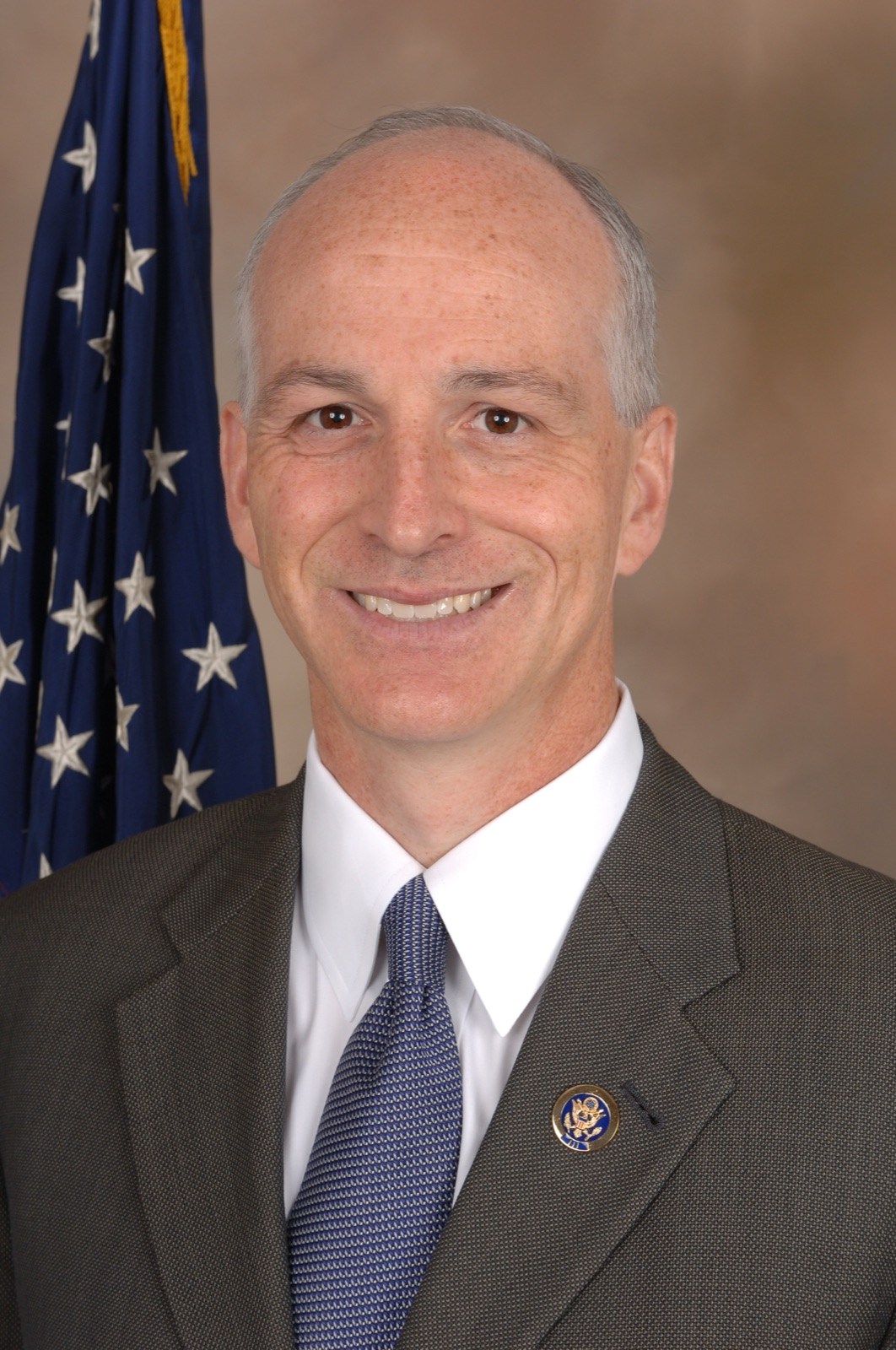
Adam Smith
Adam Smith is a Democratic Defense leader and Congressman from Washington discussing the $95 billion military aid package providing crucial aid to Ukraine, Israel, and Taiwan.
Episode Summary
This week, the United States Congress finally passed a $95 billion military aid package for its allies after months of delays. Democratic Defense leader, Congressman Adam Smith of Washington, joins correspondent Christina Ruffini for a wide-ranging interview to discuss the package that provides crucial aid to Ukraine, Israel, and Taiwan and shares his thoughts on recent pro-Palestinian protests spreading across the United States. Plus, One Decision's resident spymaster, former MI6 Chief Sir Richard Dearlove, discusses Europe's reaction to Washington's support for Ukraine, and if America's delay in passing aid has forced Europe to step up its support for Kyiv and its own security.
Listen & Subscribe
- Watch on YouTube
- Listen on Apple Podcasts
- Listen on Spotify
Transcript
INTRODUCTION
Raffini: You're listening to One Decision, the podcast that looks at the choices that shape our lives. I'm today's guest host, foreign affairs journalist and correspondent, Christina Raffini. And I'm Richard Dearlove,
Dearlove: former chief of British intelligence, otherwise known as MI6.
Raffini: Each week, we explore some of the biggest choices and issues that have global impact. We hear from key players and influencers, the people who make, inform, and shape the decisions that affect all of us. So Richard, it's great to be with you this week.
Dearlove: Christina, it's great to be back, and I look forward to our discussion again.
Raffini: Well, we're going to talk with Congressman Adam Smith, but first, I think we want to talk, the two of us, a little bit about this Ukraine aid package, $61,000,000,000 that finally passed over the weekend. A lot of it is going to go directly to US defense contractors who will ship weapons and desperately needed artillery to the front lines. I think I read this morning that Ukraine is only firing about 10,000 shells for Russia's 20,000 every day. I know there's relief that this package finally passed, but do you think it's gonna be enough?
Dearlove: I think it'll be enough to avoid significant deterioration on the Ukrainian side. But whether it's enough to turn the conflict in Ukraine's favor is difficult to say at this stage. I think we'll just have to wait and see what impact it has. I mean, bear in mind that even before the aid package was passed through, the Russians are still suffering massive losses, both of equipment and men, in order to make pretty marginal advances on the front line. But, you know, they're prepared to throw resources into the meat grinder to try to achieve some of their strategic — what they think are strategic objectives. So I think over time, this will make a really big difference. It will certainly raise the morale of the Ukrainians politically and in the front line. That will make a big difference because motivation is one of the aspects of warfare which is hard to quantify and measure, bearing in mind there's massive motivation on the Ukrainian side. And I don't think one could describe the Russian troops as highly motivated. You know, they're there because they're
Raffini: basically probably shot in the back if they don't go forward. And because they weren't wealthy enough to buy their way out of conscription.
Dearlove: So, you know, the psychological impact for the Ukrainians will be huge. The material impact will take time to tell, and let's wait and see. But I think if we look at the situation again in a month or six weeks, I think we will begin to see the benefit. My understanding is that the Americans have packages ready to fly almost immediately. And you mentioned that disproportion in artillery shells. I think it's even bigger than you said, much bigger. It has been much bigger. But the effect of scarcity on the Ukrainian side has made them militarily more subtle. And the strange aspect of that is probably in the long term, they derive a benefit from being beleaguered. And maybe the Russians have a false sense of their own progress because they're not losing in quite the way that they were. So there are a lot of sort of quite complex psychological issues that lie behind all of this, but it is fantastic news. I can't tell you how in Europe one's spirits have been raised. And some of my colleagues were very depressed by the reluctance of, let's say, you know, the Hill to deal with this issue and get it passed. So it's a huge step. It's huge.
Raffini: It's big. They've been working at this since last year, remember, because initially it was tied up in this issue to get bipartisan immigration reform passed, and then that fell apart. And then there's a new speaker, and it got to the floor, and it got a vote despite some political risk and threats from members of the Republican Party about what would happen if Mike Johnson put it to a vote. But I'm wondering, from your perspective, did America's credibility take a hit? Even though it got done, the fact that it was delayed so long and was so uncertain, is America starting to look like a less and less reliable ally?
Dearlove: Not America as a whole, because I think there are lots of significant Americans who understand the importance of contesting Russia in this matter. But I think what worried a lot of us was the appearance of this massive streak of isolationism, which, as it were, denied the importance of the conflict for global security and were saying, well, you know, it's a European matter. We don't have to worry about it. I mean, I'm quite shocked in a way that this is the Republican Party that's been taking this line. Because, you know, if you're a Brit sitting in Europe looking at issues of global security, you've always historically regarded the US Republican Party as the party that got foreign policy and got it right.
Raffini: Or at the very least, the party that wanted to get involved, right? The party that wanted to intervene and make American power felt around the world, especially when it came to Russia. I mean, think about Reagan.
Dearlove: And, you know, the people that I dealt with when I was in office, George W. and Condi Rice and Steve Hadley and all of these people, they understood exactly the problem and what we were dealing with even post Cold War. You know, Russia was still a major problem and had to be handled with great care. To see this extraordinary situation where you've got individual Republican congressmen and women almost supporting Putin, very, very worrying indeed. And it does raise great anxiety. Hit to American credibility, I'm not so sure I would say it's a hit, to the sort of Trump faction, or that's what they appeared to be, the people who were not prepared publicly to take a line against Trump because it would affect their future career prospects as, you know, Republican politicians if he gets elected. So, I mean, that's what's worrying.
Raffini: Well, we spoke about all of this with Washington congressman Adam Smith. He's the top Democrat on the House Armed Services Committee, and we wanted to get his take on a whole host of issues from Ukraine, China, Taiwan, Israel. We also did talk to him about The Hill and this sort of accidental speaker, Mike Johnson, how he is to work with from a democratic perspective. So we'll get more on your opinion of that conversation right after we have a listen.
INTERVIEW WITH CONGRESSMAN ADAM SMITH
Raffini: Congressman, thank you so much for joining us. Do you think this creative way to tiptoe around the edge of this cliff will give Johnson enough cover? Or do you think by putting Ukraine up for a vote, he's put himself and his job at risk now?
Smith: No, he's going to take a lot of pain and he knows that. There was no way around it. Look, I will say this. I mean, I have worked complicated deals before as the chair of the committee passing the NDAA. And Mike is not wrong in that even if at the end of the day, you're not gonna do what certain groups want, you still have a responsibility to hear them out. Okay? And it makes it a little less painful if you have given them a chance and basically eliminated all of the options to show them that this is what we have to do. But I mean, that depends on the people you're dealing with. He's gonna get a lot of abuse from this. Is it less abuse than he would have gotten if he had just brought up the Senate bill? I don't know. That's sort of a hard thing to quantify, probably not noticeably less. And it has dragged out the process.
Raffini: Is he a better speaker than McCarthy?
Smith: Oh, heavens, yes.
Raffini: Why?
Smith: Look. It's hard to get into this. It's like, I tell people I have an irrational distaste for two people in politics. In general, I live by what I like to refer to as the Justin Bieber philosophy. You know, his song —
Raffini: Okay. This was not what I was expecting when I came here today.
Smith: Bieber has that song. I think it was his back and forth with — I'm forgetting the name of the woman he was seeing at one point, the singer.
Raffini: Selena Gomez.
Smith: There we go. My Mama Don't Like You and She Likes Everyone.
Raffini: Oh, I do know that song.
Smith: Okay. And I was always like, I like everyone. And I do, genuinely. People are different, whatever. I got to work with them, it's fine. But there were like two people politically, and no, I'm not going to tell you who the second one was, because I've kind of gotten over that. But Kevin McCarthy, he seemed unprincipled. He just didn't really work with people in an honest and straightforward way. He seemed to be in the job for all of the wrong reasons, and it offended me as a legislator. So I had a hard time working with him.
Raffini: So basically he should go and love himself, as Justin Bieber would say.
Smith: Maybe. I think that's a euphemism. But anyway, but Mike, and the thing is from a substantive standpoint, there's obviously a lot of policy issues that I don't agree with Mike Johnson. You know, he's very conservative. But I would say he is, in my experience, you know, an honest, decent, intelligent person. And I can work with that even if we disagree.
Raffini: That's very old school Washington. That's something that's pretty rare up here. When I first started covering Capitol Hill, there was a lot of that. I hate his policies, but I love the guy. That's hard to do these days. It is. Do you see this coming back at all, or is this a very specific case of being able to work with people on the other side of the aisle?
Smith: I think it's actually more present than most people realize even now. You get caught up in what's on social media and the extreme folks who now can get attention in a thousand different ways that they couldn't twenty years ago. I mean, gosh, Matt Gaetz has got his own podcast. I think he's in the media probably, I don't know, eight hours a day. Okay? On the radio, on a podcast, on social media somewhere. So you get a lot of attention to that. But meanwhile, the NDAA has passed for sixty three straight years now. Okay? Still going. Bipartisan, House, Senate, we get it done. We've passed appropriations bills for the last three years. Not as early as we would have liked, but we've got them done. We passed the Chips Act, we passed the infrastructure bill. So I still encounter a lot of members on both sides of the aisle that are willing to be old school as you just described it, but nobody's doing stories about them. Okay? They don't have podcasts. We're working. Okay? You know? So I think it still is more alive than people realize even in what is unquestionably a more polarized environment.
Raffini: You're definitely gonna support the Ukraine aid bill. Will you be voting for the Israel aid package? Does that concern you at all given pressure from the left to stop providing weapons to Israel?
Smith: What concerns me is I think Israel needs to chart a different course to get to a more peaceful outcome. But look, Iran last weekend made it absolutely clear why Congress has to pass this. And I've said this from the very beginning, whatever's going on in Gaza, and by the way, Hamas plays a much bigger role in all this than the media seems to want to admit. But outside of that, Israel faces Iran, Hezbollah, the Houthis, and a variety of different other Iranian backed militias, all of which want to destroy them. The Middle East would not be a better, more peaceful place and certainly not a place that served US interests if Israel was destroyed by them. And absent our support, I mean, take us out of that and have Israel just defending themselves with something that we haven't provided. And who knows if France, the UK, Saudi Arabia, Jordan and all the people who helped defend against that would have participated if we hadn't been there leading. And Israel does in fact get destroyed. And sadly, a lot of the people who are legitimately advocating for Gaza and just stop the enormous humanitarian crisis that is going on there. That's not all they're advocating for. They don't think that Israel should have been created in the first place and they don't think it should exist now. And that makes all of this much more difficult because Israel faces an existential threat. So yes, I'm comfortable with that. I do wish and will continue to push for more humanitarian assistance, for a two state solution and for a future for the Palestinian people. I did not support cutting off UNRWA for instance. So no, I definitely see that part of it. But to think that abandoning Israel is the right thing to do given what they face and given what's going on in the region, I don't agree with that.
Raffini: What's your opinion of the administration's stance that they told Israel that they will not back a retaliatory strike against Iran in this incident?
Smith: Completely agree.
Raffini: You do? Why is that?
Smith: Yeah. Well, I think that to explain that, I have to sort of look at the opposite argument. And John Bolton has kind of been the guy who's been making the opposite argument most vividly.
Raffini: Not a big fan of Iran, that guy.
Smith: No, he's not. He's also — he has a very sort of one dimensional approach to foreign policy. That is, if the other side does anything you don't like, you have to beat them into submission, basically. It's the whole, they only understand strength. Must respond not just in kind, but disproportionately in order to — this sort of escalate to deescalate or escalate to dominate or whatever. And look, I just don't buy into that one dimensional way of looking at the world. You need to have a robust deterrence. You need to show that you cannot be pushed around. But you also have to have some element of diplomacy. Because if the argument is no matter what they do, you got to do more, but what if they have the same philosophy? There's no end to that, okay? And I don't want to go to war with Iran. I don't want to go to war with China. I don't want to start World War III with Russia. So part of your effort has to be, how do we achieve our deterrent objectives without stumbling into a catastrophic conflict? Israel, I think as the president has correctly said, and by the way, I think it's very clear that Biden is 100% mentally there given how he's handled this very complicated situation. And he said, Israel should take the win. Okay, they stopped everything that came in. They showed their strength against Iran. To escalate at this point runs the risk, and the biggest risk out there is Hezbollah. Hezbollah has tens of thousands of rockets miles from the Israeli border, not all the way across Iraq and Jordan and Iran, but right there on the border, to strike. And if they back them into a corner and that attack comes, Israel is in serious trouble. So I think they should take the win, look for a way to deescalate, get to an alternative to Hamas in Gaza, work with the Arab States and the US to build a future for the Palestinian people and get a security agreement with the Arab states and the US as a counter to Iran. All of that becomes a thousand times more difficult if Israel escalates again.
Raffini: Do you think Netanyahu wants war with Iran?
Smith: No, I do not.
Raffini: Do you support his decision or the Israelis' decision to strike an Iranian asset in Syria?
Smith: Well, the interesting thing about that is what seemed to really set Iran off was the fact that it was an embassy.
Raffini: Right. The US would take that incredibly seriously and hasn't.
Smith: Oh, absolutely. But here's the interesting thing. It really wasn't an embassy, which has not been reported like anywhere. My staff had to dig this up. It was next to the embassy. It was not an officially designated consulate. In fact, what it was, was a war room. Okay? So I don't think Israel thought that they were striking an embassy when they hit it. So when Iran put that story out, yeah, I mean, if Israel had affirmatively decided to hit an embassy or a consulate or anything that is considered to be the sovereign territory of Iran within another country, then yeah, I would have said that probably was a dangerous escalation, but that's not actually what happened. And let us also remember that Iran has not been shy about striking out at Israel in a variety of different ways. I'm forgetting the details, but there's this thing in Latin America that — a court just finally awards something where, I think it was also an embassy.
Raffini: Yeah, the IRGC was deemed to be behind a terrorist attack, I believe on the Israeli embassy in Argentina.
Smith: So I would urge Israel to understand the risk of escalation, but I think their attack in Syria that led to this is widely misunderstood.
Raffini: I want to talk to you about protests. You've experienced protesters coming to your home in Washington and spray painting. There have been protests. There's been, you know, protesters refusing to leave people's houses, interrupting concerts, interrupting people going about their lives and not just lawmakers. What is your opinion of that? Do you think it's helpful? Do you think it's legal? And do you think they're right?
Smith: It's illegal and they're completely wrong and it is enormously dangerous. Because I really want people to understand, and I put out a statement after they shut down a town hall meeting that I was trying to have, what's going on here? Okay. And everyone's like, well, you understand their passion and all that. And I do understand that, I do. This is a life or death situation. It is certainly not the only life or death situation that I and all policymakers deal with, but it is one that is important. But that's not what they're doing. What they are trying to do is they are trying to silence opposition and intimidate decision makers. Okay? I've been doing town hall meetings for thirty four years now. Okay? In some pretty hotly contested environments.
Raffini: I'm thinking of the ACA town halls.
Smith: Exactly, healthcare, but after the Iraq war, back when I was in the state senate for heaven's sakes, we were doing a healthcare thing and I was pushing a gay rights bill and there was all kinds of different things. I have never had a town hall that I couldn't keep under control enough so that people had the chance to say their piece. But their goal and their objective was not to get their point across, it was to silence anyone who dared to disagree with them, to make sure that only one voice was heard, and their other goal was to intimidate. That's why they're showing up at members' houses, all right? And in certain instances it has worked. We had this weird thing in King County, the voters approved a new juvenile justice center. Well, from the time the voters approved it, this whole abolition movement sort of took root. The idea that no one should ever be incarcerated. So a group of people opposed the building of this thing that the voters had approved. And I used to go to various events with a series of different mayors in Seattle and the King County Executive. No matter where he went, no matter what subject, people showed up and shouted him down. Okay. Even if it wasn't on the topic, they literally wouldn't allow him to speak. Okay. Over and over and over again. Until finally, at this point, it is the official county position to try to shut this thing down. Okay. So intimidation is the tactic. Intimidation in an effort to silence opposition. I don't know if there's such a thing as left wing fascism. Okay? If you wanna just call it left wing totalitarianism, then that's what it is. All right? It is a direct challenge to representative democracy. Now, I know they would say children are dying. This is a huge humanitarian crisis. And they're right about that. That is the nature of governance. The abortion debate, people who are pro life think it is murder. They think it is life or death. Should they shut down absolutely everything going on in this country until they get their way? People on the other side think it's life or death. That women will die, all right, if they don't have access to proper reproductive care. Should they shut down everything? Okay, there's a civil war in the Sudan that is killing thousands of people. And I think it's in the millions of people who have been displaced. Should we shut everything down until we solve that? If we don't have the opportunity for people to be heard in a sensible way, representative democracy dies. And by the way, I do have some sympathy with these people if there are members of Congress who won't meet with them. I meet with them, okay? All the time. So they have an opportunity to be heard. They're not trying to be heard. They're trying to silence people who disagree with them.
Raffini: So then what is the recourse? Because if you're placing limits on how and when people protest for better or worse, whether it's because of safety or productivity, it's a very hard line to figure out where to drop because it verges on censorship. This is the problem with hate speech and all these other things, is how do you channel that energy into something that doesn't shut down a highway or a congressional office or a town hall meeting?
Smith: Yeah. Well, look, I mean, part of protesting, you go back to the civil rights movement, they expected to be arrested. They knew they were violating the law. So you have to enforce the law. And also you have to make it clear, what I made clear just a minute ago, that this is about more than just the issue. They can be heard, but then other people get to be heard. You come to a town hall meeting, it's one thing to try to get attention. They got their attention, but literally they wouldn't stop screaming insults at me. They wouldn't allow the meeting to go on any other. They wouldn't even let me answer the very questions that they were raising. I got two words into it and they started screaming at me again. So this is a different thing than your standard protest in my view. The solution to it is if they are committing a crime, which by the way, shutting down a freeway, shutting down an airport, intimidating people is a crime, they ought to be arrested.
Raffini: And when do you think we crossed this line when protesters started showing up at people's homes? That seems fairly new to me and I've covered Washington for a while. That's a little scary.
Smith: Yeah, no it is. And again, understand the point of it. The point of it is intimidation. And I think it is harassment. It's a crime and I think they ought to be arrested for it.
Raffini: But you support protests in other spaces in general? Do you think they're ever productive?
Smith: Oh yeah, no, absolutely protests can be productive. And there's a bunch of different ways to do it. I'd even say, we had the armed services committee, people came in and they didn't say anything, they just held up bloody hands and the chairman noticed that and said, you can't do that, you're out. And they got up and left. Okay, I've been at events before. And by the way, it's not just on Gaza. That's the thing. There's this whole issue with the Philippines that is too complicated to explain that got folks excited in my district. So they showed up and protested me. I was giving a speech at the U Dub one time and like seven or eight of them stood up one after another shouting insults at me. But then they stopped and they left. Okay, not a huge fan of it. I'd much rather have an opportunity to have a dialogue and have a conversation. But you're not silencing other people. You're taking — maybe it was three or four minutes that they were doing that. So they got their three or four minutes. Then I was able to say my piece and we moved on. But when you are shutting down freeways, shutting down airports, frankly putting people's lives at risk, okay? If you're an ambulance trying to get to a hospital, then that's going beyond getting your point across and you're trying to intimidate and silence people in a way that I think is troubling.
Raffini: You mentioned the Philippines, thinking of the Asian Pacific. How do you feel about Taiwan? Do you feel that Taiwan is at risk of an invasion, incursion from China in the next few years? And do you think this aid package will do anything to deter that?
Smith: Yes and yes. I think, couple of different layers to this, but let's start with the fact that if China thinks that they can, without much of a cost, invade Taiwan and take it over, it is vastly more likely that they will do that. So the degree to which Taiwan has a deterrent — Xi does not want to go through what Putin went through. The Chinese people will not put up with that. Okay? It is an entirely different culture than Russia. So when he looks at Ukraine, even if ultimately Putin winds up getting some sort of victory out of this, I don't think Xi's going to look at that and go, yeah, I want to do that. He doesn't want tens of thousands of people dying.
Raffini: But don't you think there's a counterargument to be made that Xi has watched the US — you know, Biden has said from the beginning, American forces will not be boots on the ground in Ukraine. They're already losing momentum. But, you know, there's opposition on the Ukraine funding. You don't think that empowers Xi to look at Taiwan and say, is America really gonna stop me?
Smith: Yeah. No, I think that that's part of the calculation too. Yes. No. I don't disagree with that at all. I'm just saying that I believe that Xi has a slightly higher bar than Russia does in terms of the cost. And you can debate that. And I don't know the answer to that, but you're absolutely right that I think that gives Xi a little bit more space. But still, I don't know, the casualty figures are in the hundreds of thousands for Russia right now. So my point is the greater the deterrent, the more high cost the mission appears like it's going to be, the less likely that Xi is to undergo it. So yes, if we can arm Taiwan, if we can put them in a better defensive position, I think that helps discourage them. But the other piece of it is China is obsessed with Taiwan. Okay. Now, sadly, they're also — not quite as obsessed, but they got about a dozen other pieces of other sovereign nations that they seem to think they belong to. But Taiwan is definitely way above all that. They are obsessed with the idea that their honor will be restored when what their idea is of China is restored and Taiwan is part of that no matter what. So I am not in favor of ramping up the tension there. I am not in favor of pushing independence. I'm not in favor of getting rid of the one China policy. We have to maintain the one China policy. I'm not in favor of some sort of AUMF that says we will absolutely come to their defense. I'm not in favor of anything that aggravates China's obsession with Taiwan at some point reuniting with them. So I think we have to deter, but also not provoke in terms of how we approach this. And that's the balance that I think we need to try and strike. I went to China back in 2002. And so this is when they were just starting with some of the economic growth. And people asked me what my takeaway was. And there was two things. One, China's really moving in a positive direction. They're bringing people out of poverty. The economy is going forward. And second, their obsession with Taiwan could blow the whole thing up. So I don't know if they just get over it. Taiwan's happy. China's happy. Yes, I understand.
Raffini: But you could have made the same argument with Putin and Ukraine.
Smith: Well, yeah, but Putin's a little bit different in the following sense. Putin wants an empire. My read. Okay. I know there's a lot of people disagree with me on that. But you go back and read what he said. You can envision, first of all, what the Russian empire was at its peak. And that's a minimum for Putin. Putin has this vision of Russian dominance over a broader world. Relatively speaking, the Chinese are more limited. And they were more interested in economic growth. I mean, when has Putin —
Raffini: And economic dominance. It's a different kind of thing.
Smith: Yeah, was Putin ever interested in taking care of the poor? China is a different entity, in my opinion. Again, I could well be wrong about that. You could have Chinese experts, Russia experts in here to tell me some speech that one of them gave someplace or another that I missed proves me completely wrong. But my gut tells me that China was more about economic impact in the world and being a growing economic power and having influence in the world than they were about sort of a classic, I don't know, nineteenth century like empire of conquest and domination. But Taiwan was different. In their view, Taiwan is not about conquest and domination, it's ours and we just want it back. But if they could have got past that, they could have eliminated a whole lot of unnecessary tension. But I am abundantly aware twenty some odd years later as a much more knowledgeable member of Congress that that's just not going to happen. So we're going to have to work around it.
Raffini: It's not the sunniest foreign policy landscape at the moment. How would you rate US foreign policy? Good, medium, or disastrous?
Smith: Well, it's medium at the moment. I think we're moving in the right direction. I think Biden has a clear vision for where we need to be globally. It's just the post post Cold War world is incredibly disruptive. And it was always going to be this way. All right? The period between World War II and the end of the Cold War and the immediate years after that was a bit of an anomaly. Okay? I mean, the US and Russia won World War II. We had the advantage that we fought it entirely on the road. We didn't have the damage. So we had an enormous —
Raffini: And just — 20,000,000 Russians died or something?
Smith: Gosh, yeah, at least. Yeah. And 240,000 Americans or something like that, which put us in a position to dominate a growing economic world. The rest of the world was going to catch up. They just were, okay? And that's okay, it's good actually. But as they caught up, a lot of the old dynamics of power internationally was going to shift. Okay, we have frequently had people on the left ask me, well, who made the US the policeman for the world? Most of the rest of the world did, as a matter of fact, okay? During World War II and after, all right? Number one, during World War II, it was up to us to end it, okay? And end it so that the bad guys didn't win. And after the war, when so many other places, Europe, South Korea, Japan, were trying to rebuild, they needed to be able to rebuild without having to be obsessively worried about defense. And we provided them that security guarantee so that they could grow and prosper. All right?
Raffini: But that's shifting now. But do you worry that diminishing American hegemony makes the world less safe?
Smith: I don't worry that diminishing American hegemony makes the world less safe. I worry that if the US decides we're out entirely makes us less safe. To me, I'm all about balance, the whole yin yang thing I'm a huge believer in. So if we come at the world and say, as the neocons did post Cold War, we must dominate the new American century, right? The key is we must make sure there is no peer competitor and we're gonna dominate. That's gonna be great. That's insane. Okay, there's just no way that's going to work. You just don't have the power to do that. And it's not our core values to do it that way anyway. If on the other hand you say, as Trump would like to say, screw all you people. You're living off of us. We're not getting anything out of this, we're out. There's a happy medium between that, where we use our economic and military power to move us towards a more peaceful, prosperous and just world. And we can do that, all right? In a spirit of cooperation with allies and partners, not coming in and dominate, but coming in and saying, we got something to offer here, we want to work with you. Whether it's the existing alliances that we have, Japan, Australia, South Korea, Europe, or trying to build better relationships with rising powers like India and Brazil and South Africa. We can be a key player in guiding that in a more positive direction. So I don't want to walk away from that, but I want to get over this notion that somehow we have to dominate. All right? We have to be an effective partner with the rest of the world to stop the worst from happening. And the worst from happening is totalitarian repressive domination by people like Putin, Iran and North Korea.
Raffini: And Trump?
Smith: Yeah, that's a bit of a problem because his cornerstone foreign policy belief is what I said earlier, which is that America has been played for a sucker. All right? That we entered into all these partnerships, alliances. We give, give, give, give, give, get nothing back. I would not want to have been married to the guy. Let's put it that way. Okay? Because he doesn't have much of a sense of shared benefit and shared responsibility here. Because I will tell you, no nation in the world benefited more from the post World War II world than the United States of America. Okay? We were not rebuilding Europe and helping Japan, doing all those things I mentioned earlier out of the goodness of our heart, out of some philanthropic desire. We wanted a world that was safe for us to do business in. Okay, and we got it and it worked. I mean, to sort of piss and moan on the back end about how, they didn't do this — it worked out, okay? We did really well. Rest of the world did okay. So Trump's baseline philosophy, and think about the way he does business. Okay, his idea of a contract is, I promise to pay you a certain amount of money. You give me the services and then I don't pay. Okay, I get that. So I guess it's like my son does the whole Wimpy thing from Popeye. I'll gladly pay you Tuesday for a hamburger today. He got in an argument with me one time about — he had some economics professor in high school who told him that Wimpy was just a good businessman. He was using other people's money. I said, but would you say the same thing about a bank robber? Okay. He's using other people's money. All right. But there's got to be sort of a balance there. And I don't think Trump takes that approach. I think he very much, America first, second, and last, basically. And I worry about that in terms of how we're going to get to that more peaceful world that I described. Not to mention all the corruption and all the other aspects of the problem and the narcissism. Sorry, I left out the narcissism. That can also be a problem in the leader of the most powerful nation on earth. That's all I got.
Raffini: Thank you so much for joining us.
Smith: Well, thanks for the chance. I appreciate it.
ANALYSIS WITH SIR RICHARD DEARLOVE
Raffini: So not an entirely pessimistic view of our outlook. What were your takeaways?
Dearlove: Well, I was quite surprised by what I would describe as traditional optimism. In the current circumstances, it's quite unusual to hear a politician in his position saying positive things about American influence and America's ability to exercise influence. So in a way, I was pleased to hear that someone in such an important and key position in Congress was able to put forward those views. For me, there was a streak of naivety in them. So if you take the Taiwan issue, basically what he was saying on Taiwan was more of the same, no radical change in policy, no escalation. That's fine as long as the Chinese behave themselves. And it just struck me that there was a little bit too much dependence on, let's say, responsible, stable reaction on Taiwan from the Chinese side of the equation, which at the moment is probably where we are. You know, the Chinese don't look as though they're gonna escalate. But, I mean, every now and again, they do something quite provocative, which looks like testing an embargo on the island. So I think he's a little bit complacent there. But on the other hand, his achievement in maneuvering behind the scenes with Mike Johnson, and it's quite interesting to see him expressing admiration, which across a very deep political divide, and recognizing Mike Johnson as someone who he actually could do business with. And I think between them, they've clearly been the architects of getting this vote through. And that was obviously politically pretty complex in terms of the dynamics of politics in Congress at the moment. I mean speaking to friends and colleagues here in the UK, I mean all of us literally cheered when we heard that this bill had gone through. I mean it's that important in terms of European security at the moment that Russia, you know, does have to contest Ukraine within the context of significant American support to the regime, which is absolutely crucial at this point in time. Because, you know, Putin's story is we're winning. He's not winning, I think I've said this before, he's just not losing. But at the same time, the narrative — and the Russians are really good at manipulating the narrative. And that's meant to discourage us, to depress us, to question our policies, to do all of those things. And then America comes in with this mass intervention. And at the same time, there is a positive aspect to the US delay in making this subvention because the Europeans had to get their act together and had to think about stepping in to fill the void that America might have left. So you've got the benefit of more European coordination, more European money, more British money just going in. We've announced an increase in the UK. And then this huge sum of American money and no one can replicate the American donation. So this is massively important.
Raffini: From the domestic perspective, for those of us here in the US, it's interesting to see what you were talking about, this bipartisanship that has been all but missing on the Hill for years now and seems to be getting worse and worse. Also, this man who frankly we all, or a lot of us, had to Google when he became Speaker of the House, you know, he's third in line to the presidency, that's how the laws of succession work here, and no one really knew him, and his politics could not be more diametrically opposed to someone like Smith. He's very conservative, but he seems to be able to make this kind of thing work. And you know, he was really threatened by members of his own party, the so called Trump faction, that you know, you put this up to a vote, we're going to come after you. But so far, it seems like he's keeping his job, and that's some political backbone we haven't seen in a while, and I wonder if it'll change the metric on people who thought, you know, being on the other side of the Ukraine aid issue would make them popular or would make them powerful in Washington. It didn't seem to have gotten them a whole lot. So I'm curious to see if you see more defections starting to get in line behind that.
Dearlove: Trump did say something which was supportive of Mike Johnson, which was quite surprising, and did seem to be saying something which at least indicated he wasn't entirely against the money for Ukraine going through, which seemed to me —
Raffini: Yes, but at that point it was already going through, so —
Dearlove: It was already going through, so maybe he was being opportunist and making sure that, you know, he was in the right place. But I mean, what shocked me, or what shocked people in the UK, I know, is, you know, Moscow Marjorie, as she's been referred to in the press. And I mean, some of her statements, it's just it's so extreme, it's so ridiculous. There's complete lack of understanding, you know, any subtlety in geopolitics. It is very, very worrying that people like this are, you know, strident, prominent, and presumably getting a lot of airtime in the United States because of her views. But I'm pleased to see, I mean, she's probably the one calling for Johnson's political assassination, but it hasn't happened. But there was a lot of criticism in the press in Europe of Mike Johnson initially saying, you know, he didn't have the experience or the capabilities to maneuver this through, but that's proved to be wrong. So I'm surprised, and I'm pleased, because I think those of us that follow these things closely were extremely worried and concerned thinking, my god, this isn't gonna go through. It isn't gonna go through. So what the hell is gonna happen? But big deal, it's gone through. And, you know, I mean, Putin, I hope, is having a few sleepless nights and those around him because the consequences of this are gonna hit them pretty hard.
Raffini: The unfun question, you know, not to look a gift horse in the mouth, is will this be the last big aid bill for Ukraine from the US? Because everyone is looking at November and they may not be able to do this again.
Dearlove: Well, I think the fact that the next NATO summit is in DC will put great pressure on the US to continue their support. So I think we just have to cross one bridge at a time, recognizing it's gonna be difficult and recognizing that a lack of sort of trust in the American response will encourage Europe to get its act together more. And, of course, the key in the medium to longer term is Germany, probably, who is the second biggest supplier to Ukraine. But on the other hand, you know, the Germans are being very slow to rearm. They're being very slow to make the expenditure that Scholz promised that Germany would make. Maybe that will have a beneficial effect and accelerate the European reaction, which I think is an essential part of this sort of supportive jigsaw puzzle around this very complex war in Ukraine.
Raffini: That's it for this week's episode of One Decision. Of course, we drop new episodes every Thursday. Like and subscribe so you never miss an episode. Drop us a line, tell us your thoughts, what decisions have impacted you where you live. You can write to us. Our email is onedecision@onedecisionpodcast.com. From me and the whole team, thank you for listening, and we'll see you next time.