Episode Info
- Season20
- Episode1
Hosted by Christina Ruffini and Sir Richard Dearlove
Guest
Robin Wright
Robin Wright is a journalist from The New Yorker who has been granted an audience with the reclusive leader of Hezbollah and has spent years observing and reporting on the Israel-Palestinian conflict and its spinoffs in Lebanon and the wider Arab world.
Episode Summary
Robin Wright from The New Yorker has, on more than one occasion, been granted an audience with the reclusive but fiery leader of the Lebanese Shia group Hezbollah, designated a terrorist group in the United States and most of the Western world. Having spent years observing and reporting on the Israel-Palestinian conflict and its spinoffs in Lebanon and the wider Arab world, how does she view the events of this month, following Hamas’s unprecedented attacks on October 7th, and the shockwaves that have emanated from it? Sir Richard Dearlove argues that while Iran stands to benefit from chaos in the region and a stalling of Saudi-Israel normalization talks, Tehran may be less invested in the Palestinian cause than many might have thought.
Listen & Subscribe
- Watch on YouTube
- Listen on Apple Podcasts
- Listen on Spotify
Transcript
COLD OPEN
Wright: Even though I think that there is no interest by the major parties to engage in a bigger war, I think we really are at a precipice. We are teetering. The danger is not just the future of Israel and Hamas. It's the tapestry of the region that has been woven since 1948.
INTRODUCTION
Mcfarlane: You're listening to One Decision, the podcast that looks at the choices made that shape our world. I'm your host, Julia McFarlane. There are very few people in the Western world who've sat down face to face with the fiery leader of Hezbollah, the Shia militia turned political force based in Lebanon that's been described as the most powerful and equipped non-state actor group in the world. Not just Hassan Nasrallah, but the top leadership in Iran and in Israel, the kind of access and conversations that certainly no diplomat or politician from the West has ever been granted. But that is the fascinating thing about Robin Wright from The New Yorker, who has spent decades covering the Middle East and the punishing and brutal wars in Israel and Lebanon, always speaking to the key decision makers and power brokers along the way. She's joining us today on the podcast. But first, my co-host, Sir Richard Dearlove, the former chief of Britain's Secret Intelligence Service, he's joining us down the line to talk about Israel's widely anticipated ground offensive and the difficulty it is experiencing in bringing allies on side. This week, a bitter row with the United Nations secretary general, Antonio Guterres, who caused an uproar after saying at the Security Council this week that the Hamas attacks on October 7 did not happen in a vacuum, noting the decades-long Israeli military occupation endured by Palestinians. The Israelis were hugely upset about that. They've called for his resignation. They've revoked a visa for one of his senior officers, an undersecretary general for humanitarian affairs. There were European governments such as the Germans and the Portuguese who've backed the UN in this argument. How do you think they are feeling? Are they in the position of vulnerability here or can they rely on the US for them to achieve their objectives?
ANALYSIS WITH SIR RICHARD DEARLOVE
Dearlove: Well, I think the answer really is the Israelis rely on themselves to achieve their objectives and, you know, directly the survival of the state, as it were, predominance in a military conflict. It's completely unalloyed. I mean, it's very, very aggressive. I mean, I think that they obviously can rely on Biden at the moment. And I think you can see that Biden has significant influence in urging some degree of restraint. And I mean, honestly, I don't think the Israelis particularly care — I'm not talking about military support — what other countries think or do. But I mean, there's no question that before this crisis even started, I mean, for reasons that we all understand, Israel has probably lost the PR battle. And, you know, however shocking the Hamas assault on Israel was, it's quite extraordinary the degree to which the Israeli case for justice in their eyes and response in their eyes is already sort of beleaguered in the international media and the international press. But I think to an extent the Israelis are used to that, and it doesn't really change their attitudes.
Mcfarlane: Yeah. I mean, I totally take your point, and I think part of the frustration that Israelis feel is that there isn't really a situation like the one that they face that is replicated anywhere else in the world. And they have argued time and time again, with any of the countries that have, you know, criticized their response, called for an end to airstrikes in Gaza, they have said, what would you do in our situation? And I think the fact that Israeli officials consistently call Hamas ISIS, even though Hamas has nothing to do with ISIS. And actually, ISIS, I think ISIS have declared a fatwa against Hamas because they're allied to Shia militia groups and so on and so forth. But I think part of the reason why they do that is they're trying to appeal to the international community and say, listen, we are fighting terrorists. And this idea that the Israelis have that the rest of the world doesn't really sort of see things from their point of view. But one thing I do wanna ask you, something that everyone is concerned about, is whether this conflict can spill over into international borders. And we have seen actually, we have seen Israeli airstrikes carried out in Syria at the Damascus and Aleppo airports. It's believed that those airstrikes were targeting arms routes that may be used to facilitate weapons into Lebanon. And, of course, the Hezbollah, Hamas, Iran axis has been very vocal in this conflict. We had the Iranian foreign minister Hossein Amir-Abdollahian warning a week ago that if Israel did not stop its military campaign in Gaza, then Hezbollah is prepared and has its finger on the trigger. We have had the Israelis respond to this. An adviser to prime minister Netanyahu, Mark Regev, told the British media that Israel was ready for another war with Hezbollah. He called it a twin of Hamas. He said, my message is clear. If we were caught by surprise by Hamas on October 7, we are not going to be caught by surprise from the North. We are ready. We are prepared. We don't want a war in the North, but if they force one upon us, we are ready and we will win decisively. I mean, if you were to put a percentage on the risk of escalation and the risk that we may, you know, for the first time since 2006 and that awful devastating war between Israel and Hezbollah back then — what are the chances do you think that this current tinderbox we're seeing in the Middle East could spark into the flame of conflict between Israel and Lebanon once again?
Dearlove: Well, my interpretation in answering that question is really to look at Iran. And Iran have three proxies in the Middle East. They have the Houthis, they have Hezbollah, and they have Hamas. And basically Iran's policy has been to fight what one would call arm's-length wars through proxies to destabilize the Middle East and, as it were, to pursue their strategic objectives in contesting the relationship between Sunni and Shia Islam. What they have succeeded in doing with Hamas — and this is a significant Iranian success — is to cast the Middle East back into a strategic chaos again, where there is a huge re-escalation of the Palestinian issue which many people thought had been to an extent pushed sideways. And there's a sort of fundamental destabilization now in the geopolitics. However, I think it's fair to make the likely judgment that over time Iran will achieve this success at the cost of losing one of its proxies. And what I mean by that is that Hamas will be neutered militarily by the Israelis, even if it remains some sort of terrorist movement, but it will not be militarily significant any longer. Now the question, I think, is to what extent would Iran now risk sacrificing its other two proxies in the region, the Houthis and Hezbollah, and Hezbollah being the most important. Certainly one can see massive tension on the northern border of Israel with Hezbollah, but that, I would say, to an extent is par for the course. Since the War of 2006, Hezbollah has been a strong strategic influence in Southern Lebanon and has had a long time to prepare its position, to rearm, to train. I mean, that war was fought to a sort of stalemate, but Hezbollah did suffer really huge losses. I don't think the Iranians now, given the importance of Hezbollah in terms of where it stands on the northern borders of Israel, will risk, as it were, losing Hezbollah or weakening Hezbollah as a strategic asset. It needs that in the medium to long term.
Mcfarlane: But you think the Iranians would be willing to lose Hamas as an asset in Gaza? I mean, I don't know if I buy that given how central the Palestinian cause is and the importance and the symbolism and everything it has to do with Jerusalem, you know, Al-Quds, the Arabic word for Jerusalem, the IRGC's most powerful faction is called the Al-Quds Force, and their stated goal is to liberate Jerusalem from the Israelis.
Dearlove: I'm much more cynical than you are, Julia. Do you really think the Iranians care about the Palestinians? I would question that. I'm not going to make a strong judgment either way, but I would question the fact that they really care. They regard Hamas as a strategic asset for the purposes of Iranian dominance, or let's say Iran's sort of strategic position in the region. And I think they're prepared to expend Hamas. I mean, Hamas, you know, sits inside Gaza. It's not just a terrorist movement, it's a social movement, it's a political movement. It is supposedly, or has been, the active government of Gaza, and it looks as though it's going to be destroyed as a movement — not destroyed as an idea, but destroyed as a movement. Of course, there is concern, and there is the risk of escalation. I mean, let's be clear about that. This can get out of control. It's a tinderbox. But I think one has to step back and look at the strategic objectives of Iran. And I think that Iran will be, you know, careful to play its cards in a way whereby they can use this asset to make Israel's life more difficult, but they're not going to, as it were, escalate it into a major conflict. Because there's no question if it were to become a major conflict, the Israelis will come out on top, whatever their disadvantages. I mean, Hezbollah just doesn't have the size and the weight. I mean, it's very significant militarily, or it's become much more significant militarily. But in terms of full-scale conflict with the IDF, it eventually will take a beating. There's no question about that. And that is not what Iran wants or needs at the moment. So I think what you'll see is continued tension. But maybe I'm going to be proved completely wrong in my analysis, but I think that — don't underestimate Iran's cleverness, don't underestimate its acuity in making both strategic and tactical decisions. It's playing its cards cleverly, and it's not going to sort of throw them away. I think it's prepared to sacrifice Hamas to achieve complete destabilization of the Middle East in terms of looking to the future. And also, as I've said, to stop the Abraham Accords in their tracks and to make sure that Saudi Arabia does not enter into diplomatic relations and a different sort of relationship that the moderate Arabs were building with Israel. And why is Iran doing this? I think Iran itself, as I've already said, has its own internal tensions and problems, and this is the classic way to riposte to that sort of situation. But just bear in mind what's extraordinary about this crisis is the Palestinians had, as it were, moved to the side of the issues in the Middle East. And in a way, this might account for Netanyahu's miscalculation over the intentions of Hamas, and the feeling that Hamas maybe was moving towards some sort of, I wouldn't say modus vivendi, that's too strong a word, with Israel but was accepting its containment and was not liable to escalate. And that the main problem remained the Sunni-Shia conflict, and therefore the issue of the future relationship between Saudi Arabia and Iran. I mean, I see this as an Iranian ploy really to push the Palestinian issue right back into the center of the Middle East, at least for a period of time, and use Palestine as, if you wish, a geopolitical weapon in its contest with Saudi Arabia for dominance of the Middle East. And I think, you know, you have to look at the larger geopolitical context to understand why these things are happening.
INTERVIEW WITH ROBIN WRIGHT
Mcfarlane: My co-host, Sir Richard Dearlove there. Well, as promised, we've got The New Yorker's Robin Wright to join us on the podcast today. These last couple of weeks, I've really wanted to get her thoughts on this delicate moment as someone who has spoken face to face with some of the most powerful players in the region, people who, at this very moment, could be making the key decisions and choices that determine whether or not this region, this tinderbox, could once again erupt.
Wright: Every war has its own momentum, and every party tries to position itself in a way that it can act either defensively or, if need be, offensively. The United States is gaming not only what is playing out today on the ground between Hamas and Israel, but also what could happen down the road in the event of an escalation. There has been a pattern of minor attacks, minor in comparison to what's happening in Gaza, on US forces or bases where US troops are operating in Iraq and Syria, plus the attacks by Houthis apparently targeting Israel and then what's happening on the northern border of Israel with both Hezbollah and Palestinian factions. I think the United States is very worried about the potential. It's not a probability yet, but it is a serious potential of events getting out of control and things happening that no one really wants to happen down the road as this drama plays out. Wars have a political dimension too and everyone tries to put their red lines out whether it's on the military front or the politics. And yes, there are meetings that are happening whether it's in Beirut or Tehran among those who have been in the past allied with Hamas or who are allied with Iran, supported by Iran, in the same way that you've seen a stream of foreign western leaders go to Israel. So we're seeing that play out on both sides. I think one of the interesting things is that the Iranian foreign minister, when he was in Beirut, talked about the dangers of what would happen after an Israeli ground assault on Gaza. But he also mentioned that he recognized the difficult economic situation in Lebanon. This is not 2006 when Israel and Hezbollah fought a thirty-four-day war. The conditions, whether it's political in what is today a failing state in Lebanon, or the kind of realities that Hezbollah would have to shoot its wad in order to make a difference. And the fact that it didn't engage from the onset indicates that there was no grand plan by all of Iran's allies to do something all at once. I think it's very interesting that this has been largely a war between Israel and Hamas, with Iran's militias taking advantage to show their strength, to annoy. And is it possible that in the name of defending US forces that the United States might withdraw some of its people? 2,500 in Iraq, 900 in Syria. You know, Iran is probing. What impact might it have of these what are fairly small-scale attacks by rockets, drones, and how the US might react and what's the cost-benefit ratio? So far they have expended very little with the hopes that the US might overreact. Like, I lived in Beirut, as you know, in the 1980s and I watched marine peacekeepers come out with the idea of separating the Palestinians, the PLO and Israel. And in the end, they ended up becoming targets. They got sucked into the war, the civil war in Lebanon, and they ended up withdrawing unilaterally, having failed in their mission and having suffered the largest loss of US military life in a single incident since Iwo Jima in World War II, in the largest non-nuclear explosion on earth since World War II. So, as I said, unexpected consequences, unintended consequences, things derailed by a single incident that no one anticipates. And I think the United States is trying to be prepared and so are all those allied with either Hamas or Iran.
Mcfarlane: I think you're absolutely right. It is such a tinderbox and it's very, very hard to predict how this may play out. But you mentioned the sort of the domestic economic situation in Lebanon and obviously this is something that makes me very miserable. I'm sure you feel the same way as someone who has lived in this beguiling, absolutely crazy, heartbreaking, frustrating, illogical country. They have had an absolute torrid number of years with, obviously, the Syrian war, the explosion at the port, and this really protracted economic crisis. And, obviously, a war with Israel would just absolutely plunge the country into failed state status. And I also think it's interesting because this didn't make a huge number of headlines at the time, but it was a few years ago. I think it was either 2018 or 2019 when we saw a lot of those protests in Iran, those protests in Tehran. There were Iranians shouting death to Palestine, death to Gaza. And at the time I was like, what on earth is happening? But it was because Iranians were fed up with their leadership through Hezbollah, through their proxies. All the money they were sending to Hamas, all the money they were sending to Hezbollah, you know, hundreds of millions of dollars a year at a time when everyday Iranians were really struggling financially. And so obviously, the Lebanese have absolutely, you know, nothing to gain from getting into this war. One might say that the Iranians, it would be a very unpopular decision if they were to be seen to be actively engaging in another confrontation with the Israelis. What do you think might tip the balance? What are the risk factors here?
Wright: You covered a lot of territory in that. And let me just say, I first landed in Beirut the first time on 10/06/1973. And I remember walking into the airport and a woman next to me said the Egyptians have just crossed the Suez Canal. Lebanon was then the country you described, beguiling and beautiful. You know, you could swim in the Med and forty-five minutes later be up on the slope skiing and it was the country everyone wanted to visit. And just a very special place and I love living there even at the height of the civil war, the Israeli invasion, the rise of Hezbollah and everything else. I've gone back, you know, every opportunity I've had. It is a place that really did bridge East and West and I remember being there on an Easter where on Good Friday I was over in East Beirut and saw the pickup trucks with their big crucifixes, playing religious music, Christian hymns and so forth. And fifteen minutes later being in the Dahiya in the southern suburbs of Beirut where it coincided with the Muslim holiday because the calendar fluctuates. It wasn't Ashura but the black flags were flying and so forth. One country you could see these both and they coexisted even at a time of intense hostility. Yes, it is, and if Lebanon doesn't work, then the Middle East doesn't work. It's this tiny country that is the epitome not just of a bridge but of the potential for coexistence of all different faiths. I actually think Hassan Nasrallah understands that Lebanon is a multi-sectarian country and that when I spent several hours with him once, he told me about how when his family fled South Lebanon, they lived in East Beirut and they lived next door to a Christian and they would always go to her house for Easter brunch. And how he did that even after he became leader of Hezbollah up until 2006 when he went underground because of the war with Israel and has been ever since. I'm not sure he's trying to replicate or seek a repetition of the Iranian experience, the Islamic Republic of Lebanon, for example. I think he's always understood — the emergence of Shiite politics in Lebanon was all about protecting a minority that had been economically and politically disenfranchised and that the idea of protecting the Shiite population and making them real players in the political system was really what the emergence of first Amal and then Hezbollah was all about. I think Nasrallah is conscious of that. Now there is diversity within Hezbollah just like there is within Israel and particularly in my country in the United States. So they don't all speak with one voice but I think Nasrallah has understood. He has people very close to him who are much more militant and much more dogmatic about the destruction of Israel or what Hezbollah is all about. I think that he understands the Lebanese identity and understands the costs again. Could Hezbollah survive as it is if it went into another big war with Israel and with that level of destruction? Would Iran pay the big bucks it would take to rebuild the country? Given the way, as you pointed out, Lebanon is failing, the cost would be enormous and probably dwarf what happened in 2006.
Mcfarlane: One thing that I talked about with Richard was how far they would go to protect Hamas in Gaza, whether Tehran would be willing to lose Hamas. Let's say there is a successful sort of penetration into Gaza by the IDF and they managed to decapitate the Hamas leadership, would the Iranians be willing to lose their assets in Gaza? Would Tehran be willing to fight to protect Hamas if they are at danger of being wiped out by the IDF?
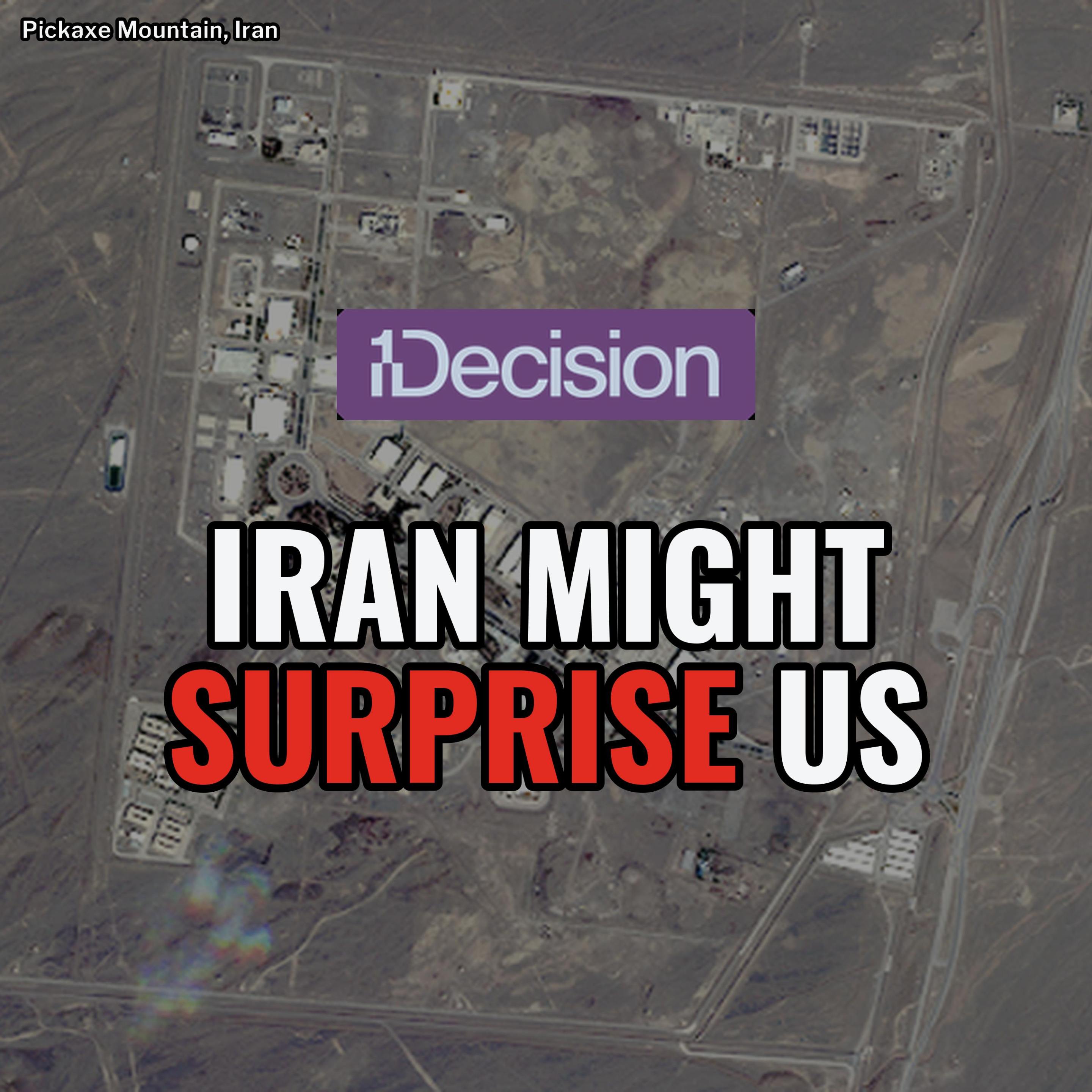
Wright: One small piece of advice and that is we tend to impose our way of thinking and our calculations on Iran. They game things very differently and they've been very good at surprising us. I mean the fact that 1,500 revolutionary guards went to Lebanon after Israel invaded Lebanon in 1982 and didn't fight the Israelis but built what became an embryonic version of Hezbollah, which is now the largest non-state actor, best armed non-state actor in the world today. Again, I think their calculations may be that it supports the Palestinians, but, you know, the Palestinians traditionally in Iran have not been a priority among the people. This is not the Arab world. The population, as you pointed out, has been involved in multiple economic protests since 2017 over the price of eggs and poultry, over the gas price hike overnight, also ration gas at a subsidized level, that they've shouted not death to Gaza, but out of Gaza, out of Lebanon. They want Iranian income and taxes to go to Iranian issues. So I think the Iranians know that kind of rhetorically, ideologically and principally that they support Hamas but it's not like Lebanon. People forget the history of the connection between Hezbollah and Iran. That Iran became Shiite at the time of the creation of the Ottoman Empire. It had been a Sunni country for millennia and it did so because it wanted to create a separate identity that the Ottomans then couldn't absorb Iran. And how did it convert to Shi'ism? It went to the Lebanese clerics, the Shi'ite clerics in Lebanon, who created new seminaries and helped convert, you know, the dynasty at the time to Shi'ite ways of rites and ways, you know, and the kind of differences with the Sunni world. And so there's this bond, this historic bond between Lebanon and Hezbollah that you don't find between Iran and the Palestinians that, you know, that goes back five centuries. So it's a different dynamic. And Iran is clearly not happy with what's happened. But remember that every time we think a group has been destroyed, it comes back, either rebuilds. I mean, who would have believed Hezbollah could have rebuilt so dynamically to become larger, better armed, better trained? We've seen this repeatedly in the Middle East. The United States went into the region and eliminated Saddam Hussein only to create Islamist groups in Iraq who fought the United States first as Al-Qaeda in Iraq, then evolved into the Islamic State of Iraq, which then evolved into the Islamic State of Iraq and Syria. We've killed leaders and what happens? They come back in different form, different leadership, more ambitious, able to create more foreign fighters. Gaza is different. Gaza is twice the size of Washington DC or the size of Philadelphia. I'm talking about a very small place. It's a very different dynamic. But I think the relationship is different and I think Iran is likely to do things or encourage its proxies. Iran doesn't need to direct a lot of its proxies anymore. Its proxies have their own mind, own agendas, own weaponry, and so forth to, you know, pester the Americans, to cost the Americans to divert their attention, you know, up the ante, so forth. I think again this is where we think in conventional terms and the Iranians think in unconventional terms and they're very different and I think there are probably other surprises out there. But I think also on your point about Hezbollah, which I didn't answer because I forgot the question, is that Iran I think has boundaries of how far it's willing to go against Israel right now and it will escalate within those boundaries. But I'm not sure that we're at the point that we're going to see the kind of escalation we did in 2006. Not yet. Who knows what incident could change everything on the ground and they may not know either. But so far, the potential is incredibly dangerous. But when you kind of game it from their point of view, there are costs and benefits too.
Mcfarlane: I think what I ought to take from that is a little bit of reassurance, perhaps that World War Three isn't exactly on the cards just yet, but I totally get your warning of just, you know, there is a precipice and it's very difficult to predict given anything could happen, as you rightly say. You wrote in The New Yorker recently about what may happen depending on how Israel approaches this widely expected ground invasion of Gaza. And you wrote very rightly, I think, that you questioned what winning would look like for Israel, essentially. You said that there's no question, quoting a former ambassador to Israel who you talked to, Dan Kurtzer, who said, there's no question Israel can inflict tremendous damage onto Gaza, onto its infrastructure and onto its people, can also target Hamas leaders, but movements regenerate. And sometimes the next leadership turns out to be more radical, more extreme than the one that was beheaded. And that, of course, you just explained to us how, for example, the US has experienced with this, Al-Qaeda in Iraq and then the evolution into ISIS. Given that, I mean, there have been in the last couple of weeks, people have been openly questioning what Israel can achieve in Gaza, how difficult any kind of ground invasion is likely to be, how to balance the risk to the hostages, how they're gonna deal with this spider web of tunnels, and how difficult it is going to be for them in a military sense, stepping forward into a territory that has been preparing for this moment for years and will have booby-trapped everything and without incurring steep loss on the Israeli side, but also, as you say, to what end? Because you can kill a group, but you can't kill an idea.
Wright: I think there are three big questions, and one is what the hell is winning? And we saw in 2006, Israel and Hezbollah fought a thirty-four-day war and neither won. It was the same way when Israel invaded Lebanon and stayed for eighteen years in occupation and unilaterally withdrew and for the first time with nothing in exchange, nothing. No peace agreement, no silent behind-the-scenes political deal. It was a decision that the war was too costly and the benefits too little. What is the solution? What's the alternative? How do you govern? Israel has tried to govern Gaza in the past with no success and again withdrew at a cost, pulling out 21 settlements. And the danger too is that what are the side effects of this war? And that's where I worry a lot. For example, Israel may push back Hamas for now, dismantle its infrastructure, destroy its arsenal, kill a lot of its leaders, but does it lead to such furor that the premise of the Abraham Accords began to erode, that there's so many protests on the West Bank that Israel loses the West Bank as an interlocutor. It's no longer viable for Mahmoud Abbas or his successor to actually talk peace with Israel, and so you lose the West Bank in the process for years to come. And then what happens to those countries, those governments, those leaders who've made peace with Israel, the king of Jordan and others? I worry a lot about the side effects of this war because in all of these situations, again, Israel may push back Hamas but lose a lot in the bigger scheme of things. This is where I went up once to the Golan Heights. I cover all sides of war, just let me make it clear. I talk to everybody and I talk to all sides. My dad once said you have to stand on top of the world and look down to understand any crisis and I make a point of not taking sides and talking to everyone. That's why I talked to the Israeli Prime Minister and I talked to the of Hamas and the ayatollahs in Iran. When I went up to Golan with the IDF to look out at the terrain, one of the IDF officials said to me, we're very good at the short term, we're really bad at the long term. I think that's right, when there's an immediate threat Israel is incredibly capable, well trained, well armed in countering an immediate threat, but it doesn't think very well long term, hasn't, and we've been dealing with that since 1948.
Mcfarlane: Well, that came out quite recently that I think the Americans asked Netanyahu's War Cabinet about what was the plan for day one after the military incursion and the cabinet admitted that there wasn't one. So I think that demonstrates your point perfectly. One thing that I should mention that I think is really, really interesting, you rightly point out the Abraham Accords and what are the knock-on effects that this conflict will have. This didn't make much of a splash. I don't know why, I thought it was really interesting. Saudi air defenses intercepted missiles from Houthi rebels in Yemen. Houthi rebels are Iranian proxies. Intercepted these missiles that were heading for Israel. I do think it's interesting how Saudi is reacting to this because, you know, they intercepted missiles that were violating Saudi airspace but were headed to Israel. MBS phoned the Iranian president a few days after this latest conflagration reignited again a couple of weeks ago. Everyone thinks that the Saudis and the Israeli potential detente, normalization talks have been set back a long, long way. Do you think we're at that yet? Do you think Saudi and Israel coming together for that much desired, at least for the American side, normalization of ties has been set back a generation or do you think it can still be salvaged?
Wright: I think that there was an assumption that the Saudi-Israel deal was a lot further along than it was. And it was always based on whether the United States would provide basically the kind of cover it does for its European allies. And that's a very controversial idea in the United States. It kind of hadn't sunk in because the terms, you know, the talks hadn't gone that far and there hadn't been enough kind of explanation of what it would mean. The Saudis are asking for a lot in exchange for normalization of relations. I think MBS, the Crown Prince Mohammed bin Salman, is very shrewd, and he's at the same time reopening relations with Iran and dangling the idea. And I think it's dangling still, or was, the idea of normalization with Israel. MBS at the end of the day really wants to be the regional powerhouse and to be the regional player. He'll do what it takes. He's determined, ambitious, aggressive, and he's playing a long game. Hamas may have reacted. I think Hamas actually launched this attack for a lot of different reasons. The Saudi deal may have been part of it. There were a lot of other factors that played into this, that wars are always a confluence of factors. You have multiple flashpoints that come together with capabilities. And Hamas had gotten to the point in training, as we now all know, got to a point it felt capable of doing this knowing it was going to come at a cost — whether naively it didn't realize at what cost, just like Hezbollah didn't reckon in 2006 that the war would go on for thirty-four days or that the reaction to a cross-border raid to abduct Israeli soldiers would bring that kind of cost and destruction. I think we make a lot of assumptions, people throw out stuff in the fog of war in these early days, may not be quite so simple. Even though I think that there is no interest by the major parties to engage in a bigger war, I think we really are at a precipice, we are teetering. And the danger is not just the future of Israel and Hamas. It's the tapestry of the region that has been woven since 1948, but particularly since 1973 when Sadat went to war to make peace. Everything that has played out over the decades since has really been about weaving together the threads so that countries, even if they still didn't like each other, even if they were different culturally, religiously, politically, could at least coexist. That's been played out so slowly, so painfully over and over and over with Jordan and Egypt and even places like Sudan that you see the beginning of that hope of a tapestry that would actually hold together and now that's all beginning to unravel in ways that we're almost back to zero starting from scratch again. And that's what worries me, that the bigger fabric, all the things that have been built at such huge diplomatic cost over the decades falls apart.
Mcfarlane: That's it for this week's episode of One Decision. We drop new episodes every Thursday. Like and subscribe so you never miss an episode. Drop us a line. Tell us your thoughts. What decisions have impacted you and where you live. You can write to us. Our email is 1decision@1decisionpodcast.com. From me and the team, thank you for listening, and see you next time.