Episode Info
- Season18
- Episode5
Hosted by Christina Ruffini and Sir Richard Dearlove
Guest
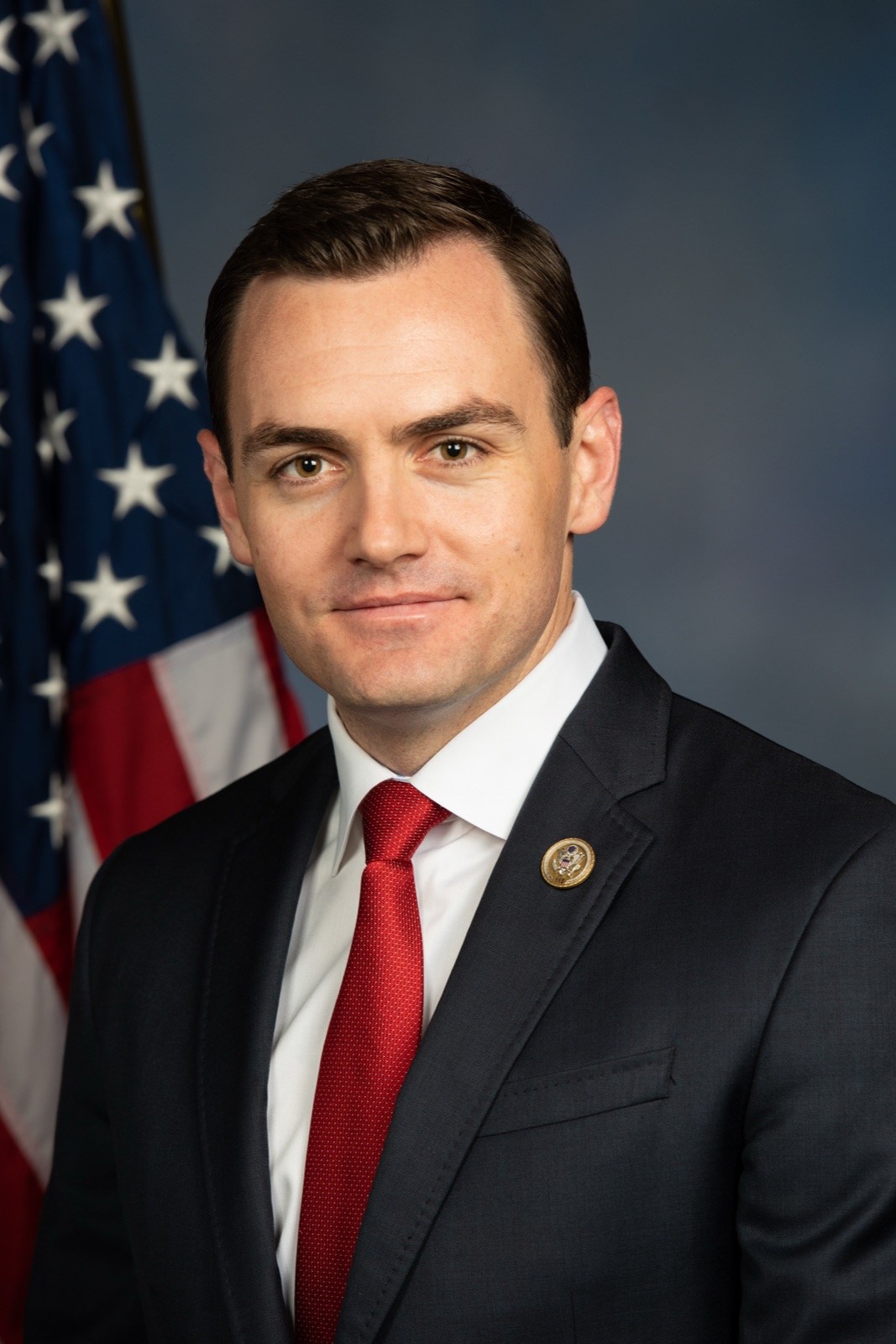
Congressman Mike Gallagher
Congressman Mike Gallagher is a Republican from Wisconsin who chairs the Select Committee on the Strategic Competition between the United States and the Chinese Communist Party and sees areas like critical pharmaceutical ingredient production and artificial intelligence as ripe for decoupling.
Episode Summary
Congressman Mike Gallagher, a Republican from Wisconsin, chairs one of the most closely watched and surprisingly bipartisan committees in the United States House of Representatives - The Select Committee on the Strategic Competition between the United States and the Chinese Communist Party. Gallagher wants Congress to lead the way on a comprehensive American policy towards Beijing and sees areas like critical pharmaceutical ingredient production and artificial intelligence as ripe for decoupling between the two nations. This week's guest host, journalist Liz Landers and Sir Richard Dearlove speak to Gallagher about his policy vision for the two superpowers, divisions in the Republican party over aid for Ukraine, and how Washington should respond if Russian President Vladimir Putin visits China. The Congressman also weighs in on some of the controversial foreign policy comments made by his party's presidential candidates and Sir Richard shares his thoughts on what might come from Commerce Secretary Gina Raimondo's meetings with Chinese leaders.
Listen & Subscribe
- Watch on YouTube
- Listen on Apple Podcasts
- Listen on Spotify
Transcript
INTRODUCTION
Landers: You're listening to One Decision, the podcast that looks at the choices made that shape our lives. I'm your guest host, journalist Liz Landers. Every Thursday along with cohost Sir Richard Dearlove, the former chief of Britain's secret intelligence service, we explore some of the biggest choices and issues facing our world, talking to the players and influencers making, informing, and shaping these decisions. China US relations have been at the forefront of international news this week as the BRICS alliance announced a number of new members, and Vladimir Putin will reportedly head to China in October at invitation of Xi Jinping for the Belt and Road Forum, marking the first time he's left his country since March. And US Secretary of Commerce Gina Raimondo visited her counterparts in Beijing for high stakes meetings. President Biden has made to come here
Raimondo: to convey the message that we do not seek to decouple. We seek to maintain our $700,000,000,000 commercial relationship with China.
Landers: Republican congressman Mike Gallagher chairs the newly formed Select Committee on the Strategic Competition between The United States and the Chinese Communist Party. And it's one of the few places to find bipartisan policy agreement in Washington these days. Gallagher wants his committee's work to both inform the American public on a complicated topic and also lay the foundation for a comprehensive policy agenda between the two superpowers. We spoke with him about what those specific policies should be, the d word decoupling, Hollywood's role in China US relations, and much more. I wanted to start with the push that you've been making to some of the GOP presidential contenders right now to talk more about China, and we did see that that happened some on the debate stage, this past week. More broadly, though, I wanna ask you, what is congress's role so that no matter who the president is after this next election cycle, that The United States has a comprehensive strategy towards China?
INTERVIEW WITH CHAIRMAN MIKE GALLAGHER
Gallagher: I think congress has really two roles, as it pertains to China and our comprehensive strategy. One is a communications role. It's to explain to our colleagues and, by extension, the American people why any of this matters, why someone in Green Bay, Wisconsin or, Chicago, Illinois or California, New York should care about the strategic competition between The United States and the Chinese Communist Party. Because if we can't explain that, then we're not gonna be able to generate support for any policy, which leads to the second thing. It's to develop a policy and pass legislation that puts us on a strong footing to prevent a war with China in the near term and then win what could be termed a new cold war over the long term. And this is really the reason for the creation of the Select Committee on the CCP. It's to find that bipartisan center of gravity in Congress, identify what can pass so that we are not left going back and forth between different administrations with different executive orders that have wildly different interpretations of how we should compete against the CCP. So many ways, I think Congress has an opportunity to lay the foundation for an approach that will endure no matter who occupies the White House in any given moment.
Landers: Did you find that the Republican contenders satisfied your call? And, also, I just wanted to ask you about Vivek Ramaswamy because there have been people on stage who sort of swatted him down in some of his comments. Did you think that what he said about Russia and, Ukraine was appropriate?
Gallagher: Well, on the first question, no. I mean, I recognize, it's the first debate, it was only two hours and enforcing the time limit for some candidates was very challenging. So my hope is that we'll get further into foreign policy. My view is that China is our most pressing national security concern and the candidates who would be commander in chief need to go beyond merely saying, you know, China's our number one threat. China's bad. China's bad. I think we need a little bit more detail on, okay. What is your plan for rebuilding the military in the short term and long term to prevent a conflict with China? What lessons have we learned from the failure of deterrence in Ukraine? What is your economic approach? Do you think we should put guardrails on outbound capital flows from America to China? That's a complex issue that divides the party. You know, issues related to data flows. TikTok, though it isn't quite as in the mind as it was a few months ago, it's still bound up in this really thorny issue of cross border data flows for which there's very little regulation. And so I think it's important that the candidates be asked about this. I think the next president could very well confront a fourth Taiwan Strait Crisis, and it's important that we select someone who we think is suited to diffusing it. Conflict with China would be incredibly costly in terms of blood and treasure, and it's something we should seek to avoid. On your second question, I mean, obviously, I disagree with some of what Vivek put out there. I'll concede that, you know, there is a divide in the party on the issue. And certainly, there's a lot of members of the Republican base who are very skeptical of future assistance packages to Ukraine. I don't think we do ourselves any favor by sort of just dismissing the skepticism out of hand or assuming that the consensus in DC, the think tank consensus is just always wiser than that of the American people. So I think we gotta stare it in the face, confront it head on, and be responsible with the aid that we provide, be clinical with aid we provide. We passed certain provisions recently creating inspector generals and a review process for assistance to ensure that it's doing what it's intended to do. My own view is that we can't sort of neatly separate what's happening in Eastern Europe and in Ukraine from what could happen or is happening in the Indo Pacific. That Xi Jinping and Vladimir Putin are, in fact, in a partnership, a no limits partnership that increasingly looks like an alliance built against the West. And if we seek to deter Xi Jinping, we cannot allow his junior partner Putin to achieve his ambitions in Ukraine.
Dearlove: As a non American who spent a lot of my career in The States or dealing with The United States on foreign policy issues. The average American voter, I mean, in my view, you've got a massive credibility gap between, you know, what you're talking about, what you're saying, which I 100% agree with. You're spot on right in my view. But how do you engage the voters in The United States on these actually quite complex and esoteric geopolitical issues? How do you get across to them the crucial importance of the issues that you were talking about?
Gallagher: I think at least two ways and with full respect for the difficulty of what you just laid out and respect for, I think, the practical reality that foreign policy rarely decides presidential elections or the political science would suggest that it tends not to matter, at least until it does, until there is a crisis that forces it to the forefront of American minds. One is to say to those skeptical voters who are wary of our entanglements abroad that we've just come out of two decades of war. Now these were limited wars, counterterrorism wars, whatever you want to term them, but thousands of Americans lost their lives. We just recognized the two year anniversary of 13 Americans in Afghanistan losing their lives. And one way to ensure that we don't find ourselves hold into costly war where Americans could die is to have allies and partners that are willing to fight for themselves. And we can serve as the arsenal of deterrence. And by providing that targeted lethal aid, we can enable partners on the ground to do fighting where Americans may be skeptical of fighting themselves. That's one argument that I think might resonate. The other is what Ukraine has revealed is that our stockpiles of key weapon systems, 155 artillery, long range precision fires, are woefully insufficient. So we should be using this crisis in order to rebuild our munitions industrial base in order to prevent a future war. And that to me is where you land in the argument. The paramount purpose, at least of our short term policy vis a vis China, should be deterring a war because Ukraine has revealed how costly it is when deterrence fails. We should be waging deterrence or peace with the same creativity and alacrity with which we wage war. And part of that, in my opinion, is ensuring that we have full stockpiles west of the international dateline so Xi Jinping doesn't think he can achieve his objective. And I think your average American likes the idea of an ounce of deterrence is worth a pound of warfare. So we'll see if I'm persuasive in making those arguments at various bars and VFW halls in Northeast Wisconsin, but I'm doing my best.
Landers: Chairman Gallagher, you brought up the relationship between President Putin and President Xi. I wanted to ask you about this news that has been breaking that President Putin is going to leave Russia for the first time since March and supposedly go visit China in October. What's your reaction to this growing relationship between these two men?
Gallagher: Well, I think when the announcement or the text of the No Limits partnership came out, there was a tendency among many and maybe even myself included, to sort of dismiss it more as a maybe photo op isn't the right word, but really to underestimate the depth and breadth of the partnership. And the more you dig into that initial text, you realize that though China and Russia are strange bedfellows historically, when they almost came to blows during the old Cold War, there are certain territorial concerns or disputes. Their interests aren't perfectly aligned. They have a shared interest in pushing back and if not undermining the West. They have a shared concern over, you know, what they call color revolutions. And often when they talk about color revolutions, they suggest that America is behind every color revolution there is or any unrest in their own countries is a product of American interference, which is of course absurd on its face. I think it also reveals what these two leaders fear in common, which is their own people, and that is the sort of abiding weakness of dictatorial or totalitarian regimes. And since even as Putin has encountered friction in Ukraine and at least in the early parts of the war, humiliating setbacks, Xi Jinping has stuck by him.
Landers: Do you think that China and Xi Jinping should face any kind of repercussions from The US for hosting Putin who's now an alleged war criminal after what's been happening in Ukraine in the last year and a half?
Gallagher: I do. I mean, I think after that, it'd be a mistake for President Biden to sort of ardently pursue a meeting with Xi at APEC. And indeed, all of our efforts to sit down with high level CCP officials thus far have not yielded sort of tangible concessions from the CCP. For example, we've been trying to set up a military to military crisis communication channel, not just under this administration, but the Trump administration too, and they continually rebuff our efforts. So I think other practical steps we could take is there was a sanctions package that was delayed in order to make way for Blinken's visit to Beijing that we could revive. There is, of course, the October 7 export control rules that are interim rules that could be finalized, could be strengthened, you could close some of the loopholes. There's commerce action related to a Chinese supercomputing company, Inspur, that could go forward. And then we keep granting licensing exemptions for American technology going to Huawei, and we could end those licenses. And all of those, I think, would be proportional. And they would also just have the practical effect of defending our own technology and our own national security, that should all be on the table.
Dearlove: I'm not about to defend Xi Jinping, but it isn't a bilateral meeting as far as I understand. It's a Belt and Road review, and Russia's quite an important part of Chinese policy on Belt and Road because of the transport of rail connections across Russia. I mean, I think one needs, in some respects, to be cautious because there are other signs that I think perhaps are more significant that Xi is quite keen not to get too entangled bilaterally with Russia. I mean, if this was a bilateral meeting, I would agree with absolutely what you're saying. But it isn't a bilateral meeting. It's a multilateral meeting. And it would have been odd to exclude Russia from it given the state of their current relations. I'm interested in your observations about what I'm saying about it not being a specific bilateral contact.
Gallagher: I should have confessed at the outset that some of the actions I talked about us taking, I believe, should have happened already. And regardless of whether Xi meets with Putin bilaterally or multilaterally or whatever the subject of it is, my broader concern is that as we've revived diplomatic and economic engagement with China, we've slowed defensive actions that we were on the cusp of taking six months ago. For example, if this working group that Secretary Raimondo just agreed to results in the delay of a finalized export control rule or a softening of export controls, as some American semiconductor companies are arguing for right now, I think that would be a mistake. If nothing else, I think we should take advantage of every opportunity we have to highlight the atrocities that Russia is perpetrating in Ukraine and pressure Xi on his continued support for Putin's war machine and, in some ways, the economic lifeline that he's provided. So what the precise response to this meeting, I guess, is less important than the overall set of defensive activities that I think we should have taken a long, long time ago, but I take your point.
Dearlove: I do agree with you on the issue of export controls. I mean, the only problem with the policy The US is following, the export controls are great, but I think the implementation when you have entangled economies, I mean, let's face it, this is not a cold war situation, Soviet Union and the West. China has a completely entwined economy with the West. So I'm quite interested in the whole issue of actually implementation of the policies. The policies look good, but is it really possible to implement them in the way that you think is going to be effective?
Gallagher: Well, here, I'll give credit to the Biden administration, which is that for the October 7 interim rule, they seem to have brought along key allies, in the form of the Dutch and the Japanese. I think whenever you can bring allies along, it makes it more practical to implement them. But you're right to suggest that this is what makes this competition, in my opinion, in some ways, far more complex than the old Cold War with the Soviet Union. We're just conjoined twins economically with China in so many areas. It's why the idea of a full decoupling, I don't think, is going to happen. I have, however, advocated for a selective decoupling in key areas, and even that has now become verboten. We're changing our lexicon on a daily basis, so we're not allowed to say decoupling anymore. We have to say, well, for a while, it was derisking, and now it's diversifying, and we'll have another d word euphemism tomorrow, I guess.
Dearlove: Well, explain to our listeners what areas you do think would be appropriate for decoupling then.
Gallagher: A few are obvious to me. One is, given the threats to cut off the export of advanced pharmaceutical ingredients at the beginning of the pandemic, I think it would be wise for us to figure out a way to sort of onshore the subcomponents necessary for life saving drugs. Because if you imagine if we got into even a lower end scenario, a confrontation over Taiwan, if Americans suddenly had their access to life saving drugs compromised, I think support for Taiwan would evaporate. Obviously, the administration has embarked upon a massive decoupling effort in the realm of semiconductors. There's disagreement about the best way to do that, but by and large, microelectronics is a category that's ripe for it. I think when it comes to artificial intelligence, one form of decoupling that would be wise would be to prevent American financial entities, primarily in this case, venture capital funds from investing in Chinese AI companies, given the uses to which the Chinese Communist Party would put that technology. And if nothing else, I would submit that when it comes to the energetics that we put inside of our weapons, the propellants, explosives, pyrotechnics, many of which are sourced from China, and China has actually stolen our technology, CL20, which we're actually too risk averse to use. If anything was a candidate for decoupling, it would be the things we put in our weapons that allow them to go far and go boom. Beyond that, I mean, you know, I'm not saying that we should cut off the ability of Wisconsin farmers to sell soybeans to China, or that Americans should have national security concerns about buying cheap T shirts from China. However, I would like to ensure that those textiles and T shirts aren't made with slave labor in Xinjiang. But again, this is, you know, in the committee's work thus far, the economic statecraft component of this competition is far and away in my mind, the most complex component. It could be that that's just where I have the least experience, but it's so intertwined and entangled that it's very difficult.
Landers: I wanted to ask you about this BRICS alliance and the meeting that happened last week. National security adviser Jake Sullivan told reporters after the BRICS meeting happened and they announced the doubling of their membership, he said that the Biden administration doesn't see BRICS as, quote, evolving into some kind of geopolitical rival to The United States or anyone else. Do you think that this is a threat to The US and European influence?
Gallagher: Well, the key variable to watch in the BRICS summit, or any future BRICS summit in my mind is India. I guess the Saudis, as well. But there's just no long term strategy vis a vis China that I think could be successful without a closer relationship with India. And in this meeting, it seemed that Xi got a win over Modi just in agreeing to expand the BRICS membership after Delhi had signaled it wouldn't support BRICS expansion. So that's a harbinger of India Finlandizing in a different direction, and it may not be, and I know I'm oversimplifying all this, that would concern me. I don't think it's anything akin to the variety of alliances and partnership structures that we have in the West. I think that's one of our long term major advantages over China, this sort of the vast network of allies and partners that we've built painstakingly through the decades, but it's certainly something to keep an eye on. You know, if Beijing were to start to build a meaningful network of partners as opposed to just vassal states or sources of hydrocarbons and food that they can control, that would, I think, concern us.
Dearlove: Well, I think that in very recent times, we've become much more conscious and aware of the threat from Chinese espionage. I think it's fair to say that Soviet Russian espionage, we know a lot about. We have a pretty definitive view. It doesn't need updating because it hasn't essentially changed. But my view on China is that there was a great deal of naivety in the West about the Ministry of State Security and what it was up to. And there's no question now that certainly in Europe, led by The UK, certainly in The US, there's an awareness of the threat of intellectual property and the important role the MSS plays in supporting, let's say, Chinese aspirations to be a global power. But I mean, I'd be very interested in your reflections, therefore, on how The US generally, not just governmentally and the agencies, sort of assess the problem with China because clearly the economic threat in particular is very potent and very continuing, and a lot of businesses are rather naive about it.
Gallagher: I have an odd cultural point to make here that I wonder, Sir Richard, if you would agree with. I think part of the problem is that while everybody knows what MI6 is, to draw upon your background, everybody knows what the CIA is, I mean, in popular culture terms. And everybody sort of knew what the KGB was because we had so many novels during the old Cold War and so much cinema. There isn't that same level of general awareness of what the MSS is, right? And maybe that's deliberate on the part of the MSS. That says nothing about something that's even more difficult to understand, in my opinion, which is the United Front Work Department and the opaque networks that it creates around the world and these innocuous sounding nonprofits that appear on American soil, that when you sort of dig a few layers deep, discover that the Chinese Student Scholars Association is actually being used to harass Taiwanese or Chinese students on American soil, or there's an illegal Chinese police station in the heart of Manhattan. That's what's so difficult about it. I guess I'm making two points. One, I think there's a lack of deep understanding of united front work even within our intelligence community, and then a lack of sort of broader awareness culturally about the espionage threat posed by China, notwithstanding the stats we hear about intellectual property theft and this and that. But I'll pause there, you can sort of push back if that's a ridiculous point.
Dearlove: You're making an absolutely great point. And in a way, you put your finger on it because the public awareness, the public knowledge of Chinese espionage until recently amounted to zero. And if you had mentioned something about the United Front Department, which is clearly a key aspect of party control. I mean, United Front Department was originally set up to control and knock out other political parties inside China. But of course, its role now has become the projection of Communist Party influence and power overseas. So I think you make a terrific point. And a lot of this is educational and why maybe a podcast like this and we're talking about it to our listeners is very important because they'll go away and say, well, hey, there's a problem here and we can think about it and understand more. And in a way, you're right. There isn't that sustained fictional discussion that we're so familiar with in American and English literature or in the espionage fiction. It doesn't really exist or it hasn't hitherto existed in relation to China. So I think you make an absolutely crucial and important point.
Gallagher: And, of course, Hollywood, I think it's fair to say, would not be eager to make a movie in which the MSS is the bad guy or any Chinese entity is the bad guy. And we actually did a roundtable Hollywood with the select committee with various producers that had made movies and, you know, gone to great lengths to get them into the Chinese market. And it was fascinating to learn about the censorship process as well as just changes in the market because China, as in so many other industries, is increasingly confident in their domestic production and their ability to produce their own movies that it's getting harder and harder for American movies to get in, even if they bend over backwards to censor anything that could be offensive to the party.
Dearlove: Yeah. But it's also the issue of Chinese investment and Chinese money. And, I mean, one sees this in all sorts of different areas. And, I mean, the one I've been most concerned with recently is scientific publishing and the whole issue of SARS-CoV-2 virus, and the pandemic, and the reluctance of a lot of American journals to publish anything which was critical of China because they have, you know, income streams which are so dependent on the, you know, money that they get from Chinese institutions. And I think this is actually a very, very worrying aspect of the degree to which our societies, when we didn't really take notice of these issues over the last decade, we haven't done anything about it. We now find ourselves in a powerless situation.
Landers: I'm just gonna jump in here too and just say that going back to Americans understanding potential Chinese espionage that there have been a number of little towns in America now. I'm thinking of this example in North Dakota recently where China and Chinese owned firms are buying up land near strategic national security locations. Congressman, are you seeing that in other parts of the country? I think that this North Dakota example is a fairly well known example now. And, also, are you aware through briefings of China doing this in other places around the world?
Gallagher: Well, there are other cases in The United States. There's a issue in Northern California near Travis Air Force Base. I can't say too much about it other than, you know, we've had briefings with the FBI about it, and there's bipartisan concern about the land purchase. There's been a variety of states that after the North Dakota case, have taken action to prohibit such land purchases. Some of these have been more successful than others. We actually have legislation at the federal level that we're hoping to get inserted into the farm bill that we think takes the right sort of surgical approach and allows CFIUS to tackle this issue. And if you remember, when we reformed CFIUS a few years ago through a piece of legislation called FIRRMA, one of the things we tried to give CFIUS was the mandate to scrutinize real estate purchases near sensitive military facilities and critical infrastructure. And then CFIUS claimed that, you know, the implementing regulations for that law suggested it was more ambiguous than we intended. So we're trying to fix that. Whether it's happening in other countries, I don't know. Certainly, we've seen in The UK, this same phenomena with illegal police stations and in other countries that we've seen in America, that's been a widespread phenomena. But the land purchase issue, I don't know. And different countries had different rules related to land purchases. I mean, what Richard alluded to before, which is just the massive investments related to Belt and Road have been a well documented phenomena that's loosely related to this topic. You know, whether it's the Chinese dominating the Gwadar Port facility in Pakistan or what they're doing in certain African countries. But the land purchase issue, here in America is certainly one that I think we need to take action on in Congress. And as a matter of reciprocity, obviously, Americans, you know, aren't allowed to buy land in China.
Landers: How does The US balance this though without targeting Chinese nationals? I mean, I've certainly heard that from some people who are concerned that this is going to target people unfairly, basically?
Gallagher: I think in at least two ways. I think it has to be tied to a national security concern. So proximity to a military base or critical infrastructure. Obviously, people can disagree about how you define critical infrastructure, right, is a local water utility in, you know, Allaway, Wisconsin, where I am right now. Does that count? There would obviously be debate about that. And then also finding a way to, and this is maybe even more difficult, tied to the party. And what makes that more difficult is that sort of the line between private actor and party in China is extremely opaque. In fact, I think you could argue that there's no such thing as a truly private entity in China given the party's power and some recent legislation that they passed. But at least you start out with that in mind, I think you can focus it in a way where it's not just a blanket prohibition.
Dearlove: And it might survive legal challenges as a result. There is an additional problem that we know that the MSS do target ethnic Chinese, whether that, as it were, a Chinese nationality or not. And I think this raises lots of problems for all of us because, you know, you can have a very loyal internal ethnic Chinese community, but at the same time, Communist Party, Chinese intelligence is looking at these people more closely because it thinks that they might have some cultural sympathy with China. And I mean, that's been I wouldn't say it's a proven case, but I think if you spoke to the FBI or MI5 in The UK, they would acknowledge that this is a real problem. You know, the big question for me is Chinese, as it were, the policy is one thing, and we can all express that. The implementation is another. And I think this is a huge problem. Anyway, it's great talking to you, and I very much enjoyed it.
Gallagher: Well, thank you both. I enjoyed the conversation.
ANALYSIS WITH SIR RICHARD DEARLOVE
Landers: Sir Richard, we covered a lot of ground with the chairman. What stuck out to you as the most important or the most surprising part of our conversation?
Dearlove: I think it's very interesting that, you know, he appreciates the complexity of the relationship with China because this isn't the Cold War in the sense of the old Cold War because you have this close, intimate economic relationship now between The United States and China. It's how you regulate that relationship, how you manage it in terms of the closeness and the importance economically to both countries. And I think it's probably significant that he didn't actually mention the European angle, because the EU doesn't have a consistent policy towards dealing with China. There's huge disagreement within the individual nations. There's different attitudes to Belt and Road. And the Europeans have found it quite impossible to unify themselves on Chinese policy. And as a result, of course, the Chinese have a field day. You know, they talk to the Germans in a very intimate way about German car industry. The Italians are very enthusiastic about Belt and Road. The French have their own relations with the Chinese. And there's no consistency at all. I mean, the only country which is taking a firm and clear line happens to be not a member of the EU, which is The UK now, and is very much following a similar track to The United States. Although I think it's important also to acknowledge that the British foreign secretary cleverly has literally in the last few days, I haven't seen a report about it, been in Beijing and trying to talk to the Chinese about what the future relationship might look like.
Landers: I would say that just looking at the committee's work, I totally agree with you, Sir Richard, that this is primarily focused on US interests. And we didn't hear the chairman talk a whole lot about Europe, as you mentioned. We heard him talk a little bit about the relationship between Russia and China and got some reaction to that Belt and Road initiative meeting, which will be coming up soon. But, yeah, if you look at some of these hearings and just where they're hosting these hearings around the country, talking with Iowa farmers about intellectual property theft, talking about all different kinds of COVID concerns and the buying of strategic real estate locations around The United States, which we touched on with him at the end there, I think that this is a committee that's primarily focused on US interests right now and how do we create a better policy in The United States because maybe our European allies are not gonna come together with a great comprehensive strategy. And I think that The United States has really felt this. And especially I think it's especially interesting, you know, from him as a Republican because this has become a real sort of hawkish position for Republicans in the last few years is becoming very aggressive on China.
Dearlove: Yeah. Well, it's relatively bipartisan in comparison to some other issues that divide the two parties. And the irony is Biden following a policy on China, which is, you know, pretty much replicates Trump's. It may have different rhetoric, but in terms of day to day decision making and implementation, there's been a consistency between the two administrations. And I think The UK is, as it were, sympathetic to the view. And you get, for example, the Director General of MI5 standing up publicly in The UK and saying China is the biggest threat to The UK's national security. That's unprecedented, completely unprecedented. And, you know, he's not wrong. I mean, this is a clear message. But you haven't got, you know, corresponding attitude and response amongst the leading European nations. In fact, they're clearly being very cautious in what they say. And I mean, I think the thing that I found very, very hard to take was Scholz's visit to China, you know, just after Chinese expression of support for Russia on Ukraine, when he runs off to China with a whole lot of German carmakers to make sure that the German industry can sustain its position in the Chinese car market. So this is a complex issue. And you're absolutely right. I mean, you know, the congressional attitude of this issue is it's essentially an American issue with a certain amount of sympathy and support from Five Eyes. But, you know, the economic parallels don't entirely work because you take Australia's relationship with China, that also has a massive economic dimension. The UK is not so much, but this coordination together, a united global response in the West towards China is going to be a very, very big challenge.
Landers: So, Richard, we didn't get to talk about it too much with the chairman there because there is a lot of news to cover. But The US Commerce Secretary, Gina Raimondo, has been in China for the last few days. She's been having meetings. We've gotten a little bit of readout on some of what she has been saying. She actually one thing that I did think that was interesting about the language that the congressman used around the word decoupling is that Gina Raimondo apparently went over and said to her Chinese counterpart that she's conveying the message that we do not seek to decouple. I'm wondering what you've made of Secretary Raimondo's visit and just the fact that The United States has now sent over the course of this summer. We've sent Secretary Blinken in June. We've sent Secretary of the Treasury, Janet Yellen, in July, and now we have Secretary of Commerce there right now. What does that really say about how The US is tackling this problem in your estimation?
Dearlove: I think any American realist on foreign policy understands that the future international security system, let's say the past one was Pax Americana, the next one is going to depend on a manageable relationship between China and The United States. And each will have their spheres of influence. And if you're taking a common sense view of geopolitics, and not being judgmental about China, which is difficult to admit, you have to realize that somehow the future of international relations depend on The US and China coming to some sort of accorded working relationship. I think there are enough sensible people in the Biden administration who understand that basic truth. Now, I'm not saying that they're ready to make concessions. All I'm saying is that they understand that talking to China is an essential part of foreign policy with an eventual objective to reach maybe not an agreement, but a modus vivendi, which will accommodate a superpower of The United States and a coming superpower, which is China. And that's an unavoidable reality. And, you know, if I was involved in foreign policy and I'm pretty hawkish on China, I would also be saying that in parallel.
Announcer: That's it for this week's episode of One Decision. We drop new episodes every Thursday. Like and subscribe so you never miss an episode. Drop us a line. Tell us your thoughts. What decisions have impacted you and where you live? You can write to us. Our email is 1decision@1decisionpodcast.com. From me and the team, thank you for listening, and see you next time.