Hosted by Christina Ruffini and Sir Richard Dearlove
Guest
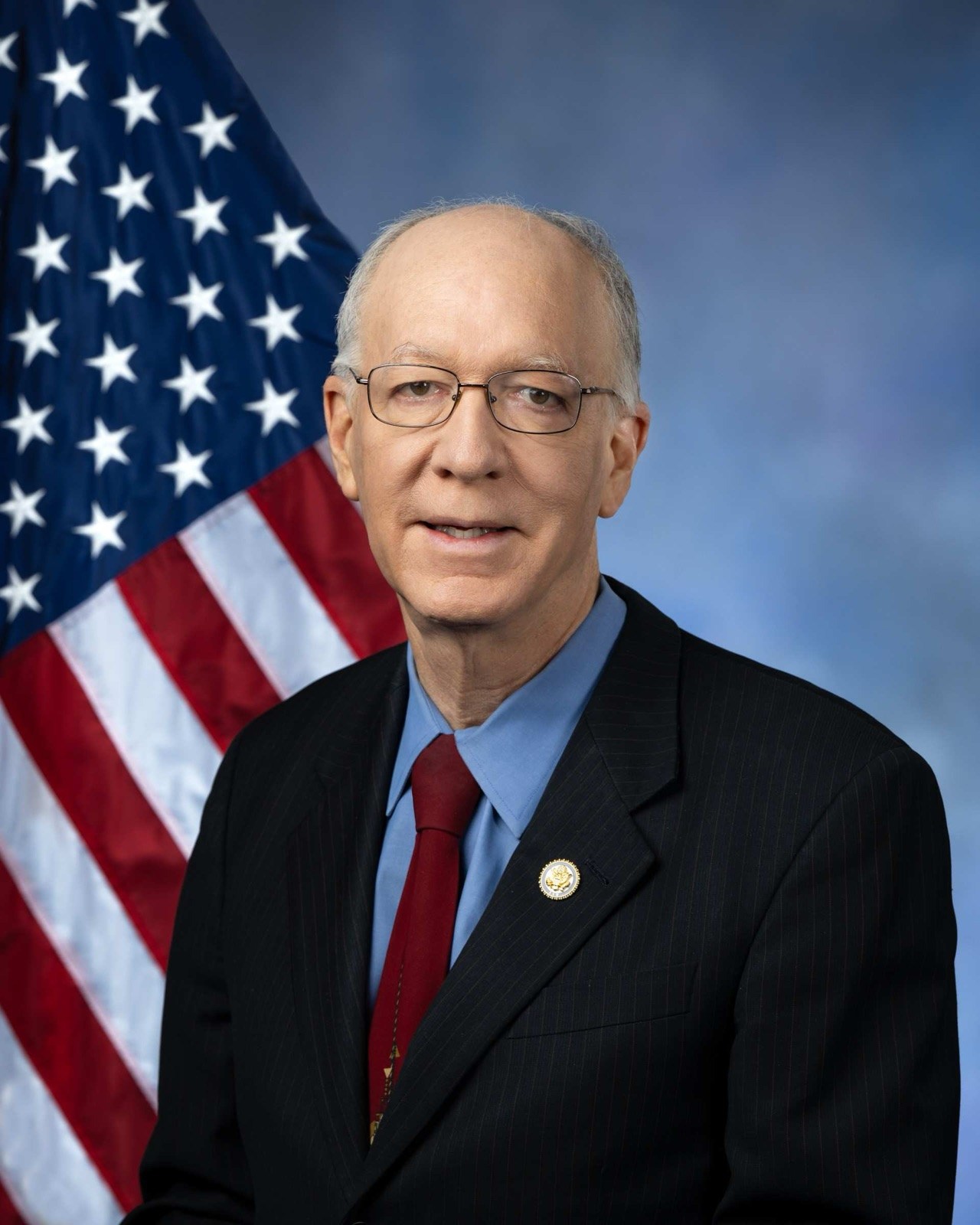
Congressman Bill Foster
Congressman Bill Foster is a Ph.D. physicist in Congress.
Episode Summary
In this week’s episode of One Decision, Congressman Bill Foster — the only Ph.D. physicist in Congress — joins hosts Christina Ruffini and Sir Richard Dearlove to examine the widening gap between science and policy in Washington. Foster warns that as the U.S. defunds research and sidelines experts, it risks falling behind in the global race for technological dominance, particularly against China. From the dangers of deregulated artificial intelligence to the unclear status of Iran’s nuclear program, Foster outlines the stakes of ignoring science at the highest levels of government.
Episode produced by Situation Room Studios. Original music composed and produced by Leo Sidran.
Listen & Subscribe
- Watch on YouTube
- Listen on Apple Podcasts
- Listen on Spotify
Transcript
COLD OPEN
Foster: I believe that because of the job displacement that we're going to see from AI, the question of what is your plan for dealing with AI is going to become the number one political question. Within a year or two, everyone is gonna know someone who's lost their job through artificial intelligence.
INTRODUCTION
Raffini: Hello, and welcome to One Decision. I'm Christina Raffini, joined, of course, by my cohost, Sir Richard Dearlove. In today's episode, we're speaking with congressman Bill Foster, democrat from Illinois and the only nuclear physicist in congress. So how does the Harvard PhD and scientists feel about the current climate of Trump versus academia, Iran's nuclear program, and the hollowing out of expertise, not just in the administration, but in American culture. It's an absolutely fascinating discussion. We were thrilled to have him. Let's get to it. Congressman, thank you so much for joining us. To get started, can you tell us a little bit about your background and how that wound you up in Congress?
INTERVIEW
Foster: My career as a physicist, I was a high energy particle physicist. So for the twenty five years before entering Congress, I worked at Fermi National Accelerator Lab where we were smashing protons and antiprotons together to make particles that have not been around since the Big Bang. And so I was actually on the team that discovered what's called the top quark, the heaviest known form of matter, a single subatomic particle that weighs more than an entire atom of gold. So I spent the first ten years in physics building these experiments, analyzing them, discovering the top quark, and then the next ten or so years I spent actually building the giant accelerators. And during that time I did a variety of things. Designed integrated circuits which has become relevant. I program neural networks. I understand you just had Geoff Hinton on because he's one of my heroes because back in the 1990s we were programming neural networks trying to get them to do useful work to analyze particle physics interactions and they were not working at all because he had not really gotten his breakthroughs working on what's called back propagation that would really led to the incredible progress in neural networks and artificial intelligence. As I say he's one of my heroes. I actually started out before I worked in physics, actually started out in theater stage lighting. When I was 19 my little brother and I started a company in our basement with $500 from my parents and well actually started in the basement and then we got kicked out of the basement for making too big a mess so he moved up to my bedroom. Then when we got our first order, we moved into a little metal shed in a cornfield and now it's a great big building in a cornfield and it manufactures about two thirds of all the theater lighting equipment in The United States. Like 90% of Broadway. It's called ETC, Electronic Theatre Controls. So I ran the company for most of a decade and then returned to Harvard graduate school and my first love, which was physics, and turned the business over to my little brother. So when people ask me what's my secret of success in business, it's to have a really smart little brother.
Raffini: I do wanna ask you, Columbia has just decided to settle its dispute with the administration. They're going to give $200,000,000 in order to kind of resolve this funding dispute. What is your take on this administration's approach to universities, to science, to education, and any dangers that you see there?
Foster: In all of the time I've been in politics, I had in the back of my closet my Harvard tie because it's not really safe thing to do in politics because of the elitist tinge to having attended Harvard, even if just as a graduate student. But when Harvard actually was willing to stick to its guns and stare the Trump administration in the eye and say no, you know, we are a country that believes in freedom of speech. We do not believe that we should be intimidated for ideological reasons by the government and Harvard has the wherewithal to stand up and they're willing to use that. And so I was very proud and I got out that old dusty tie from the back of my closet, put it on and wore it for a series of votes in the US House of Representatives. I am very proud and we recently had the president of Harvard in talking to a group of Democrats or moderate Democrats called the New Dems. And you're really, to a person, told him how proud we were that he and Harvard was standing up against this ideological blackmail.
Dearlove: I should explain that after I retired from MI6, I became head of Pembroke College Cambridge and then was the deputy vice chancellor. And then I've been also chair of the board of the University of London for the last ten years. I think looking at the issue in the States and comparing the situation in the UK, it's it's unimaginable that we could have the same sort of confrontation over essentially, you know, the independence of universities despite the fact they receive, of course, a lot of funding from the central government. But I think people in the UK are really shocked by this clash of power structures, let's put it like that, when universities play such an influential life, not just in terms of research, teaching, and all the other things that universities do, but just socially across, you know, the whole of the sort of social structure.
Foster: Yeah. And it is not just the UK. You know, I had a delegation in from Canada yesterday, and they do not understand what's taken hold of this country. And you know my cell phone is sort of burning a hole in my pocket from my scientist friends who are saying, you know, what the heck is going on? My grants are being cut, you know, a year before they're to finish and report out their results. It is virtually impossible to recruit young scientists to work in the United States and we're suffering a big brain drain. After World War II, the United States instituted a bunch of policies to gently push scientists back into their countries of origin to sort of try to resist the brain drain because we understood the damage this was doing. Well guess what it's happening now but it's being driven by the push of the Trump administration and it has to do with many factors. First the budgets are you know existential and it's interesting Trump came in in his first fifty days or so put in these DOGEs and just did all kinds of thoughtless violence to the science programs in the United States. You know just fired a huge number of people which will make it impossible to recruit high quality people into the federal government for a generation. It's the science positions across all of the agencies. I was talking recently with the recently retired head who did offensive cyber, probably a gentleman you know, and he was discussing just how there's been a hemorrhaging of the top talent from the group that does offensive cyber which is crucial to the security of our country and the fact that they do things like putting this certified idiot in the form of Tulsi Gabbard in charge of national security. When she was in Congress, I served with her on Financial Services Committee and the staff level jokes that were going out around about Tulsi and her psychological instability and incompetence were just you know semi legendary. You know it was a reputation comparable to Matt Gaetz on the other side of the aisle and the fact that you know she has somehow been chosen for one of the most sensitive positions in US intelligence is far beyond the pale.
Dearlove: But there is an international dimension to this problem because if you go back to read the documentation from the twentieth party congress in China, it declares quite clearly that the front line of global competition is, let's say, research science and the advancement of science and that China will take the world on and win in the science, as it were, conflict and competition. So at the very moment when this is becoming much, much more crucial in international security. It seems to me that the United States has turned in completely the wrong direction.
Foster: I agree 100%. And it's commercially, we're doing alright. But that's sort of the commercial short termism. You know if you look what we did to our national champion Intel, you know a decade ago Intel was one or two generations of integrated circuits ahead of everyone but we've set up a set of financial incentives for people running the companies so that in the last decade or so Intel has done $110,000,000,000 of stock buybacks instead of investing in the next generation of integrated circuits and so you know we're paying the price for that internationally. It's not clear that Intel frankly is going to remain a viable corporation. And this had to do with the fact the short termism that really has come in into our thinking as a nation. That it's all about what this instantaneous stock price of your company is and that's a problem. There's also something that's sort of fundamental about technology. If you're working anywhere in the technology stack as they call it, you know that if you started solid state physics building up to integrated circuits, building up to software operating systems and all the way up to the top, somehow all of the rewards go to those at the very top of the technology stack. You know, it's the movie stars that become the multimillionaires, not the people that develop the film and the cameras that make it work. And so there's a problem there too and I don't know how to solve it. China, one, is winning these things largely because they have a huge number of engineers and they have given them the resources they need to practice their skills.
Raffini: There's something dichotomous about this, you know, make America great ethos. But if we're accepting that, you know, maybe the 1950s, 1960s America was this peak time and this idealistic time when everybody knew what they were and the country was moving forward, if you kind of break that apart, especially from the scientific community, there was huge national investment in research in science, and we were bringing in scientists from all over the world to accomplish those goals, some maybe from some places we shouldn't, Operation Paperclip. But, you know, we got it done with this community and with this broad based faith in science and scientific outcomes. And I'm wondering why you think, and it even goes back to what you're saying about someone like Tulsi Gabbard, why there's been such a death of expertise and such a devaluation of science and scientists and what that does for a country that in theory is trying to make itself great again.
Foster: Yeah. Well, you know, part of our self image is, oh, you know, we landed men on the moon and things like this that and we made the atomic bomb. And a lot of the American public has forgotten that the Apollo program was basically designed by a doctor. Wernher von Braun and his team of engineers brought over from Nazi Germany. There was some significant efforts to the Manhattan Project by Americans but the intellectual weight and power behind it you know came from people who were fleeing Adolf Hitler. So we have to remember correctly history as the starting point of this and we have to understand that just the tremendous dynamism that we get from people who come to the United States you know because it used to be a shining city on the hill, a place where the rule of law was respected, a place where learning and science were respected a lot more. There's also a very strong and healthy sort of anti elitist strain in this government and that one is fine, but the problem is it gets mixed with being anti science and that's where we go off the rails.
Dearlove: We talked about Geoffrey Hinton, and president Trump announced this new policy document on AI, which has just come out. The policy document, as I understand it, is pretty strongly deregulatory. It takes away some of the guardrails. And I think what I found profoundly worrying talking to Geoffrey Hinton was, you know, his predictions that we would not be able to develop a benevolent AI and that it would get abused. So he's extremely pessimistic when you look at the medium to long term implications of this extraordinary technology. And, you know, the key question is, I think, for someone like yourself, politically involved in this, you know, is how serious is the threat and how beneficial is the benefit and how do we balance those two rather extraordinary conflicting extremes?
Foster: Yeah. No. It's really the question of our time and I guess I along with Geoffrey have been drifting more to the alarmist corner of this and the argument that really swayed me is the evolutionary argument that if you think of this as a competition for survival among AI algorithms, okay, what are the algorithms that will have the best survival characteristics? They will be the ones when we test them they look like they're pure and benevolent and then we release them into the wild and they're as profitable as possible without us really understanding the evil they may be doing. You know, I stayed up late reading the Trump administration's AI pronouncement and you know in the end I came away feeling kind of sad because what they finally came to if you look at their actual policy recommendations it is we have to restore many of the elements of the agencies in the US government that they systematically destroyed with the DOGEs. And there is some hope in that if you look at what the Republican controlled appropriations committees are doing, they're at least partially restoring the budget cuts that have been proposed by the administration. So they are showing you know if not some stiffness of spine at least some viscosity of spine in standing up against the Trump administration here, but that won't undo the damage you've done by firing people and making the federal government a very unsafe place to plan your career if you're a talented scientist. And the irony of seeing one of their closing recommendations, we have to recruit more top talent into the federal government when they've done their best to destroy the possibility that that'll ever happen is tough.
Raffini: Is there a place that is safe right now in the US for research that's untainted by politics?
Foster: Well, it's pretty tough. I think the allure of commercial opportunities are gonna be high. You know, if you're a biochemist, you're looking at the drug companies instead of the universities as places where you could have a career. You know, that's not an option really for a geologist. One of my favorite examples of the level of ignorance here is there's a geologist who had the grant canceled because they were working on plate tectonics, and they used the word intersectionality in their grant application, which apparently triggered, you know, woke alerts in their word searches. And it just you know, the level of sort of arrogance and ignorance is breathtaking and ultimately sad because when I was reading over the operative part of their AI thing they're all planning to sort of run it out of this small office in the White House called OSTP. And under the best of times OSTP, maybe it has 150 people in it and it's rumored to be under 50 people under the Trump administration. Many of them are, you know, career scientists who are trying to do policy and now they've installed this litmus test that unless you're pro MAGA and have never made any contribution to a Democratic candidate you're going to be thrown out. You know when that sort of litmus test is applied, you're just not gonna succeed. The number of people who are really pro MAGA and competent scientists, it's almost a non overlap on your Venn diagram.
Dearlove: I think my key question for you, particularly, let's say, as a Brit, is is this what we're talking about an aberration and that the, you know, will revert to a more sensible norm or you'll revert to a more sensible norm in due course? Or has something more fundamental changed in US politics and a strain which is identifiable in the past has suddenly become predominant, and this is much more serious as an aberration?
Foster: That's the trillion dollar question. You know, I actually am not sure. You know, some of this, you know, the Republican coalition, the MAGA coalition is a very unnatural coalition. It has a mixture of very elitists voting tax breaks for billionaires and a big appeal to those who have not been economic winners for a long time rural areas people who've seen their occupations displaced by machines. I think that actually there is opportunity for the United States to fix its politics when we understand the full impact of artificial intelligence. I believe that because of the job displacement that we're going to see from AI starting in the next year or two, the question of what is your plan for dealing with AI is going to become the number one political question. Within a year or two everyone is going to know someone who's lost their job through artificial intelligence and the fact that it's not just going after the farmers who are seeing their jobs replaced by mechanizations or the factory workers, that it is going to be people who have large amounts of college debt from getting, I don't know, an architecture degree and then find that there's a piece of AI software that does architecture better than they ever will. And that when you're facing that, we'll realize we're all in this together and there may be an opportunity to understand that, you know, we have a shared humanity and that is what we have to reconfigure our politics around and I think that frankly the Democratic Party is going to be in a better position to that because when you do lose your job from AI, software is doing your job better than you ever could and then you look around and the jobs for people with your skills are also being eaten at the same time and then you get a cancer diagnosis. There is one party that's going to say we will have a safety net that will guarantee you'll have decent health care. The other one is just you know gone about cutting it, cutting health care and giving tax breaks to the owners of the giant data centers. That's going to transform politics and we have to keep our wits around us to make sure that the reaction there doesn't turn ugly and violent but leads to a recognition of our shared humanity.
IRAN'S NUCLEAR PROGRAM
Raffini: We did also wanna pick your brain about Iran and the Iran nuclear program. What is your take on the current viability of Iran's nuclear program? We had ambassador Laura Holgate on a couple weeks ago, and she was saying that she doesn't think we're probably gonna know until Iran knows because you gotta dig out what's there and see what's there. But, you know, what's your take? And if you were them, would you start back up this program again?
Foster: If their goal is to make just a handful of not necessarily very high performance devices, they basically have everything they need. The inventory of 60% enriched uranium, people say, oh, don't worry about it. You see people that should know better like Marco Rubio saying, don't worry about it because it's only 60%, it's not weapons grade. They'll have to enrich it to weapons grade. Well that's unfortunately not true. The Hiroshima Little Boy atomic bomb was made with a mixture of 50% enriched uranium and higher enriched uranium. The threshold for weapons usability is twenty percent enrichment. Yeah, if you want to make a super high performance compact weapon that fits on an intercontinental ballistic missile, you really prefer the 90% but there's nothing wrong with 60% to make a very viable weapon. I mean in fact you can just sort of look at the Wikipedia page for Little Boy, the Hiroshima nuclear weapon and say okay let's go get an old, you know, 155 millimeter howitzer and put some metal rings in one end and shoot it into a target with a carbide tamper and a big steel pot and that's pretty much what was done. That sort of design is so reliable and predictable, we did not have to test it in the Manhattan Project. We just went ahead and said this is obviously gonna work, we'll do it. And you know that design has unfortunately been pretty well documented for eighty years of how that works. And so you say, okay, what would Iran have to do if they decided we just wanted to do something simple? The inventory that is publicly disclosed was one that the IAEA, the International Atomic Energy Agency, watched them produce. It's about 400 kilograms of uranium hexafluoride. So this inventory, you'd store it in the United States in the equivalent of about 25 scuba tanks. When you're storing a high enriched uranium, like 60%, it's not safe to store them in great big tanks. You store them in five inch cylinders that are 30 inches long like scuba tanks and 25 of such tanks will store their entire inventory. That's their entire publicly known inventory, members of Congress can get a more accurate number by going into a classified briefing but we know for sure that they have that and so then you take these 25 tanks, any five of those tanks contain enough enriched uranium to make a Little Boy type bomb. Okay, so that if they just want to make one of these they take five of those scuba tanks. It is very hard for me to convince myself that they could not have taken five of these scuba tanks and taken them off somewhere else. And then so you say, okay, what do you do with these? The first thing you convert the uranium hexafluoride to what's called green salt and then to metal. You know that is a laboratory scale process that could be done in this room, this congressional office right here and in fact the Iranians have been doing that for years. The Iranians showed them documents they got from the Pakistanis, I think back in 1987 that had detailed instructions on how to convert uranium hexafluoride to green salt to metal to machine metal of specific shapes you might need for a high performance weapon. Okay, if they're making a low performance weapon, just simply go look at the Wikipedia page, cast these into a series of rings, stick them in a howitzer and blast them together and it's not a lot more complicated than that. This is something that can be done in probably dozens of artillery machine shops scattered all over Iran and probably many that we don't know about. So we're talking about like a small industrial building for the complete facility here. You need a much bigger system if you're going to make 50,000 nuclear warheads or whatever inventory we had during the Cold War but to get the big strategic effect, Iran only needs to detonate one nuclear warhead somewhere. And then that's really a game changer for the politics of the Mideast.
Dearlove: Well, I think you've explained, I think, what a lot of people in the public domain just don't understand, which you can create, let's say, a primitive nuclear weapon with a low level of enrichment. And the general idea in the public domain has been that you, you know, you have to have 90% enrichment. But isn't there a distinction between this sort of crafting of a primitive nuclear device, which is a threat, which is maybe broader than just Iran and a serious nuclear weapons program? Shouldn't, let's say, the administration be trying to explain the difference that there is a threat from, let's say, a small craft bomb, if that's not a mixed metaphor, and quite a serious program, which Iran was certainly pursuing. The second issue has been perhaps obliterated or slowed down. Because to restart the program, you would need a massive amount of above ground activity, which would immediately be visible to overhead.
Foster: No. That is correct. But we should not fool ourselves into thinking that the Iranians cannot make a significant number of these. And they also have access as was revealed in the nuclear archives that Israel made public, as well as information they got from Pakistanis decades ago that you can make much more efficient devices that make an equal or larger bang with a lot less uranium that means that their inventory can be used to make a lot more than one or two weapons. That's where it may be relevant that a lot of the top talent was assassinated by the Israelis and to make a really high performance weapon you need to understand a lot and ideally you really have to do some testing but if you just want to do something simple, Iran doesn't need nuclear scientists, they need engineers and machinists to do that. And that's the scary thing.
Raffini: But I'm wondering, following your logic, you know, somebody's covered this issue for years from a diplomacy standpoint and been told the issue is, you know, Iran can or cannot, depending on who you are, have a nuclear weapons program. It kind of seems like you're arguing that's almost like a fallacy because they essentially already have one. Like, may not be a good one, but they kind of already have one.
Foster: That is my conclusion. And the other thing there's a lot of people who say, well, it's a weapon but it's not a deliverable weapon meaning a compact thing that can be bolted onto a Scud or something but this is not necessary. You can deliver these things with yachts or commercial aircraft, rubber rafts on a beach and deliver them to the Continental United States or near enough Israel to cause Israel to rethink things and damage the long term prospects of Israel. You know this is the difference that we don't appreciate between the strategic situation of Israel and that of say the Continental United States. You know if you look at the Golden Dome which is the relabeled version of Star Wars or SDI, you know this idea of a strategic missile defense. For forty five years physicists that have looked at this say okay you can do theater missile defense, the equivalent of the Iron Dome, if you're defending a very small area like Israel. You can put enough defensive missiles right there near the area you're defending that you can defeat a pretty large volley of incoming weapons. Alright and that will work and we've encouraged everyone who's asked physicists about this for the last forty years. That's very different than trying to defeat a large volley going in that can be targeted anywhere in the United States and it's a very different thing and the same thing is true of if you're talking about smuggled nuclear weapons and you know a lot of people are very impressed at the high efficiency of the missile defense against the Iranian missiles but it was not 100%. Alright and if you're talking about nuclear weapons, well, two things are relevant. The first thing is that if you have a missile defense system that's trying to defend against nuclear missiles, ask yourself how effective it will be if one of the incoming missiles is deliberately detonated in your face and then the real volley comes through.
Raffini: So when you hear this administration talking about a Golden Dome, which as you mentioned, many people have said is Reagan's Star Wars 2.0, do you think it's that they don't know everything you just told us? Or do you think they just don't care and they are doing it for optics knowing that it could be a huge investment and really isn't going to be that effective?
Foster: I'm afraid it's the second. You know, I've spent a lot of my time in Congress trying to convince Republicans that we're wasting our money and some Democrats and everyone says, but it would be so wonderful if it worked. Okay? You know the Star Trek transporter would be wonderful if it worked. You could zip yourself to Europe. Okay, but that doesn't mean you can pass an executive order and make a Star Trek transporter work. All right, there's fundamental physics here. It was patiently explained. You know we have spent over $200,000,000,000 on missile defense systems that have been quote unquote deployed but these have never ever been tested against even rudimentary countermeasures that we know the North Koreans and everyone else know all about and the fact that we continue to spend money is a source of huge frustration. I mean specifically look at we've just cut the proposed budgets and the DOGE cuts are something like $25,000,000,000 that we have taken out of the science budgets of the United States. That's the same amount of money that we are now going to be wasting on the Golden Dome, all right? And so that's the comparison on one hand and you say which would make the United States safer, to continue to be the world leader in science or to continue to waste money on something that the scientists have been patiently explained to you will never work and if it works will be easily overwhelmed. And even if it did magically work, we have no solution to the problem of smuggled nuclear weapons. I'd say it's a source of frustration. In times like this, I kind of feel lonely being the only physicist left in this joint.
Raffini: What is the risk of science? I mean, listen. Everything is political to some extent. Right? Academia is political. Grants are political. Even charity work is political, of course. But how do you find that line? And what is a good way to insulate science from some of the peaks and valleys of political interest? Is it internationalism? Is it blind trust? If in an ideal world, how would you fund scientific research for the sake of research?
Foster: Really, depends on which field you're talking about. And the big dimension that is essentially political is the long term fundamental research versus short term applied research. You know, there are countries like China that are all about applied research. Alright? And they do very well economically. That's not irrational for a developing country to focus there because you get your money back fast. And so that's a political thing, you know, when if we discover what's going on with neutrinos you know there's unlikely to be any commercial spin off from neutrinos but there's something that will be in the science textbooks forever that we were in this laboratory underneath North Dakota in collaboration with this particle accelerator in Illinois that we actually discovered fundamental things about neutrinos. Some fraction of your GDP should be devoted to that. You know, we remember the Medici not because they were successful in their commercial fights or their military fights, but because they diverted a significant fraction of GDP to funding the brilliant scholars of the Renaissance. And that's a political decision that's fundamentally political.
Raffini: Congressman, thank you so much for joining us. We really appreciate it. To everybody listening, thank you so much, and we'll catch you next time. Congressman, thank you very much. Great discussion. And that's it for this week's episode of One Decision. Thank you once more, of course, to congressman Bill Foster. And for more conversations with leading decision makers and world leaders, check out onedecision.com and our YouTube page where you're gonna find additional videos, commentaries, and explainers. I'm Christina Raffini on behalf of Sir Richard and myself. Thanks for listening. We'll catch you next time.