Episode Info
- Season16
- Episode2
Hosted by Christina Ruffini and Sir Richard Dearlove
Guests
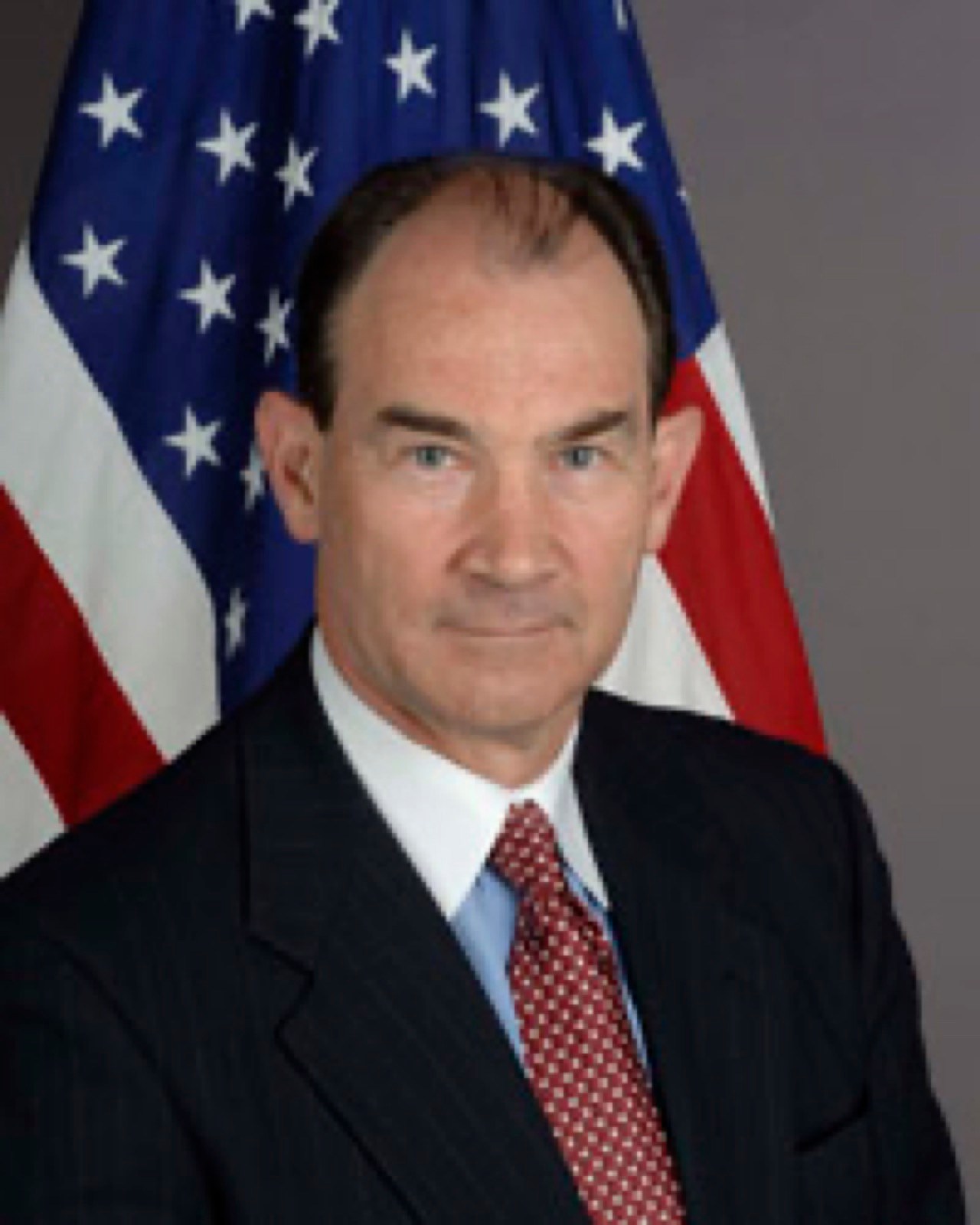
Patrick Duddy
Patrick Duddy is a former United States Ambassador to Caracas discussing what is at stake in Venezuela and whether the opposition can chart a route forward before elections in 2024.
Leopoldo López
Leopoldo López is an exiled opposition leader discussing what is at stake in Venezuela and whether the opposition can chart a route forward before elections in 2024.
Juan Guaidó
Juan Guaidó is the former President of Venezuela who fled the country and sits down exclusively for the first interview in Washington as an exile to discuss details of the flight from Venezuela.
Episode Summary
Venezuela is known to have the world’s biggest reserves of crude oil - but more than 90% of its citizens live in poverty. Millions of people have fled the country since 2015, in what the United Nations has described as the second biggest displacement disaster in the world. The policies of the Hugo Chavez government live on in the Bolivarian regime and leadership of Nicholas Maduro - but can the communists be ousted? One Decision speaks with former United States Ambassador to Caracas Patrick Duddy and exiled opposition leader Leopoldo Lopez to consider what is at stake and whether the opposition can chart a route forward before elections in 2024. And former President Juan Guaidó sits down exclusively with One Decision's Brett Bruen for his first interview in Washington as an exile to talk about the details of his family's flight from Venezuela and why he felt it was no longer safe to stay.
International Intrigue is a <5min daily newsletter written by former diplomats. They scan over 600 sources a day so you don't have to. Sign up to join 50,000 global thinkers.
Listen & Subscribe
- Watch on YouTube
- Listen on Apple Podcasts
- Listen on Spotify
Transcript
INTRODUCTION
Mcfarlane: You're listening to One Decision, the podcast that looks at the choices made that shape our world. I'm your host, Julia McFarlane. For the last quarter century, Venezuela has been ruled by two men, both from the same party. The policies of Hugo Chavez and Nicolas Maduro have driven this oil rich nation to the brink of economic and humanitarian collapse. More than 7,000,000 people have left Venezuela since 2015. The UN's refugee agency says soaring crime, gang violence, hyperinflation, and shortages of food, medicine, and essential services have forced millions of people to abandon their homes. In 2019, after a widely disputed general election, which saw Maduro and the incumbent government claim victory, the National Assembly, the only institution controlled by the opposition, declared the poll illegitimate and elected a largely unknown politician as its speaker. Juan Guaido took the oath of office and declared himself interim president. Many western nations recognized him and supported his aim of displacing Maduro, creating a transitional government, and setting the terms for democratic and free elections. However, ousting Maduro was harder than he and they had hoped. And last year, the opposition decided to dissolve its parallel government, has been in limbo ever since. Guaido has lost support among opposition lawmakers who want to present a united front before challenging Maduro again in 2024. Guaido himself, however, has announced his intentions to run again. We'll hear from him later in this podcast. But first, let's revisit the status quo in Venezuela and the dire conditions faced by its embattled population. Patrick Duddy served as US ambassador to Caracas for both presidents Bush and Obama, and before that, had served in embassies across Latin And South America in his three decade career at the Foreign Service. He now teaches Latin and Caribbean studies at Duke University in North Carolina. I asked ambassador Duddy what aspect of Venezuela's spiraling crisis, its economic quagmire, growing refugee population, or its role in regional organized crime. Which of these concerns him the most?
INTERVIEW: AMBASSADOR PATRICK DUDDY
Duddy: There are really two aspects to the crisis which concern me, and I think they roughly divide as domestic and international. Domestically, there have now been terrific shortages of medicines. The country's infrastructure is very much deteriorated and an enormous portion of the population which remains in the country is now significantly below the poverty line. This really unprecedented for the Western Hemisphere refugee crisis is straining governments all over the region. Colombia, very particularly, and the Colombians have been very generous with the Venezuelan refugee population. But there are also tens and even hundreds of thousands of Venezuelan refugees in Ecuador, Peru, and Chile. And there have been a number of indications recently that the governments of the region are feeling the strain and indeed are losing patience with the current situation. I think as a consequence of those two categories of concerns, there is a very pronounced interest in seeing a resolution to the current situation.
Mcfarlane: I think it's so right that you're pointing out all the different sort of stakeholders in Venezuelan security, and of course, one very obvious illustration of that is migration and the number of nearby countries who've had to absorb large refugee influxes spilling out from Venezuela. On the other side of the world, we've seen recently the rehabilitation of president Bashar al-Assad of Syria. We've seen him and his country start to be reintegrated to the GCC and some regional summits in the Arab League for one. Do you think we're gonna start to see out of necessity perhaps a reengagement with president Nicolas Maduro who's been a pariah for a number of years? But given the fact that he is looking pretty entrenched in power, the efforts to help Juan Guaido rise to power in Venezuela, that was an effort backed by the West and much of the international community. That kind of really fell apart a few years ago. We've seen Nicolas Maduro making an overseas visit to the COP27 summit in Egypt last year. French president Emmanuel Macron greeted him on the sidelines and recognized his authority as president of Venezuela. Mister Maduro even managed to have a conversation, albeit brief, with John Kerry, who's president Biden's envoy for climate. So we're starting to see little sort of instances of the international community inevitably talking again to Nicolas Maduro, and then, of course, there was the Biden regime starting to gently ease some sanctions on Venezuela, notably allowing Chevron to start exporting oil from Venezuela. Do you think that we're at the stage now where Nicolas Maduro is going to have to be not welcomed back into the fold, but do you think the international community now have to accept that he is leader in Venezuela and in order to help Venezuela sort out its many problems, he's gonna have to be part of the solution?
Duddy: The notion that he might be welcomed into the international community, it seems to me, is a bridge too far. The Maduro regime has throughout this very difficult period had strong relations with Russia, China, Iran, and a number of other countries. But I think the region is still concerned that there be a path forward for the recuperation of Venezuelan democracy. Part of the reason I would suggest that the international community is not going to simply shrug and say, well, I guess we have to get used to this, is because the opposition is still there and the circumstances on the ground in Venezuela are still immensely difficult. Nicolas Maduro, for his part, has emphasized repeatedly the importance of sanctions relief. Now, the US at least has made clear that it is offering what is essentially an iterative process for sanctions relief, but it is rooted in our commitment to support democracy. And we believe there was progress made, at least I believe, I don't speak for the administration, but I believe that the administration thinks that the agreement signed last November in Mexico does suggest a way forward. And that would involve the establishment of some kind of a multi partner trust fund administered by the UN to access Venezuelan funds abroad for the purpose of providing humanitarian relief. But then sanctions relief from The United States as the Maduro administration in conjunction with the opposition moves forward in the direction of free and fair elections, which should be held in 2024. And I think that there may be more sympathy in some of the left leaning governments in Latin America for Mr. Maduro on a certain level. But at the same time, I think savvy political analysts in the region in particular understand that we're not going to see a resolution to the impasse with which we have all been living now for some years, as you very correctly point out. We're not going to see a real resolution until the legitimate concerns of the Venezuelan opposition are addressed and they have to be addressed at the ballot box.
Mcfarlane: I wanna ask you, how seriously should we take these negotiations? You mentioned the agreement that was signed last year in Mexico. The Maduro regime agreed to resume those talks with the opposition in Mexico. They had basically boycotted them since October the previous year 2021. And they agreed to resume those talks in exchange for those Chevron licenses to export oil out of Venezuela, that kind of what sort of being referred to as the Biden administration easing off some of those sanctions. They were extremely limited. Maduro has not been attending those talks. He's been sending his son instead, and the resumption of talks did seem to be a quid pro quo to the granting of those Chevron licenses. Do you think that the Maduro regime is really interested actually in talking and negotiating with the opposition, or do you think this is just Maduro sort of jumping through hoops in order to get sanctions relief from the Americans bit by bit, recognizing now that the climate we're in at the moment where the war in Ukraine and inflation and everything is causing the Biden administration to rethink how it handles its relationship with oil producers, particularly big ones like Venezuela?
Duddy: In the first instance, I think it is very clear, that is to say the record is clear, and has been certainly since 2013, that the Maduro regime does not wish to give up power. On the other hand, the situation on the ground in Venezuela is so enormously difficult that I believe he feels as though if some, to some degree dealing with the opposition results in sanctions relief, then that may be necessary. Is he interested in really in risking the position of his government in power? I think not particularly, but the economic considerations I think are acute. So that's number one. Going back to the Chevron agreement, the US, the Biden administration apparently made clear that it was prepared to support a legitimate process with sanctions relief. And the agreement on Chevron was, you know, the first part of that. The US said it would do something along those lines and did. And when I suggest it's an iterative process, I think that there may be a willingness within the administration to proceed, albeit piecemeal, with sanctions relief as the Venezuelan regime moves in the direction of establishing an electoral calendar, agreeing to international observers, making clear that the opposition and whatever opposition press survives will be able to operate in the run up to national elections. The US has been very clear on that, and I think that many of the countries in the region may well, following the meetings in Bogota, understand that, perhaps even more clearly than they did before.
INTERVIEW: JUAN GUAIDO
Mcfarlane: Ambassador Patrick Duddy speaking to us there. Well, The US has much at stake when it comes to resolving the situation in Venezuela. The Biden administration faces a growing political challenge in the form of the crisis at the southern border in Texas, where thousands of migrants and refugees from across Latin And South America have converged, hoping to claim asylum in The US. Ahead of the general election next year, this is one policy area where Biden will be campaigning on the back foot, defending his handling of the crisis at the border. But let's go back to Venezuela because Juan Guaido's failure to oust Nicolas Maduro has left the international community without a favorite to champion. But that hasn't stopped Guaido, who is continuing to lobby the West for support as he prepares to launch another bid at leadership. He spoke to our colleague Brett Bruin, who sat down with him in Washington DC where Guaido was meeting with US lawmakers.
Bruin: President Guaido, I'd like to ask how your wife and daughters left Venezuela.
Guaido: I have a six year old girl and an 18 month old baby. After I came to The United States, we had to make the decision to flee because of the persecution. They went to Barinas State, a plain state located in the Southwest of the country to get to Cucuta. They ran out of gasoline on their way there, although thanks to the people who helped us to find some gasoline, they were able to keep driving. They spent the night in a city in the border with Colombia. The person who was ready to cross them got scared and decided not to do it. The bridges connecting Venezuela and Colombia were blocked with control and checkpoints such as the National Guard, the National Police on the Venezuela side, and the Interpol. Since I left, they were asking for ID person by person, obviously preventing any other exit. Therefore, we had to make the difficult decision to continue to San Antonio and cross a path on foot, passing a river with a raft to cross on the other side. It was a very dangerous situation due to the military, police and guerrilla presence in the area. I was afraid that they would be identified and could be kidnapped. We were monitoring the entire process and the people who helped us were very responsible and brave. Let me show you the photos of their journey. We have not made them public to protect those who help us. In the image, you can see my older girl in the shoulders of a person who carries her to cross the river in a deep area and a width with a width of 30 to 40 meters. My baby girl crossing her mother's arms, whom I admire more today. In one part of the river, they had to use some plastic containers for flowing to cross to the depth of it. This is the tragedy of millions of Venezuelans.
Bruin: If I could ask, as a father, how do you handle such a situation? Your six year old daughter has got to be scared going over land and through rivers. What do you tell her?
Guaido: I spoke several times with them during their journey. Miranda, the six year old, her favorite cartoon is Dora the Explorer, and we told her that she was like Dora. Miranda the Explorer is living her own adventure. We use this illusion to explain to her without taking away any innocence. We explained to her that due to her father's work, she must go to another country now. When we told her that they had to leave Venezuela, she request to say goodbye to her friends and teachers, and she did it a day before they left our home.
Bruin: President Guaido, you're here in Washington DC, a city from which so many promises were made to you and to the people of Venezuela. But how do you feel here having had to flee your native country to take so many personal risks yourself and your family?
Guaido: The United States has its own problems. The region has its own problems. Institutional instability is very complex in America, a very complex reality that needs assistance and support. Part is the migratory flow from Nicaragua, Cuba and Venezuela, countries that are contributing most to the problem in the borders. From self criticism and our relationship with The United States, which we recognize was innovative, brave and daring to have support an interim government and president in the fight to rescue democracy in a country under dictatorship, the support of the struggle, of the resistance. We would like to see a political action that impacts Venezuela. For example, a sanction does not change the regime. The sanctions are a tool implemented to hold dictators accountable for their actions, and they do affect them a lot. Sanctions hurt the dictators and their entourage a lot. They directly affect them. We have discovered that any sanction has a period of validity and effectiveness. If someone is sanctioned due to an economic activity, that same person will find a third party to keep doing what they did and the reason why they were sanctioned in the first place. Therefore, if there is not monitoring of the effectiveness of sanctions while protecting those who are assisting on the ground, the frontliners. In my case, and the reason why I decided to leave was that I felt that the protection that I had somehow disappeared. The international community was no longer enough to stop the dictatorship from detaining me or even assassinating me. If there is one element where we need to do more, that is how to protect those who genuinely defend democracy on the ground. Alexei Navalny is seen in prison in Russia, and beyond imposing some sanctions for his detention, the question is, what else can be done? I don't know the answer, even though I have resisted a dictatorship like Maduro's. I am in this city because I am persecuted by the Maduro regime and apparently by Maduro's ideological allies, such as Gustavo Petro, the president of Colombia, which, by the way, I was absolutely surprised by the attitude of someone who calls himself a humanist and a defender of human rights. If there is no forceful response from The United States expressing its public and private rejection of these actions, the message is that they can continue to do so.
INTERVIEW: LEOPOLDO LOPEZ
Mcfarlane: Juan Guaido speaking to our colleague Brett Bruin. We also had the opportunity to speak with the former mayor of the capital, Caracas, Leopoldo Lopez, a veteran Venezuelan opposition figure. A popular figure with high approval ratings and a connection to activists on the street, it wasn't long before he was seen as a threat to the Chavez regime, who attempted to ban him from running for public office back in 2008. Jailed for his role in anti government protests in 2014 on what his supporters say were trumped up charges, he was declared a prisoner of conscience by Amnesty International. He served three years in prison and was moved to house arrest before fleeing to Spain after seeking diplomatic asylum at the embassy in 2019. He's been living in exile but playing a key role in influencing and supporting the opposition ever since, and he joined me for a discussion with my cohost, sir Richard Dearlove. Mister Lopez, thank you so much for joining us today. Now elections are expected next year, but it is a really tricky time for the people of Venezuela. The failure to drive out Nicolas Maduro has frustrated a lot of your compatriots who are struggling with really high inflation, food shortages, the lowest wages in South America, conditions that have forced millions of Venezuelans to leave the country in the last few years. Eight out of 10 Venezuelans have now been pushed into poverty. The same number of those who have left, around 7,000,000 people, are now in need of humanitarian assistance. Some really, really dire pictures painted there of the situation in Venezuela. Recently, the former opposition leader, Juan Guaido, your one time mentee, he said that he will stand in the primary elections to choose a rival to president Maduro in the 2024 vote next year. Is that a move that you support?
Lopez: Well, first of all, thank you very much, Julia and sir Richard, for this opportunity. And now I'll get to your final question. Before, let me give you some context. You were relating the reality of a country that, as you very well say, has become the largest migration crisis. It was first in the Western Hemisphere, and now, according to ACNUR from the UN, is the largest humanitarian migration crisis in the world. It's above Syria with a war and earthquakes. It's above Ukraine with an ongoing war. And Venezuela without a declared war, because I believe that there is a war declared by the regime on the people, and without a natural disaster, we have this level of migration that is caused by a flood model of what was called or framed as socialism, but it's really an autocracy with total control and mismanagement of the economy that has completely crumbled what was once the most prosperous democracy in the American continent. Now, the poverty levels, as you very well say, are at the level of Haiti, only compared to Haiti. So Venezuela was the fourth largest economy in the continent, and now it's at the level of Haiti. The level of the Venezuelan economy today in terms of volume is similar to Guatemala, Central American country, or even below Dominican Republic, an island in the Caribbean. So that's what has happened over the past years. Venezuela completely collapsed, and it has become a full on autocracy. For many years, there was a conception that what was going on in Venezuela was a democracy with its problems, but it became very clear after 2014, and that was the year I was taken to prison in the public opinion of the Venezuelan people and in the perception of external analysts of what was happening in Venezuela, that it was no longer a democracy, that it was an autocracy. The economy collapsed in 80% of the GDP, something not seen in the Western Hemisphere, something not even seen by the European economy during World War II. I mean, it's one of the greatest and most staggering economic collapses in recorded economic history. So Venezuela living under that circumstance of an autocracy, a humanitarian crisis, and a criminal economy where Maduro has been getting a leverage and a very important support from external actors, such as China, Russia, Turkey, Iran, Cuba, Belarus, all of them with very concrete actions of support to Maduro, but also by non state armed groups like the Cartel of Sinaloa, the FARC, the ELN, even Hezbollah, according to a very precise article published by the Jerusalem Post last week. So this is a context in which we are talking about possible elections for next year. So I think it's very important to put the context, because it's very easy to see Venezuela through the mirage of a normal electoral process, and it's not the case. We do have a window of opportunity to organize and mobilize the Venezuelan people in the context of an elections, but by no means we are talking about a regular democratic process where you basically evaluate the different contenders and wait for the people to express themselves. We are far from that scenario in the case of Venezuela.
Mcfarlane: You touched on a lot of things that I do want to get to. And I know you didn't actually give me an answer as to whether you support Juan Guaido's announcement that he is going to run in the primaries to stand as a rival to Nicolas Maduro. Is there any point in engaging with the elections, or is it an entirely a stitch up and you expect Maduro to win next year in elections, which will likely be defrauded?
Lopez: Yes. Of course, I support Juan Guaido. He belongs to our political party, and I support him. But beyond of supporting Guaido, I support the process of primaries because this is, I believe, the strongest way to reorganize and unite the democratic movement in Venezuela. It's something that we have a window of opportunity to do, and we need to take that chance of asking the people and appealing to millions of Venezuelans inside and outside the territory to express themselves and to elect a person that will lead this new phase.
Dearlove: Leopoldo, I think what you described is what I would almost say is a descent into hell for the country. And it's quite extraordinary what's happened over a relatively short period of time if you judge it internationally. I mean, in a way, I'm really surprised that someone, you know, professional, who is intimately involved in national security that actually Maduro has managed to hang on to power. I mean, it says two things. He must have, as it were, created an internal structure to protect his regime, which in a way is very sophisticated. But on the other hand, the country has become a sort of geopolitical pawn. I mean, the two questions really is what is the nature of his internal regime, the praetorian guard that looks after him, and to what extent is he absolutely dependent on countries like Cuba? You've mentioned, I mean, it's a regional player, but, of course, further afield, Russia, China. They must be making huge efforts almost clandestinely to hold him in power.
Lopez: Yes. Well, as for the first question, I think that the best way to understand the political economy and the power structure in Venezuela is to think of an organized crime structure. I think it's misguiding to try to understand the political economy of Venezuela through the formal structure of the state. I mean, that really says nothing about who is who and who has power. But if you take a look at what are the business streams of this criminal coalition that Maduro has built internally and externally, that's when you can interpret very well the power structure. And this is a power structure that has links with external actors. And I'll just take the idea that I mentioned before of the criminal economy and the pillars of the criminal economy. So let's take the first pillar of the criminal economy, which is cocaine trafficking, and today, plantation and manufacture. Well, the partners in this structure of an organized crime are the Colombian cartels, but also the Sinaloa cartels, and also all sorts of international crime organizations that are taking the cocaine from Venezuela all the way through the Atlantic to Europe and beyond. I mean, there has been plenty of information published about boats coming from Venezuela all over the globe. Let's take the second criminal pillar, which is the extraction of blood gold. Well, there has been plenty of information about the involvement of Iran and Turkey in the extraction, and also the commerce of blood gold, the refining, and then taking into the market of this gold by these external actors. And actually, there was an article that I mentioned before, the Jerusalem Post presents the facts in how Iran has been supporting the extraction of gold from Venezuela, and it's using those funds to support the activities of Hezbollah. Let's take the other pillar, the pillar of oil. Well, Iran has been strategic to maintain the structure of extraction of oil for Maduro. And if we take the contraband, well, we have internal groups, and also some external groups. So, the power structure is really based on a criminal economy that has, on a organized crime structure that has distributed different power opportunities and economic cash flows to different groups. The military is heavily involved in this. The military in Venezuela is heavily involved as a business partner to Maduro, as there are other critical structures within Venezuela. The economic elite today in Venezuela is linked in one way to another, not everybody, of course, but most of the big cash flows are coming from the businesses from this criminal economy. So, I think that the best way to approach why Maduro has hold onto power is, one, because he has manufactured and articulated a power structure around organized crime and cash flows from criminal activities, and two, because of the international support. And you mentioned that these are stealth or underground support. No, they are very open. In 2019, when there was a threat by the US government to have a military exercise in The Caribbean, well, Putin sent a bombardier plane to Maiquetia. So it's very open. We have seen in the UN once and again, the position of China, Russia in the Security Council. We have seen in all of the multilaterals where these countries have a voice to support Maduro. So it's very open, the way in which the support is happening. Just to give you another example, two weeks ago, the minister of foreign affairs of Iran was in Venezuela, and three weeks ago, the second, believe it was the vice minister of foreign affairs from Russia, was in Venezuela. So this is something that is happening, that is there. It's open information. I think it's just a matter to really understand what we are facing. I think many times I see analysts and people trying to describe what is happening in Venezuela as it is an internal conflict, it's a power dynamic between the regime and the opposition, and that's not true. I mean, this is a regime that has declared war on the population. Those of us who have had a position against a regime have paid a high price. I paid seven years imprisonment, four of them in a military prison under solitary confinement, and I am not the only one.
Mcfarlane: Going back to what you were saying about the drugs trade and the criminal enterprises that fund the regime of Nicolas Maduro, it's interesting because it potentially could actually be an answer to a question that I had for you, which is that since 2017, president Donald Trump began his campaign of maximum pressure to try and make life really difficult for the Maduro regime. But did that campaign did the campaign of maximum pressure, all of the sanctions on the Maduro regime, on PDVSA, did that policy prove effective? And in hindsight, do you believe it was the right policy?
Lopez: I believe in sanctions. I have seen I have talked to military members, to police members from the regime that actually decided to take a step ahead, a step forward against Maduro. And when I went into their personal reasons why they were doing this, it was because of sanctions. So I have heard on a personal basis military civilians and police personnel talking about the impact that sanctions have had on them, on their families, and as an effective means of pressure. However, I do think that sanctions require a new approach to make them more effective. I think that the approach should go to who are the enablers. And when I talk about the enablers, I talk about the business structure behind this organized crime. I'm talking about the companies. I'm talking about the individuals. I'm talking about the international kleptocratic network that is behind all of this support that can very, very easily be the target of US and European sanctions.
Mcfarlane: Well, can I ask you to be a bit more specific? Which businesses in particular, which individuals, can you name any, that you believe are facilitating this?
Lopez: Yes. Companies, for example, that are taking responsibility or taking the business of taking the Venezuelan oil from Venezuelan shores up to unknown places in the ocean or in the Caribbean and taking it to another ship and then taking it to another country. I mean, you have their companies, individuals that are very clearly enablers. You have also companies that are doing the same with the gold sector. And all of this information is available to The United States. I mean, The United States and Europe, they have a lot of information, but it's just a matter of how to use it appropriately. I've had conversations with US representatives of The US Government, and many times, the issue is not about whether to impose or not sanctions, but whether there is the capacity to do an effective implementation of those sanctions. So I think here we're facing an issue not to be or not to be with respect to sanctions, but how to make them more effective.
Dearlove: Can I ask you a question, Leopoldo, which is following up what you're saying about sanctions? I mean, my experience with sanctions is that when you have a regime which is criminalized to the degree that you describe, the whole business of making sanctions work becomes extremely difficult. I mean, the example I would give you is Saddam Hussein in Iraq. And, you know, his regime was subject to massive sanctions, but they were still able, through the criminal network and, for example, the illegal export of oil in a way similar to the one you described, to evade and sustain the regime. Because the sort of smuggling was so beneficial financially to the people doing it, the isolation of the regime just, in the end, the policy of containment just didn't work. And I fear that we've got to a similar point with Venezuela. I suppose what I would say is, would the Organization of American States agree to some sort of intervention in the country? I'm talking about military intervention of some sort.
Lopez: To your latter question, no. I don't think the OAS will support that. I don't think that that would be the policy that would find consensus in the region or elsewhere. However, short of a military intervention, you have sanctions. And I think the case of, you know, the response of Europe and The US to Russia after the invasion, you know, out to the will of imposing severe sanctions. It can work, not necessarily that that is shifting the war, but it's certainly making things more difficult to Putin. My point about sanctions is that they should be focused in those who are the enablers of all of this criminal economy. And I'm not familiar with the level of detail of information that was available at the time of Saddam Hussein, but I do know that in the case of Venezuela, all of that information is available to the intelligence community in The United States and Europe, or at least part of this information. We're talking about people who are doing financial transactions, and many of them are using European ports to do this. I mean, we have even seen how many of the oligarchs that are within the Maduro regime are living comfortably in some European countries. I understand the difficulties of all of this, but again, it's always going to be a fraction of the fraction of the cost of what it takes for a military or any other intervention, or to leave things as they are, because leaving things as they are will only continue to increase the problem of migration, of instability, and of Maduro as a hope for all of the enemies of the free world, because that's what Venezuelan territory has become. Venezuela now has the presence of the Wagner Group, it has the presence of the Cartel de Sinaloa, it has the presence of FARC, of ELN, of Hezbollah, and I'm not making any of this up. I mean, this is, you know, we've been talking about this for many years, but now, fortunately, we have the backing of many reports coming from different sources that are stating that this is actually the reality. And I think that a response in terms of identifying and neutralizing the enablers is something that would be applicable with the tools available today. And I also think that the best way is to support and to give meaningful support to the pro democracy movement in Venezuela.
Mcfarlane: You mentioned among the Maduro regime's revenue streams, the alleged involvement of cocaine trafficking and contraband and also blood gold. And I wanted to ask you what you know of how Venezuela is supporting Russia financially and the role of the Wagner Group in smuggling this blood gold out of Venezuela. What can you tell us about these Russian mercenaries operating in your country?
Lopez: Well, for some years now, there's been plenty of information identifying the presence of the Wagner Group in Venezuela. At first, it was part of the Maduro security apparatus, its own personal security apparatus. But then it became more widespread in different activities. You need to understand also the context that Venezuela, after 2007, started to ship its arms equipment towards Russia and away from The US and Europe. It started with the F-16 airplanes moving towards the Sukhois, but then Venezuela invested over $15,000,000,000 in military equipment from Russia. The air defense of Venezuela, raiders and missilistic air defense in Venezuela, outperforms, I think, any other country in the region. I don't know how well maintained it is, but it's all Russian. So you have a very intricate relationship between the Russian armed forces and the Venezuelan military. And as you very well know, I mean, the Wagner Group is an appendix of Putin's intentions to have this paramilitary group that became very famous for its dealings in Africa and in Syria. And now in Venezuela, they are involved in blood gold. Others say that they're also involved in the cocaine extraction business. There's been a lot of reporting on this identifying the presence of the Wagner Group. But this is just one of the groups. As I said before, Hezbollah has presence in Venezuela. Cartel de Sinaloa also has presence in Venezuela. And I know that this is a conversation that many times it's uncomfortable in the sense that, well, if the problem such a complex, it's a medusa with a thousand heads of serpents threatening to bite, let's stay away from that problem. And I think that some analysts and even some policymakers see the problem so complex and try to simplify it in a way that I think is irresponsible, because it's going to have impact in global geopolitics, for sure. I mean, it's been happening. Now, it's 912,000 kilometers in territory in the South American continent that is completely open to all of these crime structures. And I believe that there needs to be the clarity that this is not a problem that is going to go away by itself. I mean, it will require a long term view of what to do. I mean, I think that this needs to be the priority of The United States and the continent. I sometimes get the impression that the priority of the US government towards Venezuela shifted from thinking about ways to promote the transition towards democracy and stabilizing the dictatorship in a way that can contain the migration crisis, or that it can also take some steps to have Maduro as a reliable partner in energy stability for the continent. I believe that these are flawed premises, completely flawed. I think that dealing with Maduro, stabilizing an energy policy or an energy relationship, or thinking that stabilizing economically or politically, Maduro, it's going to lower the pressure of migration, I think is completely flawed, and recent history proves me right in this. Last year, there was ample reporting on the fact that Venezuela was supposedly getting better and that it was going through a process of economic growth, and it was all a mirage because of the dollarization of the economy, and there was a small bubble. But during that time, when the regime was saying that, the migration numbers were increasing. So I think that the priority needs to be democratization. To tell you the truth, I sometimes think that the free world, Europe and The United States, because of the complexities of the policy to promote democracy, not only Venezuela, but elsewhere, sometimes we fall to a pragmatic spot where there is no push forward in terms of democratizing agenda. And I believe, I strongly believe, that we are facing Russia and China as the leaders, but also Iran and others pushing an autocratic agenda worldwide. And we are seeing this in Latin America. I mean, today, the presence of Russia, Iran, and China in Latin America is something unthinkable twenty years ago. Unthinkable in any aspects, in economic, trade balance, in investment, military presence, the kleptocratic network. And I'm not only talking about Venezuela, I'm talking about the entire region, but I think the same holds true for Africa. I mean, if you see the level of influence that China and Russia have gotten over Africa, it's also they're playing hardball. I think that, you know, Russia and China, and they make it public. I mean, this is not covert.
Mcfarlane: My last question for you. I had a conversation with an old colleague of mine at the BBC who's from Venezuela and has been reporting on your country for many years. And he told me something very interesting, and that was that he described you as the only politician that Chavez was ever scared of. What do you know about that, and why was he scared of you?
Lopez: Let me just give you some context. I was elected mayor in the year 2000, reelected in the year 2004 with over 80%. I was mayor in Caracas, the capital of Venezuela. And the year 2008, I was running for higher office to become the governor of Caracas, and I was disqualified to run for office. I was the first victim of the political disqualification, and at that time, I had a higher popular support than Chavez in the metropolitan area in Caracas. And I had, in a way, a blessing and a curse. The popular support at the time was what led to my disqualification. I took my case to the Inter American Human Rights Court. I actually won the case in 2012, but Chavez decided to abandon the Inter American human rights system instead of recognizing the decision to allow me to run for office. So I have been, you know, a target for the Maduro regime and the Chavez regime for many years. I've had three murder attempts where people were killed next to me. I've been abducted. I had been many criminal and different cases were, of course, with false claims put against me. And finally, I was taken to prison and in confinement for seven years, four years in a military prison. So, yes, I've been the target for many, many years, starting with Chavez and then with Maduro.
Dearlove: How much longer does the world have to put up with Maduro? I mean, it's difficult to put a time frame on it, you know, but there must be a fragility about his situation, which maybe we can't perceive at the moment. But someone who has ruined his country to that extent must go to bed worrying about, you know, who is going to do what to him in the next week, the next days, the next months. Is there a fragility within the country as regards his position?
Lopez: No. I believe that there is a fragility for sure. I mean, Venezuelan people are going through tremendous hardships. I mean, people in Venezuela, it's not that they don't like Maduro, they despise Maduro. There is a, I mean, fear has been installed in such a way, and this is something very difficult to understand for somebody who lives in a free country, to understand how can an entire country become hostage to the fear imposed by a regime. I didn't think that was possible. I grew up in a democratic Venezuela, and for us, for my generation, growing up in democratic Venezuela and seeing how we became an autocratic regime, it's a tremendous experience that it's very difficult to share, I mean, how an entire society is there. But yes, there is fear, but there is the will of people to have change. And you ask me how longer? Well, I can tell you that I think that a lot of the future in Venezuela in an indirect way has been played out in the war of Ukraine. And I think that if Putin is defeated, as I hope he is, and I also hope, and I know that some people are not willing to go as far, but if it's substituted and there is democratization or regime change or changing in Russia, that's going to have tremendous impact. It's going to have, in the case of Venezuela, positive externality. Because, again, if I'm consistent with what I've been talking about over the past hour, that one of the reasons why Maduro is still in power is because of its international support. If that network of autocrats that are being led by Russia starts to crumble, there is going to be an opportunity for change in Venezuela. So that's why, I mean, we are standing, not only because of that, but that's another reason why we're standing very strongly in support of Ukraine and their possibilities of defeating Putin's Russia.
Mcfarlane: That's it for this week's episode of One Decision. We drop new episodes every Thursday. Like and subscribe so you never miss an episode. Drop us a line. Tell us your thoughts. What decisions have impacted you and where you live? You can write to us. Our email is 1decision@1decisionpodcast.com. From me and the team, thank you for listening, and see you next time.