Episode Info
- Season27
Hosted by Christina Ruffini and Sir Richard Dearlove
Guest
Chris Van Hollen
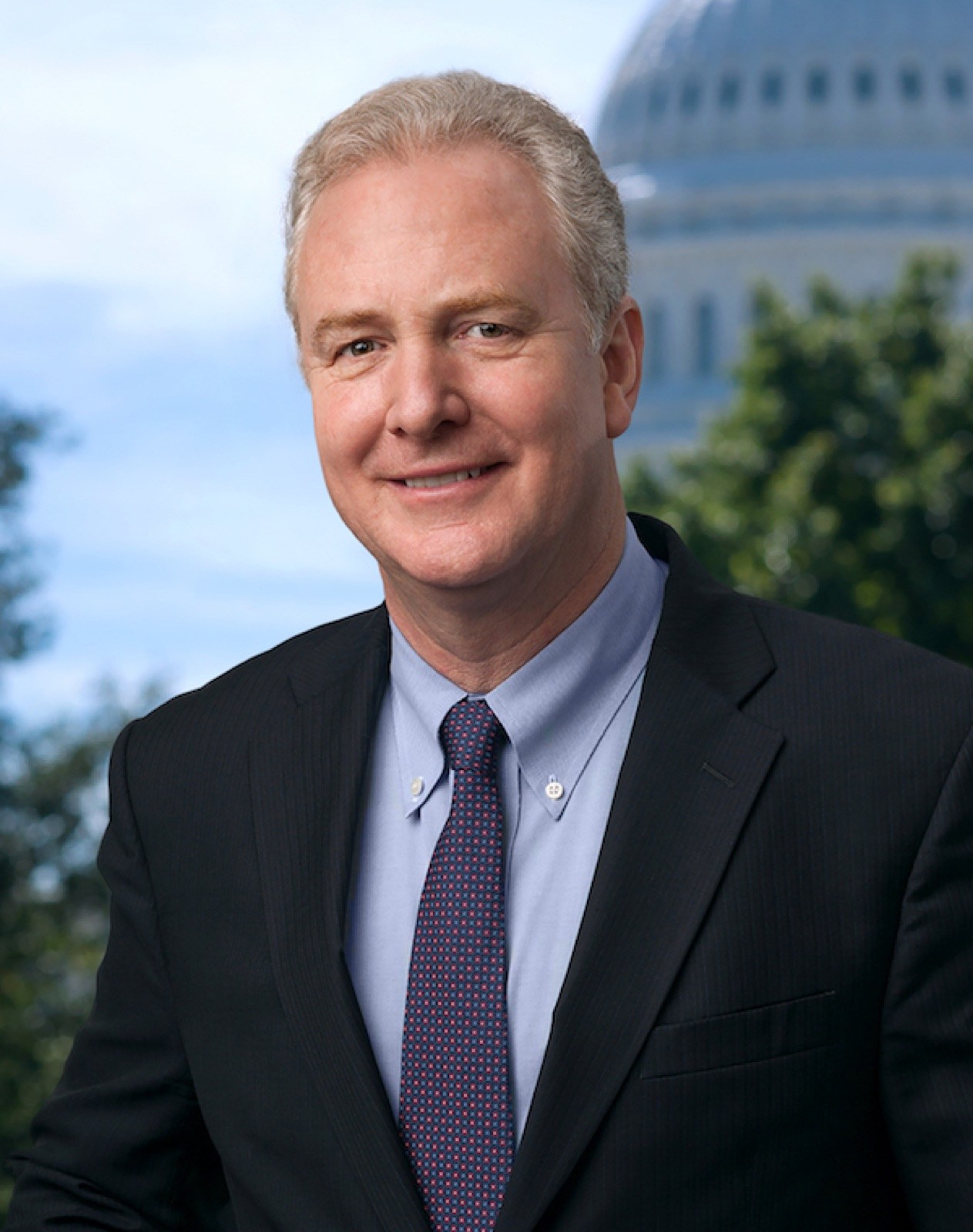
Chris Van Hollen is a Democratic United States Senator and member of the powerful Senate Foreign Relations Committee who discusses various foreign policy challenges, including the war in Ukraine, Syria, and the Israel-Gaza conflict.
Episode Summary
In this week's episode of One Decision, host Christina Ruffini speaks with Democratic United States Senator Chris Van Hollen, a member of the powerful Senate Foreign Relations Committee. They spoke from his office in Washington D.C. about various foreign policy challenges, including the war in Ukraine, the future of Syria and other countries affected by the Arab Spring, and the ongoing Israel-Gaza conflict. Van Hollen says President Biden hasn’t leveraged American influence effectively regarding Israel’s handling of the war and shares his perspective on how the incoming Trump administration might approach Israel and Netanyahu’s government. Plus, co-host and former United States Secretary of Defense and former CIA Director Leon Panetta shares memories of former US President Jimmy Carter and what his real legacy will be.
Listen & Subscribe
- Watch on YouTube
- Listen on Apple Podcasts
- Listen on Spotify
Transcript
COLD OPEN
VAN HOLLEN [0:00] My assessment is that this is an area where President Biden has sadly failed to effectively use American influence to achieve our goals, in fact, to achieve his own stated goals. I think if you were to promise our Senate Republican colleagues immunity, that you would hear that they're concerned about the incoming president and his foreign policy.
INTRODUCTION
Raffini: That was Senator Chris Van Hollen, a Maryland Democrat on the powerful Senate Foreign Relations Committee. Welcome to One Decision. I'm your host, Christina Raffini. This week, we sat down with Van Hollen in his Capitol Hill office in Washington DC to talk about everything from Syria to Ukraine, China, the conflicts in The Middle East, and of course the incoming Trump administration. We also took a minute to check in with our One Decision co-host, former Secretary of Defense and CIA Director Leon Panetta, to talk about his memories of former President Jimmy Carter, what his real legacy will be, and if he thinks a good guy can still hold top office. But first, let's pick up our chat with Senator Chris Van Hollen of Maryland. Thank you for joining us. I know it's a busy week. The first thing I wanted to ask you is, will you be attending the rededication ceremony of the now Gulf of America instead of the Gulf of Mexico?
INTERVIEW WITH SENATOR CHRIS VAN HOLLEN
VAN HOLLEN [1:19] So it's great to be with you. And I think that President-elect Trump's latest comments about the Panama Canal and Greenland and Canada show that we're in for a very rocky ride. You know, this appears to be serious, and that is obviously cause for concern.
Raffini: It's more serious than I had anticipated, especially with, like, you know, his son going to Greenland and he's really, he's not letting us go. VAN HOLLEN [1:48] And he even just the other day said he wouldn't rule out the use of force to accomplish these goals. This is the guy who says, you know, he wants to be the no wars president.
Raffini: Doesn't wanna get involved in Ukraine. Doesn't wanna get involved in Syria. VAN HOLLEN [2:01] But he wants to go about renaming, you know, Gulf of Mexico and other things. So, look, I think this is just a sign of, you know, turbulent waters ahead. We know that's true on the domestic front, but it's going to be equally true when it comes to global affairs.
Raffini: So talk to me about that. I mean, you're a longtime member here. You have a lot of foreign affairs experience. You're on the Foreign Affairs Committee. These are things you cover. You talk to foreign governments. What are the feelings here, not just among Democrats, but among Republicans and among your counterparts in different countries that you're talking to as we brace for a very different administration coming into the next four years? VAN HOLLEN [2:46] I think if you were to promise our Senate Republican colleagues immunity, that you would hear that they're concerned about the incoming president and his foreign policy. You know, last time around during the first Trump administration, on a bipartisan basis, we enacted legislation to prohibit the executive, the president, from unilaterally pulling out of NATO. Because of our concerns that President Trump at that time might try to do something like that. And one of the hallmarks of the Biden administration has been trying to expand and deepen our partnerships and alliances, which is a very important part of our overall national security and economic strategy. And I think that's one area where the Biden administration has been successful. And I think both, you know, Republicans in their more honest moments here in the Senate and certainly our partners overseas are very worried about Trump shredding those important relationships.
Raffini: I'm wondering if you think this coalition around Ukraine, as far as being able to hold together this coalition of European governments, The US, Canadians to support Ukraine, do you think that coalition can survive not having a really vocal, unwavering advocate in Washington? If The US starts to pull back even verbally, do you think that can endure? VAN HOLLEN [4:08] I think it will make it more challenging. It will certainly make it more difficult. First of all, I hope that the Trump administration doesn't do so to the extent that Trump seems to be signaling. But I also hope our European allies and partners will respond not by sort of reducing their support, but by rallying even further behind the people of Ukraine. Unfortunately, that will mean that Europeans take on more of this responsibility, and they should take on a lot of responsibility. It does risk undermining American leadership. But of course, you know, Donald Trump seems to be a lot less interested in America's global role.
Raffini: There is an argument to be made that one of the potential benefits or side effects of Trump being a less stalwart ally of NATO, of European defense, is what you just said. The Europeans have had to step up and really take a bigger part of that burden sharing. You know, contributions to NATO have gone up. This is not something that was just a President Trump exclusive. Obama hated that, he thought Europeans weren't pulling their weight. Trump was just a little bit more vocal about it. But, you know, we've seen the EU looking at having a defense minister for the first time. We've seen governments talking about having their own plans in case, or to wait for The United States to come in if The US does not come in, if they are invaded by another country. What's your take on that? Does that make Europe more secure? Does that make the world more secure or less secure? VAN HOLLEN [5:39] Well, I think American leadership is vital, but I certainly support any European initiatives to take on more responsibility for their own security. One of the success stories that we've seen over the last couple of years is getting our European allies, our NATO allies, members of the EC, more engaged in some of our efforts to take on economic challenges with respect to China. And so to the extent that they decide to go their own way entirely, it could undermine other US objectives, like having a common front and common strategy to deal with China's economic and security challenges. So having Europeans take on more responsibility, that's a good thing. If it means any kind of decoupling from a common strategy with The United States on other global challenges, that's not a good thing.
Raffini: And is it because, you know, nothing happens in a vacuum and everything is interconnected, that even though they may not seem related, if The US pulls back on European security, America could have less influence when it comes to things like China policy. Is that the case? VAN HOLLEN [6:52] I think that's very, very much the case. Just as it's the case that, you know, Japan and South Korea and others in East Asia, our partners in East Asia, are looking at what The United States does with respect to supporting the people of Ukraine, because it sends them a signal about whether or not our assurances and security partnerships are guaranteed. So similarly, I think if we send a signal to the Europeans that we're not there as part of our common defense, then they are more likely to take a different path with respect to China. You already see differences in approach, and I think those would be deepened, the differences.
Raffini: So talk to me about the China policy. Where do you see China policy going in this next administration? And do you feel like it's gonna be led by the White House? Do you feel like it's gonna be led by the State Department? Do you feel like it's gonna be led by Congress? Where is the impetus coming from? VAN HOLLEN [7:43] I think this is an area where you're gonna see some, you know, again, common ground between the Congress and the administration, but with important differences based on the degree to which, you know, they try to be openly antagonistic. So, for example, let's take Taiwan. The US position should be to protect the status quo. Right? We don't want the status of Taiwan to be changed by force. And we should be providing, you know, Taiwan with the means to defend itself. But we should not, you know, threaten to abandon our overall policy with respect to Taiwan. I mean, we should not sort of threaten or recognize Taiwan as an independent country. That upsets the status quo. And to the extent that we wanna maintain our partnership and alliance with others around the world on China policy, they need to understand that it's not The United States seeking to upset the status quo.
Raffini: Oh, that's interesting. So that makes you a more acceptable ally in places like probably Vietnam, maybe Korea, maybe Japan, if The US doesn't seem to be seeking to upend the way things have been operating, with respect to our Taiwan policy. Got it. I know you've also been following the events in Syria very closely. I was there at the very start of the war, on the border covering refugees, which were at the time, you know, this fairly new phenomenon, all these Syrian refugees leaving homes and all these people fleeing. It's hard to believe that that was, what, twelve years ago? That this war has been going on for twelve years. And just the unbridled joy watching people in Damascus celebrate, you know, women with headscarves, without headscarves, members of the army, former members of the army. The Middle East does not have a great track record when it comes to what happens after popular revolts, revolutions. Arab Spring looked so positive and for the most part, all those countries are really struggling now. What is your perspective? How do you think this is going? What is your take on al-Jolani? He's saying all the right things, but do you think he's gonna follow through? VAN HOLLEN [9:45] Well, that's the big question, and I think that we should watch what he does, not what he says. But what comes next is very much unknown, and there are good reasons to be worried, because if you look at the DNA of Jolani's group, right, HTS and others, they were originally linked to Al Qaeda. Until it becomes very clear through their actions and not just what they say that they're going to abandon the sort of Al Qaeda roots, we need to be very cautious. I support the Biden administration's decision to provide a very limited waiver on the sanctions to allow humanitarian assistance to flow and sort of other essential services, providing fuel and that sort of thing. But I also think it's right to maintain the broader sanctions regime until we really get a measure of what's happening.
Raffini: Is there a lesson to be learned here from Afghanistan? And I know it's a different situation. It's a different type of government. But, you know, America and everyone really pulled back when the Taliban took back over Kabul and sanctions went in, aid stopped, and now three quarters of the population are food insecure and starving. Is that a lesson you think the governments have learned and that's why you're seeing a little bit more engagement in Syria, or is Syria just simply a different dynamic? VAN HOLLEN [11:05] I think it's a different dynamic, although I certainly understand, you know, why people would draw parallels. And if you look at what happened in Afghanistan after The US withdrawal, many of our worst fears did take place. And I don't think that if we had come in and provided, we the West, The United States, provided lots of assistance to the Taliban government, we would have seen a different trajectory. And so this is why we have to worry about Jolani, but we also should be doing what we are doing, which is reaching out, trying to bring all parts of Syrian society together. As you well know, I mean, you have the Alawites, you have the Christian community, you've got a very diverse country. And then there's the issue, and we probably should touch on it, about the fear of resurgence of ISIS.
Raffini: Well, but I also wanna ask you, you're cosponsoring a bill, or have cosponsored a bill with Lindsey Graham to help protect the SDF, the Kurdish population. Can you explain what that does and why you think that's important? VAN HOLLEN [12:09] Sure, you're exactly right. So, you know, the Kurds, the Syrian Kurds, the SDF, have long been our primary partner in going after ISIS. I think that the SDF, again, our Syrian Kurdish allies, have been really our partners with the US military in going after ISIS. And while ISIS has not been extinguished, their power was significantly degraded for a long time. There's a real concern now that they could have a comeback given the chaos and vacuum right now in Syria. And so I've worked with Senator Lindsey Graham. We worked together during the first Trump administration to make sure that The United States maintains support for the SDF, our Syrian Kurdish partners, because they've been so critical to the fight against ISIS. And we are very worried that Turkey, who, of course, has been backing the HTS, that Turkey is gonna use this moment and opportunity to go after the Syrian Kurds. If they do that, that will simply help ISIS. And so that's why Senator Graham and I have teamed up. We introduced a bill that would impose sanctions on Turkey if Turkey breaks out of the existing ceasefire and goes after the Syrian Kurds, because that would simply help ISIS.
GAZA AND THE ISRAEL POLICY
Raffini: We've talked about some of the things you think the Biden administration did well, but you've also been very critical of the Biden administration's treatment of the Gaza-Israel war. And written about it. Can you tell us what your perspective is and what you would have done differently if you were in the Oval Office? VAN HOLLEN [13:49] Sure. And I always start where this latest chapter of the conflict began, with the horrific Hamas attacks on Israel of October. And I've always emphasized the fact that, yes, of course, Israel has the right to defend itself. In fact, I would argue the duty to defend itself and make sure that it gets rid of the military threat of Hamas and make sure that there are no more October sevenths. At the same time, how you conduct a just war matters, and it needs to be conducted in accordance with international law and American law. And so my view is that when you look at the restrictions that the Netanyahu government has imposed on humanitarian assistance into Gaza, when you look at the huge levels of civilian casualties in Gaza and you look at how they came about, recognizing that, you know, Hamas's tactics do make it harder for Israel to conduct these operations, they still nevertheless have an obligation and duty to take all measures necessary to reduce civilian casualties, and that they have not met those standards. And that the Biden administration has failed, unfortunately, to hold the Netanyahu government accountable for not meeting the standards of American law and international law.
Raffini: Do you think the Biden administration has not been sufficiently self-critical, even towards the end, of some of their policies, including the Israel policy? VAN HOLLEN [15:23] My assessment is that this is an area where President Biden has sadly failed to effectively use American influence to achieve our goals, in fact, to achieve his own stated goals. We've had this pattern where time and again, the president has asked Prime Minister Netanyahu and the Netanyahu government to take certain actions and has been repeatedly ignored.
Raffini: Or at least inform The US before they do take action, which also didn't happen. VAN HOLLEN [15:52] That, which in many important instances did not happen. But even when the president gets the back of the hand from the Netanyahu government, he does nothing to hold the Netanyahu government accountable to achieving our own objectives, and simply provides a blank check with US taxpayer dollars or a total shield at the UN in the form of the UN Security Council. And so my view is that the president could have much more effectively used American leadership to achieve what the hostage families want to see achieved. And we're sitting here in my Senate office. I've met on numerous occasions with hostage family members right here in this office. They want a ceasefire, and they want a return of all the hostages. And the reality is that President Biden has not done enough to secure that objective.
Raffini: How do you think negotiations are going? What are you hearing? You know, do you think there's any chance this happens before the new president is sworn in? And if it happens before, what does that mean? If it happens after, what does that mean? VAN HOLLEN [17:00] The short answer is I don't know. I follow it very closely on a daily basis, as I know the hostage families I've spoken to do. And, you know, one day there seems to be some optimism, the next day not. I, of course, hope that they're successful at getting an agreement, but it's impossible to predict at this point. And then you have the larger, you know, issues with respect to what a postwar Gaza looks like. Maybe get to that point. And, you know, the refusal of the Netanyahu government to sort of adopt President Biden's vision for the day one plan has also been part of the obstacle to getting this agreement, because an agreement, of course, at some point requires an end to the conflict and hostilities. And, you know, President Biden has said then we need to have, you know, the Palestinian Authority, which has for decades now recognized Israel's right to exist, to, you know, be the core of governance in Gaza. And, you know, Netanyahu and his government have rejected that repeatedly, even though that is really the only path toward any kind of long term stability. And President Biden has framed it, I think, rightly in the context of the need to make sure that both Israelis and Palestinians have security and self-determination and dignity, and to do so in the context of a broader peace initiative in The Middle East with Saudi Arabia normalizing relations with Israel. But Saudi Arabia has made it clear it will do that only when there's a clear path to a two-state solution and self-determination for the Palestinians. So, again, President Biden's sort of framing of the issue, I think, is right. He's just refused to effectively use American leverage to accomplish his own stated purposes.
Raffini: Do you think that's something Trump might do? I mean, one benefit of mercurialness is unpredictability. I mean, could there be some movement there if he decides to weigh in one way or the other? VAN HOLLEN [19:05] Who knows, right? I mean, what we do know is, you know, some of the appointments he's made, and he's nominated former Governor Huckabee to be The United States ambassador to Israel. Huckabee is somebody who denies that there is any such thing as a Palestinian. Huckabee is somebody who believes that Israel has the God-given right to take over the entire land from the Jordan River to the Mediterranean Sea. Until, you know, this Israeli-Palestinian conflict is really at the heart of so much of the challenges in The Middle East. And until we honestly address that issue, we're gonna continue to see conflicts, and The United States will continue to be drawn in. And that's why, you know, so many of us support the creation of a Palestinian state. It can be a demilitarized state, and it should be done in the context of normalization of relations with Saudi Arabia. But the Netanyahu government and people like Smotrich and Ben Gvir, they're dead set against that. They want to have it all. They want the West Bank to be part of Israel.
Raffini: Is there anything you're looking forward to in the next year? Anything either on global affairs, personal life, pop culture that gives you hope going into 2025, or should we just buckle up and get ready? VAN HOLLEN [20:35] Well, on the political front, it's gonna be buckle up and get ready. But look, I mean, you can always, I was at the Kennedy Center recently for the awards to some major artists, and I always celebrate the great artists in America. I'm a longtime Grateful Dead fan, I was glad to see them honored and Bonnie Raitt and others. So look, even in moments where we're having a lot of struggle on the political front, there are those in the arts that help lift us all up. I appreciate the chance to sit down and talk with you. Thank you for covering these issues. I don't think they get nearly enough attention here in The United States, even though Americans' future is directly tied to what happens in other places around the world.
Raffini: Thank you for taking the time. I really appreciate it. And happy New Year.
REFLECTIONS ON JIMMY CARTER WITH LEON PANETTA
Raffini: Thank you so much, Senator Van Hollen. This episode is gonna drop about the same time as the state funeral of President Jimmy Carter starts taking place at the National Cathedral, and luminaries and dignitaries from around the world have come to DC to pay their respects. So, of course, we wanted to check in with One Decision's resident luminary, Leon Panetta, and get his reflections on the former president, Nobel Prize winner, and humanitarian. We just spoke with Senator Van Hollen, who was saying he's gonna be going to the National Cathedral for the services for former President Carter. You know, I happened to be hosting a show when Carter passed and we spent the whole day talking to people who knew him, people who wrote about him. And one of the things I found most remarkable, in addition to the fact that he kind of redefined what a post-presidency could be, was I don't think so many people realize how much he changed about the actual workings of the presidency. Can you talk a little bit about what his influence was there and some of the different things he did that still impact the way the government functions today?
Panetta: For a president who lived for a hundred years, the longest living president in our history, there's an awful lot that'll contribute to his legacy. You know, what he was able to do in the Congress or some of the struggles he went through. But obviously his post-presidency and all the things he did. So there's a lot to cover. But I really do think his greatest legacy is his character. He was somebody who really believed in telling the truth, being honest, really cared about helping people. That character was built by his long religious experience. It also was built by the discipline that he learned in military service.
Raffini: Right. He was a nuclear submariner.
Panetta: He's also really a nuclear submariner. And let me tell you, orders are orders in the military, and you don't question orders. He had that sense of discipline. That character was formed by his religious belief, his faith. It was formed by his military experience, but it was also formed by his kind of singular dedication to doing what was right. You know, he ran into a buzz saw in Washington with that, because Washington doesn't operate that way. A lot of presidents who were newly elected thought they could walk into Washington. You know, they would immediately be able to get all kinds of things done. And it doesn't work that way. Every president has found out that it takes a lot of work. You gotta fight for every vote. You've got to be willing to listen, to negotiate, to compromise, to go through a process that wasn't easy for Carter to do.
Raffini: He also, I was hearing, hated the trappings of Washington. He made staffers, you know, take their own cars. He took away parking for people. He didn't believe in all these luxuries on the taxpayers' dime, and that really pissed off a lot of people. And so when he needed friends, you know, when he was having policy stumbles or when he was doing some of his more controversial stuff, a lot of people just kinda hung him out to dry because he hadn't made a lot of friends in town.
Panetta: Yeah. You know, look. We both got elected on the same day. I was running for Congress, and Carter obviously was running for president of The United States. We both got elected in 1976. And Carter went back with a lot of hope based on the fact that we were coming out of both Vietnam and Watergate, in a sense that things could change and that the country could move beyond the depths of a war that nobody liked, and a scandal that really had hurt our country.
Raffini: And people were looking for honesty in that moment.
Panetta: You know, they were looking for honesty, and they were looking for somebody who would tell the truth. Carter goes into the presidency, and I remember going down there as a freshman and listening to him talk. And it was a comforting presentation, that we were all there together as freshmen, and that we could make the changes that could really impact on the country. Well, one of the first things he does is to cut off funding for water projects that were passed by Congress. Congressional pork. He went after, like, all the pork. But he didn't spend any time consulting with the Congress or talking with the leadership or letting the speaker know. He blindsided most people on the hill. You know, if there's one thing senior members of Congress don't like, it's to have a president who basically stops them from doing the things that they need to do for their area. And so it created a bad relationship. And yet, you know, Carter continued to try to deal with it mainly because he was facing crisis wherever you turn. He was facing inflation. He was facing low growth. He was facing an energy crisis. He was facing a lot of crises that demanded attention. It was not easy. Fortunately, there were leaders in the Congress who were willing to try to work with them. He was able to get things done. He was able to create a department for education. He created an Energy Department. He was able to do a lot with regards to protecting our natural beauty, particularly with what he did in Alaska, probably the largest protection of beautiful areas that a president has done in history. And so he was able to get things done, but because he was facing these crises and because the American people in many ways were suffering through those problems, it undermined their support for the president, and the politicians could smell that happening. It really made it difficult. And then, obviously, to then wind up with the situation, because he was a good man, because he was genuinely a good person. He was willing to give the Shah help when nobody else would and felt that he owed it to the Shah to be able to let him get the care he needed, which created a huge backlash in Iran and resulted, obviously, in the taking of the embassy.
Raffini: He got a lot of pressure to do that. I was reading from Kissinger and others who were saying he really needed to let the Shah come in for treatment. Because Carter, to your point, thought it was the right thing to do, but was worried that what ended up happening is exactly what would happen and was very resistant to it, but was just getting clobbered by pressure. And finally, it sounds like, gave in, and then, you know, that was the undoing of kind of the whole thing.
Panetta: But I think deep in his heart, he really thought it was the right thing to try to help the Shah, that we owed it to him. And so, you know, that combination of things kind of made for not only a difficult time when he was in the presidency, but also created the basis on which Ronald Reagan ran against him and overwhelmed him in the next election. But my view is that in many ways that election was liberating for Jimmy Carter, because for the first time, he would be able to do the things he wanted to do in terms of helping people, in terms of doing what he thought was important for human rights, doing what he thought was important to try to help the poor, doing what he thought was important in terms of trying to protect the peace, that he was freed of the obligations of having to engage in the give and take of politics, which he didn't like to do. And he could do those things. And so building his center, building the Institute, and really working at those issues is what I think really made him finally be able to enjoy what his character really wanted, which was for him to do good. And he did that and it earned him the Nobel Prize. And probably the one thing that I remember the presenter of the Nobel Peace Prize said that I think encapsulates Jimmy Carter, was that he said, you know, he had kind of a mixed record as president, but without question, he was the best ex-president in the history of the country. And I think that says it all. Because what he did in his post-presidency represented his ability to take all the traits of his character and fulfill them his way, get them done. You know, I can remember working for President Clinton and for Obama for that matter. Every time something happened overseas, Carter would call and wanna be assigned to go after it and try to deal with it. These presidents were all nervous because they knew that if they let Carter go, he would do his own thing, say his own thing, and not really follow kind of whatever plan the presidents had in mind. I can remember President Carter being in Haiti, and President Clinton was trying to get him to do what was necessary to try to prevent any kind of military confrontation there. And I thank God that, you know, that we had others as part of that delegation, and we were able finally to work out a deal. But I can remember presidents who were nervous about having Carter do that. Although, obviously, Carter did represent a force for good, but he represented also a force that was not willing to kinda take into consideration all of the political nuances that sometimes had to be considered. I really do think in the end that his greatest legacy is the fact that he was a genuinely good person trying to do the right thing for the country and for mankind.
Raffini: But do you think a genuinely good person can be president? Especially now, there's this kind of heartbreaking interview with him on Stephen Colbert where Colbert kinda asked him that question. He says, yeah, I thought so, but, you know, maybe not. I mean, it just made me so sad to see this, you know, this person who, for all his faults, you know, really was a good guy, say maybe good guys can't be president.
Panetta: I thought a lot about that, but I also think of Lincoln, who I think was also a genuinely good person. He learned that if he was gonna get what he wanted to get done in order to obviously serve the country. I think the movie Lincoln is probably the best picture of that. Lincoln understood that if he wanted the Thirteenth Amendment, it wasn't just a pretty please thing. He would have to go after those votes. He would have to buy and sell. He would have to do whatever the hell you have to do in order to make sure that he got the votes, and that's what passed the Thirteenth Amendment. So here is an example of somebody who I think also was genuinely good, but also was willing to roll up his sleeves and engage in that give and take that ultimately you need to do if you're gonna make our democracy function.
Raffini: Well, and that was, from people who I've been speaking to in the last week, Carter's greatest asset and also his greatest liability. Somebody who had been at Camp David was saying, you know, when it came to Iran policy, when it came to economic policy, his indefatigable intransigence and insistence on doing the right thing could be an obstacle. But, you know, that was one of the places where his stubbornness and his ethics and his insistence on doing it his way no matter what really did work, and possibly no one else could have pulled that off.
Panetta: Christina, it's another example of kind of what makes up the presidency. Because what happened with Jimmy Carter was that he found out that as commander in chief, you have a lot of power to do the things that you wanna do without necessarily having to engage in the political process. And that's what he did. I mean, at Camp David, that was him. That was his character basically at play. It wasn't a question of trying to understand all the nuances, the political ramifications of dealing with Israel and Sadat from Egypt. There clearly were a lot of political implications. That's not what Carter cared about. He cared about how do you bring these two together to promote peace in The Middle East. You know, he did the same thing with regards to SALT II. He negotiated SALT II and really was able to achieve some kind of restraint on nuclear arms, which was significant. The Senate never passed that treaty, but he did it because he thought it was right. And he did the Panama Canal Treaty because he thought it was right. So in many ways, where he achieved his greatest successes is because his character did not have the limitations or barriers of having to deal with the politics of the moment.
Raffini: Well, on that happy note, Mister Secretary. Happy New Year. We'll have to see what the inaugural speech brings us. We're up on the hill today. There's fencing all around the Capitol Hill area. Everybody's ready for all occasions. Luckily, January 6 went very nicely. The handover was great, peaceful, all went well. So hopefully, the inauguration will go well as well.
Panetta: The one thing about our democracy that you know better than anybody, having covered it, is that every day brings on a new challenge, every day brings on a new crisis, but somehow we get through it. We've been doing that for over two hundred and fifty years now. And I really do think that, you know, for all of the craziness and for all of the political kind of challenges that we're confronting, that ultimately we are gonna get through this because this country deep down knows that we have to do what Jimmy Carter said we had to do, which is the right thing.
Raffini: On we go. Mister Secretary, thank you so much. Thanks for listening to One Decision. If you like today's conversation, please check out previous episodes like the one with California congressman Ro Khanna.
Khanna: But the bear hugging of Netanyahu has been a strategic mistake. Netanyahu has conducted a callous war in defiance of The United States. I did not support a ceasefire for the first six weeks. I thought they would go and get the people responsible, but they started bombing refugee camps, bombing hospitals, defying The United States and not letting aid in. And the president needs to have clear consequences for Netanyahu. He needs to say I'm for Israel, but I'm not for this extreme right wing government.
Raffini: To unlock more exclusive content, get timely updates on crucial global events, and listen in on meaningful conversations with thought leaders, be sure to check out onedecision.com. I'm Christina Raffini. For me and the whole team, thanks for listening, and we'll see you next week.