Hosted by Christina Ruffini and Sir Richard Dearlove
Guest
Jeanne Shaheen
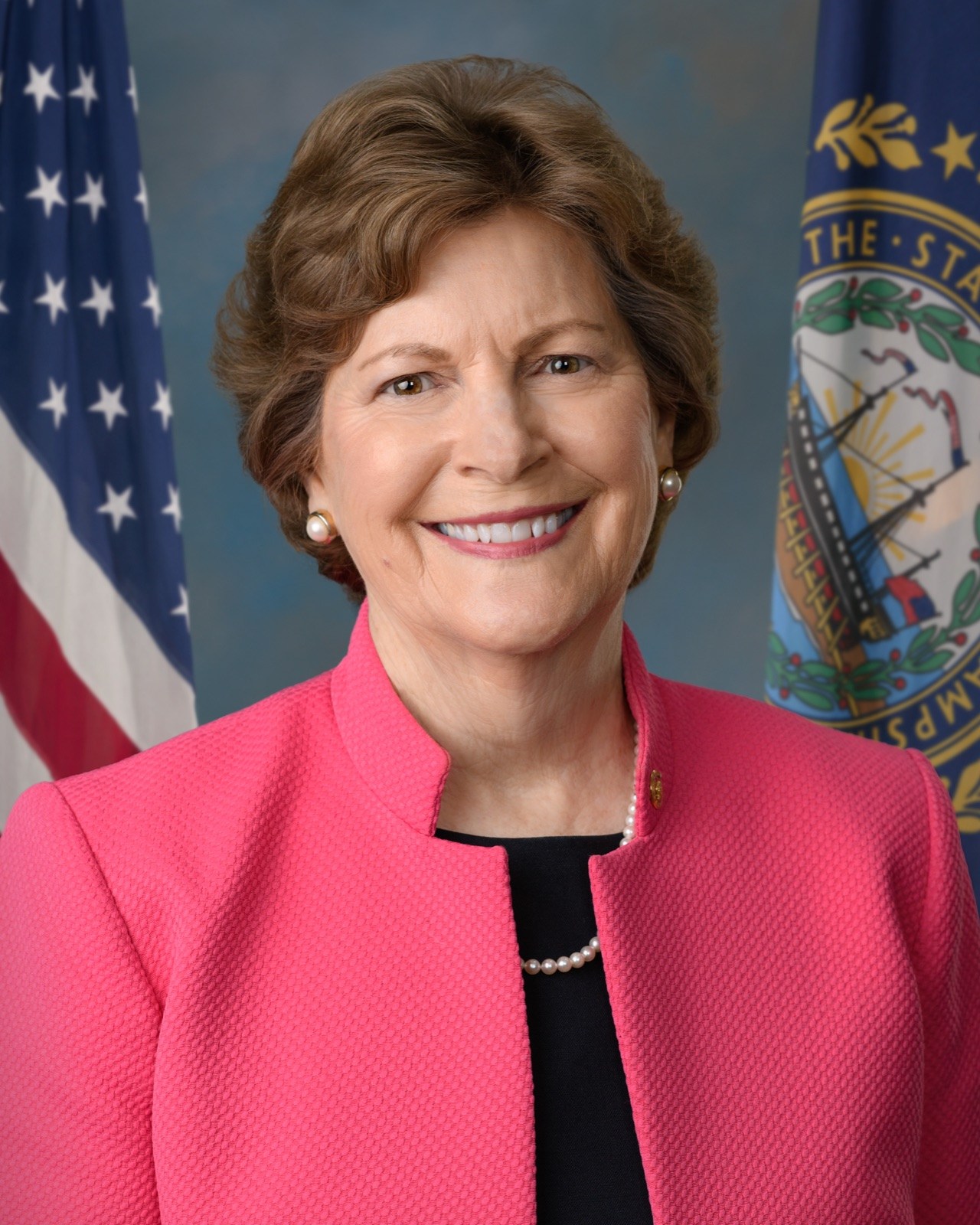
Jeanne Shaheen is a Democratic US Senator of New Hampshire discussing how US foreign policy has shifted during Trump's second term and the dangers of Trump's lax approach to Putin.
Episode Summary
Has the divisive rhetoric of President Trump’s administration irrevocably changed America’s reputation in the eyes of its allies and adversaries? Former head of MI6 Sir Richard Dearlove and guest co-host Baroness Ayesha Hazarika sit down with Democratic US Senator Jeanne Shaheen of New Hampshire to discuss how US foreign policy has shifted during Trump’s second term. Beginning with In Brief, Sir Richard and Ayesha examine the history of UK royalty visits to the US from Queen Elizabeth II to King Charles II, and the strategic importance of these visits for maintaining the “special relationship” between the US and UK. Then, Senator Shaheen argues that Trump’s lax approach to Putin and Russia undermines support for Ukraine, emphasizing that a win for Ukraine is a win for the West. She criticizes the administration’s China strategy, warning that the withdrawal of aid and allyship by America has put China in a position to fill the vacuum. The Senator also warns about the growing relationships between members of the “axis of resistance”—China, Russia, Iran, and North Korea—citing their increased cooperation as why America maintaining its historic alliances with NATO countries and beyond is so critical for a stable world.
In this episode:
03:02 – King Charles’ first official state visit to the US
13:50 – The fragility of the US-UK relationship
17:04 – Allies and adversaries behind the scenes
19:07 – Russia, Ukraine, and the Iran war
21:51 – Putin and the G20
25:10 – What’s next in the Iran war?
24:49 – The blockade ‘game of chicken’ at the Strait of Hormuz
32:39 – US and China relations
36:22 – China’s rare earth dominance
39:26 – NATO defense spending
42:22 – One Decision: Will Iran negotiations be successful?
45:15 – Sir Richard and Ayesha discussion
Hosted by Sir Richard Dearlove (former MI6 Chief) and Baroness Ayesha Hazarika (Member, House of Lords).
Listen & Subscribe
- Watch on YouTube
- Listen on Apple Podcasts
- Listen on Spotify
Transcript
COLD OPEN
Shaheen: I am so frustrated, as are many of my colleagues, by President Trump's allowing Vladimir Putin to play him for a patsy.
Hazarika: In terms of that special relationship, what do you think is sort of going on behind the scenes? So do I need to call you Sir Richard?
Dearlove: Call me Richard. If I can call you Jean.
Shaheen: That that works.
INTRODUCTION
Hazarika: Hello, and welcome to One Decision. I'm your guest cohost, Baroness Ayesha Hazarika, and I'm joined by my cohost and former head of MI6, Sir Richard Dearlove. Hello, Sir Richard. Hi, Ayesha. How are you? You must have been really busy recently
Dearlove: because I can't think of the last ten days when so much is happening. Okay. Quite a lot of it with a very British domestic signature, which may not be of interest beyond our borders, but it still has been, let's say, a national fixation.
Hazarika: It certainly has. I've been a busy bee, Sir Richard. There's been lots going on with domestic politics. There's been a lot of heat in the British prime minister over his appointment of Peter Mandelson to be the British ambassador in Washington. And we are also entering the end of our first parliamentary session of this new government. So that means lots of late nights for me in the House of Lords as we are finishing up voting and finishing up bits of legislation to get on the statute book. So, yeah, it's a very, very busy time. For me, lots of podcast talking and press interviews has been the results of the last week, plus plus requests to write newspaper
Dearlove: articles about The UK's vetting system and how ministers or, let's say, ambassadors are cleared for sensitive posts. I'm getting pretty fed up with repeating the details so many times on air.
Hazarika: Gosh. We could do a whole separate podcast just on the vetting process, but we will spare you from that. But, look, but first, let's begin with, in brief, so much going on in the world right now, Sir Richard. A third thwarted assassination attempt to President Trump, a shaky ceasefire over the conflict in Iran, the continued US and Iranian blockade of the Strait Of Hormuz. Well, look. We've got lots to discuss, and we're gonna zero in on one topic to help you make sense of the news. And afterwards, the US senator, Jean Shaheen, joins the show to examine the state of US hegemony. Has President Donald Trump's foreign policy forever changed The US's place in global affairs? And if you're not already subscribed to One Decision on YouTube or wherever you listen, now is the time. You won't want to miss a single conversation. But now it's time for In Brief. Now this week, King Charles the Third and Queen Camilla are making their first official state visit to The United States to commemorate their 250th. We wanna give you some context around the historical importance of these meetings, particularly as officials on both sides of the pond worry about this thing called the special relationship between The US and The UK. What do you think success will look like in terms of this trip for the king and queen, Sir Richard?
Dearlove: Well, I think the success of the visit would be characterized by people saying, well, the relationship between the two countries is bigger and more important than the intervention of personalities. And, you know, we all know Trump is a difficult individual and impulsive and has a mode of behavior which a lot of people find very, very disconcerting. But then on the other hand, it's clear that he himself values that sort of higher relationship which is expressed through his friendship with the king and the fact that he himself, unusually for a president, has already made two state visits to The United Kingdom when there was a massive disagreement between The United States and The UK and France who, you know, attacked Egypt. I mean, I'm very fortunate because in my career, I would say that I experienced what many people feel is the keystone of the special relationship or the very core of it, which is the intelligence and security links between The UK and The US, which are actually unique. The US doesn't have any other relationship with another country quite like The UK. And my understanding is that despite the current tensions that carries on, I wouldn't say as normal, but it carries on without, I think, a major impact on the exchange and the discussions that go on, mainly hidden from public view.
Hazarika: And is your impression that despite the kind of public tension clearly that exists between Keir Starmer and Donald Trump right now, that on a background level, on a defense level, on a security level, and from a diplomatic level, that relationships are still good and strong?
Dearlove: Yeah. I think they are. You have to realize that a lot of the relationship between The US and The United Kingdom are pretty heavily institutionalized. And they carry on at a level irrespective of politics and differences in policy. I would point to well, The UK nuclear deterrent is based on Trident technology, which is American technology. That's hugely important. There is the treaty that links our two listening and intercept services, NSA and GCHQ. It's called the UKUSA agreement. Those two organizations have a degree of integration with exchanges of personnel. You can't unstitch that. You can see in a way why Trump was so frustrated over the issue of British support for the war in Iran. But I would actually hark back to an earlier example, which I remember very graphically, when Harold Wilson was prime minister when The UK refused to join the war in Vietnam. And it's happened before. And probably, you know, looking ahead, it'll happen again.
Hazarika: And I was also struck by an interview that Keir Starmer gave recently to The Sunday Times where he still talks about having a close relationship with America on the lines that you have outlined. But he does also talk about wanting to get closer to Europe, and he talks about the possibility of potentially some kind of nuclear collaboration with the French. We talk a lot about Keir Starmer sort of standing up to Donald Trump a bit, and this visit is hoping to smooth things over. But do you think behind the scenes, he is thinking about pivoting away from America and getting closer to allies like France?
Dearlove: If you go back to Obama, there is this pivot to Asia in American foreign policy. And, obviously, if you take a long term view, the relationship between The United States and China is going to be more important in American foreign policy probably than anything else. We haven't yet maybe arrived there, but that is the direction in which we're going, which in a way throws Europe back more on its own resources in relation to European security. And we all know that the European nations of NATO have underspent on defense and ridden on the back of American security. And part of that security is the American nuclear umbrella, which actually, in my view, is still essential to European security and I think will be for some time to come. There has been discussion, actually raised by Chancellor Merz in Germany, that maybe there should be more coordination of the French and British nuclear deterrents so that there potentially could be or would be a European nuclear umbrella which would, let's say, take the pressure off or remove the primacy or immediacy of the American provision. But I think what we're talking about is a ten, fifteen year view if we have that much time.
Hazarika: Well, just pivoting back to this state visit. I mean, in your time, did you have any personal experiences of state visits or any personal sort of experiences of so you've worked very closely with your American counterparts, but your dealings with the White House and presidents?
Dearlove: Well, when I was chief, I certainly had the experience of meeting the president. It was George W Bush at the time. I've been to the White House a lot. I've been to Camp David, which were fascinating experiences. But I think in the case of this visit, I would say it's a necessary distraction because the visit has a political purpose and the political content, which is very unusual. And well, I you're not meant to report previous conversations with royalty, but as the late queen is deceased, I remember discussing with her on a couple of occasions her state visits to America where she made some very amusing observations about, let's say, the way aspects of the visit had been organized. But she had a great affection for the relationship and thought it was very, very important. But her four state visits were all very uncontroversial. Although the first one, I seem to recall, had a pretty serious political content as well, as it came after the Suez Crisis when relations were in the doldrums.
Hazarika: That was the point when President Eisenhower famously threatened to bankrupt Britain, didn't he? That was, I mean, that was a bad moment in terms of the relationship.
Dearlove: Eisenhower got very cross about the Anglo French invasion of Suez and did make some threats, which in some respects were worse than any Trump has made. So these things do have a historical perspective, which people, you know, tend to forget. They think, well, it's never happened before. But of course, it has happened before. And, you know, it left scars which took quite a long time to heal.
Hazarika: And how much do you think you know, it's often said that Donald Trump really has affection for the British royal family. We know, of course, he's got, you know, roots with Britain, particularly Scotland where I'm from, because his mom was famously Scottish. And I just wonder, you know, what do you think that the sort of royal aspect of it will really matter to Donald Trump?
Dearlove: I think they probably have a lot in common, and I think Trump's Scottishness is really important to him. I think they probably part company when it comes to ecology and King Charles' interest in the natural world and the fact that he has a reputation in The UK as a tree hugger. I don't see Trump hugging many trees. And, of course, I don't think King Charles, he likes fishing and polo. He doesn't play golf. So there are quite a lot of differences. But on the other hand, they obviously seem to have a linkage and an understanding.
Hazarika: Yes. There's well, there's two very important things. There's blood and golf, two things that are very important for Donald Trump.
INTERVIEW WITH SENATOR JEAN SHAHEEN
Hazarika: Now it's time for our interview. This week, Senator Jean Shaheen returns to the podcast to speak on President Donald Trump's foreign policy. The self described peace president has found himself party to numerous global conflicts. Like it or not, Trump 2.0 has reshaped the global world order as we know it, straining many of America's long time alliances. Senator Shaheen has called the Trump administration's rhetoric towards US allies insulting. She's a Democrat from New Hampshire. She's a ranking member of the Foreign Relations Committee, and she's a member of the Senate Armed Services Committee. Previously, Senator served three terms as the first woman governor of New Hampshire. Senator Shaheen, welcome back to One Decision.
Shaheen: Thank you. Nice to be with you this morning.
Hazarika: Well, look, it's great to have you with us. I mean, we speak to you at such a pivotal moment in terms of the fragility of geopolitics, the fragility of the relationship between America and so many of its allies, and of course, at a time when our king, the British king, is visiting America. As an opening gambit, what are your thoughts right now as you join us today with so much going on?
Shaheen: Well, we're very excited to have the king here. He's here to celebrate the two hundred and fiftieth anniversary of the United States. It's always wonderful to have the king here. He's been here a number of times before he became king, and I've had a chance to meet him on several occasions, and I appreciate his commitment to so many of the critical issues facing the world. So that's very exciting. And I think it is a reminder of just how close the ties are between The United States and Great Britain and all that we've shared throughout our history. And also a reminder of the post World War II world order that despite its fragility right now, as you point out, has been so important to providing security and prosperity for The United States and for so much of the world.
Dearlove: Jean, there's a lot of concern here in The UK that, you know, there is a fundamental shift or downgrade in the relationship. I personally am not sure that that view is correct because I think the relationship is more powerful than personalities. Do you think that we are, as it were, able to rise above personality incidents? Let's say the relationship at the moment between the prime minister and the president isn't great. And for this to be seen, I wouldn't say as an aberration, but maybe a slight interruption to a relationship, which really institutionally and culturally really is a close one.
Shaheen: Well, I think as you point out, we have a shared history, shared values, shared culture in so many ways. I have a son-in-law who's British. He's now an American citizen, but he's British. And there are so many examples of that. When I was governor, I took the first trade mission from New Hampshire overseas, and the first country we visited was The United Kingdom because that's where our businesses wanted to go because that's where they were doing business. So I think the current administration in Washington here has insulted so many of our allies in ways that are not in either America's interest or the interests of promoting the values that the Transatlantic Alliance and the International World Order has shared for so many years. And so I think there will be an important job to rebuild some of those relationships. But fundamentally, The United States and the British people have a relationship that transcends personalities.
Hazarika: And Jean, in terms of that special relationship, which as we've said, does feel quite frayed at the moment, a lot of it, because of the war in Iran, what do you think is sort of going on behind the scenes? Tell us what the kind of conversations that you're having with other parliamentarians in America. Because, of course, we see this quite fractious relationship right at the top. But what are the conversations that are being had in congress and in the senate?
Shaheen: There continues to be strong bipartisan support for our transatlantic alliance, for NATO, for the institutions that have built the post World War II order. And that bipartisan recognition of the importance of allies and partners to America's security is clearly there. People understand that. We understand that we are stronger when we work together and we face some real adversaries right now. We are seeing a growing relationship between China and Russia and Iran and North Korea. We just saw the foreign minister of Iran in Russia meeting with Vladimir Putin. This is at a time when Russia is providing targeting information to Iran so they can target not just Americans in The Middle East in this war, but they can target our other partners in The Middle East, our allies. So we need to understand, and I hope that this president will learn this, that we are stronger when we have allies and partners. They're a force multiplier. Undermining those relationships does not help us at a time when our adversaries are becoming stronger and working more closely together.
Hazarika: The other country we need to talk about, of course, is Russia, who has been quite a beneficiary of this war with Iran. What do you think this conflict in Iran means for Russia and more importantly, the war with Ukraine?
Shaheen: I am so frustrated, as are many of my colleagues, by President Trump's allowing Vladimir Putin to play him for a patsy. And that's exactly what Putin has done. And we just saw it again with the Iranian foreign minister's visit to Russia with Vladimir Putin at a time when Russia is providing targeting, as I said, to Iran so they can target our troops in the region, so they can target our allies in the region. Donald Trump continues to refuse to put further sanctions on Russia. They've lifted the sanctions and given Russia a windfall last month in terms of revenue from oil because the administration lifted the sanctions. They have refused to provide the support that Ukraine needs. Thank you to the Starmer administration and to Europe for stepping up to provide a loan, a significant loan, to Ukraine and continuing to provide weapons. But we should be putting every pressure that we can think of on Vladimir Putin to defeat Russia in this war in Ukraine because Ukraine is actually surviving in a very difficult situation, doing very well. They've actually captured ground in the last couple of months. Russia's losing 35,000 casualties a month in Ukraine, and their economy is having real trouble. We ought to be doing everything we can to tighten those screws because if Russia's defeated in Ukraine, not only is that a huge win for the West, but that sends a very important signal to Xi and China, to the North Koreans, to all of our adversaries about the importance of allies and partners, the importance of staying when we make a commitment to do something. And if we walk away, if we refuse to provide the help that Ukraine needs, then that is bad news for The United States in terms of any future relationship with China.
Hazarika: And just as a follow on to that, Trump held a press conference in the Oval Office recently where he hinted there's a possibility he could invite President Putin to join the G20 meeting of ministers. What's your reaction to that, and what's been the reaction in Washington to that?
Shaheen: Well, my reaction is outrage. I think there is no way we should let Vladimir Putin, who is a murderous thug, come to the G20, given his war in Ukraine and given his support for Iran in this war. So I would hope the president would rethink what he's doing and would understand that, as I said, he's being played by Putin. He's a patsy. You know, Donald Trump thinks he's so tough. Well, he's not tough. He's not tough in terms of what Russia's doing. He looks like he is totally being outplayed and outgunned by Vladimir Putin.
Dearlove: Jean, I think that we agree with the line you're taking in your explanation. What I just I mean, given my own background and my own career, I just don't understand why and how Trump is in this position with regard to Russia. It just seems to me completely inexplicable. I spend a lot of time in The States. All my American friends agree with me. And the number of people who must sort of support him on this issue must be just tiny, or isn't that the case? I mean, I know there's a tradition of isolationist president and all these things. But what is it?
Shaheen: I don't know. I'm not usually a conspiracy theorist. Well, I'm not either. But, you know, there are a lot of conspiracy theories about what Vladimir Putin has over Trump, which makes you wonder.
Hazarika: Compromat. It does make you wonder. I mean, just to combat that, I think part of it is, I think, just on a kind of alpha male level, which Trump is obviously very driven by, I just think he admires Putin. Trump prides himself on being a strong man. Putin is the ultimate strong man. There's something in that, Jean. I don't know if you think that.
Shaheen: Well, maybe so, but for the ultimate strongman, he's sure not doing very well against Ukraine. You know, this was a war that Vladimir Putin and even The United States at the time thought that Russia would march into Kyiv within weeks. And here we are four years later, and Kyiv has been able to stand up to Vladimir Putin. He's about to destroy the Russian economy, which was not in good shape to start with. So if this is the strong man that Donald Trump wants to be, he needs to rethink that.
Dearlove: I mean, this is a difficult question, but it's one we're all asking ourselves. What do we think is gonna happen next in Iran? Is the ceasefire going to hold, or is this just a pause in the military conflict? The only observation I would make I mean, I was recently in Spain where there's huge opposition to the war. But I said to my audience, what do you want the regime in Iran to survive or not? And, of course, the answer to that was they would like to see it disappear. And if Trump succeeds, you know, that'll be put down as big foreign policy success. But at the moment, it's hard to see what the next step in the military conflict is likely to be, whether it's negotiation or whether it's further military incursion.
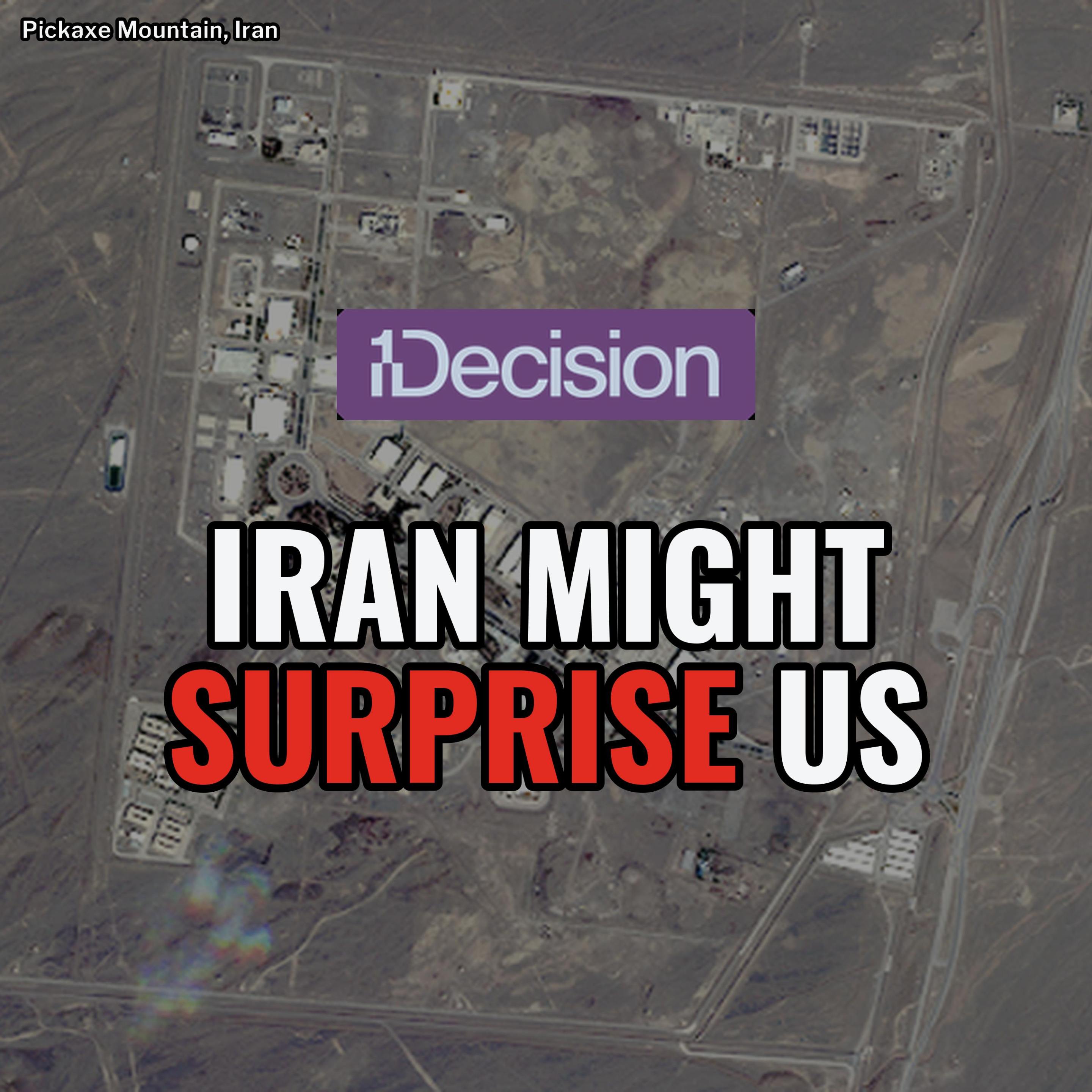
Shaheen: Well, I hope it's gonna be negotiation. I think a number of the stated goals of President Trump in going to war in Iran have not been accomplished. And I'm not sure that we can accomplish them militarily. The prevention of a nuclear weapon in the future, it's something that continues to be a holdup in negotiations. And unfortunately, Iran has the scientists, the knowledge, and the understanding of how to make a nuclear weapon. And we can't wipe that out just by wiping out the sites where they've enriched uranium and done some of their scientific research. Unfortunately, we have to address that through negotiation. That's why the JCPOA that was done under the Obama administration, while it may have had challenges, at least it gave us a path forward to prevent Iran from getting a nuclear weapon. So I hope we are gonna be able to continue to negotiate. The frustrating thing is, as we look at what's happened as the result of this conflict, Iran now has taken control of the Strait Of Hormuz in ways that we did not see before the conflict began, where they're talking about charging ships to go through the Strait. They're controlling it despite the fact that they may not have a navy per se anymore. They certainly have cigarette boats, gunboats that are able to prevent commercial ships from going through that strait. They've mined it. And so that has become a weapon that didn't seem to be anticipated by President Trump at the outset of the conflict. Don't understand since that seemed to be an understanding that most of our past presidents had, but he seems to have been surprised by the extent to which Iran has been able to weaponize the strait. And then there's regime change, which President Trump said at one point that he would like to see, and yet what we have there is a regime that is more hardline than the one that it replaced. So it's hard to see how those issues are all addressed militarily without major US troops in the region, without further costs. And so I hope that they are gonna decide to move forward with negotiations.
Dearlove: Who's dominant in the blockade? Because it seems to me now we're into a game of chicken. You know, will the Iranian regime struggle or implode? Will Trump's domestic base revolt politically to such an extent that he has to fold his hand? I mean, can you just give us a little bit of Washington speculation on that current situation?
Shaheen: Well, wouldn't be speculation because we really don't know what the outcome would be. But I would say that the blockade actually has been one of the smarter moves of the Trump administration because it has put more economic pressure on Iran. And as I understand, they are having trouble now with what to do with the oil that they're currently pumping since they can't sell it and can't get it out of the country. And so they're facing a real economic crisis that is gonna have an implication for how, hopefully, negotiations play out. So I don't think we know yet what the outcome is, but hopefully we will see negotiations. One of the other things that also is affecting this, or appears to be from Iran's point of view, is the fighting in Lebanon. And I was really optimistic that that ceasefire would hold, but now it appears that they're firing on each other again, Hezbollah and the Israelis. And so that adds to the unsettledness in the region.
Hazarika: Jean, do you think that Trump's administration is negotiating in good faith with the Iranians right now? Or are these talks that they're having, and of course, we've just had a whole series of talks which didn't happen in Islamabad, do you think they are in good faith, or do you think they are sort of performative at the moment?
Shaheen: I'm not part of the administration, so I don't know the answer to that. My guess is that they are interested in negotiating in good faith. President Trump seems to want an end to this conflict. This brought him much more than he expected, I think, at the outset. I think he didn't understand the extent to which it was gonna affect domestic policy in The United States, affect our economy, affect prices. Even though 20% of the world's oil goes through the Strait Of Hormuz, and it's not American oil and gas, the fact is it affects the global market, and that affects prices in The United States and around the world. So I think he didn't realize the extent to which Iran might be able to stand up to the bombing in the country, and that has created other challenges. Iran still has about 50% of their missile capacity, and they are still able to produce drones. And as the nature of warfare is changing, those drones can inflict significant destruction on our allies throughout the Middle East, and that creates challenges for The United States. So my hope is that the administration is negotiating in good faith with Iran, and I think it's in the president's interest to do that.
Hazarika: And just as a follow-up, in terms of these negotiations, who do you think has the upper hand right now?
Shaheen: Oh, I can't speculate on that. No, I think if Iran really is running out of a place to put its oil and therefore running out of money, that's having a huge impact. The United States is seeing rising prices, but we're not about to have our economy collapsed. And so hopefully, there's enough incentive for both parties to go back to the table and to try and reach a negotiated settlement.
CHINA AND THE LONG-TERM THREAT
Dearlove: Jean, you've taken a great interest in relations with China. And, of course, I think for all of us, although the sort of Chinese aspect of where that policy sits in international relations has been pushed slightly to one side, it's still probably the most important long term question that the West faces and the West generally. And, I mean, Trump is due to go to Xi. I think you've been a, you know, a significant critic of China in a number of ways. I mean, how do you see that visit playing out? Is that going to be an attempt by Trump to reach some sort of modus vivendi or accommodation with China so that that problem of confrontation is pushed away? And, of course, bubbling away in the background, we have the whole issue of Taiwan. I'd be very interested to hear your assessment of where The United States sort of generally stands, I mean, without necessarily being specific about this administration's policies.
Shaheen: Well, since I arrived in the senate, I think there has been bipartisan agreement that the biggest threat to The United States and to the West is China. It's a threat militarily and economically. And we've seen that threat increase in recent years. And I think many of the policies of this administration have exacerbated the challenges that we face from China. The Democrats on the Foreign Relations Committee did a report that came out about six months into the Trump administration, and we did another report that came out about a month ago about the policy changes by this administration that provide an opening for China. Everything from diplomatic presence, The United States has about half of our embassies that are not filled right now with ambassadors. China has more diplomats around the world than any other country. The United States has withdrawn from about 60 international organizations. China has come right in, and we give them the opportunity to set the rules of the road when it comes to everything from the UN to aviation to science to so many other areas. The fact that we have cut foreign assistance so dramatically because of the elimination of USAID has given China an opening for the Belt and Road Initiative that has given them a record year. And the Trump tariffs have provided an opening for China that had a record trade year last year. So, so many of the policies of this administration have really undermined our position relative to China. And I fear that the president goes into a meeting with Xi in a weaker position than I would like. I just came back two weeks ago from a trip to the Indo Pacific with a bipartisan delegation. We visited Taiwan, Japan, and South Korea, all very strong allies of The United States, all very concerned about the threat from China and all beefing up their own defense budgets in a way to help provide a shield against what China is doing.
Dearlove: Jean, this is sound like a rather detailed and specific question, but there is a bigger issue. I've just read an article in the Washington Post about Chinese domination of a rare earth called gallium, which is crucial to the most modern radar systems in American fighter jets. And 97% of the world's production is in China. It's a byproduct from aluminum. And this raises the whole question of China's domination of the rare earth market and how important it is not just for, you know, energy policy, but in armaments and in all sorts of modern systems, which are becoming, you know, more important in all of our lives. How do you think that America should approach this problem?
Shaheen: Well, it is a very big deal, and it's the reason why President Trump backed off of his tariffs last year because Xi threatened to cut off all the rare earth minerals. And what China has is a lock on the processing and refining of those minerals. The minerals are produced in lots of places, but the processing China has been able to really get a lock on and be able to use that in ways that are significant. It came up when we visited Japan because China has cut off Japan years ago from their rare earth minerals. And so Japan has done a good job of thinking about how to respond to that. I will give the Trump administration credit for recognizing this as an issue and beginning to sign deals with countries like Australia, with other parts of the world to produce those rare earth minerals. But again, the processing, the refining of those is what we really need to also be able to produce. And so there is an effort. I have legislation, there are a number of bills in the Congress to begin to address this. But we've been very late to recognizing how important this issue is. When I was in Taiwan, one of the things that was very clear is Taiwan produces 90% of the world's semiconductors, which are important, again, for almost everything we do from military equipment to appliances to cell phones. And it's one of the reasons that Congress passed the Chips and Science Act to begin to build our own industry domestically for semiconductors. We've done so much of the inventing of those, and yet the industry moved offshore. And now it's mostly located in Taiwan. But it's the reason why China's threat to Taiwan is so critical to The United States.
Hazarika: You talked about the importance of NATO. And I'm sure this visit from the king, one of the subliminal messages will be to say this is a very important alliance. But, you know, and I think Sir Richard has this view, and others do as well, that even though people aren't happy that it feels like the NATO relationship has been strained, many people argue Trump maybe did do a positive thing, was shine a light on the fact that many NATO allies were probably over reliant on America for defense, and they were not doing their own defense spending. What are your thoughts on that? Do you think there's some merit to that argument?
Shaheen: I do, absolutely. And virtually every European leader that I've met with over the last couple of years has said the same thing, that every NATO leader that I've met with has said Europe needed to step up to the plate now, and I think that's good for the Alliance, it's good for The United States, and it's good for every other member country.
Hazarika: And the flip side, suppose, other side of that question is, because there's been quite a stress put on the kind of concept of NATO, do you think that a lot of NATO countries and these new middle countries that are being talked about, Mark Carney famously coining that phrase, do you think you're going to see a bit of a new realignment of these middling countries away from America? Because they look at Trump and they don't see a reliable partner there anymore.
Shaheen: Well, I hope not. I think we'll see some posturing to that effect. We've seen a number of visits to China by a number of our allies. But as the case with Great Britain, Canada, for example, my state shares a border with Canada. We have a lot of people in New Hampshire who have relatives in Canada. We do business on both sides of the border. And while many of those Canadians aren't coming to New Hampshire right now for tourism and for some of the other things because of what the president has said, I believe that they will come back as soon as they understand that Donald Trump is no longer in the White House. And to the World Cup.
Hazarika: Well, that's right.
Shaheen: Hopefully, the World Cup is gonna go well in The United States, in Canada, and Mexico, and hopefully, we're gonna renegotiate the USMCA, the agreement between The United States, Mexico, and Canada, and see a positive outcome to that.
Hazarika: Well, Jean, we're coming to the end of our time. You've been such a fantastic guest, so thank you so much. Just before we let you go, what's the one decision that you're looking out for this week?
Shaheen: I hope we're gonna see some agreement to continue negotiations on Iran. I think that would be in everyone's interest to do that. I hope we will see the ceasefire restored between Hezbollah and the Israelis so that Lebanon no longer experiences the kind of bombing that they've seen. In Congress, we're gonna look at our FISA law, which is about trying to keep the country safe and intelligence. So that's the big issue that we're gonna see in Congress this week.
Dearlove: Well, I'm interested that you've mentioned FISA right at the end because, obviously, that's something professionally that interests me. And one of the things that has always worried me about Trump, which really, okay, it's something that John Bolton said, who I've known for a long time. And John's comment was that, you know, the president wasn't really interested in his PDB, his presidential daily briefing. And that comment really worried me because, you know, if you wanna make good policy, you need to listen to your intelligence community. And has he I mean, do you think the president is, as it were, learnt in office, or is he still being very impulsive in the way that he approaches these issues?
Shaheen: No. I don't think he has. He would not have gone into the war in Iran if he had learned. He clearly did not listen to any of the intelligence information that he received before doing that.
Dearlove: Disconcerting for someone with my background.
Shaheen: Yes. Disconcerting as a citizen.
Hazarika: Coming to the end of our term, Jean, is there anything else you'd like to add? Anything else you'd like to see?
Shaheen: No. Except that I'm gonna be excited. I'm gonna be in England in July at Farnborough for the air show. I've had a chance to lead the delegation from the Senate for the past number of years, and we have a big aerospace industry in New Hampshire, so I'm really looking forward being there. And I hope you'll make sure the weather is good.
Hazarika: We'll do our best. We'll do our best. We can't promise anything.
Shaheen: It's very good at the moment. Yes, I know. I've been there when it's been really hot.
Hazarika: Well, look. Senator Shaheen, it's been such a pleasure having you on One Decision. You've been an absolutely excellent guest.
Shaheen: Thank you. Nice to be with both of you.
ANALYSIS WITH SIR RICHARD DEARLOVE
Hazarika: Jean, thank you very much indeed. Well, Sir Richard, what a fascinating conversation and incredibly interesting and smart woman. I mean, Senator Shaheen left us with a lot to think about. What landed for you?
Dearlove: Well, you get a very different view of American foreign policy from talking to her and one which is much closer to what most of us have grown up with and got used to in terms of The United States attitude to global security as it currently stands. So it I mean, hers is very much, I would describe as a mainline view, and both mainline for Democrats and an awful lot of Republicans. And, you know, she speaks a huge amount of good sense and doesn't mince her words when she's talking about the aberrations of Trump's policies. But she did acknowledge that on Europe, you know, he had got certain things right. And I think probably she feels that on China, because he did a lot to rethink American policy on China in his first administration, which didn't actually change very much under Biden. And she probably reflects that as well. But it's this element of rudeness, element of offense, which clearly, I think she feels passionately about. And she does sort of criticize Trump very toughly without overplaying her hand. And I thought she gave us a very balanced picture. And I just wonder how much that feeling extends across the whole of the senate. I think there are more senators that probably feel like that than don't. And, of course, you've got the midterm elections coming up. And the key question, but we couldn't ask her that really because that's not what she came on for is, you know, is the balance of power gonna shift at the midterms, and has Trump, in a way, overplayed his hand so that he's gonna lose? But the other thing you have to recognize in the States that a lot of American voters really don't think and don't worry about any aspect of foreign policy at all, and that it is domestic issues which dictate how the majority look at Washington DC and how they vote.
Hazarika: I agree with lots of what you said, particularly she didn't pull any punches when it came to describing President Trump, she was very, very forthright, particularly talking about Russia and describing Trump as Putin's patsy, which I thought was interesting. And she's I thought she's very good at joining up the dots across geopolitics at the moment, which is incredibly important because nothing happens in isolation. You know, she talked about how problematic Russia was, not just because of Ukraine, but because of its support for Iran as well, which is attacking American troops. She talked about how the cuts to US development aid would inadvertently down the track bolster China, who would go into, you know, to fill those gaps. So I think she's very good at joining up those dots on geopolitics. And as you say, I think what's very important to hear is that sometimes you do get the impression of course, Trump is so dominant in American politics and global politics that his is the only view. But you're right. There's probably a broader consensus across both the parties in Washington that international alliances matter, that NATO matters, that the relationship with The United Kingdom and Europe matters as well. And I think sometimes that can get distorted in a lot of the kind of heat around the rhetoric that comes out of Donald Trump. I do agree with you as well, though, about things being a kind of Washington or a Westminster bubble, and do they cut into the real world? And I think in the same way in America as here, most people are not following the twists and turns of the negotiations with America and Israel and Iran, but most people will really notice when their food bills go up or their fuel bills go up. That's when people will take notice. Well, that's all for this episode. Join us every Thursday for more exciting conversations about world events that goes beyond the usual headlines. Subscribe to One Decision on YouTube so you never miss out on a conversation putting the global news in context. For more conversations with leading decision makers and thinkers, do check out onedecision.com, where you'll find additional commentaries, conversations and explainers. I'm Baroness Ayesha Hazarika, joined as ever by Sir Richard Dearlove. Thank you so much for listening.