Episode Info
- Season17
- Episode1
Hosted by Christina Ruffini and Sir Richard Dearlove
Guest
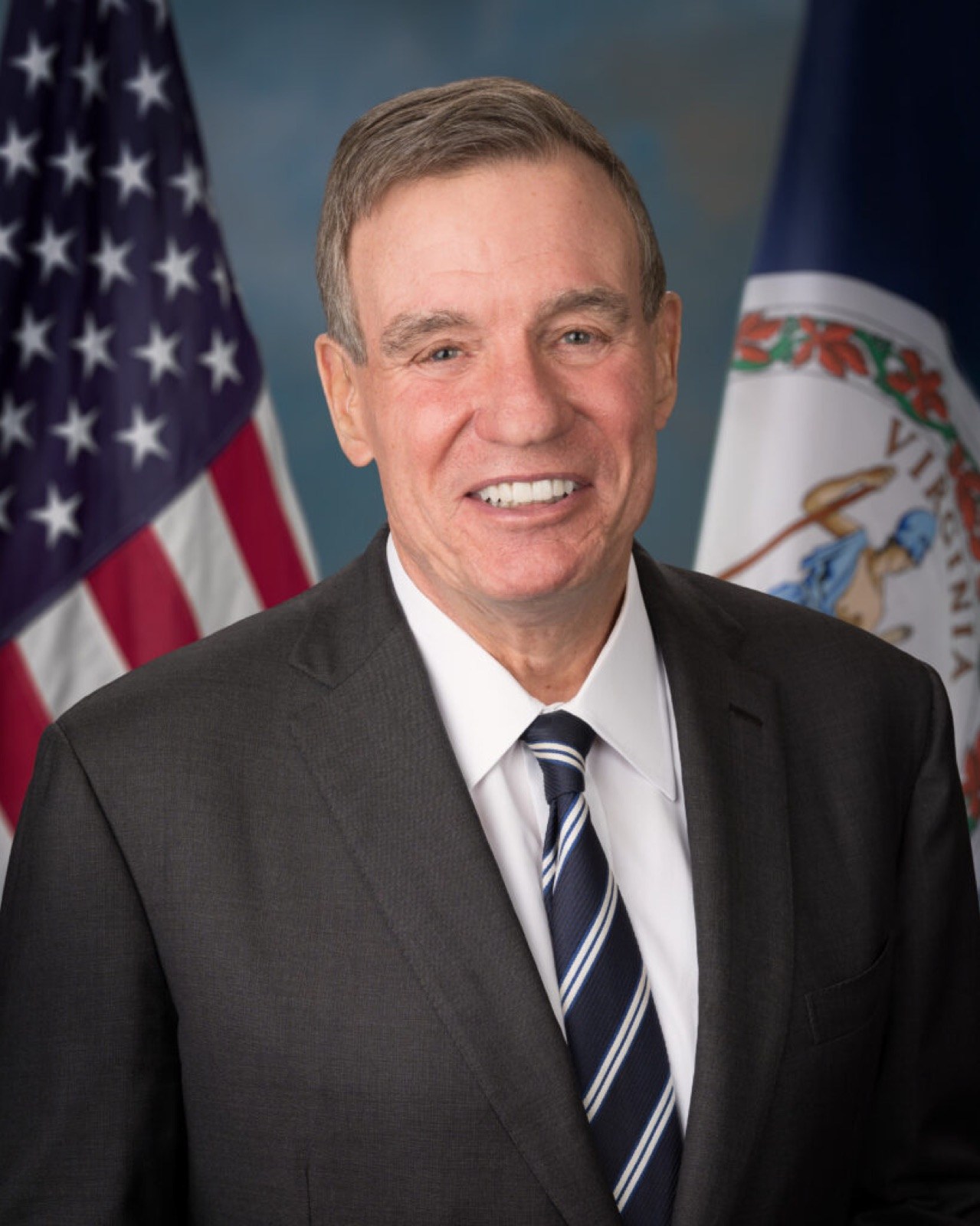
Senator Mark Warner
Senator Mark Warner is a Virginia Democrat and Chairman of the United States Senate Intelligence Committee who oversees the vast intelligence community and investigations related to national security.
Episode Summary
One Decision's Julia Macfarlane and former MI6 Chief Sir Richard Dearlove sit down with Senator Mark Warner, Chairman of the powerful United States Senate Intelligence Committee. In his role, the Virginia Democrat oversees the vast intelligence community and investigations related to national security. The discussion features the committee's work on investigations into the mishandling of classified documents, the challenge from China, and the emerging threat of artificial intelligence and advanced technology.
Listen & Subscribe
- Watch on YouTube
- Listen on Apple Podcasts
- Listen on Spotify
Transcript
COLD OPEN
Warner: I felt probably a year ago at this point that AI was a marketing tool for advanced statistics. It literally has only been the last six or seven months that I've got religion on this issue, and now I'm, you know, both excited and terrified.
INTRODUCTION
Mcfarlane: You're listening to One Decision, the podcast that looks at the choices made that shape our world. I'm your host, Julia McFarlane. When it comes to intelligence and classified information, you tend to hear the phrase need to know rather a lot. Turns out, there really are only a tiny number of people who truly need to know everything. People with the highest security clearance designated as the individuals responsible enough to be trusted with the disclosure of America's most closely guarded secrets. One of those people is Senator Mark Warner from Virginia. He's chair of the Senate Intelligence Committee, which means not only does he lead the committee that oversees the intelligence community and all issues related to intelligence and national security, but he's also a part of the so-called gang of eight, the top Republicans and Democrats in congressional leadership who must be briefed on classified matters by the US executive branch. Basically, what the American president gets to see, so does Senator Warner. Along with my co-host, the former chief of Britain's secret intelligence service, Sir Richard Dearlove, we were delighted to have some time with him on this podcast to talk about some of the key issues facing his purview today, starting with the scandal of the mishandling of classified documents by former president Trump and the emerging intelligence risks posed by both the Communist Party of China and AI, quantum computing, and other emerging tech. Let's get right to the conversation.
INTERVIEW
Mcfarlane: Senator Warner, it's such a pleasure to have you joining us today. Welcome to One Decision.
Warner: Thank you so much for having me.
Mcfarlane: It's such a great time to be talking to the chair of the Senate Intelligence Committee. There's been a lot of headlines in your field recently. I just wanna start with the fact that there's obviously been a high number of high profile intelligence leaks in The US recently, particularly with the Discord leaks from a 21 year old member of the Massachusetts Air National Guard. That, of course, comes after the leaks from Edward Snowden, Chelsea Manning. Does that need to be a radical overhaul of the IC and who gets access to sensitive information? I mean, what can or should be done about safeguarding America's secrets from within?
Warner: This, unfortunately, is not just an American only problem. We've had many, many nations have similar type of leaks or disclosures. I think it's brought into focus, though, something that in the intel community in America we've known for a long time. We way over classify. There is always a default to a classification level that may not often be needed. There's no public interest test, and that then drives the fact that we have, in America, over 4,000,000 people with security clearances. And it drives the fact where you've got this case of airman Teixeira, where who was simply an IT guy. And why should the IT guy have access to all of the full documents? In our annual authorization of overview of the intelligence community, we just had a markup on legislation that would include a broad based review and finally an effort to try to designate someone in charge of declassification government wide. Right now that is decided agency by agency. A public interest test that would have to weigh the public's right to know versus the need to classify, which I think would slow down the classification process. A requirement that after twenty five years, unless a president or head of agency gave a specific reason, you'd have information declassified. And again, think back on Snowden. He was again not a spy. He was a consultant as an IT person. Should you have access to all the documents? There are clearly ways where you can have access to the headers at the top of a document, but not all of the content. So I think we are working on this, but as you've seen, the challenge oftentimes is there's a great kerfuffle when one of these incidents happen, but then the ability to maintain the legislative agenda to push through major reform is a problem. I hope we get it right this time, because at the same time, what we don't wanna do, at least in The United States, is so slow the process of getting a security clearance in the first place that good people turn away. In prior years, sometimes it would take up to two years to get a security clearance. A young person coming out of university is not gonna wait two years to go work at the CIA particularly when they can go work for ten x that amount in high-tech. So we've gotta get both the security clearance reform process moving forward, but then the document classification process more in line. And I think some of these steps we're taking would at least head us in the right direction.
Dearlove: Senator Warner, can I just ask an additional question? Because I think it's an important one. After 9/11, bearing in mind I was still in office in that period of time, the recommendation of the 9/11 commission was share, share, share because so much intelligence pre 9/11 had been stovepiped. So would it be correct to say that, you know, there was too much sharing post 9/11 when that criticism of The US national security community was made. And that in fact, this sort of series of leakages now perhaps is, you know, a too liberal approach towards access to sensitive information?
Warner: Well Richard, I'm not sure that oversharing at its core is the problem. Although clearly the question of why someone who is in the National Guard as a reservist, who was on active duty at the moment, should be getting these full contents. And do all the combatant commanders need all this data? I'm not willing to move back from sharing because I still see stovepipes in the IC. And, unlike in UK where you've got a little more rational approach on the number of IC agencies, we are now in America up to 18. And that doesn't even count all of the component parts of the DOD — well, it does count most of the DOD folks. I'd rather go with this problem less on restricting sharing and more on that question of insider threat, more on that question of who actually gets the contents. And clearly, we've seen time and again, it is often not that intelligence professional who may be turning over these documents. It's the one off consultant who may be the IT person or somebody who, frankly, again, may or may not need access to the full contents of these documents in the first place even within a single agency.
Mcfarlane: Senator, you mentioned declassifying. You mentioned the public right to know. You've recently hit out at the justice department for not allowing members of your committee to see the documents that have been found at former president Trump's and president Biden's properties until the special counsels approve it. You've argued that your committee needs to be able to conduct its constitutional responsibility of oversight. It's interesting because we're currently having a bit of a debate in this country about parliamentary oversight over itself and its members with the conduct of our former prime minister Boris Johnson, although that's not quite related to intelligence. But with intelligence though, it is different, is it not? Why do you object to the intelligence community getting a chance to redact some of this highly sensitive information that Trump's held on to? Do you not trust the IC and the special counsel that you will be able to know what you need to in order to conduct investigations? Should a council of senators be granted top level security clearances? And if so, why?
Warner: Well, first of all, I'm happy to report that I think we're 99.5% of all those documents. My ranking member, Senator Rubio, and I have seen, or our teams have seen. We are parts in The United States of what's called the gang of eight, which is supposed to get access. This is the speaker and the minority leader, the majority leader, the senate minority leader, and the chairs and ranking members of the two house and senate intelligence committees. We as gang of eight are supposed to get access to everything that the president gets. So our frustration was, you know, it wasn't our case to decide whether Trump or Biden were guilty of mishandling documents, but it is our responsibility to make sure that the IC, if these documents were to fall into inappropriate hands, have taken appropriate steps to remediate. I think we are mostly there at this point, but I believe there were equities that were involved with the justice department investigation. But it seemed for a while that the IC was allowing those justice department equities to take precedence over our oversight equities in terms of making sure the IC had was appropriately remediating if any of these documents got out. I think we have 98%, 99% resolved that issue, but it is a challenge at times where it seems like, at least in this country, the criminal justice procedures, in a sense, trump everything else — and to use the language of using Trump, but, you know, figuring that out on an ongoing basis is still something we've gotta work through.
Dearlove: Can I just ask you, Senator, a question about the sort of procedures around the handling of the papers that Trump ended up with? Because in my experience, which is quite extensive, this couldn't happen in The UK because when the prime minister has sensitive national security papers they're put in front of him, he reads them, they're taken away, and there's a whole process for how they're stored and what happens to them. I mean, in a manner of speaking, and in my interface — well it was during the second Bush presidency, and I was at the White House occasionally at Camp David — you know, it seemed to me the handling of papers around that president and that administration was very, very strict. How on earth does it happen that, you know, Trump ends up hanging on to all this stuff? Surely his staff, the people around him should have had procedures in place which could prevent this even happening.
Warner: Suffice to say, I'm not gonna weigh in on the legal proceeding. But let me weigh in on a couple of other items. There are certain documents that when appropriately vetted, the president can keep in a White House, or documents that might be presidential papers. For example, the preparations to make a call to a foreign leader that may have intelligence in it, but it's not really something that, you know, we from the intelligence oversight committee would get a chance to take a look at. When I mentioned earlier with Julia's question about the whole question of classification, one of the things we put in our bill was kind of a no brainer, I would think, which is to say, before a president or vice president leaves office, have the archivist who has responsibility for holding these papers after a president or vice president leaves office review all of that before it goes in a box to then be transported lord knows where. So, you know, that would not prevent a president from having some of these documents handling them appropriately while in office. But it sure as heck would get rid of the kind of crazy response that I'm sure you in The UK and others are saying, well, how do these documents get in a box wherever they ended up in whoever's home after the fact? So this is, even even a slightly dysfunctional place where I work at times, the idea of putting that intervening step before somebody moves out of the White House or the vice president's residence, somebody ought to check the papers before they go in the box. I don't even think in my line of work that will be turned down.
THE INTELLIGENCE THREAT FROM CHINA
Mcfarlane: Let's switch gears and talk about the intelligence threat from China. Most of this issue has been dominated by the debate over Huawei and TikTok. You've been a strong supporter of the ban on TikTok and a lead supporter of the RESTRICT Act, which covers this. You recently issued a statement in response to their CEO's testimony in front of a house committee where you said that under the laws of the PRC, all Chinese companies, including TikTok, are ultimately required to do the bidding of Chinese intelligence services should they be called upon to do so. Senator, if that's truly the case, then why aren't we seeing a cause for a ban on all American businesses with Chinese ties, particularly Chinese suppliers for US tech firms, which absolutely have it in their capabilities to do things like build backdoors into our data, our communications, our infrastructure? Why does TikTok and Huawei get all the attention?
Warner: Well, actually, I think if you'd actually looked on our RESTRICT bill, you would see it does not name any specific company because we don't have in The United States any true process for the ability of the government to raise national security concerns about technologies that come into The United States from countries that we have defined as adversarial — China, Russia, Iran, North Korea, Cuba, Venezuela. That's in the law. So we do this one off whack a mole approach where it was Huawei one time and TikTok the next, and Kaspersky before that, the Russian software company. So we think we need a rules based approach that would give any of these enterprises their day in court and to be able to have a full fledged hearing. Because I do believe that — and I think this is the thing that governs my view holistically — is that national security in 2023 is no longer what country simply has the most guns, tanks, ships, planes, but it really is about technology competition in many ways. My background was in wireless communications beforehand, and you see in Huawei a company that not only is kind of running the table in 5G, but has that possibility of backdoors setting actually the standards. I think we're gonna see technology competition in AI, quantum computing, synthetic biology. I think we and our friends need to think about competition, number one. Number two, there still would be the ability to try to prove the case. In the case of TikTok, and I do think it is clear from the Chinese law circa 2017 when president Xi, in effect, I think, said at the end of the day, maintaining Communist Party control was more important than economic growth, and did put this requirement that at any point, any Chinese company that was controlled by China, the first responsibility was not customers or shareholders, but it was to the CCP.
Mcfarlane: Right. I mean, it's obviously not just TikTok, but, I mean, TikTok works on Apple devices and Google devices, and a lot of these phone companies source parts and chips from China. I mean, would you be in favor of calling for American companies to onshore more of their supply chains? If not, at least to all American shores, at least to allied shores so that there isn't a lot of exposure to the Chinese, not just from the apps, but also on the products that these apps sit on?
Warner: Well, first of all, I would not favor decoupling between China and The United States. Two, the legislation that we report would only apply to companies that are directly controlled by Chinese interests. So a company that did episodic business in China would not fall into this kind of review. But remember, The United States and the EU as well, but The United States, about a year ago, we passed the so-called CHIPS bill — $52,000,000,000 in direct subsidy, another 20,000,000,000 in tax subsidies — to try to bring the semiconductor industry, which had disproportionately flowed to Taiwan and China itself. America had gone from making about 40% of all the chips down to about 9%, to try to bring that manufacturing and supply chain back not only to America, but to friends and partners around the world in Asia, and a lot of this has been moving also to Mexico. So do we need to think about supply chains on a broader basis? Yes. Would I suggest or support some broad based ban? No. Do I think there needs to be a regulatory legal process that would give everybody their day in court? Yes. And that's why what we do with the RESTRICT — I would also point out what we do in this legislation is give these powers to the secretary of commerce. And in this case, secretary Raimondo, she already has those powers and has acted against companies, Chinese companies, for example, that had been dumping or otherwise manipulating the chip market.
Dearlove: Senator Warner, one of the things that seems to me in the relationship with China is that for a very long period of time, both let's say UK and US governments were very laissez faire in their attitude towards the Chinese, particularly in areas of, let's say, strategic manufacturing. And it seems to me now that, you know, very late in the day, we've woken up to the seriousness of the threat and that, you know, we're trying to retrieve the situation whilst our economies are still deeply intertwined with China, which, of course, makes the situation very different from, let's say, the relationship between the West and the Soviet Union during the cold war where there was an economic separation. I mean looking at the broader issues, how do you think we're going to be able to manage this relationship going forward? Because it's absolutely clear that, as you said, you can't sort of detach the relationship. You can't separate these two huge economic giants. And, you know, we've got to have some sort of working and realistic relationship with the Chinese which at the moment seems to escape us in policy terms at least.
Warner: Let me respond. I think you asked a great question. First of all, I think it's very important for policymakers to make clear if this is what they believe. You know, my beef is not with China. It's with the Communist Party of China, Xi Jinping's leadership. That should not be used as an excuse to be anti-Chinese or against the Chinese people or the Chinese diaspora, whether they live in The UK or America or elsewhere in the world, number one. Two, you know, my views have dramatically changed on this subject. I was governor of Virginia in the early two thousands. I was all in on bringing China into the WTO. I led trade missions to China. I encouraged university collaborations. And I think this was still a bit of a jump ball until Xi became president starting '12, circa 2013, 2014. I think the enormous tightening of controls. I think the treatment of the Uyghur people, the treatment of the people of Hong Kong. It's been a wake up call. And I know it took me years, you know, sitting in the intel committee — sitting outside, I'd hear about all this great business collaboration. And in the intel committee, hear on almost a daily basis of intellectual property theft, repressive actions toward the Chinese people, willingness to use their power in a competitive way, again, in technology domination that the Soviet Union never could actually bring to the table. We started a series of what I call classified roadshows and brought in industry sector by industry sector. And candidly, Richard, universities, businesses, many of them didn't wanna hear pre COVID, and our European friends were even less to hear. Post COVID, a lot of that has changed even amongst our European friends. I remember early on conversations — again, my background was in the wireless industry before I got in politics — but having conversations with friends in The UK about Huawei. And Huawei had fully penetrated the British. And let me assure you, one of the things that convinced people in America on a case like Huawei was if you looked in America, mostly where Huawei sold its equipment was into small rural telcos. If you then looked where America's anti ballistic missile systems were located and where Huawei had sold equipment, it was almost a 100% match. So we have seen this has been evolutionary. And I think, you know, we need to think about even how we term this because I want us to collaborate — not just the Brits and the Americans or the West. We've gotta collaborate. We've got prime minister Modi coming from India this week. There are lots of friends in Asia. When we say the West, we frankly write off our friends in Africa and South America. So I do think we need to think about this competition of nonauthoritarian states versus this authoritarian cabal between Russia, China, et al. But you're right. We have been slow to this process and how you at least make people aware. And there are clearly areas on climate and elsewhere we have to work with China. But I think we at least need to be informed about some of the risks.
Mcfarlane: Senator, Tony Blinken has, of course, just been in China, having high level meetings, including with president Xi Jinping. Both sides have said the meetings have gone quite well, and they mark a good step towards fixing the relationship, but the Chinese have refused to reengage military to military contact. That's something that Washington considers to be quite crucial with regards to de-escalation, particularly over Taiwan, for example. They've hinted that US sanctions are to blame for that. A number of Chinese government officials, institutions, and companies such as Huawei have been sanctioned since 2018 during the Trump administration. What would your message have been to the Chinese had you been part of that delegation alongside the secretary of state? And would you agree with Asa Hutchinson, who we've just spoken to on the podcast, who said that we need to be pragmatic with China and work on building a cooperative relationship with Beijing? You've said you're against decoupling. But, I mean, it's hard when the Republican party, for example, they've painted China to be some kind of boogeyman.
Warner: Well, I wanna go back to Richard's comment, and I will answer your question. But, you know, for fifty years in our contest with the Soviet Union, we had everything from the kind of red phone connection between Moscow and Washington, but we had a whole series of engagements from intel service to intel service, mil to mil, political leaders to political leaders. So even when there were possibility where things could go off the rails, even if the leaders were not directly talking, there were ways to get messages back and forth. China as a nation state has emerged so quickly. I mean, they've just got a three thousand year history, but in terms of the world stage, second half of the twentieth century, those connections and ties, frankly, outside the business domain are not as strong. So I do think mil to mil communication — I think some of this involves the reluctance of the Chinese. My understanding is because certain of those Chinese mil leaders have been sanctioned by The United States, and maybe we need to reexamine that. But I think this level of communication, and not only mil to mil, but intel service to intel service, is extraordinarily important because as we've seen with the kind of farce of the Chinese balloon floating across The states, there could be things that I'm not even sure the full Chinese government fully sanctioned, but could lead to kind of a breakdown. So I would encourage that kind of communication, but I do think it is, in this case at least, mil to mil, the Americans and others have offered. And I do find it — I don't feel it's a responsible position, even if you don't like the person on the other end of the phone, not to pick up the other phone, when the alternative could be catastrophe.
THE THREAT FROM AI
Mcfarlane: Senator, I wanted to ask you about the threat from AI, which we've been hearing more and more about in recent months. There was, of course, that AI generated image of the Pentagon exploding. There was that deep fake video of Russian president Vladimir Putin, which emerged in Russia very recently. Why is Washington trusting Internet and tech firms to provide the government with suggestions on regulations? Isn't this essentially letting the industry mark their own homework?
Warner: Well, let me first of all say that one of the great mistakes that we made in America was with the emergence of these social media platforms in the late nineties into the early two thousands. And I say this — in the late nineties, I was still a venture capitalist, so I have a little bit of tech experience. But we kind of accepted the notion of let us run fast and break things and you can put rules in place afterwards. And the United States federal government has been a complete disaster on putting any rules in place from privacy, the so-called section 230 reform, to kids on life safety. We've not even done data portability and interoperability, which we had done in the telco space. So we were big zeros and we've defaulted to allowing our friends, the Brits, to set most of these rules. I met with the UK regulators on kids online safety. I'm very anxious to see how they proceed. Individual states, the EU, has rushed ahead. So on AI, first of all, I'm fairly tech savvy, but I feel like — and I'm spending twenty hours a week — but I feel it's two steps forward and one step back for me as I try to just get my arms around and head around all of the implications, both good and bad, that can come from these large language models. I think we have agreed, and at least as I bring forward on a bipartisan basis — the good news on this, it is all bipartisan — that there ought to at least be security protocols built in, the ability to come in and manipulate some of the data inside these large language models. I've tried to encourage our friends in the EU to slow down a little bit because nothing would be worse. The only thing worse than doing nothing would be to have a quilt work of regulations in place around the world. Again, come back to our friends in China. China has already passed an extensive set of AI laws for their domestic distribution of AI, which is kind of curious — around privacy, around even data sourcing. Frankly, they don't want the Chinese people asking about Tiananmen Square and other uncomfortable questions on their large language models. But this is definitely one that, as you said, if we turn it over to the tech bros one more time to say, let us run forward, and we'll figure it out later, it would be a disaster.
Dearlove: So can I just briefly ask you about the specific implications of AI for the intelligence community? I mean, I've been asked this question a lot. And frankly, I think the answer is very, very complex. And maybe we need a, like, a UK-USA committee that might sit down and try and think through some of the problems and produce some anticipation. I mean, the implications of things like quantum computing, for example, for encipherment. I mean, there are some huge questions which are very specific to the intelligence community. Have you any thoughts on, you know, how one might get to grips with some of these issues?
Warner: I think we need to do this in concert with our friends and particularly in the IC side in terms of Five Eyes partners. But I brought in the Sam Altmans, the Alexander Wangs, the guys from Nvidia to sit with all of the leaders of our IC community. As I mentioned, we've got way too many in America. They all didn't even have a common definition around AI. Clearly, there are uses. We see more pixels with our overhead capacity than we know how to process. We have more signals intercepts than we know how to process. Our spies still steal more thumb drives than we know how to process. So this ability to input all of this data and use AI as a sorting tool is extraordinarily important. And whether you do that as a separate IC related model or whether you bolt this onto a large language model is some of the things we have to sort through. But at the same time, if you have ability to in effect mask your data so that a car looks like a tank and a tank looks like a car, the implications for DOD and the IC, the intel communities, could be hugely negative. So we've gotta run at this. I have to tell you, my views constantly are changing. I felt probably a year ago at this point that AI was a marketing tool for advanced statistics. It literally has only been the last six or seven months that I've got religion on this issue, and now I'm, you know, both excited and terrified.
Mcfarlane: Is the threat from AI mainly that of an intelligence, information, and disinformation nature, or could AI ultimately threaten us in a physical sense, or is that too far into the realms of sci-fi?
Warner: Well, I think this notion of large language model to generative AI to true kind of thinking AI, I think that's still along the path. But I mean, even the models that are out right now, the ChatGPT-4 model that's out, that's 12x what was out in November, and who knows what the next iteration may become in the fall. But if you have people already starting to self diagnose off of these models, you can see personal harm. Some of the scientists and researchers I've talked to say the current manifestation of these models, they are enormously people pleasing devices that try to give you an answer to your query that you think you want. They have no indication of what is true or non true. But if these incredible computers are people pleasers, lord knows if you don't have restrictions on where those queries might lead. So I think there are reasons that every citizen in the world needs to be at least concerned that there ought to be guardrails.
Mcfarlane: I wanted to ask what you thought security priorities for the Europeans should be. I mean, obviously, there is a bit of a disconnect between Europe and The US with regard to seeing Russia or China as a number one security threat. Is there a security threat that you think the Europeans have not adequately faced up to? What do you think should be their priorities?
Warner: Well, I think the Europeans — and I'm proud of the way, and again, give a lot of credit to our friends in The UK for helping to make this case — have stepped up in a remarkable way to Putin's invasion of Ukraine. And, where I'm a critic of Biden on certain things, there was no NATO virtually left after Trump. That had to be rebuilt. At the same time, China is — I mean, Russia is a military threat, but it's not really an economic threat. China, because they are investing in technology domain after technology domain, where they don't want to have a collaborative relation, but I believe they wanna dominate in many of these domains. I think that is the long term challenge for free and open societies everywhere. And we have to find a way to — China's a great nation — to work with them in certain cases, but offer a very different alternative in terms of tech. If I mentioned my concerns about AI: if China wins the sprint on AI and their model becomes the default model, and it bakes in authoritarian values, and it bakes in no transparency, that could have a disastrous effect for every European, every American, every, I think, every non authoritarian soul in the world.
Mcfarlane: That is a troubling and powerful note to end on. Thank you so much for your time, senator.
Warner: Thank you, Richard, also. Thank you, Julia.
ANALYSIS WITH SIR RICHARD DEARLOVE
Dearlove: Thank you, Senator Warner. Great discussion. I think talking with Mark Warner is very interesting. I think it reflects in a way the importance of the position as chair of the Senate Intelligence Committee. I mean, the people that aspire to that sort of job or that sort of committee really do have very good access, as he mentioned. You know, he's part of what they call the gang of eight, and he sees all the papers that the president would see. But presumably, he doesn't keep them in his toilet. But also that means that underneath, you know, his very fluent delivery, there's a huge amount of access to papers that a lot of other senators don't see. And it's a very privileged position for someone like him to be in. And I think it's very beneficial for us to have a discussion with someone like him because you begin to understand that he's able to make these statements because there's a depth of knowledge based on the access that he's allowed.
Mcfarlane: You didn't particularly seem to be sort of reassured by his answer to your question about the processes of handling information. You explained that, you know, with a prime minister, they get to see papers and then they get taken away. And how is it not like that in The US?
Dearlove: Well, I suppose in a way that's a constitutional issue almost because the president is the head of state. He has certain powers that perhaps even prime ministers in The UK do not enjoy. And you know there is a distinction between what are personal presidential papers and what are classified national security papers. This is quite a complex distinction. So I mean there are some fundamental differences in the system, but I wasn't entirely reassured by his answer because I think that the probability is, and I think this will come out in the Trump trial, that the people around the president were extremely lax in the way that they sought to discipline him. And you know the fact is all heads of state, I can tell you authoritatively, need disciplining when it comes to security issues. They behave in the most irresponsible way and you have to explain to them — or particularly, I mean, when I used to travel with Blair, and I'm not criticizing Blair here, I used to have to say to Blair you can't do that or you shouldn't be doing that, and you know, remember you're talking to me, a poacher rather than a gamekeeper, you know, I know what we can do to other people. And I'm not going to go into that in great detail but you get the gist I'm sure.
Mcfarlane: Was there anything that surprised you about what Warner said?
Dearlove: I think what was interesting was, you know, his conversion from being, when he was governor of Virginia, an enthusiastic Chinese partner to being one who understood the huge risks of being lax towards the Chinese. And I was very pleased. I thought it very striking. He was quite blunt about it, and I think he was quite blunt about saying, you know, for example, our universities don't get it and are not particularly enthusiastic about the restrictions placed on China. And it does indicate to me that there's more serious work going on behind the scenes maybe in The US, thinking about the implications of AI, which is important. And of course, I think that needs to be shared amongst, let's say, Five Eyes allies, so that there's a consistency of approach as to what the implications might be specifically for the intelligence community.
Mcfarlane: You know, I think the emerging threat from AI is really, really interesting. And I think it was interesting that, given that he has a really excellent, like, sort of lay base when it comes to tech because of his background in telecommunications and because he's just privy to so much information about this, he still has to spend hours sort of reading himself into a lot of this stuff. And of course, this threat is emerging and mutating beyond complexity with every passing day. And so it is something really difficult to tackle from a legislative point of view. But I do think it is interesting because it does seem to be a coming war of information and disinformation and a kind of warping of the reality when we cannot tell the difference between something that is machine made and something that is human. And it may seem like it's less of a threat than, let's say, the Matrix where smart robots literally take over the human race. But I think if we see how the Internet and social media has destabilized elections and countries and nations, an information war that we cannot win is just as destabilizing, and that's just one facet of AI. And I guess it is terrifying to think of all the many different ways we can be threatened by technology, which will pretty soon reach a complexity beyond our own consciousness.
Dearlove: Absolutely. And it's good to know that some of our more intelligent political leaders are thinking hard about the problem. But I thought it was also striking that he was so critical of the lack of US regulatory initiative by the federal government in comparison to what's happened. I mean, he was talking about social media, but the implication was that he thought the model was probably applicable to AI as well, that in The States, they're very slow to get to grips with the regulatory regime, and Europe had gone faster.
Mcfarlane: I do think it's very interesting what he said about the PRC and how they are rushing to restrict and regulate AI in their domestic territory because, I mean, clearly, AI is as much of a threat for the Communist Party as it is for nation states, as it is for private citizens, as it is for everyone. It presents a threat to everyone, and it's interesting that the Chinese do recognize that it could present an existential threat to the Communist Party's grip on power. Do you think we're entering a new space race? Do you think we are entering a new rush to who can come up with the metaverse first? And what's at stake if we do lose this new space race?
Dearlove: I think a lot is at stake, and it is in a way, you know, the area for contest between powerful nation states. Because if you can get there ahead of your competitor or ahead of your enemy, but more competitor at this stage, then you secure a significant advantage. And of course, things like quantum computing have enormous strategic significance. And the ability which Mark Warner referred to, to, as it were, digest and extract value from data. I mean, he was saying basically the collection capability of the United States government far outweighs its ability to crack and analyze this material, but that AI should in due course help solve that problem. But let's say if the Chinese crack the problem first, and also have the advantage of better data collection, for example, by exploitation of things like TikTok, then yeah, that's massively damaging, I think, to Western interests. So if you want to, as it were, frame some sort of new Cold War, I think you'll do much more in that type of area than it would be a strategic confrontation of competing nuclear powers, if you see what I mean. And it'll be fought out. I mean, the front line will be a computing AI line.
Mcfarlane: That's it for this week's episode of One Decision. We drop new episodes every Thursday. Like and subscribe so you never miss an episode. Drop us a line. Tell us your thoughts. What decisions have impacted you and where you live? You can write to us. Our email is 1decision@1decisionpodcast.com. From me and the team, thank you for listening, and see you next time.