Episode Info
- Season25
- Episode2
Hosted by Christina Ruffini and Sir Richard Dearlove
Guest
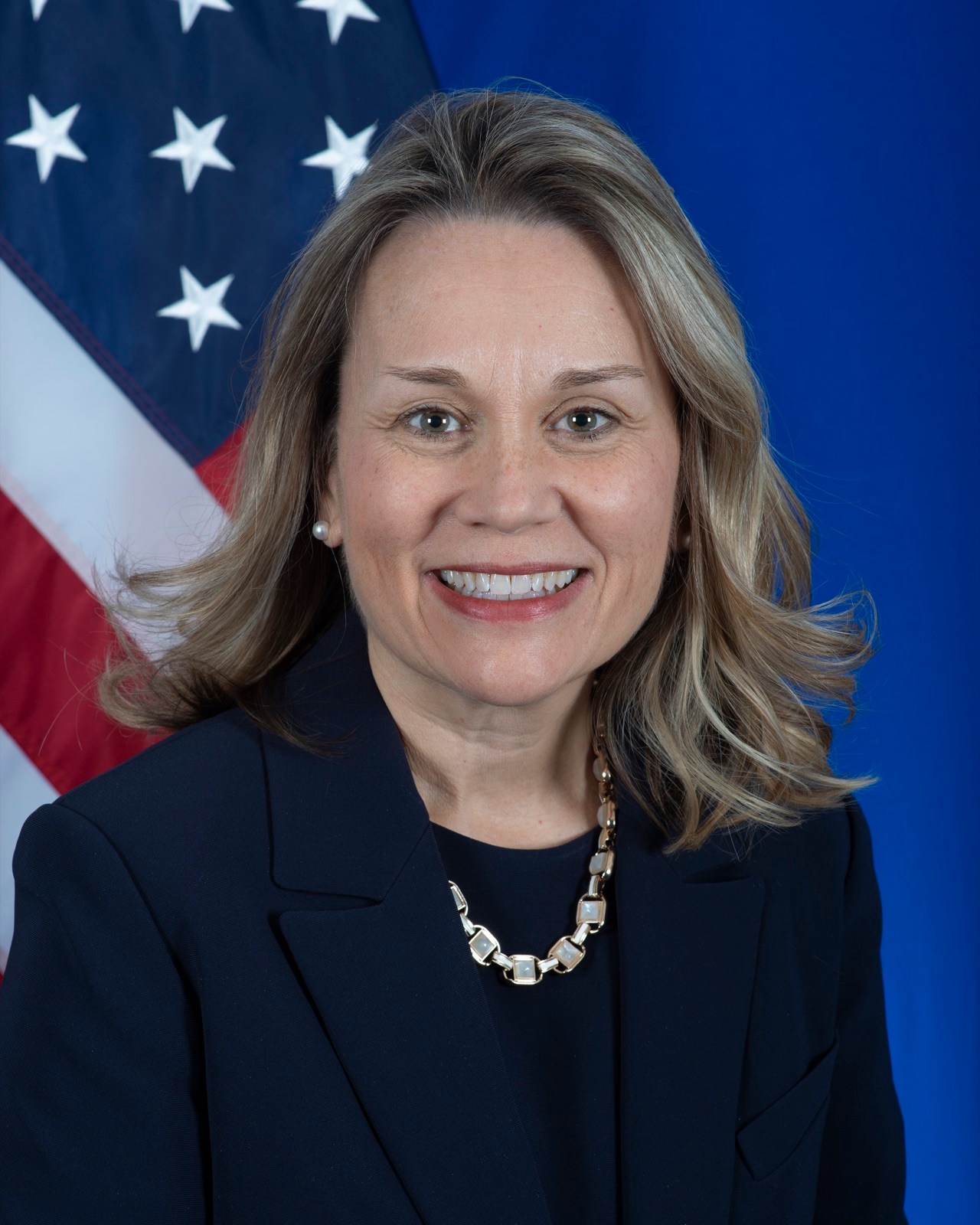
Julianne Smith
Julianne Smith is the United States Permanent Representative to NATO since the end of 2021, shortly before Russia invaded Ukraine, and discusses Ukraine's path to membership and NATO's strategy.
Episode Summary
Julianne Smith serves as the United States Permanent Representative to NATO—a role she assumed at the end of 2021, shortly before Russia invaded Ukraine in February 2022. Ambassador Smith sits down with One Decision's foreign correspondent Christina Ruffini and resident spymaster, former MI6 Chief Sir Richard Dearlove, for a discussion on what to expect at the NATO summit being held in Washington in July, which marks the 75th anniversary of the transatlantic military alliance. They discuss Ukraine's complicated path to membership, progress on Germany's stepped-up security commitments, and whether a second presidential term for Donald Trump will bolster member countries' defense spending. Plus, more on NATO's strategy to tackle global security challenges and counter Russia's influence with China.
Listen & Subscribe
- Watch on YouTube
- Listen on Apple Podcasts
- Listen on Spotify
Transcript
INTRODUCTION
Raffini: You're listening to One Decision, the podcast that looks at the choices that shape our lives. I'm today's guest host, foreign affairs correspondent, Christina Raffini. And I'm Richard Dearlove,
Dearlove: former chief of British intelligence, otherwise known as MI6.
Raffini: Each week, we explore some of the biggest choices and issues that have global impact. We hear from the key players and influencers making, informing, and shaping the decisions that affect all of us. Richard, it's great to be with you again. Okay, so this year's NATO Summit is going to be held in Washington. It's been seventy five years of the alliance, and the question on everyone's mind is Ukraine and Ukraine's path to membership and whether the alliance, which started with 12 members, could expand yet again to more than its current 32. Our guest today is US Ambassador to NATO, Julianne Smith. Ambassador Smith, thank you so much for joining us. You took this job in 2021. And then, of course, in February 2022, just days after President Zelensky spoke at the Munich Security Conference, Russia made action into Ukraine and everything started kicking off. So, you've had a busy stint in your time. But what has been the biggest change in dynamic for the alliance since you started and where are you now?
INTERVIEW
Smith: Well, I guess it depends how much time you have. In all honesty, I'm somebody that has been an observer of the NATO alliance for many, many years, and I've worked on NATO issues in and out of government for the better part of the last two decades. And so I felt like I understood what I was coming into when I arrived in the fall of 2021. But of course, none of us really knew for sure what would unfold in February 2022. But above and beyond the war itself and how allies have come together to support Ukraine in this moment and continue to support Ukraine, really, there's a whole long list of things that have happened inside this alliance over the last two years that truly take your breath away. From adding two new member states, Finland and Sweden, to rolling out new regional plans so that every member of the alliance knows exactly what they have to do and what they have to have in hand to defend every inch of NATO territory, to defense budgets, which are on the up and up. We started with three countries ten years ago spending 2% of GDP on defense. Now, by last count, we're gonna have somewhere around 20. And then a whole array of new policies across the alliance that tackle new challenges, things like cybersecurity, space, emerging and disruptive tech, disinformation, you name it. So it's not just about NATO's response and its support for Ukraine. It's about an internal transformation in real time that has enabled the alliance to broaden its toolkit and ready itself to enhance its deterrence and defense, which sits at the cornerstone of what this alliance is all about, but it's also about preparing for future threats. So it's really, I use the word transformation all the time, or transformative. It's been a transformative. Historic is another word, and it's not an exaggeration to use those two words. Truly for a NATO nerd like myself, people refer to me as the NATO nerd, and by any measure you look at what's happening inside the alliance right now and it has truly been breathtaking, the amount of change across the alliance. It's not the alliance that it was ten years ago and certainly by any measure it's not the alliance that was created seventy five years ago.
Dearlove: Ambassador, the big change for me personally looking from the UK and taking maybe a UK perspective was after the invasion of Ukraine when Scholz announced this massive increase in German defense expenditure, which, you know, was a huge political and psychological step for the country. What exactly has happened since Scholz said that? I mean it seems to me that because he's got quite a complex coalition government, the stated intention Germany hasn't yet been able to sort of implement what Scholz promised, but in your view is this making progress? Because, you know, Germany is so important and financially so powerful that this is a sort of step change in regard to the whole alliance.
Smith: Well you're right, it is a major step change for Germany, and when Scholz came out just a couple days after the war started, and we all watched with interest having him make the speech on what he calls the Zeitenwende, and he put €100,000,000,000 on the table for German defense policy. And I'm somebody that has spent quite a bit of time in Germany. I lived there on and off throughout the '90s and a little bit in the early 2000s. And if you had told me five years ago that Germany would be able to reach the 2% mark so quickly and would make such a shift in its policy, not just in terms of resourcing its own defense and its armed forces, but also in its national, traditionally, it had prohibited providing weapons to third parties. And so that was a policy shift for Germany as well to actually provide real security assistance to our friends in Ukraine. You are right to note that it has taken some time in Berlin to absorb this huge sum of resources and then determine how best to spend those resources. And it is a complicated coalition that has been delicate at times. So it has had its challenges. But I think after some initial delays and the proper internal debates that needed to occur, Germany has made significant new investments in its own defense. It is certainly modernizing its own forces. It's making investments that will pay dividends for the NATO alliance. But most importantly, it is providing leadership for other countries that frankly needed to get to the 2% mark and sometimes found it more comfortable to stand behind Berlin and say, well, look, the Germans really aren't at 2%. Certainly, you know, we won't be able to do that either. And now watching the speed with which Berlin has made this pivot has really opened up kind of a world of possibilities for other allies to take those tough decisions to do something similar. And we have seen that happen to move from just a couple of years ago, we had just about a third of the alliance hitting the 2% mark, and now fast forward to 2024, now we will have 20, 21, 22 allies hit the 2% mark. We'll know more in June when the burden sharing report comes out. I mean, that is just an increase that I think none of us could have imagined a couple of years ago. So I'm very complementary of the challenges that Chancellor Scholz has made. I think they are lasting. We're hearing important language coming out of the coalition that Germany will maintain this commitment. This is not a one off commitment of resources. And if Germany continues that kind of leadership, again, we will feel that here at NATO and across the alliance in terms of what resources are also at our disposal, what sets of forces, forces that have the right level of readiness and the right capabilities. So it was a moment and one that I think stopped many of us in our tracks when we heard it, and it's been fascinating to watch it all unfold in Berlin.
Raffini: But Ambassador, I have to ask you, how much do you think this step up in contribution is due to the reality of what's happening on the ground, fear of Russia? And how much of it do you think is due to the reality of US politics and the fear of the former and potential future President Trump and his take on NATO and contributions? He was hypercritical of countries who are not, he said, paying their fair share. And I covered Secretary Pompeo, and this was something he hammered on constantly, and they really pressured these countries to step up. And now the US Congress has passed this thing trying to insulate itself and the US from pulling out of NATO. If a president decides unilaterally they wanna pull out of the alliance, they can no longer do it without the approval of Congress. So I'm wondering how much of this step up from NATO members you think is contributable to Russia, and how much of it is you think it's contributable to a fear of another President Trump?
Smith: Well, I'd say a couple of things on that. First of all, really since the 1980s, US presidents of all political stripes have been telling Europeans that they need to invest more in their own national defense. It's a common theme. Every US president has had a slightly different approach. Obama was annoyed about it as well. You're right. It is a bipartisan issue. He was just slightly quieter about it. You're right, of course. Yes. So there's different styles. There's what you can message behind closed doors. You can use a megaphone, everybody has their favorite way to deliver the same message in essence. But don't forget, I mean, Obama put the Wales Pledge in action in 2014 and said, look, the alliance committed to everyone reaching a point in ten years, ten years from now in 2024 to hit the 2% mark. So this latest effort has been taking place over the part of a decade. So Obama started it. President Trump had his own approach. You're right. Very vocal, very critical. At times when he was campaigning in 2016, he had tied defense spending potentially to Article Five commitments that the US had to allies although they didn't really come into play when he was president. And then President Biden came in and kept driving forward. We've been very vocal here inside the alliance. So it's multiple things at once. It is the time that we have needed to push allies to make these changes over a period of ten years. And look, for most governments, it's not a light switch. You can't decide, okay, we're now going to spend 2% on defense because your finance minister and others will say, that's impossible. We can't make that kind of leap overnight. So number one is this has been a long term project. Number two is, yes, Russia is a big part of this. Russia's actions really since 2014, I would say, since they originally, you know, went into Crimea, was part of the threat assessment that is driving allies to make investments. And obviously, in the last two years, with the war in Ukraine that has even brought home the threat assessment even more and the need for all of us to ensure that we can defend the Eastern flank and protect every inch of NATO territory. In terms of US politics, I mean, I don't know what more I can say. Again, presidents have different styles and different ways of delivering the same message. But I think what I hear from allies is the message, while delivered differently, has been fundamentally consistent through those three US presidential administrations over the last ten years.
Dearlove: Ambassador, what's your strategy for dealing with the whole issue of the relationship with Ukraine going forward? I mean it's clearly crucial to the Ukrainians and when I was in Kyiv last summer, I mean this was the thing still on the forefront of their mind. I mean it's remained there, but obviously because of Article Five, you know, with a clear ongoing war with a border dispute, with the NATO, technically they can't join, but on the other hand it's essential that NATO has a specific sort of relationship with Ukraine going forward. What's your, as it were, suggested answer to this dilemma?
Smith: Well, you're right. It's extraordinarily complicated. The Ukrainians, for all the obvious reasons, are very interested in moving forward with membership as fast as humanly possible. Fortunately, it was a long time ago, in 2008, that the alliance made the commitment that Ukraine will become a member. That said, I think our messaging, particularly over the last two years, has been pretty clear in that, number one, we want to focus on getting the Ukrainians the assistance that they need to prevail on the battlefield and push Russia out of their territory. And number two, we want to continue working with the Ukrainians on a whole list of reforms that still need some attention. They have made some major strides forward on things like transparency, accountability. They've done some good work on anti corruption despite the fact that their country is in the middle of a full on land war. But there is a belief across the alliance that there's some more work that is required. And so what you're going to see us do, the summit's about six weeks away. All of the heads of state and government are going to be traveling to Washington, DC July nine through the eleventh. And the message there is that the alliance is building a bridge to membership for Ukraine. We're going to institutionalize some of the bilateral support that is currently being provided to Ukraine. We're going to continue to deepen the political relationship. We're working through the NATO Ukraine Council, which we rolled out last summer, and we're working on identifying additional resources and additional capabilities that we can give them as we work on things like interoperability, their future force, modernization. So there'll be a whole package of things that we're going to give the Ukrainians that will pull them closer to the alliance. And that is the, you know, what we call the well lit, very solid bridge to membership. There's no doubt across the alliance that they will become a member of the alliance. And frankly, I think sometimes folks view it as kind of a almost like a one way street, that this is about NATO assisting Ukraine. But in all honesty, the way we look at it here is that the Ukrainians have a lot to teach all of us. Who has better experience right now in combating Russian forces than our friends in Ukraine? Who has better experience in pairing technology with Soviet legacy equipment on the fly than the Ukrainians? And so we're also establishing kind of this joint center where we can sit and learn more from our friends in Ukraine once the smoke clears and understand what they've done on the battlefield, what NATO can take away from that, what Ukrainians will eventually bring into this alliance, first and foremost, as one of our closest partners and then as a member. So I don't anticipate Ukraine being issued a proper invitation at the summit this July. But I think what you will see are a number of very practical, very concrete steps that send an enduring message of support to our friends in Ukraine, but also importantly to Moscow. And so that President Putin understands that this alliance is not impatient. It's not distracted. We're not looking away. That we are going to maintain this support for Ukraine and keep building that bridge to membership.
Dearlove: The comment made to me in Kyiv was that looking ahead you won't be able to afford not to have us in NATO because of this experience that we've built up. And I think I absolutely agree with that point of view.
Raffini: Ambassador, it sounds to me like the rhetoric is moving more towards not if, but when Ukraine will become a member of NATO. Is that correct?
Smith: Yeah. And the language in 2008 was pretty clear. It said, you know, Ukraine will become a member of the alliance. And then what we did last year at the summit, because I think the Ukrainians were also looking for wording that would be very clear, there's a line in the summit communique that says Ukraine's future is in NATO. So we will do that again this year. I think if you look at the paragraph or two in the summit declaration that has yet to be negotiated, but my expectation is that there will be language in there that will provide additional clarity to anyone questioning about where the alliance stands on this, but also reassurance to our friends in Kyiv.
Raffini: Secretary Stoltenberg was in Kyiv not too long ago, a couple weeks ago, standing next to President Zelensky, and it was right after the US had approved that long delayed billions in military aid. And Stoltenberg was pretty frank about saying, you know, NATO members need to put their money where their mouth is. You know, promising aid, promising weapons is not enough. They have to deliver. And that's something Zelensky echoed. Were those remarks specifically aimed at the US? And how has it been in your position for the last six months having to say to our allies, to your counterparts, it's coming, we promise it's coming, and explain this delay that has seemingly had a big impact on the battlefield?
Smith: Well, we were thrilled to see Congress finally pass the supplemental, but it took a long time. And I think you've heard Secretary Blinken and Secretary Austin talk about this, the president, Jake Sullivan. I think there was some frustration on the part of the administration about the delay, time that Ukrainians don't have. And we wanted to ensure that we could get this assistance to Ukraine as soon as possible. And while we're thrilled that it got through, the delays certainly presented challenges for the Ukrainians on the battlefield. I don't think there's any question about that. Now, in terms of what was happening inside the alliance, obviously, allies were very eager to understand, well, when? When is it happening? Is it late December? Is it February? Would it be March? And, you know, we were swinging from one month to the next, trying to reassure them that we had the feeling that it was coming, but we couldn't say with certainty when that was going to happen. But what was very reassuring was to see a lot of Europeans say to themselves, a lot of European leaders, look, we can't hold our breath and wait for the supplemental. We have to do our part as well. And they have from day one. I mean, I think what a lot of folks don't necessarily appreciate is just how much Europeans have done for Ukraine over the last two years. Sometimes I get the impression that Americans believe that this is almost a unilateral endeavor, and it is so far from that. I mean, you guys both know that Secretary Austin convenes the UDCG, the Ukraine Defense Contact Group, every month, and it's 50 countries. It's not even just NATO allies. So this has been a collective effort. But what was most important was to see the Germans and others, you saw in the period from January to kind of present day, a lot of countries rolling out their own bilateral MOUs that came with real numbers attached to them. The UK, as you know, Sir Richard, made a multi year commitment. Not every nation was able to do that, but the United Kingdom put that offer on the table as part of their bilateral security assurance agreement and many others stepped forward. Germany announced billions of dollars of new assistance earlier this year. So it wasn't a situation where other countries were holding back. But I think what Stoltenberg was trying to highlight some weeks ago is we do have instances where countries pledge and it takes some time for that assistance to arrive in Ukraine, and I think he was urging all NATO member states but also those outside the alliance that are supporting Ukraine to ensure that when you pledge assistance, please do everything you can to make the timeline between the rhetoric and the delivery as short as possible. And he's been really terrific in getting out that message. I know he's directly engaged individual leaders, individual countries on that front. And I think it wasn't just a US, it was really a collective message for all of us. And he's right. He's absolutely right.
Dearlove: Ambassador, how long do you think it's gonna take to get sort of the Ukrainians back on the front foot again offensively? I mean, they now have all these promised supplies, but, of course, the logistics of getting that material into the front line and making it to have a military impact is quite complex. What's your reading of where we are in solving this problem?
Smith: Well, I think just on the supplemental, what I can say is we have pledged a whole array of different capabilities, various air defense assets, artillery, ammunition, you name it. The munitions did arrive very quickly. Those are now in country, and I think they're feeling the impact in real time of the supplemental getting through Congress. But to be fair, some of those other systems will take some time to arrive, and DOD is moving heaven and earth. I know Secretary Austin is focused on this like a laser, trying to move as rapidly as possible. And I know many other countries are doing the same thing. I mean, the good news is this is not the first few months of trying to move assistance into Ukraine. We now have more than two years of experience. Poland plays such an indispensable role in this regard, moving a lot of this assistance through Poland. So it is a system that has been tested and also fine tuned, and we've worked to make it as efficient as possible. So I think for some systems, it will take a little bit more time, some of the larger systems, but we recognize that certainly their biggest needs right now are air defense and ammunition, and that is the focus for every country providing security assistance. And I think when foreign ministers will be meeting in late May and then defense ministers will meet again here at NATO HQ in mid June, certainly, when ministers come together, that air defense piece will be front and center of the discussions that we have with the allies and with our friends in Ukraine.
Raffini: We've talked a lot about how NATO is working together, which, you know, I've covered this for a while objectively. It seems to be working together fairly on the same page the last couple of years. But I'm curious if at the summit this summer or in any of your discussions, if there's any talk of putting in some sort of a mechanism, because my understanding, there is no way to currently remove a member of the alliance. Is that correct? Correct. So when you get into these issues, like for example, when Turkey was purchasing S-400 from Russia or with Orbán in Hungary, there have been calls to eject nations from NATO, but there's no mechanism by which to do that. Is there any kind of serious discussion about trying to find ways to hold members of the alliance to democratic ideals or to the larger objectives of the alliance? Or are you just going to go ahead with the system you got and try to make it work?
Smith: Well, there's no eject seat, either for someone that wanted to eject themselves or for others to eject someone else. That's not how the alliance operates. Both of you know so well how things work around here. I mean, it is an organization that operates by consensus. And as the alliance has grown over seventy five years from its original 12 founding members to now 32, almost triple the original membership, of course, it takes more time to sit and reach consensus on certain sensitive matters. But here's the good news. I mean, we've been at this now for seventy five years, and that means when a hand goes up or a collection of hands go up around the table, we can handle it. We know how to take on our differences. We're familiar, deeply familiar with our own national views and positions, histories, geographies that all come into play. But I think what I encounter a lot when I talk to folks is people say, well, this consensus rule is a bit of a liability, and I don't look at the consensus requirement as a liability. It's an asset in some ways. I mean, of course, it's difficult, and it can take weeks or months sometimes to reach consensus, but the power of actually achieving consensus can be a real asset, which is why Russia does its very best to try and divide us and break up the alliance and split off a member here and there. Why? Because it's so much more powerful when 32 countries sit around a table and issue a joint statement or roll out a new policy or take a position to support Ukraine than having five of us do it together. So it can be difficult. I mean, just put together 32 of your favorite friends and pick a restaurant for dinner. That's pretty challenging. Even with my family of four, it's difficult to pick a restaurant. So the point here is, yes, sometimes you have to roll up your sleeves. Sometimes you have to walk away and say, we'll try tomorrow. It's not working today. And try a different tactic and work out in small groups or try and split the room in half. I mean, there are all sorts of tactics we use to try and get at the concern that Ally X is raising or if they're rejecting a new policy or opposing it. And I mean, we really have some world class negotiators around here. And I think it speaks to the skill set of those serving in the different missions here at NATO. And actually, it speaks to the secretary general as well. I will say we're closing out on a ten year tenure for Jens Stoltenberg, who has just done an amazing job in bridging consensus during one of the most contentious, difficult periods in NATO's history. This war has been enormously challenging for lots of reasons, but the leadership provided from him at the head of the table has also been really something to watch, and we're gonna miss him.
Dearlove: Ambassador, France's relationship with NATO and let's say with Russia as well has always been sui generis. They've always followed, I wouldn't say an independent path, but an idiosyncratic one I think would be true. What's been the impact of Macron's rather extraordinary statements recently about Ukraine? He sort of shifted his ground very, very significantly on Ukraine from having been an interlocutor with Putin to being now one of Putin's severest critics. And you know, we're left, I think, rather surprised by the position that Macron appears to have taken over the last month to six weeks.
Smith: Well, I would say on that front, there's been a lot of change across the alliance, and it's not just France. I think we have had a debate across the NATO alliance pretty much since the end of the Soviet Union about how to posture the alliance to deal with Russia. We have had members of the alliance much more interested in dialogue than anything else, and we have members of the alliance that have been much more interested in deterrence, front and center and nothing more, nothing less. And so I think the pivot for all of us, France included, came in the summer of 2022 when it was time for the alliance to rewrite what's called the strategic concept. I know most of your listeners probably know what that is, but for anyone listening who's not familiar, it's kind of NATO's mission statement. We review it about once a decade. So we had to put pen to paper, and in that moment, just months after Russia went into Ukraine, figure out what our position on Russia would be. And really, for the first time, we described Russia as a threat and we parked the dialogue piece. Of course deterrence remains front and center to everything that we do here. But the way in which on Russia in the new strategic concept in 2022, and look at many prior strategic concepts, you see a pretty significant shift that I think shows unity around the alliance in how we look at Russia. Still, despite that, despite the unity around those few paragraphs, there are still occasionally differences across the alliance on how to handle Russia in any given moment. It has been interesting to watch President Macron come out so forward leaning on the prospect or the possibility of sending his own troops into Ukraine. He hasn't taken that decision, but it's an idea that's been floated. You've heard loud and clear that that's not something that the US would do. Our choice is to not send troops into Ukraine. France will have to make its own sovereign decision. But I will say France's leadership in supporting Ukraine, trying to generate more support for Ukraine, shaking the trees, trying to find more long range fires, air defense, armor, you name it, we're all applauding those efforts. So we may disagree on a point here and there, and he'll have to determine whether or not France will take any sort of active role inside Ukraine. But broadly across the alliance, it does feel like there's been a shift around that caricature of NATO's relationship as outlined in the strategic concept and one where there's much more unity around the table on what we need to be doing about it. But I'd be curious in both of your views, I mean, you're both deeply familiar with these debates and always interested in how you look at it as well.
Dearlove: Yeah, I think in the case of France, it may be driven to an extent by Macron's concern about internal politics and some of the challenges he's facing. But it's been I think quite a surprise watching him make such a clear statement of, you know, putting boots on the ground when clearly the Russians, I think, you know, we all are worried about the extent to which the Russians see that as a sort of provocative step, a point of escalation. I think, you know, we all understand that there are very significant commitments made to the Ukrainians, which may not represent boots on the ground, but it certainly represents significant help that's being given to the Ukrainians in many different ways. Maybe it's not sensible to be specific about that. I'm not clear in my own mind what the French have done hitherto other than, you know, Macron making these rather aggressive statements. Ambassador, the other aspect of the conflict in Ukraine is of course the support that Russia is getting from China and North Korea, which in a way inevitably broadens NATO's strategic horizons because it has to think very carefully about the role that those two countries are playing, the Chinese in particular. How is this sort of impacting on NATO's, you know, perception of its role in global security?
Smith: I'm so glad you asked this, but there's a lot to unpack here. Let me start by saying, in terms of the changes that have happened here in the alliance, one of the most fascinating changes for a NATO nerd like myself, again, has been to watch the NATO alliance for the first time, coming back to that strategic concept that was rolled out in 2022. For the first time in NATO's history, NATO inserted the words the PRC, China, and the Indo-Pacific into that strategic document. Why? Because of what the PRC is doing in and around the Euro-Atlantic area. It's deepening no limits partnership with Russia. It's now political support and now the dual use components that are flowing from the PRC to Russia to help Russia pursue this war of aggression. So that's wrapped into part of it. But also, the disinformation campaigns, the economic coercion, malicious cyberattacks, the ways in which the PRC is trying to undermine the rules based order, divide the alliance or divide Europe from the United States and its support to Russia in this war in Ukraine, all of that has brought the Indo-Pacific through the front door of the NATO alliance in ways that many of us never imagined would have unfolded, again, say ten years ago or something. So yes, we are spending a lot more time in the alliance talking about the PRC, not because the alliance has aspirations or some ambition to expand into the Indo-Pacific, but because so many of the challenges that we're grappling with today, whether it's cyber, whether it's space, whether it's disinformation, those don't have any geographic boundaries whatsoever. It's a global challenge, and it's a toolkit that is being used by a wide array of actors, whether that's the PRC, Russia, or Iran, or the DPRK. So what you're gonna see at the summit this summer is actually our four Indo-Pacific partners. NATO has four partners. They're not interested in membership, strong partners to the alliance in the Indo-Pacific, and they're gonna be present at the summit, Australia, New Zealand, Japan, and South Korea. Why are they coming to the summit? Because they too find value in trading best practices and insights with the alliance on those challenges that I just ticked through. I would add maritime security, I would add climate security, women peace and security, emerging and disruptive technology. There's so many ways in which we all benefit when they come into the halls of the alliance and sit at the table with us. So this isn't about, I know sometimes it's misinterpreted, it's not about turning NATO into a global alliance. Not at all. It's about strengthening our collective toolkit to cope with especially some of the hybrid tactics that these actors are using. And again, thinking about what we can learn from our friends in the Indo-Pacific or other corners of the world as they grapple with the same challenges. So this is a really interesting development at NATO. If you had told me again a couple of years ago, I'd be talking to you in 2024 about NATO's relationship with countries in the Indo-Pacific, I might have, you know, raised a few eyebrows there and squinted at you. But this is the reality. This is what we're doing every day inside the alliance and cooperating more and more with these countries in the Indo-Pacific on some of these shared challenges.
Raffini: The first secretary general of NATO famously said the goal of the alliance was to keep Germany down, Russia out, and the US in. I'm wondering as you come up on the seventy fifth anniversary of this alliance based on what Sir Richard just asked you and all the things we've just talked about. If you had to summarize the alliance in one kind of sentence, how would you do it? Can you do it?
Smith: Yeah. So there's kind of two ways that I would talk about it if I had just a couple of words. So we have the standard tagline, which is stronger together. But that's the official one. I want the snippy backdoor diplomatic one that we're all gonna be talking about. I don't know if I could deliver on the snippy, catchy phrase. But look, let me say this. When we talk to a lot of the next generation, younger audiences that might not be familiar with why the alliance was created, if they are, they're asking the question, why should it still be around? It feels a little rusty and creaky, and is it outdated? And I think there it's pretty simple. The alliance is defending the future. And that's the tagline that you will hear a lot around the summit. We are an alliance that was created to deal with tanks rolling across borders and conventional military threats. We are still a military alliance, but the breaking news is this is an alliance that thinks about new domains, space and cyber, but it also thinks about climate and tech and AI. So helping the next generation understand that, this isn't your father's Oldsmobile, as Americans like to say. This is a new alliance. It is still a conventional military alliance, without a doubt, that focuses on deterrence and defense. But it is also an alliance ready to defend the future, and we have to get that message out about the alliance's adaptability, its resilience, and how relevant it is to the next generation. I hope that helps. I don't know. It's still too wordy, but we're working on it.
Raffini: Thank you so much. We really appreciate you joining us.
Smith: Well, thank you so much, and really appreciate the chance to sit down with both of you. It was a pleasure.
ANALYSIS WITH SIR RICHARD DEARLOVE
Raffini: Sir Richard, I really enjoyed our conversation with Ambassador Smith. I'm curious, what were your biggest takeaways from what she had to say?
Dearlove: You know, we asked her some challenging questions, and she is a diplomat, so she has to be a little careful how she answers them, but I thought she answered them with clarity and I thought she answered them with insight and honesty as well, because, you know, the question about Macron is quite tough if you're the American ambassador, you're not going to be hyper critical, but on the other hand you're going to point out, you know, why France has its particularities and its peculiarities. And I think, you know, the issue about Scholz, Germany, their defense expenditure, it was just terrific. And I think her final answer, you know, that this is an alliance for the future is absolutely spot on. And of course the other point she dealt with, I thought brilliantly, was to explain the dilemma of Ukraine's membership and how that isn't easily solved. But of course there is this now massive long term commitment to Ukrainian membership, but it is essentially long term. I mean the irony is if you'd ask people like me before February 2022 should Ukraine join NATO, I would have said no way. Why? Because it's a hinge between the East and the West, and because it would have been a step too far for Russia. But of course all of that's changed because of the way that Putin has reacted and sort of taken matters into Russia's own hands. I mean the irony is it's got exactly the opposite result than Putin intended when he set out on this path because Ukraine could have remained a country that stood between the East and the West, which has been its historical position. But I think now one has to conclude as a result of this war that its future lies with the EU, it lies with NATO, it lies with an alliance with the West.
Raffini: And of course, it's exactly what Putin was trying to stop. The other thing she talked about a little bit, but again, she's a diplomat, so she couldn't get into too much, is I do wonder how much of this sudden impetus we're seeing from Europeans to step up and pay for their own national security has to do not just with Ukraine, not just with political whiplash in the White House, but whether or not these countries feel that the US is a reliable ally and will truly be there for them if needed.
Dearlove: Yeah. Well, I think if you look at the recent history of Eastern Europe, they prefer to call it Central Europe. Of course. My mistake. The logic is that history has told them to fear Russia and Russia's predatory policies. And I mean I think what's extraordinary now is that Poland I think is spending 3.8% on defense or something in that region and is talking about spending even more and will probably, other than Ukraine, have the largest military in Europe very soon, larger than Germany, although the Germans I think will catch up if they spend the money that they said they're going to spend. But you know I lived and served behind the Iron Curtain in Czechoslovakia, so I have a very sort of graphic memory in my own experience of what that was like and how difficult life was for these countries when they were within the Russian orbit and how, you know, the domination of communist rule and the atmosphere and yet you were living in part of the former Habsburg empire. And the nature of those countries is that historically they've always looked to the West rather than the East, but they've had to contend with a very predatory Russia historically, going back many many centuries. So in a way, this is hugely significant historically, the way this is playing out at the moment.
Raffini: That's it for this week's episode of One Decision. We drop new episodes every Thursday. Like and subscribe so you never miss an episode. Drop us a line, tell us your thoughts, what decisions have impacted you where you live. You can write to us. Our email is onedecision@onedecisionpodcast.com. From me and the whole team, thank you for listening, and see you next time.