Episode Info
- Season21
- Episode2
Hosted by Christina Ruffini and Sir Richard Dearlove
Guest
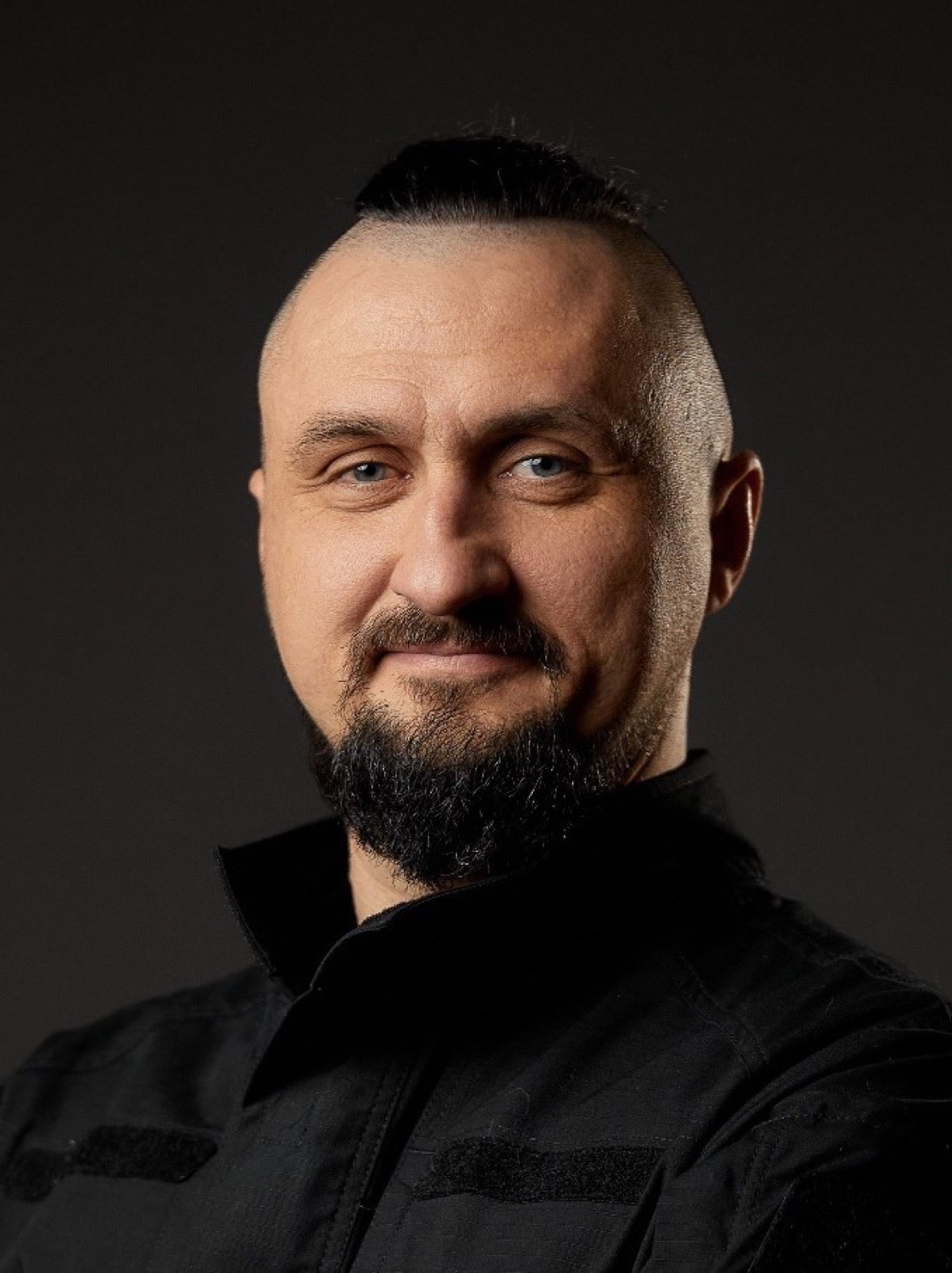
Alexander Kamyshin
Alexander Kamyshin is in charge of arming Ukraine's defense industries and gathering military hardware from allies to sustain the country's defense against Russian invasion. Alexander Kamyshin previously led Ukrainian railways and kept the country's train network running punctually during the early days of the war.
Episode Summary
Alexander Kamyshin is in charge of arming Ukraine's defense industries, and gathering military hardware from allies to sustain the country's defense against a Russian invasion. This week he is in the American capital meeting with lawmakers and business leaders alongside his Defense Minister Rustem Umerov and President Volodymyr Zelensky. He was the guy who led Ukrainian railways and went viral for his success at keeping the country's train network running punctually during the early days of the war. He managed to not only deliver millions of Ukrainians safely, but also transport the leaders of the free world in and out of Kyiv. One Decision's Sir Richard Dearlove met Kamyshin in Ukraine earlier this year and joins with his thoughts on the logistical leader’s efforts and the state of his supply chain.
Listen & Subscribe
- Watch on YouTube
- Listen on Apple Podcasts
- Listen on Spotify
Transcript
INTRODUCTION
Mcfarlane: You're listening to One Decision. I'm your host, Julia McFarlane. And I'm Richard Dearlove, former chief of British intelligence, otherwise known as MI6. Together, Richard and I look at the key strategic choices and decisions that have global impact. We hear from the key decision makers, players, experts, how they arrive at the choices they face, and how they impact us all. This week, a delegation from Ukraine is in Washington DC, talking to lawmakers and business leaders as part of their ongoing campaign to help drum up support for Ukraine in the fight against Russia. It's a particularly important time as Congress is currently arguing over a vast spending bill that involves more than $60,000,000,000 of aid for Ukraine. Republicans are refusing to pass this bill unless Democrats tack on new restrictions and spending over its southern border with Mexico. Both sides seem unlikely to come to an agreement before the Christmas holidays, which could mean very bad news for Ukraine. We're now almost two years into this full scale invasion launched by Vladimir Putin, that anniversary, of course, coming up on the 24th of February 2024. There have been some key victories for Ukraine and some important losses. But perhaps most crucially now, what is to all intents and purposes, a bitter stalemate in which Russia may end up having the edge with time very much on Vladimir Putin's side. You may remember Alexander Kamyshin. He is the man behind the incredible success of the Ukrainian railways, a network that ran almost entirely to schedule despite Russian aerial bombardment, influxes of mass migration, and complex and sophisticated supply lines of crucial humanitarian and military supplies from all across Europe. He famously apologized earlier this year for delaying some of his trains to give way to Rail Force One as Biden made his way on train tracks to the Ukrainian capital of Kyiv ahead of the one year anniversary. Only 90% of our trains arrived on time yesterday, he tweeted. I apologize. Well, for those of us who are Brits, where it feels like 90% of our trains are either delayed or canceled, we may remember that statement with rather painful jealousy. Alexander is now no longer in that post of running Ukraine's rail, but now he's running a new government department, Strategic Industries. Put simply, he is now Ukraine's procurement manager in chief. He's been tasked with the daunting challenge of getting Ukraine what it needs to fight the war against Russia. Richard, you actually met Alexander Kamyshin before when you were in Kyiv earlier this year. So I'm keen to hear your assessment of how he's been doing and where we are in terms of Ukraine's stockpiles and the military and military aid it's managing to get.
Dearlove: Well, the meeting with him was memorable. He is really quite a charismatic figure. And we spent a couple of hours with him in late May. What was quite striking was he walks into the room and he's in black jeans or a black t-shirt. Well, had a ponytail then, I don't know, but he's still got it. Never judge a book by its cover, Richard. I don't know if he has a completely unexpected appearance. Was phenomenal, absolutely phenomenal. Of course, he had just made his reputation in the early stages of the Russian invasion after February, because he kept the railways running. And not only did he keep them running, I mean, you know, the great story about him is he apologized to Zelenskyy because one of the trains to Kharkiv was seven minutes late. And, you know, as we traveled in and out of Kyiv by train from Poland, I was, you know, it was just so impressive how efficient, clean the railways were, how everything was working smoothly, you know, despite the fact this was a country at war, you were traveling in a blacked out train overnight. And he'd just been shifted from this position running the railways to being responsible for strategic defense industries. And in effect, basically, he was being put in charge of all of the supply of armaments to the Ukrainian military. So an absolutely key position. And I think one could understand very quickly why this is a man of phenomenal energy, but phenomenal clarity of mind. And he obviously is a superbly gifted administrator and organizer. I would imagine that's his sort of strong point. And he doesn't waste his breath talking about, let's say, marginal issues. He has an intensity of focus which is quite gripping when you're in conversation with him. I hope listeners will get an idea from my description of the sort of impact he makes. I'm not someone who's particularly easily bowled over by people. He certainly was one of the most impressive people in that sort of situation that I've met in a very long time.
Mcfarlane: That's so interesting to hear. And I think it's so fascinating. You point out that on first impressions, he didn't look as you might have expected of a very, very senior government official, but perhaps that's one thing the Ukrainians are doing so well is that they are thinking outside of the box. They are doing things unexpectedly. And the way Ukraine has shifted in terms of using tech and how it's adapting to changing conditions on the battlefield, they've been doing some really interesting and ingenious things. Let's hear from the minister Alexander Kamyshin himself.
INTERVIEW
Mcfarlane: Minister Alexander Kamyshin, welcome to One Decision. It is so great to have you on the programme. You're obviously talking to us in Washington, and it is a pivotal week for Ukraine because of course the United States are trying to work out if they are going to be able to pass this bill, which has this huge aid package for Ukraine, aid that is desperately needed by your country. I want to ask you about the new job that you have, your efforts to try and procure the weapons that Ukraine needs, and what the mood is like, not just among your government and your colleagues, but also back home. But first of all, do tell me how you have found this trip. Have you received assurances from American lawmakers that support for your country is still strong? President Zelenskyy, he has repeatedly tried to make the case that Ukrainians don't just want charity. They don't just want donations from the West. They want partnership. They're presenting this as an opportunity for investment, as you say. But also it sounds like the more Ukraine embeds its defense industries, its companies, its military hardware with the West, the easier it is to accede into NATO and to share some of that risk. Right?
Kamyshin: That's true. We are here to promote opportunities in the defense industry from US companies in Ukraine. And these opportunities can help US defense industry to ramp up production capabilities. Because, again, in Ukraine, we grew three times this year comparing to prior year, and our capabilities for the next year are all of the six times higher. No single nation can withstand in this war stand alone because, again, that's the largest war for generations.
Mcfarlane: That's something I've heard you talk about a lot recently, how Ukraine has managed to ramp up its own production of military hardware since last year. It's been a huge increase. Obviously, it's not enough. Do you think you will be in a position to obviously not be able to withstand the Russian onslaught without support from the US, which is of course incredibly vital. A lot of your production now has been moved overseas because of course Ukraine is being absolutely hammered by the Russians. But given that the Russians themselves have also dramatically increased their own production, can you give us any kind of sense of your progress in that? And perhaps then give us an idea of how much you depend still on a lot of help from your partners.
Kamyshin: Julia, again, Russians never stopped their defense industry in the last twenty years. And we just start the growth of the industry and bringing it back to life, actually. For instance, in 2021, we produced just zero ammunition, and we are working hard on bringing that production back to some decent levels. But, again, all free world together can cover that need with its production capabilities for one year. So that's why we are still dependent on the help. And, again, our capabilities for the next year are already higher than the funding capabilities in Ukraine. So we really waited for that help, and that would be really important for us.
Mcfarlane: My colleague, Sir Richard Dearlove, was in Ukraine earlier this year. He met you and many of your ministerial colleagues back on his trip to Kyiv. And back then, and this was sort of late spring, early summer when he made the trip, he received the message from your government that ammunition and particularly shells were top of the wish list. The number of rounds that Ukraine is burning through every month is huge, has been dwindling in most months. There was a big, big, big push by the Ukrainian government appealing to Europe and to America to send more ammunition, more shells, and particularly those 155 NATO standard shells for use against the Russians. That was communicated as a really critical need for you. How are you doing on your stocks of shells, and at what point do you run out?
Kamyshin: We don't discuss exact numbers. I just would say that in artillery shells, in about 155, that's something we never produced in Ukraine before. And that's something we are highly dependent on the supply of critical things like charges, like explosives and propellants, and that's where we face the same issues with supply chain as the whole world. So we are negotiating that things now as well because, again, without that things, we can't produce rounds. And speaking about all the other things, we understand the priority of ammunition. And, again, no matter how much we grow, it's never enough.
Mcfarlane: You said on an interview recently with Christiane Amanpour that you were working on joint production of ammunitions, particularly those very critical 155 millimeter shells in Ukraine and neighboring countries. I don't know if you're able to talk about which neighboring countries you are doing that joint production with. Are you able to talk to us about that manufacturing and how the process is going?
Kamyshin: Julia, we consider a number of neighbor countries at this point. Again, this discussion will take some time. And finally, we will be able to start that production in few years.
Mcfarlane: Of course. I mean, the scale of the challenge is hugely daunting. And, I mean, all kudos to the Ukrainians for thinking outside of the box and the ingenuity that has been involved in this almost two years. Crazy to think how time has been passing. While you have been in Washington, while you've been overseas with your defense minister, with President Zelenskyy and his top advisor, your home country has come under increased attack by the Russians. A really, really heavy bombardment of the capital city of other parts of Ukraine. The Russians are clearly trying to send a message here. Your military chief recently described the situation on the ground as a stalemate. That caused a bit of friction with your president. Does your defense minister have a point? And have you had tough questions from your friends and allies in the US over the state of the counter offensive this year, which a lot of people say really failed to make the ground that it was hoped, although there are of course a lot of reasons for that. Not least of all, Ukraine not receiving as much military aid as it had hoped, and also perhaps unrealistic expectations on the part of the West.
Kamyshin: Julia, indeed, I am speaking often with our brave warriors from the frontline, but I am always focusing on the weapon and ammunition they use, on their experience, on their feedback, and that's where I'm focusing on. And I would tell that in our production, in our research and development, there is no any sign of stalemate. So we constantly focus on growing their capabilities and making those things that fire Russians better. So in my industry, it's working well.
Mcfarlane: Can you talk to us about some of the conversations that you've had with the US defense industry? Are you able to talk to us about who you might be working with? Is there anything you can announce to us? Are you talking to, I don't know, companies like Raytheon or Lockheed Martin? Who is it that you have had fruitful conversations with?
Kamyshin: Yesterday, I've got a meeting with my president and US defense industry. We got 10 major companies coming from ammunition and air defense mainly, including those you've already mentioned. And we got strong, highest level of presence and strong interest. And my president reassured them that we are focusing on developing joint defense industry capabilities, working together on building the arsenal of the free world. So these discussions are fruitful. We've got a number of homework to do, and that's where we'll focus.
Mcfarlane: Can you talk to me about air defenses? That's another thing that is very high on your list. It will be some time before the Ukrainians and the much desired F-16s and modern aircraft will be operational. But can you talk to me about any news that you may have on the procurement of air defenses, which are obviously so needed right now, particularly at a time when it's difficult for you to advance, given how the Russians have mined and booby trapped swathes of area on the front lines. The air defenses have been really, really important. Have you been able to make any headway on that?
Kamyshin: Julia, we focused on the number of projects where we make what we call do it yourself air defense, so kind of collaborations or creativity solutions that give us quick wins and give us fast solutions. Part of that is, again, is FrankenSAM portfolio of projects which we do with US defense industry, but we got a number of projects like that we do locally on the ground. So this kind of solutions, all of this started working on the ground, and we'll get more to the battlefield in the nearest months. So that's our primary focus these days. Meanwhile, we are speaking with US defense industry on the long term joint solutions.
Mcfarlane: It's interesting how you are referring a lot to projects. You're thinking the medium to long term, as well as Ukraine's very immediate battle needs. It's really interesting watching how this war has unfolded and how both sides have increasingly used tech, particularly because of fast turnarounds and the use of drones by both sides has also been really, really critical. Are you able to increase your use of drones and also given how the Russians have been doing the same, what can you do to mitigate that? Are there sort of electronic jamming devices that you are asking for that you're working on? Given that this is quite a new emerging sort of battlefield tactic on both sides, how is Ukraine responding to that challenge?
Kamyshin: Julia, we grew our defense tech capabilities significantly. And from next year, you can buy half million smaller FPV drones as cheap as $200 apiece. You can buy thousands of those things that fly midrange, like five to 700 kilometers, or over a thousand of those that fly over 1,000 kilometers. So finally, our capabilities are already there. We face scarce funding issues these days, but I'm sure we will solve them and we'll get the solution, and those drones will get to the battlefield.
Mcfarlane: And where are you sourcing them from? The Russians are getting huge numbers of cheap Chinese drones. Obviously, you have those incredible Bayraktar drones from Turkey, but those aren't the only ones you're using. And how exactly have they been a game changer for you? What kind of things can you do with them on the battlefield?
Kamyshin: I would say that the major part of drones are produced locally. So there are only several positions we still import, and we've got some great solutions. And I'm sure that lessons learned from our defense tech capabilities will be important for our strategic partners as well.
Mcfarlane: Obviously, you gained worldwide respect at the start of the war for doing an insanely good job at keeping Ukraine's railways going. I'm sure every British person you have ever met has asked you to run our railway network. If you ever fancy a break from the Ukrainian war or when the war is over, it's quite embarrassing for us really. When you moved to your position in government minister for strategic industries, what did you take with you from your successes in keeping those vital arteries open? The railways that carried not only refugees and people across Ukraine whilst it was being bombarded, but also military equipment, humanitarian supplies. I mean, a truly incredible feat. How have you brought what you learned in that challenge and the successes you brought to what you're doing now in trying to secure what Ukraine needs to keep the battle going?
Kamyshin: Actually, ironness. That's something I brought from the railways to defense industry because, again, we've showed the whole world that railways is about iron people. And I can tell you the defense industry, it's also about iron people. And it's also got its iron people that work under shelling, that work day and night, that work hard to give iron things to our warriors at the battlefield to make Russians out. So that's the main thing I brought from the railways and the desire to win as well.
Mcfarlane: You've talked about a lot of your domestic production, how a lot of stuff is being made in Ukraine. It's not all been outsourced overseas, even if a lot of your defense industry has moved overseas. How worried are you about Russian attacks on your infrastructure over the winter period? We saw Russia doing that a lot last winter. Obviously you need to keep the grid on, you need to keep the lights and the electricity on to feed those factories, which are working on churning out a lot of this equipment that you desperately need. How concerned are you about potential attacks onto your infrastructure? And is that something that you anticipate Russia will be doing in the coming weeks?
Kamyshin: Julia, they never stopped actually. And indeed, we are dependent on the critical infrastructure we have in the country, like electricity grid and so on. But, again, they shell not only defense industry. They shell railways. They shell civilian buildings. They shell schools, hospitals. And somehow, we found a way how we can live with that for, again, a lot of the 657 days. So we are ready for this winter. We are ready to live through.
Mcfarlane: Minister, thank you so much for your time. It was really a pleasure to speak to you.
ANALYSIS WITH SIR RICHARD DEARLOVE
Mcfarlane: So Richard, I thought that was a really fascinating conversation with Alexander Kamyshin. And I remember you telling me when you had just got back from your trip to Kyiv, where you had had face to face sit downs with some pretty important people in the Zelensky administration. And one of the key things that had been communicated to you and you passed on in our podcast was the need for ammunitions, shells, shells, shells. I mean, that was back in sort of the spring, early summer. They were saying that there was a dire need of shells, particularly those 155 millimeter sort of NATO ready shells. The Ukrainians, their prayers weren't exactly answered, were they? They haven't received the shipments that they so desperately needed, that they were ringing the alarm bells all the way back in spring.
Dearlove: Yeah, well, I think ammunition has been a particular problem, mainly because the NATO inventories were not very full, and therefore, you know, people's storage was run down. So when it came to NATO caliber ammunition, there wasn't a lot of it around. And then the problem with the material that the Ukrainians already had is the old Warsaw Pact, different caliber shells, it's the difference between 150 and 155 millimeters. And there aren't many places left in the world except Bulgaria and one or two others, which continue to manufacture the old Warsaw Pact caliber. So they've had difficulties in both directions. And one of the characteristics of the war, well, early on and continuing, has been the massive exchanges of artillery and the number of shells expended in both directions, more by the Russians but also significant quantities by the Ukrainians. Just keeping up with supply has been hugely tricky. And I think that that's a problem that's not easily solved. They're talking about setting up new manufacturing hubs, but of course to set up something to manufacture artillery shells you can't do it overnight. I think it takes eighteen months to get a new factory up and running. So it's not a problem easily solved. And of course the other problem that Ukrainians have is security, so it's better for them to manufacture outside Ukraine where the factories are not strategic targets or can't be strategic targets. So I know that they had reached a deal with the Slovakians, but in the light of what's happened in the Slovakian election, I'm not sure what the position is on that now. And I mean, Bulgaria has been very important. And there's been recent reporting from the Bulgarians of Russians running disruption operations quite extensively across Bulgaria to frustrate the supply of defense material.
Mcfarlane: Right. I mean, Alexander really wasn't wanting to be drawn on some of the political machinations at work. He wanted to stay very much on message. He did say after we ended the interview that, you know, he comes from a background of doing things, of actually putting stuff together and getting things done. Politics is kind of a different game. And it was clear that he perhaps, not that he's not comfortable, but he prefers being in the sphere where things can get done rather than just talked about. But there is a lot of political machinations going around. And, you know, I wondered what you thought of the fact that Donald Tusk is now in charge in Poland, whether you think perhaps if the Slovakians maybe take their foot off the gas, as the Americans would say, with regards to getting really involved in helping Ukraine in its military procurement? Do you think maybe the Poles might step up?
Dearlove: Well, Poland is crucial. And the previous Polish government agreed a massive increase in the Polish defense budget. And the Poles will be, if they carry out their expenditure plans, one of the largest militaries in Europe. And of course they're sitting very close to what they consider the front line in Ukraine. So there's no question that the Poles are going to play a big role. But I remember when I was in Poland last, this was on my way back from Ukraine, we met some quite key Polish people privately. It wasn't part of the organized visit. But I had dinner with a couple who were very well connected. They said the Polish problem is, you know, politically they can take the decisions, but they have big problems also of implementation. So getting stuff done quickly in Poland is not straightforward. They haven't got the economy yet quite geared up to that pace. But I think Poland will be, perhaps in European terms, apart from the UK, Kyiv's crucial ally. And obviously there are huge historic links, particularly between Northern Ukraine and Poland anyway. So that linkage is natural. The big problem in Poland is quite, you know, taking political decisions is relatively straightforward, and they do have a transformed economy. But implementation of strategic decisions takes time. And you can write it down on paper and say, wow, look what the Poles are doing. But the reality is it isn't done with a flick of the fingers. It's going to take a considerable amount of time for Poland to build up its defense capability in the way that it's announced. And I don't think that will change under Tusk. I mean, they will be the biggest, I think, spenders in terms of percentage of GDP within NATO over the next three to four years.
Mcfarlane: I mean, what do you think is going to happen in the months ahead? Because what we have seen, particularly in the couple of months, is that all of the coffers, all of the stockpiles of things like shells, ammunitions, other heavy weapons that have been sent to Ukraine, all the stocks in Europe are being depleted. Even the Americans, their stocks are being depleted. There are national security concerns among Western nations who want to support Ukraine, but who don't want to leave their own nations divided. Given that we are at a stage of the fight where we are entering the bitter cold winter, we've already seen frustrations emerging even among Zelensky's cabinet, his defence minister describing it as a stalemate and Zelensky getting very angry at him for doing so. I mean, Richard, are European countries in denial? Are they doing enough to replenish their stocks? Obviously, these things have a really long lead time. What can we do? Because if things carry on, Ukraine's going to run out of things to shoot the Russians and the Russians are just going to win.
Dearlove: I suppose if you put it that boldly, yes, that is the risk. Russia has quantity and strength and depth. Ukraine has quality if it's sustained by the West, and it has to be sustained by the West to maintain the advantage of quality over quantity. So we are at a crucial point, which for most of us who watch this closely is extremely worrying. Because if the Americans don't resolve this clash in Congress between the Republicans linking the border issue with, as it were, the Ukrainian package, I think the consequences could be for the West very serious and very difficult. And you also have quite authoritative voices, you know, calling on the Ukrainians now to compromise and accept, you know, permanent loss of some of their territory. I mean, I was listening to some interview with Vance recently, the author of that extraordinary book, Hillbilly Elegy, who is close to Trump and, you know, is advocating a serious degree of compromise. I think what this boils down to is the leadership of President Biden. I mean he's been very good on Ukraine and can he sustain that leadership in difficult times because he's running into very choppy political water in Washington and it's becoming a very sectionalised debate between two parties that seem to be in very different places. So I am worried. I mean, I think my prediction is there will probably be a compromise. But there's no question that, well, our attention has been massively distracted by what's happening in Gaza. And I think that the sort of German and French support for the Ukrainians was somewhat equivocal. Although there are signs of firmness in the German position, the problem is that Scholz in Germany has got a coalition which is equally as weak as, let's say, the political lineup in Washington. So Putin is sitting there waiting for political advantage to play the cards in his direction. And I'm not gonna make any prediction as to which way they're going to be played, but at the moment, one inclines to pessimism and worry. And you know I'm very hawkish on the Ukrainian issue, I think it's essential for the West to come out of this conflict on top. I mean, it's already a disaster for Russia, and whatever happens, it's gonna take Russia years to recover from the setbacks of starting this war. But on the other hand, to allow Russia to reach a position where Putin can claim some sort of victory, I think, is intensely dangerous for global security and European security in particular.
Mcfarlane: So more on that. Let's say that's what happens. Let's say Ukraine is forced to cede its territory. Let's say Putin in many ways technically, quote, wins. What happens? Because people are asking, look, this will be a disaster. He'll go for Estonia next, he'll go for Moldova. I mean, what do you think Putin winning actually means?
Dearlove: Well, what is the solution if Ukraine is forced by circumstance to compromise with the Russians. Let's say Trump is elected president and they're forced into an unwilling negotiation. The only solution in my book is that the bits of Ukraine, or the significant majority of Ukraine, which is still Ukrainian, is armed to the teeth and becomes a member of NATO, and becomes a member of the EU as well at the same time. That would be complicated because it would mean some sort of special dispensation for NATO because of Article 5, and you can't become a member when you have a territorial dispute with a neighboring country because of Article 5. So there's quite a lot of creative thinking around this issue.
Mcfarlane: Sure, but that's from the European side, what happens if Putin wins? I'm asking what on the Russian side happens if Putin wins? Will Putin stop with the areas he has seized from Ukraine? Will he relaunch another full scale invasion? Will he not stop until he takes Kyiv? If he takes the whole of Ukraine, what happens next? Or will he be happy with just Ukraine?
Dearlove: Russia's incapable of taking the whole of Ukraine. It can't do that. It's shown it can't do that. It can take the 18% of territory that it currently occupies, but it's not really showing that it can take any more territory than it's got. So you can imagine a frozen line of conflict. And as I say, if that were the situation, the only response from the West is a massively strengthened NATO, which means increased defense expenditure across all major NATO countries, and that would have to be the major deterrent operating on the Russians so that they did not follow an expansionist policy. And bear in mind that, okay, I think Moldova is a specific problem because it's a very particular enclave and it's not part of NATO. If you talk about the Baltic Republics, you're talking about part of NATO, so the situation there is different. But can you see Putin moving in on any other European nations, if not NATO nations? Well, I can certainly see Putin moving in on Moldova. I don't think that given the performance of the Russian military in this conflict, they're going to risk a major conflict with NATO. They are likely to come off very, very badly.
Mcfarlane: Even if there is a Trump administration in 2025, you think he won't risk? Because obviously Trump was very NATO skeptic when he was president.
Dearlove: Well, yes, NATO skeptic, well, we're having to make big leaps here. And, you know, maybe, obviously there are massive dangers and risks to a Trump re-election, which we all worry about. And even some of the people who worked closely with Trump in that administration are now understanding that it would be a disaster, I think, for Western security if he comes back into office.
Mcfarlane: Who gets your vote, if you had a vote?
Dearlove: Well, if I had a vote in the States, and I was a Republican, I'd be trying very hard to make sure that Nikki Haley, I think, out of the current candidates became the candidate. I think, okay, she's very right wing, but on the other hand she's sensible, she's incredibly experienced, and I think she's performing very, very impressively in the debates. And I think she has a credible chance of winning an election as a Republican president because she will grasp a lot of center voters who are dissatisfied with Biden's economic policies. And, you know, one can go into that in terms of US domestic politics. But at the moment we're in a very tangled and difficult position and I'm worried and I wouldn't say I'm yet pessimistic because I tend to try and avoid being pessimistic, but we're at a crucial point and over the next six, eight, ten, twelve weeks I think we'll begin to see. I mean, the important thing really is for Biden to get this 106,000,000,000 package through Congress. If he can't get that through Congress, I think there might be a compromise in the New Year when Washington starts up again. And okay, that's pretty tenuous, but I'm pretty sure that we can hold the line. What Biden can do is he can supply the Ukrainians without funding additionally by drawing down on America's strategic defense reserves. Obviously there's a big risk there. He can actually do that. And I had some people who I know in the Pentagon suggest to me that the situation isn't quite as dire as the Ukrainians are making out. And actually, if you read the latest sort of assessments of what's happening, the Russians are still suffering massive losses of men and material. And they haven't really made any significant gains. And the Ukrainians are, for the moment, holding the line.
Mcfarlane: That's it for this week's episode of One Decision. We drop new episodes every Thursday. Like and subscribe so you never miss an episode. Drop us a line. Tell us your thoughts. What decisions have impacted you and where you live. You can write to us. Our email is 1decision@1decisionpodcast.com. From me and the team, thank you for listening, and see you next time.