Episode Info
- Season16
- Episode1
Hosted by Christina Ruffini and Sir Richard Dearlove
Guests
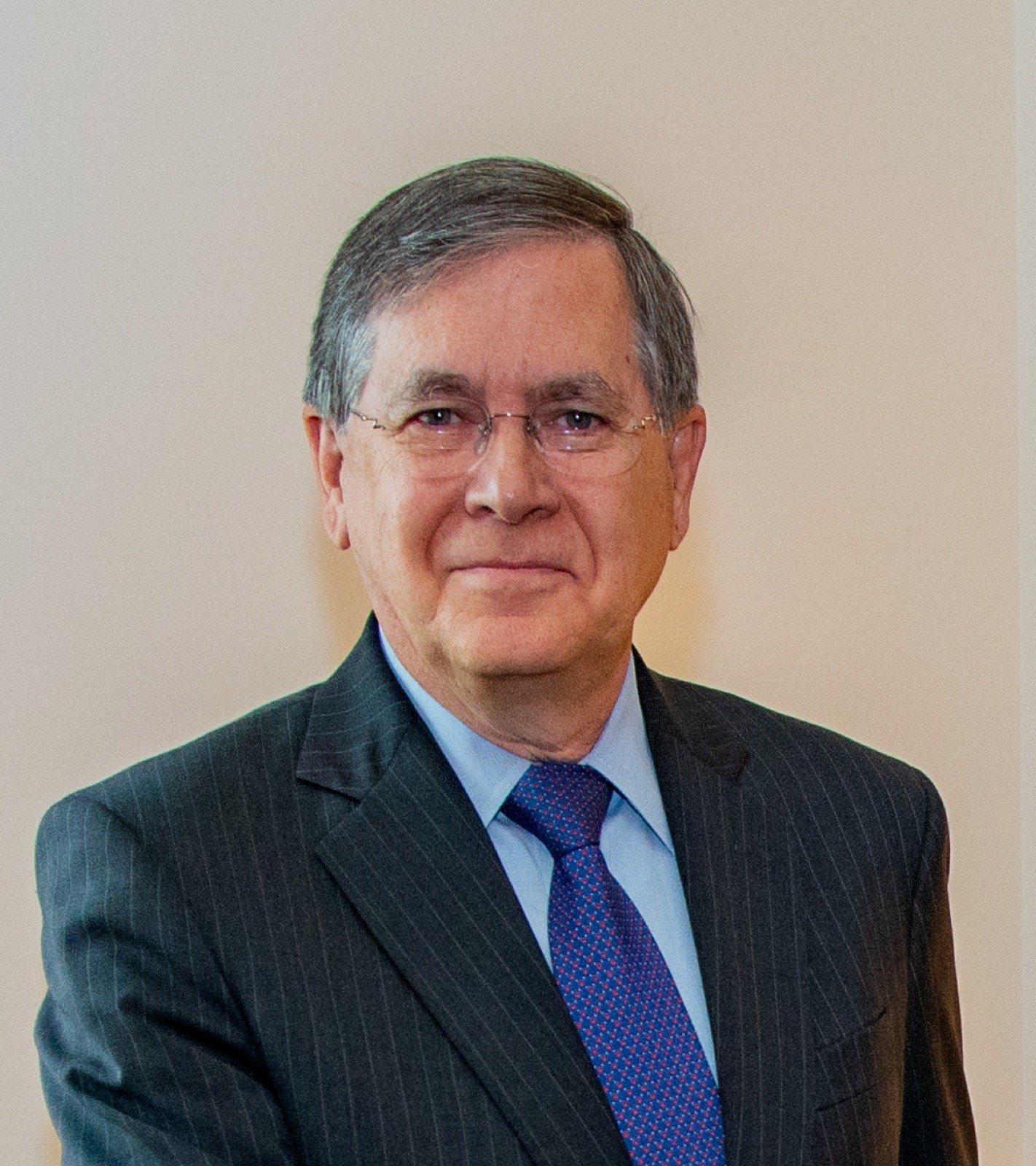
David Satterfield
David Satterfield is a former United States Ambassador to Turkey discussing what is at stake in Turkey's elections and whether Kilicdaroglu could lead Turkey in a different direction from Erdogan.
Gonul Tol
Gonul Tol is a Turkish academic and author discussing what is at stake in Turkey's elections and the implications for NATO.
Episode Summary
Turkey’s longtime leader Recep Tayyip Erdogan is facing what many describe as his toughest election yet. On Sunday, May 14th polls will open for presidential and parliamentary elections, and amid a dire economic crisis in the country, his prospects are in doubt. His leading rival, Kemal Kilicdaroglu is a mild-mannered and bookish elderly lawmaker who is presenting himself as a man of the people, and the polar opposite to the incumbent. Unlike Erdogan - the poster boy for populist politics - who has shunned closer ties with the European Union and the West and courted Vladimir Putin, Kilicdaroglu could lead Turkey in a different direction. As one of the mightiest armies in NATO, straddling Europe, Asia, and the Middle East, Turkey is a strategically important nation, and how the country votes could have implications for us all. One Decision’s Julia Macfarlane and Sir Richard Dearlove, along with the former United States Ambassador to Turkey David Satterfield and Turkish academic and author Gonul Tol discuss what’s at stake.
International Intrigue is a <5min daily newsletter written by former diplomats. They scan over 600 sources a day so you don't have to. Sign up to join 50,000 global thinkers.
Listen & Subscribe
- Watch on YouTube
- Listen on Apple Podcasts
- Listen on Spotify
Transcript
INTRODUCTION
Mcfarlane: You're listening to One Decision, the podcast that looks at the choices made that shape our world. I'm your host, Julia McFarlane. There are few places in the world where at certain points in history, it seemed as though the world's attention was concentrated. Present day Turkey, the location of the historic Byzantium Empire and its beautiful cosmopolitan city of Constantinople, was once the capital of the Roman Empire and the seat of Christendom. Now known today as Istanbul, its ancient history tells of how armies and empires, Muslims and Christians, repeatedly fought over this strategic jewel of a city for thousands of years. Turkey today has continued to benefit from its position between Europe, Asia, and the Middle East and is now one of the biggest military players on the global stage. A member of NATO since the Cold War, it's long been seen as a key European ally and a hinge point between East and West, but not so much in recent years. Turkey's strongman Erdogan, whose political journey has seen him go from being a leader receiving the hope of the West to a man who's come to be emblematic of strongman politics, populist nativism, whose recent years in power has involved amassing sweeping powers, cracking down on his opponents, and eroding Turkey's once independent institutions like the media and the judiciary. Thousands of political activists, journalists, lawyers, and human rights defenders have languished in jail. His opponents say if he wins the election this May, he will continue in this vein and inevitably become a modern day sultan with absolute power like those who ruled in Turkey's ancient history. Today, we're sitting down with a former US ambassador to Ankara. But first, let's hear from Gönül Tol. She's the founding director of the Middle East Institute's Turkey program and has written extensively about her native country's politics. Gönül, it's so great to have you join us today. We've got a lot to discuss and sadly not all the time in the world to get through it all. But I wanted to start off with, as we are recording this, there has been a new announcement from President Erdogan, which is that there is going to be a 45% hike in wages for nearly three quarters of a million public sector workers. He's announcing this new policy just a number of days before the country goes to the polls for the general parliamentary and presidential election. Is he panicking?
INTERVIEW: GÖNÜL TOL
Toll: Well, he seems like he's panicking because, and I think he has good reason for that. The country's opposition has been pressing him on the country's dire economic situation. The opposition candidate, Kılıçdaroğlu, he has released several videos in which he offers tangible solutions to the country's economic problems. And obviously, the economic problems are the top worry. If you talk to anyone in the country, they will say that inflation is a big problem. Particularly important is the food prices, soaring food prices, which is the highest among OECD countries. So certainly, worries top voters' agenda and Erdogan so far has not really addressed them. He's been in power for twenty years and any promise that he makes doesn't quite seem credible because the economic conditions that the country has found itself in is mostly his making. So that's why I think, yes, he can understand that he's lagging behind in the polls and that he just has to offer something on the economy.
Mcfarlane: Right. I mean, the economy and Turkey's dire financial straits it finds itself in at the moment is really the key battleground it seems that this election is being fought on. Gönül, I want to read you something from Amnesty that sums up quite succinctly the state of human rights and civil freedoms in Turkey at the moment. They say baseless investigations, prosecutions, and convictions of human rights defenders, journalists, opposition politicians, and others persist. Parliament introduced draconian amendments to existing laws that further restricted freedom of expression online. Police have used unlawful force to detain hundreds of participants in banned pride marches in several provinces, and the right to peaceful assembly remained severely curtailed. With more than a 120 journalists and other media workers imprisoned and thousands more unemployed following the closure of a 156 media outlets, independent journalism in Turkey is at the edge of the precipice. How would you describe the freedoms for the civilian population in Turkey right now and how much of the loss of those freedoms can you attribute to President Erdogan himself personally?
Toll: Well, before Erdogan came to power, Turkish democracy was never perfect, right? But then he came to power and centralized power in his own hands, to the point where now everyone agrees that Turkey is not even an illiberal democracy anymore. It once was an illiberal democracy, now it's considered as a competitive authoritarian regime where elections are still held, but they're not free and fair. And the level of erosion of rights, human rights and democratic institutions, Erdogan has taken all those things to an unprecedented level. And that's why many people, especially young people in the country, cannot really see a future for themselves in a country where repression is so widespread. I mean, consider this: Turkish prisons is full of Erdogan opponents. And in the last few years, hundreds of children stood trial for insulting Erdogan. So, I think this unprecedented level of repression in the country is the root cause of problems from economy to institutional breakdown and everything. And I think people realize that still economic crisis, I think, is the number one driver here driving voter behavior here. But I think people understand that this extreme centralization of power is not really working. So, Erdogan cannot actually govern. And we've seen that very clearly in the earthquake, in government's very slow and sloppy response to the earthquake, that this system of government is simply not working.
Mcfarlane: I mean, we've certainly heard a lot throughout the course of this latest campaign how it's certainly not a fair field. I mean, President Erdogan essentially controls the state's media. He also is the one in charge of the purse strings. He is able to spend as much money as he wants. In this election fight, he's been able to have unfettered campaign spending. The freedom of expression and freedom of opinion, as we've touched on, is severely curtailed in Turkey in recent years, and it's pretty impossible to criticize him. But one thing that a lot of people have said, a lot of long time watchers and analysts on Turkey and Turkish politics have commented on is how elections in Turkey are themselves pretty free votes which are held. And they say that although it is obviously not a fair playing field, it is rather difficult really for someone like Erdogan to rig a vote and to rig the outcome of the vote. It is very difficult to stuff ballot boxes. It's very difficult to defraud election in ways that we've seen other elections being defrauded in other cases. I wanted to ask you as someone who is Turkish, as someone who's obviously a long time expert in your country's politics. Tell me, as an outsider and someone who's not very familiar to how Turkish elections go, what is it about Turkish elections that means that there is always such a remarkably high turnout in elections, that Turks take their elections very, very seriously. And also this kind of volunteer aspect of the vote count. The fact that so many Turkish citizens often go up to places where the votes are being counted, the polling stations, and they observe, they are sort of self enforcing that this vote, while not essentially a fair one, is still in very many ways actually quite a free vote.
Toll: That's right. It's counterintuitive, right? Because we just talked about how Turkey has become an autocracy under Erdogan. And yet when we talk about autocracies, the first countries that come to mind is Putin's Russia, and Xi Jinping's China. So, people often ask me, why are we even talking about elections? Why are we even pretending that there's some kind of uncertainty about the result? Erdogan is never going to let himself lose these elections. And this is what I say to them. Not all autocracies are created equal. In some countries like Russia, for instance, they are highly manipulated. But in others, elections are very competitive. And Turkey is the latter case. And as you said, elections are very popular in Turkey, and fraud is not popular. Turnout is always high. In 2018, presidential elections, for instance, turnout was 86%. And this time I'm expecting an even higher turnout. So that means people in Turkey, they love to be able to vote. They do like strong men. They do like strong leaders, but it doesn't mean that they like them to be meddling with the ballot box. So that's what makes it very difficult for an autocrat like Erdogan to engage in outright rigging. Now, that's not to say that I'm 100% comfortable about election security. As someone who has worked with Turkey's civil society on election security, I am extremely concerned. But I think the picture is more nuanced than many Western commentators think of Turkey, because, as you said, despite the horrible conditions that they've had to operate under, Turkish civil society is still very vibrant, very strong. And remember, Erdogan did lose elections in the past. In 2015, for instance, June 2015, he lost elections. Yes, he did not accept the result, but he did lose elections. In 2019, and that's a very critical year because in 2019, Erdogan lost municipal elections. And you might say it's just municipal elections, the stakes are not as high, but actually the stakes were again high. This time around, they're higher, but still losing municipalities dealt a big blow to Erdogan. So in 2019, the opposition parties managed to protect the ballot box. So, what do these things tell us about elections in Turkey? Again, when the opposition gets their act together, they can actually beat Erdogan at the ballot box. And never discount how much faith people in Turkey, despite all the risks and anxiety they have around the security of elections, they have a lot of faith in the prospects of change through elections. And I think that's what makes Turkey unique in many ways and different from other autocracies.
Mcfarlane: Different from other autocracies, but also I think that's just such a fascinating and incredible sort of aspect of Turkish society and one to be admired, I think, and certainly not something that I was aware of until recently. I wanted to ask you about the stakes of this election because obviously Erdogan has become the poster boy for strongman populist rule. And he has been in power for twenty years, but his particular brand of sort of nativist politics that he's become really, really known for, he wasn't always this way. I mean, he came to power with the support of the Kurdish population of Turkey, which was another thing that I find fascinating that I wasn't aware of until recently. He's gone on quite the journey these last two decades, but he has now come to be the key strongman in our politics today. What would it signify, Erdogan being defeated at the ballot box via a democratic vote?
Toll: That autocracy, autocratic surge can be reversed. I think if Erdogan loses elections, and if pro democracy actors come to power via elections, I think that will tell the rest of the world that we should not give up on democracy, because we are living in an age where autocracy is on the surge, right? Everyone is talking about how autocrats and strongmen are getting stronger, and democracy is in retreat. So, I think if Erdogan loses at the ballot box, that will tell all of us that autocratic surge can be reversed. And if pro democracy forces again get together and they unify against strongmen, that they can defeat them.
INTERVIEW: AMBASSADOR DAVID SATTERFIELD
Mcfarlane: Gönül Tol speaking to us earlier. Someone who's been charged with handling the vital relationship between Washington and Ankara is David Satterfield, the former American ambassador. He actually served under two presidents, both Biden and Trump. The two men had very different personal relationships with President Erdogan. Trump got on rather well with him, the media at one point calling it a bromance. Trump said famously of Erdogan, he's a hell of a leader. It's likely that Trump admired his combative style of politics, not too dissimilar from his own. President Biden, however, has had a trickier time dealing with Erdogan. His tenure coincided with a difficult moment in ties. Biden angered him by declaring that the Ottoman era mass killing and deportations of Armenians was genocide, and Washington has been angered by Turkey's purchase of Russian made defense systems. Ambassador David Satterfield himself attracted the ire of Erdogan for calling for the release of a businessman and philanthropist who's been held without charge since 2017. For that, Erdogan called him persona non grata and demanded he be removed from his post. I asked Satterfield why Turkey was such a critical ally for the West despite the tricky handling of its prickly leader who has refused to distance himself from Russia's Vladimir Putin even after the reinvasion of Ukraine.
Satterfield: Its position within NATO as a vital NATO partner, and I don't use the term lightly, Turkey is a critical mission participant for NATO. It occupies a vital geographic space within the alliance. When we face challenges, we work those challenges within that overall frame of Turkey as a partner and a strategic ally. The issue of Russia, I would not agree that Erdogan has grown closer to Vladimir Putin. I see nothing of the kind. What I see is a transactional relationship, transactional on the part of both of these extremely self aware and clear eyed interlocutors based on their perceptions of where their interests lie and what harms those interests. Turkey with respect to Ukraine has been an essential supporter of the government of Zelensky. It early on doubled and tripled down on its military commitment to Ukraine and I would note, there was virtually no stronger proponent of the need for international respect for borders and sovereign integrity than Turkey at the time of Russia's unilateral annexation of Crimea. And that certainly applies to the Turkish reaction to the Russian invasion of Ukraine. President Erdogan was a key interlocutor with Vladimir Putin. He was largely responsible for brokering the so called Black Sea Grain Agreement. That's a role that we have welcomed on the part of the United States and the NATO alliance. So again, what we see here is a transactional association based on concerns over harmful relationship or how to advance relationships. We do not regard it as growing closer one state to the other. Each approaches the other with a certain cold eyed look at where their interests may lie.
Mcfarlane: I take your point. I think it's fair to characterize Erdogan's dealings with Putin as being transactional, but I do think it's pretty clear that Erdogan has taken steps to become closer to Russia than the West would like. I mean, yes, of course, Turkey is a huge supplier of support to Ukraine. Those Bayraktar drones have made a real impact on the battlefield against the Russians, and the Ukrainians owe a lot of their frontline success in part to the use of those drones. But the Turks haven't joined in sanctions against Russia. Turkey really relies on Russia for its tourists and of course its gas. And we had just very recently Vladimir Putin hailing his ties with Ankara just ahead of the elections as they inaugurated Turkey's first nuclear power plant. And this was something that was built by Rosatom, Russia's state nuclear agency. We saw with the acquisition of those Russian air defense missiles, Turkey got itself kicked off the US's F-35 program that it was helping to develop because there were concerns that Turkey acquiring Russian S-400 missiles would somehow — and I don't understand how this works, but apparently this is the case — would somehow allow the Russians to have access to information about F-35s. And so it was a bit of a security risk. And also the S-400s, the West claimed, was incompatible with NATO air defense missiles. So that put a lot of people's noses out of joint. A lot of people have described this as his toughest election that he has faced in his long career. He has been in power for many years. He has won, I believe, 10 parliamentary and local elections, two presidential elections to count. He faced off that military coup back in 2016. And some say that if he does win, he will take over what remains of any other kind of independent institutions and consolidate more power than ever before. And he will be essentially a sultan of Turkey for the rest of his life. What checks and balances remain as a check against him right now, if any?
Satterfield: The law of economic and market gravity to which all authorities, however strong, in all countries around the world must ultimately yield. That's the check and the balance, and it's a profound one and its impact is felt very clearly throughout Turkey today. We do not wish to see, no friend of Turkey wishes to see a continued deterioration in democratic institutions and democratic freedoms in Turkey, not just because Turkey is a vital NATO partner and we wish to see NATO partners share basic values and support for democracy. And of course, Turkey is not the only state challenging those norms. We certainly have concerns over Viktor Orbán and his direction of authoritarian governance and ideology in Hungary, there are concerns with respect to Poland as well, but Turkey has and has had such enormous promise and realized promise as a vital international player, we believe its democracy should be allowed to flourish not be suppressed.
Mcfarlane: Turkey has often been described as one of the only true democracies in the Middle East. And I find this really, really fascinating about Turkey because while, of course, the civil freedoms, freedom of expression, freedom of opinion, the freedom of the press, the freedom of the courts, a lot of that has been chipped away under Erdogan. Yet, from what I can tell, everyone essentially is anticipating the vote that will take place on the fourteenth to be a free vote. Now it may not necessarily be a fair one because Erdogan, of course, he has a monopoly of the media. He basically controls the purse strings of Turkey, and so he's able to spend as much money as he wants in order to get reelected. But the vote itself, there are not really any concerns that it is a vote that can be rigged in any way. Do you agree with that? And what can you tell me about how Turkey is able to achieve that?
Satterfield: I agree with your phrasing word by word. It will not be a fair election. It can't be because of the domination of the government over media and the way in which elections are presented. But I do believe it will be a free election and I believe it will be a genuine reflection of the will of the Turkish people. That's a credit to the Turkish electorate and that does provide a check and a balance on absolute autocracy. So I do think the Turks will have the opportunity here in what is, I believe, the most consequential election in Turkey, perhaps since 1950, to take a different direction on economics and prosperity in Turkey, as well as on restoration, revitalization of two critical things. First democratic institutions in the general and democratic freedoms, particularly expression of freedom of speech, but also the ability to reestablish the rule of law.
Mcfarlane: I wanted to ask you about Turkey's membership of NATO. It is of course a formidable military power. They inaugurated their first aircraft carrier earlier this year, but they are quite a problematic NATO member. There are of course all of the issues with civil liberties and freedom and this backsliding into authoritarianism, which really is at odds with the democratic values and principles which NATO members are supposed to uphold and embody. We have Turkey involved in a sort of standoff against Greece over islands and areas in the Aegean Sea, which are sort of semi contested between the two of them. We have, of course, the friction between Turkey and the US over Syria and the time when the US was backing Kurdish rebels. That upset President Erdogan quite a lot. And then we have also President Erdogan almost sort of vetoing NATO membership with other potential members. It has just allowed Finland to accede into the military alliance, but there remains a question over Sweden because of the presence of some would-be political prisoners that Ankara wants the Swedes to extradite. What do you make of Turkey's membership of NATO? Is it quite difficult for the US because on the one hand, they have a powerful military ally, an incredibly advanced military, the air force, which has been incredibly important in the fight against ISIS and other counterterrorism operations. But then again, you have this fickle character of Erdogan who plays politics with a lot of strategic international defense issues in the way that he does.
Satterfield: Turkey and President Erdogan would not be the first, the only, nor I suspect the last NATO leader or NATO partner to offer what are at times problematic, your words, behaviors. There is a not inconsiderable list of such countries at different moments. But Turkey is, has been a vital and I use the term advisedly, a critical NATO partner. It is an essential part of the alliance and there is no doubt whatsoever that problematic behaviors notwithstanding, President Erdogan values highly, as does his military and national security establishment, Turkey's membership in NATO for a variety of reasons including who the neighbors of Turkey are. And I'll remind, in 2015 when the Turks by accident shot down a Russian fighter, Russia cut off tourism, cut off importation of agricultural goods from Turkey and delivered a very severe blow to the Turkish economy. Turkey nevertheless has remained a strong partner within the alliance and if you want to understand the motivations for the transactional relationship that goes on with Vladimir Putin, a lot of it has to do with the determination by President Erdogan. I would say this would be the case for any government of Turkey, to mitigate the potential for Russia to inflict significant harm on Turkey as it has done in the past, just as Putin has to be concerned with actions which could push Turkey into an even more hostile position than already is occupied by Turkey in Ukraine, in the Caucasus, in Libya, and in Syria where there is very much a standoff between President Erdogan in Turkey and Putin and Russian forces. The Russians have not agreed over many years now to any increase or change in the Turkish military position in Northern Syria. The Russians have not themselves abided by the terms of the understandings that they reached with Turkey in late 2019 with respect to the presence of elements the Turks regard as terrorist in the 30 kilometer border zone. There are significant tensions and challenges here. And Turkey has acted within the alliance on a variety of issues that are external to the sorts of things we've been focused on here that are extraordinarily valuable. They take on roles which no other NATO partner has the capacity or the will to do and that's something we acknowledge and value quite highly. With respect to Greece, those tensions are historic. They preceded the Erdogan government. They will undoubtedly follow in some degree any change in government if that's what happens in Turkey. We encourage throughout on both sides, in Athens, in Ankara, active measures to talk, to diminish tensions and I'm very pleased that since the height of tensions was reached in the summer of 2020, through extraordinary diplomacy which included that of the German government and the late national security advisor Jan Hecker, those tensions have never returned to that level. They're not absent. Overflights, issues regarding the islands, rhetorical exchanges do take place, but we are not in a position where a kinetic confrontation looked to be in the realm of the possible as we were three years ago. And that's a credit to both governments, President Erdogan and Prime Minister Mitsotakis.
Mcfarlane: Thank you so much for talking to us today. It's been a fascinating conversation. I do find Turkey such an intriguing and as I said, multifaceted country, an incredible position it occupies physically and politically.
Satterfield: It was the most interesting and rewarding assignment in a forty three year career and unlike many of my less happy posts of assignments, I left with the deepest regret and the deepest affection, not just for the Turkish people, but for my colleagues in the Turkish government.
ANALYSIS WITH SIR RICHARD DEARLOVE
Mcfarlane: That was ambassador David Satterfield. Listening to those conversations has been my cohost, Sir Richard Dearlove, the former chief of Britain's secret intelligence service. I asked him to pick up from where ambassador Satterfield left on whether we may possibly be seeing the end of the era of Erdogan this summer.
Dearlove: I mean, I think he obviously is a very experienced diplomat, and he characterized Turkey very well because on the one hand, he got across the importance of Turkey. It's no coincidence that, you know, the Bosphorus on one side you have Asia, on the other side you have Europe. It is a geopolitical dividing line, and I think what Erdogan has done is exploit Turkey's position for all he's worth. I think Erdogan himself is a very interesting political phenomenon because he started off so strongly and he had phenomenal success in the early years of his presidency, but now Turkey and Erdogan are both really in a very parlous and difficult position. I think the ambassador obviously was reluctant to make a clear judgment about what he thought the outcome would be, but I personally would be surprised if Erdogan wins this election. Now, will he stay in power? That's the other issue, because it might be a close run thing. But on the other hand, I think to fix an election in a country as complex and as big as Turkey might even be beyond Erdogan. And one of the things that Erdogan has tried to do, well, you could say he's depoliticized the army. I'm not sure that that's exactly an accurate statement because what he may have done is remove those officers who were not enthusiastic supporters of Erdogan. So I'm not quite sure what the state of play at the moment is in the Turkish military. But in the past, it was both, let's say, a check on over ambitious politicians on the one hand, and as it were, a guarantor of Turkish power, security, and also the internal security of the country. But I think you've got to credit him as well. I mean, he was enormously successful for the first ten years in power. He walked on water, and the Turkish economy absolutely boomed. He made many, many Turks a lot better off. And he also had significant achievements, things like the reduction of infant mortality. He really changed a lot. There was a lot of infrastructure building. There was a huge improvement, and it isn't surprising. You might have disagreed with his Islamist politics. But on the other hand, it's easy to see why he was so popular and why particularly the sort of traditionalist elements in Turkish society, the nationalist elements, supported him so strongly. It's only since things started going badly for him, which would largely relate to the economy in 2013 — I mean, it starts before that, it starts, I think, at around 2011, 2012 — that he becomes so autocratic in terms of locking out journalists, arresting opposition politicians, using the power of the state, which in Turkey is very substantial, particularly the police and the intelligence and security services, to protect his position politically. But it's quite clear that the Turkish economy now is in a desperate state. And I think, ultimately, it looks to me, it's the economy which could well sink Erdogan in this election.
Mcfarlane: I mean, on that, do you think President Erdogan is suffering from the same thing as Vladimir Putin is, whereby you have such a strong autocratic leader who has cultivated this atmosphere of fear and sycophancy and a court full of yes men around him, that there is no one there to advise you on making stupid decisions like trying to invade and take the nation of Ukraine in three days, or the idea that low interest rates are the cure to high inflation as is the current situation with Erdogan who has these pretty goofy economic ideas about inflation, and he has a very particular sort of economic ideology.
Dearlove: Yeah. I think all of Erdogan's current problems look to me as though they're economic. And as you say, he's cut interest rates in the face of massive inflation. Turkey's lost its access to international liquidity. His ruinous policies, I mean, he's doubled the minimum wage in the last eighteen months. Admittedly, that's cut unemployment. But the Turkish lira has lost, I think, 80% of its value in the last five years. Inflation last year was over 70%, I think. He's heading for an economic brick wall because at some point, Turkey is going to have to, as it were, pay the price of these crazy economic policies. So ironically, he's quite good at playing his geopolitical cards. I mean, Erdogan's skill has been to make himself a valid interlocutor, both with Russia and the West and with the Middle East for that matter. So he's played his cards in that manner quite well, but Erdogan's Ukraine is the economy. I know that's a crazy thing to say, but you can see what I mean, the thing that makes him vulnerable and fragile politically. And don't underestimate the sort of sophistication of Turkish business, the way he's viewed by the business community and the influence that the Turkish business community has. I think the situation in Turkey is so desperate, has got so bad economically, that I would be really, really surprised. But don't underestimate Erdogan because he's been pretty nifty and pretty clever. And, you know, despite soaring inflation, he has still been pumping money into social aid, which is at record levels, government infrastructure projects. Okay, they've all got to be paid for at some point in the future. But Erdogan isn't a stupid tactician either. He knows what he's doing. I'm just very, very surprised that by being so intransigent, he's maneuvered himself into a pretty desperate position. I mean, I think that's a very important caveat.
Mcfarlane: Erdogan is a canny politician. He has never lost an election yet, and he's faced nearly a dozen in his time and he's pulled them all off so far. But if you might humor me, Richard, if we do find actually that this is the end of the Erdogan era, what do you think that means for democracy in the wider world? I mean, what would the downfall of Erdogan really mean for democratic efforts? He kind of invented that sort of populist, very nativist politics before Trump, before Boris Johnson, before Duterte, before Bolsonaro. They all came after Erdogan, and it's kind of just Orbán and Erdogan are sort of the last men left standing. And so what would it mean if Erdogan gets voted out? And remember that, you know, when Bolsonaro got voted out, his followers stormed congress after he lost. No reminder necessary for what happened in Washington DC after Trump lost his election. But what do you think it would mean if Erdogan were to lose at the ballot box?
Dearlove: Well, I think it would be hugely symbolic because it would be a blow, and it's a phrase I rather like, to the end of personalistic rule. And he has, you know, personalized Turkish politics in the way that Orbán and some other European politicians like Le Pen are trying to do, and there are other countries which you could say maybe appear to be on the brink of it but haven't quite taken that step. I mean, Meloni in Italy is an interesting politician. I wouldn't say she actually has gone down the personalistic rope, although she's extreme right wing, she's proving to be a rather different sort of politician in terms of implementation of policy. But I think the end of Erdogan would be hugely symbolic, hugely important. And, of course, it would probably mean a significant shift in Turkey's geopolitical position because Kılıçdaroğlu has already said he will look much more towards the EU and try to re-energize Turkey's membership. He's made it absolutely clear that he'll be much, much tougher on Russia. And I think that you will see less of a what I would describe as an Ottoman policy in the Middle East. So he'll be much more cautious and much more consensual in terms of coordinating with NATO and with the West generally about how Turkey deploys its very significant influence in the Eastern end of the Mediterranean. And as I said already, Turkey is a hugely strategic and important country. And in a way, Erdogan's used that to catalyze his international influence. But I personally would be delighted to see the back of him because he's become such a difficult and angular entity as an important member of the Western Alliance, that I think he's really played himself out, and we do need a change. But obviously, one worries about what the change would be like, what the stability of Turkey would be like, how this coalition will work together. So there are many questions that are left open. But in spite of those questions, I still think that if he goes, it would be beneficial to democracy globally because it will send a signal to those politicians who look to Erdogan as a sort of icon for personalistic rule. There's one further observation I would make, which is really a question. And the question is, if Erdogan loses a close election in the second round and then shows a reluctance to accept the result, and I'm not saying that that would necessarily happen, but there's a danger that he might behave like that. What then would the Turkish military do? Because it may be that you'll have a situation where the Turkish military are almost forced to step forward as the guarantor of democracy, which would be a turn up for the books as well.
Mcfarlane: Oh, god. We could have a repeat of 2016.
Dearlove: I know. It's a very potent and extraordinary. I mean, I'll be watching this election with bated breath. It's the most fascinating election in, I won't say in Europe, but within the European space that we've had in recent times.
Mcfarlane: That's it for this week's episode of One Decision. We drop new episodes every Thursday. Like and subscribe so you never miss an episode. Drop us a line. Tell us your thoughts. What decisions have impacted you and where you live? You can write to us. Our email is 1decision@1decisionpodcast.com. From me and the team, thank you for listening, and see you next time.