Note: this podcast contains explicit content.
Episode Info
- Season1
- Episode5
Hosted by Christina Ruffini and Sir Richard Dearlove
Guest
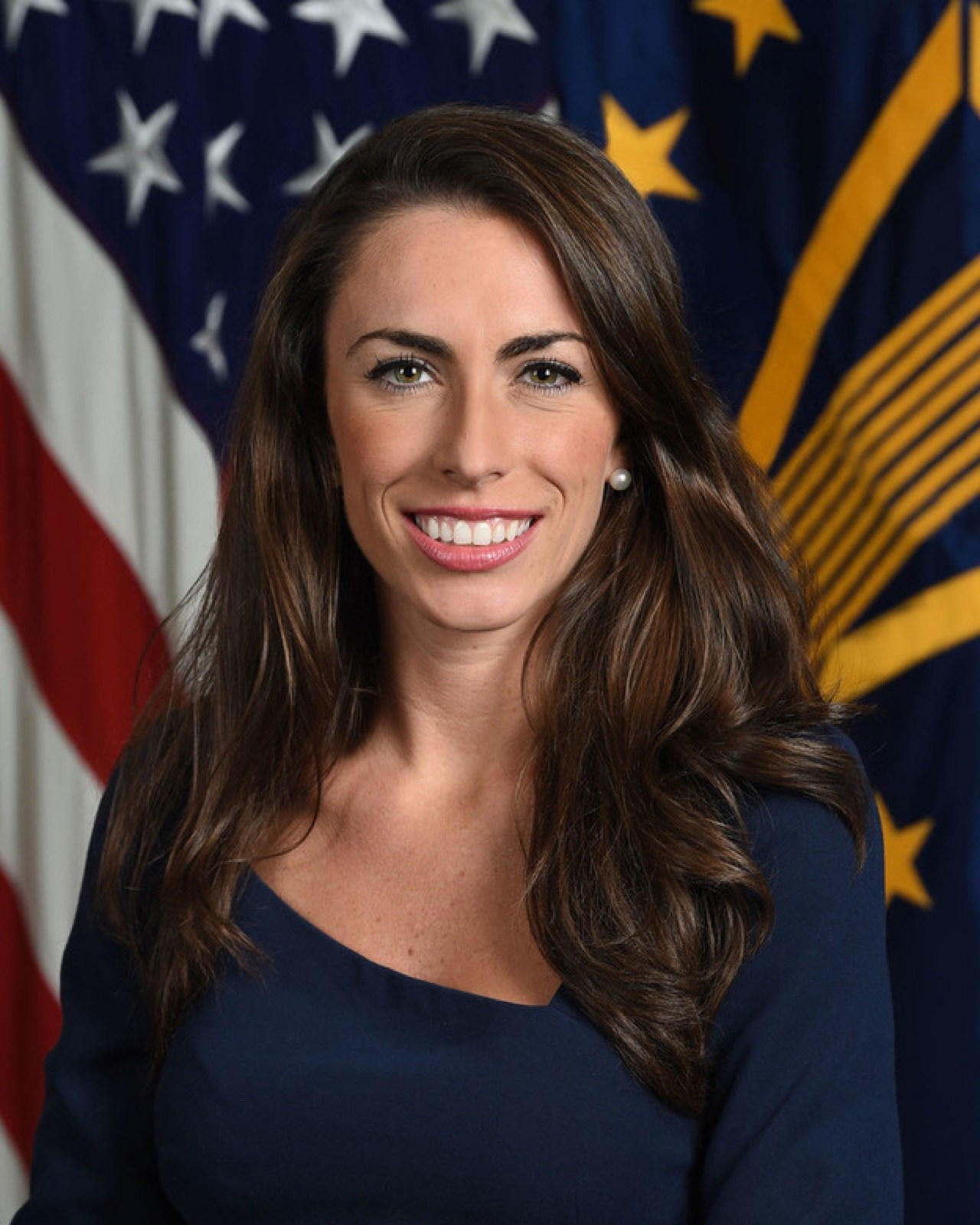
Alyssa Farah
Alyssa Farah was a witness to a momentous decision and pushback inside the Trump administration and faced an ethical decision of Alyssa Farah's own.
Episode Summary
Alyssa Farah was witness to a momentous decision—and pushback, and doubt—inside the Trump administration. Then, faced an ethical decision of her own.
Listen & Subscribe
- Watch on YouTube
- Listen on Apple Podcasts
- Listen on Spotify
Transcript
COLD OPEN
Farah: Was the heaviest several hours of my life. To think that there are people actually suffering after the fact was heavy for me. Honestly, to me, that day was the worst case scenario, except that it wasn't worse. Worse. I thought it could have been a massacre.
INTRODUCTION
Kosinski: Hello. Welcome back to One Decision. Here, we're going deeper on another tough one. To recap where we left off, Alyssa Farah, former adviser to Mike Pence and Donald Trump, was heading up communications at the Pentagon. This was just about a year and a half ago. Alyssa had just witnessed a momentous and quick decision taken by the administration only days after Iran backed fighters breached the US Embassy in Baghdad, a decision to take out the notorious head of Iran's feared revolutionary guard, Qasem Soleimani. But many inside the government, especially at the State Department, did not agree this was a good idea. There was pushback. Alyssa had some doubts, too, but was convinced by Pentagon lawyers that the strike was legal, that Soleimani was a terrorist on the battlefield. The missiles fired from drones killed Soleimani instantly, right next to Baghdad Airport. Images circulated around the world of his singed, severed hand bearing his signature blood red ring. NEWS CLIP [1:32] Breaking news. In a major escalation in tensions between The US and Iran, the top Iranian general has been killed in an airstrike while leaving the Baghdad Airport. The Pentagon confirmed the US military carried out the attack. Qasem Soleimani was one of the most powerful figures in The Middle East.
Kosinski: Now Alyssa's job was to face the world to explain, justify, and keep the public updated, which in the Trump administration rarely went as hoped. And this time, sure enough, immediately controversy swirled around Secretary of State Mike Pompeo, Trump, and others saying that Soleimani had been planning imminent attacks against US troops. That controversy existed inside the administration as well. Did you feel like this was trumped up, or did you feel like this was legit? I mean, was this something that was kind of pushed?
INTERVIEW
Farah: So being careful of what I can say, because I was privy to the intelligence, where we would battle is over the definition of imminent. There was an extremely credible, thoroughly planned, potential to harm US and coalition partners. The imminence is really the word that I think folks would get hung up on how immediate it was. But I would go back to what gave I know what gave Secretary Esper and Chairman Milley peace about the strike. It was that we had a terrorist on the battlefield in Iraq. Right.
Kosinski: So then if that's the justification, both legally and morally, why even bring up the planning piece? Like, do you think it was a mistake to communicate that, especially in the sort of back and forth way that it ended up being communicated?
Farah: I would have advised that we probably not raise that as the answer. We were a bit more, I'd say conservative from the DoD side on how we talked about imminent and the threat, because we didn't feel like we needed that from a legal perspective. And what we all didn't want to do was create a speculation game, or to create, you know, a level of fear over something at a time when you know that much of the country's on their heels thinking that we could be on the cusp of, again, World War Three.
Kosinski: So whose idea was it to use that as part of the public presentation? Was it coming from the White House or was it the president himself?
Farah: My recollection tells me it was first said by Secretary Pompeo, but I think from there, it was echoed by the White House.
Kosinski: Were you annoyed, and were your colleagues at the Pentagon annoyed by this?
Farah: It was challenging in the moment.
Kosinski: So after this happened, there was a briefing for Congress, and some, even Republican members of Congress, felt like this briefing from the administration was weak at best. Why is that?
Farah: There was a lot of having to dance around things. I think we in the ideal world, we would have a United States Congress where all 535 members can absolutely be trusted with classified information of the highest levels. Unfortunately, that's not been my experience on both sides of the aisle. Yeah.
Kosinski: So there were some real sensitivities on how much we could share. I'm just looking at this one quote, for example, from Senator Mike Lee from Utah saying this was probably the worst briefing, at least on a military issue, I've seen in the nine years I've been here. Why not brief these guys better?
Farah: The Senate one could have been better. The Senate one could have been better. Others who may serve in SASC and some of the relevant committees at least recognize that if you're going to do it, that was a once in a lifetime moment to do it.
Kosinski: Then six days after the strike on Soleimani, far more ominous news starts bubbling up. Again from Iraq, Al Asad Air Base, home to around a thousand US troops, troops that are now being attacked by rocket fire. Iran's response to Soleimani's killing was happening. Did people at the Pentagon, like, were there moments when people thought, oh god, this is all falling apart?
Farah: There was. That was the heaviest several hours of my life. Just knowing that you're seeing incoming ballistic missile fire and that there is literally nothing that we could do to defend that base and knowing that, there were potentially Americans who were going to be killed as well as coalition partners. There was just, there's no way to measure the magnitude of it based even on, you know, the sharpest intelligence and the best, you know, we were able to see most of this in real time, but you couldn't tell like if it hit even, you know, five feet more this way, what it could have done and how it could have increased the casualties and loss of life. And that was a scary moment for everyone in DoD. But I could sense the tension and the concern in Chairman Milley's eyes and in Secretary Esper's in this fear that this could truly be a massacre. And thank God it wasn't. We're getting reports that we have as many as a dozen cases of traumatic brain injury. And I was so worried. What's, you know, the worst case scenario? Are we thinking some of these people could die? How can we get them where they need to be? It was devastating. It was scary because, especially because I felt like on the home front, those of us who weren't ever in imminent danger, we're perhaps a bit too quick to think all is well, we're good. This was successful. Everyone's fine. And then to think that there are people actually suffering after this act was heavy for me. And then the numbers just kept ticking up and it became clear that we had a very real problem on our hands, especially those with more severe cases. And seeing the numbers rise to the hundreds, it makes you realize just how devastating that attack actually was. We didn't have significant missile defense capabilities, at Al Asad. So honestly, to me that day was the worst case scenario, except that it wasn't worse. My heart still goes out to the one hundred and ten who were severely injured, but thank God we didn't have deaths because watching those in real time, watching the strikes come in, I thought it could have been a massacre.
Kosinski: Are there not conversations, though, ahead of time? Like, why not fortify these places or with anti missile defense before you take an action like taking out Soleimani?
Farah: Well, it's the million dollar question that unfortunately has a few bad answers. Some of it has to do with our diplomatic status, or lack thereof in Iraq. We have tried to coordinate bringing in whether it's Patriot defense systems or others, missile defense systems into the country and have faced resistance. There's an appropriations aspect of it that, the United States Congress needs to take some responsibility for, if we're going to continue, you know, thinking about as we're drawing down in Afghanistan. If you're going to keep forces places for prolonged periods of time, then you better as hell have the defenses necessary to protect them.
Kosinski: Meanwhile, in the communication space, things also got worse.
Farah: And then the next thing I would mention that we certainly got wrong on this, the president's initial address, he gave an address and said there had been no casualties. And that was true at the time that we gave those facts to the president. We were getting real time updates from the field in the aftermath of the Al Asad strike because the nature of what the injuries ended up being were ones that the effects didn't onset until significantly after the fact.
Kosinski: Okay, so the people who had traumatic brain injuries and there were one hundred or so of them, was the White House kind of parsing the meaning of casualties?
Farah: There was not enough weight given to the potential of injuries that could develop over time or even just the significance of the attack. We were getting real time reports of ballistic missiles being launched at a number of sites, not just Al Asad. And I mean, the gravity of that, it's hard to even imagine. I knew people who are on the ground there and you hear ballistic missile, and it was a more sophisticated technology than we'd previously seen for most of the Iranian militia groups, we were thinking there could be significant deaths.
Kosinski: So the Pentagon recognized that, but not the White House?
Farah: There was an effort, from the White House to want to say, you know, the Iranians were not successful in harming our targets, in response. And I think that went too far. And I think that it ended up glossing over what ended up being very significant injuries on US troops after the fact. One hundred and ten American troops had traumatic brain injury, TBI, which can range from anything from a concussion to something that you could lose motor skills.
Kosinski: So some of the troops, they did have severe TBI?
Farah: Yes. But I believe about eighty percent of them, ended up being able to return to the base after getting medical analysis and treatments.
Kosinski: As the reports trickled in from Iraq of first this many soldiers with brain injuries, then a few more, then still more, Alyssa faced a disturbing decision of her own. She says the White House was insistent. They wanted the Defense Department to hold off on reporting what was happening. It's not how the Pentagon does things. And Alyssa, as spokesperson, was the one who would normally be releasing this information on real casualties in close to real time.
Farah: We did get pushback from the White House of, can you guys report this differently? Can it be, you know, every ten days or two weeks or we do a wrap up after the fact? And the White House would prefer if we did not give regular updates on it. So it kind of was this drip drip of quote unquote bad news that certainly helped folks who were critics of the strike, you know, say that it was a mistake and these are the repercussions of it.
Kosinski: Well, what did you feel when they asked you to do that? And you're the face of communications for the Pentagon. I mean, this is on you, on your watch. What did you feel?
Farah: My feeling was, if my experience had taught me anything, transparency is always gonna be your best friend in that field. We can't keep this information in. So we're much better to give the most accurate up to date information as possible. I would much rather deal with that bad news story than the bad news story of you withheld this information from us. And that was what our office conveyed to our counterparts at the White House and elsewhere. You're always better erring on the side of transparency when it comes to warfare in particular.
Kosinski: Were you annoyed that you were asked to do that in the first place?
Farah: I'll say this delicately. I knew listen. The White House was dealing with a lot then.
Kosinski: Why? You don't have to say anything delicately. You're not beholden to these people anymore. Alyssa, you can say whatever you want.
Farah: They were dealing with impeachment, any number of things. I'm not even sure that their minds were all that focused on this issue at the moment, but it was that like additional bad headline they didn't want and I communicated as effectively as I could. You will be much better served in the long run to be honest and transparent and forthright and just give this information accurately as you receive it than to
Kosinski: Did they accept that?
Farah: We were I think they did in the sense that we just went forward with how we reported it.
Kosinski: So when you reported it as you normally would in real time or as close to real time as possible, did they then get on you after that and like criticize the way you were doing it?
Farah: Oh, there were certainly some phone calls from across the Potomac, you know, just expressing why are we seeing this in the press again.
Kosinski: Who was this? Who was doing this calling you and saying we need to report this differently?
Farah: I don't want to single out individuals, but I think that there were folks on that side of things who just frankly, they don't understand the military's obligations to the public.
Kosinski: Yeah. Or how about just the transparency that comes with democracy that you're a public official?
Farah: Of course. Of course. And I think they didn't understand this. There seemed to be a lack of understanding of why you have an obligation to report things, especially in theater when it comes to US service members. We made a decision from the DoD side. We frankly could have even done it better, but it was we're going to give you guys updated numbers and they will change. They may go up, they may go down, but, we owe it to the Americans who are injured, to their families, and to transparency, for our democracy to share that.
Kosinski: Was that your decision?
Farah: It was my decision among others. Yes.
Kosinski: So did you feel good about that, or did that make your life a living hell as well?
Farah: I took peace knowing I thought I was making the right decision, and I'm confident in retrospect that I was.
Kosinski: Got it. And did they give you any reasoning for wanting you to report such things differently? Or did they just say, this is how we want you to do it?
Farah: I think the holdup was as simple as, the cable news world of we, you know, this is another bad headline. Why do we keep getting bad news out of DoD? Like, can you get this under control? And the answer was, that's not how it works. And listen, we've all been on the side of like, oh, come on, I don't need another bad headline today. But, it was the right thing to do, and we weren't going to change our minds and sharing it.
Kosinski: Yeah. Well, there were certainly, there must have been incidences in your job, with the vice president, you know, when I don't know if you were his spokesperson at the time when he would say things like, oh, well, the spike in coronavirus cases that we're seeing is just because we're doing more testing or there's significant evidence of voter fraud. Did those kinds of statements not bother the hell out of you?
Farah: I was not with Vice President Pence's team at all during coronavirus, but I'll say this. Vice President Pence is somebody who I have tremendous respect for. He and I have I've spent countless hours with him. I know his heart. I can't speak kind of to those one off statements. He came in every day wanting to do good by the American public.
Kosinski: So when in the coronavirus crisis, when you're then sent over to the White House and you see the president for weeks and weeks and weeks downplaying and saying, we're fine and we're going to beat this and, you know, we're not going to see these numbers. Like, does that not question your existence there? Like, are you going crazy listening to this stuff?
Farah: I'll say this. I always keep conversations I had directly with him between the two of us, I think, out of respect for the office of the presidency. My belief is that I wanted to stay in my role at the White House so long as I thought I could influence outcomes for the better. Now, did that mean I was going to win every day, turn around every bad statement, fix policies that I disagreed with in real time? I wish, but absolutely not. I saw something happening in our country with the coronavirus that was unlike anything any of us had experienced in our lifetime. I felt I was marginally able to help in the communications efforts around it but yes, no one liked the presidential tweets myself being at the top of that list. I could ask myself forever, should I have ever gone into the White House? You don't get to make decisions twice. I made my decision and I hope that I, in whatever small way was able to marginally influence outcomes for good.
Kosinski: Today, in retrospect, do you think the strike on Soleimani was worth it?
Farah: I do. I do. And it doesn't mean that I don't think of the gravity of the injuries that came from it, but I truly saw months of escalatory behavior and an emboldened behavior from Iran that I don't believe based on any of the assessments I've been privy to would have stopped without such a shot across the bow to show them that we are serious and you know my heart will always be with those who are injured in the aftermath of it those are brave men and women who they matter and they deserve the continued care they need. But I think we took a terrorist off the battlefield who was responsible for the deaths of thousands and could have been responsible for the deaths of thousands more.
Kosinski: Are there any conversations that were really interesting that you remember about either the lead up to the strike or the aftermath?
Farah: There was a feeling of the gravity of what we did, but it also people were happy. They were at peace. This was somebody who just a terrorist who plagued the US military and our allies for decades. And, I can tell you, you know, several of the decision makers, you know, involved and who were in the situation room that day had served in the military in various capacities. There was a relief and a level of celebration.
Kosinski: Now, given that this strike on Soleimani only happened just over a year ago, are you not concerned that the real retaliation for it is not yet come, but it's going to?
Farah: That's a very good question and something I was thinking about throughout this conversation. We shouldn't assume that there won't be more wanting to, you know, avenge who they consider the martyr Soleimani. So I would hardly say we are out of the woods, though I do think the extended period of significantly deescalated behavior from Iran is a direct result of knowing the US government was willing to act, decisively and in a way that I think actually shocked them.
Kosinski: Okay. Lightning round. What do you have? What's your regret, if any, about the time you served during the Trump administration?
Farah: A very specific one. I regret that I didn't push more advocating for mask wearing. I always expressed that I thought we should embrace it. I told the president he looked good when he wore a mask and I remember one of the times he infamously did. It was at my encouraging and a couple other folks, but I wish I pushed harder on it, and I think I could have had more success on it.
Kosinski: Okay. Other lightning round questions. Does Trump do his own makeup?
Farah: In my experience, he does. Yes. He backstage, we always have a mirror for him. He's super tall, so he slunches, kind of slouches backward and touches up his makeup himself.
Kosinski: What brand does he use?
Farah: Oh, I don't remember, but a funny story. He, we always have like roughly the same mirror that we have backstage. But there was one time we were backstage and for whatever reason, he particularly liked the mirror. I guess the way it was positioned and he turns to me and says, look at this, this is a skinny mirror. He says, take this back to the White House. It's like, pretty sure. It was a mirror use at every event. But anyway.
Kosinski: Did you ever try to help him with his makeup skills?
Farah: No. I did some of Pence's makeup. I never touched you don't touch the Donald Trump face.
Kosinski: Got it. Okay. Last lightning round question. Does Mike Pence really call his wife mother?
Farah: No. And this is a myth that drives me crazy because it's weird. That would be very weird if he called her mother. He was hosting a group of lawmakers when he was I want to say it was when he was governor, might have been in the house. Yeah. It was at a dinner. And this is when he has kids who are teenage years, and he steps up and he says, mom. And he calls her mom. But my parents did that too. In front of kids, you say dad, mom. He doesn't refer. Yeah. Okay. That's true. She was always Karen when I was around and the rest of us called her Mrs. Pence or the second lady. But, he does not call her mother.
Kosinski: Well, Alyssa, thank you for clearing all of that up. All of those very, very important questions. You know, national security and makeup. We like to cover it all. I think that was great. I really appreciate it, Michelle.
ANALYSIS WITH SIR RICHARD DEARLOVE
Kosinski: So let's bring Sir Richard Dearlove, former head of MI6, in for a little wrap up. What did you think, Richard? Do you remember finding out that The US had taken this shot and killed Soleimani?
Dearlove: It was such an extraordinary moment. I mean there was only one way it was going to have happened. You know it was a targeted killing. And I suppose the reason it surprised me is because I mean the question of legality, even you know with an administration like the Trump administration, is still a big issue. It certainly is a huge issue in The UK if you're going to carry out anything like that, and you know Cameron did actually carry out a drone killing against that Jihadi John terrorist who had beheaded some ghastly events, but I mean they did carry out, and that surprised me too. I mean I think in the case of Qasem Soleimani, you could argue that it was an act of war, and it was a battlefield killing because as far as Soleimani was concerned he had made the whole of the Middle East his battlefield.
Kosinski: So you yourself feel that this was legally justified?
Dearlove: Yes, I do personally.
Kosinski: So if someone came up to you with a button and said Richard, press this and it takes out Qasem Soleimani, would you jubilantly press that button?
Dearlove: I would never do it jubilantly. I would sit down and say well hang on a moment, this is a huge risk, and you know have we considered all of the angles? I think I would have argued in favor of it because of who and what he was, and because of the problems he had caused and would continue to cause, and probably the bigger problems that lay ahead with his activity.
Kosinski: I remember seeing the news that they had taken this move and just thinking, what? Am I reading this correctly? What went through your mind when you saw it?
Dearlove: Well, I think, my god, they dared to do that.
Kosinski: Did the thought that they would do something like this cross your mind at all?
Dearlove: Yeah, I think it has certainly crossed my mind. I mean, how do you get Iran to back off? But to be honest, if you'd asked me, would they do it? I think I would have said probably not.
Kosinski: It's a step too far. Got it. And what do you think this move means for Iran's influence in the region overall?
Dearlove: There's no obvious successor to Soleimani, and it basically has sent the message to Iran: be careful. If you overreach, your arm will be shortened violently and you know I wouldn't say this very often but the world's probably a better place without it.
Kosinski: Okay now yes or no round. Was this a brilliant decision?
Dearlove: No, not a brilliant decision, because they couldn't possibly have anticipated its success. I mean it turned out to be more successful than I think anybody expected, but I think that that was more by good fortune than anything else. Was it a reckless decision? Yes it was, because they couldn't have, as it were, anticipated what the consequences might have been, and the consequences might have been quite serious indifference, but they got away with it. Was it dangerous? Yes. Definitely.
Kosinski: And what are the risks? What were the risks at stake at that moment?
Dearlove: There and there still could be, you know, terrorist attack somewhere which might make the cost of this killing look very high and maybe not a worthwhile event. So I mean I would go as far as to say that we don't fully know what the Iranian response may be even now. You know, this is dangerous territory and we shouldn't become used to it. We should question it every time that it happens.
Kosinski: Well, it's great having you, Richard. Thank you.
Dearlove: Yeah, great talking to you, Michelle.
Kosinski: Thanks for joining us on this episode of One Decision. I'm Michelle Kosinski. Follow us wherever you find your podcasts and on social media to delve into the minds of those playing for high stakes and whose decisions can shape our world and our lives in it.