Note: this podcast contains explicit content.
Episode Info
- Season1
- Episode1
Hosted by Christina Ruffini and Sir Richard Dearlove
Guest
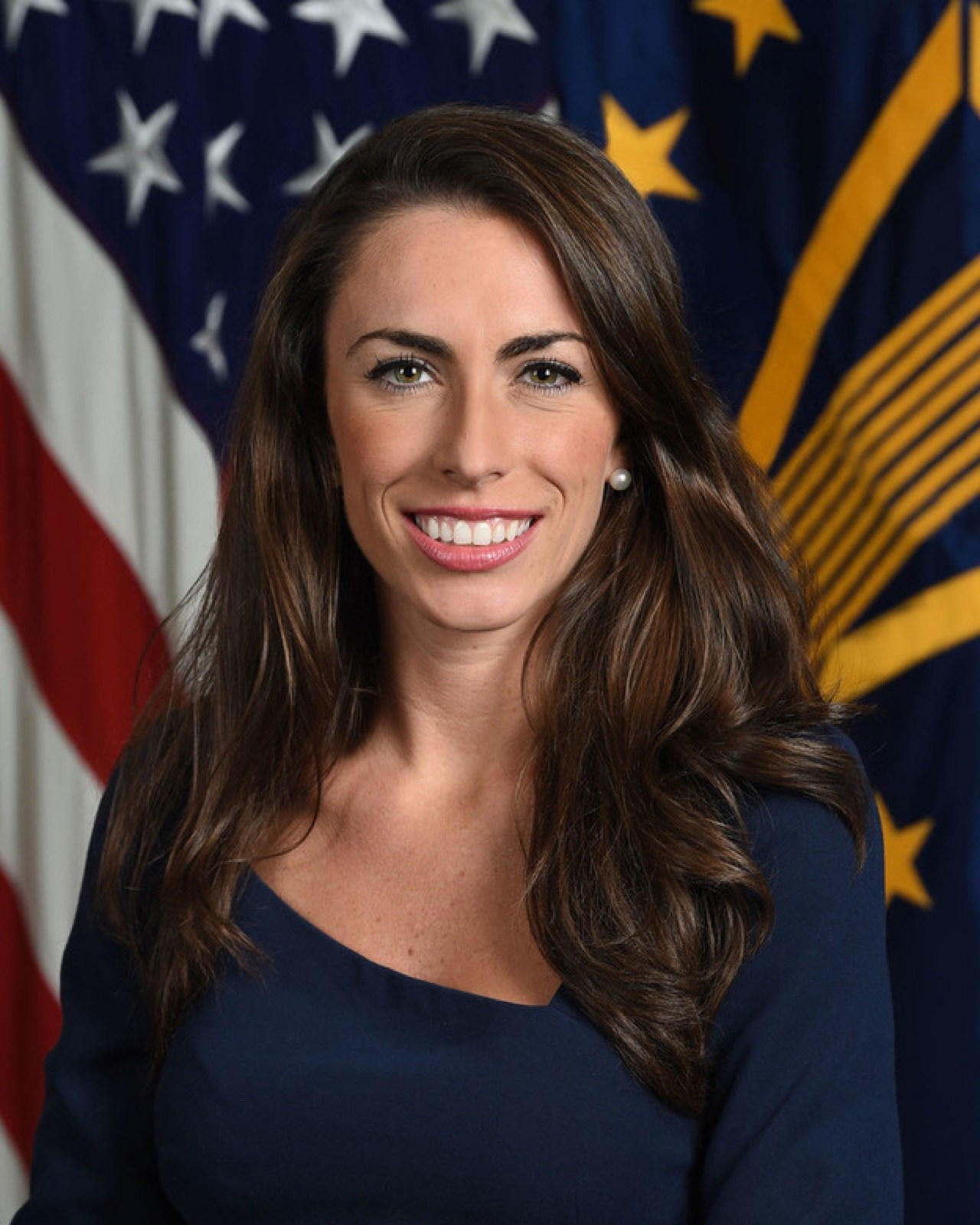
Alyssa Farah
Alyssa Farah was a witness to a momentous decision and pushback inside the Trump administration and faced an ethical decision of Alyssa Farah's own.
Episode Summary
Alyssa Farah was witness to a momentous decision—and pushback, and doubt—inside the Trump administration. Then, faced an ethical decision of her own.
Listen & Subscribe
- Watch on YouTube
- Listen on Apple Podcasts
- Listen on Spotify
Transcript
COLD OPEN
Farah: Nothing prepares you for the moment of knowing something is coming that could go so many different directions, but regardless, it is going to have ripple effects and consequences for so many people. And candidly it was a gamble. I don't think anyone even at the highest levels thought that this was real and something we were likely to do even in the days prior to it. Are we on the cusp of war? There was a moment where the world thought we were on the brink of World War III.
INTRODUCTION
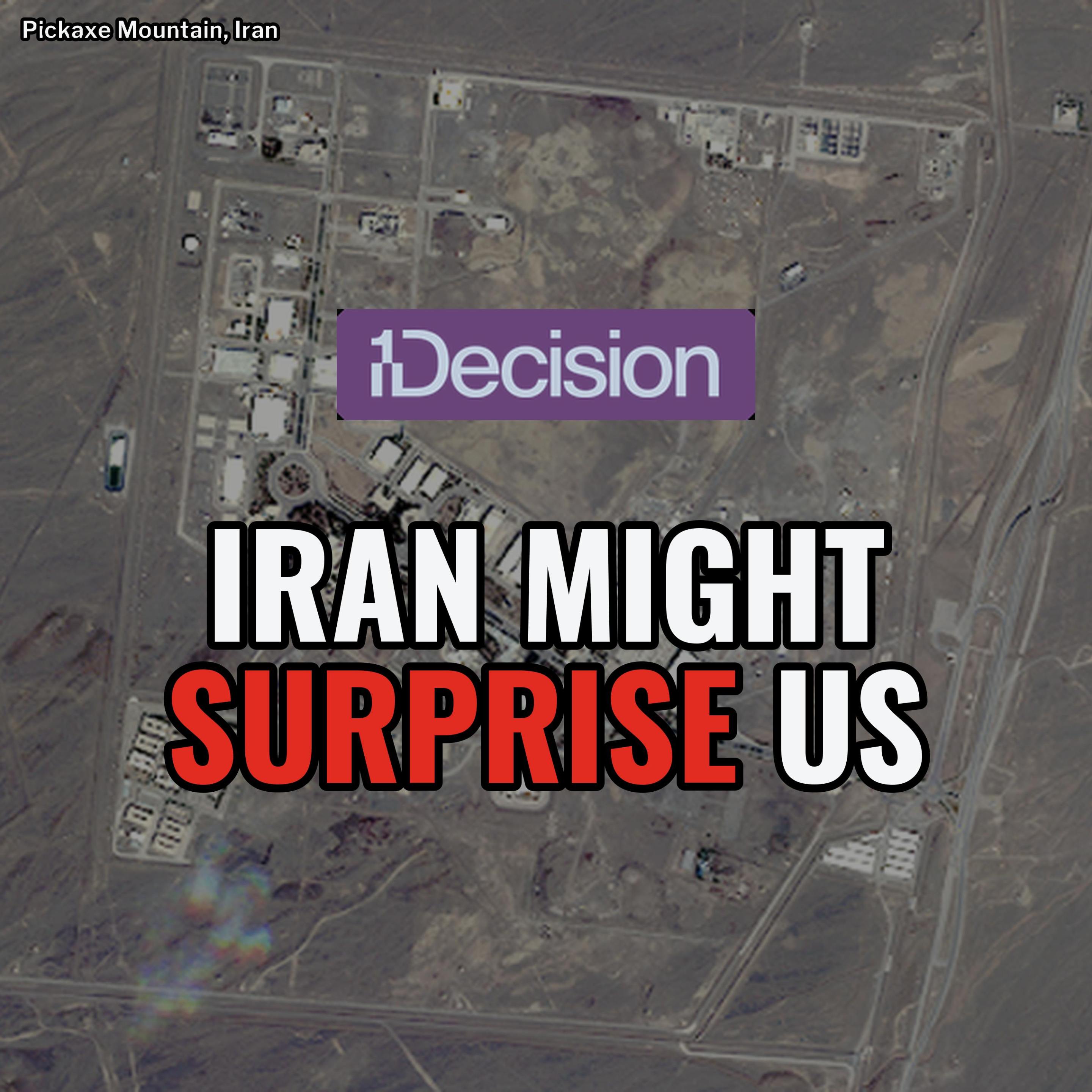
Kosinski: Hi there. Welcome back to One Decision, where we take you deep inside some very difficult and messy decisions that are always stressful but recollected in tranquility are very good stories, which also shaped the world. Today, we're talking with a former Trump administration official. And sure, we've been hearing from quite a few of them lately. This story is a bit different, though. Elisa Farah was a top communications official and close advisor to Mike Pence, then the Department of Defense, then the White House. So she's seen quite a bit. She didn't leave the shitshow, also known as the end days of Trumpville, until a month after the 2020 election. But here, she speaks candidly about a decision, actually a few decisions in one, surrounding the stunning action the Trump administration took to take out the legendary head of Iran's revolutionary guard, the notorious Quds Force, Qasem Soleimani. So it's a terrifying moment in time with some strange twists and a few surprises. But first, for some background and perspective, we bring you someone who had to deal with Iran's adventuring around the world as the head of Her Majesty's Secret Service, Britain's MI6, Sir Richard Dearlove. Greetings, Richard, or C, as they, I'm sure, lovingly referred to you.
BACKGROUND WITH SIR RICHARD DEARLOVE
Dearlove: Hi, Michelle. It's nice to be together again.
Kosinski: Likewise. Okay, Iran. Would you say there are a few problems in the world like the ones that Iran continues to back?
Dearlove: Ever since the Iranian revolution, Iran has been, you know, a source of international instability, and it's still very sore spot in terms of its ability to generate pain for the international community.
Kosinski: And to set the scene, we had the Iran nuclear deal, which the Trump administration abandoned, but Iran had been willing to enter that deal.
Dearlove: Iran almost took this, maybe took this as a green light, within the context of that agreement then to do what the hell they liked in the Middle East to promote Iranian influence, to promote dominance regionally, and to contest directly Sunni Islam. And the way this developed I think is very much through the agency of the Iranian Revolutionary Guard, who as it were are the sort of shock troops of the Iranian revolution. But it was clearly the strategy, probably developed by Soleimani himself, to fight what I would describe as distance wars. So they were fighting at arm's length, and they were very skillful at doing this, so they would turn around you know and say to the international community this is not us. But of course Iran is the hand you know within the puppet glove, and all of these events were strategically driven and organized by Qasem Soleimani, and I don't know whether you've ever seen a photograph of this man, but hugely charismatic, very handsome guy, very dashing, very influential, and he had developed for himself within Iran a hugely influential position, both in terms of its military capabilities, but also I think the creation of foreign policy, or let's say security policy. I mean it's really hard to call it foreign policy, but let's say Iranian outreach policy. And you know I think he was very much the architect of this fascinating and extraordinarily interesting figure and a hugely troublesome figure in the Middle East.
Kosinski: I'm sure when you were head of MI6, Iran's work and his work in particular figured heavily in the work that you were doing?
Dearlove: Well, you know, I can't talk much about that really in detail, but what I can say was that, you know, the revolutionary guard is both an intelligence organization, the IRGC, and a sort of quasi special forces military organization, and very much the agency for projecting Iranian power through militias that they influenced and funded, and you know the source of sophisticated weapon supplies. I mean a very broad and formidable capability and something not to be treated lightly.
Kosinski: So the Trump administration leaves the nuclear deal, and you see this ramping up in its rhetoric against Iran. They were actively and openly calling for regime change. Do you think this stance had more to do with the Trump administration's very close alignment with Saudi and Israel, or did it have to do with Iran's own actions or both?
Dearlove: I think it's a combination of both. I mean, Trump's Middle Eastern policy is extremely interesting, and you know, it was a huge strategic shift in the region to throw you know the weight of American influence exclusively behind Saudi Arabia was in a way a courageous move, to end up in a position where you know Israel and the Saudis effectively were allies against Iran. I think the effect of the JCPOA was very destabilizing across the Middle East because it let Iran sort of off a leash, off a strategic leash. I mean, it was meant to put it, it was meant to have the opposite effect. Right. And of course it did in relation to this one issue, which was the speed at which they could develop and and and ultimately deliver a nuclear weapon.
Kosinski: Well, one stance is very optimistic and the other is just as pessimistic, would you say?
Dearlove: No, yeah. And I think it shows the degree of difficulty and challenge in working out a constructive policy to contain Iran. It's like holding a very prickly animal and never quite knowing how to handle it and it turns around and bites you at every opportunity as well.
Kosinski: Would you ever have imagined the US government taking out Soleimani when they did?
Dearlove: Well I must say I was surprised. I thought it was an incredibly aggressive and bold move. I've got a feeling that maybe some Ayatollahs woke up the next morning and thought thank God he's out of the way! If anyone was going to contend for power in Iran it would have been Qasem Soleimani, but it was an extraordinary thing for the US to do. And they took a big risk in doing it, a big risk. Imagine being the one deciding to take it. Yeah, well I mean I think in a way probably given what we know about Trump, it was quite an impulsive decision, and maybe he didn't weigh them very carefully, but in some respects got away with it.
INTERVIEW WITH ALYSSA FARAH
Kosinski: That is a song we have heard before. Now Alyssa Farah will open the door to what it was like on the inside during those incredibly tense, excruciatingly uncertain days. Hi, Alyssa. Welcome to the podcast. I hope normal-ish life is treating you okay.
Farah: It's great to be with you. Thank you for having me.
Kosinski: So what have you been doing since the demise of the administration?
Farah: Well, I am now gladly in the private sector. I'm running a boutique consulting firm specializing in strategic communications. And that's sort of my passion project side project. I have partnered with an Obama alumni to speak to groups and audiences that are willing to hear about how we can bridge the political divide. It's been good to be out of government. Public service is a great thing. But, hey, after after the end of the last administration, I think we're all eager for a breather.
Kosinski: Oh, yeah, to say the least. Okay, so tell us a little bit about yourself. Where are you from?
Farah: So I'm originally from California, Sacramento, to be precise. I went to school in Virginia, have been in Washington, DC for the better portion of a decade. And, in my time here, I've worked largely in government. I spent close to a decade on Capitol Hill in a variety of roles, and then went into the Trump administration. I first served as Vice President Pence's press secretary, and I was a special assistant to the president.
Kosinski: When was your start? How how far into the administration or were you there from the beginning?
Farah: September 2017. So I actually didn't go in initially. I was the spokesperson for the House Freedom Caucus in the House of Representatives.
Kosinski: So as a communications professional, you see the misinformation and some of the outrageous statements made by the president for about a year. What on earth made you want to hitch your wagon to this administration?
Farah: It's a very fair question. I declined to go in on the campaign. I hadn't even made up my mind of who I was voting for on Election Day 2016, but something I feel very strongly about is public service. And as soon as president Trump won the election in 2016, things got real. You know, there are many people I respect, Republicans who I think were sort of, I call them conscientious objectors, who chose not to go in. I made the calculation that I thought that I could help serve the administration. Vice President Pence was someone that I knew from the US House of Representatives. He was someone I respected as both a policymaker and a statesman and also someone I was very confident I would work well with.
Kosinski: Did you not go in worried that you were just gonna get embroiled in some unsavory stuff and then you were gonna have to be the spokesperson for it?
Farah: Not not in the sense that I know my convictions and also my ethical obligations as a government spokesperson.
THE DECISION TO STRIKE
Kosinski: Alyssa steps in little by little to the rough and murky waters of the Trump inner circle. She works on Pence's team for two years, then becomes Pentagon press secretary. So now as we step back there with her, it's New Year's Eve 2019. On that day and going into day one of 2020, Iran backed militia fighters attack the US Embassy compound in Baghdad. They managed to get through Iraqi security, storm out buildings, and set fires. No one in the embassy is hurt, but this whole scene is pretty stunning. The secretary of defense calls it a game changer and vows to preemptively strike Iran backed groups if they plan anything else anywhere else.
Farah: The US made the decision to retaliate swiftly, with what we call defensive strikes on some Iranian backed militias sites within Iraq and Syria. But what that set the course on was a series of escalations on both sides, ultimately culminating in a day that many Americans and around the globe will remember.
Kosinski: That day is January 3, only two days after the assault on the embassy in Iraq. The Trump administration decides to make the extraordinary move of targeting Iran's Revolutionary Guard commander himself, Qasem Soleimani, inside Iraq by drone, right near the Baghdad Airport. Alyssa, Pentagon spokesperson, is told this plan. Eight hours before it is set to happen, maybe the most tense and surreal eight hours of her life deep inside that building.
Farah: Nothing prepares you for the moment of knowing something is coming that could go so many different directions, but regardless, it is going to have ripple effects and consequences for so many people. And that anxiety, that nervousness that comes with it. And so few people in the building were read into it, very few people in the White House and the State Department and the IC. But as the decision was being made by, at the time, Secretary Esper, General Milley, the President, Secretary Pompeo, Gina Haspel, the conclusion of these minds was, yes, this is going to have immediate repercussions. We are accepting that, but we believe that something this decisive and bold will actually restore deterrence for the region. And candidly, it was a gamble.
Kosinski: A big gamble. As much trouble as Iran's Quds Force had caused over decades, it is telling that no other administration had made this move. Alyssa says there was serious alarm and doubt, as well as worry and fear among many inside the administration, including at the Pentagon, but especially within the State Department, not with then Secretary Mike Pompeo, but among longtime state hands, the diplomats who the Trump administration often publicly dismissed as being part of some deep state, though what they had was deep experience and knowledge. When was the first you heard buzzings within the administration about we should go after this guy?
Farah: I'd say it had been something that existed as a sort of, for lack of a better term, extreme option, but not something that in any conversations at very high levels that I was part of was seen as realistic. And some of that had to do with his movements, that there hadn't been a target of opportunity in years. But also because it is, it's an extremely bold strike to take. And the complications, I don't have to tell you this, but Iran's a government. Iran is an established government. Taking out a leader from an established government is seen on the world stage as much different than a terrorist leader associated with a non state actor, you know, a leader of ISIS or something like that. There were a lot of things to weigh. No one, I don't think anyone even at the highest levels thought that this was real and something you were likely to do even in the days prior to it.
Kosinski: Had the president or somebody within the White House been pushing for this behind the scenes for some time?
Farah: My understanding, only saying what I'm able to say in the public space, is it was a swift decision made because a window of opportunity arose. So following that December 31 attack on the US Embassy, you'll recall, Soleimani was on the ground in Iraq and to the best of our knowledge, we didn't have a lot of records of him having been there previously. So there's this very swift window of decision making that went to the highest levels of the US government, and I don't think there wasn't a back and forth, but it was remarkable for a period of time in the Trump administration where there was so much disagreement often between the White House, the IC, the State Department, DOD, that there was a there was close to unanimity among those that if we could take this target of opportunity, we should because it's our best way to end this cycle of escalation that we felt we were on with Iran.
Kosinski: Describe what those discussions were like. Did they get heated?
Farah: It was much more an analysis of how can we do this and how is it going to be received? And the IC and our incredible teams, especially in the field who have to make these decisions based on knowing they might actually be in the line of fire if things go poorly, if there's a poor reaction, it was the consensus that this is the best way to restore deterrence. And it wasn't something where I would say there was a heavy handed push from the political side, meaning the White House side. If anything, it was gonna give us days of poor headlines, something president Trump was obviously sensitive to. But there was a decision with the national security experts that this was the right decision to make.
Kosinski: Who was the most trepidatious about this?
Farah: I think Gina Haspel, Director Haspel of the CIA was supportive so long as we were able to do it in the window that we had targeted. And again, the some of the very nervous, nerve racking aspects of this was had it been moments later, he would have been at a civilian airport, with all of the repercussions and potential casualties you could have had there.
Kosinski: Well, because this was decided, the actuality of it was decided quickly, did you yourself have worries like, is this the right thing to do?
Farah: I think my biggest worry was the legal justification, which shortly after being read into it, because my role as the spokesperson at the Department of Defense was to be able to communicate to the American public, but also to the globe, why we as a military that tries to hold ourselves to the highest moral standards does actions that we take. So shortly after being read in that the strike would take place, I sat down with our attorneys who walked me through it. And I was comfortable with the legal justification based on the knowledge that we had very credible reason to believe an imminent strike was being planned and going to take place that targeted US Forces as well as our coalition partners.
Kosinski: Right. But the communications of this from the White House and from the State Department at times would kind of wobble on just how imminent these attacks were, on just how serious they were, how much information there was to say that they would happen, how specific that info was. So there was some going back and forth, even in what the president himself said. Absolutely. So why was that? If you guys had solid information that further attacks were in the planning, then why was the communication of it so shaky?
Farah: That's a very fair question. There was a real tension, largely, I would say, between the DOD approach and how the State Department and White House wanted to mention it, wanted to, I should say, wanted to talk about the legal justifications, the true justifications for being able to carry out the strike were, as I alluded to, he was a terrorist on the battlefield. So, State Department designated terrorist as the leader of IRGC Quds Force on the Iraqi battlefield.
Kosinski: But the White House and others kept harping on this imminent threat with how imminent depending on who was telling it and when. For something so important, why could they just not agree amongst themselves to publicly focus on what you say was the real justification for it anyway, that Soleimani was a terrorist and Iraq was a battlefield?
Farah: There were worries that in the immediate aftermath, the communications from the US government focused so much on that imminent threat.
THE STRIKE
Kosinski: That just seems unnecessarily self defeating. So this strike actually happens. Were you in the Situation Room, or where were you?
Farah: I was in the what we'd call outer office of the secretary of defense's office in and out of his office. And he has sort of his own situation room command center off of it. A few folks, myself not being one of them, General Milley, Secretary Esper and others, watched it in real time. They were able to watch the strike from the Situation Room. So they went over shortly to the White House before it took place. The rest of us were getting updates from the Pentagon. And I will say to the credit of our armed forces and those involved in this strike, it was a very successful precision strike and that no one who is not a target was injured or harmed. There was minimal damage even to the area around it.
Kosinski: So what is your feeling as you're there? What time of day in Washington time did this happen?
Farah: It was evening in Washington, just starting to get dark out. And I would say probably around six or seven p.m.
Kosinski: But I mean, you're on the inside. You're in the Pentagon. Describe the feeling, from a human perspective that you had, knowing that this killing was about to happen. Is there a sort of quiet? Is there excitement? What is it like?
Farah: Leading up to the strike there was a tension. There was a nervousness with everyone because there was so much that could go wrong. And it was hard to not think about the gravity of what could potentially unfold from it. The second and third order effects, there's always that lingering feeling of, are we on the cusp of war? But I will say, and this is interesting to me thinking back reflecting on it after the fact, once we knew it was successful, there was a feeling of levity. Qasem Soleimani was particularly despised by the military because many of his terrorist actions specifically targeted US service members with IEDs. So there were many people in that building who'd known people who were victims of, you know, terrorist activity he commanded. He was a uniquely military figure on the other side that I think there was a relief when it took place, but also sort of that holy moment of he was such a legend in the field and he was someone that was such a known entity for twenty plus years. It was almost hard to believe in the way that, you know, outside of the military, Soleimani was not someone who was a household name, but in it was. And there was this feeling of relief and levity once we knew it was successful.
Kosinski: What goes on inside those halls? Is there high fiving? What kinds of phrases are said after something like this happens?
Farah: Well, I credit it to my then military colleagues who tend to be highly professional and not show a lot of emotion as sometimes my political ones do, but I just remember a lot of holy SHIT. It was something between levity and just shock that we did it and that it was executed as successfully as it was. And from my understanding and conversations I had the next day with the secretary and with the chairman, there was that it was a respectfully, celebratory feeling in the Situation Room after they knew that that was successful.
Kosinski: How did you feel about it as a non military person?
Farah: I was relieved by it. I was relieved when I knew that it had been executed as successfully as it was. And I knew him to be an enemy of our forces and of our coalition partners and somebody who I do think posed an existential threat. There was a relief and a magnitude to what was done and fear over what the coming days could hold.
THE AFTERMATH
Kosinski: And that was the thing, the fear over what could happen next, the unknown of if and how Iran would respond. Who would they then target?
Farah: So this is a precision strike taking place right outside of a civilian airport. It ends up going off largely without a hitch, meaning we got the target in this very brief target of opportunity. But you'll recall, you know, as a journalist yourself, the headlines and the news chyrons that the days afterward, there was a moment where the world thought we were on the brink of World War III. You saw massive demonstrations in Tehran and an escalatory rhetoric from the Iranian government, all of which we expected that there was this period of fear of what the, you know, second and third order effects of that decision were. The decision to take out one of the leading state sponsors of terror.
Kosinski: Were there people within the Pentagon who felt like this was a terrible idea?
Farah: I'm sure there were, but I didn't hear it vocalized. There were people that, I mean, were folks I work with on the joint staff on the civilian side who I think shortly after getting read into that it was coming, were very nervous about the consequences. But I think there was real trust that if we got it in that target of opportunity, it was worth it.
Kosinski: And what was the biggest worry? Was it the attacks that could then happen against US service people? Was it all out war? What do you think was the overriding fear?
Farah: There was a tremendous fear that it was going to be open season on US Forces everywhere around the globe and something that, you know, I think people probably would overestimate how well guarded even some of our forces are in some of these different outposts.
Kosinski: God. What are some of the details that stay with you about leading up to striking Soleimani?
Farah: I think the biggest pushback, and again, I was only read in for probably eight hours before it took place, but it's, you know, can feel like the longest eight hours of your life. We were getting word that there was real concern and pushback within the State Department. Secretary Pompeo was very supportive. But some others within the diplomatic space were concerned about the consequences. And you'll remember the initial aftermath, some of our European allies were critical, they felt like it put them in vulnerable positions. They're co-located with our forces in Iraq. There were real concerns about even Iraqi government revoking our right to have our troops housed there.
Kosinski: Was this like were those eight hours just like a shit storm with the pushback you guys were getting?
Farah: So from the DOD side, we tend to be, and I love that place, they're very actions oriented and let's just follow the chain of command and do what we need to and make sure we're prepared for anything that could happen. But we're hearing the rumblings of an absolute pushback within the State Department from some who worry about how it could impact our diplomatic presence in Iraq as well as elsewhere. And we're dealing with a White House, but there were the challenges of knowing you're dealing with a president where you can have a precision strike, you can have the wording perfectly crafted, but he may go completely off script. There are a lot of different things we were balancing. And, you know, a fear that I had is the team on the communications front that I was dealing with at the White House mixed with the anxiety of just, is this going to work?
Kosinski: It was planned very quickly, but the strike quite dramatically met its target on a dusty Baghdad Airport Road near a cargo area as Soleimani and some other officials were starting to make their way out of the airport grounds. Several missiles rained down from the sky aimed for their two vehicles, all by drone. It was fast, effective. It was shocking. The 62 year old Soleimani's body, shredded, was identified by his signature big blood red ring on his severed hand. NEWS CLIP [30:14] Breaking news. In a major escalation in tensions between the US and Iran, the top Iranian general has been killed in an airstrike while leaving the Baghdad airport. The Pentagon confirmed the US military carried out the attack. Qasem Soleimani was one of the most powerful figures in the Middle East.
Kosinski: But yes, there were repercussions, lives affected, and mistakes made. For Alyssa and many others, the toughest moments of this decision were still to come, and she herself was about to face a very tricky decision of her own, directly at odds with the White House in how to communicate to the world what was happening after Qasem Soleimani was killed. These moments still haunt her. In our next bonus episode, we'll delve into what happened next, what Alyssa Farah had to do. Plus, she shares with us a few odd nuggets to finally answer some of our other strange burning questions about the administration not related to Iran at all. Also, we'll have analysis on this decision from Sir Richard Dearlove. Thanks for joining us on this episode of One Decision. I'm Michelle Kosinski. Follow us wherever you find your podcasts and on social media. Get in touch. We'd love to hear your thoughts as we delve into the minds of those playing for high stakes and whose decisions can shape our world and our lives in it.