Episode Info
- Season19
- Episode3
Hosted by Christina Ruffini and Sir Richard Dearlove
Guest
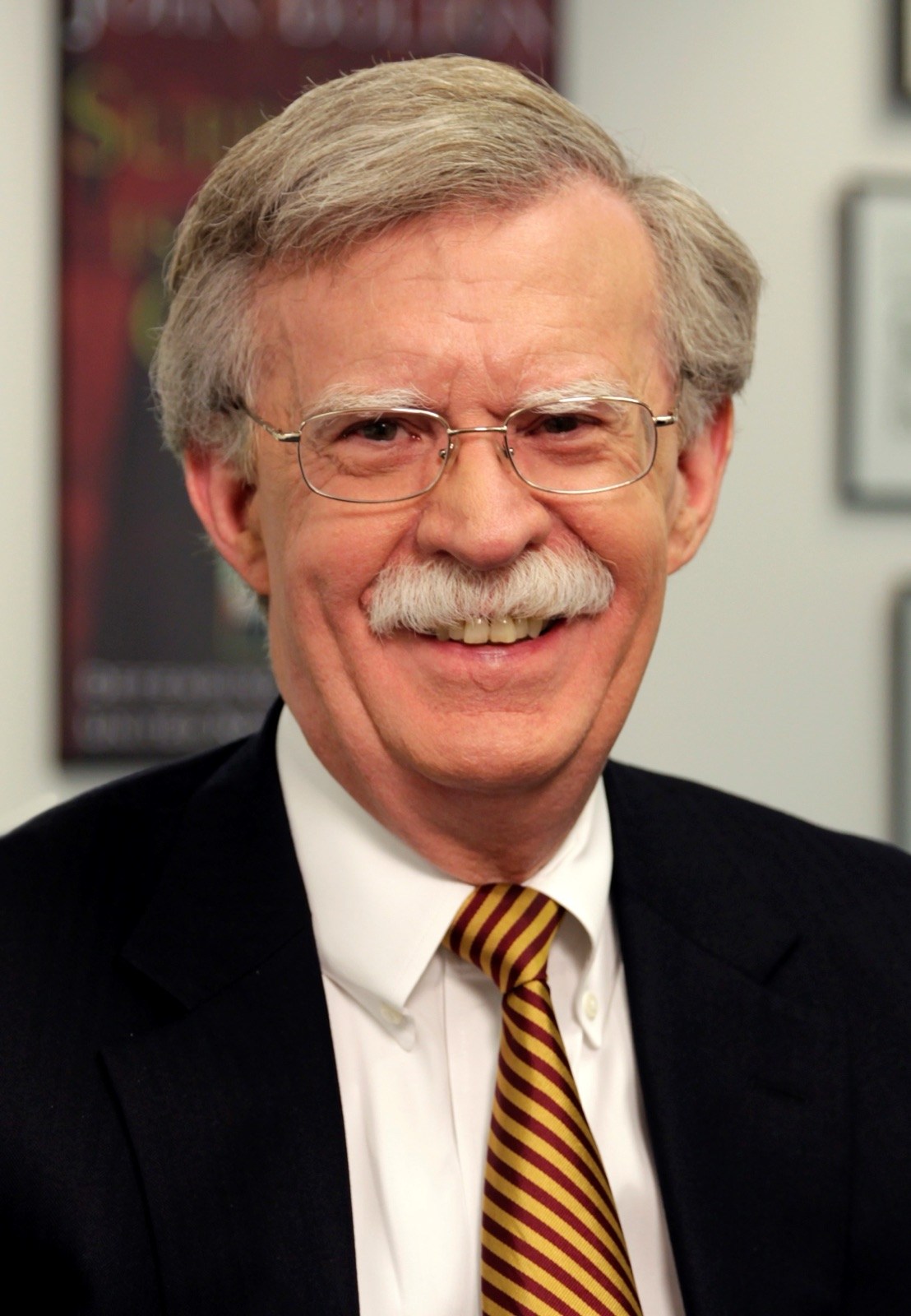
Ambassador John Bolton
Ambassador John Bolton is a Washington foreign policy hawk who has served in every Republican administration since President Reagan, with his most recent post serving as Donald Trump's National Security Advisor.
Episode Summary
Washington foreign policy hawk Ambassador John Bolton has served in every Republican administration since President Reagan, with his most recent post serving as Donald Trump's National Security Advisor. Bolton sits down with guest host and award-winning anchor and foreign correspondent Robyn Curnow and Ex-MI6 Chief Sir Richard Dearlove to discuss his time during the Trump administration, why he is working to prevent a second Trump term, and his thoughts on the end game in Ukraine.
Listen & Subscribe
- Watch on YouTube
- Listen on Apple Podcasts
- Listen on Spotify
Transcript
COLD OPEN
Kernow: I'm Robin Kernow. On this episode of One Decision, former Trump national security adviser John Bolton on his time during the Trump administration.
Bolton: He didn't read much of anything, and he certainly didn't listen very well. So in a given half an hour of an intelligence briefing, much of it was consumed with Trump talking, giving us his opinions on the world as a whole. And the challenges of a Trump 2.0 presidency. If we had had a cold war kind of Cuban missile crisis situation, I don't know that Trump would have gotten through it. So facing another four years, the odds of our escaping that again are pretty remote. And I think for purposes of people in the Western alliance, that obviously is a source of concern.
INTRODUCTION
Kernow: You're listening to One Decision, the podcast that looks at the choices that shape our lives. I'm Robin Kernow, today's guest host alongside Sir Richard Dearlove, the former head of the British intelligence agency MI6. Every Thursday, we explore some of the biggest choices and issues facing our world, talking to the players and influencers, making, informing, and shaping those decisions. Thanks so much for having me this week, Sir Richard.
Dearlove: Robin, it's great to have you on the podcast and a warm welcome, and I look forward to working with you.
Kernow: Thank you very much. And you too. And I I I know that you know our guest from your days as a top spy, and, of course, I know of him from my years reporting and anchoring international news at CNN. Ambassador John Bolton is considered a foreign policy hawk in Washington and in capitals around the world. He has served in every Republican administration since President Reagan. Most recently, he was the national security adviser in the Trump administration. We're delighted to welcome Ambassador Bolton to talk today about a second Trump term, the possibility of that, China, the war in Ukraine, and whatever else we find ourselves discussing. So, Ambassador Bolton, hello. This podcast is, as I said, called One Decision. It's about those big decisions a leader makes in their career that can influence history. My first question to you is the decision to work for Donald Trump. How has that experience defined you?
INTERVIEW
Bolton: Well, it was certainly a great honor to be the national security adviser, even if for only seventeen months. It turned out to be a challenging assignment, more than I expected. But I had met Trump before the election. I had spoken to him during the course of the election, spoken to him many times during his first year plus in office. And I believe that notwithstanding everything that I had heard about him, and I think I had pretty much heard everything that everybody else had heard, I still believe that like his predecessors as president, that he would be aware of the gravity of the decisions he was making, the implications for American security and for others around the world, and that that realization would provide a framework of discipline that would overcome many of the things that I had heard and that were evident to all to see. And unfortunately, I was proven wrong in that belief because there wasn't anything that provided a disciplined framework for him to make national security decisions. And so I spent seventeen months trying to figure out how, in finding my hypothesis disproven, could nonetheless try to create some kind of order so that our policies could proceed in a coherent fashion.
Kernow: So what you're saying, to put it mildly, you were left disappointed in President Trump and his policies and his discipline. So at the moment, he is the front runner for the Republican nomination. There is a huge possibility, I suppose, that Americans will vote him in again if he beats Joe Biden, whoever the Democratic nominee is. From your experience working so close to him, working with him, working in the Oval Office with him, what do you think a possible Trump 2.0 presidency would look like?
Bolton: Well, it won't be good for America, unfortunately, or I think our friends around the world. I've said before and I continue to believe that while Trump did damage to The United States internally and damage to us internationally in his first term, all of that damage was repairable. And in fact, a good bit of it has been repaired. But then in the second—
Kernow: Like what? What kind of damage? Just before we move on.
Bolton: Well, I think his disdain for alliances, his seeing alliances as entirely transactional and not having a broader purpose for The United States. His affinity for strongmen around the world like Vladimir Putin and Xi Jinping, Erdogan of Turkey, Kim Jong-un of North Korea left both allies and adversaries confused as to what America's intentions and goals were. I think much of that has been corrected. I think the damage he did internally is more severe, perhaps in leading to distrust of institutions, which we're seeing him continue in his assault on the judicial branch because of his four pending indictments around the country. But I think that too, the judiciary is a strong and independent branch of government. It will survive even Donald Trump. But in a second Trump term, and I had immediate reference to a second Trump term that would have followed if he had been reelected in 2020, but it applies even to a second Trump term that might begin in 2025. I think the damage could be more severe because he starts from a lower position in terms of his regard for institutions than he did when he first took office. So I think the trajectory begins at the low point when he departed in 2021 after the January 6 riot and then goes downhill from there.
Dearlove: I saw a poll today, I think, that said 64% of Americans, you know, are pretty alarmed by having a presidential runoff between, you know, a very aging Biden and Trump and, you know, for the reasons that you've explained so clearly. I'm really quite alarmed and depressed by what you're saying because it sounds, you know, that you think it really is a serious possibility that he could get another presidential term. And, I mean, people like me who are optimists think that, you know, the good sense of the American people will never permit this to happen, however alarming it looks at the present time. I mean, how do you sort of analyze that comment from someone like me?
Bolton: Well, I'm alarmed and depressed too. I don't know really what else I can say. I mean, it's why I and many many others are working so hard in the first instance to deny Trump the Republican nomination, but it's an uphill fight at the moment. And, you know, we'll see what happens with the trials of some of these indictments, especially the two federal cases. I think a conviction in one or more of them could have a volcanic effect on Trump's candidacy. We'll see what the Democrats do. I think people should understand it's far from certain that Biden will be the Democratic nominee. I think concern over his fitness for office continues to grow and certainly within the Democratic Party. But the mood of the country is very negative toward a rematch between Trump and Biden. There are polls in the range that you spoke of where 70% of the American people do not want a rematch. Whichever one they would vote for, they don't want to see the two of them running against each other. So I think 2024 could look a lot like 2016 and 2020 in that in those two previous elections, there was a large group of people who didn't like either candidate. In 2016, turned out they didn't like Hillary more than they didn't like Trump, so Trump won. In 2020, it was the reverse and Biden won. That group was large in 2016. It was larger in 2020. It's even larger today. And I don't think at this point we can predict who wins between Trump and Biden if that turns out to be the race.
Kernow: And Ambassador Bolton, I know that your book was called In the Room Where It Happened. I'd like to hear you riff the Hamilton song. But more seriously, if we're looking ahead at this possibility of a Trump 2.0 presidency. What did you see? Give us a few anecdotes about what took place in the Oval Office or moments between you and him that are causing you to issue this warning, which is what I think you're doing right now.
Bolton: Well, I tried to write about this in the book. Some people call it a tell-all. I just call it another day in the office extending over seventeen months, and it's the pattern. I wasn't trying to write characterizations of Trump's behavior. I was simply trying to lay it out fact by fact by fact, and people can draw their own conclusions. But, you know, you can start at the beginning of a Trump day when he finally makes it to the Oval Office about eleven a.m. in the morning, and we start off with the intelligence briefing. You know, normally a president reads the daily brief, doesn't have to. Ronald Reagan liked visuals and presidents are entitled to receive information any way they want. But with Trump, he didn't read much of anything, and he certainly didn't listen very well. So in a given half an hour of an intelligence briefing, much of it was consumed with Trump talking, giving us his opinions on the world as a whole. And it was always something to live through, but the amount of intelligence the briefers could sort of shove into the gaps in the conversation was pretty minimal. And I recalled to me the comment that former president Lyndon Johnson once made, and this is given what we know about Lyndon Johnson, this is a real mark of self awareness for him. He said, you know, I don't learn very much when I'm talking. And yet for Trump, that's principally what he did. So that's the intelligence part of the day where you're supposed to be imparting information. Second, in the decision making process, Trump doesn't have a philosophy. He doesn't pursue what we call policy. That's not the way he approaches things. It was said in his real estate career that he never made a schedule, that he'd come into his office in Trump Tower every day and say, okay, what's going to happen today? And that was pretty much the way it was in the White House too. Maybe that's a way to be a successful real estate developer. I don't know. But it's not the way to be a successful president. And then finally, when a decision is made and announced and we begin to implement it, if it didn't go well, and sometimes they don't, the president simply wouldn't own it. He would be pointing fingers. He would say, you know, I knew this was the wrong thing to do, but you talked me into it. And what that leads to among subordinates is people saying, well, I'm not going to offer my strong views on things. So that was part of my responsibility as national security advisor because my office was only 10 or 15 yards down the hall. I usually heard the response first. And that's just not good leadership. You've got to make decisions, Richard, as you know, as well as I do, if not more, often on incomplete information or uncertain information. You have to judge the risks, and then you have to follow through and try and do the best you can to have your decisions implemented. If you're not willing to take responsibility for mistakes, which by the way, all of us make except Donald Trump, then you're not providing effective leadership. I think other than the COVID crisis, which was a long term unfolding crisis solved in large part by the development of the vaccines, we didn't really have a national security crisis that unfolded minute by minute in real terms. We had some tough times, but nothing like the kinds of crises that we saw during the Cold War. I don't know how we would have come out if we had had a Cold War kind of Cuban Missile Crisis situation. I don't know that Trump would have gotten through it. So facing another four years, the odds of our escaping that again are pretty remote. And I think for purposes of people in the Western alliance, that obviously is a source of concern.
Kernow: I want to talk about those intelligence briefings, because you mentioned also the deep loss of trust between Trump and institutions, and in particular, the intelligence institutions, whether it was the FBI after, you know, particularly after January 6, CIA, military intelligence. Can that trust be restored in a 2.0 Trump presidency? And more importantly, what impact would a Trump presidency have, for example, on Five Eyes, that key Anglo sharing intelligence organization, and also AUKUS, for example, which involves nuclear submarines to deter China. What are the global implications of those alliances if Trump comes in again?
Bolton: Well, Trump has his own unique definition of trust and loyalty. And to him, trust and loyalty are personal. I think all of us who worked for him in the administration, people in senior positions around the government, obviously want to be loyal to the president. He's the decision maker. But fundamentally, what we're all loyal to is the country and the constitution. And Trump couldn't tell the difference between them. In fact, if anything, he thought personal loyalty was more important. So when intelligence officials came in and said, well, we think x or y, and it didn't happen to be what he agreed with. He took it as a personal affront. Now, in the course of my career, I've disagreed with intelligence analysis on any number of occasions. That's what you do. You argue back and forth. What you're trying to do is reach the truth because if you don't operate on the basis of truth, it's not going to be long before you get in trouble. And some of these questions are very hard to decide. But that wasn't what Trump was arguing about. He was arguing about whether people were doing really what he wanted. And if they gave testimony in Congress that was inconsistent with the world he wanted to paint, he took that as disloyalty. And he believed that he had sources of information that our intelligence community didn't have. You know, members of the Mar-a-Lago club, people he met at political rallies who would tell him, well, I've heard x. You know, all Ukrainians are basically Russians. Or he had heard Finland was still part of Russia. And he had heard that. He hadn't heard it from us. So he believed he had better sources of intelligence than his senior advisors were providing him. And finally, as I think we've seen in the case of the indictment for the retention of classified information after he left the White House, he had no feeling for the significance of sensitive information. The most egregious example of that actually took place, I was out of the country, but my deputy was sitting into that intelligence briefing and, I'm not revealing anything here, but there was a picture of a failed Iranian rocket launch. Of course, gladdened our hearts when we saw it, but Trump was glad enough about it that he asked to retain the picture. The intelligence briefers and my deputy Charlie Kupperman in the room said, well, please, sir, don't let this get out of your hands. And he said, fine. No problem. They left the room. Before the CIA director was back at her office in Langley, Virginia, Trump had tweeted the picture out saying, the Iranians say we sabotaged that missile launch, but it's not true. I'm glad they believe it, though, or words to that effect, and put the picture as handed to him out on the Internet. So, you know, you asked about Five Eyes and how much people can trust him and other countries like Israel. How much sensitive information would they provide even to other officials in the US government if they feared that it was at risk of Trump blurting it out at a news conference or tweeting it out on one of his social media accounts.
Dearlove: John, it's worse than I feared when I hear your personal descriptions. It sort of sends shivers down my former professional spine, if I can put it like that. But moving on really to the future or, you know, future policy decisions, what is the attitude sort of in the foreign policy echelons of the Republican Party about Ukraine? I mean, is there a serious isolationist tendency in there? Or do they understand the importance ultimately of not letting Putin into a situation where he can claim he hasn't lost this war. Okay. We all know that he doesn't have to win it. I mean, what worries me is that I think there's evidence of some of the isolationist tendencies reappearing. Whereas, you know, in the past, someone like me has always depended on the good sense of the Republican Party to take strong foreign policy decisions. How do you deal with that issue? How do you see that?
Bolton: I would have to say it's gotten more serious in the past six months than I thought before. And certainly from my perspective, there hardly is a national security wing in the Democratic Party anymore. I mean, you can count on the fingers of maybe two hands in Congress how many people understand what's at stake in a world where I think threats are growing and metastasizing, not shrinking. What has happened in the Republican Party, I believe, in substantial measure, not entirely, but in substantial measure is due to Trump and his aberrational views on America's place in the world. But once it starts, the virus spreads. And we had a situation in July when the House of Representatives voted on the annual defense authorization bill. And there were, I think, three amendments to cut off aid to Ukraine. All failed. But one third of the House Republicans, about 70, voted in favor of cutting off all aid. Now the good news is two thirds voted to continue it, and many of those who voted against it knew that their votes were of no consequence because the House as a whole would pass the aid. But nonetheless, what they were trying to do was appease Trump to say, see, I voted against this unnecessary aid to Ukraine. The senate is much more solid. There are probably only three or four of the 49 Republicans in the senate who are wrong on the Ukraine question, but a lot will depend on who gets the presidential nomination. If it's a Reaganite kind of Republican, then I think the dissidents in the house will fall back into line. If Trump becomes president again, then I think it gets very serious and not just for Ukraine. Not across the board because Trump, he likes to bluster and sometimes that actually works against a recalcitrant adversary. But mostly, he likes to deal. And if our adversaries think they can deal, they're ahead of where they might be with a more forceful president.
Dearlove: So what does an endgame in Ukraine look like for a President Trump then?
Bolton: Well, he has said, and this is a paradigm Trump approach, I would get Zelensky and Putin in a room together, and we'd solve this thing in twenty four hours. And that's ridiculous, of course. But what he would do after that failed would be the real test. If he thought Zelensky was being obstructionist, might agree with Putin. He might go the other direction too. Or he might bring in his friend Xi Jinping to be a mediator. I mean, we're in uncharted territory yet again because this war on the continent of Europe, which Trump said would never have happened because Putin would have been invaded if he had been president, is gonna be a test for whoever the next president is. In fact, I think Putin was waiting to see the outcome of the 2020 election. And if it had been Trump, he would have been hopeful that Trump withdrew from NATO as he had threatened to do on several occasions, which would obviously have been of material assistance to the Russians in defeating the Ukrainians.
Dearlove: So to both of you, how does NATO or Europe game this out?
Bolton: Well, I think the near term could be important here because if the Ukrainians don't begin to make more significant military advances, and they're fighting very hard, but we did not supply them with assistance in a strategic fashion. We've doled out this weapon system and then that weapon system after long arguments. It's not the way you fight and win a war. We've put restrictions on the Ukrainians that I think were excessive, and I think we've been deterred by Russian threats, both threats of conventional escalation and nuclear escalation. Putin doesn't have the capability to escalate this war. He doesn't have a hidden army somewhere. If he did, he deployed Ukraine to make up for the abysmal performance of the Russians so far. And our indications are that when he's rattled the nuclear saber, he hasn't redeployed any of his nuclear forces. Our intelligence officials have testified to that in Congress in open session. So I think he's been bluffing. But when we're intimidated, we are being deterred by his rhetoric. I'm worried that if this current offensive doesn't have a more positive outcome that we're at risk at some point in the near future. Putin himself will say, you know, this war has gone on long enough. The cost is so high. Let's have a ceasefire in place and start immediate negotiations. I don't know what President Biden will do. I worry about the French and the Germans that might lock Ukraine into another bifurcation of the country that the ceasefire line becomes a permanent border that gives the Russians a chance to recover and regroup. I don't think NATO has an effective strategy to counter Putin if he does something like that.
Dearlove: Yeah. I pretty much agree with John's analysis. And I think, you know, we are in that respect in a worrying position. But there's one aspect of Biden's support for Ukraine that really worries me, which is even the Biden administration and Blinken, they will never articulate the idea of, let's say, a Ukrainian victory. And it seems to me that there is this sort of anxiety that runs through the Democratic Party, that the Russian defeat and, let's say, political chaos in Russia that might lead to the disintegration of the country even is a bigger worry for them than, as it were, securing or making sure that the Ukrainians come out on top. John, do you agree with that comment? Because, I mean, this business of piecemeal supply of weaponry, of course, you're absolutely right. I mean, if there had been a strategy and, you know, a clear buildup and a clear coordination of the weapons sort of strength that they could have given to the Ukrainians. You could have seen a different outcome.
Bolton: Well, I think they're worried that if we had really pursued the objective that all NATO members say is their objective, which is the full restoration of Ukrainian sovereignty and territorial integrity, that somehow that would have provoked the Russians to do something worse than they had already done. And I just don't think there's any evidence of that, but it has crippled NATO's ability to do what was necessary to give the Ukrainians the wherewithal they needed. I think Biden was obsessed with making sure that Ukraine didn't lose because he didn't want a defeat on his record, but we haven't done enough to allow them to win, which is proven by what's happening on the battlefield now. And I think that is very troubling because of what it tells Vladimir Putin, that he can manipulate Biden and NATO. And it tells the same thing to Xi Jinping. I mean, I think I would see Ukraine as a global war. I think the Chinese are supporting the Russians in a lot of different ways. I think they're moving toward a new kind of realignment around the world of Beijing, Moscow axis, this time with Beijing in the senior position, Russia's the junior partner. And it is a fair point that we don't know what happens in Russia if they visibly lose the war. I mean, I think Putin falls at some point, although his position right now is strong. I don't think the West appreciates that this is not Putin's war. There are a lot of Russians who agree that they wanna recreate in effect the Russian empire. But you could imagine a Russian regime, say, headed by Nikolai Patrushev, who was my opposite number, who's even worse than Putin. You could imagine a government in Moscow that was very weak and unable really to exercise effective control over much of Far Eastern Russia, which would be very dangerous for the West if China were able to exploit that. We just don't know. We're again in uncharted territory. After the Cuban Missile Crisis, there was at least a Politburo in Moscow that could say to Nikita Khrushchev, Nikita, it's time you took retirement. There is no Politburo in the Putin government. There are no institutions that can bring him to account and find a replacement. So if Putin goes, it could be chaos.
Kernow: So you issue a warning that we're already in a global war and potentially a forever war or a never ending war with Beijing as the puppet master. What are your thoughts around Taiwan and China at the moment?
Bolton: Yeah. China's been very assertive about saying that its version of the one China policy is Taiwan belongs to us. That's what they mean when they say one China policy. And I think there's a very sensible analysis that China's now declining population, its aging population, its diminishing workforce, the effect of the one child per family policy, the tightening of central control over the economy are gonna leave China weaker in coming decades. So it's at the height of its military strength now. And if it's gonna act, it's gonna act sooner rather than later. I think it's important to deter China. I think we're behind the curve on that, although I think we can still accomplish it. I don't think actually China's likely to invade Taiwan. They've seen what happened in Ukraine. That's not what they want. They want to inherit the chip manufacturing capabilities and really all of Taiwan's industrial capability. They don't want to grind it into the dust. So I think what they would do is create a crisis, some kind of pretext that allows them to throw a blockade around Taiwan and see if we come to its defense. And I can tell you that certainly in Taiwan, and I believe in Beijing, everybody's watching how the West performs in Ukraine. I've been to Taiwan many times. I was just there this spring and among other things, seeing a lot of old friends and officials and met with the Taiwanese foreign minister who in his office not only has a big stand up flag for the Republic of China, Taiwan, also has a big stand up flag of Ukraine in his office. This is the first time I've ever seen anything like that. So if Beijing thinks that we are serious about repulsing the unprovoked Russian aggression in Ukraine, I think it will weigh on their calculations about what to do with Taiwan.
Dearlove: John, I think you just said for me something really important about China. Most of the people who are my interlocutors on China appear to assume, you know, a rising graph of power and economic influence. I agree with you that there is a sort of fragility in China's success at the moment, and that perhaps it isn't going to be like that at all. And that China faces huge economic and social problems internally, and that Xi's sort of dominance is not to be assumed as a sort of absolute assumption that that's the way China is going to go. How do we get this message across more broadly? Because this sort of fear of China and this velvet glove handling of China, you know, is determined by its assumption that it's, you know, it's an accumulating power and that we can do nothing about that.
Bolton: Well, I think people are beginning to see the fragility that you mentioned, but it's a slow learning process. And I think they've also seen some of the evidence of the real threat China's posing. If you look at how across the global West as a whole, we've come to understand that Huawei and ZTE are really arms of the Chinese state and that their domination of fifth generation telecommunications would be a catastrophe for us all. But there's still a long way to go. And if it's right that China is in a long term secular decline, the threat in the near term, meaning the next ten years, fifteen years, thereby becomes more acute. And that really still is something that, in the private sector in particular, need to become more aware of.
Kernow: Ambassador Bolton, if you were advising the next government, the next administration, either as a national security adviser or as secretary of state, and I'm talking hypothetically here, what needs to be done? What would you advise the next president?
Bolton: Well, I think one thing that's clear is we need more capabilities across the board and higher military spending. You know, there's a bipartisan commission in The United States some years ago, bipartisan, that said we need around a 325 to 330 ship Navy. Right now, we've got 285 ships, and that number is going down. It's a huge budget item. I think the 2% of GDP that we've talked about for military spending in NATO since 2014 is outdated. I think The US has to go back to Reagan era levels, five to 6% of GDP. And I think our friends in NATO need to come up to three or four. And I think we've just got to be more realistic about this relationship between Russia and China. It's not inevitable. I mean, if there were ways to break it, we should. I think we've got to deal more effectively with India, now the most populous country in the world, and maybe the real coming economic power in Asia, not China, as it declines. And we've got to be careful about national security aspects of our trade policy, which we have not been for many years.
Kernow: Tehran also comes into this potentially. What are your thoughts about the recent hostage swap?
Bolton: Well, I think it was a mistake. I think it puts a price per head on Americans that's gonna boomerang against us in many other circumstances, 1,200,000,000 per hostage. Even Gershkovich, a Wall Street Journal reporter now held by the Russians. I mean, do we have another spare $1,200,000,000 to give to the Russians to release him? I just think it's a mistake. Obviously, we're concerned about Americans who are unjustly held. I think you've got to apply pressure and use other forms of diplomatic persuasion. But when you bargain for hostages, you're just really, it's almost human trafficking.
Dearlove: Is the JCPOA dead now? I mean, is there any chance of reviving it or not? I mean, I think you and I share the view that this is not a good agreement, but there is still momentum in the Biden administration, it looks like, to try to revive aspects of it.
Bolton: Well, it's like the pursuit of the holy grail. I mean, they just never give up. And, look, the mistake of the agreement fundamentally was allowing Iran any uranium enrichment capability. Once they understand how to do that, they've got the means to get a nuclear weapon no matter what limitations they commit to. So it was fundamentally flawed from the beginning. And now by its own terms, its provisions are expiring. The regime has never shown any evidence whatever of a strategic intent to give up nuclear weapons. They want relief from economic sanctions. That's for sure. But they don't wanna give up anything in exchange for it. I don't trust them, and I just think it was a bad deal that we should avoid at all cost.
Kernow: On the issue of nuclear weapons, obviously, huge concern about Iran. But if we look again to that conversation about Trump 2.0, how concerned are you about President Trump and nuclear weapons? And did you see anything that caused you concern during his first administration?
Bolton: No. I mean, I think the idea that he was sort of fiddling with the nuclear button on his desk is overstated, but I just don't think he, it's not that I think there's a Dr. Strangelove problem. I think he just doesn't understand what he's dealing with. And therefore, whatever decisions are made are not going to be well considered or well thought through. I think his fascination with reaching deals with the likes of Kim Jong-un or the Ayatollahs in Tehran make it very dangerous because he doesn't understand the implications of some of the trade offs that he's being asked to make.
Dearlove: That argues strongly, John, for you being there if he gets back in.
Bolton: Thanks a lot, Richard. Well, who's part of a Trump cabinet? Number one, he's not gonna ask me. So it truly is a hypothetical question, but I lasted seventeen months the first time.
Dearlove: Didn't he stop you from becoming the secretary of state because he didn't like your mustache?
Bolton: He assures me that that's not true. And, of course, I believe everything Donald Trump says.
Kernow: Ambassador Bolton, I wanna go back to our original thesis, and I know that this is not the first conversation where you are essentially coming out on the airways globally trying to warn the world and Americans about voting for Trump again, and particularly within the Republican Party. How successful do you think you're being, and do you believe that Trump will be the Republican nominee, or do you believe that something will happen between now and then?
Bolton: Well, I think as of now, he will be the Republican nominee unless we find a way to defeat him.
Kernow: How?
Bolton: Well, I think the potential for defeats in these trials of these indictments being convicted by a jury could do it. It could well be if the Democrats come to their senses and find a nominee other than Joe Biden that that would, it may be counterintuitive, but I think have an effect within the Republican Party. If they're not gonna nominate an octogenarian, maybe we don't need to nominate a septuagenarian. Maybe there's somebody who's merely 50 years old who could be president. And I think the shakeup on the Democratic side could have a comparable effect on our side. And I do think the point that, as we talked about at the beginning, the American people do not want to see a rematch. And eventually one hopes in a democracy, the people's views get heard by somebody. So the current environment doesn't look very promising, but we're still a long way from over.
Kernow: Ambassador John Bolton, thank you so much.
Dearlove: John, great talking to you.
Bolton: Thank you, glad to do it.
ANALYSIS WITH SIR RICHARD DEARLOVE
Kernow: So Richard, that was fascinating, wasn't it? What struck you about that conversation with Ambassador Bolton?
Dearlove: Oh, clearly, his determination to stop Trump getting a second term. I mean, I knew that he had, you know, obviously changed his position significantly after that period when he served as National Security Advisor. But I hadn't realized quite how forceful he would be now in his arguments against Trump. I think that was an extraordinary interview and we learned some spectacularly interesting and significant things which really I found disturbing because I would have been a little more optimistic that ultimately Trump won't and can't make it. And I think most of his judgments are pretty sound. He comes across as more grounded than he used to. I think experience of having served with Trump has made John less of a sort of hawkish ideologue.
Kernow: It was a very sober analysis from an expert who, as he said, has been there in the room and has the benefit of this sort of broad historical experience within DC. So if your former colleagues in MI6 or in, you know, capitals around the world are listening to this, how do you think they would react and what kind of weight are they putting on his warnings?
Dearlove: Well, I think as someone who's been in an extraordinary strategic and close position to Trump, you have to put a hell of a lot of weight, excuse my language, on what he's saying. And, you know, let's say it's a sort of widow's warning. That's a wonderful, excellent way of saying it. That's a big deal, because what he's saying is important, very important, and it should make people sit bolt upright and think very hard about hoping for and trying to influence a change, you know. But the trouble is, you know, this is US domestic politics and it's become very complicated. But it is quite extraordinary that you've got a somewhat senile octogenarian as the likely democratic candidate and you've got this, well, I suppose narcissist is the sort of, political narcissist. John's emphasis on the way that Trump sort of personalizes his view of the world, and that it isn't about nation states, it isn't institutionalized, the idea that he, this individual, is the most important element in international relations.
Kernow: When did we last see a similar situation? I mean, obviously, you've had a long career within the intelligence services, and you've come across various forms of leaders or characters. Where is there some sort of comparable parallel in history to a man like Donald Trump?
Dearlove: I can't think of one.
Kernow: Particularly in the West?
Dearlove: Well, I can't. Can you think of one in the West? I mean, the trouble is that you're drawn to figures like Tito in Yugoslavia. I mean, I'm trying to think of people historically. Ceausescu in Romania. I mean, these were politicians that did personalize their political systems to an extent. But, I mean, maybe they were still framed by a bigger institution and bigger international relations because it was the Cold War. So someone like Ceausescu was, as it were, pinned within that framework. Similarly, Tito was pinned within that framework. But they had a strong sort of personal style which spread to their relations with the West, and they exploited that. And of course there were points in the Cold War where the West could, as it were, squeeze, get a knife in and lever open those relationships. I mean, I'm reluctant to make comparisons with people like Mao. I mean, that's going too far and going back too far because, you know, I don't think Trump is in that league. But he's certainly a significant figure in a minor league of political rogues, let's say. So Robin, it's been wonderful. Thank you for allowing me to join you this week as a guest host.
Kernow: No, great, Robin. Really enjoyed doing the interview with you and I think we were both privileged to share that experience of interviewing John in phenomenally good form. He was very clear and very fluent.
Dearlove: Yeah, clearly he feels like certain people need to step up to the plate and he's rallying the troops in many ways. Okay, Robin. All the best.
Kernow: You too. Cheers, Richard. I'm your guest host, Robin Kernow. That's it for this week's episode of One Decision with Sir Richard Dearlove, the former head of MI6. New episodes are dropped every Thursday, which you can like and subscribe to so you never miss an episode. Tell us your thoughts, what decisions have impacted you, and where you live. Or email the team@1decisionpodcast.com. Thanks for listening. See you next time.