Episode Info
- Season1
- Episode6
Hosted by Christina Ruffini and Sir Richard Dearlove
Guest
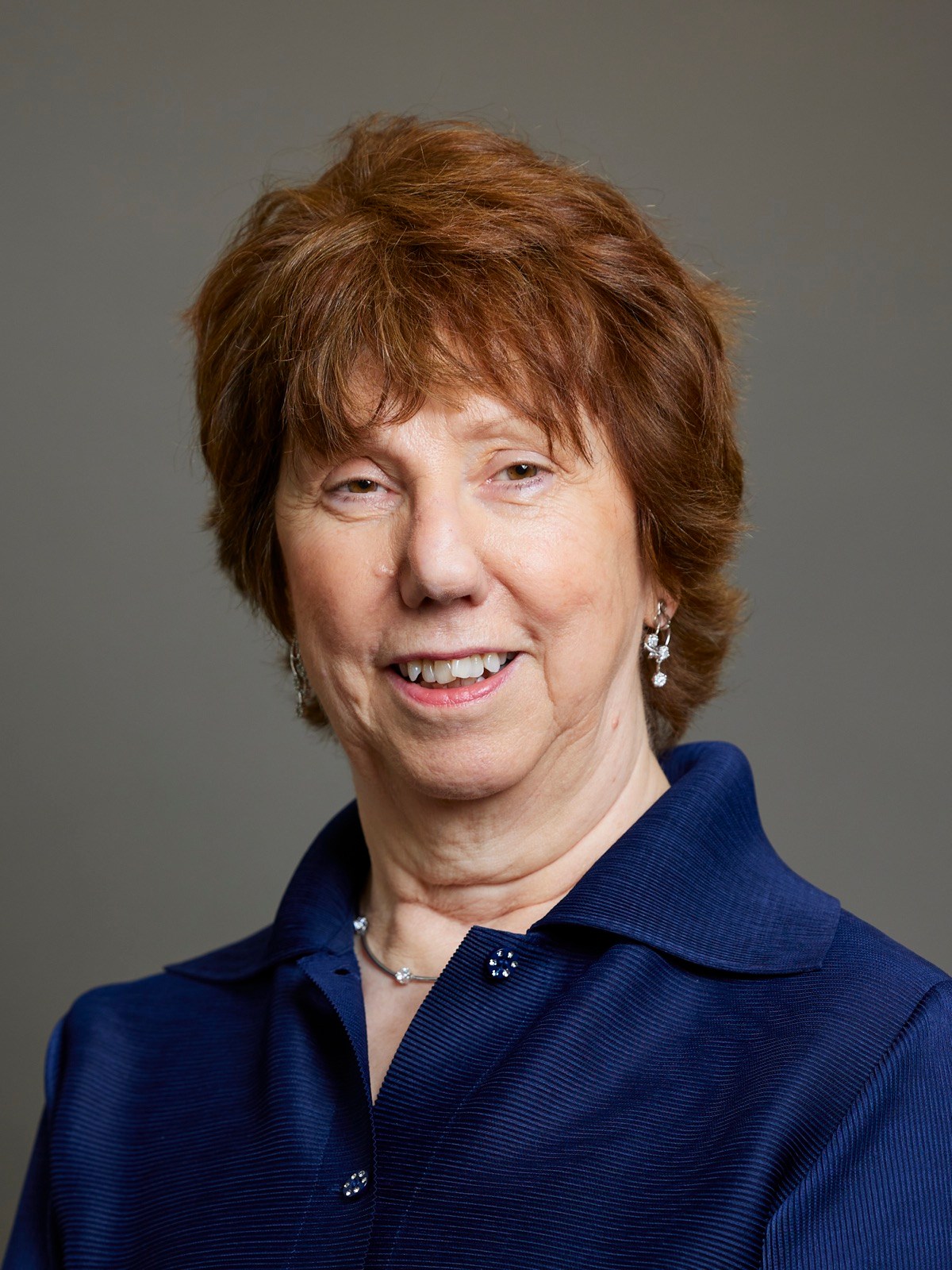
Baroness Catherine Ashton
Baroness Catherine Ashton faced the delicate task of moving past a bitter war and trying to prevent another, knowing that conventional approaches would never work.
Episode Summary
It was the most delicate of situations. A minefield of moving past a bitter war, and trying to prevent another one. Baroness Catherine Ashton knew the expected way of doing things would never cut it.
Listen & Subscribe
- Watch on YouTube
- Listen on Apple Podcasts
- Listen on Spotify
Transcript
INTRODUCTION
Kosinski: Hello, and welcome to this episode of One Decision, where we take you behind the scenes of some very difficult decisions that shaped history, hopefully for the better, though not always. I'm Michelle Kosinski. This week, we're going to the Balkans. Today, a beautiful historic vacation destination along the Adriatic Sea that we all wish we could visit right about now in times of COVID. But not so long ago, still vivid within many of our memories, it was the scene of a vicious, complicated series of wars. And this is where one woman faced an enormous task: to broker an agreement between Serbia and Kosovo, which had been two sides of the multifaceted, unspeakably violent hellscape that was the conflict in the former Yugoslavia through the 1990s, more than a decade after the battles, the war crimes, the genocide, the tension, bitterness, and the impasse lived on. Painful wounds remained figuratively very much open, and Baroness Cathy Ashton, a top European Union official, was about to wade into it. It wasn't so much the ER of diplomacy anymore, but the very beginning of the grueling process of healing and rehabilitation, at the risk of the deadly infection of war flaring up again. But first, let's check in with our guru of international intrigue and all around spymaster, former head of MI6, Sir Richard Dearlove.
ANALYSIS WITH SIR RICHARD DEARLOVE
Kosinski: I hope you enjoyed that introduction, Richard.
Dearlove: Yeah, I think it's a little bit exaggerated, but I enjoyed it enormously.
Kosinski: I think there were some accuracies. Okay. So the absolutely atrocious wars in the Balkans. Where were you during this? Pretty heavily involved.
Dearlove: At the time, I'm chief of station in Washington, actually.
Kosinski: So you were watching this place just blow up. So much killing. What were you thinking at the time?
Dearlove: Well, I think that what we felt was that, you know, Tito during his rule had as a sort of communist dictator, and quite a clever and subtle one, had suppressed for years the ethnic differences in what's now called Former Yugoslavia. And he never actually took any steps to solve the ethnic conflict. He just suppressed it. So once the communist bloc, as it were, fell apart, then things began to go rapidly wrong.
Kosinski: Even today, ethnic violence is still the cause of so many of the world's problems. It's like we just can't get past this.
Dearlove: I think it can take many generations to remove these problems. And even then, they leave a residue, and that residue can be lethal. And I think what often happens is as the problems come close to negotiation and settlement, sometimes the conflict amongst the extremists becomes more vicious and difficult, and certainly in the case of Serbia and Kosovo. I mean, you have a conflict and a contest there, which is, as well, it goes right back to medieval times. Okay, so take us back a bit in time to where this story places us.
Kosinski: The outright horror of that decade of war is over, but Serbia and Kosovo are still, in a sense, on the brink. Kosovo had been a part of Serbia but declared independence in 2008, which Serbia will not recognize. There are still ethnic Serbs in Kosovo. So 2013 comes around, and there's a chance to finally have some kind of functional peace, at least. What's at stake for the region as well?
Dearlove: In both places, there's war weariness by that time. Actually, you know, both sides have a certain amount of guilt. You know, the ultimate prize is a prosperous economic relationship with the EU. So that's, I think, is what is driving them both, but neither of them really want to make concessions either.
Kosinski: Okay. Thanks, Richard. So here we are in the midst of still very much simmering tensions, and the then EU high representative for foreign affairs and security policy needs to be the peacemaker and prevent more conflict. Enter the baroness, Catherine Ashton.
INTERVIEW
Ashton: I would prefer Cathy, if that's okay.
Kosinski: We love that, and we like to keep it very human. So first of all, tell us a little bit about yourself. What made you want to go into diplomacy?
Ashton: So I've been involved in public policy all my life and was brought into the House of Lords by Prime Minister Tony Blair, where I held two ministerial positions before the successor prime minister made me leader of the House of Lords.
Kosinski: At the time, the government only had a reliable 22% of the vote there, so getting anything done took endless negotiation and mediation. She found she liked that.
Ashton: And from there, was asked to go to Brussels to become the first woman trade commissioner and then to take on the responsibility to be the first EU high representative for foreign and security policy, combined with being first vice president of the European Commission. So diplomacy found me rather than my going into diplomacy.
Kosinski: Okay, so set the scene for us. At the time of your decision, what was happening?
Ashton: The pull of the soft power of the European Union was particularly relevant in the countries of the former Yugoslavia, the Western Balkan nations created at the end of the terrible war, who all looked to Europe as their future and where the European Union had indicated that in the end, whenever that would be, they should all be part of the European Union. So here was an example in Europe's backyard of a post conflict group of countries that were looking to Europe and felt that pull, the soft power pull of the European Union.
Kosinski: But both Serbia and Kosovo wanted into the European Union, wanted the security and economic partnerships that could come with it. And that would only come at a price. The conflict would need to end.
Ashton: So the backdrop to my decision was trying to look for ways in which Europe's soft power pull could help support people who had gone through horror and crisis and war in the backyard of Europe.
Kosinski: That bloody conflict, though, was all very fresh. It haunted everything. So as diplomatic gigs go, this one was by no means a guaranteed success. Quite the opposite. At the time, five of the EU member states also didn't even recognize Kosovo as a legitimate country.
Ashton: But what had happened in Kosovo was that in the North, where about 3% of the people lived, Kosovo has about 1,800,000 people. So this is a tiny area, largely Kosovo Serbs. We had got to a position where we had two and a half thousand NATO troops guarding different parts of the area. We'd had the gates that divided Kosovo from Serbia on fire. We'd had conflict. It was, in the words of a diplomat who traveled there, like the Wild West. And so my objective was to try and find a way to make it better for the people who lived in that part of Kosovo, to try and make this small area function better. And that was the focus of my asking both sides whether they were prepared to meet to talk about how that would be done. And that happened in a meeting in the autumn of 2012 between the two prime ministers who had never met before, and for whom it was a hugely challenging decision, a very brave decision, to actually come together and actually sit in my office and talk to each other.
Kosinski: Now, to get that to happen at the behest of the EU, to make everyone get along, what would normally happen is that the EU, in this case Cathy, would draw up a proposal, line up all the things the EU would require of each of them in order to begin to move forward, and then somehow get these two struggling sides to sign on to it. This would be the orderly way of diplomacy. However, Cathy, three years into her job, just felt in her gut that this could not be the way here. This would require something else, something a bit unorthodox and much more delicate. A very careful winding through and around all the ruts and minefields in what you could barely call a relationship at this point.
Ashton: They had to agree between themselves what they were going to do. What I was offering the two sides was a better relationship with the European Union, part of the journey towards their ultimately being part of the European Union. And I had to negotiate that. But the agreement between them, they had to own. It had to be their agreement because they had to go and sell it at home.
Kosinski: Got it. So in making your decision of how to approach this, was it at odds with the way some others involved thought that it should be presented to both sides?
Ashton: It seemed to be at the time that usually what happened was that you would present a proposal to them in writing that said, this is roughly what we want you to do, and this is roughly what you're going to agree to. And it seemed to me that that was a very tried and tested formula in some circumstances, but I didn't think it would work here. And that was because I felt that they would both immediately look at the things they hated within what I had written or we had written, and gang up together against that. It would be our agreement, not theirs. And in a sense, would let them off the hook. Well, you know, the EU presents us with this. It's unacceptable. We're not doing it.
Kosinski: She knew a much different tack was necessary. There was going to be stubbornness and distrust and deep grudges, and she had the unenviable position of being in the middle of it. Nobody wants the gig that's very likely to fail, right?
Ashton: Instead, I said, No, we're not gonna write anything until we've got to the point of agreement. We're going to say to them, These are the issues you have to resolve. And we had a list of them, which were roughly issues, you know, two for you, two for the other, and some that they had to do together. And as they worked through those, that could become translated into the words as to how they were then going to implement the decisions that they'd made. It was very unusual. And for some officials with a lot of experience, they would say to me, Are you sure this is right? This may not go so well. Wouldn't it be better if we presented them with something? This is what they will expect us to do. I just felt it was not the right thing to do. I just really felt that we should let them talk about the issue and come to a conclusion.
Kosinski: In human terms, what was at stake here?
Ashton: For the people who lived in the North of Kosovo, their lives were pretty intolerable. There was a great uncertainty about where they belonged, and there were some very practical issues that needed to be addressed. People didn't have car registration numbers because they no longer had the old Serb ones, but they hadn't got new Kosovo ones. We didn't know what should be stamped on the customs stamp when goods came in to the country. People were being paid both from Pristina, the capital of Kosovo, and from Belgrade, the capital of Serbia. So the police force in the North didn't really know who they worked for. The justice system didn't function properly because people feared, as a minority group, that they wouldn't get a fair hearing. And equally, the majority of people in Kosovo did not want to create a system that was separate. And the practical aspects of life had become extremely difficult. There was a lot of violence. You had a lot of troops from NATO protecting buildings or institutions. So it was not an area that felt like everyday life would in any other part of the region. And of course what you don't get is economic growth, you don't get opportunities for people. And Kosovo has the youngest population in Europe, so lots and lots of young people kind of caught up in this ongoing dispute. So it was a very practical agreement designed to start to make things more normal. We talked about normalization. I didn't ask Serbia to recognize Kosovo. I didn't ask Kosovo not to see itself as a nation. What we said was our purpose is to make life better for people who are trying to manage and live in a time of turmoil and difficulty.
Kosinski: So as you were presenting this to both sides, did you yourself have some doubts that your approach would work in the end?
Ashton: I did, we spent many, many hours. I think I added up that it was something like one hundred and forty seven hours of dialogue. Sometimes in a day we'd spend eleven hours together. You know, without a break, we would just talk. And of course, what happens when you're trying to get people to move forward on an issue is that they will divert onto something else, that they will want to talk about other things, it will get heated, it will become challenging. We made sure that the content of the discussions remained private. Nothing leaked out of Brussels. At the end of each long day or two or three session, I would say to the press only the paragraph that had been agreed by both sides, every comma, every word, and nothing more, so that we didn't get into the blame game or we didn't get into people interpreting parts of what we were discussing. So it was incredibly intense. And at various points, I did wonder whether it would be better for me just to put a piece of paper on the table and say, for goodness sake, this is what you should do. But I always, in the end, came back to the same point, which was something I say to them all the time. This is your agreement, not mine. It belongs to you, not me. You have to go home and sell it, not me. So you have to believe in it, and you have to agree it. I will help you in any way I can, but it's yours, not mine.
Kosinski: It's strange how much this sounds like, and not to diminish all the issues at stake, but like trying to get your kids to put aside their differences and just get along or get feuding branches of your family to finally bury the hatchet. This is a very human thing, right? I guess even when you're dealing with heads of state here, that the resolution often has to come from within. If the law is just laid down or crafted by an outsider, imposed by a judge, the bitterness can linger and fester. So your eleven hour days, there's tension in the room to say the least. You're deep in discussions with these two sides. At what point did you start to see this is really going to work?
Ashton: The first point that I saw that was after the very first meeting between the two prime ministers. So they joked with me now, or joked with me after the event that they were both sweating, and my goodness they were. This was a huge thing for them to do, and we sat them down, each with a translator, and I sat with my wonderful official, a man called Fernando Gentilini, who was brilliant. I knew them and the area so well. So six of us in a room, and we had one photograph taken. And then in those days it was memory cards. The memory card was taken from the camera and given to me. And I said to them, this stays with me and this photograph will never be published unless you both want it to be. And they talked for an hour, roughly, and at the end of an hour I stopped the conversation because they'd said what they needed to say, but you could feel that there was the beginning of a conversation there, a real conversation. And indeed the next day they both said, Yes, publish the photo, which I did.
Kosinski: And it went around the world because it was in its way quite extraordinary. It must just give you chills at that moment to see that this is a real breakthrough.
Ashton: It was just a moment when you just, and we've all been in that situation in different ways, where you just kind of know that there's a real chance that these people can talk to each other. Because that's really what you're after is. Do the people in the room have the ability, the maneuverability, the kind of character, the bravery, if you like, to actually sit down. And so I invited them to come back for dinner because one of the things that, again, you learn in diplomacy or you learn in negotiation is sitting around informally and eating and talking gives you a different framework to explore ideas before you get to the point of decision making. And we needed to explore with them what we felt they really had to do. And these were very practical things again. For example, the very first thing we asked them to do was that in each capital, there should be somebody from the other capital, from the other government who would be based there, not an ambassador, but somebody who would be the go to person. The purpose of that was to avoid problems or misunderstandings and to have a sense that there was somebody on the ground in each place, which they did. They did, they worked that out. And then we gave them particular things that we wanted each to do to help the people in the North from the perspective of their own government. So Kosovo had to think about how it was going to support this particular group of people. And Serbia had to think about how it was going to help make sure that there were not what we called parallel structures in operation. That there were lots of sort of, again, very practical things that needed to happen. How were they going to manage the border? What were we going to do about customs that was collect, the money that was collected at the border and so on. So very practical things to do. So it was about then clearly having the ability to hold a conversation and to talk to each other.
Kosinski: There must have been times when you just were incredibly frustrated.
Ashton: I remember very well one moment when it had all gone off the rails and people were yelling at each other, which is, as you can imagine, in these very tense situations, it can get to that. And in a sense, wanted to allow them to be able to say what they wanted within reason, and then bring it all back down and start talking properly again. But it had just got off the rails, I think I'd been there for something like ten hours with them, and I'd had enough. It was also my birthday, and I can remember it was sort of 10:00 in the evening and you're thinking, well that's terrific, I've really, really had enough of this. And so I just sat there without speaking with my arms folded, and gradually stopped, their voices got quieter and everything sort of stopped because I was obviously just not gonna speak to them. And then I said, well, I'm having a glass of champagne, you could please yourself, but it's one hour by this point to go of my birthday, And that's what I'm going to do. And we all sat around, I have a photograph of it that I took, everybody's sitting around. And I said to them, look at you, we are all sitting around here as ordinary people just doing something quite normal. We're sitting on chairs and sofas and talking. This is what we have to get to. We have to get to the point where the past is recognized and respected, but that we honor the people who we lost by building a better future.
Kosinski: Was this the toughest thing in diplomacy that you've ever had to tackle?
Ashton: Well, of course, the Iran talks for a long time. So they were happening simultaneously, which was also quite interesting. Would leave one for the other quite often. And they were very different in some ways. And sometimes one would become the relief from the other, because you sort of got to a point where you couldn't do any more with one and you'd move on to the other. And of course there were other things going on as well, like the Ukraine crisis at the same time. So it was a time of moving between different issues to be resolved. But in terms of that particular role, which was much more about mediating through the middle rather than negotiating directly, it was very tough. And nobody knew, least of all me, when we started whether we would succeed. It was not a given. In fact, many people, many very seasoned ministers, diplomats who I respect enormously said to me at the beginning, Are you sure, really? I was very fortunate, and I do need to say this because it's important in having support from the US. Because particularly for Kosovo, the US was where they looked to for advice and support, more than Europe. And Secretary Clinton at that time had been incredibly supportive. As I began the talks, she had invited me to join her on a trip together to both Serbia and Kosovo, where she in part delivered the message that she was supportive of what I was doing. And that was extremely important and valuable. In any diplomatic effort, you're really doing it yourself. There's lots of people doing it with you.
Kosinski: Her decision to let these two war scarred nations come up with an agreement organically themselves, born from both pain and hope, rather than to present them with one, ended up working against what many saw as slim odds. On April 1933, Serbia and Kosovo completed the Brussels Agreement. The Serbs in Northern Kosovo would have some autonomy, their own police and court, and Kosovo would retain national authority. It is hard to overstate what a remarkable historic move this was between two entities where there had been such violence and hatred in the midst of a sea of it through more than a decade of the ugliest that war can draw from humanity.
Ashton: Well, of course, it looks practical now because it worked. Had it not worked, it would have looked like a really stupid idea. And that's also the reality. The first pressure is the pressure you put on yourself. What do I know? Have I got this right? Who am I to say this is the way to do it? Well, you know, there is that real sense that you're just a person in this extraordinary set of circumstances and you're trying to do the best you can, but my goodness, you do you know, have the experience and the knowledge? Well, nobody ever has enough of it. And I certainly was conscious of that. The second is that there are plenty of people who don't want to succeed because they don't think that there should be an agreement. And there were plenty of people who wonder if you've just got this completely wrong. And certainly there were lots of people who thought that this was just impossible, that these people couldn't do it. So you're stuck in that sort of world of, Well, I'm going to try this, and the only way to approach you is to say, Well, the worst that can happen is I fail and we end up where we were before. But there is a chance we can make it work. And for a lot of people, particularly in the sort of world of politics and diplomacy, they don't have the necessary support or flexibility to be able to do that. It's very, very hard to go into something that you think you're going to fail. And just to say, until the day before they signed, I was convinced we wouldn't get a deal. And until the morning that they actually did, I was convinced we'd lost it, we hadn't got it.
Kosinski: Why? Because they just seemed tenuous in what they were saying and what they were agreeing to?
Ashton: Because when you get closer to an agreement, when it gets to the point where you've got it, the pressure's really on, the fear sets in. Two days before, for the Kosovo team it had become, they just felt it was impossible. So actually they struggled with it most right at the end. Could see that this was going to be politically extremely difficult to sell back home. Whereas Serbia had moved into a place where they made the decision that they were able to manage and live with what they'd agreed. And when they came back together on that Friday to sign, I actually never didn't let them meet, they signed separately because I just feared that if they got in the same room we'd start all over. They came to sign and did, and after they'd signed, then they were fine. It was sort of watching that moment of signature almost as a moment when you felt the weight lift off them because they'd done it as it were. At the end of it all, I did type it up, the actual documents that they signed, I typed, which was fun.
Kosinski: It must just feel like once the signatures are down, the sky opens up and everyone can breathe a little bit.
Ashton: There's a couple of pictures of me as they sign grinning, and I know that what I'm thinking is, they've signed, that's it. I've got it, smashed the paper off and it's in my hand. Mission accomplished. But ultimately it was theirs, not mine. And that I believe made a difference.
Kosinski: It must be in those moments when you do feel that you're changing the future, that you are shaping their history.
Ashton: I wasn't, they were. I'm very clear about the fact that this is something they did, not me. That we simply provided the opportunity and the way of doing it that allowed them to try out ideas, that it gave them a safe space, if you like, to be able to discuss things with each other, to build, in a sense, a sort of, I wouldn't say a relationship, but to build a way of talking, to be able to skip over having to go through their own positions each time they met. They got to know each other well enough to be able to do that.
Kosinski: And after spending so much time deep in these kinds of discussions where it almost seems like you're a therapist, just letting everyone you know, hash everything out, letting them let it all out, except, you know, they're not just families involved, there are armies involved. Do you stay in touch with the people that you negotiated with?
Ashton: I did, I've visited both and I've seen them at conferences. One can never underestimate just how brave it is to actually say, no, I'll try and do something different. You know, that you bear a huge amount of risk and criticism for doing something, that it would be much easier for them to say, no, we'll just carry on as we are. But they were prepared to do that. And I have enormous respect for the people who were prepared to do that because it's not so often you see it.
Kosinski: Today, that relationship between Serbia and Kosovo remains difficult. Serbia has still not recognized Kosovo as a nation, but there have been significant strides. Just last year, they agreed to work more closely together economically. How do you view your decision as having shaped where we are now?
Ashton: I'm confident that the way that we did that, the way that we approached it, gave them confidence that we were not trying to put our stamp on them, or indeed in a way to try and skew or change the agreement to favor one or the other. But because they owned it, it was for them to say to their own governments and people, We agreed this, because this we can do and should do. And it will have the huge benefits, hopefully, of bringing us closer into the European Union. And I still think that that positioned everybody in the right place. They had to go home and sell it. They had to claim it as theirs. They had to say they weren't told to do this, that they were respected in what they did. And we were able to say this is the agreement they came to, but we've made sure that it is, in our view from the European side, it's a good agreement. It's a good agreement. It will start to deal with the challenges that we have set out, especially for these people living in the North who deserve a better future.
Kosinski: What are your biggest concerns for this relationship today?
Ashton: It's been stuck for quite a long time. And it's been stuck because the politics within the two sides is very challenging. People who've lost family members, there are still many missing people from the war. It's very, very difficult. Do you think this approach shaped other negotiations that you came across later on? Something that was a real lesson for me, but which I often say to young diplomats is, don't start with a formula until you've thought about what it is you're trying to do. You then have to think really carefully about what is the right approach to achieve what you want to achieve.
Kosinski: Cathy, thank you so much for spending this time with us. It really gives us a human look into these kinds of decisions that are made, and very few people understand the kind of work that goes into it. So thank you for that.
Ashton: Thank you, Michelle, very much. I've enjoyed it a lot.
ANALYSIS WITH SIR RICHARD DEARLOVE
Kosinski: It's interesting to think how just a difference in approach to a negotiation can lay an entirely different foundation and even determine ultimately whether the whole thing stands or falls apart. Let's bring Sir Richard Dearlove back in. Richard, what surprised me is that an approach like this, which in retrospect seems somewhat commonsensical, can at the time be a really brave thing to do.
Dearlove: She's improvising, but that's quite a difficult thing to do when you're dealing with such potent problem. But it's pretty unusual in those circumstances, you know, not actually to have your negotiation focused around a piece of paper, and to be arguing about the drafting and the paper which exists and both sides have, and you sort of work through, you know, that final process, it was almost done back to front where, you know, she presents a set of proposals and deliberately doesn't write them down in order to avoid that sort of negotiation blockage that you can get if you've got a text. So yeah, that's a very unconventional approach.
Kosinski: Okay, but somebody could say, what is so courageous about having two sides come up with their own framework and you be the mediator? It could seem obvious, right, in any conflict, whether it's your own family or two warring sides. No? And if a diplomat considers that to be a difficult decision, then maybe no wonder so many diplomatic efforts take so many years to work out.
Dearlove: Yeah. Well, I think that you, in a way, you put your finger on it. I mean, let me draw a parallel, which is the peace process negotiations, you know, with the IRA in Ireland. And that could have gone dreadfully wrong, and in a way that was a similar situation. I mean it did eventually lead, you know, to a solid agreement peace process, you know, which has endured, and think it's when the alternative is conflict, or the alternative has been conflict, you're taking a real risk because you can't be absolutely sure that you're not going to go backwards rather than forwards. I guess I'd put it like that.
Kosinski: Yeah, it's incredible the pressure one must feel in that situation.
Dearlove: Yeah, and that, you know, I mean, you know the Serbs are still talking about, you know, the Battle of Kosovo, which is in 1389 or something. So I mean if you're looking at events that are that distant, that old, can understand the passion and the commitment of the people that you're dealing with.
Kosinski: Yeah, yeah. And the way Baroness Ashton describes it as being such a stalemate when she walked in the door, you have to always, I guess, be worried that something that goes on in that room could just flare things up again.
Dearlove: Yeah, I think you become involved. And I think what's striking about your interview or your discussion with Cathy Ashton is the sort of degree of personal engagement in those negotiations. I think the other thing which is a subtext of her account, and you may be a bit shocked if I say this, you know the EU doesn't really do geopolitics very successfully. It's never done geopolitics. It would love to do geopolitics, but it just hasn't built that strength and reputation. So its foreign policy initiatives are sometimes, you know, rather superficial and don't go very deep, and they certainly don't look at the bigger strategic issues because that's not the way that the EU is capable of acting. Looking back at this region, what do you think Western powers and the UN should have done differently? Well, I think it's clear with the benefit of hindsight, you know, there should have been a bigger intervention earlier. And of course, you know, we all know about the catastrophes, the massacre at Srebrenica, and you know some of the extreme events which, you know, it could have been prevented, handled differently, but and in a way that the US played a really important role when they came in and took a leading role in the negotiations, because the European intervention had, you know, proved itself inadequate to, I would say, solving the problem is probably too strong a word, to managing the problem, so the problems haven't entirely gone away. I mean I think one of the big problems is that the Serbs, who are some of the sort of hard men on the soft underbelly of Europe, have regarded themselves, you know, as the protectors of Christian European civilization, and they think, or they felt that Europe sort of owed them a living, and they were therefore very sort of intransigent in their attitude towards any settlement.
Kosinski: And you know, we just saw two of these former Serb intelligence guys convicted and sentenced in the international court, and to this day there seems to be no remorse.
Dearlove: Yeah, well, problems have continued. I was quite heavily involved in some of that stuff later on when we were looking and searching for individuals who were being hidden in plain sight by the Serbian population.
Kosinski: It's so strange to see their faces now. While this litany of massacres is read out in court. Such horrible memories, and they sit there like stone.
Dearlove: Yeah. And I, you know, I don't think they have a lot of remorse. Clearly you know they obviously see their actions in a different historical context, and you know they're sort of unmoved by their loss, by their defeat, by the fact they're being obliged to accept these settlements.
Kosinski: And where we are today?
Dearlove: The situation has significantly improved, but I think what's happened is that Europe has moved on and shifted significantly. So in a way Serbia and Kosovo may be further from membership than they were when they agreed this compromise.
Kosinski: It's no longer the driving force in the same way. Thanks, Richard. It was great having you and great hearing Cathy Ashton speak so candidly about what went on in that room, even her own doubts of her own abilities. You could just feel the tension. Good thing they kept champagne nearby.
Dearlove: Thank you, Michelle. I enjoyed that discussion very much.
Kosinski: That's it for this episode. I'm Michelle Kosinski. Thanks for joining us at One Decision. Subscribe to us wherever you find your podcasts to delve into the minds of those playing for high stakes and whose decisions can shape our world and our lives in it.