Hosted by Christina Ruffini and Sir Richard Dearlove
Guest
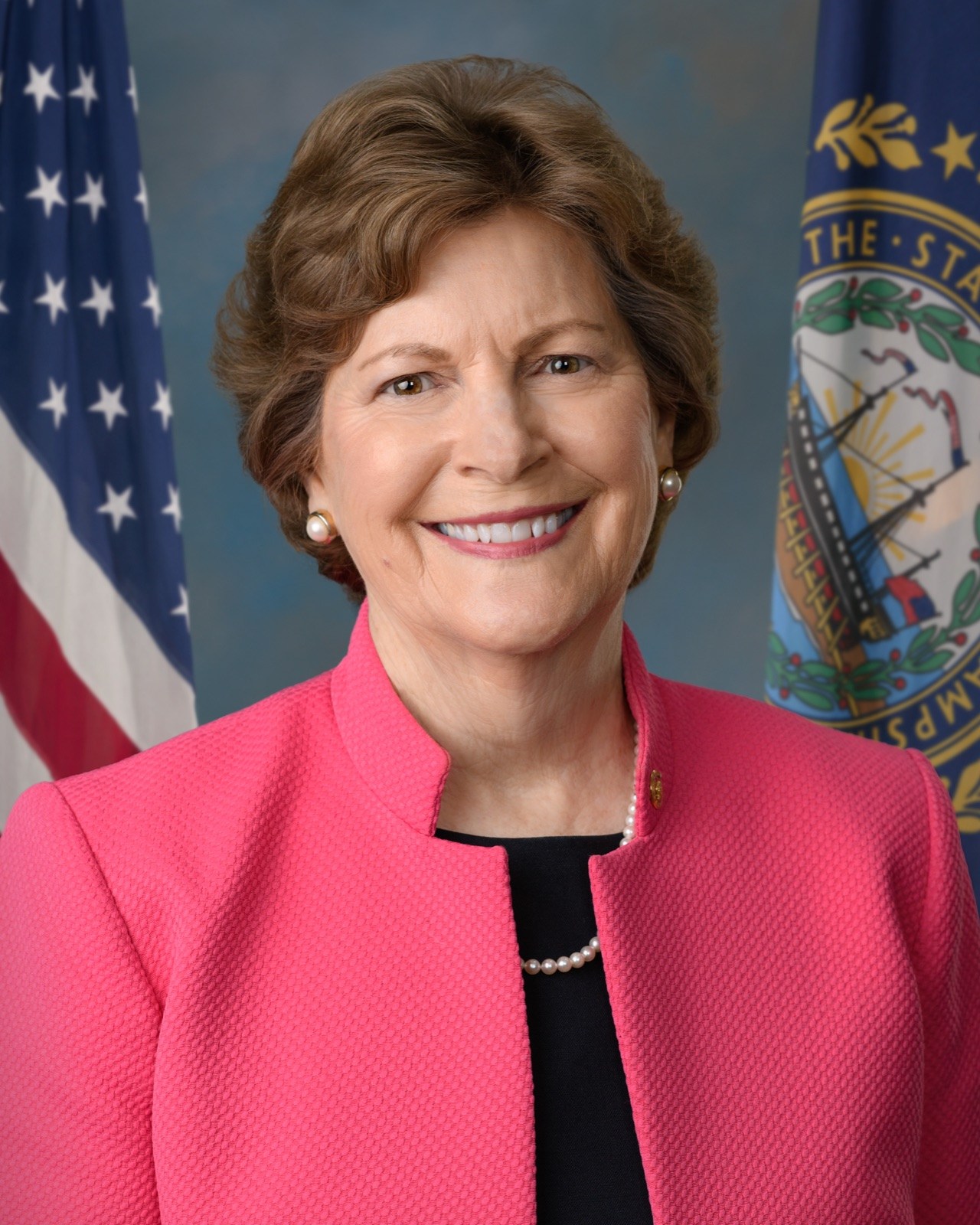
Jeanne Shaheen
Jeanne Shaheen is a New Hampshire Democrat and ranking member of the Foreign Relations Committee who recently visited Kyiv, Ukraine, and shares experience speaking with Ukrainian citizens and discusses whether America is perceived as a reliable ally.
Episode Summary
In this episode of One Decision, host Christina Ruffini sits down with United States Senator Jeanne Shaheen, a New Hampshire Democrat and ranking member of the Foreign Relations Committee. Shaheen recently visited Kyiv, Ukraine, and shared her experience speaking with Ukrainian citizens in the small town of Bucha. She also reacted to the prospective mineral rights deal that Ukrainian President Volodymyr Zelensky has agreed to with the United States, whether she thinks America is perceived as a reliable ally, the importance of the U.S. Agency for International Development (USAID) in mitigating adversary efforts by China, Iran, and Russia, and working with new cabinet secretaries under the Trump administration. The episode also features a preview discussion between French journalist Margot Haddad and former European Commissioner Thierry Breton in English. The full-length French conversation will be published next week and will explore the European Union’s relationship with President Donald Trump, the EU’s efforts in AI investments, tech titan Elon Musk, and much more.
Episode produced by Situation Room Studios. Original music composed and produced by Leo Sidran.
Listen & Subscribe
- Watch on YouTube
- Listen on Apple Podcasts
- Listen on Spotify
Transcript
COLD OPEN
Raffini: At this point, would you consider the US a reliable ally?
Shaheen: Well, certainly not based on what President Trump has been saying. We'll have to see. I think actions speak louder than words.
INTRODUCTION
Raffini: I'm Christina Raffini, and this is One Decision. The voice you just heard was Democratic Senator Jeanne Shaheen, ranking member on the Foreign Affairs Committee. And we had a lot of foreign affairs to talk about, from Macron's visit and the vibes in the Oval Office to her recent trip to Ukraine on the third anniversary of the war, and also how US President Trump's harsh rhetoric and false allegations against Ukrainian President Volodymyr Zelensky are impacting that war effort. We sat down in her Washington DC office. Let's have a listen.
INTERVIEW WITH SENATOR JEANNE SHAHEEN
Raffini: Senator, thank you so much for joining us. I was in Munich. I know you were in Munich, I hear you just got back from a visit to Ukraine. You went to Bucha. Can you tell us what that was like?
Shaheen: None of us had been to Kyiv since the war had started. It was compelling, disturbing, the trip to Bucha. It showed the resilience of the Ukrainian people. They're willing to resist, and it showed just what a murderous thug Vladimir Putin is. You know, the Ukrainians, we met with the mayor of Bucha. We met with the priest. There had been a mass grave of a couple of 100 of the civilians who were killed. There were over 500 killed in Bucha in that thirty three day siege. It was horrific and they had a display that showed some of the photographs of finding the graves, taking the corpses out of the graves. We met with the investigators who were investigating each murder individually and they showed us the picture of the Russian commander who had given the order. The order was to frighten the civilians, to do everything you can to try and reduce any resistance from the civilians. And it was, for me having watched that on the news at the time that they uncovered the siege and threw the Russians out, I thought this was a small village someplace in the hinterlands of Ukraine, but it's not. It's a suburb of Kyiv, and the tanks were stopped right there at the suburb. So it really pointed out the stark contrast in between the Russians and the Ukrainians and what's at stake in this war.
Raffini: So you said it was a bipartisan trip, and you said Putin, it showed what a murderous thug he was. How do you go on a trip like that and then come back and listen to the American president call the Ukrainian president a dictator and say that Ukraine is at fault for the war? And, you know, listening to the rhetoric coming out of the White House, what do you do with that, and how do you talk to your Republican colleagues about that?
Shaheen: Well, it's very distressing, and the president's wrong. He's just wrong. Vladimir Putin is the dictator. President Zelensky was duly elected by the people of Ukraine, and he has a higher favorability rating than Donald Trump. All Americans saw the Russian tanks going into Ukraine. So we know that Russia started this war, that it was unprovoked, that this is part of Vladimir Putin's effort to recreate the Soviet empire. We also believe that if he's successful in Ukraine, then he's gonna go on to Poland, to the Baltics, to Romania, Moldova, Eastern Europe. I mean, I'm sure you talk to people in Munich who are very concerned about Putin's ambitions and the United States needs to pay attention to that. We don't want to have Putin invade a NATO country and invoke Article Five that will mean the United States has to put troops on the ground. We've benefited from the Ukrainians' willingness to fight to defend their freedom in their country. We've been supporting them in that effort. We need to continue supporting them because it's not only important to the Ukrainians to stand up, for us to stand up to Putin, it's important to our other allies not only in Europe but around the world and it's a message to our adversaries, to Xi and China who President Trump claims is the biggest threat to the United States, and yet he's doing everything he can to undermine our ability to compete with China and combat Xi.
Raffini: When you were in Munich, how concerned are European leaders that if there was a need for Article Five, like you were just talking about, that mutual defense clause, that the US, that this American administration would not live up to its expectation, would not actually support Article Five if it was triggered?
Shaheen: Well, as you know, the Senate passed legislation that said a president can't take us out of NATO. And I think that's an important safeguard and we pointed that out to some of the Europeans that we met with when we were in Munich and continue to point that out. I think it's good news that the president has nominated a NATO ambassador from the United States and we haven't yet had that hearing in the Foreign Relations Committee but I think it's an indication that we should assume that the President is going to continue to support NATO and our involvement in NATO. And listen, if he and my Republican colleagues really are concerned about China, the most important thing we can do is continue to be a strong member of NATO, continue to support our allies and partners, and it sends a very important message to our adversaries.
Raffini: I also wanna ask you, I think it's yet to be confirmed, but it seems like Zelensky has potentially agreed to a deal with the US for, it looks like it's gonna be 50% of mineral rights in the future, for continued US support. What is your take on that? And, you know, if I were in the White House right now, I would make the argument that this agreement proves that Trump's bullying tactics actually were effective here.
Shaheen: Well, I think anything that helps position Ukraine for any peace negotiations is a positive move. Now what we heard when we were in Ukraine is that 40 to 50% of those mineral deposits are actually in territory controlled by the Russians. So maybe part of the deal is President Trump is gonna get a deal with Vladimir Putin on the mineral rights too. So I do think there is support to do everything we can to help get a peace in Ukraine. And from my perspective, one of the most important aspects of that is ensuring that the Ukrainians are positioned in the most positive, favorable way for them. If this deal helps with that and President Zelensky is comfortable signing it, then I support that.
Raffini: I wanna ask you in general, when it comes to European security, Keir Starmer is about to come and visit with Trump, and the UK announced today that ahead of this visit, they're cutting the foreign aid budget and beefing up defense budget. They're taking some of that money and putting it into defense. I'm wondering, first of all, what your thoughts on that are and if this is gonna become part of a trend. Is this the way European leaders are gonna have to ingratiate themselves to Trump in order to deal with this White House?
Shaheen: Well, I don't think it's just about ingratiating themselves with Donald Trump. I think it's also about the defense of Europe and the security of Europe. We had a very good meeting with President Macron from France on Monday, a bipartisan group of senators. But one of the things he pointed out, and I think he's doing a good job trying to rally European leaders together, is that, and we heard this in Munich as well, we heard it from Mark Rutte, the NATO Secretary General, we heard it from other leaders in Europe from the Baltic states, and that is that Europe needs to do more in its own defense, it needs to step up. And I think there's a lot of support for that on both sides of the Atlantic.
Raffini: I mean, is an argument to be made. This is one of the reasons I've said this. The policies coming out of the White House, you know, if you're on the opposite side, can be very upsetting and seem kind of crazy. But I think one of the reasons there isn't more pushback to some of them is there's always a bit of a kernel of truth in them. And NATO defense spending, you know, used to drive Obama crazy too, but he just complained about it a little differently, a little more quietly. But is there an argument to be made that, you know, seventy five years on from this war, these European economies have in fact benefited from the fact that the US has been paying for their defense, and maybe it is time for that to change a little bit.
Shaheen: Sure. And I think most European leaders will acknowledge that and will agree that they need to do more to step up. Now 23 of the 32 NATO members have reached their 2% of GDP. Now we're looking at increasing that percentage and one of the biggest offenders here is Canada in terms of not yet reaching their 2% of GDP. So I think we need to continue to encourage that but to also recognize, and this is where I don't agree with President Trump's strategy, because whether it's talking about tariffs or talking about the war in Ukraine and praising Vladimir Putin, anything that separates us from our allies and partners is not conducive to our own national security. And it's important not just for our allies to see that we're gonna be a strong defender of them, but it's important to our adversaries. And one of the things that has happened as the result of this war in Ukraine is that we've seen Russia partnering with North Korea, with Iran, and with China. The reason they have been able to continue this war as long as they have has been that support from our adversaries. All countries that want to undermine and destroy and take over the United States. So what President Trump is doing when he undermines our allies and when he says that he's gonna be on Vladimir Putin's side is to undermine our own national security, and that's in no one's interest.
Raffini: If you were in Europe, if you were in Canada, if you were in Mexico, at this point, would you consider the US a reliable ally?
Shaheen: Well, certainly not based on what President Trump has been saying. So we'll have to see. I think actions speak louder than words. So what happens with the tariffs? Again, why do we wanna antagonize our biggest trading partners?
Raffini: Why do we wanna antagonize Canada? Why do we wanna make that more difficult? That's not in American business interest. It's been interesting to watch the pushback from Canadians who, you know, you think of as, you know, the nice polite neighbor to the north, putting Canadian flag stickers on all the items in the supermarket that are Canadian so that people buy Canadian and not American. At some point that is gonna start impacting the economy.
Shaheen: Absolutely. And it does have real impacts. You know, we've been talking to businesses in New Hampshire who are affected. One company in the western part of the state who does significant business with Canada. They've been working on this relationship for a number of years and what they've heard from the Canadians is when those tariffs go into effect, there's going to be a 50% surcharge on everything that they sell. Well, this is a small company, they can't accommodate that. So it's going to have real ramifications and it has an impact on consumers. This president was elected saying he was going to reduce inflation, address the price of groceries, he was going to address the price of rent, mortgage rates, energy costs and what's happening to all of those? They are going up, they are not going down. And this president is not paying any attention to that. He's all about retribution and antagonizing anybody who he disagrees with.
Raffini: You know, as a journalist who's gone all over the world, sometimes I'm welcomed as an American and sometimes maybe not so much. But one of the things that has helped has been USAID programs. And when you go places where those trucks roll in with USAID on the side of them, it is easier not just for American journalists, but for American businesses, American politicians to have a positive public opinion from local groups, organizations, populations, and to work with that country. Can you talk about the impact of the soft power loss from gutting USAID and what you think the long term ramifications might be?
Shaheen: Yeah. It's very distressing and all over, something that makes up only about 1% of the federal budget, which is foreign assistance. And, you know, as we were on our way to Ukraine, we passed through the town that's about 20 miles from the Ukrainian border in Poland. They have done a lot to support Ukrainian refugees, but we met with some of the service providers. And what made me so sad was talking to one woman who was providing services for the children of Ukrainian refugees. And she said, the worst part about cutting off your assistance was you told us we had to take down the American flags. We talked to one man who provided mental health services for refugees and he said, you know, in Poland we always looked up to the United States. You have always been our dependable ally and now we don't feel like we can trust you anymore. That has long term ramifications. And again, if you care about, if you're really worried about the competition from China, if you're worried about our adversaries undermining the United States, why in the world would we stop those services and programs that help people, that make them feel positive about the United States? And when we discontinue those, we know who is going to move in and pick them up and that's China. They're already doing that. We're already hearing those stories. So this is not in America's interest.
Raffini: But why is that argument falling flat with a lot of Republicans? I mean, I'm shocked at how, especially with the voter base, they just seem to not have any interest in foreign aid. If you read, you know, there was a story about a USAID family having to self evacuate from the DRC and other stories about PEPFAR, which, you know, I've been involved in for a really long time reporting on, this AIDS distribution, which was set up by a Republican president. The comments are, they're not Americans. We don't care. They're not Americans. We don't care. Why are we sending money? How do you bridge that empathy gap when it comes to foreign aid?
Shaheen: Well, I think we need to remind people that maybe they don't care now about them because they're not Americans. But when that conflict arrives at America's shores, when Americans need to put boots on the ground in places around the world because we are being attacked, because our interests are being undermined, then they're going to care. And it's a whole lot cheaper and better to do it now than to allow the situation to get to a conflict. And, you know, for most people in New Hampshire when I talk about the war in Ukraine and why it makes sense to support the efforts in Ukraine. And I say to them, because if we don't continue that support, then who's gonna stop Vladimir Putin? And when he attacks Poland or a NATO country, my grandsons are gonna have to go fight. Do you want your children, your sons, and your children to go fight? Most people understand that argument. So I think we've gotta make sure that people understand what's at stake here.
Raffini: So how have your interactions been with Senator Rubio over at the State Department? It seems like there's this give and take where he and the White House have approved some foreign aid, and then it's getting trimmed back by these DOGE agents. Have you interacted with any of these DOGE people? Do we know who they are?
Shaheen: Well, we know who some of them are because we sent some of them, those who got into classified areas of USAID, we sent them document preservation letters to say, do not destroy what you've taken. And the court has said you need to start these programs back up again and we heard that again from the court this week and yet what we haven't heard from the Department of State is a real effort to get the programs back up and running.
Raffini: So you don't think there's impetus from the secretary's office to really fix this?
Shaheen: I don't think the secretary has done that yet.
Raffini: Why not?
Shaheen: You'll have to ask him. I don't understand. I mean, I think Secretary Rubio understands the importance of our foreign assistance. He certainly did when he was a senator. He seemed to be supportive of it, right? And he certainly was at his hearing, but it's not clear to me at all why he basically seems to have ignored the court order.
Raffini: What's your take overall on the current tranche of cabinet secretaries? Do they have any real power or independence, or are they just completely at the behest of the White House?
Shaheen: Almost everyone, not completely everyone, but almost everyone I've talked to has basically deferred on any issues of politics or controversy to Donald Trump, saying, I'm here to do what the president says.
Raffini: So what do you do? What do Democrats do? Where does everyone go from here? And who is in charge of the Democratic Party?
Shaheen: Well, we're all in charge of the Democratic Party, because we don't have a presidential nominee. And I think we need to continue to raise the concerns.
Raffini: And if that doesn't work?
Shaheen: We gotta keep at it. Because the alternative is that Donald Trump is heading down that road to autocracy. There's a playbook there, and he's following it pretty closely. He's trying to get rid of independent media. I mean we saw that again. They were going to decide who gets access to him in the White House. He's getting rid of people, in terms of cutting researchers and scientists, he's undermining that effort. I mean, he's trying to get rid of the Department of Education. He wants to get rid of education and educational opportunities for all Americans. So this is a playbook and we've seen, he said he wants to be king.
Raffini: Thank you, Senator Jeanne Shaheen. Please stick around for a preview of an all new, all French episode coming to the feed later this week. Journalist Margot Hadat spoke to former European commissioner Thierry Breton about the evolving relationship with the US and Europe, Elon Musk, Europe's AI efforts, and more. Take a quick listen of the sneak peek.
PREVIEW: INTERVIEW WITH THIERRY BRETON
Hadat: Zelensky is coming to Washington DC. They're gonna talk about the mineral deal with President Donald Trump. What do you expect from this discussion?
Breton: We know that this discussion has been going on for a few weeks already. I think it was at the beginning of proposal coming from Zelensky, which was probably a smart idea to involve, let's say, the United States in this architecture of security because if the US will have some interest in Ukraine, so may have also the willingness to defend it. So now we will have to see under which condition. I understand that it is probably a much more balanced deal that has been played at the beginning. We understand also that President Trump in his way to negotiate deals is always moving, starting to move very far away as objective and then maybe come back a little bit. So we'll see where it will land.
Hadat: This proposal actually shocked a lot of European countries that said that it might create a momentum on the international scene for the United States to ask for different things around the world when they want something else. Some people said it's blackmail. Some people say it's exploitation. What would you say?
Breton: Well, but it's not new. I mean, we know that this is the kind of discussions that we need to organize ourselves and to be ready to have with our partner and ally. So that's maybe new for some of us. But we know that this is how the new administration is willing to discuss. Now look at what happened with Mexico, saying that we will increase drastically 25% the tariffs. And then, okay, but if you give me something else, which is also very important by the way, the fight against fentanyl, which is a tragedy, and the fight against illegal migration, then I may review it. So it's transactional. Something in Canada, even if maybe a little bit less clear because there's maybe only 1% of fentanyl coming from Canada and 1% of migration, but we see what is at stake. And for us in Europe, we need to be ready also. But there are things which are not negotiable, of course, it is the integrity of our territory in Europe and also our democratic laws. That's something that is obviously by definition untouchable. But the rest, of course, when you have a discussion for commercial agreements or tariffs, this is something, of course, that are always open for discussion. But we need to be very clear on what can be discussed and what cannot be discussed.
Hadat: Tensions might arise between the United States and Europe. What do you think Europe's role on the international scene should be?
Breton: Europe is a very strong partner of the US. We are buying more than 1.5 trillion of goods from the US every year. We are very, very strong partners. And I think it's important to remind. Of course, President Trump is willing to have a total balanced partnership. Let's discuss it. And I think it's a fair discussion to have. And I'm coming from the business myself, so I understand this. But again, there are things that are not negotiable outside of business, which is again integrity of a country or democratic rules of a country. The rest is totally potentially negotiable. Now the question is with whom to negotiate and to discuss. We have our institutions in Europe. And of course, normally I should say, it's important to discuss with the one representing our institutions. For example, for us in foreign affairs, it is of course the president of the European Council. It is Antonio Costa. He's a former prime minister for Portugal. And it is the former prime minister from Estonia, Kaja Kallas. She's now our high representative. So this should be the two persons to discuss with when it's ready. We know that Trump administration prefer to have bilateral discussions, could be with Viktor Orban, could be with Giorgia Meloni, could be, which is a good idea I think, with Emmanuel Macron, would be probably also with the new German chancellor, Mister Friedrich Merz. If it makes more comfort for the administration to do it, why not? But at the end of the day, for us, when one of the member states will speak in this capacity, it will have, of course, to be fully coordinated with all the other ones. This is why personally, I think it's more efficient, of course, to discuss with the head of the European Council or the head of our diplomacy, Kaja Kallas. But we'll see what happened.
Raffini: Thanks, Margot. Of course, that excerpt was in English, but the full episode will be in the feed in French coming soon. For more exclusive content in a myriad of languages, be sure to check out onedecision.com and, of course, our YouTube page. I'm Christina Raffini. For the whole team, this is One Decision. Thanks for listening.