Episode Info
- Season22
- Episode4
Hosted by Christina Ruffini and Sir Richard Dearlove
Guests
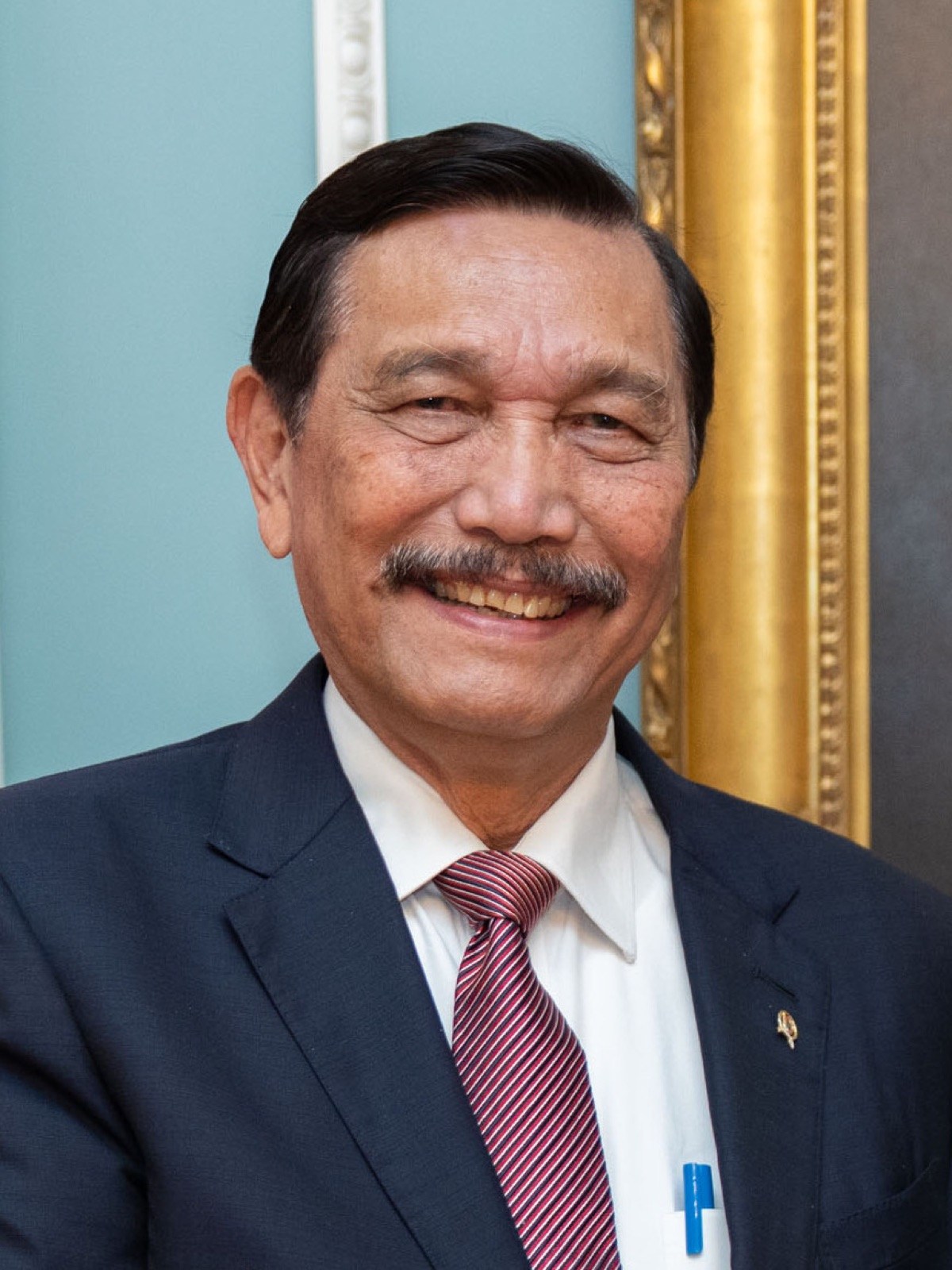
Luhut Binsar Pandjaitan
Luhut Binsar Pandjaitan is a retired four-star Army general and Indonesia's Coordinating Minister for Maritime Affairs and Investment who has known Prabowo Subianto for decades.
Ben Bland
Ben Bland is Chatham House's Asia Pacific Director and provides analysis of Indonesia's upcoming elections.
Episode Summary
Indonesia is a rising powerhouse. Its economy is growing— now the 7th largest in terms of GDP. It has huge oil and gas stockpiles, the biggest nickel reserves in the world, and critical materials for semiconductors, laptops, and smartphones. And—arguably its most valuable resource— a diverse, youthful, and digitally native population. Next week, 205 million registered voters head to the polls to vote in the nation's legislative and presidential elections—the world's biggest single-day election. The current presidential frontrunner, Prabowo Subianto, an aging former general accused of war crimes and former son-in-law to Indonesia's last dictator, is on the cusp of winning power thanks to a TikTok campaign that's rebranded him as a 'cuddly Grandpa' figure. One Decision—your Global Election Headquarters for 2024—sits down with Minister Luhut Binsar Pandjaitan, a retired four-star Army general and now Indonesia's Coordinating Minister for Maritime Affairs and Investment who has known Prabowo Subianto for decades. Host Julia Macfarlane talks with Chatham House's Asia Pacific Director, Ben Bland, for his analysis of what's at stake in the election.
Listen & Subscribe
- Watch on YouTube
- Listen on Apple Podcasts
- Listen on Spotify
Transcript
INTRODUCTION
Mcfarlane: You're listening to One Decision, the podcast that looks at the choices made that shape our world. I'm your host, Julia McFarlane. What you're hearing but not seeing is the rather unedifying sight of the 72 year old front runner in the Indonesian elections, Prabowo Subianto, a former general accused of historic war crimes, a former son-in-law to Indonesia's last dictator, Suharto, doing a very silly and awkward looking dance on stage during the campaign. Perhaps surprisingly, his strategy appears to be working for him. This might be the first general election in Indonesia's history that has fought not over differences in policy or strategic visions, but over TikTok. We'll get to that later. But first, let me say that while I do have a huge personal interest in Indonesia, I was born there, lived there, and still have family there, it is a fascinating place that you need to pay attention to. More than 200,000,000 people will vote on Valentine's Day. There will be more election officials facilitating the count than the entire population of Singapore. This is a country that has the seventh largest economy in terms of GDP, the largest reserves of nickel in the world, and the third largest democracy after India and the US. We've got Ben Bland, who's the director of Asia Pacific at Chatham House, to give us all the analysis of what's at stake in this regional and rising powerhouse. But first, we go to Jakarta to talk to Minister Luhut Binsar Panjaitan, also a former army general. He has known front runner Prabowo Subianto for decades. He now serves in the cabinet of the incumbent president, President Jokowi as he's known. I started by asking Minister Luhut what was his assessment of the outgoing president, who's been one of the most popular figures in the country in recent years. I think we are lucky to have President Jokowi
INTERVIEW: MINISTER LUHUT BINSAR PANJAITAN
Panjaitan: because he he's a good leader. He care very much about the people of Indonesia because he told me the other day that he came from unfortunate family, very unfortunate family in Solo. So he understand about poverty. No need people lecturing him about poverty.
Mcfarlane: Well, it's interesting you say that because someone who doesn't know much about poverty is Prabowo. He obviously comes from one of the most powerful wealthy families in Indonesia. He has access to huge amounts of money. He was married into the Suharto family. Does he have your endorsement? Do you think he should be the next president of Indonesia, and will he be a good one if he wins the election?
Panjaitan: I think he's the best candidate among the candidate that we have today. Yes. He's came from the rich family. I've been together with the Prabowo the last forty years or maybe fifty years. Yeah. And I know him well. He really love this country. And he want also to see his legacy in the near future. And he's willing very much to continue what the program has been done by the Pak Jokowi in order to bring Indonesia high income country in the future. And he's very smart. And I believe with if he become a president, I think he can bring Indonesia like what Pak we have done the last ten years. That's what I believe.
Mcfarlane: Obviously, Prabowo Subianto has a long history. He was a special forces commander under Suharto. He is accused of committing atrocities in East Timor. He was accused of ordering the kidnapping of scores of protesters who were demonstrating against Suharto, his father-in-law, the previous dictator. A dozen of those protesters are still missing to this day. An Indonesian investigation, the Truth and Reconciliation Commission, found that Indonesian forces, including Kopassus, and I know you were a general, you were part of Kopassus, that commission found that Kopassus was responsible for committing war crimes during the occupation. And that's part of Indonesia's history, and that's part of Prabowo's history. Do you think he's changed? And what would you say about the human rights allegations that people made against Prabowo?
Panjaitan: Well, I think maybe he makes some mistake before. Everybody has their own past and all. Everybody make a mistake, maybe. I make a mistake maybe also, but not very much exposed maybe. If I look at the last thirty years, let's say, he has been doing very much, pretty good for the our country. So I'm not gonna say that he's a perfect person, and nobody perfect person. But I think he can be the very good president for Indonesia. Then he can continue what the President Jokowi has been doing the last ten years. So that he, the one, I think, suitable to do so because he dared to say no and he dared to say yes. That's, I think, the beauty of Prabowo.
Mcfarlane: How do you think he's changed since those days when he was in charge of the special forces? What kind of change has he made in himself?
Panjaitan: I think he's much more mature. If we look at back to, let's say, fifteen years ago, not too very long to twenty years ago. He's getting old, but he's getting mature, and he understand that his character, we needed to lead Indonesia. And I love very much because he also picked up the young guy to be his vice president candidate, and we'll see it happen. Jokowi's son. Yeah. That's the reason also I fought for him, because a combination of senior and young guy, which is, I think, can make Indonesia even better in the near future. Because what happened for the next fifteen, twenty years, this is today. If we don't do it right, it's gonna be bad for Indonesia
Mcfarlane: Indonesian future. You have a military background. You worked in defense. You are now a minister for investment as well as businesses, and it's one of your key priorities. The relationship with China, which is obviously very important. A lot of countries in not just Southeast Asia, but around the world are trying to work out how to deal with China. They wanna do business with China, but obviously it presents a security challenge. How should Indonesia approach the Chinese question?
Panjaitan: Julia, Indonesia, our Indonesian population, today, 282 million something. By 2030, going to be 300,000,000. And this country is very rich. And with the program that President Jokowi have been doing the last ten years, make Indonesia much stronger. So Indonesia, I think, is too big to lean to any power. Maybe some people thought that Indonesia begging here. No. We learn from the COVID. When India lockdown, we cannot get even paracetamol. You have to survive with your own domestic support.
Mcfarlane: But what about, for example, places like the South China Sea and the Natuna Islands, which are Indonesian islands, which are inside China's so called nine dash line. They continue to send ships inside that area of Indonesia's economic exclusive zone.
Panjaitan: They never send any their ship inside of Indonesia, and they never also crossed the, you know, the border Indonesia and Indonesia
Mcfarlane: expelled Chinese fishing fleets from inside Indonesia's economic zone. There was an incursion. Indonesia had to expel these Chinese fleets from inside Indonesian waters. President Jokowi visited the Natuna Islands. He boarded a naval vessel there, and it was a very strong message to tell China to back off. Talk to me about that situation in the South China Sea. Talk to me about the Natuna Islands and what the situation is there, particularly given that you are from a military background. So you can speak to Indonesian security when it comes to these islands.
Panjaitan: Well, first of all, our relation with China, very, very good. Let me repeat, very, very good. And China help us also for the downstream industry. There's no question about that. But I talked to the Chinese leader. I said we have to respect to each other. So far, we don't have problem with China. No problem at all. They never crossed the border of Indonesia. They never. So
Mcfarlane: what's the problem? The problem is with your Natuna Islands, which are just off the coast of Borneo, the Chinese want that area. It is inside their nine dash line. And Indonesia has been building military bases there and building it up, but they don't have enough people to adequately staff it. The fishermen there say there is not enough support from the Indonesian military
Panjaitan: and that there are often Chinese vessels lurking just out of sight, and they feel under pressure. As far as I understand, we don't have problem with that at all. If they enter our area, maybe if they cross for coincidentally, I will let them out from Indonesia. Simple as that. Why should fight
Mcfarlane: unnecessary thing? Can I ask you, a lot of countries around the world feel like they are being forced to choose between being partners with America and being partners with China? How is Indonesia dealing with that situation?
Panjaitan: Well, with America, we have very, very good relation. I have a very good contact with Jake Sullivan, and I see I have a good contact also with Anthony Blinken. So we communicate with each other, like, a critical mineral, for instance. Been discussed this pretty well and a lot of progress. There are some differences here and there. It happened, could happen sometimes, but in general, I think we are doing pretty good. And we love very much also to maintain our relation with US. Because if you look at also Indonesia,
Mcfarlane: majority people of Indonesia live in America. There's no question about that. I think it's very interesting because when the US was trying to drum up international support for the coalition against ISIS, the jihadists in Iraq and Syria, they really wanted Indonesia to join the global coalition. Indonesia has a very successful anti jihadist anti terrorism unit called Densus 88. It's been very successful at targeting Islamic terrorism in Indonesia. Why did Indonesia not join the US coalition against ISIS? I mean, that was something the Americans really wanted them to do. So why didn't they join?
Panjaitan: Well, yeah, why should operate in the other country? You know? We look at our own backyard. You know? We can defend our backyard pretty well. That's already part of our our contribution.
Mcfarlane: But with respect, there were plenty of Indonesian militants fighting in Iraq and Syria. Plenty of them joined ISIS. They could have constituted a security threat for Indonesia if they came back home. Did it not make sense to assist the US and join the global coalition against ISIS?
Panjaitan: Well, we have also problem domestically because in order to make stability to clean up also within the country. That's what we did so far, and we are very successful on that because the methodology of US and recent differently to approach this issue. How? We have our own strategy. We're not gonna disclose to you. I think it's interesting because you say, we want to stay friends with America. America is very important to us.
Mcfarlane: And that was something that could have helped that relationship. And it's very notable that Indonesia did not join the coalition. It didn't have to do much. It could have been something largely symbolic, just some small support. It was so noticeable that Indonesia refused.
Panjaitan: No need to be like that. You know? What we have done so far, I think, is the best for Indonesia, the best for the international. You know? So that's, I think, domestic issue. And other thing, Julia, I don't believe the other country can infect Indonesia, whoever they are, or even America or China or Russia, whoever cannot. They cannot control Indonesia because Indonesia, the largest archipelagic country, you may take one island, but you're not gonna be successful over there because the spirit of Indonesia against the other country invaded Indonesia is very high. So we don't need that one. But if you look at also like this in America, in Afghanistan, America, in Iraq, they lost trillion of dollars. What did they get over there? Nothing. Nothing. So we maintain also relation overseas with the other countries. But we remind them, we have to build our relation based on respect to each other. That's one very clear. We make it very nice tone to any countries. No country can dictate Indonesia. I promise you. I mentioned earlier. Such a big country, Indonesia, no country can dictate Indonesia, especially for today. With our economy today like this, we understand now what we're going to do next because this country is so rich
Mcfarlane: with the resources, natural resources. Are the Chinese going to be involved in any way in all the new infrastructure that's going to be in the new capital that's going to be relocated from Jakarta to the city of Balikpapan in Kalimantan, which is known as Borneo?
Panjaitan: Well, not necessarily Chinese involved. I think some Indonesian conglomerate also invested in a new capital. And Elon, I spoke to Elon last Friday, and he will be here. He's going to inaugurate his Starlink press in Indonesia. So we're going together. We plan next ten days maybe from now or two weeks, depending on the Starlink preparation in the new capital.
Mcfarlane: That's very interesting about Elon Musk. I mean, Jakarta used to be Twitter's biggest city in the world. Do you think he's doing a good job running the company?
Panjaitan: Oh, I don't know about that. I was in his factory when he sealed the deal about the, you know, territory at the time. Yeah. Back to nearly two years ago. Yeah.
ANALYSIS WITH BEN BLAND
Mcfarlane: Minister Luhut Binsar Panjaitan speaking to us from Jakarta earlier. Now we have Ben Bland joining us next. Luckily for us, he's just arrived back home from Indonesia where he has been monitoring the election campaign so far for Chatham House.
Bland: Yeah. It's really quite incredible. I've been lucky enough to monitor at least two national elections and quite a few local elections in Indonesia in the past, and five to 6,000,000 election workers on election day at about 800,000 polling stations. So just the number of election workers is probably, you know, same size as, you know, population of Singapore, the whole place, the population of South Carolina or Ireland. So you're talking about huge numbers of people involved. Obviously, more than 200,000,000 voters, and more than half of those are under the age 40, so are really young electorate. Everyone gets a holiday, for the national elections to make sure there's high turnout. And in the past, we've typically seen 80% type turnouts, the sort of things that we would love to see in the UK and other more circled established democracies. And I think the other fascinating part of it is how you get these really accurate unofficial counts within hours of the election polls closing. Even though it's such a big complicated election, the votes actually counted as soon as polls close in the open in front of, you know, the local citizenry, in front of observers from all the different parties. And that means that opinion pollsters can send out maybe 2,000 observers to different polling stations sampled across Indonesia. And although the official results, because there's so many candidates across all the different levels of election, take a month, within about three or four or five hours, you get these really good rough quick counts, they call them, which give people a very good idea, especially in the presidential race, where there's three candidates. So the whole enterprise takes a very long time to pull together. But I think in the past, it's always been really well run, and there's broadly a high degree of trust from Indonesian citizens in the process and the results. Although it's often the case that the candidates will contest the quality of the election, but that's often done in bad faith in the past anyway rather than on the basis of any real kind of electoral fraud or wrongdoings on a mass scale.
Mcfarlane: It's so interesting to hear those crazy numbers. And the thing that I always try to get across to people who are not really familiar with Indonesia is that it is a country of so many contradictions. And it's so interesting hearing you describe what sounds like an incredible model for an open, reliable, free, and fair election. And yet Indonesia is also a country where you don't have a great amount of freedom of the press, and there are things like election intimidation tactics. And so anything you say about Indonesia, you can very often say the exact opposite at the same time. And the other thing that I think is really important to get across to people is that this is a very young, as you point out, very young, very dynamic, very plugged in society. And it is a country that is hugely signed up to social media, very active. There are more smartphones than there are people in Indonesia, I believe. That's been the case for a long time. And the front runner, General Prabowo, is someone who has tried to win the presidency twice before. He has a very checkered past, and yet somehow he appears to be doing really well with the young and on TikTok.
Bland: Yeah. It's it's really interesting how he's been able to do that. It's partly about smart campaigning. Prabowo has always had really good teams around him and has raised the money to get, you know, smart people doing social media, doing mass media, doing all kinds of different things. And there's obviously been this effort to portray him as some sort of cuddly, avuncular or grandfather like figure. So I think he's tried to refresh his image. It helps, as you said, that it's quite a young population. And I think, generally I mean, I studied history, so I'm a history geek. But, generally, Indonesians are not very interested in history, and the history isn't taught much at least sort of contested history on the school curriculum. You don't see much debate in Indonesian society, and so people are just generally looking forward. So that obviously allows people who do have a complicated past to focus on forward. And, also, I think Indonesians tend to be quite forgiving, but what maybe will help him win this time if he does eventually is that partnership by bringing Jokowi's eldest son in as his vice presidential candidate, by pitching himself as the continuity candidate who'll continue Jokowi's legacy. You know, whatever you think about what Jokowi's done, it's an undeniable. He's one of the most popular second term leaders in the world, approval rating something near 80% after a decade in power, which is quite unusual, I think, in any democracy. And if Prabowo can't get over 50% of the vote on February 14, there will be a runoff election as well. And if that happens, I think you might see the dynamics change a bit. If you have two candidates rather than three, you can probably expect a more heated race where perhaps some of these historical issues, issues of character
Mcfarlane: might come to the fore more. In our conversation with Minister Luhut, I did ask him about General Prabowo. He served under General Prabowo after independence. Of course, Prabowo has been accused of war crimes, human rights abuses. It's so interesting to me to have a man involved in that, tainted by that, to then be embraced by young people and the new generation and to be remodeled as a cuddly grandfather figure, I find really extraordinary.
Bland: I think it's important to point out that the allegations about Prabowo and human rights abuses generally date from from later, right, from the eighties and nineties. So mostly, it's about what Prabowo is alleged to have done or overseen or allowed his troops to do in Timor Leste and then sort of Indonesian run East Timor. And then sort of allegations about what happened to various activists who were kidnapped and disappeared around the time of the fall of Suharto in 1998. I just think you gotta think about the age of people who are now forming, you know, large chunks of the electorate. I mean, anyone who's, what, 25, 26, and younger was born after the fall of Suharto. And most of those people who the half of the electorate who are aged 40 and under would probably have, like, very little experience of that. I think it's also a case that, obviously, Prabowo has been active in democratic politics for a long time. Right? And these allegations date to things that happened in the eighties and nineties. So he's had a long time to sort of move on. Whether or not Indonesians, you know, are comfortable with that is a different question, but he's been active in public life as the leader of the Gerindra Party, as a presidential candidate and as defense minister now for five years. So I think that's probably, you know, why, you know, that's pushed the allegations really to the back of people's attention because they have just moved on. And that's not something that's just happened now. That's probably something that, you know, process that started, what, ten, twenty years ago.
Mcfarlane: The other really interesting thing about our conversation with Minister Luhut was his reaction to questions about the situation in the South China Sea. Now when Beijing started being very aggressive and assertive with its so called nine dash line, all these areas that it claims in both the East China Sea and the South China Sea, countries like the Philippines, Vietnam getting very upset with China initially when this expansionism really started coming to a force. Back then, so a few years ago, Indonesia was trying to keep out of it. Indonesia was trying to have nothing to do. There were, you know, the Philippines was trying to get support from its ASEAN neighbors and Indonesia was one of these countries that didn't want to hear anything about, you know, we need to stand up to China. That's changed in recent years because Chinese expansionism has now reached Indonesia's economic zone. And when I put that to the minister, he first of all tried to deny that there'd been any kind of skirmishes. And I had to remind him that actually the Indonesians actually had to eject Chinese fleets that had carried out incursions into Indonesian waters, that Jokowi himself boarded a military naval vessel in the Natuna Islands. It was a very strong symbol and message that he was giving to Beijing to back off. Indonesia does have a territorial dispute with China, and it was interesting that this minister who comes from the military, very close to the former defense minister, now potential future president, who's also a military strongman, he tried to make it seem like there was nothing to see here.
Bland: Yeah. It's interesting. I think we have seen this tendency before that generally the Indonesian leadership tries to play down the tensions with China. The nine dash line, this sort of vague Chinese claim intersects with Indonesia's exclusive economic zone, as you said. And there have been cases of, you know, disputes over Chinese fishing people active in Indonesia's EEZ or Chinese, you know, state vessels harassing Indonesian fishing fleets that are there in Indonesia's EEZ. So there clearly is a dispute over those waters. You know, the Indonesian foreign ministry likes to say there isn't a dispute, but I think you can't unilaterally say there isn't. I mean, if the other side is claiming something that you say is yours, de facto, there is one. But I think you gotta think why are they saying there isn't a dispute? I guess they hope it is relatively small. They hope it can be ironed out somehow with Beijing. And they, yeah, they don't want to be ganging up with other Southeast Asian neighbors against China. They would rather sort of go their own separate ways. And I think that sort of credit to China's diplomacy, right, saying we wanna deal with people bilaterally, and it's also that fear of some sort of Chinese economic coercion, especially because we know there's been a really significant increase in Chinese investment in Indonesia in the last decade and often on very high profile projects like the Jakarta, the Bandung high speed railway, like some of the key mineral processing projects and some of the ambitious plans to attract new industries, like e-commerce and electric vehicles. So I think there's a fear that if Indonesia pushes too hard, they might lose some of this investment. I also think that the political elites don't want the public on their back. So they're trying to play the issue down so that they have wiggle room to manage the relationship with Beijing. And what we've seen here from China is increasing assertive stance. So I think it is a difficult position that Indonesia's in. I think the last thing I'd say is that I think it's generally a sense in Southeast Asia and particularly in Indonesia that one way to get China on side or to find balance in the relationship with China is to embed China into Indonesia's economy and Southeast Asia's economy, which is kind of the opposite of what western governments are trying to do now where they're talking about derisking, which is basically protecting certain parts of your economy from China or banning Chinese investment, limiting trade with China in semiconductors or nuclear power stations or whatever it may be. But I think the approach in much of South Asia and certainly in Indonesia is the polar opposite that if we can embed China, Chinese companies, Chinese technology in our economy, somehow China will need to have better relations with us because there's a mutual interest in keeping that, you know, flow of trade and investment going.
Mcfarlane: It's so interesting because there doesn't seem to be much of a concern about debt trap diplomacy or economic coercion from China rather than derisking their economy, trying to get closer to China's economy. There's no fear of something similar happening as what's happening in Sri Lanka. And of course, these are two very different countries. But Indonesia is really feeling confident, isn't it? It really is now seen as a rising power. This dynamic, young, hyper digital plugged in populace that is driving a lot of growth, they want the world to sit up and listen and take notice of them, and they're very much wanting to call their own shots. And it was very interesting that Minister Luhut, when I asked him about the polarization of the world and a lot of countries feeling pressurized into picking a side between the US and China, he pushed back very strongly against that and basically said that Indonesia is powerful enough and strong enough to call its own shots.
Bland: I understand that, and I understand that Indonesia does want to have a bigger voice. And I will say that, you know, people in the business elite, people in the political elite see an opportunity in a sense to sort of play different outside powers off against each other and try and extract maximum economic benefits for Indonesia. So I think that obviously makes quite a lot of pragmatic sense. I mean, I think what the minister said, I'm sure, is true to the extent that I don't think actually that the US or China wants Indonesia as an ally. I mean, China doesn't have alliances, and I don't think the US is looking, would look to Indonesia as a possible formal ally. And I think, yeah, for sure, Indonesia won't have to choose one side. But I think one thing that can't be avoided is this sort of politicization or the geopoliticalization of industry and trade and technology and supply chains. So that the choices that Indonesia and other countries like Indonesia make with one power and the companies of they come from China or the US or other, western countries, that will have an effect on how the government and companies from the other side treat them. I think if you think about, you know, these products of the future, things like EV batteries, EVs, semiconductors, if Indonesia wants to get into more of these kind of, yeah, emerging high-tech manufacturing areas, if you partner with Chinese companies, there's a real risk that you're gonna end up excluded from exporting your products to the US, to Europe. Equally, if you kind of move into aspects of the kind of US and European supply chains, it may be that China, which is pursuing its own self reliance policies, effectively squeezes you out of access to its market. So I don't think it's about one choice, but I think there's gonna be a squeeze from many sides. And there'll be choices that Indonesia will take on many things. Then Indonesia will have a free choice, but there will be costs and consequences for those choices. And I think that's something different from maybe five or ten years ago. And there isn't really much that Indonesia can do about that. Right? I think these pressures are important, and Indonesia's economy isn't strong enough or big enough to be self reliant in its own regard to develop. It needs kind of foreign investment. It needs access to markets, access to technology, etcetera. So I think it's gonna find itself squeezed from multiple sides. But, you know, there's still an optimal path through, at least in the short to medium term, where you somehow maximize benefits. And it also depends how far is the US on one side and China on the other. How far are they gonna go with their own kind of self reliance, decoupling, derisking, whatever you call it? It's still quite early days. But if they're gonna go much further down this route, I think the pain points for third countries like Indonesia that trying to have friendly relations with both sides are gonna be, you know, multiplying.
Mcfarlane: I am still extremely skeptical about Prabowo's image rehabilitation. I have an anxiety that a President Prabowo may, once in office, try to use methods or measures to ensure he continues to get to stay in power, whether that is massaging some of Indonesia's independent institutions or doing other kinds of, you know, electoral fiddling. Is that a concern or a fear that you think is a serious one? Do you think a President Prabowo would be happy to be voted out and there would be a peaceful transfer of power at the end of his first term, or do you think the jury's out?
Bland: Well, if we look at his track record, he hasn't been a very happy election loser the last two presidential campaigns. When he lost, he brought court cases, you know, which is his legitimate right. But he was also, you know, really casting doubt on the legitimacy of the process despite a lack of evidence of any kind of widespread or meaningful electoral malpractice or fraud. So I think you do have to worry about that. He's obviously, you know, not really talking much about democracy in a negative way now. But in the past, he has said it's sort of it's too expensive. It's too messy. It's too complicated for Indonesia. The government should have simpler ways of getting things done, which I think, you know, a lot of Indonesian activists find quite alarming given his personal track record and the fact that already under Jokowi, we've seen kind of the hollowing out of some of these important democratic institutions and checks and balances. So I think there is a real concern in Indonesia about what would happen when you hand over the keys to that sort of slightly weakened democracy to a character like Prabowo. We'll have to see. Right? There's still an election to come. I also do think that there are still quite a number of decent channels for criticism, for opposition in Indonesia, you know, academics. There are still critical journalists, very critical investigative media outlets like Tempo Magazine, of course. So, you know, I think democracy is living things. Right? They might be undermined. People from the top might try and manipulate them, but there are channels with which other people in society can fight back. And I think, you know, that contest in Indonesia has kind of been ongoing since 1998, since the fall of Suharto. So I don't think kind of the rules of the game and the balance of powers has settled yet because it's such a young democracy. So I think there probably is gonna be quite a big contestation. But I guess this is a bit of a curious point, but maybe the best hope is just the kind of the bureaucratic inefficiency and the kind of confusing multiple layers of government and the general difficulties of implementing anything in Indonesia might also apply to someone trying to kind of you know, if they were to try and manipulate the system, you know, to pursue their own personal will and benefit, you know, you'd hope that some of those inefficiencies would also hold them up. And we also see that Indonesians up to now do have some bottom lines. Right? I think we've seen that under Jokowi, they've largely been happy with the economic performance, and they haven't worried too much about some of the things that have happened to these checks and balances. However, when there was talk, serious talk of Jokowi having a third term by either changing the constitution to allow him to get reelected or somehow delaying an election. In the end, it was clear that the public would not stand for that. And the people around Jokowi who are pursuing those kind of options dropped them because I think polling showed that the public just wouldn't accept that, that the right to choose their own leaders was just too important. So I do think there is a kind of popular bottom line, and, you know, we'll just have to see whoever wins. Are they gonna test that? Hopefully not. Hopefully, they will respect the system and the process, and people will find ways to keep whoever is in power honest.
Mcfarlane: Fascinating. I feel reassured, and I think that's who would have thought that Indonesian bureaucracy and clumsiness could be one of the biggest bulwarks of safeguarding democracy? Such an odd, fascinating, maddening place. Thank you so much, Ben. That's it for this week's episode of One Decision. We drop new episodes every Thursday. Like and subscribe so you never miss an episode. Drop us a line. Tell us your thoughts. What decisions have impacted you and where you live? You can write to us. Our email is 1decision@1decisionpodcast.com. From me and the team, thank you for listening, and see you next time.