Episode Info
- Season5
- Episode3
Hosted by Christina Ruffini and Sir Richard Dearlove
Guest
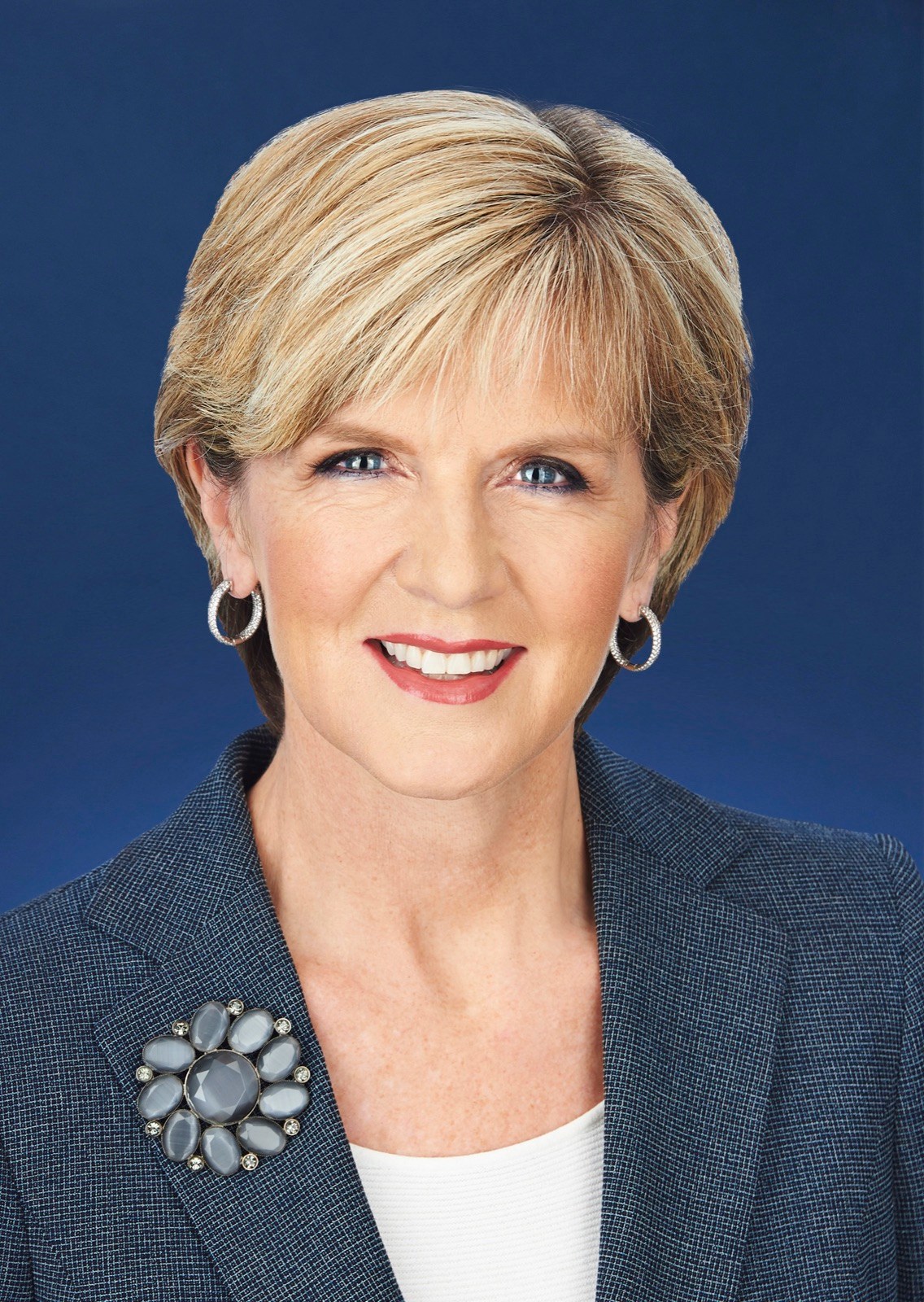
Julie Bishop
Julie Bishop was Australia's Foreign Minister between 2013 and 2018 and discusses Australia's priorities in a Western alliance post-Trump.
Episode Summary
China’s growing power is a big concern for the West, but perhaps nowhere more so than Australia - US strategic partner and Five Eyes member. Julie Bishop, Foreign Minister between 2013-2018 talks to One Decision about Australia’s priorities in a western alliance post-Trump, and how the West needs to approach and counter, Beijing.
Listen & Subscribe
- Watch on YouTube
- Listen on Apple Podcasts
- Listen on Spotify
Transcript
COLD OPEN
Bishop: The great power competition with The United States is, of course, playing out in our region. And a number of countries feel pressure that they will at some point have to choose between The United States and China. And Australia is, for the first time in its history, in a rather unusual situation.
INTRODUCTION
Mcfarlane: Welcome back to another season of One Decision Podcast. I'm Julia McFarlane, and I'm really excited to be cohosting today's episode with the former chief of MI6, Britain's secret intelligence service, Sir Richard Dearlove. Hello, Sir Richard. How are you?
Dearlove: I'm very well, Julia.
Mcfarlane: Julie Bishop was foreign minister between 2013 and 2018. And in that time, she led the development of the Australian foreign policy white paper published in 2017 at a period of great change. It was the first white paper and recalibration of Australia's international engagement in fourteen years. Now in that time, of course, there had been massive challenges to globalization and shifts in strategic power, meaning, of course, the growing force and assertiveness of a rising China. All of this had a profound impact on Australia, a key Western defense ally located in an increasingly contested region. Now we have a fascinating episode coming up because Sir Richard was in the interviewer chair today, and he had a fascinating chat with the former foreign minister of Australia, Julie Bishop, on some pretty big decisions she made whilst in office that helped to shape the region. Let's dive straight into Julie and Sir Richard's discussion.
INTERVIEW
Dearlove: Hi, Julie. How are you?
Bishop: Hello, Sir Richard. Very well indeed.
Dearlove: Okay. Well, you know, this is the, we call the One Decision podcast, and the one decision I wanted to focus on with you was your foreign policy white paper of 2017 in the latter stages of your time in office as Australian Foreign Minister, and the evolution of Australia's foreign policy really as an Indo-Pacific power. I mean a lot has happened since that paper was written, and obviously the key to it maybe is Australia's relations with China. But I'm very interested in how you now see that decision and what the consequences have been.
Bishop: It is interesting to look back over the last few years. We published a white paper in November 2017. And from the outset of my time as foreign minister back in September 2013, I wanted to refocus Australia's outlook and integrate the Indian Ocean with the Asia Pacific in terms of our foreign policy attention in economic security and foreign affairs and for Australia to think in truly Indo-Pacific terms. And it is fair to say that the Indian Ocean part of our foreign policy remains a work in progress. But I think it's worth noting that Australia is bounded to the East and to the West by two of the world's great oceans, the Pacific and the Indian. Yet we traditionally focus more on the Pacific. Yet Australia has the largest maritime jurisdiction of any state in the Indian Ocean.
Dearlove: That's fascinating because personally I'd never really thought about Australia as a naval power, but you have put the emphasis very much on its sort of oceanic position. I mean the particular thing I'm fascinated by is on the one hand you have China there as a key trading partner, on the other hand now we have a China which is becoming very autocratic, which has, you know, violated the democratic rights of the people of Hong Kong, which is behaving, particularly towards Australia, let's say over the issue of the pandemic, in an incredibly aggressive fashion. How do we sort of balance these two rather extraordinary developments now?
Bishop: Well since Xi Jinping became president, we have seen a much more assertive China, indeed aggressive in some instances. And we've heard and observed their wolf warrior diplomacy, which has been startling in some instances. The great power competition with The United States is, of course, playing out in our region, and a number of countries feel pressure that they will at some point have to choose between The United States and China. And Australia is for the first time in its history in a rather unusual situation that our major trading partner, China, is in serious competition with our major strategic defense and intelligence ally, The United States. Now China, we have a massive trade surplus with China. So unlike The United States, which has a massive trade deficit, we are hugely reliant on the Chinese economy exporting to China. However, in recent years it's become quite apparent to us that Australia should not put all our eggs in one basket and that we should seek to diversify our exports. And now that has been forced upon us because in some instances, China has sought to make an example of Australia by putting up tariffs and making it very difficult for us to export to China in areas that are quite challenging, wine and beef and other agricultural products. China continues to buy commodities that they clearly need and want, like iron ore and lithium and the like. But in areas where they can source from elsewhere, Australia is being singled out, not the only country, but we're certainly feeling singled out for punishment because of various transgressions according to China that Australia has been guilty of. In fact, the Chinese ambassador in Canberra published a list of 14 areas of dispute with Australia. In each instance, China expected Australia to change our policy, which, of course, no self-respecting sovereign nation will do. So at a government-to-government level, relations with China are tense. However, at a business-to-business level in certain sectors of our economy, has continued as it was pre these challenges.
Dearlove: In the longer term, is it going to be possible to square this circle? I mean, you've referred to your strategic alliance with The United States, and I'm thinking of the fact you've got a marine base up in Darwin now, you've got the Pine Gap installation which is crucial to, let's say, Western coverage of China, you have got the AUKUS deal which, you know, has had so much publicity recently, that's the deal to switch to American-built nuclear powered submarines, not nuclear-armed submarines, and all of this, you know, is, you could argue, very, you know, provocative to the Chinese and at the same time, you know, your economy or aspects of your economy are absolutely totally tied to the Chinese market. Is it possible?
Bishop: It's a balancing act. It's always been a balancing act. However, I think with China being more assertive in its foreign policy, whatever, Xi Jinping is president and that is their stance, it's going to be very difficult for Australia. But in my view, Australia and China must reestablish a more constructive dialogue and a broader relationship. I mean, we're not the only country that has had difficult relations with China, Japan, South Korea, other nations from time to time. And of course, China's claims in the South China Sea are disputed by about eight nations in the region. Australia is not one of the affected nations, but of course, so much of our trade does pass through the South China Sea. So we are deeply committed to open seas, open skies policies, freedom of navigation. And that's where we have, in the past had disputes with China. For example, when there was an UNCLOS, the United Nations Convention on the Law of the Sea arbitration between The Philippines and China, China refused to take part in this UN arbitration. I always find that ironic, given that China is a permanent member of the Security Council of the United Nations and has a particular responsibility, I believe, to uphold the international law and the norms and protocols from the United Nations. But nevertheless, they refused to be joined in this arbitration. The arbitration found in favor of The Philippines and China has ignored it.
Dearlove: So the interpretation of international law has always been or appears to be highly subjective.
Bishop: Oh, yes. One can cherry pick. But I used to make the point often to my counterparts in both China and Russia that as permanent members of the UN Security Council, they have a particular responsibility to uphold peace, stability and security around the world, and that means committing to and defending the rules-based international order. But it seems that in both instances, in the case of Russia and China, they pick and choose those parts that they seek to abide by and that they don't. So it will be interesting to see how Xi Jinping is able to maintain this grip on power. I've not yet seen evidence that he's losing it. But China's future is facing many hurdles, many challenges. Its inexorable rise is not inevitable. I think there are many bridges to cross before China could be seen as a superpower in the nature of The United States. When you look at The United States military power, its maritime supremacy is unrivaled. It would take a great deal for any other country, indeed, any other collection of countries to rival The United States. I think the other important aspect to this is that The United States strength also lies in its network of alliances around the world. The United States can call on many nations around the globe to support their foreign policy interventions, to support them in the UN, to support The US around the world. China does not have alliances of that nature. And that I think really focuses on the difference. In our part of the world, nations are looking for more US leadership, not less, and very few would want to live in a region where the Chinese government was calling the shots.
Dearlove: Yes, I think you referred to The United States, maybe when you were foreign minister, as the indispensable strategic partner, well I think that's the phrase you used. How do you think that Trump's era, as it were, affected that assessment?
Bishop: Well, it is interesting when you think back to 2001 when China joined the World Trade Organization. That was a milestone. But it was also a moment when I think collectively, the Western liberal democracies believed that China was becoming like they were, that China was opening its markets and that therefore opening its economy and that political reform would follow. To be fair, 2001 was September 11 and President George Bush's focus was on terrorism, Afghanistan, Iraq, and not on what China was doing. When President Obama came in in 2008, to be fair, his focus was very much on the global economic crisis. But all the while, China was becoming more and more economically powerful and less and less open in the political sense. I mean, China was moving away from any democratic reform, not moving towards it. And so by the time of the 2016 presidential election, President Obama was trying to hedge with China. For example, the Trans-Pacific Partnership was going to be the economic manifestation of Obama's pivot to our part of the world. Yet neither candidate Clinton nor candidate Trump embraced the Trans-Pacific Partnership because of its unpopularity in Congress, and that was an opportunity lost because I feel that had the Trans-Pacific Partnership been completed with The United States as the major economy, that would have given nations in our region assurance that The United States was here to stay. The United States would not be missing in action. Then President Trump campaigned and delivered on his America First policy. There was a great fear in our part of the world that America first meant America only. But he did refocus the allies' attention, particularly NATO, on ensuring that people didn't take The United States support for granted. It did concern allies. I mean, even Australia had a dispute with President Trump over steel tariffs and the like. But over time, it did make countries perhaps appreciate the umbrella that The United States does provide. President Trump, for all his faults, and there were many, did achieve two remarkable foreign policy outcomes. I recall by the end of 2016, I was almost convinced that relations between The United States and North Korea had so deteriorated that there would be some kind of military intervention. In fact, I remember having a conversation with the then Secretary of State Rex Tillerson about the very idea. It was an appalling prospect. But nevertheless, North Korea had continued on its nuclear proliferation path, and President Trump made all sorts of threatening noises. Remember he called him little rocket man and was being very provocative.
Dearlove: Yes. I remember that.
Bishop: Then suddenly, President Trump turned the whole thing on its head and had a meeting with Kim Jong-un. It was just extraordinary. And to this day, North Korea is still a belligerent disruptor, but we haven't had military intervention in North Korea. So you have to say, well, President Trump did call the bluff. And then the Abraham Accords, I think, is one of the most significant foreign policy initiatives I've seen in The Middle East for quite some time. I mean, John Kerry, as Secretary of State, focused so much of his time, effort and energy on Israel and The Middle East, but it came to little. And so you have to say if the Abraham Accords stay together and hold together, then that is quite a foreign policy triumph.
Dearlove: I mean how do you view that, as it were, particular alignment in The Middle East now? And I mean to what extent is it relevant to Australia's interests?
Bishop: Well, I think that we lost an opportunity with Iran back after September 11. I feel that you will recall that at the end of that year, there was a kind of a global sense. We're all American now. Iran was part of that. We're all American now. And then Iran, Iraq and North Korea were lumped together as the axis of evil. I think that was a lost opportunity with Iran at that time because they had resorted to playing the role of disruptor. Australia did support the nuclear deal with Iran. We thought that it was better to have Iran in the tent negotiating than not. So we were disappointed when President Trump walked away from that. I visited Iran for a very specific purpose, and that was to explain why Australian troops were in Iraq, because we knew that Iran was very close to the Iraqi military and government, and I didn't want there to be any mistake as to their response to Australian troops being on the ground in Iraq. I also was expecting that relations between The United States and Iran could improve under future presidents. And I wanted to ensure that Australia, because we've maintained an embassy in Iran throughout, we've never packed up and gone home. So we have an embassy there and I wanted to make sure that Australia was seen in a very positive light. We used to have a massive, well, very important trading relationship with Iran, student exchange and the like, and there are many Iranians living in Australia. But of course, since I was there, we also had some issues about some Iranians who were seeking asylum, trying to come to Australia. And under our then policy, those Iranians were in a detention center in Papua New Guinea, and that was a very unsatisfactory situation. So they'd been found not to have a valid claim for asylum, and yet Iran was refusing to take them back. So that was another issue that was very much in Australia's national interest for my visit to Iran. But it was not as if I was taking sides or anything like that in Iranian...
Dearlove: That's fascinating because it actually illustrates the sort of multidimensional nature of Australian foreign policy and how the reach of Australia is perhaps much bigger and in some respects more influential.
Bishop: Australia was, Australian troops in Afghanistan from 2001. They were in Iraq from 2003. We assisted with Syria. So, you know, we've had our defense force personnel in The Middle East for a very, very long time. So what happens there is of great concern to us.
Dearlove: The trick question that people often ask is which country has fought with The United States in every war since World War II, and of course Australia. That question is Australia, everyone thinks it's The UK but it's not.
Bishop: No no no, The UK wasn't in, you weren't in Vietnam.
Dearlove: Yes absolutely. One of the sort of propositions, I mean I want to just touch on Russia and Ukraine, I mean you have been very involved with that issue because of the leading role you played in MH17 and the investigation to the follow-up of that killing, I think it included 38 Australian nationals were on the aircraft.
Bishop: Two hundred and ninety-eight passengers and crew were killed on MH17, and 38 were Australian citizens or permanent residents.
Dearlove: Yeah, I mean how do you see the situation now with Ukraine, which is extremely worrying given the amount of buildup on the border with Russia, and it's been suggested to me that we could face a dual crisis in 2022 with China moving against Taiwan and Russia moving against Ukraine, I wouldn't say in a coordinated fashion, but the timing would happen so that you would have a double global crisis. Do you think there's a risk of that?
Bishop: Russia has been building up to this for many years prior to 2014 when MH17 occurred. And it has its roots in the fact that NATO was getting very close to Russia's borders because if Ukraine joined NATO, then there would be a NATO nation on its border. And President Putin was obviously going to avoid that at any cost. So having the so-called Russian-backed rebels in Eastern Ukraine had been building for some time. When MH17 occurred, Russia's deniability about its role in Eastern Ukraine was exposed for the world to see. Up until that time, Russia kept saying, oh, these are just your rebels, insurgents who want to be part of mother Russia, and they're being oppressed by the Poroshenko government. But when MH17 was shot down, it became quite clear that, in fact, there were Russian troops, Russian military. The men in green jumpsuits were in fact not Ukrainian farmers. They were Russian military. And so MH17 was possibly one of the worst things that could have occurred to Putin's plan in relation to Ukraine at that time. Mind you, because the world's focus has been on Eastern Ukraine for some time, they have denied all involvement. They have run a very strong and powerful propaganda machine against the independent investigations, against nations like The Netherlands and Australia and others who just want to hold those responsible to account, and they've stymied every effort through the United Nations. Again, here's an example where Russia is a permanent member of the UN Security Council and unrelentingly uses its veto to ensure that it can never be the subject of UN action. That's another podcast on what we do about the veto in the Security Council because there are five nations on Earth that control what the rest of us do. I guess the added complication with China and Taiwan is what would The US do should China act aggressively toward Taiwan? The US has legislation that calls it to protect Taiwan in the event of intervention. I keep hoping that the consequences would be so dire that neither China nor Russia would take the step of military intervention.
Dearlove: Yeah, I think I agree with you.
Bishop: I mean, the consequences would be huge, not just sanctions, but it could be, it would change the dynamic in the globe as we know it. And I think that even neither President Putin nor President Xi Jinping can rely absolutely on their populations to follow them with that kind of folly.
Dearlove: Do you have any intention of returning to politics? You seem to me to be very much still engaged.
Bishop: No, I don't. I am very happy in the private sector. I've really enjoyed my time out of politics, and I must say I don't envy anyone being in politics during a global pandemic. I found being foreign minister of Australia one of the most challenging yet satisfying and fulfilling roles I could have ever undertaken. I was privileged to serve in the role. It was an honor to be Australia's foreign minister. And I found that our voice was heard on the global stage. Sure, we're a small nation by population, but we're a significant economy. We're in the G20, and we've always pulled our weight in regional and global affairs. So to be foreign minister of Australia was truly a joy.
ANALYSIS WITH SIR RICHARD DEARLOVE
Dearlove: Reflecting on that interview, I think it was extremely, for me, significant in a way, because what Julie Bishop was talking about was the sort of maturity of Australian foreign policy, the way it has moved from really being considered a part of the Anglosphere, you know, an ally of The UK, a close ally of The United States, and suddenly you see it maturing in self-confidence and developing its own independent thinking about how it will conduct itself in its geographical region.
Mcfarlane: I think maybe a lot of us in The UK or The United States, we probably take for granted Australia's locality. You know, it's part of the Western world, but it's located nowhere near the West. And as such, at this moment in time when China's becoming increasingly the dominant foreign policy issue for a lot of Western nations, the situation is perhaps the most pressing for Australia given that it's right on China's doorstep. And Richard, you talk about Australia's emergence on the global scene. It's been an emergence that it's been forced to make, has it not? Given we have seen The United States in recent years stepping back from its position as the global policeman?
Dearlove: One always thinks of Australia and The UK in terms of sport and rambunctious domestic politics, and perhaps, you know, as a commodity supplier to a whole host of nations which import its commodities, agricultural and its mineral wealth, but one hasn't really thought of Australia as a defense power, one hasn't really thought of them as a big security player, but it really did strike me that during this period 2013 to 2018, these considerations of the strategic role they're going to play on the Pacific Rim really do come to the fore. And I mean thinking further about it, of course maybe we should be thinking of Australia as a continental power in its own right, because of course it is, you know, the fifth continent, and it does have this massive geographical presence because, you know, it is so huge. Of course because of its mineral wealth, which I'm sure is massively undeveloped, I mean, you know, China is eyeing this continent in a very, I think, predatory fashion, and has paid, when we weren't really paying attention ourselves, has paid huge attention strategically and politically to Australia, and I think it's really as a consequence of that. That probably was the catalyst or the trigger for what Julie Bishop was talking about in this 2017 white paper, when you see this really fundamental shift in Australian thinking.
Mcfarlane: Right, and she mentioned in your interview that China is an incredibly important trading partner for Australia, but they have had a little bit of an uncomfortable relationship, particularly in recent years. And I mean, at the start of the COVID-19 pandemic, Australia was extremely outspoken in its desire for an international investigation into the origins of the pandemic. The Prime Minister Scott Morrison suggesting that we should have inspectors akin to weapons inspectors in China to undergo an investigation as to how the pandemic may have started. The Chinese reacted extremely unhappily to that. And you had all sorts of things like the Chinese ambassador in Canberra warning that the Chinese consumers might boycott Australian goods. And there was an embarrassing leak of telephone conversation with the Australian Department of Trade that was very embarrassing to the Scott Morrison government. I think a Chinese official even likened Australia to a piece of gum stuck on the heel of China's shoe. And so it was interesting to hear Julie talk about the need to have a good working relationship with China given that there's so much trade at stake. And yet you have China behaving in a way with this wolf warrior diplomacy that she mentioned in your interview, where it tries to sort of be coercive in its attempt to influence other countries' foreign policy to policy that is more favorable to Beijing.
Dearlove: Yeah, well I think I rather admire, well I very much admire the way that the Australian government have been prepared to go out on a limb, particularly on the issue of Covid and the causes of the pandemic. I happen myself to firmly believe that it is a lab escapee, and the pandemic started, you know, as a result of gain-of-function experiments that went wrong, and you know the Australian government was vociferous, and I think its instincts were right in demanding, you know, that there should be an international inquiry, but of course they then paid a very high political price for that, with the Chinese coming back and really trying to slap them down in a most disgraceful fashion. But you know that is the nature of China's behavior when China's aggravated, and I must say that, you know, I don't think that necessarily worked to China's advantage, because it seems to me it's sort of forfeiting the manner in which in the past it benefited from soft power, and you know its sort of softly way of dealing with international relations, was much more cautious, but you know it really took the gloves off in responding to the Australians and threatening them in a quite extraordinary way. And of course it has embargoed certain Australian exports, but I mean what Julie Bishop said during the interview was that in fact a lot of the particularly agricultural exports, just the trade is so intense, it's so wide, it's so varied, it's so important to China as a source of basic foods and luxuries, I mean luxury commodities, that there hasn't actually been much effect in that general area, but you can see China's been very threatening, and I guess will continue to be so, but somehow you know the Australians I think understand that they have to explore a way of living with China whilst retaining the ability to be critical of its policies, critical of its behavior.
Mcfarlane: There was a sentence in her white paper that struck me, and it read: In The United States there is greater debate about the costs of sustaining its global leadership. And it goes on to stress the need to build ties with other closer regional allies in Southeast Asia, in The Pacific. Now, that paper was published in the first year of President Trump's America First style of leadership. But back in 2017 when Julie Bishop was working on this, we were already starting to see the beginning of The US questioning its role as the global policeman. So allies, including key defense and intelligence sharing allies like Australia, they may not want to admit it, but they are starting to realize they can no longer truly depend solely on the support of The United States, right? And will Australia be willing to be the West's aircraft carrier in the Pacific against China, as a bulwark against China, when they are starting to see The US as increasingly unreliable?
Dearlove: Well it's a good question and a very challenging one, but I frankly find it very hard to imagine the Australians, as it were, beginning to distance themselves from the Western sort of defense alliance. You've now got US marine detachments up in Darwin, so for the first time you've got US troops on Australian soil stationed there permanently. You've got the massive installation which is partly NSA at Pine Gap, and that's really important because, well, it's an intercept intelligence site, and it's hugely important strategically to The US and to the Western Alliance because of its position, geopolitical position, well its geographical location.
Mcfarlane: Can you say a bit more about what Pine Gap does? You say it's an intercept, for a layman like me, what exactly does that entail?
Dearlove: Intercept!
Mcfarlane: So a spy satellite listening to China, is that right?
Dearlove: Well, a sophisticated listening post, all right, and a lot else besides. I mean it is a hugely important center, and it's close, you know, it's located more or less near, it's near Ayers Rock, in pretty much in the center of Australia, and I mean its knowledge of that is in the public domain, but I mean I don't think I should go into detail about what it actually does, that would be indiscreet.
Mcfarlane: Well, if I may, because you brought up Five Eyes, which is the intelligence sharing network, of course, that involves Canada, The US, The UK, New Zealand, and Australia. I understand, of course, Richard, you are limited in what you can disclose about your previous reincarnation as the chief of MI6, but what can you tell us about how Australia contributed to that network? What strengths did it bring to the table? Was it primarily the Western launchpad for keeping tabs on China using installations like Pine Gap or was it more than that?
Dearlove: Well I think I would say its importance in the alliance has grown exponentially over the past decade, and the Australians have developed their own sophisticated intelligence and security community. You have ASIS, the Australian Secret Intelligence Service, you have ASIO, their security intelligence organization, that's the internal service, and then the Australians also have a very sophisticated intercept capability. So that, and it's not just through geography, you know they have become important contributors as their community has matured and developed, and they're important in the Indo-Pacific region as a whole. They have, you know, wide-scale deployment which stretches as far as The Middle East. I think the question that faces us, and is particularly potent for a country like Australia because of its proximity to China, you know, what comes next? I mean China is emerging clearly as a global power. It is insisting on its rights and influence in its own region, but clearly its ambitions are much more extensive than that, and I think that, you know, we have to develop a new security regime which copes with China's presence as a superpower. I mean at the moment I find the situation rather alarming, you know, because China is so insistent on making its own rules and claiming that these rules have international legal force, but you know if you've got a gorilla sitting in the living room, it's quite hard to ask a gorilla to move to another armchair if it doesn't want to. And I think that's where we are.
Mcfarlane: Right, and so when The Philippines launched their complaint about China's behavior in the South China Sea and it went to international arbitration, the Chinese took no notice of that and they have carried on doing as they want. So in a way, I mean, who can blame the Chinese if no one is actually going to either, you know, compel or enforce them to abide by international law?
Dearlove: Well I mean China sees itself as righting, you know, the wrongs of the nineteenth century, really, I wouldn't say getting its own back, that's maybe, but pushing aside the humiliation that the Chinese empire suffered in the eighteenth and nineteenth centuries at the hands of the West, which it did. I mean it was, you know, effectively dismembered in a rather ruthless fashion, and I think historically it feels justified now in righting those wrongs in the manner that it chooses to do, making its own rules, and you know because of its economic and military power it's going to be difficult to resist. I think at the moment, you know, it's very hard to explain and describe, you know, what the world might look like in thirty to forty years time, assuming it takes that long to build some new security regime.
Mcfarlane: So we've talked about how China is using a number of different ways to interfere in other countries, democracies, to gain access to political elites, to our institutions, as you experienced yourself in Cambridge. We've talked about Chinese expansion in The Pacific, and we've talked about its debt trap diplomacy. I just want to ask you one last question. If you were advising Australia, let's say, back in 2017 when Julie was working on this white paper, what advice would you give her on how to engage with China on trade and on diplomacy?
Dearlove: Well you may be surprised, but by talking to them in the right way at the right level and making it absolutely clear where Australia's boundaries were in management of the relationship. I mean I do firmly believe in talking not just to one's competitors but to one's enemies as well, and engaging in dialogue and having some sort of bilateral infrastructure which allows for the treatment and discussion of problems on an almost constant basis. I mean this may sound somewhat naive, but show me an alternative. And of course Australia, because in terms of GDP and size, it's not a large country, I mean it's geographically large, but I'm not sure where it comes in let's say the economic league tables. You know its alliance with The United States, its alliance with the Anglosphere, its future relationship with Japan and with India, are going to be absolutely crucial in counterbalancing the dragon. Australia can do a certain amount on its own, but needs the right allies, and it's obvious who the allies are, I mean India, Japan, The United States, and to an extent the Anglosphere, and of course that crucial point that Julie Bishop made at the beginning of her interview when she talked of Australia's oceanic power, that is for them the crucial way to, as it were, show the Chinese that they are prepared to make dispositions to counter the Chinese threat, and to talk to the Chinese from a position of strength to the extent that they can build strength.
Mcfarlane: But what does that mean? Does that mean building themselves up as a stronger naval power?
Dearlove: Yeah I think you're going to see them, well interestingly they've massively increased their naval spending, and I think they need to increase it even further. We need, you know, the idea that we're going to have to, as it were, fight a land war in Europe seems to me, even given Russia's behavior over Ukraine, unlikely, but we are going to need a powerful navy and powerful naval forces to, as it were, contribute to international security, particularly given the way that the Chinese have been behaving, are likely to behave in the future, and for example the problems that Australia have as a result.
Mcfarlane: But say, you know, you say that Australia is increasing its defense spending, you think it should reassert itself as an oceanic naval power, if it does that, won't China see that as a provocation?
Dearlove: To an extent, yes, but you know Australia is not India, if you see what I mean. Its size in proportion. I mean there's no way that Australia is ever going to attack China. It would be very very hard for any nation to portray Australia as a hostile and aggressive power. What we're talking about is, you know, Australian security in the face of an expansionist and possibly a revanchist China, but as long as there is a consistent approach by the US Pacific fleet, and, as it were, this is the point, you know, you raised, this is why I don't see distancing between The United States and Australia on the strategic issue of how to deal with China, and of course, you know, at the moment this is the strategic question in the forefront of The United States thinking about the future of global security. I mean okay Ukraine, but I'm sort of putting Ukraine as a real European problem, but it doesn't have the breadth and the implications and the strategic importance of, you know, how to deal with an expanding China.
Mcfarlane: What is the future of global security? We could spend days discussing it.
Dearlove: But it's interesting how you talk about Australia, and immediately, you know, the whole discussion opens up into something much bigger than just, you know, local Australian foreign policy.
Mcfarlane: Totally right, totally right. No man is an island, and in this case Australia is so much more than just an island between the Pacific and the Indian Oceans.
Dearlove: Absolutely.
Mcfarlane: That's it for this episode of One Decision. I'm Julia McFarlane. Don't forget to subscribe so you never miss an episode. And get in touch. What decisions have impacted your lives and your part of the world? We would love to hear from you. You can find us on Twitter. Our handle is @onedecisionpod, and we're on Facebook at One Decision Podcast. See you next time.