Episode Info
- Season8
- Episode2
Hosted by Christina Ruffini and Sir Richard Dearlove
Guest
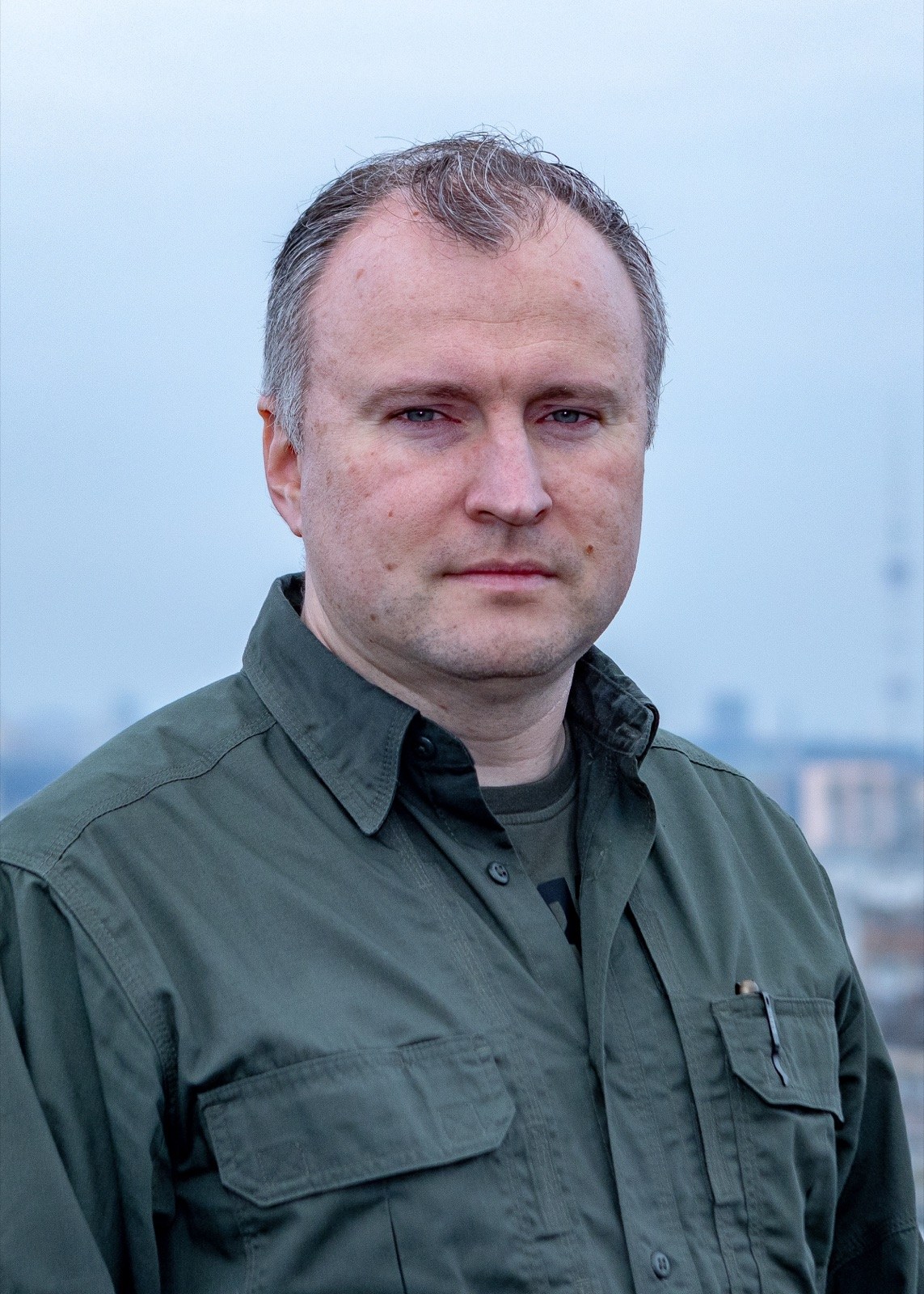
Victor Zhora
Victor Zhora heads Ukraine's digital infrastructure protection and discusses how the country fights Russian hackers in cyberspace alongside ground combat.
Episode Summary
Ukraine's under an unprecedented assault, on the ground, but also online. We spoke to the man in charge of protecting Ukraine's digital infrastructure, Victor Zhora, about how the country continues to fight Russian troops on the battlefield, and Russian hackers in cyberspace. Guest host Helena Humphrey speaks with Sir Richard Dearlove, who himself revealed on One Decision that he has been the subject of a personal targeted cyber-attack by the Russians, and his analysis on where Russian cyber warriors may next take aim.
Listen & Subscribe
- Watch on YouTube
- Listen on Apple Podcasts
- Listen on Spotify
Transcript
INTRODUCTION
Mcfarlane: Welcome back to One Decision. I'm Julia McFarlane. I'm away this week, and so we are bringing on the talented Helena Humphrey, lead anchor of Euronews Tonight and former global correspondent at NBC and MSNBC. Helena will be speaking with Ukraine's deputy chairman in charge of protecting Ukraine's digital infrastructure and our regular cohost, Sir Richard Dearlove, who himself revealed on One Decision recently that he has been the subject of a personal targeted cyber attack by the Russians. We'll learn more about what's under threat and what's to come.
Humphrey: Julia, thanks for having me. Great to be sitting in the guest co-host seat today. Now believe it or not, the war in Ukraine has rumbled on into its third month. Three months of heavy bombardment leaving few areas of the country unspared, and three months of stepped up cyberattacks as well, leaving the Ukrainians fighting a war on two fronts. The first shells in this battle were actually fired in cyberspace. That's the conclusion of a report by Microsoft. And on the 23rd of February 2022, the eve of Russia's land invasion of Ukraine as thousands of troops mustered on the country's borders poised to attack, in cyberspace, the bad actors were already acting, hitting Ukraine's government websites, banks, IT and agricultural companies with a series of denial of service attacks, disrupting communication. And the fallout wasn't confined to Ukraine either. The ripple effects were felt in Central Europe, where the sails of wind turbines stood still and modems were taken offline. It was enough to prompt the US Deputy Attorney General Lisa Monaco to warn that for allies of Ukraine, it was time to put up their defenses.
Monaco: Given the very high tensions that we are experiencing, companies of any size and of all sizes would be foolish not to be preparing right now as we speak to increase their defenses, to do things like patching, to heighten their alert, to be monitoring in real time their cybersecurity.
Humphrey: They need to be, as we say, shields up. And even with their shields up, in Kyiv, authorities say since the start of the war, the country has sustained over 600 cyberattacks. That's triple the usual level. The damage wrought may be less visible than that of aerial bombardments and missile fire, but it is a key piece of the Kremlin's war on Ukraine, blending boots on the ground with bots in cyberspace, all in a bid to paralyze the government and sow discord among the population. And while the current level of cyberattacks may be unprecedented, it's not an entirely new approach either. When I spoke to Viktor Zhora, the deputy chairman of Ukraine's State Service of Special Communication and Information Protection, he explained to me that Russian hacking has been a persistent threat to his country since the annexation of Crimea in 2014. We caught up as he was traveling around the capital to reinforce cyber defense capabilities.
INTERVIEW WITH VIKTOR ZHORA
Humphrey: Victor, welcome. Thanks so much for being with us. I want to dig into your area of expertise in just a moment. But, of course, first, I want to ask you, as I'd ask anyone in Ukraine right now, where are you and what is the situation there?
Zora: Well, thank you. I'm in Kyiv. Right now, for more than a month since the risk of invasion to Kyiv is very low. We are back and we try to recover all processes that we have in Kyiv before the war. So it's, yeah, it's continued being rather complicated since we have martial law here and we have a lot of restrictions. But nevertheless, Kyiv renews its normal living. So now I'm performing some task for my service and moving across the city.
Humphrey: Well, Victor, good to hear that you've managed to get back to the capital. Let's go back to the eve of Russia officially invading Ukraine on the 24th of February. And as you well know, it was a series of large scale cyber attacks targeting Ukraine, which the UK, the US, the European Union now say were carried out by Russia, something that the Kremlin denies. But I want to ask you, what has the impact of those cyber attacks been and how have you felt and experienced them there in Ukraine?
Zora: Well, we should understand that Ukraine is under constant aggression for more than eight years, and it's a hybrid aggression with cyber warfare component in this hybrid aggression. And it lasts for eight years, as I said, started from the attacks on the Ukrainian election system in May 2014, followed with the number of attacks on Ukrainian energy grid, number of attacks on Ukrainian government entities and much more. The active phase of this cyber aggression started on January fourteenth this year, with the massive defacement of government websites, using of wiper malware and disrupting of IT infrastructures of state agencies. And it was followed later in February with a huge DDoS attacks and then followed unfortunately with the full scale invasion to Ukraine on February 24. And during the second phase of war, which lasts for three months, we observed a lot of kinetic attacks, lot of disruptive actions from Russian military forces, from Russian terrorists, which are combined with the cyber operations. So again, it's a hybrid warfare and probably the first time when the full scale war is combined with cyber war at the same time.
Humphrey: That's interesting what you're saying there, essentially describing a new frontline in this war. Cyber war is part of a broader hybrid war. And something I'm curious about is to what extent do you believe that attacks on the ground actually end up happening in concert with cyber attacks?
Zora: Yes, for sure. So their strategy is to use all kind of weapon, including cyber weapon and the activity of APT groups to attack Ukrainian's critical infrastructure, to attack cyber grids, to attack public entities, to attack financial organizations, even charities and supply chains. That is combined with the attacks, for example, in Ukrainian railways and physical attacks. I mean, shelling of Ukrainian transportation nodes, etcetera, etcetera, to prevent logistics and supply of our armed forces and supply of humanitarian aid, etcetera, etcetera.
Humphrey: Okay. So something like attacking food security is also attacking a civilian target, even if it is through cyber means. And I wonder, is this a new frontier of hybrid warfare? Can there be the same kind of accountability? Can you hold actors to account in the same way that you would for other crimes, for example, which if you were to carry out militarily on the ground could amount to a war crime?
Zora: For sure. We are collecting evidences and proofs of Russian cyber aggressions and all the attacks that we are attributing to Russian military hackers and state sponsored actors, and we collect them and we'll send them to the ICC together with all proofs of Russian war crimes on the territory of Ukraine. Since again, I will confirm that most of these attacks are targeting Ukrainian civilian infrastructure instead of military. And, of course, we will not target their civilian infrastructure in any way, kinetic or cyber operations. Of course not, but we are on our land, and we will do our best to defend our land, our country. And if it require any actions against Russian cyber terrorists, we will think about extending our abilities.
Humphrey: Well, Victor, I want to try and end on an optimistic note then and talk about the endgame in this war because President Zelensky has always been very clear that war ends with a diplomatic solution. It ends with a peace accord. How does a cyber war end? Can it?
Zora: Well, it's a very good question, by the way. And this never happened. So we are probably in time of first global cyber war. And, of course, I don't think that the world has enough mechanism and tools to prevent cyber aggression, and a lot of lessons should be carried out on this situation. But with regards to global aggression, I mean, from Russian Federation, if they are stopped and they are disarmed and demilitarized, I believe that the cyber aggression and their supremacy will also come to end. And again, this is a very important topic to be discussed on diplomatic level and included to all agreements in the end of war. That is very important. And if it happens, I believe that our world and our cyberspace will be much more safe than earlier. But all the lessons from this cyber aggression should be scaled, should be used to prevent the potential aggression in the future. That is very important to have reliable mechanism of preventing and this is a global task probably for the United Nations and for NATO and for other structures that are responsible for keeping peace on Earth and for keeping safety in cyberspace as well.
Humphrey: Now if I could ask you briefly to make a prediction based on your experience there in Ukraine, which countries do you think around the world could be facing a large scale cyber attack at the hands of Russia? Well, we see that Ukraine isn't the only target.
Zora: Russians targeted United States, a lot of European countries, and the latest declaration from Killnet mentioned 10 countries. And I don't think, I wouldn't consider this statement as serious one, but the name of countries, of course, was mentioned according to their policy. So it's kind of a state policy, and it is implemented through such kind of statements. So we can see these countries in this list and to my opinion, the cost targets are very close to Russia. And if you see the global targets in the recent years, we see it's not only Ukraine, it's United States, the democracies in Europe, and many, many, many other countries. Again, cybersecurity is a global task.
Humphrey: Alright. Viktor Zhora, deputy chairman at the State Service of Special Communication and Information Protection of Ukraine. Great to talk to you. Thanks for sharing your insights with us.
Zora: Thank you for inviting me. Thank you so much for supporting Ukraine.
ANALYSIS WITH SIR RICHARD DEARLOVE
Humphrey: At the end of that interview, you'll have heard Victor mention Killnet. That's a pro-Russian hacker group. And earlier this month, they, quote unquote, declared war on 10 countries, saying they'll target the United States, Great Britain, Germany, Italy, Latvia, Romania, Lithuania, Estonia, Poland, and Ukraine. In short, countries supporting Kyiv. And he told me that global food security could be in Russia's crosshairs if it decided to hack smart farming systems, presenting a risk for all of us. So, I sat down with Sir Richard Dearlove, the former head of MI6, to find out to what extent he thought those kinds of threats could come to fruition and what we should be doing about it. So Richard, great to have you with us. How are you doing?
Dearlove: I'm doing fine despite these challenging and difficult times.
Humphrey: Well put. And talking about these challenging times, particularly challenging times of course for Ukraine facing a dual threat, that dual war, in fact one that blends kinetic warfare, war on the ground with cyber capabilities, cyber attacks against it. How much of a challenge do you think that is for a country?
Dearlove: Well I think it's a huge challenge on both fronts. I mean you know we've seen the Russian military deploy its massive power badly in the initial stages, but now I suppose that you could say they're getting their act together and doing what they traditionally do which is use massive kinetic power and massive ordnance to sort of blow their opponents away, including you know destroying and devastating the towns they're attacking and killing some of the civilian population. But of course there is then the hidden dimension, which is you know what's happening on the cyber side, and it's probably overall strategically just as important as what's happening militarily on the ground. And you know we're not used really to perceiving warfare in these terms.
Humphrey: So Richard, you talk about the hidden dimension of cyber warfare. You are someone who for most of your career you've dealt with hidden dimensions and talking about that, I wonder in your experience if you've ever really seen anything like this, because it strikes me when analyzing these kinds of situations that I often reach for the phrase 'past as prologue' to work out how they could unfold next. But have we ever really seen anything like this level of cyber capabilities and military capabilities at the same time? Or is this hybrid warfare something relatively unprecedented?
Dearlove: I'm not sure it is unprecedented. If you look back at Russia's past aggressions and engagements, you look at for example events in Georgia, or you look at some of the crises in the Baltic Republics, we have seen them already deploy various powerful cyber weapons in order to give themselves you know either a strategic advantage or you know interference or to demonstrate their ability to interfere you know in the critical infrastructure for example of another country. But I really do think the clues are there, and the experts will be tracking the technical side of this war very, very closely.
Humphrey: Talking about those clues, you yourself, talking to your contacts, your former colleagues in the intelligence community, are they preparing for something bigger? Or is there also the sense for Western allies that perhaps they're actually woefully underprepared despite those clues and they risk being caught out? Because we only have to point to the fact that in the months leading up to the kinetic invasion of Ukraine, there were a lot of people who were caught out with their reading of Russia, let's be honest.
Dearlove: Yeah I mean I think I would admit that I myself had not believed Putin would take such an extraordinary decision as to invade on the scale that he did. I thought that the preparations for invasion were more an act of intimidation, that they might step up the military activity in the Donbas and Luhansk regions where there's been a conflict since 2014 and bite off more Ukrainian territory, which is actually where we've ended up. But on the other hand, you have to, as it were, admit that the intelligence predictions made by the Americans and by the UK turned out to be precisely accurate, and I would imagine that a lot of that material was derived not from human sources but from technical sources, partly from overhead. That's satellite surveillance of what was happening on the ground, and what that military activity meant.
Humphrey: Well let's take our cue then from what you've just said about how the invasion actually unfolded. Many people were predicting that it may just focus on the East, it may just focus on the Donbas, and if we apply that symmetry that we've actually seen in cyber warfare that's being carried out, do you think we could see an escalation that we should prepare for that? Or on the other hand, do you think that there's been some kind of sabre rattling when it comes to what is happening in cyberspace and that actually, in the same way, let's be honest, that many had overestimated the capability of the Russian military, so too we may have overestimated the capability of their cyber army? Because as Viktor Zhora pointed out when I spoke to him, Russians haven't been able to deliver a knockout blow yet to Ukraine when it comes to the cyber front. They've knocked out power twice, the Ukrainians have managed to thwart them on a third attempt, but they haven't quite got there yet.
Dearlove: No I'm surprised that they haven't in a way been more successful, and you know it's quite clear that the failures on the Russian side are not just military on the ground, that there seem to be technical failures or technical sort of incompetence, and I mean I think some of the stories of Russian units having to use mobile phones to communicate is indicative of that failure, because of course it means insecure communication on the battlefield, it also means that you know they can be geolocated. There are all sorts of follow-ons, and assuming that the Ukrainians are getting some quite sophisticated help from those countries that are, as it were, turning out to be their closer allies. Yeah I think it's surprising how, given the sort of overwhelming capability that Russia should be able to deploy, it doesn't appear yet that they have secured any significant advantage. I think I would put it as strongly as that.
Humphrey: Why do you think that is? Is it the case perhaps that the chiefs of the cyber forces haven't been able to speak truthfully to President Putin? Have they not been able to prepare?
Dearlove: I would say, and I was talking to someone recently in Central Europe who knows quite a lot about this area, I would say probably lack of preparation, lack of training, possibly corruption in terms of things that supposedly have been financed and prepared, the money, the equipment going astray. I mean these areas you know require really significant attention to develop a high level world class capability. Huge discipline, self discipline, and what it suggests, and the whole business of the Ukrainian war suggests to me that you know there is a rottenness, there is a weakness that is endemic in the Russian state, the Russian regime as it now is, and that would certainly flood into the technical. I mean it would definitely flood into the technical domain.
Humphrey: I want to talk about escalation and potential retaliation when it comes to Western allies on the cyber war front in just a moment. But first, something I'm curious about is that now we are seeing strides being made on the Russian side in Donbas. And you could argue that that would buy the Russian military a little bit more time to regroup and to prepare further attacks. And I'm wondering, in using cyber warfare, for example, when we look at the occupation of the nuclear power plant in Zaporizhzhia, which saw Russian troops put at considerable risk and we're seeing heavy Russian losses right now, do you think in the future that President Putin may wish to use these kinds of cyber warfare means to achieve considerable aims on the ground, while also minimizing collateral damage to his own troops?
Dearlove: Yeah I think that's entirely possible. I think the more that Russian weakness is exposed in this conflict, the more serious becomes the threat of escalation as the Russians try to recoup ground, try to recoup something of their reputation, you know try to push the dividing line which will you know inevitably I think split part of Ukraine off under Russian control to push that westwards, and I mean the Ukrainians still I would imagine think that they can win, or win back a lot of what the Russians have taken, and the Russians have been humiliated, and as it were need to show that they've achieved some military success. And I think that the cyber part of this is very very important, because Russia theoretically at least does have what we thought was a formidable capability to do all sorts of things and interfere you know in the critical infrastructure of Ukraine. And of course the longer this goes on, the more sophisticated the Ukrainians themselves become in responding. I think one of the extraordinary things is the number of, let's say, sort of private hackers and people that have rallied to the Ukrainian cause.
Humphrey: Absolutely. And when I spoke to Victor, he mentioned around 400,000 volunteer hackers working on behalf of Ukrainians. He said that he couldn't endorse them, but he was very thankful for them. And I'd have to imagine going beyond just volunteer hackers that global intelligence agencies around the world are probably working overtime right now. GCHQ for one, it's probably working overtime. And to what extent in your experience do you think that the global intelligence agencies and community are also involved in operations of defense against the Kremlin right now, side by side?
Dearlove: Well I mean there will be a huge amount of technical coverage and analysis being conducted across the Western world and its allies, and you know more and more states have significant capability in this area and will be sharing material, sharing tasking. So the Russians will be up against you know a formidable set of problems the longer that this goes on. And I mean let's face it, the Americans do have an extraordinary capability. The UK's capability is small but very sophisticated, and then you know if you add into the mix the Europeans, I mean some of the Baltics like Sweden and Norway are hugely capable in these areas too. So I mean when you add up what NATO countries could unleash and deploy, the Russians will have a hard task, and this will give huge assistance to the Ukrainians as well.
Humphrey: If the Kremlin's cognizant of that, of the huge capabilities, the help from allies, where does that leave them then in terms of being open to risks of escalation? Even myself, you know, on a personal level, I wondered when this invasion started, are we bracing for large scale cyber attacks in the European Union, the UK, the US? Will we be directly targeted? You know, I'm not talking about spillover, for example, from attacks on Ukraine that we already saw in Central Europe. But should we expect that in response to sanctions do you think?
Dearlove: Yeah I think the Russians will you know become more aggressive and will go after more opportunities, and it's not as though you know they're blind. I mean they will have done lots of preparatory and targeting work just on a routine basis. So I mean I think that there will be all sorts of vulnerabilities and opportunities they'll be trying to exploit. I mean it's just hit the UK press in the last forty eight hours, but I mean I've been the object of a significant Russian operation which is absolutely crystal clear Russian cyber attack, which has been on my and others' personal emails, and these have been stuck in the hands of very, in my view, disreputable investigative journalists whose Russian credentials are absolutely crystal clear, and you know they've been adapted, threaded together to create a story or a scenario which you know if it was believed, fortunately it's not, would be very very unpleasant. And I mean it's extraordinary that you know the Russians are prepared to go after essentially private citizens who are leading innocent lives. You know, I retired eighteen years ago from Crown Service. I'm very flattered that I'm thought to be such an important individual.
Humphrey: Well, bringing it on a more serious note, and it is great that you can laugh about it, but in terms of what people could be facing, where do you think, well, let's just put it this way, which countries do you think could be first in line when it comes to a significant cyber attack next in this war outside of Ukraine?
Dearlove: Well, those that are you know helping Ukraine the most, I mean somewhere like the Czech Republic you know, which is close geographically and geopolitically, and has been giving very sophisticated modern equipment to the Ukrainians, they you know would be an obvious target. The Poles will be an obvious target. I think the UK will come pretty high up the list, and you know maybe the Russians. But I think the Russians will at the moment be cautious about escalating. I mean I think I agree with the care that NATO has taken so far to ensure that there is no direct conflict between NATO troops and the Russian military, so that you know this hasn't turned into a war between Russia and NATO. And I think we're right to do everything to try to avoid that risk.
Humphrey: Look, what should the average person be doing then? What should I be doing if we are in a climate in which there is the possibility for a cyber attack in the UK and in the EU?
Dearlove: Relax. Well I think that the important thing is to make sure that you've got in place the sort of basic defenses, you've got a basic understanding of what your vulnerability, where your vulnerabilities are. I mean you know vulnerabilities for different firms and you know different organizations are variable. And you know if you've got an accurate IT risk register, you know what you need to protect. And you know you need, as it were, good fallback arrangements that will you know replicate your systems if they happen to go down. I mean I think if you're an individual, you know, you're probably not going to, as it were, come to the attention of the Russian state. You know, in my case perhaps it's exceptional. I think most of us aren't important enough, which is probably good news. Yeah, and so I mean I wouldn't worry about it. But then on the other hand, you know basic cyber discipline I think is an essential part of anybody having a computer, just the most straightforward and you know like changing your password and using your computer in a way which is sensible. And I mean if you take my particular case where it's clear that you know this is a Russian state operation, I think trying to protect yourselves against that, I described it like sending out the pub football team to play Manchester United. I mean as an individual there's not as much you could do except not use your IT in a way which you know you might regret at some point in the future. I mean I think the bottom line is any type of information technology has its weaknesses or insecurities, however sophisticated you are.
Humphrey: There's another facet to cyber war and that is the information war as well, which is also being waged online. And you talk about those risks to young people and they're really in the nexus as frequent social media users. Recently, we've had Twitter taking more efforts to prevent the spread of misinformation about this war. But I also wonder to what extent should the West be more alert, should prevent Russia's media from spreading fake news about the war? And from your experience, how harmful can propaganda wars be in this? Because we know that this is something, we know that this is definitely an objective of the Kremlin to sow discord among populations.
Dearlove: That's a huge dimension you know of the contest, let's say in this case between East and West, and it's illustrated in almost any you know geopolitical contest or issue that you care to look at closely. I think at the moment with Russia you see that contest for control of the narrative, which interestingly Ukraine I think is clearly winning, but it just shows that if you have a president, I mean Zelensky is a professional actor, a man who's massively at ease in front of the television cameras. I mean in a way he reminds me of Reagan, you know who was similarly you know brought up in front of a film camera. Zelensky has been absolutely brilliant at crafting and dominating the story, whereas you know the sickening Putin with his puffy face and his inability to communicate in a warm fashion with any single individual has become something of a horror story. And you've got this massive discrepancy between the two presentations.
Humphrey: We're talking about Putin and alluding to his health, as you just did then. You said on One Decision that you thought Putin will be out by 2023. I'm quoting you here, you said via a sanatorium from which he'll not emerge as president. And I wonder where would that leave a cyber war? Even if the military kinetic war on the ground is all said and done, is this something that we live with that just rumbles on indefinitely? Or can you draw a line in the sand and say cyber war ends here as well?
Dearlove: No, I mean clearly if this conflict does grind to a halt, a confrontation or whatever, even if you know there's a sort of predominant outcome, say the Ukrainians you know drive the Russians back beyond their original lines, I think that the military conflict will become frozen, but the cyber conflict will continue. You know in the ethereal dimension it'll just carry on because the Russians are not going to stop, and the Ukrainians will need or have to respond and defend themselves. And of course you know there's, in a way we're witnessing a war in the media to discern you know the future of Putin himself, and I mean that has to be a dimension of the conflict, and you know clearly there's something seriously wrong with him. I don't think anyone is disputing that now. You know the question is how long is he going to last? But clearly the Russians have a huge presentational problem because of the condition that Putin seems to be in.
Humphrey: And we certainly know that unfortunately around the world dictators love to take pages out of each other's playbooks. So where do you think looking forward, looking past even this particular conflict, that we could see this kind of hybrid war replicated in hotspots around the world?
Dearlove: Yeah, I mean you know I would say it's already started with China. You know China cyber activity is very aggressive towards the West. Their attempt to you know steal commercial secrets is highly developed, and of course you've got partial conflicts already across the border with India, problems in the South China Sea, the problems over North Korea, all of these issues have a cyber dimension, and they're already in a way in cyberspace probably more developed and more sophisticated than we already realize.
Humphrey: That's an interesting aspect that you raise though, because I asked you before about where does Russia lash out next in terms of this conflict, in terms of Western allies? Do you think that there's the risk that while we're all busy looking at Moscow, looking at the Kremlin, looking at the GRU military unit, that actually the West could be facing a far greater risk from the likes of China in the meantime, that whilst we're looking the other way, we could actually be letting our guard down on that front?
Dearlove: Well, we definitely should be alert. Yeah, I'm sure that in terms of you know their cyber aggressiveness, the Chinese will be taking advantage of our preoccupation or trying to take advantage. I mean they won't stop, they certainly won't, I mean it's a good question, and you know it's a good thing for people to keep in mind. I mean I think it's very interesting that Biden recently you know goes to Southeast Asia and meets the Japanese and Singaporean leaders, and I think this is very much reflective of the fact that the Americans understand very well that those countries have a hugely important role to play. Actually in the current conflict of how they you know express issues in relation to Russia, but at the same time they're crucial allies, in keeping a close eye on what's happening in China.
Humphrey: Well what about China acting in concert with Russia when it comes to cyber capabilities then? Because we know that President Xi found himself trying to walk something of a diplomatic tightrope, didn't he, in terms of being asked to support Russia militarily and then on a public stage having to call for a cessation of hostilities in Ukraine. Do you think there's the potential, do you think there's the possibility that China could be working hand in hand with Russia when it comes to cyber attacks, or at least lending some kind of expertise?
Dearlove: Well I'm sure that there's a degree of cooperation between them, and I honestly don't know how close it is. My guess would be that both sides will have joint projects but will not as it were be moving towards any sort of integrated effort. I mean the sensitivity of these areas is such that you don't necessarily share your crown jewels with your closest allies or your closer allies, but there will be areas of jointry and projects which they undertake together.
Humphrey: We'll have to see, but for now Sir Richard it was a pleasure to hear your thoughts. Thanks so much for chatting.
Dearlove: Well, much enjoyed talking to you, Helena.
Humphrey: That's all for this episode of One Decision. Be sure to subscribe so you never miss an episode. New shows drop every Thursday. From me and the entire team, thanks for listening and bye for now.