Hosted by Christina Ruffini and Sir Richard Dearlove
Guest
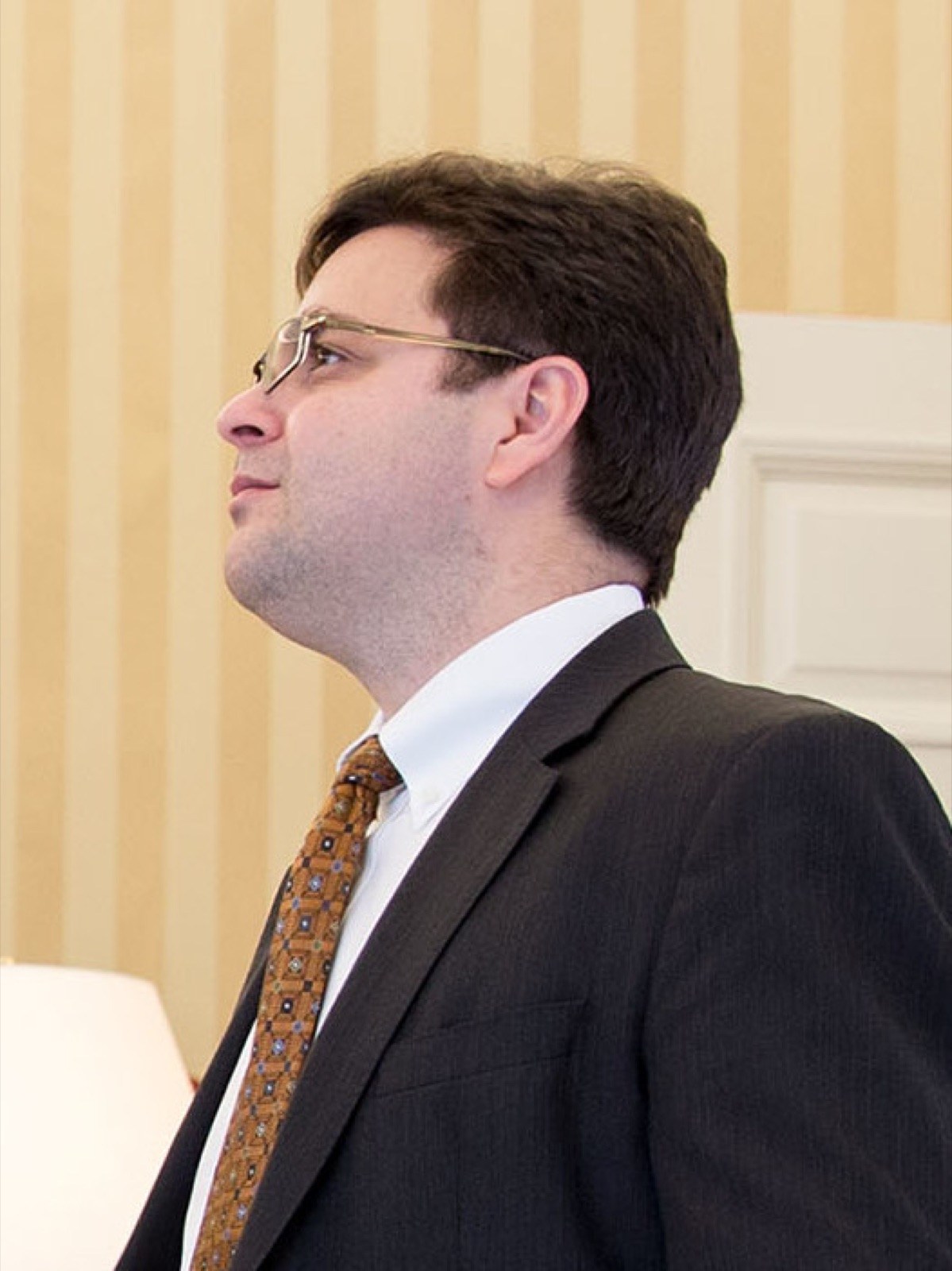
Ricardo Zúñiga
Ricardo Zúñiga secretly negotiated with Cuba for the Obama Administration. Ricardo Zúñiga breaks down why the U.S. and Cuba are headed toward conflict.
Episode Summary
The man who secretly negotiated with Cuba for the Obama Administration says it plainly: the risk of military intervention is quite high. Ricardo Zúniga breaks down why the U.S. and Cuba are headed toward conflict, why the Cuban regime would rather fight than negotiate, and why Cuba is not Venezuela, no matter what the White House says.
Also this week: the Iran-U.S. ceasefire deal, the resignation of UK Defense Secretary John Healey, and what Armenia's election means for Putin.
In this episode:
(02:07) Iran Deal
(07:32) UK Defense Shakeup
(09:39) Armenia Votes West
(12:14) Cuba Interview Begins
(15:04) Life Inside Cuba
(18:31) Cuba Versus Venezuela
(20:22) Russia China Backing
(24:01) Collapse Crime Risks
(28:28) Will US Strike Cuba?
(33:04) Reform Not Bombs
(36:51) CIA Channel Talks(
44:00) Intermediaries Options
(46:34) One Decision to Change Cuba’s Fate
Show Notes:
The Day After in Cuba | Foreign Affairs https://www.foreignaffairs.com/cuba/day-after-cuba
Is Cuba About to Fall? A 35-Year CIA Analyst on What Comes Next | One Decision https://www.youtube.com/watch?v=ddlk1Wxy8To
Hosted by Sir Richard Dearlove (former MI6 Chief) and Kate McCann (Political Editor at Times Radio)
Listen & Subscribe
- Watch on YouTube
- Listen on Apple Podcasts
- Listen on Spotify
Transcript
COLD OPEN
ZÚÑIGA [0:00] Essentially, what the Cuban leadership is presented with is the option of resisting and staying in power or being eliminated completely, I mean, perhaps physically.
Dearlove: The other danger is this, you know, possibility of an island of criminality.
INTRODUCTION
Mccann: What is the one decision that could fundamentally change the trajectory of US Cuban relations? Hello, and welcome to One Decision. I'm your cohost, Kate McCann, and I'm joined by my cohost and former head of MI6, Sir Richard Dearlove. Hi, Sir Richard.
Dearlove: Hi, Kate.
Mccann: Have you been watching lots of World Cup football matches, or are you not a soccer fan?
Dearlove: Okay. I'll hold my hands up. It's not my greatest love in life. I've been drawn into a couple of games so far, but I reckon as we move further along because there's six weeks of this. Right? As we get further along and when England start playing, I'll probably get a bit more excited.
Mccann: Have you got, have you picked a team?
Dearlove: Well, I suppose I have to support England, don't I? But the one that impressed me watching the games I've watched so far is Morocco. They were good, weren't they, last night? They clearly have a very, very good side, and they did extremely well at what was in the African Cup of Nations. Anyway, maybe they'll emerge as the sort of surprise team.
Mccann: Well, we'll keep an eye on that throughout the next six weeks or so. We might combine a little bit of football with a bit of foreign affairs. But joining us this week to talk about the escalating crisis in Cuba is Ricardo Zúñiga. As a senior diplomat in the Obama administration, he was a key figure in the secret negotiations that led to a period of relative detente in US Cuban relations. If you're not already, by the way, you can subscribe to One Decision on our YouTube channel or wherever you listen so you won't miss any of our interviews. And you'll also be able to go back and get our previous conversations about Cuba if you'd like a bit more depth in terms of the history of the country and the politics and why we're talking about Cuba right now. First, though, it's time for In Brief where we'll make sense of some of the biggest geopolitical news. And so, Richard, I want to start with Iran because Iran and America have reached this memorandum of understanding. And I call it that deliberately because it's not a formal big agreement in the sense that it's hundreds of pages long, it's taken months to negotiate. It's quite short. There is a bit of complexity around exactly what's in it and what it means. But at the very basic level, it's an agreement to cease the war, to reopen the Strait of Hormuz at least for sixty days and to try and walk back to essentially a position where things started. I think that's fair to say, isn't it?
IN BRIEF
Dearlove: Yeah. I think that's a pretty good summary. I mean, it's an agreement to start negotiating, rather than to continue fighting, but neither side is gonna stand down its military capability, certainly not the Americans. So I think in a way, it's a negotiation under duress. I think the aspect which is the most fragile immediately is I can't see that Netanyahu is going to agree to stop attacking Hezbollah. And the, as it were, the ceasefire in Lebanon is meant to be part of the deal. So that's one enormous fragility. And I think the other is that the negotiations with the Iranians are likely to be extremely difficult because that's the way that Iranians negotiate. And I just wonder whether Trump actually has the patience. I mean, it's not a quality which, as it were, stands out from his personality. And if he hasn't got the patience, I can see this breaking down pretty quickly. And that will mean going back to putting more military pressure on Iran, will mean disregarding the ceasefire. So at the moment, I remain skeptical, and I sort of stick by my original analysis that this is by no means the end of the conflict, but I would love to be proved wrong.
Mccann: I would love you to be proved wrong too in this instance. I mean, I feel like both sides have an incentive to get some kind of agreement on the table, and this feels to me a bit like a piece of diplomacy where you just don't ask too many questions. I mean, ultimately, the things that have been written down on paper seem light at best and, you know, confusing, really. I mean, take the Strait of Hormuz, for example. I mentioned the idea that it will be reopened within thirty days, but there's a sixty day period of it being open and free to access with no tolls. But then after that, it says subject to, I think, the control of the Iranian side, potentially with another regional partner, which seemed to me to leave the door open to charging for the use of the Strait of Hormuz, which, of course, was never the case before. And the issue with the nuclear capacity of Iran also seems to have been, you know, very heavily glossed over. There is not very much at all in there about what will happen next in terms of what Iran is allowed to do and also the material that Iran has already amassed. And it seems to me that it's all linked to this idea that, you know, Iran will be happy to start talking about nuclear when the US releases, you know, millions, billions in frozen funds. There's also this huge rebuilding pact, which I think is worth $300,000,000,000, a regional commitment to rebuilding Iran, which also seems conditional. I mean, there seems like a lot of this, as you say, still needs to be filled in later, which just does look very, very difficult to do.
Dearlove: Yeah. But I just wonder whether there's a hidden dimension, and that hidden dimension is whether the Iranian leadership is as solid as they appear to be. Because once you start negotiating and there's a lot in it, it may well be there's a more moderate group behind the scenes in Iran who are keen to concede and maybe begin to isolate some of the hardliners. The only suggestion I'd make is that, you know, don't neglect the idea that both Israel and CIA, both Mossad, might have some significant intelligence, which is encouraging them to go down this track. But I'm just sort of using my past experience to say there may be aspects to this that we don't fully understand.
Mccann: Well, in a way, I hope that there is because that sort of channel of conversation was definitely very prevalent before this conflict, the idea that there was kind of a moderate grouping within the regime inside Tehran that would quite like a deal with America but were prevented from doing so because of the more extreme end of things. My concern is that, actually, because of what has happened, it has galvanized that extreme core, particularly the IRGC element of it, and it's made it even more powerful and therefore even more difficult to see where this kind of moderate element might come from. But you're right. Maybe there is, maybe there's some intelligence somewhere that suggests that's closer than we think it is. Okay.
Dearlove: Let's see what happens.
Mccann: Well, we will watch and wait. Should we talk about the resignation of the UK's defense secretary, John Healey? Because those listening around the world, he may not be a household name, John Healey, but he's been the defense secretary since before Labour came to power. He has been the only defense secretary for this Labour government. And his resignation at the end of last week came as a surprise, not just to the press, but also to the prime minister, Keir Starmer. He wasn't expecting it to happen. John Healey resigned saying that the prime minister had been unable and the treasury unwilling to stump up the cash for defense. What does it say to you about the UK's position right now?
Dearlove: Well, pretty much that Healey is one of the grown ups in the government, and he's resigned on an issue of principle. And I think what he said is absolutely clear. Well, the treasury is unwilling to increase the defense budget for which there is a massively strong case. But I think what it actually points to is a weak prime minister because the prime minister obviously didn't feel able to overrule the treasury. And I think the reason for that is he's facing a leadership challenge, and the left wing of his party would be probably opposed, for example, to cutting the welfare budget to increase the defense budget. So there is a sort of specifically domestic dimension to this, but I'm extremely worried about it because I think the urgency of the case to modernize the armed forces, and the trouble is it's an increase and a modernization at the same time. I won't go into the detail, so it's pretty unsatisfactory.
Mccann: It's worth us saying that the defense investment plan, which is what John Healey resigned over, we have still not seen. And that's how the UK is going to invest this money. It was supposed to come out last summer, then last autumn, then early this year, and we are now well into June, we still haven't seen it. So we'll keep an eye out for that, of course, as well. Just finally, Sir Richard, I'd like to get your take on Armenia's election and Russia, the Russian link, really. Just explain to people why they should care about this particular topic.
Dearlove: Well, Moscow is always super sensitive about democratic elections in countries where it has been the dominant influence, particularly when those countries are democratizing and beginning to look westwards rather than their traditional view sideways or back towards Moscow. And Armenia, of course, has been through this war with its local neighbor, Nagorno-Karabakh, and the Armenian population had to be evacuated. And it has had a relatively western leaning government, which was up for reelection. And Russia was putting in huge amounts of effort to support a sort of oligarch candidate who was opposing the Armenian prime minister. And a lot of people were predicting a very close run election because of the degree of Russian influence and engagement, and they thought that this would sway the vote. In practice, the current prime minister who leads the sort of Western faction came out with a clear majority of well over 50%, and the Russian oligarch candidate was down in the twenties. I mean, 23% was a huge setback for Moscow and actually an important one because you have a similar problem in Georgia where you do actually have a government which is well disposed towards Moscow, but which is threatened democratically by the opposition. And then, of course, you've had a similar election in Moldova, which was also massively influenced by the Russians, but the Western Sandu. So Putin's been doing rather badly in these areas, which are important to Russia because they are sort of protective barriers along the border of Russia and traditionally have always been under Russian control.
Mccann: You know, there are some rumblings inside Russia too, although obviously not strong enough to make any real difference to Putin right now, but an interesting one nonetheless. Well, now it's time for our interview.
INTERVIEW
Mccann: The US government hasn't treated Cuba as a serious military target since the Cold War. The 95 year old former president has been indicted in an echo of what happened to Venezuela's Nicolás Maduro, and Donald Trump says that he'll have, quote, the honor of taking Cuba. But how serious are the United States military threats against the island nation? Ricardo Zúñiga joins us to dissect Trump's actions and rhetoric towards Cuba. He spent two years secretly negotiating with the Cuban government as a senior National Security Council officer under President Barack Obama. I'm delighted to have you on the podcast. Welcome, Ricardo. ZÚÑIGA [13:00] Thank you so much.
Mccann: Well, it's brilliant to have you with us and your expertise because I think a lot of people are looking at what's happening in Cuba and scratching their heads a little bit. Where are we right now? Can you explain the situation on the ground and the relationship between Cuba and the United States? ZÚÑIGA [13:13] Certainly. I'd say that we are at one of the moments of highest tension in the relationship. Very briefly, when after President Obama led this opening to Cuba, the Trump administration in the first term rolled back many of the changes that President Obama had made, but maintained diplomatic relations, were one of the most important elements of President Obama's opening. And now in the Biden administration, there was actually not very much change at all in the US Cuba relationship following the rollback of President Obama's opening. In the second term, President Trump, what he has done has really tightened the noose around Cuba, has taken extraordinary measures, like essentially cutting off the flow of oil imports into Cuba. About two thirds of their oil comes from imports from Venezuela at one stage in a subsidized form from Russia sometimes, but often from Mexico. And all of those sources have been cut off by the United States. And so now the economy, which had already been shattered by COVID and the tourist sector, which was the biggest cash earner, had never really recovered from that. The country is now on its back. And what we're having in Cuba are rolling blackouts every day really across the island. And so the situation is quite dire. As you noted, President Trump has said he'll have the honor of taking Cuba. Most people interpret that to mean that the United States is willing to use military force to seize or attack Cuba in some way. I believe that the risk of war is really quite high. And in the meantime, the humanitarian situation on the island is as bad as it's been, not even since the special period, but I would say in a century.
Mccann: Wow. I mean, that's quite some statement. Can we come on to talk about the threat of military intervention? But I don't want to miss the sort of reality on the ground if you're an ordinary Cuban, what it must be like at the moment. I know that there is rubbish piling up on the streets, that people are setting fire to that rubbish in protest. I know that there is a huge amount of unrest and fear. But is there a recognition in Cuba that something needs to change, that things have failed and that there needs to be a different path forward? ZÚÑIGA [15:35] I believe that's the case. I think it's quite obvious that the model has failed, and the fact that the current Cuban leadership really dragged its feet on basic reforms and opening up the economy to even small scale economic activity for too long. They rejected the advice from Vietnam, from China, from other governments that urged them to open up the economy and modernize the economy. They were more concerned with control, and economic control for them means political control. And so after the death of Fidel Castro, I think there were more and more elements of Cuban society that understood that whatever the revolutionary past had meant was very much in the past, and that Cuba has to change and adapt to current realities. And it has to end really over the top restrictions on ordinary economic activity, social activity, and political activity by its citizens. People are very ready for change.
Dearlove: It seems to me that the Cuban population have almost sort of given up. I mean, I don't mean they're inert, but there doesn't seem to be any sort of reaction because the situation is so bad. I mean, they've had a totally repressive regime for, what, sixty seven years. And I think there are still a huge number of Cubans in detention, are there, from previous attempts to object to the regime? I mean, is that sort of stasis an accurate picture of what's happening inside Cuba? ZÚÑIGA [17:03] It is, and I would say it's more so because of the lack of fuel. It means that people are very focused on just surviving from day to day, and the Cuban state's repressive capacity remains strong. There is strong, probably a greater level of popular discontent with the government than at any stage since 1959, and it really goes across the island. What that has translated into in recent decades has been people leave the island. Almost 2,000,000 people left during the period of COVID and right after. So you had 2,000,000 people out of a population of around 10,000,000 who left. That gives you an idea of how much dissatisfaction there was in the country already. Now I would say that people, as I mentioned, are very focused on their own circumstances, but they are also quite fearful of change. And as they hear about the possibility of US military intervention, I think there are many Cubans who surprisingly would welcome something like that if it meant change in their circumstances, and they would just want to rip the Band-Aid off and see change come as soon as possible. But I think there will also be a lot of disillusionment owing to the fact that, you know, I think a military attack is not likely to actually change their circumstances.
Mccann: Should we talk a little bit about the relationship between America and Cuba? Because, you know, I think a lot of people are looking at this in the same vein as Venezuela, and maybe the language from the president encourages people to do that. But is it the same thing in your view? ZÚÑIGA [18:48] Not at all. The countries are vastly different. I would say from President Trump's perspective, one thing that Cuba doesn't have is oil. And so his level of interest in it really is the symbolism of accomplishing something that other US presidents have not accomplished as opposed to any real interest in the country itself, which I understand from people who have worked with him, he really doesn't have. It's much more important to Secretary Rubio and to others in the Republican Party, especially in Florida. But I would say for President Trump, it's not that important. At the same time, I think that for me, the real risk is the fact that the two leaderships don't really understand each other very well. And one of those is that Cuba is a much more consolidated state. It is a much more organized state that has been in power, in fact, for sixty seven years and is reluctant to move on. There aren't factions that we're aware of. Now there may be those factions, but we don't know about them because we don't understand the inner workings of the Cuban system and have not for a long time. And so you don't have the economic incentives from the US perspective. And on the Cuban side, you have a government that's capable of maintaining control over the entire state, which simply did not exist in the case of Venezuela, where one portion of the elite essentially allowed itself to be co-opted by the United States as a survival tactic. And in Cuba, those elements don't exist.
Dearlove: Alright. So what about the other props to the Cuban government, the traditional ones? Okay. Venezuela's gone as an oil supplier. But, I mean, China and the Russians have always played a big part, particularly the Russians. Is there sort of continued presence of any significance at all in terms of helping the current government in Cuba sustain itself? ZÚÑIGA [20:48] Well, I think that's a really important question. My sense is no, that Russia will rhetorically support the Cuban government because it has to. You may recall Cuba was quite resentful of the former Soviet Union after the end of assistance from Moscow during the dissolution of the Soviet bloc, and that resentment has stayed. There is a skepticism of Russia as well as an alliance. They sense that Russia's an unreliable partner. So I think Russia will, you know, they sent an oil shipment. They sent another, but did not press the issue when the ship was diverted from arriving in Cuba. It simply did not go to Cuba anymore. It went back to its port of origin. So I would say the bottom line here is that neither China nor Russia is going to do anything beyond rhetorical and diplomatic support in a real crisis between the United States and Cuba.
Mccann: I'm really interested in this idea that this is almost symbolic for the Americans. Ricardo, do you think that's true of all American leaders who are involved in this conversation? And I ask you that because I think it's clear that President Trump has no real interest beyond the symbolic in Cuba. But I wonder what you think Marco Rubio's motives are. ZÚÑIGA [22:01] Well, look. He comes from a community that is very vested in the outcome in Cuba and wants it to be quite different from what happened in Venezuela, where essentially the US removal of Maduro did not remove the regime and the United States essentially is in partnership with Chavismo, with Maduro's sort of political movement. There's no discussion really of a timeline for elections yet, and the focus is on cooperation and collaboration. That would be very difficult politically for somebody like Secretary Rubio and the administration to try to undertake with the Cuban Communist Party, which would be the equivalent of Chavismo and the PSUV in Venezuela. And so I think that you're looking at a desire for a much more immediate, much more substantial, and much more extensive change in the Cuban leadership right now. And, essentially, what the Cuban leadership is presented with is the option of resisting and staying in power or being eliminated completely, I mean, perhaps physically. And a lot of the rhetoric from the Cuban American community is of change and revenge against the Cuban leadership. That's very much in the air. That is very much a Florida thing. If you go outside of Florida, the Republican senate leadership is reportedly strongly opposed to military action against Cuba in part because of the US embroilment in Iran and concerns about what that meant for the US midterms, but also because there's just a strong popular desire in the United States to avoid further conflicts, to avoid further wars. And that's a little less true in the Republican voting bloc, but it's very true among independents and other voters that the Republicans need.
Dearlove: From your description, Ricardo, it sounds as though, and I think we all know this, the regime is really tottering. I mean, it could be quite easily knocked over. But we've seen in so many other places the danger of political vacuums. Because of the repressive policies of the Cuban leadership over many years, there doesn't seem to be any sort of lineup of people who could step in and begin to rebuild the country. So, okay, the government goes, in one way or another, maybe just economic collapse. But, you know, what could come afterwards? You could have some really serious problems. For example, organized crime. I mean, having, in my past career, looked at these issues of organized crime in that region of the world, these islands are very, you know, even Cuba, Ireland. Look what's happened in Jamaica, for example, at various times. I mean, these are serious problems even in quite substantive, you know, island nations. ZÚÑIGA [25:07] Absolutely. Look. The conditions in Cuba are such that there is real risk in the event of a state collapse without something to replace it. Right now, there is nothing to replace it. And, again, there's another difference with Venezuela, where the opposition really did manage to defeat the Maduro regime in the ballot box just two years ago in 2024. It was an overwhelming victory by the opposition. Nothing like that has happened in Cuba in decades, and there are no elements that are prepared to do that. Now we don't know really about the inner workings. And if there is some sort of reform element of the Cuban leadership or simply a group that wants to survive and is prepared to work with the United States to do so, we're not aware of them right now, and they don't have an outlet. I agree with you. One of my great concerns has been that the Cuban government would survive by essentially going the route of Putin's Russia, basically making the revolutionary oligarchy the new, you know, quote unquote free market oligarchy, but simply parceling out the state goods. In Cuba, the situation exists to do exactly that. Not a very industrialized country, but the various elements of the economy could easily be parceled out to regime loyalists, and then they could open up the economy for everyone else, and there would be a perception of improvement. But in fact, it would be kept in the hands of a small economic elite, political elite becoming economic elite. Then you also have the risk that, let's face it, with the Russian presence in Cuba, Cuba could become one of the greatest money laundering opportunities in the history of the world with an undeveloped Caribbean coastline. If you had a government that was allied with Russian organized crime, which, of course, is a part of a larger multinational group of organized criminals, you could easily see the island transformed into a base for organized crime and still have a perception that conditions were improving. So that's a very high risk. Geography is geography. It's on the way to the largest drug market on the planet and next to the largest economy on the planet. So those pieces are there. And with, as you said, a high level of organized crime activity and very sophisticated organized crime activity from Mexico and South America and, of course, from Russia. It's a real concern. The other concern is that you could go in the complete other direction. And at this stage, I would say that in terms of social conditions, Cuba could go the way of Haiti quite easily, and you could have a complete social breakdown. There is great unwillingness in the United States to carry out a ground operation in Cuba. And I think the Venezuela model for them is a lightning strike and a brief presence and no serious troops on the ground. With Cuba, you're not going to necessarily see change if you see that kind of an operation in Cuba. So then what?
Mccann: Can we come on to talk about that? Because and then what is the big question here, isn't it? I mean, given everything that you've just said, the American appetite for some kind of long term presence, but the risks involved with Cuba, how likely do you genuinely believe military intervention is, and what would it look like if you think it is likely? ZÚÑIGA [28:52] The reason I think military intervention is likely is because I don't believe that either side will be able to make much progress as things stand in a negotiation. Right now, the Cuban leadership believes that if they're not in power, they are dead. And if they don't see a place for themselves in a future Cuba as defined by the United States, then you fight that with everything you have because your alternative is annihilation. And for the United States, I think that there might be a misapprehension that the Cuban government can be sort of intimidated, bluffed into giving up power, and that seems very unlikely. It's just ordinary sort of human behavior to not take a risk like that from the perspective of the Cuban government. For them, it would be better to try to wait out an American military assault than to negotiate a transition where they could lose their lives in addition to power. And so the real question is, at what point does that frustration turn into military action? What does that look like? I think what it looks like is US airstrikes against Cuban military targets, against Cuban probably industrial targets as well. There isn't much to hit. It's in much worse condition, so there's not much to destroy. If you destroy Cuban patrol boats and say that you sank their navy, then you also destroy the force that helps prevent a mass migration from Cuba. That's not something that the US military or the US Coast Guard is gonna want to support. I suppose you could go after intelligence targets, but does that mean you're going after Russian and Chinese listening posts? What does that mean for those relationships? The military options are available. They could certainly strike headquarters. They could try decapitation strikes, etcetera. And perhaps that would be sufficient to eliminate Cuban leadership, but that doesn't necessarily lead to a change in the form of government or what the state is. The Cuban state is actually at its weakest moment, and yet it remains sort of the unquestioned state in Cuba. There's no alternative to it. There's nothing in there to replace it. And in some ways, it's remained quite strong. The expectation that just basic governance was run by the communist party and its affiliates, it's encrusted in Cuba right now. And so finding an alternative to that would be quite difficult. I don't think airstrikes would do it.
Mccann: Well, I suppose that's my question, really, isn't it? That what would it actually achieve? You know, even if America did decide, okay, we're gonna go ahead with this, what would be the point? What would be the endgame? ZÚÑIGA [31:42] I think there might be a belief that this would soften up the Cuban side. And the reason I believe that is that, one, this misapprehension about Venezuela applying that model applying to Cuba remains strong in the US government, I believe. And I think, objectively, they've miscalculated the responses from their adversaries. Iran is a good example. Okay. So I should also say this is a really hard problem to solve. I am not sort of denying that there's no clear path here. There are some hard choices to be made if they choose to make them, if they decide. But it is a choice to decide to go down this path. They don't have to go down this path. At this stage, they have alternatives to military action, but it may feel like this is a way to soften up the Cuban side. I think it would actually have the opposite effect, the same way I believe that indicting Raúl Castro probably hardened Cuban positions rather than softening them up. At some level, people have to believe that you need enough of the elite to believe that they have a way out of this that gives them a future rather than the opposite. It's small. It's weak, but it's not a pushover.
Dearlove: But the only other solution really would be to pressurize Cuba into adopting bits of the market economy. And I think you've actually said in other things where you've talked about Cuba lifting sanctions in order to give, as it were, the economy a chance of taking off and improving the life of ordinary Cubans. But could the remnants of, let's say, the Castro family ideologically accept the elements of a market economy even partially introduced? ZÚÑIGA [33:41] Well, that's a really good question. De facto, Cuba's informal economy is a capitalist economy, and it's moving and expanding significantly. Cuba's private sector provides food. Cuba's private sector moves things. It provides goods and services that the state simply cannot. And that has all been done reluctantly and acknowledged reluctantly by the state, but it's a fact, and that has already been moving in that direction. They continue to announce measures that they believe are very significant, allowing Cubans outside the country to invest and participate in the economy, decentralizing decision making to the municipal level from the central government. These are, as I said to somebody who pointed these out, I said, that's like, for them, that might be a ceiling, an extraordinary set of reforms. For us, it's phase zero of a 10 program of reform. And so there's a deep misperception of what's necessary and what's acceptable. And I think you're getting at a very good point, which is that you have parts of the state that have just not accepted the failure of their model, and that's a real concern. I do believe, and I strongly believe, that essentially that would be obviated by measures that started demonstrating the success of Cuba's private sector and if it was allowed to succeed rather than squeezed, which is what's happening under US sanctions at this point. And more importantly, let me just be very clear. It's the Cuban state that's preventing the economy from flourishing. The US sanctions add to that problem. They are an additional set of measures and stones on top of Cuban entrepreneurship as opposed to the source problem, which is the Cuban state. And my contention is that if we essentially said, look, send it to the Cuban side. If you will take these measures—and the list is pretty long, but it includes allowing people to hire themselves rather than having the state be the one, having to have employees be hired through the state for foreign enterprises, allowing foreign enterprises to have majority stakes in Cuba and to administer themselves as they would as opposed to as part of a joint partnership with the Cuban state. Very basic things, allowing, you know, expanding credit for the private sector in the Cuban banking system, preparing the Cuban banking system to make it easier for small and medium enterprises to operate, lifting the restrictions of a 100 people on the sides of small enterprises. If they were to do those things and the United States said, we will make it easier for you to undertake those reforms, that seems like the right path to me. Because then you give people, you alleviate humanitarian conditions very quickly, and you have demonstration effect.
Mccann: I mean, you've spent a lot of time negotiating with Cuba. So, I mean, you understand the mentality. You understand really what the state, what the Americans are working within. Why do you think the CIA director was recently over in Cuba? I mean, it's not the only high profile visit recently, but it is a pretty spectacular one. What do you think that was about? ZÚÑIGA [37:11] Look. I think the Cuban state as it is, which is so focused on the communist party, the intelligence service, and especially the armed forces, frankly, has a better relationship with the CIA and the US Department of Defense than it did with the State Department, for instance, or it does with the State Department. It respects those entities because in the past, historically, Cuba had a respectable military force and a capable intelligence service, and it felt like it could work with the United States on more of a basis of respect and if not parity then understanding, you know, at least of respect, which they did not feel from the Department of State. And so I think that the channel is a good one. I think that's the right way to approach it. In Cuba, power rests in the communist party, the intelligence services, the armed forces, the economic elements of the armed forces, and a very small portion of the bureaucracy. If you're talking to those people, you're talking to the right people in Cuba. And so, you know, no disrespect for Cuban diplomats who are actually quite capable, but the Cuban foreign ministry is not the center of power in Cuba just as, you know, diplomatic services are often at the periphery of power in other countries. And so I think in this mission, in this particular meeting, the readout from the US side was essentially that this was sort of delivering a series of ultimatums to Cuban counterparts. The Cuban readout was essentially, these are people talking about our shared security interest, and Cuba conveyed its readiness to work with the United States on shared security interests. I suspect it was probably some combination of those.
Dearlove: Well, I think I would agree with what Ricardo has said in that very often with these autocratic regimes, they'll talk on intelligence channels because somehow that's not a formal diplomatic exchange, and there may be some sort of mutual respect. I've been involved in meetings like that myself with some very peculiar interlocutors. We won't necessarily go into detail, but I can see exactly why the Cubans would sort of mirror image and think, right, we'll talk to CIA. But I wanted to follow up with a question, really. This is a bit of a specialist question and maybe slightly nerdish. But, you know, Cuban intelligence was actually relatively highly capable in its own terms, very influential across Latin America, had some quite significant successes spying in the United States, and was seen as, let's say, a forceful expression, influential expression of the regime. I mean, is it still there, or is that evaporating too? ZÚÑIGA [39:54] That's evaporating too. That capacity is drying up. Among other things, it's been a long time since I think the Cuban intelligence services have had a coup of the scale that they managed in the beginning really in the eighties. And I think are depleted just as other parts of the Cuban state are. Their internal repressive capacity remains quite strong and relatively well resourced, and that's a factor right now. Their external capacity, I think, is degraded. But you really can't underestimate their ability, for example, on the counterintelligence side. I think they remain pretty committed on that front. Even though you would think under these circumstances, that would be pretty rich terrain for a foreign intelligence service, given the demoralization on the Cuban side, I'm sure that they are very attentive to that.
Mccann: I'm interested in that word demoralization. How much can the American side take advantage of that, Ricardo? Because I get the sense from what you're talking about, you're talking about a country and a people that think very, very differently about their state to maybe others. And maybe that's part of what the Americans are missing here. Or maybe not all Americans, but some Americans who are doing these negotiations or thinking about what comes next. That's maybe the missing piece. Maybe that's partly what went wrong with Iran, is not really fully understanding a country and the country's own relationship with itself. ZÚÑIGA [41:20] I think that's true. This is a complete guess based on having worked with the Cuban side, is that they were already in the process of shifting towards a more market based model, but they were trying to do it in a way that kept that in the hands of the communist party. And not just the communist party, but the armed forces as a separate matter, and which we've seen in other places in Latin America as well, including in Venezuela, but in other places and not just on the left, on the right as well. The armed forces become an important economic actor. They essentially take care of the security services first. That's their retirement plan. Their smooth transition has been underway now for more than a decade. That was never gonna extend to a broad opening of the economy under the current Cuban leadership, and that was really what was necessary. So now what you have in Cuba is a perception in the population of much greater corruption on the part of the Cuban government, that they're enjoying benefits that they're unwilling to allow other parts of the population to enjoy as well. And I think that's true. My thinking is that you have to understand that you want more people in the Cuban elite to believe that they have an option, that they're going to be doing better even if they're not going to have the kind of control they had now. And that's very distasteful for people on the American side because essentially it sounds like an accommodation with a regime that's been our adversary for close to seven decades, and that somehow they're going to be getting away with something. The challenge is that the accountability, if you wanna call it that, is really a Cuban decision. It's not ours. I think that defining exactly what we want in Cuba, I think, has also been a challenge for this administration. Exactly what it is. What are we asking the Cuban side? In those high level meetings between defense officials and intelligence officials and counterparts on the Cuban side, what are we suggesting is the path forward? And that's my question, because I think that you do have right now an opening. You have a portion of the Cuban leadership that understands they have hit a wall and that now they have to do something else. But what does that something else mean? And I think we're going to have to define that because it won't come from the Cuban side. It has to feel like their idea, ultimately. They have to own it.
Dearlove: But that's diplomacy. I mean, that's the hard subtlety and art of dealing with an adversary in that way. Is there another country which could play sort of midwife to political change? I mean, the two I'm thinking of is Mexico, obviously, who has maybe a sympathetic left wing government who obviously would have influence. The other country which always had really close relationships with Cuba is Canada. And, you know, the Canadians have always had, well, pretty hefty economic involvement to an extent a political dialogue with Cuba. Could somehow they play intermediary and help, you know, facilitate a change which wasn't violent? ZÚÑIGA [44:41] Traditionally, the United States and Cuba have not wanted intermediaries. They wanted a direct communication. In this instance, I would say it could be useful. I don't believe that either side would welcome that. Certainly, when I was involved in this, Canada was very important to us as a host, and President Obama's opening to Cuba would have been much more difficult to accomplish without Canada's support. But in terms of mediation and intermediation, those are two absolutely important ones. Spain is another one, but they have a terrible relationship with the United States, and so that government would not be welcome. Mexico and Canada are both dealing with other issues with the United States, particularly on their trade relationship, which means that they don't want to add to that menu. And I think that this is very much everyone for themselves first situation, sadly. And so Cuba is going to have to deal, I think, directly with the United States. On the other hand, I mean, we focused on the United States. The Cuban side has also had a very hard time, and this is a real challenge, a very hard time thinking about what the world looks like without them in complete and total control and under the existing model. One option for them would be, rather than having the kind of humiliation of negotiating that change directly with the United States, would be to have it proposed to them by somebody that they are willing to accept. Mexico's an obvious example. I'm surprised to an extent that they haven't tried to use Putin for that, given Putin's relatively good relationship with President Trump. But I'm fine with me, I wouldn't trust the Russians anywhere close to this.
Mccann: Ricardo, we like to end this podcast, our conversations, by asking our guests what one decision they are looking out for. But we thought that we would ask you a slightly different twist on the question, given your expertise in this area, which is, what is the one decision that either the Trump administration or the Cuban government could make that could fundamentally change the trajectory of US Cuban relations? What's the one decision there that you think, yep, that would really make a big difference here? ZÚÑIGA [47:10] So I think a Cuban commitment to truly open their economy would alter this administration's approach to the problem. And by truly opening the economy, what I mean is removing the state from its current role and allowing the economy to operate. If they were to say, we are modernizing the Cuban revolution, we've been highly successful, we've been victorious. Now it's a new phase in our national history, and the state will maintain control over education and healthcare and assure that those are free. Everything else, we're going to work with the United States to open up. I think that would completely change the scenario. I don't believe that's within their ability to conceive. But I think that would certainly be the changemaker. That's by far, for either government, the single decision that could really alter the current environment. On the part of the United States, well, there are many things I think they could do, but I will give you the decision they should take right now. And then what I think would also alter the scenario, the decision they should take right now is to remove military action from the list of options just now. There is absolutely no reason for the United States to pursue a military solution here. First, it's probably not a solution. Second, it simply obscures the path to an actual resolution of the situation in Cuba. So I think taking that off the table would be incredibly valuable and important for creating the conditions where the Cubans might make better decisions. That's one piece. I think the very hard thing that the United States is going to have to do, given the extent of sanctions that are in place by law under code in the United States, I think a decision by the United States right now to say that they would be prepared to suspend large portions of that for a government that is pursuing a serious and verifiable reform path would also alter the thinking among part of the elite in Havana. The hard part there is that, again, people would have to believe that they have a future in that in order to release their hold on power.
Mccann: Ricardo, thank you so much for giving us your time. It's been fascinating to speak to you, and I'm sure our listeners will have got a lot out of that conversation. Thank you very much.
Dearlove: Thank you, Ricardo. Thank you very much.
ANALYSIS WITH SIR RICHARD DEARLOVE
Mccann: Well, so Richard, I thought that was a fascinating conversation. There was a lot in it. I mean, seems to me a bit contradictory in the end that there is this feeling that military intervention is inevitable, but America doesn't really know what it wants or what the point would be.
Dearlove: Yeah. I think it's the expression of a real conundrum. How do you deal with this problem? You can't evade it because of the historical links between the two countries. The regime has absolutely broken and is on its way out. I mean, I would have personally felt at the moment that military intervention's unnecessary except it might speed things up, but it will also complicate things. Well, I think it was quite clear from talking to Ricardo that the solutions to Cuba's problems are really, really difficult, whatever happens. And I think that's what's striking about his very well informed interpretation. Can a market economy introduced in bits start to do the job, but then what happens politically? And I think we're agreed that once the Castro clan disappears, who else is there to run the country? I mean, it's really, you go around in circles thinking about it. But what on earth would a military intervention do other than knock the regime over more quickly and you've got a bigger problem on your hands?
Mccann: Well, that's it, isn't it? Knock the regime over, but to what end? I mean, as Ricardo was saying, there doesn't seem to be an alternative. And I think the thing for me that really stands out is the difference between Cuba and Venezuela as, you know, some people often lump them in together and sort of see this as one thing. And it really isn't. And I think it's a mistake to do that. And I just wonder, Ricardo was quite tactful, I thought. But I wonder whether, I mean, he seemed to be suggesting that he thinks there might have been a misinterpretation of what might happen if America does intervene, what might happen next, and maybe a sort of misunderstanding about the depth of commitment, really, I suppose, to the path that Cuba is on. But as you say, it's a fascinating problem, and it doesn't really seem to have a very easy answer. So I'm sure we will come back to it at some point for another episode because it's not gonna be solved quickly, is it?
Dearlove: I'm sure. But it doesn't have the wealth. It doesn't have the infrastructure. It doesn't have the political diversity that Venezuela has. Okay. You know, there had been an election, as he so clearly said, which had been won by the opposition, although Maduro hadn't accepted the result. But it showed that there were elements in the country which were at least thinking constructively about the country's future. I mean, Cuba has just been denuded of anybody who would dare to criticize Castro's regime and what he left behind run by his brother. And it's all there rusting away about to collapse in a pile of rusty bits and pieces. Well, actually, I find it a fascinating discussion, but rather depressing too.
Mccann: I was gonna say it's quite sad, isn't it?
Dearlove: Yeah. And I think the other danger which is extremely potent is this, you know, possibility of an island of criminality, which would be a bigger problem for the United States to have an offshore island where, you know, you had a criminal regime or criminal influences dominating the country than having a communist regime there.
Mccann: Yeah. Huge problem. Clearly, huge problem. And I thought Ricardo set that out really well. That is it for this episode. You can join us every Thursday for more exciting conversations about world events, and we always go beyond the usual headlines and get right into the detail of this kind of stuff. So if you liked it, you can subscribe to One Decision on YouTube. You won't miss any of our conversations, putting the news in context. And for more like this with leading decision makers and thinkers, you can check out 1decision.com. In fact, we did a really interesting episode about Cuba previously, a couple of weeks ago now, which if you enjoyed this one, is really worth listening to because it'll give you the full kind of weight of historical context that you might have missed in other news outlets. You can find that and additional commentaries, conversations, and explainers. I'm Kate McCann, and I've been joined as always by Sir Richard Dearlove. Thank you very much for listening.