Episode Info
- Season9
- Episode6
Hosted by Christina Ruffini and Sir Richard Dearlove
Guest
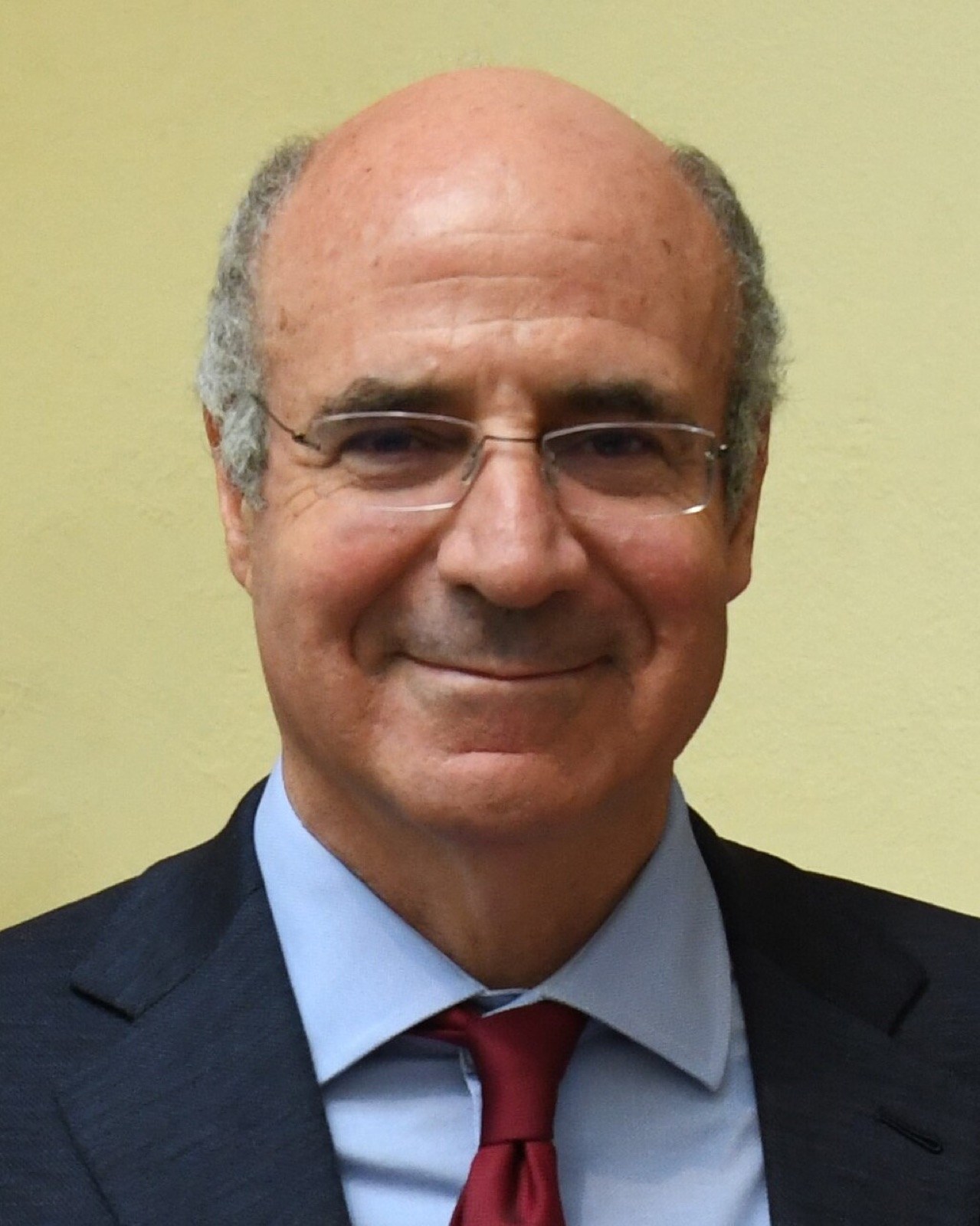
Bill Browder
Bill Browder was Russia's largest foreign investor and exposed corruption, pushing for accountability for the death of colleague Sergei Magnitsky, which led to the Global Magnitsky Act.
Episode Summary
Bill Browder was the largest foreign investor in Russia until 2005, when he was denied entry to the country for exposing corruption in Russian state-owned companies. Browder's colleague Sergei Magnitsky uncovered a massive tax scam totalling hundreds of billions of dollars, and the officials he accused of stealing the funds threw him into jail, where he was beaten, tortured, and then died in custody in 2009. Browder decided to act, pushing for accountability of those involved in Magnitsky’s death. Browder’s activism has led to the passing of the Global Magnitsky Act, which authorizes the US government to sanction international government officials believed to be behind human rights violations. Julia Macfarlane sits down with Browder to discuss his work targeting corrupt Russian officials while Sir Richard Dearlove, former head of Britain's Mi6, shares his insight on the complex trails of Russian money, who's hiding it, and who has access to it.
Listen & Subscribe
- Watch on YouTube
- Listen on Apple Podcasts
- Listen on Spotify
Transcript
INTRODUCTION
Mcfarlane: You're listening to One Decision, the podcast that looks at the choices made that have global impact, hearing from the people who make them and live by them. I'm your host, Julia McFarlane. Bill Browder is a naturalized British citizen living in the UK. He made his fortune in Russia as an investor, but things changed when his colleague, the Russian lawyer and tax auditor, Sergei Magnitsky, uncovered a massive tax scam totaling hundreds of billions of dollars. The officials he accused of stealing funds had him thrown into jail, where he was beaten, tortured, and then died in custody in 2009. Browder decided to act, pushing for accountability of those involved in Magnitsky's death. Browder's activism has led to the passing of the Global Magnitsky Act, which authorizes the US government to sanction international government officials believed to be behind human rights violations by freezing their assets and banning their travel. Magnitsky acts have also been passed in the UK, Canada, and several EU states. Browder, earlier this summer, published his second autobiographical book detailing his fight against Putin and the Russians that he believes are responsible for his friend's death and those involved in kleptocracy and money laundering. Freezing Order follows his first book, Red Notice. We sat down to talk about his work targeting corrupt Russian officials, and I began by asking him if the war in Ukraine and the international stigmatizing of the Putin regime had made his activism work any easier.
INTERVIEW
Browder: Oh, there's no question it's gotten easier. Doors are swinging wide open in a lot of different places. People wanting to talk to me. I could not get a single meeting with anybody in the British government before. And now all of a sudden, I'm getting calls from people in the, you know, cabinet ministers calling asking for advice. And not just the British government. I get calls from the Canadian government and the US government asking for advice. And certainly there's a lot more interest because everyone can watch on their television as innocent people are being, you know, destroyed and children killed and so on and so forth. And everyone understands that this comes from, you know, Putin's, you know, criminal activities, and a big part of his criminal activity is stealing money. And a big part of that stolen money finds its way into our economies in the West. And the only difference between him and the mafia of Italy or Pablo Escobar is that he's got the powers of a sovereign state.
Mcfarlane: Let's go back to the origins of that mission. Talk to us about why you started the Hermitage Fund, your investment fund in Russia, and walk us through the journey of how it's evolved more or less into an investigative firm.
Browder: Well, so I come from a strange family. My American family, I should say. My grandfather was the head of the American Communist Party in the 1930s, 1940s. And so, I was born in 1964. And when I was going through my teenage rebellion, I had this epiphany one day, which was that if my grandfather was the biggest communist in America and the Berlin Wall has just come down, I'm gonna try to become the biggest capitalist in Russia. And I eventually achieved that. I first moved from California to London, and then I moved from London to Moscow. And I set up an investment fund. It was called the Hermitage Fund, to invest in the newly privatized companies of Russia and the former Soviet Union. And the fund grew from nothing to four and a half billion dollars, which made me the largest foreign investor in Russia. And then I discovered something that I hadn't really thought about in advance, which was that every company that I was investing in was being robbed blind by the oligarchs who were the majority shareholders of these companies. And it was interesting because this was at the time that Putin had just come to power, and Putin was fighting with the same guys that I was fighting with. And so every time they were stealing power from him at the same time as they were stealing money from me. And so every time I would publicize one of these scandals, he would come down like a ton of bricks on these oligarchs. And so in the first couple of years of the Putin regime, I was actually thinking that he was a good guy because he was doing all this stuff that was helpful and seemingly reformist and, you know, honest. And it worked out very well for me until about late 2003, and that was the moment that he arrested the richest oligarch in Russia, Mikhail Khodorkovsky, the owner of an oil company called Yukos. He arrested him. He put him on trial, and he allowed the television cameras to film the richest man in Russia on trial sitting in a cage. And that had a very profound impact on all the other oligarchs who saw this and said to themselves, I don't wanna sit in a cage. And so they all went to Putin and said, what do we have to do so we don't sit in a cage? And Putin said, very simple, 50%. And this was the moment that Putin became the richest man in the world, and that's when all my troubles began. I was expelled from the country. I was declared a threat to national security. My offices were raided. They seized all of our documents. And the documents were then used in a very complex fraud in which they stole $230,000,000 of taxes that my firm paid to the Russian government. I had this young lawyer named Sergei Magnitsky discover the fraud, expose the fraud, testify against the officials involved, and he was subsequently arrested by the same officials and put in pretrial detention where he was then tortured for 358 days and killed at the age of 37 on 11/16/2009, leaving a wife and two children. And that was the point in which I put aside all of my business activities, and I made a vow to his memory, to his family, to myself that I was gonna go after the people who killed him and make sure they face justice. And a big part of that was to figure out who got the money, the $230,000,000 that he was killed over.
Mcfarlane: I just wanna quickly ask about the Magnitsky Act because Sergei Magnitsky, he's so lionized in your book. And yet, it seems that there are people who have an issue with his name being in the Magnitsky Act. And there were efforts in the US to try and remove the name from that piece of legislation. Why do you think his name is problematic to some people? And he clearly, you know, did a whole lot of good investigating Russian criminality and kleptocracy and paid the ultimate price. He died what must have been a horrific, gruesome death in a cold, dark Russian prison on his own, his loved ones far away. Why do you think that aspect of the Magnitsky Act has been problematic in some areas?
Browder: Well, it's problematic primarily for Putin because the story of Sergei Magnitsky is the defining story of Putin being a crook, and Putin understands that. And he understands that, you know, sometimes a story is more powerful than anything else. And so every time that Magnitsky's name is mentioned in Putin's presence, you can see his face, you know, get all angry because it just upsets him. And so he went on a mission, first of all, to stop the Magnitsky Act and it became his stated top foreign policy priority. But beyond that, if he couldn't get it repealed, then he wanted to make sure that Magnitsky's name had nothing to do with it. So there wasn't this constant reminder every day that somebody is sanctioned that Putin is a low life criminal. And Putin went on a major mission to do that in the United States. It's written about in great detail in my book. And he also did the same thing in the European Union. And in the European Union, he had good help from Viktor Orban, his friend who is the prime minister of Hungary. And every decision at the European Union requires unanimity. And so when the Europeans passed the Magnitsky Act, his name was not on it because Putin didn't want it on it.
Mcfarlane: A major theme in your book is how Russians use or rather misuse the legal profession as a way of persecuting and shutting down their political opponents, activists such as yourselves who are pitted against them. I'm so interested in this, I think it's clearly such a huge issue. And partly the reason why it's such a huge issue is that lawyers actually do really, really well from Russian business. You make the point, you know, Russians both in London, in New York, in Washington, they are busy spending money on legal fees, getting divorced, getting visas, and things like that. And there was a story in your book where a lawyer who was initially working for you, a lawyer called John Moscow, he did something quite incredible, and he switched sides to then represent a company that you accuse of being behind that theft, the multi-$100,000,000 theft of stolen taxes.
Browder: Yeah. It's one of the most shocking parts of my whole experience was, you know, you kind of expect trouble from Russians, but you don't expect trouble from American or British professionals. And in this particular case, I'd hired this man. His name is John Moscow. He was a former US prosecutor in the city of New York against organized crime and money laundering, went into private practice and was considered to be one of the top people for shutting down criminal networks. And so I hired him after we discovered the theft of the $230,000,000 to try to figure out where that $230,000,000 went. And he was pretty good, and he gave us a whole bunch of tools to figure out where the money went and helped us come up with a subpoena to see, you know, the banks where the money flowed through. And then one day, he just abruptly stopped working for us without any explanation. And then we carried on with our mission using some of the great tools that he created for us, and we found the money. And some of the money we found had actually gone to buy expensive, luxury apartments in New York. And once we found the luxury apartments, we made a complaint to the New York DA's office, the same person in the DA's office he introduced me to. And the DA's office passed it to the US attorney's office, and they opened up a criminal investigation. And they then filed a federal forfeiture order to freeze the properties. And when they filed the forfeiture order in court, the next day, who shows up to represent the people who got the money? None other than John Moscow, my lawyer, who helped me find the money. So he's going from representing the victims of a crime to representing the alleged perpetrators of the crime. And you don't have to look at the footnote in the book to understand that that's, like, against the rules. But the fact that this could happen and these guys were making millions, maybe tens of millions off of this, doing this stuff for the Russians. And this was, you know, just one example of what I think is a much, much bigger problem. As you mentioned, the lawyers are making so much money off of Russians, buying properties and doing mergers and acquisitions and fund investments and suing each other and divorces and so on and so forth, that these lawyers have become multimillionaires through their relationship with the Russians, and they have effectively, and this is the most important point, they have become agents of the Russian government. They've become foreign agents of the Russian government.
Mcfarlane: In your case, you had been served with a US subpoena in very dramatic ways with these professional servers running after you, stalking you, harassing you and your family. You had to sit through two depositions where the lives and the securities of your whistleblowers who had to remain anonymous, their lives were at stake. And it was only because you happen to have a great legal team who coached you in the best way possible to preserve the safety of confidential information that was not relevant to the case, but that could have serious implications for the safety of your whistleblowers, of the people involved in uncovering all of these criminal networks. I mean, the US justice system gave you no protection. According to your account, the rule of law was not protecting you from the Russians. If anything, it was aiding the Russians in pursuing you and pursuing your whistleblowers and the people back in Russia without whom your work in exposing corruption, money laundering, all of this illegal activity would not have been possible?
Browder: Yeah. There's a word for this. It's called lawfare, where they take law and they turn it into a weapon. And the Russians have been really, really good at that. And, of course, assisted by all these Western lawyers who make all this money off of it. And so as you said, we have a situation where lives were at stake and the judge and the rules and so on were, you know, if you go to a judge and you say, look, they're gonna, and we went to the judge and said, look, there's people's lives who are at risk. And this is right at the time that Boris Nemtsov had just been murdered, who was involved in our whole campaign. And we said lives are at risk. And it's such a weird, one thinks that the legal system is all very upright and proper, but it's all very antiquated and easily abused. And it's been abused in every possible way in my case. And I could go on and on about all these lawyers, and they're so aggressive. And I'm somebody who can handle it. I've made some money in my life, and I can take the hit, and I could pay the fees if I needed to. But imagine this happens to you, you know, or to any other journalist, and it has happened to many other journalists.
Mcfarlane: Yeah. Catherine Belton, the Financial Times journalist who wrote a book about Putin, she won a long court case, but she was pursued in a similar way. Christopher Steele, the former MI6 intelligence officer who compiled the dossier against Trump and Putin. He has been tied up in legal cases from Russian oligarchs named in the dossier for years and years and years. And they've both described how these cases, even if they are thrown out a bunch of times, even if the Russians have really no credible case, the fact that they have the money, what do criminals have? They have a lot of money. They have money available to throw at their opponents to force them to go to court and money that in many occasions their opponents don't have. And in Catherine Belton's case, she's lucky to have had the backing of the Financial Times. But a lot of people don't have that kind of support.
Browder: Yeah. It's terrible. And it becomes basically legal terror. And the system is completely not fit for purpose, that somebody with money can terrorize a journalist, a whistleblower, an activist who doesn't have money into submission. And it happens all the time, and the laws need to be changed. And I'm involved in trying to change the laws because it's just so unjust and unfair.
Mcfarlane: I wanted to ask, the Hermitage Fund, at one point, it controlled, I think, the largest foreign investment fund in Russia. It held several billions of dollars worth of assets. You have been described by some of your opponents, as you mentioned in the book, as an oligarch yourself. Has it been awkward for you? One of the biggest transparency campaigners and anti-corruption activists in Russia, has it been awkward for you, the fact that you've made a total fortune out of Russia? And how do you respond to people who try to use your wealth and your history in Russia to try and discredit you?
Browder: Well, I mean, anytime you have opponents, they try to use anything to discredit you. I mean, in my case, the way I made money in Russia was sort of the exact opposite of how the oligarchs made money. So the oligarchs were stealing money. I was buying shares in the companies they controlled, and then I was exposing their corruption schemes. And so my main money-making vehicle was anti-corruption. And it's kind of a rare situation where you can make money and do good in the same job.
Mcfarlane: I wanna just finish by asking you about Putin's personal wealth. By many estimates, and they are in the estimates because so much of this is difficult to prove. Putin is the richest man in the whole world. And there was a very interesting part of your book where you describe the curious tale of this cellist, this man who I think he has a secondhand cello. He wears scruffy clothes. On paper, he doesn't have much of a salary, but he is actually the richest musician in the world, far richer than Jay-Z, than Paul McCartney. And you believe that because he has had a lifelong friendship with Vladimir Putin from a very young age that he is one of Putin's closest friends and allies. You believe that he is essentially a placeholder sitting on this huge, huge bank account that contains vast sums of money, and you believe that that is how Putin keeps his wealth out of his name. He has this sort of deniability where he spreads all the money that he has stolen, and he puts people he trusts in charge of these funds. Walk us through that and how difficult has that been for people like yourselves who try to track down where Putin's money is kept, the difficulties you come across, and how important were the Panama Papers in helping you get some more of that information out?
Browder: So Putin doesn't keep any money in his own name. Why doesn't he keep any money in his own name? Because if he did, somebody could blackmail him with the bank statement or the property deed or whatever. And he understands blackmail better than anybody because he spent his whole life blackmailing people to become agents of his in the past. And so he loves money. He's stolen an enormous amount of it, but he can't keep any in his own name. So he needs to find people whose names to keep it in. And one of the best discoveries that came in the last few years was in the Panama Papers. And the antihero from the Panama Papers in Russia was this man. His name was Sergei Roldugin. Sergei Roldugin was a cellist, and he was a cellist living in Saint Petersburg. And amazingly and sort of hard to explain, here is this cellist who had received, in companies that he controlled, $2,000,000,000. And the money came in from oligarchs. It came in from Russian state banks. It came in from all different sources. And the obvious question is, why would all these people be paying $2,000,000,000 to a cellist? This is a man who was Putin's best friend from childhood. He was the godfather of one of Putin's daughters. He introduced Putin to his wife, and he's a person that Putin trusts. And so the reason that Sergei Roldugin was sitting in front of $2,000,000,000 is he was one of many nominees, trustees, proxies for Vladimir Putin. And that's how Vladimir Putin keeps his money.
Mcfarlane: Well, you have been quite a thorn in Putin's side since you started your investigative work, and you have been targeted by the Putin regime on several occasions. You've also worked very closely with Boris Nemtsov, Sergei Magnitsky, one of your colleagues, of course, both of whom are widely believed to have been killed on the orders of Vladimir Putin. Since the war in Ukraine, I'm talking about how Putin now has lost so much of his credibility. Some of the levers of influence he maybe could have pulled before, he's becoming the bête noire of Europe in a way that he hasn't been before, given that he has demonstrated on the world stage the lengths that he really is willing to go to get his own way. So how do you feel that the fact that Putin is now pretty openly reviled across the West, does that make you feel a little safer, or do you still fear that his long arm can reach you?
Browder: Well, one of the main ways that Putin wanted to get me, and I should point out that Putin wants to kill me. It's sort of established. It's been stated. The main way he wanted to kill me was not by putting Novichok on my doorknob, or maybe he did wanna do that but decided not to. But the main way he wanted to kill me was to get me back to Russia via international legal means, arrest, extradition, etcetera, and then kill me in a Russian prison. That was his objective. And the way he went about that was by issuing Interpol arrest warrants. They've issued eight Interpol arrest warrants for me. In the past, if I were to travel to certain European countries, they would respect a Russian arrest warrant. At this point, I think that that's no longer the case. But none of this means that Putin doesn't still wanna kill me. What it means is that he's gotta find another method to do so because asking for a country to arrest me and extradite me is not gonna work. And so the best way to prevent them from doing something terrible is not to have any patterns that are exploitable. So not to take the same bus every morning at the same time or not to walk your dog at the same moment or whatever that is. And so I've had to explicitly and very consciously live a life of no habits and patterns.
Mcfarlane: I mean, it must be so exhausting. And all of these sort of risk calculations you must be making on a daily basis, all of these adjustments to your behavior, that must take its toll emotionally, or is it sort of background noise to you?
Browder: I mean, it's been going on for a long time. This trouble started when Sergei Magnitsky was murdered in 2009. And so there's been thirteen years of really ugliness. But at the same time, I can also argue that what this has led to is a mission that I've been on for the last thirteen years, which is to get justice for Sergei Magnitsky. And my mission has led me to pass laws in different countries, has started money laundering investigations against these criminals in the Putin regime, to publicize things in a way that nobody knew, to write books that educate, you know, millions of people in the world about what's going on. And so on the other side, I feel like I have something that really is, you know, gets me up in the morning and I can feel good about and I can feel pride in and my children can feel pride in what I'm doing and perhaps even in certain ways following my footsteps when they grow up. And so it's, you know, there's lots of different parts of this story, some bad, some good.
ANALYSIS WITH SIR RICHARD DEARLOVE
Mcfarlane: Bill Browder ending our conversation there. Now we arrive at the point in our podcast where I bring in my cohost, Sir Richard Dearlove, the former head of Britain's secret intelligence service MI6, for his take. So Richard, we're gonna get into that fascinating conversation with Bill Browder in a second. But I just, first of all, want to ask you what your impressions are of his new book that's come out.
Dearlove: Well, it reads rather like a political thriller. I mean, it's a very unusual book. I was expecting something more analytical and cerebral, but it's a sort of hot-paced thriller almost that recounts this series of events, which is pretty extraordinary. I'm fascinated by it. And to read the book, you know, subsequent to the impressions I had of him, the two seem almost written by almost different people. Because, of course, in 2005, 2006, that period, I think he still had a very different view, well, we all did, of the economic opportunities in Russia.
Mcfarlane: Right. He was quite pro-Putin at the beginning, and he's quoted in The New Yorker in a piece from 2000, saying that Putin was going to be good for business. And this was at a time. This was after Yeltsin had allowed Russia's oligarchs to manipulate the economy for their own profit. And Putin came in and started reining back the oligarchs, and Browder was in favor of that. And he even said a few years later, we want an authoritarian, one who's exercising authority over mafia and oligarchs. And he added that Putin has turned out to be my biggest ally in Russia.
Dearlove: How the tables have turned. I think the general reaction to Putin when he initially took power was positive. I mean, we've talked about this before in a different context. There's no question that someone like Browder was worried that, you know, the Russian economy was being ripped off at that stage by sort of ruthless oligarch exploitation. And I think, you know, Browder saw Putin as a force for good and someone who would take more control of the situation and wouldn't allow this sort of financial anarchy to develop. Of course, you know, an awful lot of water's gone under the bridge since then. But Browder was the guru on Russian investment, Russian startups. And, you know, he was the person who had this extraordinary expertise. And bear in mind this extraordinary access. I mean, Browder's sort of family history is fascinating. His father was leader of the American Communist Party, which is a pretty extraordinary thing to have been in that period. Obviously, a huge interest to the FBI, was sort of accepted in Russia as a political figure. And then Browder goes in as the arch capitalist and plays an entirely different role from the one that his father preached, but at the same time is exploiting those extraordinary Russian connections that the family had. I mean, he was in a unique position.
Mcfarlane: Yeah. No. It's a fascinating backstory. I wanted to ask, we briefly touched upon the security precautions and measures that he has to take, given that he has a big target on his head. He's caused a lot of pain and annoyance to Vladimir Putin and to a lot of Putin's allies. If you were Bill Browder, how worried would you be for your own safety? Given everything that you know about how Russia operates and how Russia does behave towards foreign citizens.
Dearlove: Well, I think my comments on this might be a little bit provocative. Reading the book, Browder was clearly the target of what I would describe as Russian lawfare. And they went after him with every legal mechanism that they could muster. Russian assassinations, which of course have a long history, have almost exclusively been of Russians themselves, Russian citizens. Okay. They may have changed their citizenship and become members of another country, but, ultimately, the Russians have killed their own kind. You only have to go right back to Trotsky, you know, whom Lenin ultimately had murdered in Mexico. And there is a long record of the Russians assassinating dissidents and opponents of the regime both internally and externally. I would find it hard to pull out of my memory the example of an assassination by the Russian state, or let's say suspected of being a state operation, of someone who was not a Russian citizen. And Browder was an American citizen. And that's why I think if you read the book carefully, all the hype and all the incidents, and it's written like a thriller, are around legal issues. Now I'm sure what the Russians wanted to do was to get him back and stick him in some dreadful prison, you know, a hundred years or fifty years. You could say that's the same as assassinating him.
Mcfarlane: One recurring theme in the book and in our conversation was the perceived, frankly, uselessness of many national institutions, be it British, be it Swiss, be it European institutions, when it came to standing up to Russian corruption, to dirty money flowing out of Russia. There was that extraordinary case of the Danish bank that after doing an audit, after an investigative journalist who worked with Browder to look into corruption and the flow of dirty Russian money, found that more than $200,000,000,000 had flowed out, dirty Russian money had flowed through this bank in Denmark. Denmark, which is one of, you know, it's a European country. It certainly claims to be transparent, to adhere to the rule of law. And then also like Swedish banks and other Scandinavian banks, an awful lot of corrupt Russian money flowing through these mainstream banks. It was an extraordinary indictment from Bill Browder on not just Western banking institutions, but also the legal systems in a number of countries and particularly in the UK of how vulnerable they are to malign Russian criminal influence.
Dearlove: Yeah, Julia. We've nothing to be proud of in terms of the way we treated the Russian community in London. And you've produced this other extraordinary example of the Danske Bank and that applies to a number of other banks particularly in Scandinavia actually which traditionally have had close links with Eastern Europe and with Russia in particular. But I'm sorry to say that, you know, we had a very laissez-faire attitude towards Russian money coming to London. We had a very laissez-faire attitude towards the British legal community using its expertise and its sort of respect for the process that exists in the UK in a way which was exploited ruthlessly by a lot of wealthy Russians whose money had very questionable origins and who were certainly involved in significant money laundering. I'm pleased, I think, to be able to say now all of that has changed but there's no question that the government turned a blind eye to this problem as it evolved because the financial benefit to the UK of having all this money washing around in the city was significant. You know the rumors about Putin's wealth and the rip-off that he's taken as a percentage from the oligarchs, the houses, the palaces, you know, the girlfriends, the airplanes, where is the money stashed? I mean, Browder, in a way, because of the Magnitsky affair and his persistence. I mean, what's extraordinary in reading that book is the courage and persistence of Browder in pursuing this objective. And in a way, you know, he becomes Putin's nemesis. And you can see why Putin was so aggravated and desperate in a way to silence him because this one man was in the process of, as it were, undermining Putin's financial and long-term ambitions, not as a politician, but as an individual.
Mcfarlane: Well, I do want to get into Putin's finances because I find that a fascinating subject to get one's teeth into. But I do have to ask, since you feel like the tide is turning in terms of standing up to malign Russian influences, I have to ask you about that shelved report into Russian interference into British politics that was compiled by British intelligence services. And that was ready to publish before the 2019 election, but Downing Street blocked it until after the public went to the polls in the general election and Boris Johnson won that resounding victory. And of course, a lot of that report featured heavily on a number of Russian donors to the Conservative Party. Do you really think that our political system has improved in terms of standing up to Russian influence? I mean, there are so many things we could talk about, Boris Johnson and his links to Russia, and he's recently getting flak, even though it's been out for a while. The fact that he ignored intelligence warnings about Evgeny Lebedev, the former owner of the Independent, who is the son of a KGB officer, warned against having links to them. And he promoted him to the House of Lords. He's now Lord Lebedev of Siberia. I mean, what do you make of Britain's independence from Russian influence right now?
Dearlove: Well, obviously, there's a residue of influential Russians. I mean, I think you've probably got to look at the individuals and try to assess, you know, where they are in terms of their support for the regime, the extent to which they've broken with Russia. So I think it's a little bit tricky to generalize and to say that, you know, all of this leads one to the same conclusion because there are certainly Russian families and Russian individuals that, you know, are really anti-Putin and have left Russia because they can't stand the regime. There are those who have, you know, made accommodations with Putin to preserve their wealth. I mean, I think I can say this in my old age about Lebedev. No head of MI6 is in the House of Lords. No former head of MI6 is in the House of Lords, but the son of a senior KGB officer is. I find that a little bit anomalous.
Mcfarlane: I do want to ask you, some of Browder's really important contributions has been lifting the veil on some of these money trails, because it is often said that Vladimir Putin is unofficially the wealthiest man in the world. And a number of Russian experts believe that he has spread his wealth through a number of different ways. One particular Russian expert I spoke to recently, who used to work for the British government, told me that the way the kleptocratic Russian government works is by the means of obshaks, which is basically like a slush fund. And it's similar to how organized crime groups operate. There is no bank account that says Vladimir Putin or even a bank account of one of his friends that is sort of holding on to it for him. There's not a single bank account that is earmarked for Putin. There is rather this, what is known as an obshak, the slush fund of vast sums of money. And part of that will be used for Vladimir Putin, part of that will be used for other senior Russian officials. But it's more of a mutual pot of money that has come from the inception of Russian state assets. So what do you know? What have your contacts told you about Putin's financial situation? Where does he keep his money for his rainy day? And do you think there will come a day when he steps down from the presidency in order to enjoy this wealth that he has accrued over decades?
Dearlove: I do recall, and through my peripheral involvement, actually as a witness in one or two court cases, I can make some observations. I mean, I think you're absolutely right. There is no account, you know, with Putin's name on it. And the money, you know, it's held anonymously but is easily accessed in other places. And certainly the trails are complex through holding companies and whatever and don't lead back to Putin. They may lead back to other Russians. So in a way, he has nothing, but whenever he needs it or when he wants it, he has access to it, obviously. But, you know, like many great dictators, I just wonder whether he will ever enjoy the benefits or the fruits of his ill-gotten gains. It's rather like that poem by Shelley of the ruined statue lying in the desert. Look on my works ye mighty. And I would confidently predict that Putin is not going to enjoy his ill-gotten gains. I think dictators like Putin do not. He's made a dreadful mistake over Ukraine. What the outcome of that will be is difficult to predict, but, you know, he's gonna come to some sort of unpleasant end, whether it is his health or an intervention by, as it were, another Russian group. I just can't see him going off into luxurious retirement.
Mcfarlane: That brings us to the end of this week's episode of One Decision. If you enjoyed this podcast, do subscribe to us so you never miss an episode. We drop new podcasts every Thursday. Freezing Order, a true story of money laundering, murder, and surviving Vladimir Putin's wrath by Bill Browder is out now, and you can follow Bill on Twitter to see more of his work at Bill Browder. You can also follow us. We're at One Decision Pod. From me and the team, see you next time.