Episode Info
- Season4
- Episode5
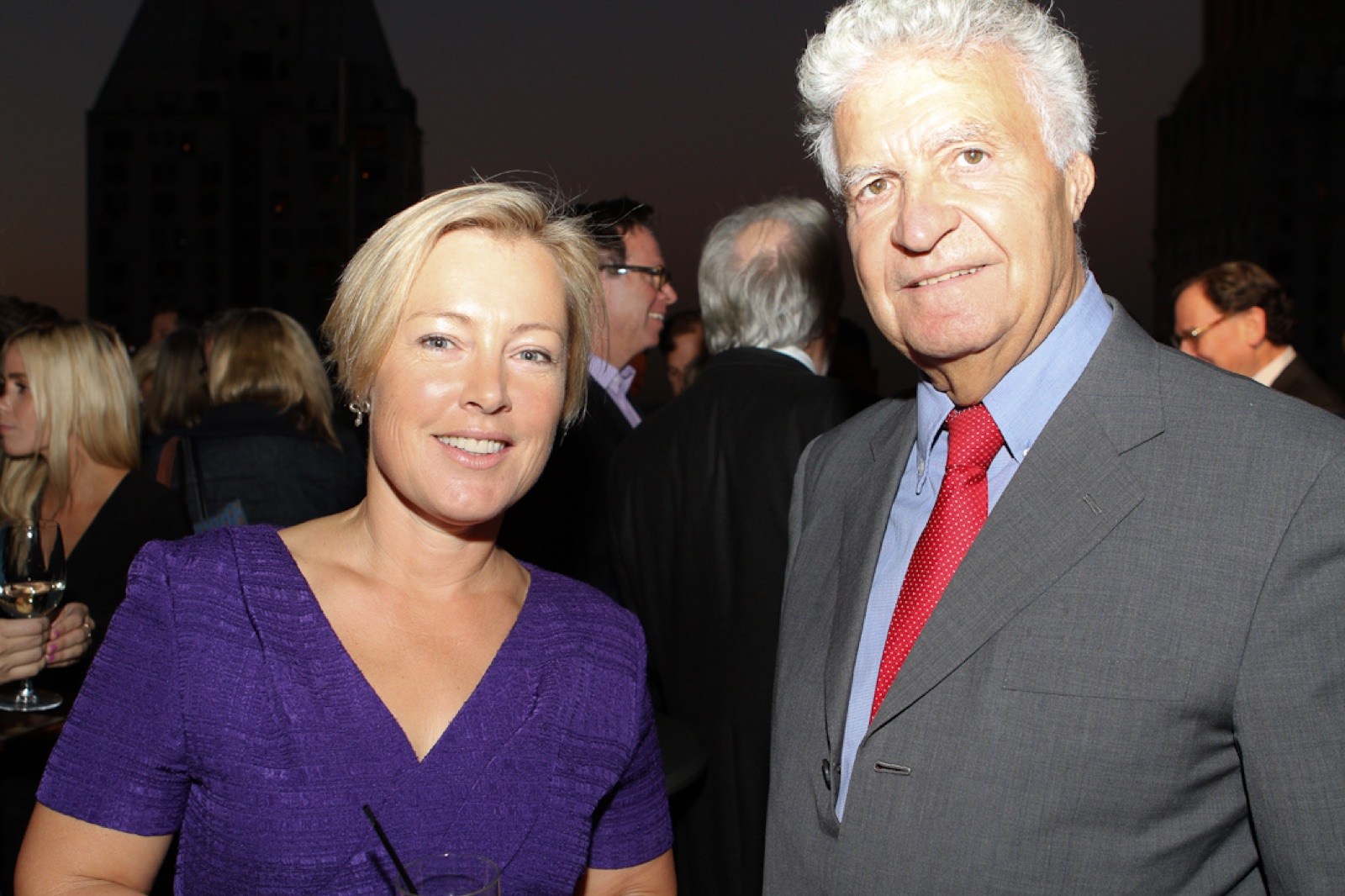
Hosted by Christina Ruffini and Sir Richard Dearlove
Guests
Gillian Tett
Gillian Tett writes for the Financial Times.
Suzanne Lynch
Suzanne Lynch writes for Politico.
Episode Summary
Was it a very bad year? Or just a looong continuation of 2020?! You don’t want to miss this sharp, freewheeling roundtable on the most impactful decisions on our planet—and the not-so-obvious angles. With FT’s Gillian Tett. Politico’s Suzanne Lynch. And Sir Richard lets loose with some insights…
Listen & Subscribe
- Watch on YouTube
- Listen on Apple Podcasts
- Listen on Spotify
Transcript
COLD OPEN
Kosinski: Hi, everyone, and happy almost New Year. It was an eventful one. NEWS CLIP [0:09] We will be challenged with a virus that has a degree of transmissibility that's more efficient than what we've been dealing with. NEWS CLIP [0:14] This is the first step. This is a tiny little step of what Blue Origin is gonna do. And what we're really trying to do is build reusable space vehicles. It's the only way to build a road to space.
INTRODUCTION
Kosinski: I'm Michelle Kosinski, and today on One Decision, we're gonna take a look at the biggest decisions of 2021, the ones with the greatest impact on our world. NEWS CLIP [0:33] I am president of The United States Of America, and the buck stops with me. And I do not regret my decision to end America's war fighting in Afghanistan. NEWS CLIP [0:50] May I just say to all, delegates, I apologize for the way this process has unfolded. I also understand the deep disappointment. But I think as you have noted, it's also vital that we protect this package.
Kosinski: If you check out our website, you'll see the full results of a survey we did with a 100 international journalists about what they think were the most important decisions around the planet. See if they line up with your own view of world events. And to go deeper, we have assembled a very sharp group right here. Hopefully, everybody is armed with their most comforting holiday sweater. Of course, we have Britain's former head of MI6, Sir Richard Dearlove.
Dearlove: Hello.
Kosinski: Gillian Tett, chair of the editorial board and editor at large at the Financial Times.
Tett: Hey. Great to be on the show.
Kosinski: And Suzanne Lynch, coauthor of Politico's Playbook Brussels.
Lynch: Great to be with you guys.
Kosinski: Welcome, everyone. It's hard to believe that this grinding year is finally skulking away from us. It kinda just seems like a never ending 2020. Right? Okay. So it might not be that hard to guess what people felt was the number one impactful decision by a landslide.
AFGHANISTAN WITHDRAWAL
Dearlove: I think it has to be a withdrawal from Afghanistan.
Kosinski: Ding ding ding. You nailed it, Richard. Now it's obvious what this does to Afghanistan in the short term. We still don't know what will become of its economy, what freedoms women will ever have, and how many more refugees will flee, as well as what it does to American credibility. But what about the even wider reaching effects?
Lynch: Well, I think why geopolitically it was so interesting was that it was the first big foreign policy decision by Joe Biden. I think there was a real surprise around the world, there was a real shock among European allies that this was happening, that the twenty year incursion by The US was happening in this manner. It was the fact that symbolized something about the Biden presidency that I think a lot of people did not see coming.
Dearlove: Yeah, I agree.
Tett: I took away three things. Firstly, I mean, actually did my PhD research around Afghanistan and spent years of my life in the former Soviet Republics on the borders of Afghanistan. I mean, it was absolutely playbook of the Soviets all over again and frankly the playbook of the British empire all over again. But secondly, that withdrawal would be a fiasco. I mean, it was absolutely obvious and inevitable and tragic. Second point that's very striking about it is it raises big questions about the quality of leadership and personnel inside the Biden administration. People who've basically spent their entire life as staffers and who are not experienced in strong leadership positions. And I don't think there was enough challenge inside the White House towards Biden over this. And the third point is that you know Afghanistan has always been fascinating as a crossroads place. It's very symbolic as part of the great game in terms of indicating who's up, down on the geopolitical stage. Clearly America has been shown to be, you know, losing status and credibility in the region as a result of this. But the Chinese are quietly using these events to build their position across the region. And that's something that's going to have long term significance.
Kosinski: Oh, right. And, Richard, what do you think it'll mean for the role of Pakistan and other players in the region like Turkey as well as China's sights on that vast mineral wealth?
Dearlove: Well, it gives Pakistan a green light to pursue its ambitions in the regions and I mean there's no question that Pakistan will see it, would maybe too strong a word, but as a victory over Indian interests. So it really lets Pakistan in some respects off the leash and of course Pakistan's great supporter is China and eventually you know it gives China better access to the mineral resources in all probability. Although I have to say there probably are signs, and I can't really go into detail on this, that the Taliban leadership are not necessarily that keen on having the Chinese in as a full cooperator, and it may be a question now if the devil they know is better than the devil that they don't know. I mean what I'm suggesting is I wouldn't be at all surprised to see a shift in the Taliban leadership in terms of courting the West again when it comes to investment, but of course to do that they're going to have to make very significant concessions and whether they are ideologically or religiously able to make those concessions is a big question. But I mean the issue generally, just endorse what others have said, it raises serious questions about the competence of the Biden administration in foreign policy, and it raises quite serious questions about the future of American foreign policy generally, so I think you know as geopolitical strategic issues goes it's a pretty important development.
Tett: I was going to jump in and echo two of the points that Richard made. Firstly that people talk about the Taliban as a unified group. People talk about, you know, radical Islam as a unified group. Nothing could be further from the truth. The Taliban is very split. And I think that this idea that somehow the Taliban are permanently opposed to America again is wrong. It's very telling that whenever the Biden administration needs to do anything very serious or delicate, they tend to send Burns from the CIA, not Blinken. Again, this underscores this point about the questions being raised about the competence and also the level of experience inside the Biden administration at the moment. NEWS CLIP [6:16] No plan survives first contact with reality. No plan can account for every contingency that occurs at a tactical level on a day to day basis. What you do is you adjust, and we've adjusted.
Kosinski: I almost didn't wanna ask it, but do you think that this is that that decision, the way the pullout was handled is, in essence, the beginning of the end of the Biden administration, this close to the beginning of his term.
Tett: No. I don't think it's the key factor that would cause it. It's hanging heavily on them. It's obviously been picked up by the Republicans, but there are many other things. At the end of day, the Biden administration will win or lose in the future on the back of its economic record and domestic issues because at the end of day, that's what Americans really care about. But this has certainly undermined the sense of competence that they were trying to project earlier.
Lynch: You know, I think one other angle is of course the way the European Union and the European countries, you know, exposed in terms of their lack of military capability. So I think it's kind of refocused that issue about NATO and the power dynamic within the organization.
Kosinski: What about Afghanistan as a continued breeding ground for terror abroad and the Taliban's capability to control it?
Tett: At the moment, we certainly don't have any security assurance in my view. You know it's a misnomer to think of Afghanistan as a country. What you have basically is a long legacy of multi ethnic city states, shifting tribal groups and valley cultures and loyalties and you know time and again for the last two hundred years, people have made the mistake, and by people I mean invaders, of thinking they seized Kabul and they control the country. And maybe one other message from all of this, it's time for us to rethink our obsession with the nation state going forward in terms of foreign policy making. Because, you know, it's a huge misnomer that the only international body we have that really is trying to act credibly on the world stage is called the United Nations at a time when actually the nation state is proving increasingly not the ideal unit of governance to be operating in places like Afghanistan or, dare I say, someone like European Union as well.
Kosinski: But Afghanistan will have to forge functional relationships with modern countries in the modern world.
Tett: Well, you're gonna have basically a Kabul government negotiating with people, and what happens outside Kabul will be anyone's guess.
Dearlove: Yeah. I agree with that. The Taliban will say one thing, and that assurance will only apply to a very small area of territory.
JANUARY 6 AND US DEMOCRACY
Kosinski: Okay. Moving on. I know that we can discuss the Afghanistan pullout all day. The next biggest decision of global importance, according to our survey, with nearly 70% of votes, was the prior US administration's most horrifying moment. The stunning decision by then president Donald Trump to try to block certification of Joe Biden's 2020 election win. Remember the terms that were used from the mouth of a sitting US president. NEWS CLIP [9:21] If you count the legal votes, I easily win. If you count the illegal votes, they can try to steal the election from us.
Kosinski: A dark moment for American history. But remember, the survey is about international impact. So what do you all think about that? I guess the obvious effect is American credibility and stability.
Lynch: Yeah. I was there. I was reporting that day from the Stop the Steal rally, as it was called, that morning when Trump addressed the supporters and watched them in horror as it developed during the day. And as I went back to write to my office, I think we can't ignore what a seismic moment that was in American history. And as you say, it's a matter of credibility. But for example, you know, at the UN, Russia, China can turn now with validity and say to America, don't lecture us about democracy when you actually cannot implement a peaceful transfer of power. There was an attack on the Capitol Building. So I think it has done huge damage to America's, not just reputation, but its credibility as the world's policeman.
Dearlove: I'm not sure I agree with that entirely. You know there are, well let me, I've had this discussion with Michelle a little bit before. Look at France, the violence of French politics, the street fighting is an absolutely constant factor, but it doesn't you know necessarily underline France's reputation as a functioning democracy. I mean I think the reason it was an important event in my view is that it reminds us that Trump actually did rather well in that presidential election, and it defined in a way the depths of the divide in US politics. That's what worries me, the inability of the two extremes of American politics really to work together, which I think has a huge knock on in terms of The US's credibility as a functioning polity and what happens further down the road.
Lynch: Just to come back in on that though Richard, I mean the fact was the sitting President didn't and still does not accept he lost. And number two is there was an actual physical invasion of the Capitol Building. Neither of those things have happened in France, at least for a few hundred years anyway. So you've
Dearlove: You've forgotten about 1968, I mean De Gaulle was—
Lynch: I'm a bit too young for that.
Dearlove: Yeah yeah, no no, I mean it's happened in France in 1968 and it didn't actually damage France's political reputation. My god, I mean you know, Paris was in a state of civil war in 1968.
Kosinski: Wait, I didn't know that either. You're already young to remember.
Lynch: Yeah, I'm gonna have to go back and look this up.
Dearlove: No, I mean the students tried to you know overwhelm the government.
Lynch: There were similar things happening in America that year too. I mean there was a lot of division in America in 1968 too, this is a different issue. I think when a sitting president of the biggest economy in the world, the most powerful country in the world does not accept the results of an election and most of his millions of supporters, I think that's a huge issue for America.
Dearlove: That I agree with. I mean, I agree with it. I think what worries me is the depth of this separation and division and the possibility that Trump may again be a presidential candidate, that's I think what's worrying.
Tett: The good news, if you want to be cheerful, is that it didn't succeed. You know, the good news is it did not succeed. The second bit of good news is that it has crystallized the issues at stake right now in a way that nobody can ignore. And there is an incredible upsurge of energy and activism from liberal groups who are trying to uphold, you know, the constitution, protect the constitution on a scale that we've probably not seen for many, many years. The bad news though obviously is in my mind what's far more concerning is that there are very few Republican leaders who are hoping to be serious contenders for the 2022, 2024 races who are actually disavowing what happened, which is, you know, astonishing. And the thing that's really concerning in my mind is the degree to which you've got increasingly right wing groups covering and controlling the state legislators and all areas of legislators right down to school boards. So you're seeing, you know, a battle for the soul of America now occurring on almost every level of the government structure. Yeah. I agree. I think so Richard and I are in danger of being in violent agreement on almost everything at the moment. So we'll have to find something to disagree about in a second.
Kosinski: Well, Richard's very persuasive, very persuasive in his arguments. Okay. So after that decision, the next biggest ones that people chose are interestingly really split, all of them around the 30% range. And remember, these respondents are all over the world, so geography and areas of expertise also play in. But we're looking at decisions like The US's reentry into the Paris Climate Agreement, the vice president of The United States, Mike Pence's decision to certify the 2020 election results, China's national security law and crackdown in Hong Kong, also China's test of a hypersonic missile. But then you get things like the Facebook whistleblower leak as highly impactful around the world. The agreement by 136 countries to tax corporations at a global minimum of 15%. So it's really a reminder of how many big decisions were made in terrible little 2021, isn't it?
CHINA AND THE HYPERSONIC MISSILE
Tett: There was a lot of news. I mean, can I make a quick plea for one story, which was a Financial Times scoop, the hypersonic missile? Because it's not clear that America actually has the capabilities to replicate what the Chinese appear to have done. Let me stress appear to have done. But it really highlights a core point that the rivalry tensions, strategic conflict potentially between US and China is entering a new level. And I think that's something which is gonna be extremely important for the next year.
Dearlove: Yeah. Okay. Well, unfortunately, I would agree with Gillian again. I think the whole security issue of China, what impact China is going to have on the international security situation, and you know you can either express it through its disregard for the security law in Hong Kong and its behavior towards Hong Kong, which is an absolute breach of the agreement that they made, or their you know missile development, and if this hypersonic nuclear capable missile is as the Financial Times has described it, you know it's a serious escalation in the sort of cycle of armament, but also in the capability that China is believed to have. It represents this whole question of how on earth, you know, we're going to confront China which is going to be very assertive of its power. Definitely.
Kosinski: Well Richard, do you believe that what China did was test a hypersonic missile that is capable of circling the globe?
Dearlove: The answer to that is I don't know. It does look, in terms of the material that they've come up with, they have, as the Russians have been exploring this area for some time, and the States as well. I mean, it's in both East and West. It's a crucial part of weapons development at the moment, but it looks as though the Chinese may have got a good deal further than we thought they had.
Kosinski: Okay. So next, the decisions that respondents did not care about so much. Sorry. Only 4% put great importance on the multiple coups in Africa this year, Mali, Guinea, Sudan, or the one in Myanmar. Also, only 13% thought that the AUKUS submarine deal, whereby The US, UK, and Australia left France furious, was one of the biggest. And around 11% felt that the first use of Bitcoin as official currency in El Salvador was a huge one.
Tett: But it'll be nice to think that, you know, the world's community cared as deeply about what's happening in Mali as, you know, Europe or America, sadly, in terms of their impact on the world stage, they don't at the moment. But I'd say one thing, which is that the great tragedy of our modern age is that we are so hyper connected as a single global system that we are constantly exposed to contagion from each other and not just the medical source, but, you know, the political, economic, cyber, financial contagion. And yet our level of interconnectivity and exposure to contagion has not gone hand in hand in any way, shape, or form with interest in what's happening in other parts of the world amongst the wider public. I mean, quite the contrary. The year of lockdown, I think, has made most people, you know, much more myopic. There's a tremendous tendency of people just to roll their eyes and say, if it's not happening in my own backyard, I just don't care. And that's very, very dangerous as we've learned with COVID.
Kosinski: Very, very well said. Yeah. Other less intriguing decisions to respondents were things like the billionaire space race, the Olympics moving forward during COVID in Tokyo, and Belarus forcing a commercial plane to land so they could arrest the dissident Roman Protasevich. All fair that they aren't necessarily hugely internationally impactful. But any other decisions out there that you think were the ones that people aren't paying so much attention to but should?
COVID AND THE PANDEMIC DECISIONS
Dearlove: Well, there's nothing, what I find a little bit surprising about the list is we've lived through the most disruptive event since World War II, that is the COVID pandemic, and it's quite difficult to identify a specific decision because there are so many decisions that affect the different countries' policy towards dealing with the pandemic, but I mean it has to be the primary event for most individual citizens as it were. And I think what's extraordinary about the pandemic is the way that we have allowed ourselves to be treated by our governments. I mean I lived behind the iron curtain in a communist country during the cold war for a significant period of time. And the restrictions that we've experienced on our daily lives are far worse than anything the worst communist regimes imposed on their populations during the cold war.
Kosinski: And actually, Richard, you're right. This survey looked at individual decisions. But in people's write in responses, they overwhelmingly included the sum total of COVID related decision making around the world. And when you think about it, any one of those government restrictions impacts people's health, work, and lives simultaneously. Any one could be the difference between life and death for one of your own loved ones, or potentially tens of thousands of people.
Lynch: Yeah. I mean, the other part of it is it gave Joe Biden the cover, the political cover, if you like, to really go for it in terms of government spending. The same in Europe, huge spending plans that were pushed through to try and keep the thing afloat as it were. But I do think we are going to be living with the economic consequences of this for a long time.
Tett: Yeah, I would add two things. Firstly, to pick up Suzanne's point, you know, if I was making a positive optimistic decision that would cheer us up, it would be the decision by a number of pharmaceutical companies to work essentially with governments and to a degree by themselves and to deliver what was without question the most astonishing display of globalized, digitized collaboration between scientists in search of the vaccine than we've seen in history. The decision that did not happen and is one of the big questions is whether governments, pharmaceutical companies are going to learn the experience of COVID and decide to create a more effective framework going forward to deal with the next crisis.
Kosinski: You're right. I was just about to say that not all decisions this past year were negative ones. The science collaboration is momentous. However, is it tempered by the other big collective decision out there, that of so many people, to trust disinformation and distrust science. Also impactful.
Lynch: I think the tech companies have a big role to play here. I mean, as a source of misinformation. You know, you mentioned earlier one of the stories of the year was about the whistleblower in Facebook. And I think regulation of big tech over the next few years is going to be very interesting to watch.
BELARUS, TAIWAN, AND FLASH POINTS
Kosinski: So true. I was really interested to see our respondents' write in choices of the decisions of this past year. And some of the others included China's moves in the South China Sea, Angela Merkel leaving office, Vladimir Putin's decision to jail dissident Alexei Navalny. But I think the biggest one could be the situation on the Belarus Poland border right now because this really is hybrid warfare. What Belarusian president Alexander Lukashenko has done to move those migrants there while the world has been watching thousands of people sitting in a forest literally freezing to death, and nobody can figure out where this ends. What do you think the wider effect will be?
Lynch: Well, I think the fact that Belarus is effectively backed by Russia is what makes it so potentially explosive as an issue. And migration is one of these interconnected global issues that is there. It had a kind of an artificial pause in a sense during COVID. But I think it's a reminder, the Belarus issue, that migration, regular migration is a challenge for so many countries in different ways.
Kosinski: Yep. And somebody else rightly wrote in as a big decision, the one of The US to do more transits through the Taiwan Strait as China asserts itself there as well. And you have Taiwan gearing up, training up. I mean, people are now openly gaming out what war would look like between China and Taiwan. Richard, what do you think is the likelihood of that being a real flash point?
Dearlove: It's one of the crucial, if not the crucial flash point at the moment. My own feeling is that what would restrain the Chinese from a full scale invasion, and you've got to bear in mind that it's taken them a long time to modernize their armed forces so that they would have the amphibian capability to do this, which they probably are pretty close to having now if not already got it. I think the general feeling is that if they chose to invade Taiwan and did it you know with all their force, you couldn't stop it, no one would be able to stop it, but the price afterwards that they would pay politically would be incredibly high. So I mean I think that they will continue to pressurize Taiwan politically, they will continue to play this strange game of influencing the Taiwanese economy through investment, and there's this very complicated circuit through Singapore, and a lot of the investment in Taiwan is actually Chinese, although it comes through Singaporean financial institutions.
Tett: Any kind of conventional, you know, invasion or assault in Taiwan is probably going to lead them having to attack Guam at some point, which is full of Americans. And the minute you start getting Americans dying, you're really dragging the two countries into a very, very nasty situation indeed. But, you know, I don't think that China at the moment wants to have a full scale confrontation with The US and have, you know, American soldiers dying. So you're likely to see ways to try and squeeze Taiwan in alternative ways. And it's quite interesting because, you know, war in the history books has always meant one thing, which is basically a physical kinetic attack. Today, war can mean cyber war. It can mean trade war, currency war, capital war, technology war, many meanings. And you're already seeing a cyber war. You know, that's happening as a de facto situation. You've had elements of a trade war. You know, you've had a mild currency war in the past. You may have a capital war. So war is already bubbling, but not in a classic sense.
Kosinski: Yeah. And something else I found fascinating this year is the modern coup, like what we saw in Tunisia where Kais Saied took advantage of COVID and protests, called it a state of emergency, dismissed parliament, claimed it was all legal, which, of course, it was not in the way that it was carried out, and then used the judiciary to launch investigations against his opponents. And there we are. This was a promising democracy in Tunisia, and now it's a coup that is very slickly disguised and confusingly presented and incrementally done. It's like the modern coup is disguised as legal to the point that people there are split and don't know what to think. Yeah. Well, look what's happened in Sudan with the prime minister being invited back, but under conditions which still heavily favor the military. I think that's a good point. What about the decisions that we didn't bring up, but that we should be thinking more about?
THE BOND MARKET AND IRAN
Tett: I spent my life being a financial geek because I worked for the Financial Times. And one of the most astonishing things that happened in 2020, which continues to reverberate this year and will next year, is that the treasuries market almost broke down. And by that, I mean, the US government bond market almost completely froze up back in the spring of 2020. Now the Fed rushed to patch it up. It did keep going. They've since had a series of internal discussions about what went wrong. There's a fair chance that there will be big shocks to The US government bond market going forward because of the fact that inflation's back, interest rates are rising, and most investors are not well prepared for that. And to my mind, one of the big decisions we've been looking at is will the government do anything to shore up the bond market? And if not, if inflation is rising and the Fed starts to seriously raise rates, what would that mean going forward?
Kosinski: Excellent point. And what about the decision by Iran with its new harder line government to continue to enrich uranium? How impactful is that potentially with talks looming over a new nuclear deal?
Dearlove: Well, I think the new Iranian regime, which is politically, if anything, more hard line than its predecessor, it will continue at the moment to escalate tension in the Middle East. At some point, I think that will break out into something more serious in terms of confrontation between Saudi and its allies and Iran. It's looking pretty grim at the moment and I don't think I would say more than that. I think the only other thing one might add, I think that the Iranian administration is politically fragile in the medium term and that at some point there could well be an upheaval internally inside Iran. You know people have been saying that for years, but I think the recent evidence of, let's say, opposition to the regime, not organized, it's considerable, but I'd just leave it at that at the moment.
Kosinski: And let's see if anyone can agree on what a new nuclear deal should look like now.
Dearlove: But I mean, I certainly have the view it was a rubbish agreement, and it gave Iran the green light to misbehave so significantly across the whole of the Middle East. And, you know, they more or less observed the letter. I'm not even sure that they did that, and took it as a you know laissez-passer to do whatever they wanted politically across the region, so I'm not sure that we'll ever see the full agreement back again with The US included in it. I think there will be some other resolution to this problem over time.
DECISIONS TO WATCH IN 2022
Kosinski: And what upcoming decisions do you all have your eyes and big brains on?
Lynch: In Europe, we've got a few elections, French election in April, the first round. And then we have, it's gonna be interesting to watch what's happening in Hungary. I mean, one of the things that has been gradually creeping up over the last few years has been the rise of very right wing parties in Central and Eastern European countries. Viktor Orbán has been leading Hungary. I'm leading the charge on that at the election next year, so I think that's one to watch, I think that will tell us something about politics in that part of the world when we get a result in that.
Dearlove: I think the presidential election will be a big deal, particularly if Macron doesn't win. I'm not predicting who might.
Lynch: I was just going to ask what was your prediction for that one, it's shaping up to be very interesting.
Dearlove: Well until we know the centrist candidate, it's difficult to say. I mean clearly Zemmour has really mucked up the whole field and has stolen a lot of Marine Le Pen's clothes. If Zemmour and Le Pen were to link up, but I'm told between their two camps it's absolutely out of the question and impossible, they would present a real threat of a rather extremist French government which would be pretty unnerving, particularly for the EU and for Germany, less so for The UK, I think.
Kosinski: I know. Imagine the bizarro world that would open up, which reminds me, I still hold out hope that some space aliens will finally make the decision to come take over and save us all from ourselves. That's my yearly wish. Well, this has been a great discussion. Sir Richard Dearlove, Gillian Tett, Suzanne Lynch, here's to nothing but good decisions for 2022. Oh my gosh. Even saying 2022 seems impossible. We'll leave it there. Thank you.
Tett: Great to be with you guys.
Dearlove: Okay, guys. Thanks very much.
Lynch: Thanks. Bye bye. Bye.
Kosinski: Well, that was fun. And to all our listeners out there, thank you for joining us. We hope you survived 2021 relatively unscathed and wish you all the best for a happy and healthy 2022. I'm Michelle Kosinski. Check out our other episodes and follow us wherever you find your podcasts and on social media. We always love to hear from you here at One Decision. Hi.