Episode Info
- Season21
Hosted by Christina Ruffini and Sir Richard Dearlove
Guest
Daniel Yergin
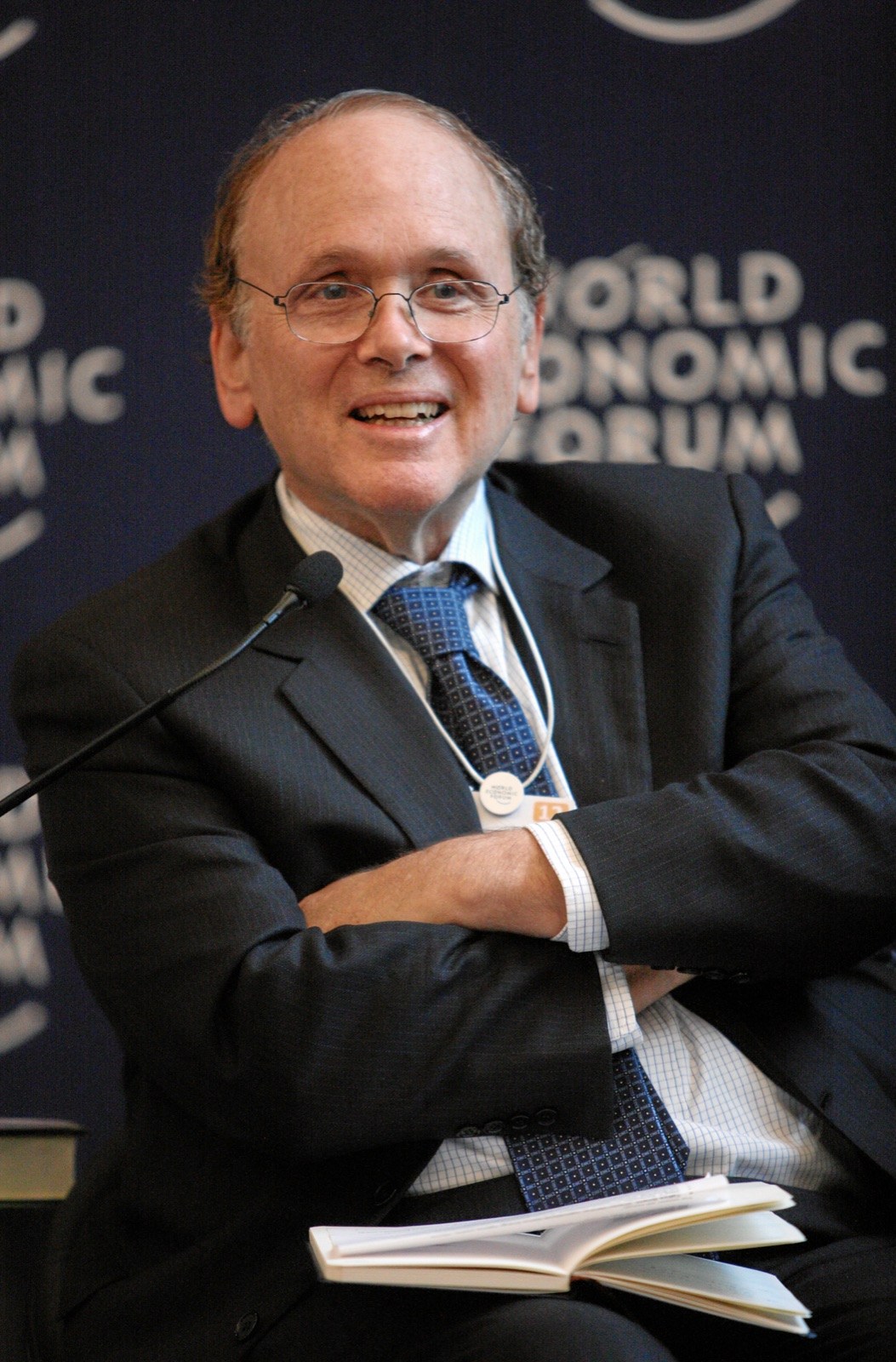
Daniel Yergin is one of the world's leading experts on energy, a Pulitzer Prize-winning author, and Vice Chairman at S&P Global.
Episode Summary
The team behind the top global affairs podcast, One Decision, brings you "Power Decisions," a new energy series that explores the world's energy sources and the politics and power behind the clean transition. On this episode, guest host and journalist Rhana Natour speaks with Daniel Yergin, one of the world's leading experts on energy, a Pulitzer Prize-winning author, and Vice Chairman at S&P Global. They discuss his takeaways from the COP28 climate summit—the historic deal marking the first time countries have agreed to transition away from fossil fuels, skepticism over the leadership of United Arab Emirates oil executive Dr. Sultan Ahmed Al Jaber, and the concerns he's hearing about financing climate goals. Yergin also discusses the impact of the Israel-Hamas war on oil prices, and the challenges posed by China's dominance over critical mineral supply chains.
Listen & Subscribe
- Watch on YouTube
- Listen on Apple Podcasts
- Listen on Spotify
Transcript
INTRODUCTION
Natur: Welcome to Power Decisions, the energy series that explores the world's energy sources and the politics and power behind the clean transition. I'm correspondent and journalist Ronen Natur, and I will be your host today. We will be talking to Daniel Yergin today, hearing his take on the world's energy markets, what's going on geopolitically that could impact them, and his take on COP28. Mr. Yergin is a Pulitzer Prize winning author and vice chairman of S&P Global. He is one of the world's leading voices on energy, geopolitics, the global economy. His latest book is The New Map: Energy, Climate, and the Clash of Nations. Thank you for joining us, Dan. COP28 wrapped in mid December. It's, of course, the conference where these climate goals are mapped out by world leaders. To me, sometimes meetings like this can feel like a lot of bureaucratic theater. But when you get down to it, this is the room where the global project to save the planet, so to speak, is hammered out. So I want to get the Daniel Yergin take on some of what went down at COP28. We can start with the new climate deal that came out of this. It marks the first time countries agreed to move away from fossil fuels. Some experts hailed it as the end of the fossil fuel era. Others said that it had a lot of loopholes. What's your take?
INTERVIEW
Yergin: I'm very pleased to be with you today. Thank you, Ronen.
Yergin: I think this was a consequential COP28. As you say, it's very important because it is the sort of focus of the global climate discussion. And I think it was different from some of the others. It was a pragmatic one as well. I mean, it was sort of more focused on solutions rather than pledges. I think that transitioning away from oil and gas was an appropriate way to express it in the sense that today 83% of world energy is fossil fuel. And for many countries, they depend upon those fuels and they don't have an alternative. I think transitioning away was an appropriate way to recognize the reality of the global energy system and the challenges of it. I think the global stocktake, as they described it, certainly there's a lot more to be done to meet these goals. That's why you got the pledge to triple renewable electricity by 2030. So I think you're not going to get one solution that works for every country around the world. But I think also the fact that you actually had industry there, which was controversial with some, but it is an energy industry that delivers energy. So to have them engaged in the discussion, making pledges as they did with an oil and gas decarbonization charter, those are important.
Natur: So you think it's important that these energy companies were part of the process and that it was beneficial?
Yergin: Absolutely. They are the people in the energy business. It would be like having a medical operation without doctors there or something. You need people who are part of the system and make it work, and in general, they are the ones who have to commit to reduce emissions. They're the ones who have to invest money. They're the ones who have to deploy technology. So it's better to have the engineers in the room, which is basically what these companies are, rather than only people dealing with words.
Natur: The counterpoint to that, or people who criticized this, would say it's more like having arms dealers in the room when you're talking about gun control. Would you say that's not a fair assessment?
Yergin: You could say that, but I don't think it's — the world would come to an end as a civilization as we know it without energy supplies. The world depends upon these. What are you going to do? Shut down Europe? Shut down factories? Throw people out of work? Have people starve? By the way, about 70% of the cost of food is energy. So if you don't have that engagement in it, you're not going to get things done. And you need to bring people together rather than have polarization. I know people say that, but at the end of the day, again, it's about engineering. It's about investment. It's about technology. It's not just about words.
Natur: And there were some really big goals when it comes to renewable energy. Solar, wind. 130 countries, including the US, agreed to triple their use of renewable energy by 2030. That's not too far away. Do you think that is realistic?
Yergin: Well, it is six years away, and it is a pretty short time. I think it's going to be a challenge. I mean, wind costs have really come down, solar has come down. But, you know, we're starting to see, like, offshore wind has run into some very rough waters. We see a lot of projects being postponed, high interest rates, supply chain problems. So I think you are going to see a lot more momentum towards renewables. And it is a good goal. It is a really big goal to have by 2030 to triple. We will certainly see a lot of movement in that way. But you are going to need a lot of finance. And I think one thing that people came away from COP28 concerned about is the finance issue. I just did an event yesterday with 10 prime ministers from Asia, a roundtable, and all of them talked about the issue of finance because it costs money and you have to mobilize money. So I think that was one of the kind of unanswered questions that came out of COP. I mean, there were significant agreements about methane, about making up for loss and damage for developing countries. But the question is, agreeing to it, then you need to put the money into it. And a lot of governments are under financial pressure. So I think maybe that's the unanswered question that comes out of COP, is about finance. How to fund all of this?
Natur: The UAE hosted it this year. The head was a veteran oil executive. And the choice to host this in the UAE was criticized when it was announced. For your average observer, they might wonder how they can take any promises that come out of COP28 seriously when an oil executive is leading it. And I wanted to get your take on this broadly.
Yergin: I think that's a really irrelevant question. I mean, I think you have to look at what came out of it and say more came out of this than out of previous COPs. The way it rotates to different continents, as I understand, and it was a Middle East turn to do that. I know John Kerry, who is a US climate negotiator, is a very strong person in climate, was very supportive of the UAE in this. And Dr. Sultan, who is the person you are referring to, when I first met him, was actually setting up what is now a very major renewable energy business in the United Arab Emirates. It's one of the biggest developers of renewable electricity around the world. And he's pushed his own company to move towards continuing to reduce emissions. Obviously, he had to thread a needle. There was certainly torrents of criticism coming from some quarters on that. But I think this was, you know, a pretty consequential COP, and you had 100,000 people there who were engaged in the issues of addressing climate.
Natur: So you think it doesn't weigh in at all on what could come out of this?
Yergin: Well, I think these are significant accomplishments that came out of it, and he pushed them very hard to get there. And I think maybe if you didn't have somebody like him pushing it, it would have been harder to get to them, actually. So he was all in, and I think the fact that John Kerry was a big supporter of this event and of Dr. Sultan was a very significant message. He's a veteran, you know, fighter on climate.
Natur: Could you explain why the UAE would be interested in being part of this and hosting it? It might, to the average observer, be counterintuitive. So I'm wondering if you can walk us through it.
Yergin: Well, it was going to go to the Middle East in any event. And the UAE, actually, in addition to being a significant oil producer, is also a significant player in the renewable energy industry. And for instance, they've committed money to various of the initiatives that have come out of this COP addressing climate issues, including in particular focus on the developing world, that weren't there before. They're one of the biggest contributors to that. And, you know, you can say it was a Middle East country, but the other thing that's been left out, and a lot of the developing countries have been very upset with this process because they felt their voices were not heard, that their needs are very different than the needs of people living in Paris or Berlin. Their per capita incomes are a tiny fraction of the advanced countries, and they wanted their interests and their voices to be heard. And I think this time you heard more from the developing markets. You heard more from the countries that represent 80% of the world's population.
GEOPOLITICS: THE RED SEA AND OIL MARKETS
Natur: And, Dan, a recent development when it comes to the Israel-Hamas war is the attacks from Yemen's Houthi militants on ships in the Red Sea, drones coming from Yemen that have attempted to attack ships. And freight firms have actually had to reroute in order to avoid these threats. And that's added a lot of time to their shipping journeys. And I'm wondering if you can talk about what that looks like and the impact this will have on the price of oil potentially?
Yergin: That's a very important question, and it brings together energy markets and geopolitics in a very vivid way. Basically, right now, if you just looked at it in terms of supply and demand, there's going to be downward pressure on oil prices in 2024, at least the first half, because you have, while demand is growing, reflecting a growing world economy, supply is growing more rapidly. It's particularly Western Hemisphere supply, Canada, Brazil, Guyana, and in particular the United States, is having close to a million barrels a day in 2023. But there's been a geopolitical risk, that question hanging out there is the war that's now going on in Gaza between Israel and Hamas, is it going to be contained? And people have been looking at Hezbollah in Lebanon and saying, is that where it could spread? But where it's come instead is the Red Sea. And the Red Sea is also a major traffic route for global commerce, including for oil and gas. And between eight and nine million barrels a day of oil have been passing through the Red Sea, through the Suez Canal, through the Strait, Bab al-Mandab, that goes out to the wider ocean. Because you have Russian oil that's no longer going to Europe, it's now going through the Red Sea to go to Asia, and Middle East oil that needs to go to Asia is now coming to Europe, and also LNG, which Europe needs to get through the winter. But now the Houthis have started, as you say, attacking shipping. And we're seeing, as we're talking today, basically people saying, we're not sending our ships, we're not sending our tankers, we're not sending our container ships through. It's too risky and it's too dangerous. And there's a risk of escalation here. And this is certainly going to affect prices of oil. We've already seen some movement in natural gas, particularly for Europe, worrying about the winter. And it will affect — it's another, just when people are starting to think that they're getting a handle on inflation globally, this, plus the problems with the Panama Canal, which is the other major route, shortcut for world trade, is also having problems, that this could reignite these kind of supply chain problems that we've seen before, but with an overlay of military conflict.
Natur: How many days does this alternative route to avoid the Red Sea add to their arrival time?
Yergin: It could add twelve days or more to shipping, and it certainly lengthens the voyage. It affects therefore the number of ships that are available and it adds to the cost. So as we started to see these drones, the US Navy has been shooting down, the British Navy, the French Navy, but still some hitting ships. We've seen insurance rates go up very considerably and of course the extra cost of those longer voyages. And by the way, it is a big hit for Egypt because Egypt depends significantly on revenues from the Suez Canal, which of course is in Egypt. So if the Suez Canal isn't being used because people are avoiding it, that hurts the Egyptian economy. The canal has been disrupted in history during wars between Israel and Egypt in '56 and '67, and it reopened, I think, after 1973. But the attention normally has been on the famous Strait of Hormuz, which is the exit out of the Persian Gulf. And that's the big choke point because a quarter of world oil flows there and there's always been a concern about Iran. And people have been kind of avoiding the Persian Gulf and the Strait of Hormuz. I know some companies, because Iran has seized a couple of tankers, and some people were saying, well, the Red Sea is safe. But now the Red Sea, in modern times, in the last several decades, has not been a problem at all. Now it is a choke point, and the question is, is this going to escalate or not? And, of course, this is a widening effect of the Gaza war.
Natur: Was this a bit of a wild card, the Houthis attacking ships on the Red Sea and having that effect?
Yergin: I think absolutely. A month ago, people were not talking about it. This is, you know, so often important things just come unexpectedly from left field, and that's certainly what's happened here. And I think we've seen kind of a scrambling now by the Western navies to respond. This is a very interesting question for China too because this affects China's supply. It affects India's oil supply because India now is a big customer of Russian oil, which it wasn't before. So often things happen in history that, you know, people don't see coming, and this is one of those. It definitely was not on my list of top 10 predictions. I think back a month ago, I didn't hear it at all. I mean, what has been on the agenda is there have been, as of this point, about 80 attacks on US troops in Syria and Iraq by Iranian-linked militias. And so there's been a big focus on that and tit for tat. But, of course, the Houthis are also an ally of Iran. But I don't think people saw this coming, but now it's here.
RUSSIA, UKRAINE, AND EUROPE'S ENERGY
Natur: The Russia-Ukraine war, it actually set off real fears from EU countries who relied on Russia for natural gas. That war from the very beginning was an energy story. How dependent was Europe on Russia for their energy needs at the start of this war? Can you paint a picture for us?
Yergin: Well, they were very dependent. I mean, Russia had been traditionally a source of large volumes of inexpensive natural gas. And for the Europeans, it was a kind of integration. They saw the energy trade as part of the larger integration of bringing Russia together into the world. And so, you know, they felt very confident. The Russians said we will never use gas for political purposes. But that, of course, changed when the war began and the Europeans really discovered their high degree of dependence. And so what happened, the price of natural gas, particularly LNG, it just shot up enormously and put a lot of pressure on those economies. The governments rushed in a lot of money to their citizens to try and lower the pressure. And a country like Germany, which had never thought about importing liquefied natural gas, LNG, in a matter of weeks really almost, approved five facilities to import natural gas into Germany. So they have kind of reoriented their market and said we are not going back anytime soon to using Russian energy, so that Russian natural gas is really stranded because Putin lost his market. And as I said, it was a very rational calculation. He just miscalculated. So the Europeans continue to pursue their green renewable energy agenda, but also now are much more concerned about energy security and securing supplies. And so you have people like Chancellor Scholz of Germany going to Senegal in Africa to talk to them about that, and to Canada too, to talk about getting new LNG supply. I will give you another example. The Norwegians never gave any real consideration to the security of their pipelines because they are a big producer of oil and gas. They are the largest country supplying natural gas pipeline gas to Europe. And they now worry about the security and safety of their pipelines. Energy security has come to the fore in a way it was not the case before the Ukraine war.
Natur: There were some sabotage attempts on some of these pipelines over the past few years.
Yergin: Yes. The biggest one, of course, was the destruction of the Nord Stream 2 pipeline, which was done by persons unknown. But that was the new pipeline to bring Russian gas to Europe. But suddenly there's a lot more attention to physical security of energy infrastructure.
Natur: And how were they able, these EU countries, to scramble so fast to successfully secure these different sources of natural gas in such a short amount of time?
Yergin: Well, they were fortunate it was a relatively mild winter, so the temperature matters a lot. Secondly, because China was shut down because of COVID, LNG supplies that would have gone to China normally were available on the market, often at a very high price. And so they scrambled to use exactly what happened. It was a scramble to buy these cargoes and that of course drove up the price. But so natural LNG that normally went to Asia was redirected to Europe. And you saw countries, not only Germany but other European countries who never paid much attention at all to LNG or to gas imports, making sure that they got it too. And you know, it's only in 2016 that the US started to export LNG and this happened so fast, the US now is the largest exporter of LNG, kind of another amazing change. And I think the Biden administration, you know, President Biden actually last year pledged more gas, more LNG to Europe. So he sees the geopolitical significance and the economic significance.
Natur: For Russia, it sounds like they took a pretty big hit economically when it comes to their oil and natural gas industry. Is that true?
Yergin: Well, they are taking a big hit on the gas front. You know, at the same time, the G7 countries tried to put a price cap on Russian oil because they wanted to keep oil flowing to the world so there wasn't a shortage. I mean, the big three oil producers in the world are the US, Russia and Saudi Arabia. They wanted to keep Russian oil flowing, but they wanted to reduce Russian revenues. One result of the Ukraine war is that you now have a divided world oil market. Before the war began, it was truly a global market. Barrels went wherever is most efficient. So even the US was taking some Russian type of refined product because it made its refineries run better. That's over. US doesn't take any oil. And Europe was the main market for Russian oil. Europe said, we're done with it, I won't take it. And so the Russians divided the market. We have two markets now. And basically their main markets now are China, their great partner, and India, which has a mixed relationship with Russia. And to get away from the G7, the Western countries' sanctions, they created almost a ghost fleet of something like 600 ships, old tankers that should have been retired, that they moved their oil around the world. You know, they've executed this very well and that's how they've been able to come back and get higher revenues again.
Natur: Why was this war the reason that they stopped depending, or tried to stop depending, on Russian natural gas? Because Putin's been quite clear that he considers the EU his arch enemy. So I'm wondering why they waited.
Yergin: Yeah. You're right. I mean, he really would like to see the EU broken up and he's trying to lure some of the countries into his orbit. And of course, certainly wants to see the breakup of NATO. But they saw this as just, you know, economics. A lot of people didn't think Putin would actually invade Ukraine, although he kept saying Ukraine doesn't exist as a country. And so they saw this as part of a two-way trade because they would import Russian energy, but they would sell cars or goods or food or manufactures to Russia. So, you know, in a sense they were both benefiting from trade. I mean, it wasn't obvious three years ago that Putin would do this. I mean, I think we'll never know what really triggered him. I've always thought that he spent two years in deep isolation with just a few cronies. And this increased maybe his paranoia or his imperial dreams of restoring the Russian empire. And Ukraine was always target number one. He thought the war would be over in five days. His soldiers took their dress uniforms for what was to be the great parade in Kiev. And instead it's turned into a sort of mini World War I trench warfare. It's a rather incredible miscalculation on his part. And he's, as you suggested Ronen, he's cut himself off from his most important and his natural markets.
THE ENERGY TRANSITION AND CRITICAL MINERALS
Natur: And what does he get for this? And we are now living in an era where world powers are concerned about climate change and there's a transition to clean energy. What is the bird's eye view of what this looks like?
Yergin: Well, I think it depends on where you look at it from, what part of the world you look at it. So you have some countries who have goals for 2050 to be net zero but the developing world for the most part doesn't. Indonesia doesn't, China doesn't, India doesn't, Nigeria doesn't. I think there's been this kind of what I call a linear scenario about getting there. But I call it multidimensional because there's so many issues like developing world countries don't necessarily have the same agenda as developed countries. If you take Senegal, its per capita income is maybe $4,000 per year per person, something like that. Germany is at 60,000. If you're Germany, you're a rich country, you can do a lot. The US can, you know, give major subsidies to people to buy EVs. But if you're a poor country, you're not in that position. But it's not going to be just a simple, smooth scenario. Last year, the world used more coal than it ever has. This one is trying to do in twenty-five or thirty-five years to take what we've said is currently a $105 trillion economy and change it. You know, that's pretty heavy lifting.
Natur: So, Dan, in one article, you wrote about something that I was shocked we are not talking about more: that in a post-fossil fuel era, things like electric cars instead of gas-fueled cars will require an unprecedented amount of crucial minerals and metals. Minerals and metals is not something that typically comes up when we talk about what it will take to meet these emissions goals. And you wrote that the world would need to double the supply of copper. And I'm wondering if you could talk about that and what this crucial mineral and metal need will look like.
Yergin: So copper is a very good example because a lot of what the energy transition is about is basically about electrifying things, things that are like cars, instead of gasoline, run them on electricity. But electricity, the metal of electrification is copper, wiring, all sorts of things. And so you think about it kind of shifting to much more reliance on wind, even solar, electric cars, all of that means that copper demand doubles. So what we did in our work at S&P Global was simply look at, well, what are the Biden goals for 2050? What are the European Union goals for 2050? What would that mean in technology and what would that mean in copper? And saying, oh my gosh, copper supply would have to double to achieve these goals. Then the question is, where are you going to get the copper? I mean, copper minerals have a really long cycle. If you went out, Ronen, and discovered a big copper deposit, it would be about twenty years later before you would be actually able to start to sell the copper that you discovered. And so the timeframe, that's an example where the timeframes don't fit together. So if you want to move as rapidly as people want, you're going to need a lot more minerals. And you've seen the US government, the European Union, Canada, Britain, World Bank, International Monetary Fund, International Energy Agency, all expressing alarm about minerals. But who dominates the production of minerals as we were talking before? China. I testified less than two months ago in a US Senate hearing on critical minerals. I mean, these senators were very concerned about it. And also all of them asked a lot of questions about China's domination because China just got a head start on this, on the mineral supply chains. And again, that's one of the things — to go back to what you said before, there are no easy answers here.
Natur: And does China have control of this copper supply through countries that it has made deals with or has a sphere of influence with? Or do they have direct control over the land?
Yergin: China processes about half of the world's copper. So the Chinese companies are very prevalent and they've been very active in tying up things like cobalt and nickel. You know, they don't have the same shareholder pressures or other pressures. So they move faster than Western companies. But when you get to processing, they're much more dominant. The US used to have, you know, maybe a decade and a half ago, 12 copper smelters, now it has two that operate. So even though the US mines copper, some of that copper is sent to China for processing. So it's very interdependent.
Natur: Is there even double the copper supply in the world to be had? Does it even exist?
Yergin: Well, I think it physically exists, but it's a question of getting a mine. We can see in the United States there are projects for new copper mines and they just wait for permits and wait for permits. That's true in countries because you have to go in, negotiate with the government, maybe make a $6 billion investment, and then it just takes a long time to engineer it. Obviously in all of this, the big wildcard is technology. And we can see on batteries right now, there's efforts to make batteries that won't need cobalt or batteries that may not even need lithium. So there's a tremendous incentive for innovation. I think really the real solutions to energy transition, to climate, are ultimately all going to be around technology and innovation.
Natur: What other minerals, what other metals are we talking about when it comes to this clean transition? We have copper, are there others?
Yergin: Well, it's lithium right now. I mean, for everybody driving an electric car right now, it's a lithium-ion battery. It's cobalt, it's nickel, but also there are a whole host of sort of what are called rare earths which you need, for instance, to work in wind turbines and so forth.
Natur: And guess who produces most of the rare earths? China. And these crucial minerals, these crucial metals are also very important for car manufacturers that really need a steady supply and a reliable supply to meet their goals for electric cars. What does that scramble look like? What does that arms race look like for the car manufacturers?
Yergin: I'm glad you're using the word scramble because I think that again is happening. I was recently at a meeting with senior automobile people and they were very focused on minerals and realizing that everybody wants to move in the same direction at the same time. But the timeframe for minerals is much longer than the timeframe for new cars. And then there's another thing on their mind, and this sort of circles back in a different way, where the carmakers are also worried about is the export of Chinese electric vehicles. China now has exceeded Germany and Japan as the world's number one exporter of cars. 20% of the new cars sold in Mexico are Chinese. So they're really pushing electric cars. And certainly the European automakers are very worried about losing their position. So the Europeans are now looking to see if the Chinese government is unfairly subsidizing their electric cars. And I think in the United States, you know, when I was listening to these folks, they're concerned about that too. It hasn't happened yet in any volume. Electric cars are only about 8% of new car sales in the US. I mean, where you and I live, we probably see a lot more Teslas on the road than we used to, but it's only 8% of the cars and at least the current word is that, you know, they're not seeing the uptake in electric vehicles that have been expected. And you see some of the major automakers not backing away, but kind of shrinking their investments to kind of try to size to the market, even though the incentives are very generous to buy an electric car. The incentives for consumers — I mean, you can get a $7,500 rebate tax credit from the US government. So the administration, again, I think wants to see half of the new cars sold in the United States by 2030 to be electric. And the state of California has passed regulations saying that every new car sold in the state has to be an electric car by 2035, that every car sold in California in 2035 has to have two and a half times more copper than a conventional car.
Natur: How are we setting these goals as individual states, as countries, without making sure we have the supply of copper and metals to actually execute it? It seems like a big vulnerability, especially for the US.
Yergin: I think that's right. That's why, again, I go back to sort of the multidimensional energy transition because you could set these goals, but if you can't achieve them, the roadblocks appear when you start driving down the road. You didn't see the roadblocks before you started on them.
Natur: I see. So now that we're down the road, we know that we're in trouble when it comes to these metals, these minerals.
Yergin: Yeah, exactly. And I hadn't thought about it in that image, but that's it. Certainly we're seeing either potholes or roadblocks that were not clearly seen when the targets were set. I don't see backing away from the targets, but I'm just going to tell you it's going to be harder to achieve them. And the other thing that's really important, and another thing that wasn't there in 2021, in 2021 money was really cheap. Interest rates were very low, almost zero. Now interest rates have gone up. And so if you're doing a capital intensive project that requires a lot of up front investment, like an offshore wind project, the fact that interest rates have gone up makes the project a good deal more expensive.
Natur: And I do have some questions about some other clean energy sources that people might not think about — offshore wind. Can you explain how offshore wind works and the roadblocks it's faced?
Yergin: Well, offshore wind is the poster child right now for things being more difficult than you thought. The idea of offshore wind is when you're offshore, the winds are much stronger, they're more steady so that you can generate more electricity supplies. But this is a fairly new industry and you have these supply chain issues, which are, you know, you need special boats to work offshore to put these on. These are very big installations. You know, there were very ambitious goals for the East Coast of the United States, off California. But what you have is companies really walking away from the project saying the economics don't work. Either I need much higher rates or subsidies to do it, or I just can't do it. And the company that, you know, was one company that was the star of offshore wind has now been pulling out of projects on the East Coast, making governors of some of those states very angry. And then you get into the permitting issue. I was talking with the developer earlier today, one big onshore wind developer, and they said they've been working on a big transmission project. They started in 2007 and they now think that they should hire for their future staff people who are 12 years old so that they'll still be able to work by the time they get all of their approvals. In other words, it's tough doing these big infrastructure projects today, whether it's a natural gas pipeline or whether it's an electric transmission line.
Natur: And as we're talking about clean energy, net zero emissions, what are you thinking when you have observed the change in the kind of public discourse around climate change? It going from a very important political issue to many voters in the US, at least. What are your thoughts on that? The way that regular people view climate change and the pressure that they put or don't put on their elected leaders?
Yergin: Well, I think I would make a division between Europe and the United States. I think in Europe, there's much more commitment and public opinion is pretty solidified around it. I think in the United States, public opinion is much more divided. But I think polling indicates among young people concern about climate is a much bigger issue than it is with older cohorts of people. And I think they're very motivated young people. And I think that's one of the uncertainties, you know, when we're looking at our political process in the United States next November, how that will register.
CLOSING
Natur: Thank you to Daniel Yergin for joining us, and thank you for listening to this special energy series, where we explore the world's energy sources and the politics and powers behind the clean transition. We'll drop new episodes here every month. I'm Ronen Natur. See you next time.