Episode Info
- Season20
Hosted by Christina Ruffini and Sir Richard Dearlove
Guest
Ernest Moniz
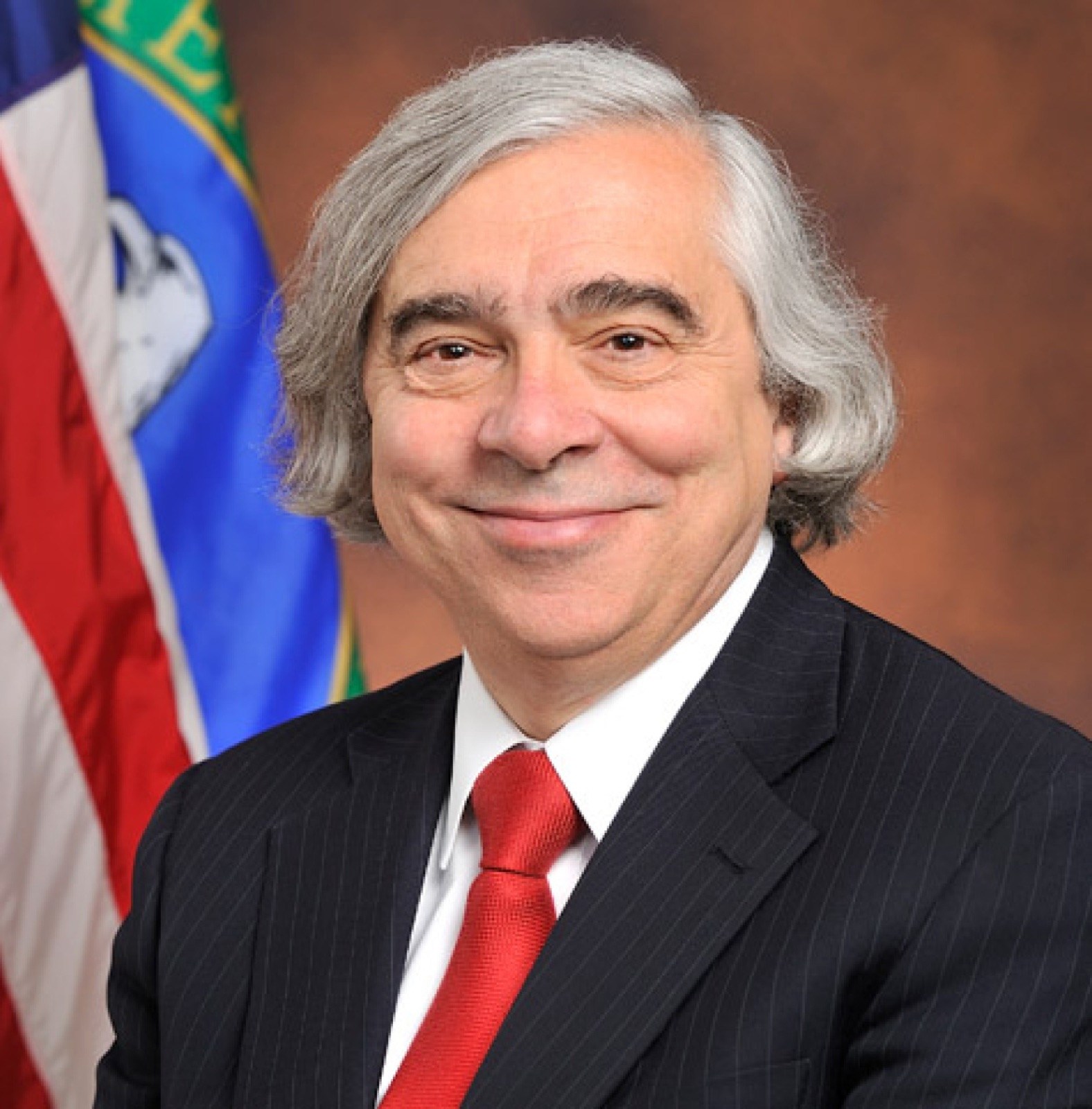
Ernest Moniz is the United States Energy Secretary discussing latest trends and emerging clean technologies.
Episode Summary
The team behind the top global affairs podcast, One Decision, brings you "Power Decisions," a new energy series that explores the world's energy sources and the politics and power behind the clean transition. As the COP28 climate conference kicks off this week in the United Arab Emirates, we examine the growth and development of emerging clean energy technologies with guest host Marie Harf, who served as State Department Spokesperson in the Obama Administration, and her former colleague United States Energy Secretary Ernest Moniz. They discuss the latest trends and emerging clean technologies, the emerging nuclear energy innovations, and how prepared we are for a transition from fossil fuels.
Listen & Subscribe
- Watch on YouTube
- Listen on Apple Podcasts
- Listen on Spotify
Transcript
INTRODUCTION
Harf: Welcome to Power Decisions, a new energy series that explores the world's energy sources and the politics and power behind the clean transition. I'm your host, Marie Harf. My guest today is someone I served with during Barack Obama's presidency, Energy Secretary Ernest Moniz. He was appointed during President Obama's second term, and he was instrumental in negotiations toward a comprehensive agreement on the Iranian nuclear program, where we worked closely together. He is literally a nuclear physicist, so I couldn't think of a better person to talk to about this. We talk about the clean technologies that will have an impact on our energy future, how geopolitical tensions may impact how we get there. But I had to start first with his thoughts on how prepared we are.
INTERVIEW
Moniz: Well, I think we are clearly way behind the pace at which we need to introduce the clean energy technologies. As we go forward, it's quite clear that the concerns that have been expressed scientifically are quite real. Global warming is happening at a pace that exceeds the one that we were evaluating only a few years ago. And yet, the introduction of the clean energy technologies that would lower greenhouse gas emissions has gone way slower than required. And indeed, emissions keep rising, as opposed to falling. So we have a major challenge. I've said many times that I think to meet this challenge, we need technology innovation, we need business model innovation, and we need policy innovation. It's the last one that really troubles me. We, in the United States, certainly we continue to have not only a failure to enact any kind of national program that will take us to the kinds of deep emissions cuts that are needed. But, in addition, the whole argument has rather incredibly fallen into a partisan discussion for something that is as nonpartisan as you could imagine scientifically. So I remain an optimist. It's with mixed emotions, I have to say, that I think the driver that will tip us politically towards the solution space is going to be the continued rise in extreme weather, which of course is creating enormous challenges, economic challenges, human challenges, social challenges. And I think that that increase in extreme weather eventually will drive our political system, our political so-called leaders to lead only because frankly, the voting public is getting more and more concerned over the impacts.
Harf: I think that's fascinating. It's almost policy making by catastrophe. And you see that in places like Florida where there are a lot of conservative politicians, but who see at a very firsthand level the rising sea levels, these really significant climate events. I guess, I know you're not a politician, and I don't wanna be partisan here. You are an optimist, but we are in an election season facing the possible return of an administration under Donald Trump that was pretty hostile to clean energy solutions here. Do you still have that optimism facing that possible reality that the catastrophes will be so big and so great that we will actually act?
Moniz: Let me start by saying that over many years, independent of the political flavor in the White House or in the Congress, we have seen actually quite strong support for technology and technology innovation. Clearly, the problems arise on the policy side. For example, most students of the climate challenge would argue, and certainly economists would argue, that we need a price of some type on carbon emissions. That, of course, is a political lightning rod so far. So I think the combination of technology innovation, the fact that I believe that industry, business, is reacting with interesting new business models. The fact is, you mentioned obliquely, I think, the possibility that President Trump could be reelected and go back to some of the policies that he had in place. A reminder, when in President Trump's term from 2017 on, business did not deflect itself from its commitment towards lower carbon and to new business models. I do have optimism on the technology and business model innovation fronts. It's really on the policy front where we have been pretty much stuck. I'll go out on a limb. Sometime in this decade, I believe we will have a serious national policy in going towards the low carbon future.
Harf: Okay. Well, I am writing that down. Sometime in this decade, I'm taking that prediction to the bank. You were a policymaker. You were at the highest levels of government, and we were confronting these issues even then. We've been confronting them for decades. Are there things we could have done differently in the Obama administration? How do you look back at that?
Moniz: Well, of course, as you know very well, I was in the Obama administration in the second term. And I think that I personally would have liked to have seen more done in the first term. Now when I became secretary in 2013, excuse me, for the second Obama term, it was pretty early on. It was in June when the president made his Georgetown speech that committed the administration to a strong push on climate and clean energy in the second term. And that followed. I might say as an aside, I remember that speech very, very well because it was outdoors at Georgetown and it was an incredibly hot day. And it reminded us all about the importance of—
Harf: It made it real.
Moniz: It made it real. Exactly. But then when the president made that commitment, that was followed through. For example, in 2015, of course, there was one of the more important COP meetings, annual climate meeting, the one coming up in a few weeks in the Emirates, in 2015 that was in Paris. And that led to some significant, at least elevation of commitments globally, including in the United States. But I would also remind people, in many cases I'm thinking inform people, but in Paris, the French decided that the national leaders would come at the beginning of the meeting and not at the end of the meeting. So the first day of the two week meeting was when the national leaders were present. That included President Obama. And the announcement that President Obama made on the first day was about something called Mission Innovation, in which the United States had taken a lead. France and India were also early on members. So this was the first time really in the international context that clean energy technology innovation was put at the center of climate response. And 20 countries and the EU committed at that time. There are more countries now. It remains a strong initiative looking at ways to collaborate internationally on clean energy. So in that term, the President Obama's second term, I do think that we made some substantial progress on the technology front and on the policy front. In particular, on the policy front, I also would remind that in 2015, the Clean Power Plan was put forward to dramatically reduce emissions from the utility sector. Well, the fact is that that rule was then ruled out in the next administration. It did not, therefore it is not in effect. However, the goals that were set for decarbonization in that plan have been exceeded even without the plan in place.
Harf: And why is that? That seems counterintuitive. Why is that?
Moniz: A major reason is that, first of all, it was a major signaling to the economy, especially to the utility sector. I should say as an aside, just to be clear, that the electricity sector has always been and will remain the lead horse in decarbonizing the economy. That message was sent clearly. We saw then the dramatic drop in costs for things like solar energy, wind energy, etcetera. And what one had was the utilities, as I mentioned earlier, by the way, again the private sector did not deflect from its commitments to lowering carbon, and in particular the utility sector carried on its commitments in switching, mainly the switch from about half of our coal use, switched into natural gas and renewables, and that lowered carbon emissions quite dramatically, and in fact accounted for something like 70% of the United States carbon emission reductions. So a lot happened in those years, and certainly a lot has continued to happen, especially in the clean energy technology space, and especially now with the Biden administration. As a reminder, we have had now a trifecta of laws put into place with significant impact here. One was the infrastructure law of 2021. Secondly, I would put the CHIPS and Science Act, the science part in particular, with lots of clean energy commitments. And, of course, third, the IRA, the Inflation Reduction Act, with many, many tax incentives.
Harf: Is that actually working? I don't mean to interrupt you, but so many climate activists talk about the infrastructure law. We talk about many pieces of legislation. Are these working? Do we see this tangibly working on the ground?
Moniz: Now in terms of the working of the infrastructure law, first of all, it does take time to build up the programs, but we are seeing it right now. For example, just recently, the Department of Energy announced one of the major initiatives of that law was to move forward on what are called clean hydrogen hubs, regional hubs, around most parts of the country at least. And that was put into motion. Those negotiations will start with the various, at least potential awardees. They will get $7,000,000,000 worth of funding to kick start hydrogen supply, which will draw from the Inflation Reduction Act, and hydrogen market formation, which is really, in our view, the bigger challenge. And all of these hubs have different approaches to create demand for hydrogen. Industrial demand like green steel, heavy transportation demand like heavy trucking, for example, and utility demand, introducing hydrogen into the electricity generation system. So the message is hydrogen is very flexible. It has the opportunity of decarbonizing multiple sectors, and because of the infrastructure law, in synergy with the Inflation Reduction Act, we are seeing a forward motion right now today.
Harf: I want to pick up on hydrogen a little bit because there's a lot of touting of the potential for hydrogen to help reduce carbon emissions. We hear a lot about blue hydrogen, green hydrogen and the production of that kind of hydrogen that actually involves fossil fuels. And I've heard critics of hydrogen say it doesn't really help with net zero emission goals, that it's not perfect. I know nothing is perfect. No technology is perfect. But I wonder how you're looking at hydrogen since you brought it up.
Moniz: Yes. Well, first of all, Marie, I have to say, hydrogen today is mainly gray hydrogen.
Harf: Okay, tell us more about gray hydrogen.
Moniz: So gray hydrogen is the process where natural gas is reacted with steam basically and it produces CO2 and hydrogen. And that hydrogen is used for refineries. It makes the oil lighter, for example, in many cases. It's also used for making fertilizer, you know, ammonia for fertilizer and the like. So blue hydrogen would be the next step where you make the hydrogen in the same way from natural gas, but you capture the carbon dioxide, do not release it into the atmosphere, and put it below ground. Green hydrogen would be splitting water rather than methane using electricity, electrolysis so called, and that produces hydrogen and oxygen. There is another, I will mention two other approaches, pink hydrogen. I'm sorry about all the colors of the rainbow, but this is the conventional terminology. Pink hydrogen means doing electrolysis, but using nuclear generated electricity to split the water. And I'll mention another, yet one more, turquoise hydrogen, which is splitting, we're back to natural gas, but splitting it with high temperature heat rather than steam, the advantage there is the carbon comes out as a solid, and is very easily disposed of without losing it to the atmosphere. And then I'll mention one more, it's sometimes called white or gold hydrogen, and that is actually mining for hydrogen, using natural hydrogen out of the earth. It's still in its early stages. There is actually a village in Mali which is run on natural hydrogen. So there are many, many different approaches. Many of them do not release carbon to the atmosphere, even if starting with natural gas, like the turquoise hydrogen. And with blue hydrogen, it all depends how much of that CO2 you capture. So generally speaking, to be clean hydrogen, one is talking about the order of 95% capture and disposal storage of that CO2. So there are many approaches. We will see different approaches used in different regions of the United States, in different parts of the world. And the bottom line is you will have a substantial reduction of carbon emissions if the demand side succeeds, if we start using clean hydrogen in all the sectors that I mentioned earlier.
Harf: And that's in many respects a business decision. You keep mentioning that the private sector is, and I think for a lot of people, look, I work in narratives and communications a lot. Sometimes the human impact of climate change doesn't move people, but the business numbers do. I think maybe particularly on the right, more conservatives in the United States, if you can show that it's profitable, that feels like the way to maybe get people to buy into this.
Moniz: Well, for sure, when it's profitable, there's a big impetus. In fact, we talked about hydrogen. Let me combine the discussion of hydrogen with the earlier discussion about clean electricity. Many think that clean electricity and the electrification of other sectors like electric automobiles, for example, together with hydrogen could be the winning combination for a very low carbon economy. And that would be supplemented by removing legacy carbon dioxide out of the atmosphere and the oceans. That's my trifecta for a potentially very, very low carbon economy. As you said, new business models are being created. Obviously, the financial incentives that are included in some of the laws are trying to speed up the adoption of those technologies, and that's very important. The private sector is the place where the enormous amount of capital resides that will be needed to transform the American and the global economy. However, I do want to say that while clearly business is central to this, I go back to the extreme weather, which does have enormous human impacts. And that's where, again, to repeat, I think we will see the tipping point politically to bring all of this together.
GEOPOLITICS AND ENERGY
Harf: I'm glad you brought up the global economy because I wanna transition a little bit to some geopolitical questions that are related. I'm curious your thoughts on how much you think the war in Ukraine has set back Europe's energy transition and sort of their commitment to making some of these same investments. Obviously, there have been both in Ukraine, but other parts of Europe, severe consequences from the war with Russia. Also, of course, what's happening in the Middle East right now. So I think sometimes people feel like we have to choose between geopolitical realities and addressing climate change. How do you puzzle through that?
Moniz: Well, first of all, in Ukraine, obviously, the major issue was essentially the near stoppage of natural gas exports from Russia to Europe. That required a huge reorganization of the global gas markets. And there was a period of extremely high natural gas prices. By the way, United States LNG, of course, played a major role in getting Europe through what would have been a very, very difficult time if it weren't for the combination of new liquefied natural gas coming on the market combined with a relatively warm winter in Europe, which was a major factor.
Harf: And which proves your point. It's unseasonably warm all the time now.
Moniz: It has been unseasonably warm. As you know, every month, basically, we are breaking records for the hottest month on record. And that in turn is connected to the increase in extreme weather and all of that. Going back to the Ukraine situation, it clearly led to some additional coal use, for example, in Germany. But what is less often said is that very high spike in natural gas prices caused many developing countries also to shift to more coal. So in the near term, there was clearly a negative effect with regard to carbon, not to mention obviously the great suffering that continues in Ukraine. However, for the longer term, what the Ukraine situation has done is, it has committed Europe and others to the low carbon future, because energy insecurity is all about carbon. Wind and solar and nuclear, etcetera, do not create energy insecurity. They contribute to energy security. It's the imports of fossil fuels that put economies at risk if there is dislocation. Similarly in the Middle East, if the situation in Israel and Gaza and the region develops into a wider war, which obviously we all hope will not happen, that does put at risk, of course, major sources of oil to the world. But again, it would be the same thing. I think there would be a very, very bad shock to economies globally. But for the longer term, it would drive home the lesson. We need to transition our economy to low carbon, and that will be good for energy security as well as climate.
THE ROLE OF NUCLEAR ENERGY
Harf: I hope that people fighting in these wars, people affected by them are looking at the long term. I think it's often very hard from a policy making perspective in the middle of such a crisis, but I think you're right. I would be remiss not to ask you about the role that nuclear energy can play in the transition. You're obviously a nuclear physicist, and I know you've been a proponent of nuclear energy playing a role. But I candidly think a lot of people still have a fear, based on past accidents, based on their caricature of it. I'd love for you to say a few words about the role you think that nuclear energy can play. I know Europe has looked at this actually probably more than the United States.
Moniz: Well, I think in the United States, the activity also is quite intense. Let me say first that it's clear that there has never been such a period of innovation in the nuclear space as there has been over the last one or two decades. Consequently, there are many technologies that are now coming to the cusp of deployment that have, in fact, very, very strong safety features. They are so called passively safe so that an accident would not lead to public health concerns as we have seen, of course, in the past with Chernobyl, with Fukushima in particular. Now I think what one is seeing is that many environmental groups, for example, are taking a very, very strong position in favor of an expansion of nuclear energy precisely because it provides carbon free energy. Indeed, after the Obama administration with a couple of colleagues, we started a nonprofit called the Energy Futures Initiative. I'm also involved, leading the Nuclear Threat Initiative. And those two organizations, plus the Clean Air Task Force, a well known environmental organization, we have worked together and will be presenting together at the upcoming climate meeting in the Emirates on nuclear power and trying to put forward a playbook for how the many countries that are considering launching nuclear programs can do so economically, safely, and responsibly. So I think we will see much more discussion of nuclear energy at the upcoming climate meeting in the Emirates than we have seen in past climate meetings. Now whether that translates or how rapidly that translates into an expanded deployment, we will see. But the general expectation is that to be material in impacting the climate challenge, nuclear power will need roughly a tripling by mid century, certainly doubling, perhaps tripling, which is not unlike the kinds of major expansions also talked about for renewables, for example. However, let me also mention that in the nuclear case, let me mention just two things, quickly. One is that some of the new technologies, the so called Generation Four technologies, often have much higher temperatures of operating. And that means that in addition to electricity, they also will have uses in supplying heat for industrial operations. And secondly, nuclear is generally taken to mean strictly nuclear fission, splitting uranium to make electricity. But I do want to make sure we don't lose track of the enormous progress going on on nuclear fusion, taking light elements and fusing them together to release huge amounts of energy. Fusion has no issues of the type that you referred to in terms of public safety. And it does not have long lived radioactive waste to deal with. So fusion, which is making enormous progress, don't take your eye off the innovations in fusion, really I think have had tremendous progress. I will confess, I'm on the board of one of the privately funded fusion companies. So I'm trying to walk the talk and see these technologies come forward.
Harf: Well, I think this is absolutely a sea change, particularly in how environmental groups are looking at nuclear technology. So, we will watch what happens at COP. In the minute we have left, we are a little short on time here. There's a lot of doom and gloom in this space. We're talking about technologies today, but when you think about how far we have to go to meet our goals, it can feel daunting. So I wonder if you could leave us today with where you think the best hope is, where you feel it. I know you're an optimist, but it can be hard in this space.
Moniz: I do think that we are going to have to face the fact, and I think we are, in the COP context, getting more and more attention paid to the fact that even as we bend the curve on emissions and do limit the growth of global temperatures, we will also need to have in parallel a major focus on adaptation. Because the reality is, look, we are now seeing 1.1, 1.2 degrees centigrade of warming, compared to pre industrial times. And just look around us and we see these dramatic impacts in terms of storm intensities and flooding and droughts and wildfires and all that extreme weather that we discussed earlier on. So we're gonna have to adapt even as we do not lose sight of the importance of mitigation of these climate effects as, first of all, the most effective and least expensive way of addressing climate change, that is mitigation. But we'll have to adapt too. We'll have to have some seawalls and we'll have to have some other, it may sound low tech, but other ways of addressing the impacts that our societies and our fellow citizens are suffering from already. And, unfortunately, there will be more of that as the temperature continues to rise before we manage to stabilize.
Harf: That was former Energy Secretary Ernest Moniz. Thanks for listening to the special energy series where we explore the world's energy sources and the politics and powers behind the clean transition. We'll drop new episodes here every month. I'm Marie Harf. See you next time.