Episode Info
- Season18
- Episode1
Hosted by Christina Ruffini and Sir Richard Dearlove
Guest
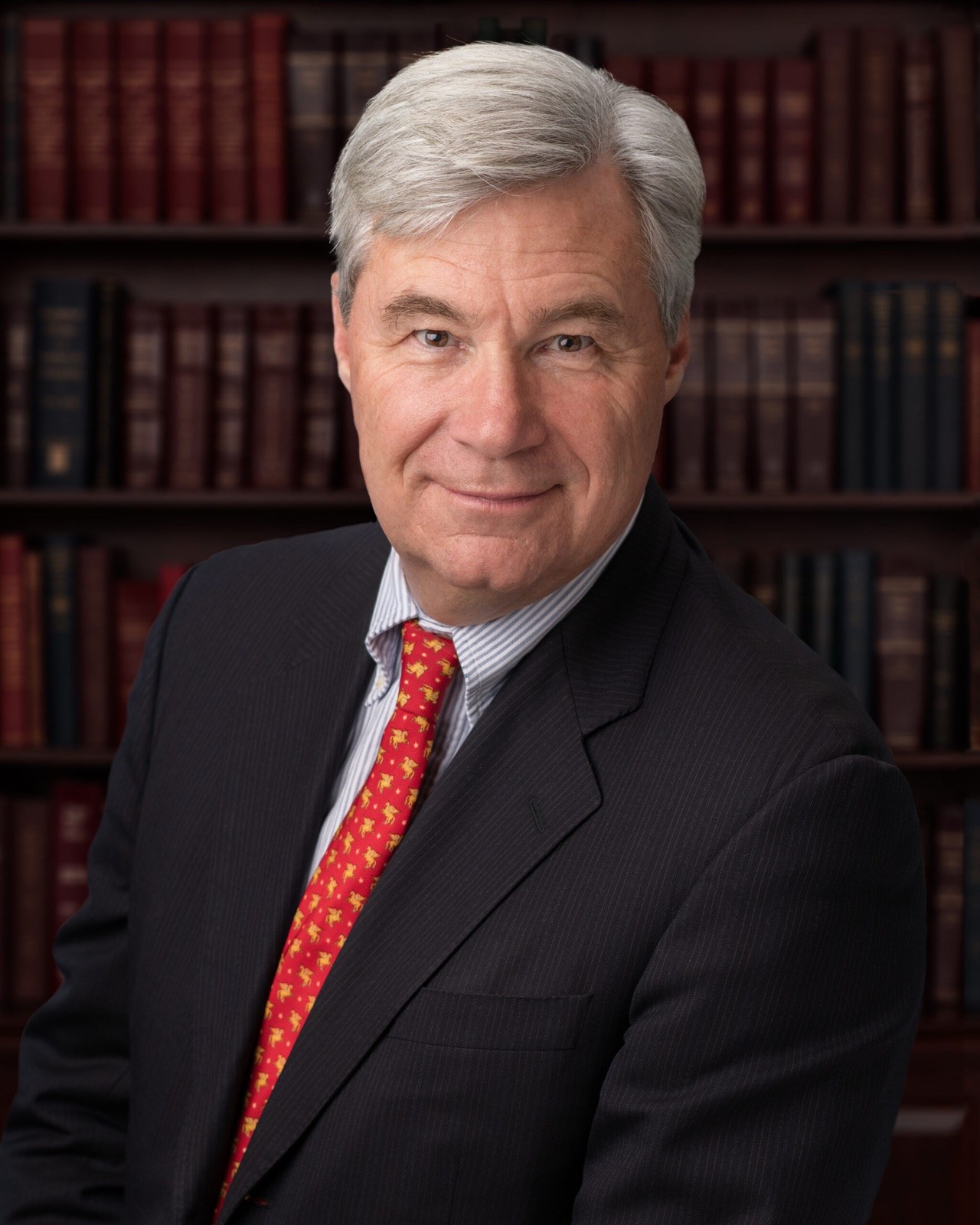
Senator Sheldon Whitehouse
Senator Sheldon Whitehouse is a Democrat from Rhode Island and a longtime climate champion in Congress calling for oil executive Sultan Ahmed Al Jaber to step down from leading the COP28 summit.
Episode Summary
As Ukraine’s counteroffensive meets stiff Russian resistance, Europe and the United States are being ravaged by climate change this summer ahead of the COP28 climate summit being hosted by the United Arab Emirates, one of the biggest energy producers in the world. Senator Sheldon Whitehouse, a Democrat from Rhode Island, and longtime climate champion in Congress has joined other United States and European Union lawmakers in calling for oil executive Sultan Ahmed Al Jaber to step down from leading the summit after backlash from activists over the conflict of interest. One Decision's Julia Macfarlane sat down with Senator Whitehouse to discuss the war in Ukraine and the growing climate crisis. Both require that the West, led by the United States, find global solidarity and agreement at a time of great power rivalries and difficult domestic challenges. Plus, Sir Richard Dearlove, the former Chief of Britain's secret intelligence service joins Julia for an analysis of the conversation.
Listen & Subscribe
- Watch on YouTube
- Listen on Apple Podcasts
- Listen on Spotify
Transcript
INTRODUCTION
Mcfarlane: You're listening to One Decision, the podcast that looks at the choices made that shape our world. I'm your host, Julia McFarlane. There's two main global challenges this year so far. There's the war in Ukraine that's wreaking havoc across Europe, and then there's the growing climate crisis, is increasingly wreaking havoc on countries all over the world, from the United States to Europe to Asia and to Africa. The remaining time to address the destabilizing impact modern human life is having on the planet is rapidly shrinking. The Secretary General of the UN making abundantly clear last month. Climate change is here. NEWS CLIP [0:38] It is terrifying, and it is just the beginning. The era of global warming has ended.
Mcfarlane: The era of global boiling has arrived. Senator Sheldon Whitehouse, a Democrat from Rhode Island, is increasingly involved in the US government's efforts to deal with both of these global crises. He served on the Helsinki Commission for more than a decade. It's a group in the US government that promotes and works on military and political security in dozens of countries in the international community. The group was set up after the signing of the Helsinki Act, a global agreement that was a key part of the detente between East and West during the Cold War. Whitehouse is also a cofounder of the Senate Climate Action Task Force. He was part of a group of officials that signed an open letter calling for an end to lobbyist influence at the climate conferences each year known as the COPs, and calling for the current COP president, Sultan Al Jaber, head of the Abu Dhabi National Oil Company, to be removed from his post. I sat down with Senator Whitehouse to discuss some of the key issues on both fights. And as always, I'm joined after for some post match analysis with my cohost, Sir Richard Dearlove, the former chief of Britain's Secret Intelligence Service. Let's get right into the conversation.
INTERVIEW
Mcfarlane: Talk to us about what you saw during that trip, and what message or lessons did you wanna bring back for your American colleagues back in Washington having spoken to the Ukrainians on the ground?
Whitehouse: Well, the Ukrainians are showing just a wonderful amount of resolve under very grave assault by Russia. In Kyiv, the city looked very vibrant. There was a lot of traffic. People were going out to restaurants. Shops were open. People were stopping for coffee. I think our embassy is doing a terrific job. They're holed up in a hotel so they can all be in the same place, and they're not allowed to travel. But they're keeping, I think, a very dynamic and supportive presence. President Zelensky personally was very positive and enthusiastic and spent a lot of time with us, made a terrific impression. I'd never seen him that close-up for that long. I've been in the room with him before, but he came across very well, and their determination to win was really profound. As you know, the issue at the time was the tanks, and we put considerable pressure on the Biden administration to solve the problem of getting the Abrams tanks authorized. And they very shortly did. And that opened up the flow for the Leopard tanks to go in, which, right now, the Ukrainians are using to great advantage.
Mcfarlane: Your colleagues, Senator Graham and Blumenthal, just last month, they introduced this resolution stipulating that the use of any Russian nuclear tactical weapons, either by Moscow or by their proxies, Belarus, as an attack on NATO requiring an immediate response, including the implementation of Article Five of the North Atlantic Treaty. That scenario, along with any potential destruction of a nuclear facility in Ukraine, dispersing contaminants into NATO territory. I assume you support that resolution. But let's say that either of these dreadful scenarios take place. Is the US establishment really ready to call for NATO to go to war if Poland gets some radiation on its territory? I mean, are your colleagues in the GOP prepared to make that call? Have you discussed this with any of them?
Whitehouse: No. At this point, I don't know that any vote has been scheduled on that. I don't know that it's been through either the Armed Services or Foreign Relations committees. So those are the places where you'd take the temperature around a measure like that. But, you know, this is one of those questions where you work step by step. Some things are more at a starting stage. Some are sort of ready for action, but the endpoint is the same, and that is to express strong American support for Ukraine achieving outright victory over the Russian invaders.
Mcfarlane: I appreciate what you're saying about that there are steps taking place and you're at a starting stage. But, I mean, for example, the Zaporizhzhia Nuclear Power Plant is under attack right now. The Ukrainians have been warning for weeks that the Russians have added mines to the reactors and that there is heavy fighting going around. That is a scenario, an attack or destruction of that nuclear facility, which really is the nuclear facility which is described in that resolution, that is under attack right now. It is possible that that facility could be destroyed. There is a possibility right now that this scenario that contaminants could spread onto NATO territory, Moldova is pretty close, as well as Poland.
Whitehouse: We're at a starting stage on trying to get a sufficient Senate expression of support that the measure can move forward. If those catastrophic events should take place, nothing prevents the president and NATO from making the determination that the extent of the harm of the radiation cloud that goes over NATO territory is sufficient to trigger Article Five considerations. And then once you've made that decision, the question is how you respond. Because triggering Article Five just brings NATO into the equation. It doesn't mean necessarily that you throw everything you have into the conflict at that particular moment. So there remains very considerable authority with President Biden and with NATO to respond to that Zaporizhzhia problem if the Russians are foolish, reckless, and evil enough to provoke it.
Mcfarlane: Is there any sense of urgency in the US leadership, obviously monitoring the events on the ground very closely on a day to day basis? How worried are you with regard to that particular outcome?
Whitehouse: I think there is a sense of urgency because of the lack of discipline shown by the Russian military and the Wagnerites when they were operating in Ukraine. When you're bombing kindergartens, when you're bombing children's hospitals and schools, when you're bombing apartment buildings full of civilians, you are not showing yourself as being willing or capable to restrain yourself to military targets. So the prospect of somebody thinking that as a provocation, they could do this and blame the Ukrainians or that an inadvertent missile aimed at a different target ends up hitting the station or an individual commander makes a reckless decision. I think all of those prospects are very, very real. In addition to whatever prospect, I can't evaluate how remote it is, of Putin actually making the decision to create a Chernobyl 2.0 type nuclear emergency in Ukraine. I think the military and intelligence officials of the country have a pretty good read on that, but I wouldn't wanna prognosticate what that is. But I do think that the danger of something going accidentally wrong or unintentionally wrong that creates a nuclear disaster there is a credible concern and one that requires attention.
Mcfarlane: The other part of this resolution involves the scenario that Belarus could deploy tactical nuclear weapons on behalf of Russia. They're obviously building new nuclear storage facilities near the border. Putin announced that the transfer of tactical nukes would be completed by the end of this summer to Belarus. What can you tell us of what the US government currently understands of the progress of that? And also, what's your assessment of the severity of that threat?
Whitehouse: I cannot tell you much. I have seen a good deal of official and unofficial reporting that the threat of a military incursion into Ukraine out of Belarus is not very realistic. And, again, official and unofficial reporting of the problem that the Belarusian dictator is far closer to Putin than he is to his own people. And so he has to be very, very careful about putting Belarus in harm's way in ways that would cause the people of Belarus to turn on him and given that he's not that popular a person to begin with. So I think there's gonna be a lot of caution about taking any of those steps. What our intel is telling us about the communications with and within Belarus about that, couldn't tell you.
Mcfarlane: There's been some news recently on how Russian landmines and booby traps are really harming any progress in the Ukrainian counter offensive, especially in the South and in the Donetsk region. The Helsinki Commission, of which you're a part of, they released a statement a few months ago noting that demining was a huge issue in Ukraine and pose an enormous challenge. It's a huge issue, of course. Should the US go further than cluster bombs in terms of what it gives to Ukraine to get past the Russian defenses and mines? I mean, jets are quite a few months away, and the stalling of the offensive could really be jeopardizing any possible Ukrainian victory. I mean, what should the US do if Ukraine is unable to push forward in these key areas?
Whitehouse: Well, my personal belief is that the Ukrainians have fought very bravely, that they have fought with considerable discrimination, that they have not misused the weapons that we have given them, and that they've shown an ability to manage even fairly complex machinery quite quickly and effectively. The training and learning curve is very short with Ukrainians. So my personal view is that we should be giving them essentially whatever it is that they need and letting them win. That said, I think there's a very plausible theory that the Ukrainians have a strategy right now to test the zero line in multiple places, to stress the Russian forces along multiple areas along the zero line, to use HIMARS and the British cruise missiles to destroy the capability of the Russians to provide munitions and supplies to their front lines by taking out the depots and so forth. And by sort of deliberately maintaining this position of destroying Russian military capability to provide material to the front lines while testing the front lines in multiple areas. And as they do that, watching carefully what's going on and with their participants helping them, I think they've got the chance to find the moment when the lack of supplies and the wear and tear on the Russian front gives them a significant opening to make a significant deployment of the reserves that have not yet been put to use. And if that's the theory of what they're doing, then it's not really appropriate to criticize them for having a stalled offensive. This is part of the offensive planning, the testing, rattling the Russians' cages, making them run their people all around. When they do respond, using cluster munitions to weaken the troops at the front lines and at the same time defining and blowing up the mechanisms of supply that can support those front lines. And when it collapses, that's the moment that you actually make your move. So it could be that this is the Ukrainian counter offensive, and it's being stalled. It could be that this is the precursor to the Ukrainian counter offensive.
Mcfarlane: That's so interesting. So you're saying that the fact that they appear to have stalled a little could actually be a strategic sort of pause. That's an interesting theory. Is that your theory? Is that a theory that is widespread among the US leadership? Is that something you've heard from the Ukrainians or Ukrainian sources or colleagues?
Whitehouse: I think a little bit all of the above.
Mcfarlane: Interesting. Interesting. I want to talk to you about energy security in Europe. It's obviously part of this conflict. Putin has really tried to weaponize energy during this war, and he's certainly been able to exploit the fact that prices have really sharply risen since his invasion of Ukraine, and thus has been able to fill his war chest despite sanctions and an EU wide boycott. And that's because countries such as China and India have been snapping up Russian fuel. Russia has also been able to export their crude oil for blending and re-exporting to Asia and back to Europe, which is bypassing sanctions from Europe. Now the Gulf states have long been close allies with the US, but the relationships have soured in recent years, and they're kind of at an all time low under the Biden administration. Does Washington need to rethink its relationship with the Gulf, and does it need to woo the Arabs back in order to put a stop to their cooperation with Moscow, including with regard to OPEC and things like that?
Whitehouse: I don't think I'm able to offer any kind of an expert opinion on that. I do think that as my dear friend John McCain used to say, Russia is a gas station run by gangsters with an army. And the gas station has supported the gangsters and the army for a long time. But the departure of the European Union from its reliance on Gazprom and on the Russian energy companies has been really impressive. I mean, first of all, they've suffered a lot of economic pain to do it. Second, they've accelerated their green energy transition dramatically. And for Putin, that means they're never going back. When you've built in clean and renewable energy, you don't go back to fossil fuel. And I think that in the market that remains to Putin, the prices have collapsed considerably compared to when he was selling into a more robust, buyer's market. Now the buyers, since they're fewer, can demand better pricing. And I do think that is creating considerable pressure both in terms of the ability of Russia to support its army. And I think we've heavily degraded many of the gangsters in the Russian operation by punishing the oligarchs and going after their assets and putting them under sanctions. So I think they're scrambling to try to keep a semblance of an economy going. But I do think the damage to the Russian economy is steady and profound, and it's gonna be very hard for them to undo this.
Mcfarlane: A lot of American lawmakers and officials such as yourself have repeatedly stressed that Ukraine has to win. Putin can't be seen to win this war because of the precedent it will set, because of what it will mean for, you know, international borders and sovereignties and everything, and Taiwan, of course. If Putin does win, if the Western support is not enough to get Ukraine over the line and to push the Russians back, what do you fear in actuality may happen, particularly with regards to, like, other European nations who are on the border with Russia? Do you think other neighboring countries will be in serious jeopardy from Russian expansionism?
Whitehouse: I think if Ukraine had not fought so heroically and if the rest of the world had not provided the munitions and support that they needed, those would be very, very real dangers. We know very well from what he has said that Putin wants to rebuild an imperial Russia and reclaim the former Soviet slave states back into his new empire, and that reaches up into the Baltics, and it includes Ukraine. It's a very considerable swath. What we've seen is actually, you know, Finland and Sweden joining NATO, the Ukraine on the way to joining the EU and entering into what I think will probably be a fairly robust defense agreement if it's short of full NATO membership, followed by NATO membership. So the Western alliance is stronger than ever, and I give President Biden a lot of credit for having, you know, done the 180 from Trump trying to degrade NATO to now having it be a really formidable resource, a formidable defense against Russian aggression. I don't see a Russian victory in Ukraine as being possible right now. I think the worst case scenario for Ukraine right now is a stalemate and continued partisan warfare in the Russian occupied areas. I just don't see that Ukraine is ever gonna give up after everything that they've been through on reclaiming its own sovereign territory, you know, guaranteed by the Budapest Accords. So I think the best case scenario is for them to be armed and supplied well enough that they can achieve a prompt victory. And that sends a very powerful message, and it sends it soon out to other warlords around the world that the civilized world stands united against efforts to redraw the world's map by force of arms and brutality.
Mcfarlane: So I wanna pivot slightly to climate change. This is something I know is hugely important to you. You're a cofounder of the Senate Climate Action Task Force. The Southwestern United States and much of Europe is currently going through a terrible heat wave at the moment. The Secretary General, Antonio Guterres, declared that the era of global warming has ended and the era of global boiling has arrived. That was after scientists confirmed July is on track to be the world's hottest month on record. President Biden reacting to that news saying, I don't think anyone can deny the impact of climate change anymore. But Senator, that's not true, is it? There are still quite large parts of the US population. Indeed, there are a few individuals in Congress that are skeptical about climate change and who do not see the phasing out of fossil fuels as a strategic priority. Why? And how can you convince them to change tack?
Whitehouse: The why, I think, is easily explained. The fossil fuel industry in January 2010 was given license by the United States Supreme Court to spend unlimited amounts of money in politics. That had never been the case, not in generations in the United States. And furthermore, by virtue of conspicuous non-enforcement of elements of that decision, the Supreme Court also allowed that massive expenditure of political money to be anonymous. So it comes through front groups with floral names that are anything but we're here from the fossil fuel industry. And so these new power structures that have been built and these new political mechanisms like super PACs have all been created and pushed out onto the political landscape, and their first target was the Republican Party. And their job was to say, no Republican will ever again support climate legislation, meaningful climate legislation. And by virtue of lining you all up, we'll now say this is a partisan issue, not a selfish, greedy political issue, and that's how we're gonna cast it. And they succeeded. And they have essentially bought and paid for the United States Republican Party, and it is very, very unfortunate. But the pressure from reality, the pressure from the public, the pressure from home state universities is continuing to mount. And I think that the climate denial within the Republican Party that the fossil fuel industry funds and supports and provides every kind of inducement for is dying out, and they're falling back.
Mcfarlane: I appreciate that. I appreciate there's a lot of influence from the industry into the Republican Party, but I just think it's so interesting because it is in Republican areas and Republican states that are seeing huge, huge heat waves, wildfires. I mean, those very upsetting images from Florida of coral dying out because of rising sea temperatures. I'm curious as to why so many citizens, so many American people in parts of the United States that are hugely impacted by climate change are climate deniers. I don't understand why that is. Can you explain that to me?
Whitehouse: I think they're fed a diet of climate denial through news stations that are funded by the fossil fuel industry, Fox News, right wing talk radio. It has become almost a tribal gathering song to deny the reality of climate change. But that doesn't change the fact that for the great majority of Americans who are not addicted to Fox News and right wing talk radio, the public is moving extremely rapidly towards an understanding of what scientists have been saying all along, which is this is real. This is deadly serious. It's caused by a particular pollutant or set of pollutants, and we can do something about it. And it's real and it's now. So, you know, the island on which climate denial inhabits still exists, but it is shrinking very rapidly, and its days are numbered.
Mcfarlane: Now COP28 is happening this year in Dubai of all places. The Emiratis have appointed Sultan Al Jaber, head of the Abu Dhabi National Oil Company as the president designate of COP28. You were signatory of a letter addressed to President Biden, Ursula von der Leyen, and Antonio Guterres expressing concern that hundreds of fossil fuel lobbyists are attending COP and calling for the withdrawal of Al Jaber as the president. Senator, is there any point in these COPs? What exactly did they achieve? And frankly, should the UAE be stripped of hosting privileges for COP28?
Whitehouse: I think there is a point to them. I think if we were to give up on them, that would be a signal of defeat. I do think that many of these COPs have been frustrating in terms of how little they have accomplished, but that doesn't mean that they're of no use at all. With respect to the UAE COP, I think that the hosts are very obviously laboring under a massive conflict of interest. And they know that as well. They've been told that. They acknowledge it. They don't deny it. And their argument is, well, we may have a huge conflict of interest, but we also know this industry very well. And if you will give us a chance to prove our sincerity, we will deliver a really impactful COP that helps move the planet to a pathway to climate safety. Not entirely. No. And one of the things I've told them is that, well, if you think that's the case, you really have to prove it by trying to remove from COP28, already tainted with conflict of interest, the secret tentacles of the fossil fuel industry that have crawled into so many of the other COPs. And the UNFCCC has responded to that by saying, okay, we are gonna come up with a requirement that participants at the COP disclose all their fossil fuel affiliations. And we're working with American environmental groups to try to determine what that actually means. So, like, what would the form that you have to fill out to make your disclosure accurate, complete, and robust look like? So people aren't just giving some public relations statement, but it's actually like filling out your taxes. You've gotta actually disclose the material.
Mcfarlane: Yeah. I mean, is it more an opportunity for lobbyists and an exercise in greenwashing than actually exacting any global agreements on ending fossil fuels?
Whitehouse: Those two things hydraulically oppose one another at the COPs, and one hopes that the good wins out over the evil. But I would point out that the biggest event at which actually Secretary Kerry spoke at the Sharm el-Sheikh COP in Egypt, nominally hosted by AmCham Egypt, the local American Chamber of Commerce in Egypt. When you walked in, you saw that all the heraldry and all the action was from the US Chamber of Commerce. And the US Chamber of Commerce is the worst climate obstructor in America. They are my constant opponent in courtrooms on climate issues, in regulatory proceedings on climate issues, on electing anti-climate members of Congress, and on funding trade associations and anti-climate activities through massive amounts of dark money. So they're an anti-climate behemoth. And the idea that they got away with hosting the biggest event at the Sharm el-Sheikh COP, it's a real just a display of kind of fossil fuel bravado through this particular front group for the fossil fuel industry, and that kind of nonsense has got to stop, particularly in a country like UAE where the COP28 is gonna be run by a fossil fuel executive. You cannot have both those things going on at once. So this is a moment when this COP could deliver real transparency and hold corporations really accountable for their actual behavior on climate, not just their public relations statements.
Mcfarlane: I appreciate it. We have one minute left of your time, so I have to ask you the question I am asking every single US official at this moment in time, and that is about aliens. Why do aliens only ever seem to visit America, and when are you guys gonna reveal their existence to the rest of the international community?
Whitehouse: I think the aliens have provided enormous amount of fodder for conspiracy theorists and for comic books over many years, and I think that is where they belong.
Mcfarlane: Thank you so much, Senator Whitehouse. Really appreciate your time. I hope you have a lovely weekend, and do come and join us again soon on the podcast. Thank you so much.
ANALYSIS WITH SIR RICHARD DEARLOVE
Mcfarlane: Richard, I hope you enjoyed that conversation with Senator Sheldon Whitehouse. I suppose I wanted to ask you first of all, something that we've briefly touched upon a few times on One Decision is the threat of nuclear confrontation. And I put it to the senator, we did have the US Senate, his colleagues in the Senate moving towards trying to get what he phrased as a sufficient expression of support with regards to those resolutions about what would happen if the Zaporizhzhia nuclear power plant was attacked, if there was any kind of radioactive contamination upon NATO allies, moving towards consolidating US support for those eventualities being recognized as an attack on NATO and one requiring an Article Five response. I mean, first of all, how likely do you think we are gonna find ourselves in a situation where that nuclear power plant in Ukraine is attacked, that there may be some impact upon some of Ukraine's neighbors who are members of NATO. And do you think that that support of recognizing that as an attack on NATO is one that would meet the threshold? Would it have the support from other NATO members as well, or do you think the Americans would be a bit of an outlier on that?
Dearlove: Good question. Well, I think if you cast your mind back to 9/11, remember the United States invoked Article Five, and I think that's the last occasion on which it was done. I mean, what we're talking about is more a nuclear incident at the Zaporizhzhia power plant caused by military action sort of in the building, around the building, or if the building's mined as it's been alleged. So I think you can invoke Article Five so that there is a coordinated NATO response without it necessarily being a declaration of war is my understanding. So, I mean, it's quite a technical issue, and I think that it's quite clear that if there was a nuclear incident which led to contamination of NATO territory, you know, obviously, Poland or one of the other border countries with Ukraine, then I guess that there could well be an initiative from the Americans. And I think that that would get a lot of support because, you know, it would be a significant escalation on the part of the Russians. So but look, I've always been of the view that, and I don't think much has changed, that certainly on the Russian side there's going to be great reluctance to provoke NATO. And I'm pretty sure in my own mind that if you look back at what's happened, I think that, for example, when William Burns, head of CIA, talked to the Russians, he put down some very serious red lines with the Russians about what would happen if they went nuclear. And I think that would include, you know, making it appear that there was some sort of nuclear accident at Zaporizhzhia. So I'm pretty sure that there would be a very severe response and I'm pretty sure that the likelihood of this happening remains low.
Mcfarlane: And yet Putin is continuing to move his tactical nukes around in Belarus, and they are finalizing the storage capabilities in Belarus so that these weapons can be mobilized and stationed there and ready for deployment. And we don't know for sure, but we presume that the Chinese have also conveyed their concern over the risk of nuclear escalation. I mean, whether the mined Zaporizhzhia power plant gets damaged or if there is a sort of staged nuclear accident there, as you say, it's almost like it's a booby trap that may not even be activated by the Russians. But because this plant is heavily mined, it could be something that happens accidentally. But the deployment of tactical nukes stationed in Belarus would not be accidental. That would be very much an active decision Putin would have to take. Do you think we are in the place where that may be a possibility, given he's had the Riot Act read to him from the Americans, possibly the Chinese, and maybe the Indians as well. Like, do you think Putin will ever get so desperate that he starts not just posturing with those tactical nukes in Belarus, but he might actually consider deploying them?
Dearlove: Well, of course, it's a possibility. I still think it's a remote possibility. I don't quite understand what Lukashenko is up to. Maybe he hasn't got much choice in the matter. I mean, bear in mind that Lukashenko has got massive political opposition in his own country. He had a real problem hanging on to power at a crucial moment. He only managed to do it by suppressing all political dissent by locking up opposition politicians. And his grip on power depends on his security infrastructure. And he has, you know, very, very low political support across the country. Is this guy really going to do Putin's nuclear dirty work for him? I think it's highly unlikely, and I think this is more, you know, Russian posturing, more Russian attempts to pressure the West without actually, you know, taking those final steps, which, you know, would anticipate use of, let's say, tactical nuke or some sort. Look, the Russian general staff, I think, are well aware of the fact that the Russian military, after its performance in Ukraine, is in no state to risk either a confrontation or the possibility of a conflict with NATO. And it would seem to me that the sensible minds in the Russian general staff, and there are plenty of sensible people there, will understand that this, you know, is madness because of the really rundown state of the Russian military. Okay. If we were ten or fifteen years on from Ukraine and Putin's had a chance, or not Putin, but maybe another regime, to rebuild the Russian military, you might be in a different state. But at the moment, it's in a really powerless mess.
Mcfarlane: Can I ask you for your thoughts on analysis that's come from Sky News recently? And this comes from Sean Bell, who's their military analyst. He thinks the tide has changed in the battle between Ukraine and Russia. He says that, you know, at the start of the war, Putin probably felt that time was on Russia's side. The longer the war continues, the greater the chance that Western unity and support and resolve would dissipate. However, he argues, now time appears to favor Ukraine. Russia continues to lose ground, and Putin probably needs to find a way out of the conflict without losing face to consolidate what is a rapid loosening of his grip on power. Do you agree with that? What do you make of it?
Dearlove: Well, I think that we might be at a tipping point. And if the war's tipping in any direction, it's tipping in Ukraine's favor. But on the other hand, Russia now being forced to try to hang on to the territory they gained, and it looks very much as though they do not have the capability any longer to mount a new offensive. So they're in a totally defensive posture. At the moment, that defensive line is holding and hasn't broken, but you know we all understand, and I think understand pretty authoritatively, that the Ukrainians still have quite a large trained armed sophisticated offensive capability to launch once they've, you know, probed the Russian defensive line for weaknesses. So yep, I think, to an extent Putin is being pushed onto the back foot, whether he's quite on the back foot yet, it's hard to say. And of course, he may just about manage to hold on, and the defensive line that the Russians have may not be broken. But I think my prediction is it's more likely that it breaks than it doesn't over the course. I think we've got like a six, eight, ten week period now in front of us and the moment the Ukrainians sort of sense a weakness, I think they will then try and push these massive forces through the gap. And for the moment, things look bad for Putin because the Russians have to face continued armament by the West with more sophisticated weaponry, more training. Okay. Ukrainian losses are heavy, but at the moment, they seem to be sustaining them.
Mcfarlane: What you're saying is similar to what Sheldon Whitehouse mentioned, which was that the Ukrainians are probing. And amid all of these outside observations of, oh, the offensive is stalling, they're not doing very well. I thought it was so interesting that he hinted that he had been briefed by people in the know that what's happening right now is tactical. He believed that where the Ukrainians are in the counter offensive is actually not full thrust ahead, that they are probing and they are testing where the fault lines might be, and that there is a little bit of misunderstanding certainly in how some of this has been reported and that they are waiting for a gap to be created somewhere or for them to find a gap somewhere to push on through.
Dearlove: Well going back to my own visit to Kyiv, which okay was back in May now, and we were being briefed at a senior level by defense, by military, by intelligence, and basically they were saying there is no big counter offensive yet, there will be a series of counter punches and you know we're going to be probing for where the weakness in the line is and then maybe once we've discovered where we can push through then you know watch what happens. So I mean I think that what's going on at the moment accords with what we were told. The other thing you have to bear in mind, and I think this is really important, the Russians have had stacks of time to prepare their defensive line. They have improved their command structure, they've improved their defensive coordination and it's much easier to sit on territory and keep it than try and gain new territory, particularly, you know, when you're facing a sophisticated opponent. So for the moment, I think my feeling is that what's happening is meeting military expectation. I think knowledgeable commentators pretty much reflect this. I think that the next few weeks, well, let's say the next two or three months will be crucial. And the other point, which I think is really important to understand, is that the threshold for a Ukrainian failure as far as the Russians are concerned is quite low. And what I mean by that is if there were to be negotiations now and the Russians could hang on to what they've got, even if they were moving backwards slightly, the danger is that Putin could say, hey, well, you know, look what I've done, I've gained this territory off Ukraine. Whereas for the Ukrainians, it's absolutely crucial that they break through and, you know, show an ability to regain more territory and show that they're a politically stable entity that can contest successfully with Russians. So a Ukrainian victory is a more challenging objective than, let's say, the Russians somehow claiming that they've done well because the Ukrainians haven't succeeded. And I think you have to factor in that interpretation when you're looking at the military situation as it is at the moment.
Mcfarlane: I'm just gonna pivot slightly because we also had a very interesting conversation with Sheldon Whitehouse about climate change. We asked him about the upcoming COP, which, of course, is being hosted quite controversially in the United Arab Emirates. And there have been a bit of concern about who the Emiratis have appointed as their president of COP28, Sultan Al Jaber, who's the head of the Abu Dhabi National Oil Company. Some interesting things Senator Whitehouse said in the course of that conversation, particularly with regards to the US Chambers of Commerce, who he said was his biggest constant opponent in the fight against climate change.
Dearlove: Well, I don't follow the internal US politics of climate change very closely because we've got so much to follow here domestically in the UK at the moment. But I think what I would say is that commercial America is very keen that the United States climate change policies should be practical rather than aspirational. And I think to the extent that there are politicians who love setting aspirational targets, a lot of business and bear in mind how big the energy business is in the United States would prefer to be more pragmatic in terms of the targets that they're expected to achieve over the coming decade or two decades. And I think that you certainly see that tension now in the UK, and I think that the tension has been there very much so in the States. And, I mean, you've only got to look at the difference between Republican Party energy policy and the Democrats. I mean there are quite significant differences. Okay, there are individuals who are close. We've actually looked at the stated policies. There are real fundamental differences. And there's no question in my mind now, internationally that we're moving into a period of time and this is certainly reflected in the UK where energy security is going to be a much more pronounced argument in balancing climate change policies. Not that anyone's going to walk away from zero carbon. What they're going to be saying is, look, we have to have pragmatic policies that work, which do not, as it were, absolutely slaughter the interests of individual voters because they're too expensive, they're impractical, and people, you know, just not prepared to put up with them. And I think one's going to see, you know, globally, but particularly in the West, in the EU, in the UK, and in the States. So you're seeing it already. I mean, it's happened in Holland, it's happening in the UK, it's going to happen in the United States to an extent, and, you know, it'll be replicated in other developed economies.
Mcfarlane: Richard, when you were head of MI6, were you ever briefed on aliens and UFOs?
Dearlove: No.
Mcfarlane: Never. Hand on your heart? Cross your heart in the hope to die.
Dearlove: Actually, I should reply to that no comment because I'm not really allowed to say yes or no. But I think in this particular instance, as a boyhood reader of you probably don't remember the Eagle whose top cartoon series was Dan Dare, who was a spaceman with his friend who was a Mekon whose name I can't remember. Anyway, look, no is the definitively, clearly, look, no.
Mcfarlane: So what is going on in the US right now then? What is going on with all these UFO hearings? I mean, Senator Whitehouse was pretty dismissive of that comment. I believe it was Mark Esper who showed a bit more humor when it comes to that. But honestly, what is going on? What are we expected to believe?
Dearlove: Well, I think conspiracy theorists have been alive and well in the United States for many years, particularly on this issue. And I think that, you know, there are unexplained phenomenon which have been observed, which remain without clear explanation, and therefore people turn look, if our planet was being visited regularly by intelligent aliens, I think we'd have a much clearer idea than we do that is happening.
Mcfarlane: Forget it. Do you think it's perhaps a giveaway that the aliens only ever seem to visit the Americans?
Dearlove: Well, they do seem to turn up in the States a lot more often than they turn up in the UK.
Mcfarlane: That's it for this week's episode of One Decision. We drop new episodes every Thursday. Like and subscribe so you never miss an episode. Drop us a line. Tell us your thoughts. What decisions have impacted you and where you live? You can write to us. Our email is 1decision@1decisionpodcast.com. From me and the team, thank you for listening, and see you next time.