Episode Info
- Season7
- Episode1
Hosted by Christina Ruffini and Sir Richard Dearlove
Guest
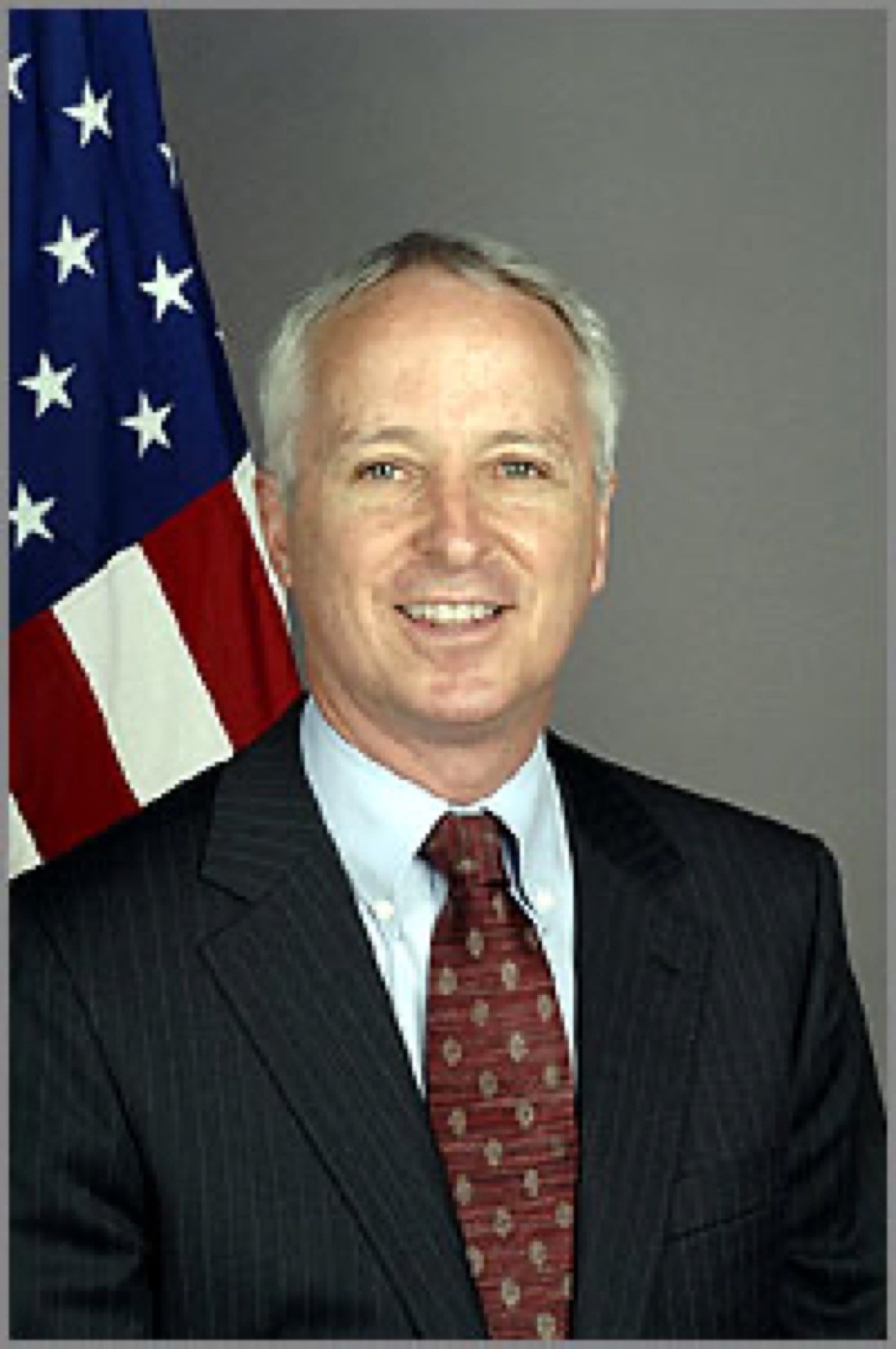
Cameron Munter
Cameron Munter is a former U.S. Ambassador to Serbia.
Episode Summary
As Serbia receives a fresh delivery of Chinese weapons, One Decision explores Serbia's President Aleksandar Vucic's recent reelection, his cozy relationship with Russia, and the tight-rope he's been walking on the path to EU accession. His decisions on which way Serbia turns could affect the stability of the region. Guest host Milena Veselinovic sits down with former US Ambassador to Serbia Cameron Munter and our resident analyst Sir Richard Dearlove, former head of MI6 weighs in on the geopolitical importance of the former Yugoslav Republic at this critical time.
Listen & Subscribe
- Watch on YouTube
- Listen on Apple Podcasts
- Listen on Spotify
Transcript
INTRODUCTION
Vasilinovich: Back to One Decision. I'm Milena Vasilinovich, your guest co-host for this week. Today, we're talking about the Serbian elections and why they matter. On the April 3, Serbia re-elected Alexander Vucic as president. He has come a long way since the 90s when he was a minister of information in the government of Slobodan Milosevic, who was later tried for war crimes. In the last ten years, Vucic has rebranded as a pro-European politician, trying to steer his country towards EU membership. And at the same time, he has fostered a close relationship with Russia, Serbia's traditional Slavic ally, whom the country depends on for its energy needs. But straddling both East and West may no longer be possible since Russia's invasion of Ukraine. Serbia hasn't imposed any sanctions on Russia, but there's growing pressure on the country to pick a side. And not just with Russia. When Serbia recently took delivery of a Chinese anti-aircraft system, alarm bells rang in Western capitals, prompting fears that an arms build-up in the Balkans can't be a good thing. I've been talking to former US ambassador to Serbia, Cameron Munter, about which way Serbia's leaders might go, and how that decision could have profound consequences on the stability of the whole of South East Europe.
INTERVIEW WITH AMBASSADOR CAMERON MUNTER
Vasilinovich: Well, Cameron, it's a pleasure to talk to you today. Thank you very much for your time. You were The US ambassador to Serbia between 2007 and 2009. That was a turbulent time for the country during which the former province of Kosovo declared independence. The US Embassy in Belgrade was attacked and torched, as you know, over America's support for that independence and forced some US diplomats to evacuate from the country. Now, during that time, you also got to know Alexander Vucic, Serbia's President, who has just once again won the presidential elections and whose party has been in power now for about a decade. Now he has some pretty big decisions to take ahead of him, which could have a global impact. First for those unfamiliar with the region, do you mind talking a little bit about why, what happens in this small country of 7,000,000 in the middle of Southeast Europe? Why does that matter on a global European scale?
Munter: Well, thanks again for the opportunity, Milena, to talk about this. And yes, I mean, it's a small country and yet it has outsized influence in the sense that it was, both it both sees itself and actually was kind of the core of the former Yugoslavia, part of the anchor of the history culture and central kind of dynamism of the region. Now you don't wanna go too far with this because one of the issues about the region is whether or not Serbian irredentism or Serbian kind of preponderance is a problem or not. And I'd rather not get into that kind of issue. But Serbia matters in as much as the region itself is unstable, has been since the end of the so-called Wars of Yugoslav succession after 1990. And because it's unstable, Serbia is seen as ultimately either cause of instability or potentially the leader of the way out of instability. As Serbia goes in many ways, the region will go. I would add that we have right now, because of the current events and the war going on in Ukraine, we have a question in that kind of still open as to whether the importance of the Balkans will change or at least take on a new form in as much as it becomes part of a broader European perception of instability on its borders. That is, there can be a good thing that there will be more attention paid to those countries that are not in the European Union, not in NATO, but are on the shall we say periphery of Europe. The bad news would be that it would throw Ukraine, Serbia and the other ex-Yugoslav countries kind of into the same pot. And that would mean that it would perhaps observers would lose a little bit of nuance. But I would predict that Serbia and its neighbors are going to be seen. And we can talk about this in the result of the elections. They're going to be seen as part of a post-Ukrainian set of challenges for Europe. And that'll change the way that I think that the perception has been over the last decade.
Vasilinovich: And now that's very interesting because president Vucic was the incumbent president as well. So he has tried to sort of straddle this path between east and west between accession towards the EU, which Serbia is trying to do, but also maintaining very friendly relations with Russia, which has traditionally been a brotherly Slavic nation. Even now in the wake of the Ukraine invasion by Russia, Serbia is one of the few European nations that hasn't imposed sanctions on Russia. However, they have joined the condemnation, the UN condemnation of the invasion albeit quite reluctantly. And now it's been seen as the EU leaders sort of tolerating that kind of hesitance up until the elections. But now the President Vucic and his party have won decisively, have another term. They are under pressure to kind of make that decision. Are they gonna go east? Are they going to go west? How do you see that playing out?
Munter: Well, it's actually more a little, I think more complex thanks to the election. As you know, the SNS, the party that Vucic founded and now runs, Vucic himself got 60% of the vote. There's no doubt he had a resounding victory as president, but the parliamentary elections took place. His party, the SNS is expected to get somewhere in the neighborhood of 100 and seats in the parliament. And you need, I believe 127 in order to have a majority. So he will need, he will lose his absolute majority that he's had. And that has given him the freedom to do exactly as you described, to kind of sit on two stools to try to play off not only the Russians and the EU, but also the Turks and the Chinese. I mean, really tried to be the man in the middle with a free hand. Now he doesn't have an absolute majority. And the party that is likely to join him, as you know, is the SPS, the Socialist Party, Ivica Dacic, long his ally. And one of the reasons that Ivica Dacic, who is going to get around 30 seats in the new parliament, is kind of had a new lease on life is he presented himself to the more pro-Russian electorate as someone who would be a break on Vucic's tendency to be a friend of Europe. Interestingly, you know, he took a lot of the votes that more conservative voters who might have in the past voted for Vucic. People who are pro-Russian, I believe, voted for Dacic.
Vasilinovich: And it's also really important to remember that, I mean, Serbia does pretty much entirely depend on Russian gas. It gets it on a severely discounted price. But then again, the EU is the biggest investor in Serbia as well. So both those sides can sort of decide to pull the plug, which would leave Serbia in a very vulnerable position, whichever way it goes. And I also wanted to ask you about Alexander Vucic himself. I mean, you were there in Belgrade at a crucial time when his party was being formed. I mean, he is a former ultra-nationalist who has rebranded throughout the years as a pro-EU politician. He was the minister of information in Slobodan Milosevic's government in the 1990s. He's also kind of gradually over the years, clamped down quite a lot on media freedom institutions, assuming sort of a near complete control of the country. But this hasn't really over the years triggered any warning lights in the international community in a way that perhaps it would have with some other leaders. Do you think that was because of his signals that they, you know, and his work to get Serbia towards the EU path? Why do you think that was the case?
Munter: Well, part of this part of the answer here is are things that lie outside of Serbia. That is to say there was a lot of attention that both The United States and the European Union paid to Serbia and the democratization process, let's call it, especially in the years after the assassination of Zoran Djindjic and the efforts to try in the first decade of this century to try to kind of bring the institutions of the country into the West. I would say that in the next decade, the decade of Vucic, the Europeans and the Americans became preoccupied with other things. And there's been less pressure, less even though there's been ongoing European investment and ongoing American interest in NATO enlargement in the region, Montenegro, Albania, North Macedonia, etcetera. There has not been the focus by the West on the country that there's been before. And so to your question, how did he kind of quote, get away with this? How did he clamp down on the press? How did he clamp down and take over kind of the institutions of the country? He did it because others weren't paying enough attention in part. He is probably, I've spoken with a man a number of times over the decade. And he will always say that his goal is to be in the European Union. He says, make no mistake. We want to be in the European Union. We are a European country. And there's the argument for a certain crowd. And I think I'm among them. The people who he sees as the Westerners is don't sell us short. We're a European country. In fact, you are condescending if you don't consider us a European country. But then there's another message that he gives to another constituency, which is that there is a kind of soullessness and weakness in the West. And only people from a certain culture can resist that. You know, that's something you will recognize from, you know, when Viktor Orban says, or even from what Putin says, there's a streak of that for the other constituency. He's been able to give these dual messages skillfully enough that he's been able to get a great deal of investment from the European Union, a great deal of assistance from the European Union, and yet interest from the Chinese. And as you say, he's up to his neck with the it's certainly an energy with the Russians. The Russians own the Serbian national energy company. And, you know, it's not a question of them being dependent, say the way the Austrians or the Czechs where I live are dependent. The Russians own energy, the energy of that country. They don't really have a choice. So I don't know what he's going to do. I agree with you that I think the Western experts and leaders have been fairly gentle on him in the run-up to this election, assuming that he would win resoundingly and somehow then he would, in the wake of the Ukrainian crisis, he would turn to the West. I'm not sure that's gonna happen. I'm sure it can happen. And we sometimes may overestimate his ability because he's skillful at controlling the press and things. His ability or his confidence in being able to get out of the prevarication mode that he's in. It may be that's the only way he knows how to rule and he just doesn't, you know, and staying in power is number one.
Vasilinovich: And I'd be interested to hear more about your encounters with Vucic. I mean, you were there before he became the all-powerful president that he is now at the very nascency of the political party that he co-founded. What were your interactions with him like? What did you think of the man?
Munter: Well, it's an interesting problem because he was at that time breaking away from the old radical party. You know, the leader of the radicals is still around. And the radicals, I think, with a very small following are still there, but these were the heavyweights in the 1990s. This is the tradition from which he comes. The radical is a venerable old nationalist party going back decades in Serbia and in Yugoslavia. So my first contact with him was him basically complaining how scared he was of Seselj. Now, you know, when people talk to diplomats, they tell diplomats what they think the diplomats want to hear. I don't know what quite he was trying to say to me, but he often talked about he was consumed by the idea of getting away from Seselj and kind of the millstone around his neck of the radicals. He was with this time too with Tomislav Nikolic, the former who then became president before Vucic did. The two of them claimed to be saying, we want to break away the election that took place in 2008, which Boris Tadic won. I remember Vucic saying up until now, something along these lines, it's not a direct quote. Up until now, the elections in Serbia had been between going forward and going back. From now on, it's not going to be a question of whether we go to Europe. It's only how we go to Europe. And he would argue, I think he used the term Boris Tadic wants to go to Europe on his knees. You know, I want to go to Europe, you know, standing tall, but we both want to go to Europe is the point he made. Now, at that time, we had no idea that he would be taking over in the way he did. You know, the Serbian constitution actually puts its power in the prime minister and the president is supposed to be a figurehead. And he very cleverly arranged things that he through his party controls all the patronage. So I did not realize at that time he would so skillfully take over the institutions of the country. And by the time I left in 2009, I thought he may be the kind of Nixon in China character, the man from the right who can actually convince the country not only to join Europe, but even to deal with an independent Kosovo.
Vasilinovich: If it's gonna happen, it hasn't happened yet. Let's put it that way. As you mentioned that there is a big elephant in the room when it comes to Vucic and the EU accession, and that is Kosovo. I mean, he in domestic kind of addresses is very adamant that no Serbian government could ever recognize Kosovo. The Serbian state television still refers to Kosovo as its Southern province. So obviously Serbia cannot become part of the EU until the issue of Kosovo is resolved. But it's hard to see the government of Alexander Vucic really selling that to the people. Seems like a very complicated conundrum. I mean, how do you think he can go about that?
Munter: Well, he gives a very different story when he's talking to Europeans, he's sitting with Miroslav Lajcak, the European Union's representative for the region or with Gabriel Escobar, the American Envoy for the region. He doesn't talk the way that you described accurately the way he talks to his constituents. He says he is much more flexible. He is much more a kind of realistic. He says, oh, come on, we realize that the situation is this way, but he believes he cannot do it. And he has actually said on occasion, if I did that, they would kill me. He has a very frequent reference to kind of a martyrdom that he feels that you want me to do something that will mean my death. You know, a very dramatic kind of thing.
Vasilinovich: So Serbian, by the way, very Serbian, typical Serbian kind of narrative mentality.
Munter: To digress just a little bit on that, you know, there are really three very interesting countries that have something in common here. And, you know, if you take Russia, if you take Hungary and you take Serbia, you have countries that all feel a deep, deep sense of grievance that territories that they believe are theirs were taken from them. And with some justification, you can make a good argument that those old ancient Serbian communities that were in Croatia and the Krajina were driven in Slavonia, etcetera, etcetera. A sense of lost greatness and it's just not fair. And same thing with the treaty of Trianon and Viktor Orban and Hungarians and all this. And of course, this is exactly what the Russian attack on Ukraine is all about, is that someone has taken the Kievan Rus' from us. There is this kind of feeling of grievance that becomes personal. And that's what's very interesting. As you point out, it's very Serbian, but he in a way is this apotheosis, this kind of super Serbian expression of, you know, what we really want is the respect for who we really actually think we are. The roots of Serbia, you know, the cultural roots of Serbia are the monasteries in what you call Kosovo, you know, what we call our Southern province. The roots of Serbian greatness are bigger than what this small Serbian state is. And we deserve recognition for that. And you're not fair to us. You're not fair. You bombed us. You doubtless, you know, have been down the main street in Serbia, for years they refused to rebuild after the bombing, the NATO bombing in 1999. In an enormous act of self-pity, look how we suffer. Of course, we're not gonna rebuild these buildings. And it's as if they're saying, we're gonna make you NATO suffer. NATO didn't suffer. It's the people of Serbia who suffered from not rebuilding these things. So these kinds of things I'm talking about very much percolate, I think in the person of Vucic. And so he does believe that this will be something that can't be solved without an enormous gesture. He says, I need something in order for me to solve Kosovo. You have to give me something. And what most people who are in favor as I am, you see both countries get into the European Union is get real, two different countries. Both of you will benefit by going in. You don't need to get something. What you will get is European Union membership and all the benefits that come from that. That's not entirely the way he sees it. So back to your question, how do you solve this question? Under certain circumstances, you can have deals for people who are that way. It happens that the current leader of Kosovo, Mr. Kurti is not the kind of guy he can make a deal with. Kurti, as he said famously, talking with Serbia is I think seventh on my list. I'm against corruption. I'm against this and that. I want jobs. And if this guy up in Belgrade wants to be this way, well, that's his problem. So at present, I am not optimistic that a Serbian Kosovar deal or arrangement or something can be made. But I'm wondering what do you think might happen now.
Vasilinovich: With the war in Ukraine not going as planned for Russia, is there a danger that their focus might now be shifting to Serbia? I mean, obviously Russia does clearly see the Balkans as its sphere of influence. There's not a geographical threat. There's at least two countries between them. There's more than a thousand miles. But as we know, the Russian state has other means of influence. We've seen a failed coup in neighboring Montenegro in 2016. Authorities there have blamed it on GRU agents. Russia has denied it. But infiltration influence through political means kind of potentially maybe even pushing Serbia to some sort of a conflict with Kosovo in order to destabilize it, order to kind of sever any ties or any potential progress towards European Union. How real a threat do you think that is?
Munter: Well, I think that most of the Russian experts I know and things are changing rapidly in Russia. So I give that to you with a huge boulder of salt. Most of them have always said that the Balkans is a place where Russia can play, but it is not a priority for Russia as much as Serbia would like to think it is. It's not a priority because it's again far away. And the ability of Russia to use economic tools is very limited. It's limited to energy. And the ability, I think we sometimes overestimate the ability of Russian dirty tricks or intelligence to get things done. Witness the botched coups, the activities in North Macedonia and in Montenegro. So I don't see a huge danger of Russia being able to kind of mastermind changes. I see a huge likelihood of Russia being very clever in opportunistic efforts to try to keep things off balance and to get in the way of say a Kosovar Serbia settlement if they don't see an advantage for themselves. But rather than seeing Russia as I see Russia as a kind of a constant, but not dominant force in the region. A constant region. The problem much more to me is the instability that takes that is in Bosnia right now. The relationship of Kosovo with Serbia, it's not right to say it's stable, but it is not anywhere near as tense as what you have between the Republika Srpska and the other parts of the Federation in Bosnia.
Vasilinovich: Yeah. And it's interesting that you mentioned Bosnia because we've been hearing from Milorad Dodik, the leader of the Republika Srpska, and he's been wanting to create what would essentially be a Serb only army there, which of course harks back to the very unpleasant memories of the wars in the 1990s. But there is a sense that for that he would need some support as well from the big neighbor Serbia.
Munter: And I don't think Vucic is champing at the bit to do that. I think Vucic wants to get what he wants to get. It's hard for me to imagine Vucic trying to pick a war, pick a fight.
Vasilinovich: So now after these elections, there is a sense that the European Union might put some pressure on Alexander Vucic to make up his mind. This narrow path that he's been walking between Russia and the West is turning into a bit of a tightrope. Do you foresee the EU and The US sort of perhaps maybe even lowering the standards when it comes to the rule of law or media freedom or other things to welcome Serbia into the EU for just to prevent it going the other way in the context of everything that's happening in Ukraine?
Munter: I don't. I mean, I think there was in the previous German government, there were those in that government who wanted to bring Serbia in and were willing to kind of say, you know, Serbia is never going to be great democracy. But, you know, we lived in Romania and Bulgaria and they're not free of problems as well. So there was that feeling of, we bring them closer and Vucic is the guy who can do this. Vucic, if you have some liberal Democrat come into power, we see what happens to liberal Democrats. They get shot like Djindjic. This guy can maybe bring them in. There are two problems with that. One problem is that the Ukraine war really has changed the way that Europe sees itself in the way that Europe works with America on this. So I think that there's gonna be very difficult for any country to kind of say, oh, let's just let these guys in. They are going to really, I think over the next months, you're gonna see the Americans and the Europeans talking together about whether or not they might start making offers that Vucic can't refuse. They have not been tough on Vucic and they may, that's one thing because of Ukraine. The second thing is the Americans have gotten kind of interested in the region. We have sent recently arrived in Belgrade, one of our most skilled diplomats, Chris Hill, who was our ambassador in Iraq and in Korea and in Poland is now in Belgrade. We have Phil Reeker, one of our major diplomats, perhaps coming to the region. We have Yuri Kim, one of our skilled diplomats in Albania. We have some real major power players in the region. And it may be that we, the Americans will pay more attention and perhaps drag the Europeans along to say, it's time for us, instead of saying, you get this money saying you will do X or we will cut off the money. You will do Y or this, you know, kind of give them choices. I suspect we're gonna see a tougher Western attitude towards them and also towards Viktor Orban in a different way because he's a member. As a result of the realization that you've had a kind of a life threatening you were having a life threatening experience in Ukraine. And this really matters now. And you can't just, as you say, kind of say, well, why don't we just see if we can lure him in and maybe once he's in, he'll be good. I think the experience of countries like Cyprus coming into the European Union and then becoming problematic in a number of areas has especially countries like France, not wanting to do what you had talked about, not wanting to relax standards and let the Serbs in. Are they then going to drive Vucic into the arms of the Russians or the Chinese? I think that the Europeans and the Americans realize that the Russians and the Chinese are no match for the EU, especially economically. And I think that they may be coming to the point now where they're gonna play hardball. That's my own personal feeling. Well, it certainly seems like the Serbian leadership will have to make some pretty tough decisions for them in the months ahead.
Vasilinovich: Interestingly, Serbia is one of the few countries that's continued flying planes to Moscow. So it's been a loophole for Russians. They hop on Air Serbia, they come to Belgrade and then they can go wherever they want. And that's continued even though it's been severely criticized obviously by Western capital. So the number of flights has been reduced, but it does continue. Can you just also tell me what is the danger of just leaving things as they are as a status quo, of like leaving the Balkan, Serbia and Bosnia in a way neglected the way they were in the last ten years or so?
Munter: Well, I mean, stasis is not stability. And one of the if you look at the various kinds of problems that the West, let's say is facing, whether it's energy, whether it's migration, whether it's actual conflict breaking out, whether it's the questions of democratization and the rising tide of kind of autocracy. Almost all the things that the West needs to do or wants to do to shore up its position are issues where Balkan countries can play a role. I mean, you don't have a migration from Asia without going through the Balkans. You don't have real long term solutions to energy issues without figuring out what you do with the Balkans. And so it's one thing to say that if you basically leave the Balkans alone and you give them benign neglect, well, we have other problems and they'll just kind of stew in their own juices and we won't pay attention. And that may have been, I don't know, I've been out of the diplomatic business for a decade now, but that may have been the way that leaders thought over the last ten years. You know, we just have other things to worry about. I think there is a realization that if there's going to be substantive progress in solving the problems that matter to Europe, it can't be done without dealing with the Balkans. And when you say, okay, concretely, what about energy? What about migration? What about the institutional advancement of security? These things are going to be they're gonna pop up in ways that you will either deal with them or they will bite you. I expect A, that the West will come down harder on Vucic and B, that it's gonna be harder for Vucic to respond the way the West wants him to because of the results of this election, which is that he lost his outright majority. So the irony is that the window of getting him to do what the West wants may be just a little closed.
Vasilinovich: Great. Well, Ambassador Munter, thank you so much for your time. It's been a fascinating discussion. Lots of stuff covered.
Munter: Great. Good. Thank you. Thank you very much.
ANALYSIS WITH SIR RICHARD DEARLOVE
Vasilinovich: So Richard, thank you so much for joining me today for this discussion on the Serbian elections.
Dearlove: Pleasure, Milena. I look forward to our discussion.
Vasilinovich: So in my conversation with former US ambassador to Serbia Cameron Munter, he said that Serbia and the Balkans in general have a somewhat outside significance as a region compared to where they are, the number of people living there, how significant they are globally, and would you agree, but why would you say that's the case?
Dearlove: Well I suppose geopolitically historically they have been on the edge of Europe and that's one of the things about Serbia that we should talk about. However, you know during the Balkan War they enjoyed this huge prominence politically, geopolitically, and they were at the forefront of most European leaders' minds. So for the wrong reasons they had that moment in the sun. I mean it was a tragic and ghastly series of events, and of course you know it was the first European major European war since the end of World War Two.
Vasilinovich: But I think it's fair to say that say in the last ten years or so, a lot of what has been going on in the Balkans in Serbia has somewhat been ignored by the West. Do you think that now that has potentially changed with Russia's invasion of Ukraine, just because Russia does see the Balkans as its sphere of influence and, you know, Serbia is dependent on Russia for its energy. There's been also talk of Russian interference previously in the past few years in North Macedonia, there was a failed coup in Montenegro, which the government there blamed on Russia, which Russia does deny. But do you think that perhaps that kind of maybe negligence over the last ten years by the West has left some room for more Russian influence and interference in the region?
Dearlove: Yeah, well you had a messy political settlement at the end of the Balkan War, you had, you know, attention being pushed elsewhere, you had the political settlement partially working but not working, you know, as maybe it should have done, and yeah you have a, I would say, a loss of strategic interest in the region. I'm not so sure it'll come back to center stage, but it'll certainly come back as an issue of concern, I mean given Serbia's relations with Russia which you've pinpointed, and the fact that there are those deep emotional ties, you know, really part of Christian orthodoxy between Serbia and Russia. And yeah, there will be concerns now about, you know, what Russia's behavior in the area is going to be, particularly if it's going to try to use that, as it were, backdoor routes into Europe to stir up trouble, which is a possibility as sort of revenge for European support for Ukraine.
Vasilinovich: And that is very interesting because Serbia's President, newly elected, and he also the previous President, Alexander Vucic, he has so far tried to sort of sit on two chairs to court both EU and be friends with Russia. But what is happening in Ukraine will now make that much harder. And in my conversation with Ambassador Munter, he said that we may see more pressure from the West on Serbia to commit to their European path. What do you think about that?
Dearlove: Yeah, well if Vucic has any realistic ambition of joining the European Union, then he's not going to be allowed, you know, to play both ends against the middle. Mind you, I think he will take some inspiration from Orban in Hungary, who's just been re-elected with a very large majority, and of course Orban has continued this rather extraordinary position that Hungary has taken and refused to be directly critical of Putin over Ukraine. It'll be interesting to see which way Vucic inclines, I mean I personally I think it would be very dangerous for him to, as it were, model himself now on Orban. I mean Orban's managed to get in, you know, Hungary's in the EU, it's not suggesting it's going to leave, and it's developed this capacity for a rather independent stance in relation to its foreign policy, but remember that Serbia is still, you know, an applicant nation. Serbia feels that Europe owes it a living, historically pays it a living, and has never sort of delivered on Serbia's expectations, and of course the ultimate catastrophe, you know, for Serbia was to get bombed by NATO during the Balkan War. I mean, Serbia sees itself as, you know, the country that has protected the soft underbelly of Europe since the sixteenth century or fifteenth century even, you know, they've been the armorers of Europe. You know, they think that they saved Christian Europe from annihilation, and this thread sort of runs through Serbian history, and it's not been forgotten to this day. And the Serbians have an expectation that they should be treated in a certain way, and you know, they're fed up that they feel that they've been discriminated against for that reason. So it's made Serbia incredibly tricky to deal with as far as the Europeans are concerned, because, you know, they have been so volatile, so touchy, and of course when they're volatile and touchy, their automatic response is to sort of try to hug Russia rather than to hug Europe. But I mean I think in a way those days for Serbia are coming to an end, because the one thing that you learn, you know, from the invasion of Ukraine is that you do not want a friend like Russia, and Serbia will very much I think realize the dangers of that relationship. And of course the other issue, which is, I mean, intransigent, and I don't really see how it's going to be resolved, is the recognition of Kosovo, and you know, because I think still for any Serbian politician to resolve that issue with the European Union is probably lethal politically in terms of future electability. I don't know, maybe times are changing in Serbia and that's not the case anymore.
Vasilinovich: I mean I think you hit the nail on the head. I think it is still very much the case that whichever government, if any government takes that decision to recognize Kosovo, I mean that would be the end of that government. The public opinion is very much still that Kosovo is part of Serbia. And that is one of the advantages that Russia has when it comes to its relationship with Serbia because it does feed that sentiment, opposing to getting those messages from the European capitals that that's a lost cause and you have to move on.
Dearlove: Vucic is a past master of saying to the Europeans what they want to hear, saying to the Serbian people what they want to hear, and saying to the Russians what they want to hear. I mean he's a clever scheming type of politician, and you know he makes light of serious problems when he's talking to the other party. I mean this has been the character of this politics. So my view of Serbia is sort of one of the grand history of Serbia, and you know its role, you know, in the Habsburg Empire, its role as a bastion between the Ottoman and the Habsburg Empires, and the fact that, you know, historically it's played a hugely significant role in European history. So I mean I do have some sympathy with the Serbian people because, you know, they've got themselves now into a position in the twenty-first century where, you know, that history is not generally recognized unless you really know something about the region and the area and what happened in the past.
Vasilinovich: Yeah I think you are completely correct to say that majority of Serbs feel that the country was kind of the defender of Europe against the Ottoman invasion, paid a high price for it, but now being made to jump through hoops to join the European family as it were or made to give up Kosovo which many Serbs still see as an integral part of their culture and history. That will definitely be a hard obstacle for any government to overcome and I am not at all certain that this government of Alexander Vucic is willing to sell that message to their constituents.
Dearlove: Because at the moment I think Serbia is really sort of stuck. It can't make concessions politically on Kosovo. It doesn't want to completely cut its links with Russia. It's desperately keen to join the EU and economically desperately needs to join the EU, and it's difficult to see what the path forward is, and of course you know, Vucic has got a massive majority and he's not threatened politically, so what's going to change? I mean that really would be my comment and my question.
Vasilinovich: Current President Alexander Vucic, he has had a huge rebrand from being in the government of Slobodan Milosevic in the 90s to now pushing the country towards EU accession. But throughout his time in power, has really consolidated authority and he clamped down on media freedoms. He's clamped down on judiciary. And that doesn't seem to have kind of bothered the West very much. They still see him as a partner. Do you see a leader like him really, you know, say the issue of Kosovo is resolved by some miracle, but do you see him as a potential EU leader, you know, the way that he rules the country?
Dearlove: Well I suppose you could ask the same question, Le Roerbein, and I mean I'm sorry to keep harking back. I mean the fact is if you're elected by that size majority in an election which is reasonably fair, it's difficult then to contest that position politically. I mean there's no question that there are authoritarian aspects to his behavior vis-a-vis the press, vis-a-vis political criticism, vis-a-vis putting political opponents at a disadvantage by using the machinery of the state in one way or another, and you know that's exactly what Orban has done as well, and you know he doesn't allow his political opponents a thorough and full democratic platform, and will only put criticism up to a certain level. I mean I think the problem that you mentioned, I mean you know the trouble is the European scrutiny Europe's been so preoccupied with other problems, Serbia does not come up high on the list. I mean Serbia has to an extent been a bit off the map. Okay, for reasons now it's coming back on, and Ukraine you know will pull it back as you said right at the beginning of the interview, but you know, and Vucic doesn't have a great political reputation, but he's a survivor, and not only a survivor, he's successful politically in his own country, and that you cannot ignore.
Vasilinovich: Sir Richard, thank you so much for your time today and for this fascinating discussion.
Dearlove: Okay Milena, it's a pleasure talking to you.
Vasilinovich: Thank you. Thanks for joining us for this week's episode of One Decision. I'm Milena Vasilinovich and it was a pleasure to co-host this podcast. The team wants to hear from you. Get in touch and tell us what decisions have shaped your world. Where should the podcast head next? You can find One Decision on Twitter One Decision Pod and on Facebook at One Decision Podcast. Don't forget to subscribe so you never miss an episode. From me and the team, thank you for listening.