Episode Info
- Season6
- Episode1
Hosted by Christina Ruffini and Sir Richard Dearlove
Guest
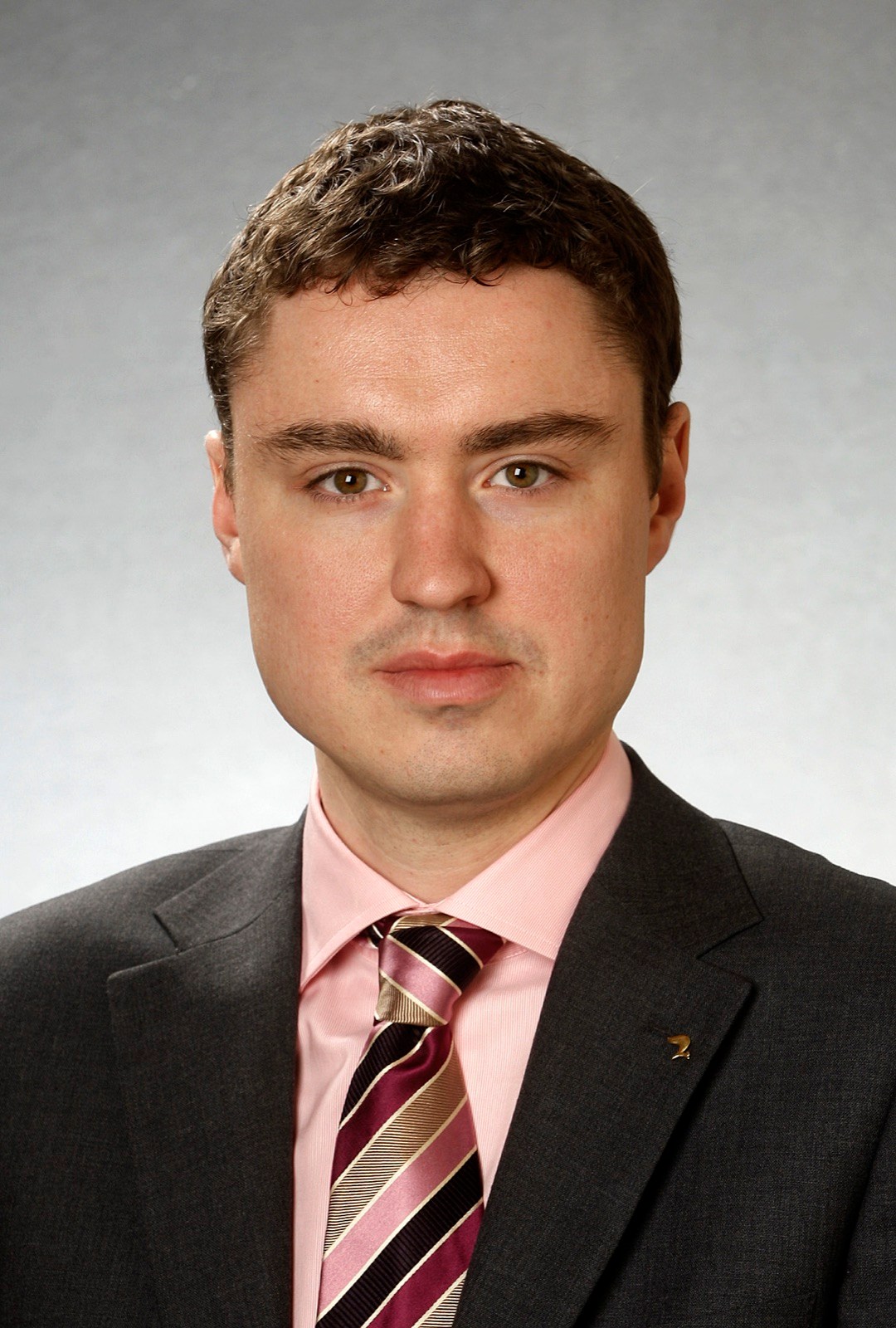
Taavi Rõivas
Taavi Rõivas is the former Estonian Prime Minister who lobbied for NATO to step up its presence in the Alliance's east and secured NATO troop deployments in the Baltics for the first time in 2016.
Episode Summary
Former Estonian Prime Minister Taavi Rõivas speaks exclusively to One Decision on what it’s like being a small FSU state on the border with an increasingly aggressive Russia. As PM, he lobbied for Nato to step up its presence in the Alliance’s east - and secured Nato troop deployments in the Baltics for the first time in 2016 after the annexation of Crimea.
Listen & Subscribe
- Watch on YouTube
- Listen on Apple Podcasts
- Listen on Spotify
Transcript
INTRODUCTION
Lockwood: The team and I here at One Decision are extremely sad to learn of the death of three journalists killed in Ukraine this week. Our condolences to the family and friends of Brent Renaud, Pierre Zakrzewski and Oleksandra Kuvshynova, and our thoughts are with Ben Hall, who is recovering after being wounded in the field. Welcome to One Decision, the show where we speak to people behind some of the key decisions that have shaped our world. Taavi Rõivas was Prime Minister of Estonia from March 2014 to November 2016, assuming office at the age of 35. At the time, he was the youngest world leader in the European Union. Estonia is also a young country. Having been repeatedly occupied by historic empires, Estonia declared postwar independence before being occupied by the Soviet Union. Estonia regained its sovereignty in 1991 along with other former Soviet states. From its rebirth in the early nineties, Estonia, under its forward thinking leadership, embraced the Internet and global connectivity. An early success story in Skype, the video service, was to be repeated by many start ups in Estonia. It's now one of the most highly technologically advanced states, is host to NATO's Cyber Centre of Excellence, and was the first government in the world to go digital. But as with many Baltic states, there is remaining anxiety about the behavior of neighboring Russia. Rõivas was central in lobbying NATO to send a forward presence in its East, deploying troops in Baltic states back in 2014. Taavi Rõivas sat down with us just before the Russian invasion of Ukraine that began on February 24. But he knew it was something that was not just possible this time around, but an ever present threat for all countries that were formally occupied by the Soviet Union. He began by telling us why.
INTERVIEW
Roivas: First of all, Russia sees its neighbors somewhat differently as the rest of the world, whereas all the democratic countries see and recognize every country's right for sovereignty, and every country's, including Ukraine's and of course, all other European countries' sovereignty, choose their own destiny, be it whatever alliance they choose to pursue for. Now Russia sees spheres of interest, they think, or he thinks in Kremlin that it is possible, also in the twenty-first century, to influence what the neighbouring countries should think or can think. One very important aspect, of course, is that I don't think it is justified to call any country a former Soviet country, because Soviet Union occupied a lot of independent countries during second world war, and it was not recognised by the West or by the democratic countries. So it's very important to understand that we are talking about destinies of independent countries here, not the influential spheres as Putin might see.
Lockwood: That's fair. You talk about spheres of influence and spheres of interest in those states that Russia previously had occupied. And obviously there are Russian interests across Europe, there are large Russian speaking populations in many countries. And obviously, what Vladimir Putin wants is allies, allies that he doesn't really tend, doesn't really have in a way that the Soviet Union had had allies around the world. Vladimir Putin is not in a similar situation. And so when you see him being aggressive towards a lot of Russia's neighbors and a lot of countries in Europe, what exactly is he trying to do? Is he trying to protect or regain or control these spheres of interest, spheres of influence? Or do you think he actually wants to invade? Do you think he wants to add a lot of countries back into Russia?
Roivas: Well, I don't think it's actually possible to pursue this kind of goal, even in his mindset. I don't also agree that having somebody speaking your language in a country that is neighbouring, or in Kensington for that matter, that doesn't give you any right to possess ownership of that district, for example. And I think it's right that every country, be it Ukraine, be it The UK, be it Estonia, has its own right to choose whether they want to form alliances with Russia, which as we see has happened under the current regime of Lukashenko, for example. Of course, lot of people in the country dispute that, and it's not the democratic process that is going on there. But most of the neighbors of Russia, for some reason, have opted for other values, more European values. What I can speak from Estonian experience, I think being occupied by Soviet Union for fifty years left this wish for Estonian people to get as far as possible from this kind of repressed society.
Lockwood: Yeah, I was going to ask you about the demands that Russia made back in December last year. For our listeners, I'll just read out the demands that the Kremlin made in order for de escalation in Ukraine. Russia wants an end to NATO military activity in Eastern Europe, including Ukraine, The Caucasus, Central Asia. No expansion of NATO membership, particularly to Ukraine. No intermediate or short range missiles deployed close enough to hit the territory of the other side. No military exercises of more than one military brigade in an agreed border zone. An agreement that parties do not see each other as adversaries and will resolve disagreements peacefully. And lastly, neither Russia nor The United States can deploy nuclear weapons outside their national territories. Quite a long list of demands. What do you make of that?
Roivas: Yes. And at the same time, we know that there are many European NATO capitals that are in the range of Russian missiles. Are they willing to take their missiles further away from their borders? Well, I kind of doubt that.
Lockwood: But is this a serious list to you? Do you think this is a serious list for Vladimir Putin?
Roivas: No, I mean, it could be serious if we would think, as he thinks, that there should be Molotov-Ribbentrop secret pacts also in the year 2022. But of course, we don't think like that. We don't think that we can or should decide over Ukrainian head whether they could someday want or pursue for NATO membership. This is not something we should, like, forbid them as an option in the future. Even more absurd is to tell that NATO should not have weapons on its own territories. Estonia is NATO territory. Denmark is NATO territory. Norway is NATO territory. So saying that we should not have any weapons or whatever kind of weapons in these territories would mean that, okay, but then Russia should not have any long range missiles in Kaliningrad, near Saint Petersburg, because they are all in the range of European countries or European capitals. And we know for sure that this is not something that Russia would be ready to consider, at least in the foreseeable future. And if we remember what happened in 2014, it was not, at least according to Russian government TV or national TV, it was not Russia who was attacking Ukraine. It was the Americans who were involved in their opinion. They can still pose ridiculous claims that come out of the blue. That was the point why I said that. Now, what are the goals of Putin? Well, at least what I see is that often his measures or his moves are counterproductive. Obviously, many European countries have started thinking about energy security. Many of European countries have seen on their own territory hybrid tools being used. I'm not sure if it has been helping Putin's goals. I think most probably these things have been counterproductive. We have seen a lot of European projects that are actually reducing the dependence on Russian resources, including my own country. We built a few years back interconnector of gas to Finland. And it's not possible to delink either Estonia or Finland separately from gas supply. So we have achieved much more independence because of that. And this is something I wish other countries would do as well.
Lockwood: Right. You mentioned 2014, and I would like to revisit the situation in Ukraine in 2014, because that was the year that you became prime minister of Estonia in March 2014, I believe. And so, there was quite a lot going on at that time. I mean, we had the Euromaidan protests starting in late 2013 and the month before you became prime minister, that was when we saw those huge clashes in Kyiv, we had those incredibly dramatic events where president Yanukovych fled the capital and you had protesters storming and occupying government buildings, you had Yulia Tymoshenko released from jail, and then you had the start of those little green men popping up in Crimea and Simferopol taking control of Crimea. So, I just wanna go back to your first days in office, because it must have been a storm for you to come in.
Roivas: Well, I do remember exactly what I felt when it happened. We had still the coalition negotiations, and the chairman of the coalition part, their Social Democrats, he was about to become the minister of defense, and I was about to become the prime minister. And I remember our delegations debating heavily on the final issues that had nothing to do with the security or defence issues. They were just ordinary coalition negotiations ongoing. We both looked at my colleague's iPad, what was happening in the international news. Of course, that basically held a strong change for our agenda. We didn't plan for getting national defense and security issues as the top of my first government that worked until March 2015. But because of the international situation, this was exactly what happened. And of course, we worked together with EU and NATO to increase the presence of NATO allies in our region. That was actually among the very first tasks my government took upon ourselves. My first visit as prime minister was not to Latvia or Finland. That is the usual way to do or usual way that the certain presidents and prime ministers work, but it was to Brussels to meet NATO secretary general and EU commission and other EU colleagues. That was clearly because of the security situation in Europe worsening in March considerably.
Lockwood: You were prime minister during the NATO Warsaw Summit in 2016, and that was a particularly interesting year because there was emerging this arc of instability and insecurity across NATO borders. You had the invasion of Crimea back in 2014. Then you also had the rise of ISIS taking swathes of territory in Iraq and Syria, Mosul falling to ISIS in June 2014, you had the Paris attacks in 2015, you had the EU migrant crisis sweeping across EU borders. All of this was high on the agenda back then, and the upshot of that summit was that NATO would deploy a battalion in each of the Baltic States and Poland, and that was the enhanced forward presence units. However, at the time, Estonia said that this deployment was not sufficient enough to protect indefinitely against Russian aggression. So back in 2016, at that last NATO summit, what was the atmosphere like? How highly charged was it? How much did you feel there was possibly an imminent threat of escalation and a national security threat?
Roivas: Well, I think it was not as tense as it was in 2014. In 2014, it took some discussions among the NATO leaders whether sending troops is the right answer or other alternatives. In 2016, it was crystal clear to all of NATO leaders that we should have a permanent presence of allied troops in the Baltic countries and in Poland to send a clear message.
Lockwood: But you did have in 2016, you had Petro Poroshenko was warning of an imminent Russian invasion into Ukraine.
Roivas: Well, by 2016, they had already attacked Ukraine. We had seen, and now more also general public has seen footage of weapons and the troops crossing the border. And it's quite clear that a lot of troops used in Eastern Ukraine were not there before the conflict emerged. Thus, they had to come across the border. So it's kind of no brainer in this context. So yes, 2015 and 2016 remained tense in Ukrainian context. But as said, European response, or later response regarding presence in Baltic countries and Poland was something that was to be expected, I would say. And there was no real debate about it. And also actually, one thing that should be also remembered from that particular Warsaw summit is that NATO started, or started is a wrong word, but NATO decided that cyber is a separate domain and gave cyber defence a lot of more priority. And this is also something that is quite much more probable to be used in NATO or EU countries as a tool or as a weapon. This is something it is also very acute to prepare for and to take cyber threats very seriously.
Lockwood: Well, I mean, that brings me on very nicely to one aspect of Estonia I did want to talk to you about, which is it's Estonia's cyber capabilities and it's very, very sort of high-tech approach, not just to security, but governments and all aspects of public life. To cybersecurity first, there was an interesting study a couple of years ago by the Harvard Kennedy School's Belfer Center, and they did the study into Russian disinformation efforts in the Baltics. And they found that Russia primarily interferes in the democratic processes of Baltic states, such as Estonia, using information means or sort of disinformation influence campaigns. And what they have tried to do is that they have tried to push through both traditional and social media, narratives which are designed to divide people who are ethnically Russian or Russian speakers from the rest of society. They want to undermine domestic political stability and eventually break the Baltic commitment to the EU and NATO. Tell me a little about that fight that you have in Estonia and how you assess that risk and what Russia tries to do in terms of trying to destabilise your democracy, and how Estonia handles that threat?
Roivas: Well, I think this particular description is greatly exaggerated because Estonia and Latvia and Lithuania are all very well vaccinated against Russian propaganda. We remember Soviet propaganda. We can understand what it is. We can recognize it. And it's much more difficult to influence us. Now regarding political goals, I think most easy to see what Russia would benefit from leads us to also the areas where they tried to influence European politics. Probably it's not a coincidence that a lot of those parties who are anti European, parties who are, let's say, nationalist in Europe, they also tend to be either openly or closely pro Russian. Sometimes they are not even openly pro Russian, but you can find NGOs or partners that are very close to them, that are also very close to, or have Russian ties, let's put it this way. It doesn't matter if the topic that helps them to tear the society apart is migrants, or is it minority rights. I think from Putin's perspective, or from the Kremlin perspective, it's all the same. The goal is to undermine unity. The goal is to weaken the European societies. And in a way, what has been succeeding is that in many countries we have parties that are advocating those topics that actually, let's say, weaken the society. Of course, one of the topics is also this kind of no brainer, where it's easy to fuel potential conflicts or disagreements among people in democratic countries, is of course the right response to COVID. Any topic basically that you discuss with your family in the Christmas table, and that can make you disagree so much that somebody wants to leave, this kind of topic would be ideal for Putin to support and to fuel, either through NGOs or directly.
Lockwood: Right. Well, you say that Estonia is vaccinated against disinformation, but tell me, how does this sort of manifest in Estonia? Do you have a UKIP or a Front National that is divisive, that has, you know, sharpened the divides in the national debate and has also links with Russian donors? Do you have that in Estonia? Like, how is Estonia sort of inured to that situation?
Roivas: Well, first of all, I think if something like that, like information of some party or some politician being either directly or indirectly financed by Russian regime, if something like that would come out in Estonia, it would be basically very clearly the end of this particular politician or party, or at least the beginning of an end, because this is something that is not okay in Estonia clearly. The same is, for example, just to bring you example, it's not possible to establish a successful communist party in Estonia, because we know what communism brought to Estonia during fifty years. And it's just not something you could play with. Whereas in some European countries where the history has been different, there are communist parties, it's not as much of a red flag. In Estonian society, being influenced by Kremlin would be a huge red flag.
Lockwood: Right. Things are a little different in this country. We take the sons of KGB officers and we elevate them to the House of Lords. So that's one way that Britain is different from Estonia. The last question I wanna ask you about cyber is Estonia was hit with a massive cyber attack back in 2007, and that was eventually attributed to Russia. It disabled government websites, it disabled bank websites and business websites, and it was the first time really that an entire country was targeted at such a scale. And it's also the main reason really why the Cooperative Cyber Defence Centre of Excellence was very quickly established there in the capital Tallinn the very next year in 2008. So that was obviously before your time in government, but talk to me about how Estonia's cybersecurity defences have evolved since then, and how much of a historical event was that first cyber attack?
Roivas: Yes, well, I do remember it very well. I was a newly elected member of parliament when it happened. And I think, again, this was something where probably the attacker didn't plan for Estonia to become as resilient as we have become in cyber, and actually build a huge strength for ourselves from this experience. So in a way, we can also say that that attack was counterproductive for the attacker. In a way, in long run, it was actually beneficial for Estonia, if you can put it this way. Now what we learned and what we are continuing to learn together with NATO allies and external partners in the center of excellence that, as you correctly said, was established in Tallinn, is that we need to constantly exercise against these kind of threats, and this is something that the Centre of Excellence is organising. And also cyber exercises are part of all bigger military exercises that Estonia holds. Also, a lot of work that has been done jointly by NATO allies and partners in the Centre of Excellence is about legal issues. How to attribute something, what would be the proper proportional or disproportional or whatever kind of response would be appropriate, let's put it this way.
Lockwood: I mean, it must be difficult when attribution is so difficult when you have a lot of these like non state actors and these sort of murky groups that are sort of semi or unofficially or deniably taking orders not in various parts of Russian government. Can you tell me what are cyber exercises? What do they entail exactly?
Roivas: Well, there are different cyber exercises, but one way of doing it is having a cyber range where you mimic either information systems or you build in a closed circuit similar systems that, for example, your banks or even electricity stations or whatever critical infrastructure might have. You build a replica of these in a closed environment, and then you have one team attacking them and one team defending them. Of course, for that matter, you can have several teams on either side. So that would be one possible way of doing that. Estonia has different ranges, both in the public sector, and also some Estonian IT companies have also private cyber ranges, so that these kind of exercises are not only easy to organise, but also they are quite easy to follow. I have been following several cyber exercises, and it's really good if you can see what is happening, you can understand also what kind of threats you need to take into consideration when you build your own critical ICT system.
Lockwood: That's so fascinating. Cyber ranges, like cyber shooting ranges, because I was gonna ask if any of those exercises were offensive as well as defensive and that sounds like you do sort of simulate attacks and I find that fascinating. Do you hire like former hackers? Do you have a school of hackers or how does that work?
Roivas: It's a school of witchcraft and hackers that we don't really have, but of course our universities do have ICT faculties. And actually, Estonian armed forces, when we talk about military, we have a reserve army. So a lot of Estonian armed forces are actually civilians who have received military training. Similarly to other troops also, we have a cyber defense league, which consists of people who in their everyday life, they work for banks or ICT companies, or some of the many tech companies that have emerged from Estonia, or who have built their R and D centres in Estonia. We are using all resources we have, and this is the only way to do it in order to allocate the best expertise also for cyber defence.
Lockwood: That's amazing. I mean, one of my pet topics of obsession is the North Korean cyber army and the way they recruit, you know, kids who take part in mathematics competitions, and they grab them and they teach them how to code and how to hack, and I find the whole thing absolutely fascinating. I mean, it is the future of warfare, isn't it? It's certainly a lot cheaper than what Russia is doing and cranking out the tanks. So the future of warfare is in the cyberspace, isn't it?
Roivas: Well, I wouldn't say with clear words that Russia isn't doing also the things in cyber. But you're correct, of course, saying that conventional warfare is only one way of pursuing your goals of influence, of political power. Cyber is definitely one of weakening your counterparts by weakening their societies, as we described earlier, or using energy. Today when the energy prices in Europe are very high, and partly because of Russian supply decreased, this is also changing the political sentiment, how people see energy. So in a way, now it is easier to advocate for both alternative sources, but also to say that, let's just keep the gas coming as long as it becomes cheaper. So in a way, if somebody has a tool to influence your behavior as a sovereign country, he has already won this particular battle. And of course, warfare is just one means. And Russian doctrine does include hybrid methods. This is quite open. They have quite openly been writing and speaking about it, so it's not a surprise for any European politician, I'm sure.
Lockwood: Well, lastly, I wanted to ask you about your political career, because it was an extraordinary one. And in 2012, you became the youngest member of the Estonian government when you were appointed the minister for social affairs. And then it was two years later, when the reform party nominated you as leader and prime minister, and at the time you were the youngest leader in the EU. So, I wanted to ask, you know, after exploding onto the global stage, breaking that ceiling of being Europe's youngest leader, you know, what was that like for you? What was the pressure? And how did your fellow European leaders treat you when you entered the world stage? Did they treat you as an equal or was there a little bit of, you know, you're a bit younger now, so you still have a lot to learn? Or were there any dinosaurs saying that you were too young for the job?
Roivas: I think it was like for one week in Estonian media in the very beginning, because it was a surprise that I became the candidate for prime minister, and people were not expecting this move. They knew me as member of government. They knew me as chairman of finance committee of the parliament during the crisis, the fiscal crisis. So it wasn't completely 100% new. And also the Finnish politicians, I knew quite well. Being the youngest was nothing negative. The only negative thing was that when I ended my three years as prime minister, I was 37, so I still needed new challenges.
Lockwood: Do you feel a twinge of regret that your premiership only lasted for three years? Were you happy with your term? If you had stayed in power longer, what would have been the top of your list for what you wanted to achieve for Estonia?
Roivas: Now, whether if I could have chosen to be a year or two more in office, of course I would have. Of course I would have. It was a job that was super unique in both domestically and internationally, and the challenges in this office never end. And probably as a young person, I tended to be also a little bit over ambitious. I know some of the older colleagues have taken it much slower and setting much easier goals for themselves. But for me, it was very important that during my watch, Estonia will really succeed. And in several aspects, we get to the next level. And if you ask if I had plans for 2017 and 2018 and 2019, then the answer is yes, I do. And it's actually quite typical. Actually, my government together, like three years, or my term of three years, is above average in Estonian politics. So that's just how Estonian governments work.
Lockwood: Fair, fair enough. You talk about the ambition of your youth. Did you peak too soon?
Roivas: I'm not sure if I have peaked. I do hope that I still have enough to contribute in private sector. I mean, a lot of people have asked, why didn't you continue in politics? The last time I was elected was, the term is still continuing. So even today, or for the next more than one year, I still have my parliament term that I could, in theory, have continued, and probably for the next twenty years to come. But I decided that this is not the future I want for myself, and I want to peak, using your good term, in different sectors.
Lockwood: Is there an element of maybe personal growth about what matters to you and where you feel that the areas in which you want to make a meaningful difference, whether it's in your family life or in a smaller industry where you can maybe have a little bit more independence and particularly with you, you had a coalition government and a whole group of different priorities to try and juggle. Did you find that? Did you feel that maybe you could have made more of a difference outside of government in that sense?
Roivas: Well, both in the government and after that, I have been happy with my choices and also happy with the results that we achieved in the three years. Now about personal growth, I guess it's a fair question, and probably it's correct that you change both when you become prime minister, when you are prime minister, and when you no longer are. These are all actually very, very big changes, both in work life and also in personal life. But luckily I have managed to live successfully also after the term, and I then had one kid, now I have three, and I'm happily married, and exercising for Ironman. So in a way, exercising for Ironman, of course, shows that I have a small midlife crisis, probably, that I still need to prove myself to the world.
Lockwood: Other than that, it's all impressive. Certainly, you would never catch me doing an Ironman in a million years, so all credit to you. What are those changes before becoming prime minister, being prime minister, and then leaving prime minister behind? What are those changes? What has changed for you?
Roivas: Well, as trivial as it sounds, of course, the weight of the responsibility, especially regarding the security situation, but also all sorts of reforms we decided to do, like administrative reform. We changed the number of municipalities in Estonia from more than 200 to roughly 80. So that change was very principal and strengthened the municipalities a lot, but it was a very difficult reform to pursue or to take. Now, second part of it is I learned to walk very quickly when I was prime minister. And you might think that this is a small detail, but actually this is a reflection of how actually when you are a leader of a government, that everything happens much faster, and you really don't have time to walk slowly. This is something that my friends still notice about. They haven't changed also afterwards. I still walk quite quickly as if hurrying from one meeting to another.
Lockwood: So interesting. Yeah, that's it. When you started that, I thought you were talking metaphorically, but no, you mean physically, and that is actually a really simple, but very clear illustration of how every minute of your time matters.
Roivas: And also, you learn to value your time and your colleagues' time. Our routine was the same that I learned already when I was advised to my predecessor, roughly eight years before becoming prime minister myself. That was every morning I had one hour meeting with all of my closest advisors. During this hour, I needed to be briefed, all the main decisions that I needed to take during the day, we had the chance to prepare them. This one hour had to be sufficient. There were some exceptions, but usually this had to be sufficient. And then during the day, the day was scheduled so that the only breaks you had were when commuting at the back seat of your car from one meeting to another. So I still couldn't teleport from one meeting to another. This time I still had to take. But one interesting thing is also when you're a leader of government, there is no event or no meeting where you can passively participate. Whether you go to government meetings, whether you go to visit somebody either in Estonia or abroad, whether you attend parliament sessions, you are always expected to say something, hopefully also something meaningful. So it needs a lot of preparation, and this is something that you need to learn very quickly. Because becoming a prime minister could happen, like, I wouldn't say overnight, but it could happen in a couple of weeks. Every politician is saying in Estonia that if you become a minister, you should prepare yourself also for the case of becoming prime minister. And it's very, very correct saying. But luckily, of course, even though I was very young, I had the luxury of being prepared quite well. Being member of parliament helped a lot. Being member of previous government helped a lot, advising previous prime minister and other ministers. This all contributed to the fact that when I became actually the prime minister, the job was much more familiar to me than many of my colleagues who had never been, for example, in public office outside of the parliament or who had not held an executive position before.
ANALYSIS WITH SIR RICHARD DEARLOVE
Lockwood: As Russia ramps up its incursion into Ukraine, even getting just over a dozen miles from the border with Poland and therefore NATO, the Baltic States and their security is becoming an ever increasing geopolitical priority for the Western alliance. Sir Richard Dearlove, reflecting on what Taavi Rõivas had to say, has this analysis to share.
Dearlove: Well, I think what you have to remember, I mean Estonia has turned very rapidly into a very sophisticated independent entity, and of course it only turned independent in '91 I think. But I should say it regained its independence because technically it actually never lost it. And in a way I would describe Estonia as a mini state because it's tiny, it's only got a population of 1,300,000, but on the other hand it is a fully fledged NATO member country, and it's also a very enthusiastic NATO member, and you know despite its smallness a significant contributor to the whole NATO alliance. I mean I think that obviously Ukraine's situation must make the Estonians pretty nervous and pretty concerned, but on the other hand I think that they make a clear distinction between themselves, who always had a more distant relationship with Moscow, and the Ukrainians whose relationship with Moscow historically is quite different, and of course Ukraine is not a NATO member country. So the parallels are there, but one has to be quite cautious about how detailed you're going to make the comparison between these two countries. I mean Ukraine was fundamentally part of the Soviet Union right from the time of the Russian revolution, and of course that's because it was considered so closely attached to Russia historically, going right back to the twelfth, thirteenth centuries. I mean the Baltic Republics have had a very difficult and stormy and violated sort of history in terms of their identity and their independence, and you know they've either been dominated ethnically by the Germans or by the Russians, and you know they've struggled to retain their identity, but they've always been very much more distinct as former Baltic Republics, and bear in mind after World War I they actually technically maintained their identity and independence by having representational government outside their own countries. And in fact I don't think we ever abandoned, I mean for example The UK and The United States never abandoned the principle of recognizing the independence of those Baltic Republics, so when they separated from the Soviet Union after the end of the Cold War, I mean you know their identity in a way as separate countries was already ready made. And I mean Estonia in particular, that's not Russian at all, I mean it's Finno-Ugric, so it's ethnically connected to Finland, and it was aggressively settled during Soviet times by the Russians to try, as it were, to dilute the ethnic Estonian population. So I mean its history is so different from that of Ukraine. I mean in a way I think one could say at the end of the Cold War, I was surprised, I mean I think many were surprised, that the Russians accepted that the Baltic Republics would become part of NATO, and some of us at the time thought that was pretty surprising and pretty strange, but they did, and I think it's a reflection really in the Russian mind that they regarded the Baltic Republics differently. I mean you know in a way it was an enforced invasion and settlement towards the end of World War II, and you know initially when Russia invaded the Baltic Republics they saw them as a sort of savior from Nazism, but of course that didn't last very long when they, you know, discovered that they were going to be integrated into the Soviet Union, which is effectively what happened.
Lockwood: Yeah, I mean, he said in his interview, didn't he, that, you know, it's just not possible to establish a successful communist party in Estonia, because we know what communism brought to Estonia during the last fifty years. And so, therefore, like, in Estonia, being influenced by being seen to be influenced by the Kremlin is a huge red flag, and Russian ideology just doesn't sway in Estonia.
Dearlove: Yeah, well I think that's an extremely interesting comment because I think it's 26% of the Estonian population are Russian speaking. And you know Moscow would consider, you know, it has some sort of, let's say claim, or at least interest in that 25% of the population. But in practice I think what's happened is that that 25% isn't an identifiable grouping, you know, they've, as it were, absorbed more of the Estonian identity. And you know if there were to be you know a communist party it would be seen you know as disloyal to the vision of Estonian identity. So I think that's quite a revealing comment by him that despite this large percentage of the population, they don't naturally any longer look towards Moscow, although Moscow of course would feel that it had some sort of claim on them.
Lockwood: I wonder also given Estonia is so high-tech. That's one of the most individual sort of defining sort of characteristics of Estonia, isn't it? I was reading an article about Estonia's technological revolution, and it described the country as a millennial, halfway between a millennial and a startup in itself, and all these sort of bold gambles in the nineties, such as, you know, mandating that every classroom needed to have a computer and that access to Internet was declared a human right twenty two years ago, way before it was, you know, really a sort of taken for granted everyday part of our lives. And so what do you make of the fact that, you know, Estonia is extremely capable in its cyber capabilities? He was talking about, you know, these cyber ranges, which I found so interesting that they sort of simulate these war games on protecting from, you know, possible Russian attack, but also they have a counter disinformation influence program as well, and that's of course one of the main ways Russia tries to sow fragmentation and dissent in a lot of EU countries.
Dearlove: Well I think what's extraordinary about Estonia is that it shows what you can do if you start off your independence more or less with a clean slate, and you've got a small, I mean small is beautiful, so they've got a relatively tiny population, and right from the word go they made this decision about you know e-government and the online identity of their citizens. They were very careful though to construct it in a way that didn't sort of violate personal freedoms and personal identity, and they've just really gone from strength to strength very rapidly. I mean I think it's also indicative of a country which has a very high level of education, very high level of literacy, and I mean it was always, even during its Soviet period, I think a highly skilled area, and it drew a lot of skilled people, you know, from its population that were active you know inside Soviet society, but you know they switched very quickly. And then of course if you do adopt this sort of technique of e-government and then develop it very fast, you're also extremely vulnerable, you know, to cyber attack if you're so dependent on your electronic communications. And of course they had to build their defenses in parallel, and I mean that's one of the reasons why I think they've become, you know, quite a specialist country in this particular area. And I think what I would say is they have to be sophisticated because they're sitting next to you know the Russian giant bear. And I mean the Russians also are very very clever and sophisticated in this area. And I mean if you go back in terms of cold war, I mean the sort of technical capabilities of the KGB, I think it was the fourth chief directorate of the KGB, and their intercept capability and then the speed at which they developed their cyber warfare capabilities was pretty remarkable. So in a way, I mean Estonia almost had no choice once it decided to build the sort of electronic society. It then had to build very very sophisticated defenses, and I think you know even having done that they are still subject to vulnerabilities, and then you had those attacks on the Baltic Republics in I think they were 2007, 2008, which caused some pretty chaotic situations there, and were very much done to try to support and identify the interests of the Russian section of the population, but in a way they really backfired because it taught the Estonians what the extent of the threat and the problems they were facing, and it just encouraged them to build even stronger and more defensively. But let's make the two basic points, okay? The first is that despite Russian military might, and as it were bravado, Russia is not in a good place. It is in post imperial decline. It has a GDP about the size of Italy and getting worse. It's got absolutely appalling demographics, its population has shrunk by over a million in the last twelve months, and the rate of fertility is way below the replacement rate for the population. It totally lacks foreign investment at the moment, which it desperately needs to modernise its economy, and it has got an economy which is commodity dependent. It's completely dependent on the price of gas and oil, which for the moment is favourable and actually would help the Russians resist any type of, you know, embargoes or sanctions on the economy, and so they could resist that for quite a long time. But what I'm saying is that if Russia is looking at a low carbon future for the world, Putin's legacy, if he's beginning to think about his legacy, he was in his 70s if I'm right, which I think I am. He has got an absolutely appalling legacy, and you know he's in a bad place. So I mean my own view on Ukraine is, look, it's never going to be a member of NATO. It's a hinge between East and West. That doesn't mean it isn't going to have a close economic relationship with the West, a close political relationship with the West, a close social relationship with the West, but to be a member of NATO is going to be damaging to NATO, frankly, and it's certainly going to, as it were, increase Russia's post imperial anxieties. And I think what Putin is looking for is a negotiation which, as it were, recognizes this reality and perhaps changes his relationship with Germany, because if what I'm saying about Russia in the medium to long term is true about its, let's say, post imperial decline, the partnership it needs is with Germany. Germany is the one country that has that close relationship with Russia economically and politically, and it's always been, you know, a major player in that respect. I think Germany is sort of there poised, and it can as it were help Russia solve a lot of its problems, and the only other country which can do this is the Chinese. Do we really want to drive Russia into the arms of the Chinese and have a Sino-Russian axis? I would much rather see, as it were, a German-Russian axis and a more, as it were, compliant Russia, because we maybe have understood some of their anxieties. And I mean let's face it, if a hostile military alliance were trying to, as it were, position themselves in an independent Scotland, we wouldn't be too pleased in England about this development. I mean I'm sorry to make that, it's a rather absurd parallel, but I think it has some validity. And I mean lots of people have drawn a comparison between what happened in Cuba and the way that the Americans reacted to the Cuba Crisis back in 1963. I think we should sit down and talk to the Russians, because I think we should take that post imperial angst seriously, and I think we should try to sit down and find out what the solution could be, and I think that we should establish some sort of security conference with a permanent sort of Sherpa group that should try to, as it were, probe these Russian anxieties and find a solution to them.
Lockwood: But doesn't Putin need something concrete in order to action a climb down? And the thing is, NATO could never say to Russia, okay, we promise never to admit Ukraine. Ukraine could never make that promise either. So how do we end the standoff?
Dearlove: Well, it's a good question. I think we probably have to do it through negotiation. I mean NATO is a defensive alliance, it's not an aggressive alliance, but on the other hand, it's clearly seen from the Russian point of view that they have security worries. I think we have to look at the problem partly with Russian eyes. I mean we don't talk about Russia's problems, but let's face it Russia is in a mess. And I mean I think we have to accept that we don't have much alternative at the moment but to engage them in discussion. So I mean I think Putin has a window of opportunity. He also has the clock ticking on his legs.
Lockwood: What is the situation for him domestically? Do you think he is in trouble? And why so given the fact that he and the Kremlin have basically solidified his grip on power so that he basically is in the middle of a never ending term? What is it that he's afraid of?
Dearlove: Well I think there is clearly significant opposition, although it's very effectively suppressed. We all know about Navalny and the sort of support that Navalny could attract. I think it's very much probably amongst the sort of Russian intelligentsia. But I think his situation politically probably is more fragile than it appears to us in the West, and he appears strong because you know they've got such a strong grip on the media, they've got such a strong, I mean the siloviki, the power brokers inside the regime or inside the tent, you know they've been very effective at suppressing opposition. I mean Russia you know is an autocracy and it's, you know, the fairness of its elections have to be questioned. And I think that as I've tried to explain in terms of Russia's decline, Putin maybe is running out of time. I mean his legacy could look awful. So in a way, you know, maybe it's an exaggeration to say last throw of the dice, but I think this is an agenda which is designed, you know, to portray him as a tough Russian leader, and the Russians are always like strong prominent leaders who're doling it out to the West, and you know we're going to get our own way, particularly in you know reasserting our influence in areas where Russia has historically been the dominant power. I mean look Russia historically since the time of Peter the Great has set out to weaken all the nations on its immediate borders, and as it were to undermine them and to make sure that they did not present any sort of major threat to Russia. So historically it's a theme that goes through Russian history, and Putin is acting in character. And you know why has he picked this moment? Well, possibly because he realizes his own vulnerabilities, but also he could, as it were, or we could argue that the West is in a certain state of disarray. We've got a weak American president, I think people would say that Biden is not a force to be reckoned with in the way that other American presidents may have been. You know the EU is divided, you've got political change in Germany, you've got a presidential election coming up in France, the outcome of which is clearly uncertain, you've got political instability in Italy. I mean if you look around, you can see why the Russians might think, great, this is a moment when we can make our move.
Lockwood: The last thing I wanted to ask, I don't know about you, but I was very interested in that little tidbit that Taavi Rõivas gave us, that one of the things he learned as prime minister was how to walk very, very quickly, because every minute of the day was important, and one that many people needed him for, meetings and briefings, etcetera. You can't dawdle when you're prime minister. So I wanted to ask you, Richard, when you were head of MI6, presumably you also had quite a lot on your plate on workdays. Did you dawdle or do you have quite a quick trot?
Dearlove: I have a pretty quick trot and I never dawdled, and you really don't escape, you know, it's like being permanently tagged you know, even when you go home, you know you're sort of sitting there thinking is the phone going to ring this evening? No, particularly in the crisis or even when work is going on relatively normally, it's a very intensive experience to be in that type of position. It's very exciting, but on the other hand it's tough.
Lockwood: I imagine. What was the most chaotic part of your tenure? What was the busiest, most demanding of your time?
Dearlove: Without doubt the events around 9/11.
Lockwood: 9/11.
Dearlove: Yeah, yeah, I mean it turned my life upside down. I mean both my personal and professional life had turned upside down, and it went on and on and on and on. I mean after 9/11, life was not quite the same again, professional life that is. Of course it led on to the invasion of Afghanistan, and war in Iraq, and then, you know, it was a very tough and difficult period. A podcast for another day. I'm not sure I can do that one this morning.
Lockwood: Thanks for joining us here on One Decision. Let us know your thoughts. What are the key decisions where you are that have shaped your world? Get in touch. You can find us on Twitter at one decision pod and Facebook at one decision podcast. Don't forget to subscribe so you never miss an episode. From me and the team, see you next time.