Episode Info
- Season14
- Episode3
Hosted by Christina Ruffini and Sir Richard Dearlove
Guest
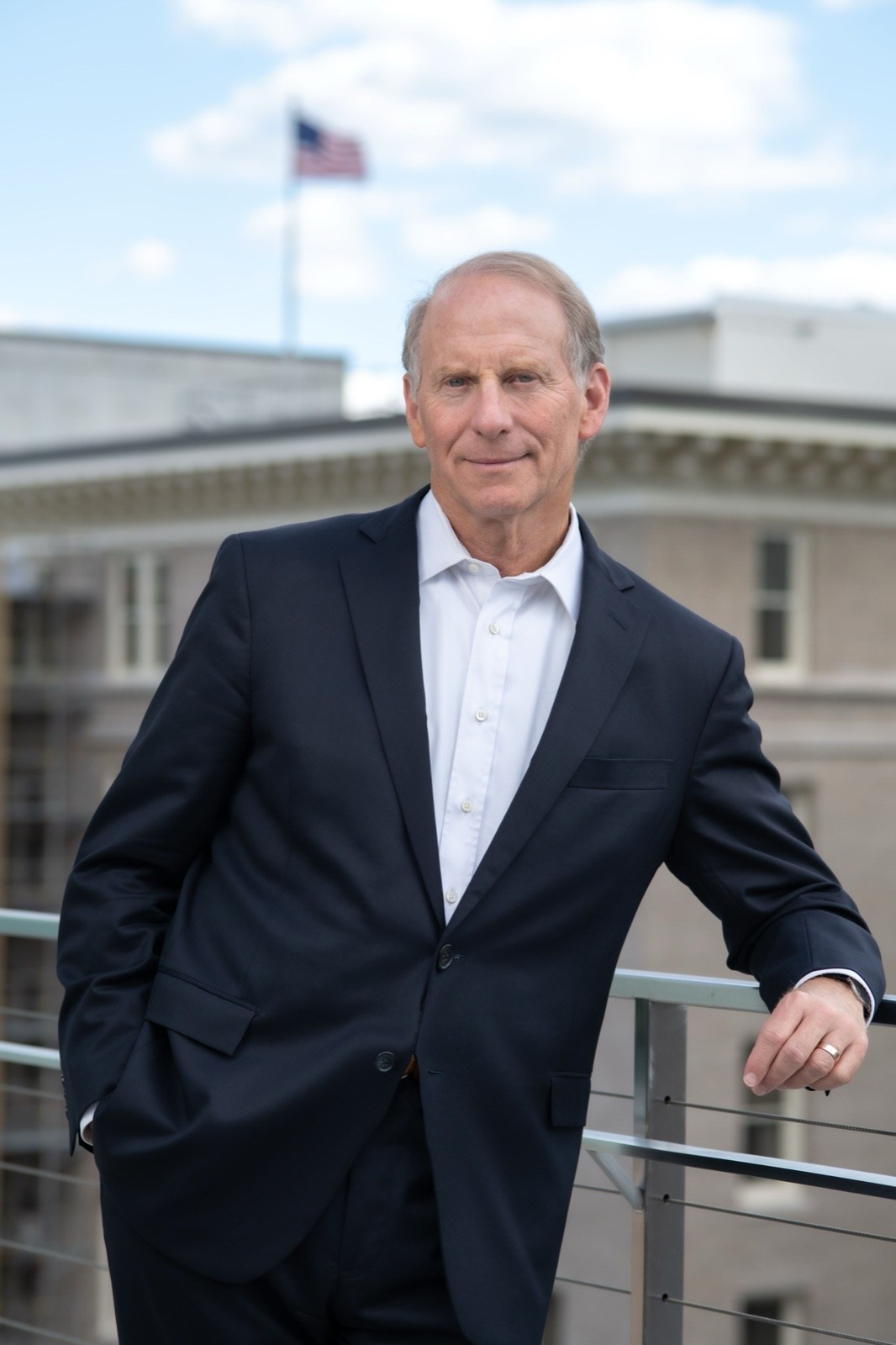
Richard Haass
Richard Haass is the head of the influential policy think tank Council on Foreign Relations and reflects on the past twenty years of observing global events and why the next decade may be even more dangerous.
Episode Summary
When Richard Haass became the head of the influential policy think tank, the Council on Foreign Relations, twenty years ago, the world was very different from where we are now. Dominated by a post-9/11 reality, the American-led international order was in little doubt. In 2003, China had only just joined the World Trade Organization and had yet to become the rising power and economic behemoth it is today. The new Russian President Vladimir Putin declared that the European Union was Russia’s "natural, most important partner". War fatigue was far on the distant horizon, even if opposition to what was to become the ‘forever wars’ was there from the start. Richard Haass sits down with One Decision to reflect on the past 20 years of observing global events and why the next decade may be even more dangerous.
Listen & Subscribe
- Watch on YouTube
- Listen on Apple Podcasts
- Listen on Spotify
Transcript
INTRODUCTION
Mcfarlane: You're listening to One Decision, the show that looks at how choices made by those in power or influence can shape all our lives. I'm your host, Julia McFarlane. Someone who has had a front row seat to some of those very decisions and turning points in our modern history is Richard Haass. An assistant to President George H. W. Bush, who then went on to work closely with Colin Powell in the second Bush administration, Haass, who was and remains opposed to the decision to go to war in Iraq, left politics behind, but not his fascination with how it shapes world events. Now in 2023, we arrive at a time where America's self appointed and so far mostly accepted status as global policeman appears to hang in the balance of its own bitter divisions over what its role in the world should be. This reflection, this reassessment could hardly come at a more critical time as global threats requiring global cooperation and leadership posing growing threats to all of us. As the Bolsheviks apparently said, there are decades where nothing happens and then weeks where decades happen. What does Richard Haass fear in this coming tumultuous decade? I wanna start off obviously, we're gonna talk a lot about the Russia Ukraine war and about growing competition with China. But I wanted to start off following up on an article you wrote recently for Foreign Affairs on how you believe we're entering a dangerous decade. I'll quote from your piece. You said heightened geopolitical competition makes it even more difficult to produce the cooperation demanded by new global problems, and the deteriorating international environment further fuels geopolitical tensions, all at a time that the United States is weakened and distracted. Now, something that my co host, Richard Dearlove, has mentioned a lot on this podcast has been the decline of Pax Americana, that post 1945 period largely of peace under the global dominance of the United States. That's not to say there haven't been wars. Of course, there have been plenty of wars in the last eighty years, but there have been far fewer than at any other point in our recorded history. And many analysts have been saying for a few years now, ever since the tail end of the Obama administration really, that Pax Americana is coming to an end. Some equating it with the decline of the West and others with an emergence of rising powers to challenge American dominance. What do you believe? Are we entering a new era where peace is not going to be the status quo that we in the West have enjoyed since the end of the great wars in the last century? I mean, I heard you on the CFR podcast recently reminding listeners that order is not the natural state of things.
INTERVIEW
Haass: Well, if I may quote myself, order is not the natural state of things. Order tends to come about and be maintained for several reasons. Things like balances of power, deterrence. Over the last seventy five, eighty years, it had more than a little bit to do with the leadership and role of the United States. All things being equal, you'd be hard pressed to make the case that the next seventy five or eighty years going forward will be as stable as the last seventy five or eighty. It's not, I would say, it's not at all likely. Would say we're in for a time of much greater turbulence. And there's three issues. One is the revival of great power politics. And we've seen it obviously with a vengeance in Europe. We could see it in other parts of the world. And the corollary to that is there's a much wider distribution of capacity than there's ever been before. Large powers, medium powers, non state actors, there's many more hands have their hands on power. Secondly, it's the global issues and the rather large gap between these challenges like climate or infectious disease or what have you, and global arrangements meant to deal with them. The gap is large and in many cases getting larger. And then thirdly, as you alluded to, the problems here inside the United States. And there are legitimate questions about our willingness and our ability to play the sort of outsized role going forward that we've played for much of the post World War II era, and it has weakened over the last decade, give or take. It used to be that domestic developments here didn't make that much of a difference, that one could safely assume that even if there were to be a rotation of power, the outcomes would not be wildly different. Well, now we can't assume that anymore. The rotations of power could bring with them transformation of policy. So I would simply say that if you add up what's going on in the world and what's going on here, if you're not concerned, you're probably not paying close attention.
Mcfarlane: Right. I do want to ask you about American division at home because it is the subject of your latest book. But since you mentioned deterrence, I wanted to ask you further on that because you also wrote recently that nuclear proliferation is a growing concern of yours. I mean, the obvious example, Ukraine giving up its weapons at the end of the Cold War. It's been invaded twice since it's done that. Other countries are obviously going to be watching the US and the West being so cautious over what it does in Ukraine for fear of provoking Russia because of Russia's possession of nuclear weapons. It's an increasingly obvious security insurance that many countries might be considering for themselves right now.
Haass: Right? Well, I think there's lots of reasons that we could be entering what I would call a new nuclear age or era. One is the one, Julia, you just mentioned. The fact that the United States has acted with caution in Ukraine and the assistance we've extended has been what you might describe as indirect rather than direct. We haven't gotten involved ourselves. I expect that is not a lesson lost on China. We are seeing the ramping up of the Chinese nuclear capabilities. I expect in the hope that if there ever were to be a crisis involving Taiwan, the Chinese would hope that their nuclear arsenal, if it were much larger than it currently is, might give the United States pause. So I think that's one possible takeaway. Then even apart from that, you mentioned Ukraine giving up its nuclear weapons and getting invaded twice. Libya and Iraq are not advertisements for giving up nuclear weapons given what subsequently happened there to the leaderships. Now you've got also North Korea continuing to build up its nuclear arsenal and its delivery systems. And for the first time, you have a real debate in South Korea about whether it ought to have its own independent nuclear deterrent or whether it can count on what's widely known as extended deterrence on the American umbrella. And the fact that Mr. Trump, when he was president, was talking about withdrawing American troops from South Korea has fueled that concern in South Korea, that they face a growing threat from the North. China's not doing anything to help, and the United States may not be there to help. So they're rethinking their nuclear posture. Obviously, Iran has gotten very close to nuclear weapons capability. It's probably become what's known in the trade as a threshold nuclear state, very, very close to having many, if not all of the prerequisites in place and could probably have deployable nuclear weapons in a matter, say, of weeks. So you add all that up. And if Iran were to go down that path, who knows how several of its neighbors might respond, including Saudi Arabia or Turkey or Egypt or others. So yes, I think we're in an age where to some extent nonproliferation has been discredited, or at least questioned. And we've got a lot of dynamics and so much of nonproliferation policy over the decades is dependent upon confidence in security guarantees above all from the United States. And if that confidence were to erode, then I think we could quite possibly find ourselves in a new era of proliferation.
Mcfarlane: You've been president of the CFR for twenty years now. And in that time, we've seen US foreign policy shift from the post 9/11 era in recent years to a gradual returning of the or perhaps a new kind of Cold War era. There have been some very visible failures in US foreign policy that have had a lot of knock on events. And all of these have had an impact in America's standing overseas. There's Afghanistan, there's Iraq, there's Libya, all of those spring to mind. And it's clear that when you listen to the grievances of America's critics, these failures have in many people's eyes have undermined US influence and credibility, as well as in the eyes of non interventionists back at home. I mean, a staggering sum of money has been spent on many of these interventions and on US foreign aid and an attempt to grow soft power. There is of course the price of American lives that have been lost as well. I mean, would you say that all of these countries have been left worse off after American intervention or interference? And how damaging has this been to US influence overseas? And the danger that this has given how the US has been a stabilizing power for so many years?
Haass: Well, I think many countries are better off as a result of American intervention. Certainly Ukraine is. Ukraine would not exist as a sovereign entity were it not for American leadership and assistance. Iraq for all of its difficulties is arguably better off than it was under Saddam Hussein. That's not necessarily a justification of either the decision to undertake the Iraq war or how it was carried out. But I think objectively, you could make the case it's better off. Afghanistan in some ways has gone back to what it was. The new Taliban are pretty much the same as the old Taliban. What makes it so frustrating is I didn't think it was inevitable that we would end up where we are, but that's a different conversation. And most other places I think American intervention or involvement has been quite salutary. In the Balkans, I think it helped with NATO. Obviously our alliances and so forth. So, you know, what we did in Colombia or under Plan Colombia and building up the apparatus of the state. So again, we've made real mistakes. The 2003 Iraq war being first among them, the Vietnam War. So I'm not going to argue we haven't made significant errors in the course of our foreign policy. But more often than not, I actually am prepared to argue that what the United States has done has brought more benefits than costs.
Mcfarlane: It's interesting you say that. I want to ask how maybe perhaps US policy, not so much in military foreign interventions, but other areas of US policy has affected what you might describe as the loyalty of certain allies. And an obvious example is India's sustained grievances on things like American funding for Pakistan. That's something they talk about all the time. How that's transpired to Indians being less than reliable allies on certain things like UN votes. Just quickly Saudi Arabia is another example. They've got serious grievances with the US over things like the Iran deal. And we've seen the likely ramifications of that and things like the recent OPEC decisions last year that saw them actually siding with the Russians on things like oil production and things like that.
Haass: Where to begin? Look, there's things that, you know, the United States has done that have caused anger or whatever you want to describe it. There's other things that we've done like PEPFAR, the HIV AIDS drug program, which was fantastically effective and remains fantastically popular, particularly in Africa. Some of our errors are things we didn't do more of, for example, in making mRNA vaccines available widely around the world in the case of COVID-19. In terms of Saudi Arabia, sure there was unhappiness with the previous administration, with both the Obama administration and now the Biden administration over diplomacy with Iran. There was American unhappiness with them over human rights issues, the war in Yemen. So the United States and Saudi Arabia have drifted apart. Not beyond bridging, but we've drifted apart. There's not a lot of confidence that either has in the other. That's just a fact of life. Our interests, we're not allies. We're sometimes partners, we're sometimes not. It's simply a fact of life that this is a relationship that is not based upon common values. Let's be serious here. We're fundamentally different kinds of societies. The question is whether we have sufficient common interests. And we'll see. It's quite possible that there might be some common interest vis a vis Iran. The Iran deal is effectively dead because of Iranian military support for Russia, because of what Iran's done on the nuclear side, because of the protests. So that issue has essentially taken care of itself. So we'll see what happens going forward. But my guess is US Saudi relations because of Iran will probably be slightly closer going forward than they've been during the Obama and the Biden administration. What you said about India, I just don't see it. It's ironic. You mentioned that India is unhappy with what we give to Pakistan. Pakistan's even more unhappy with what we don't give to Pakistan. There's a serial frustration from Pakistan's point of view with American foreign policy. We're seen as insufficiently consistent and generous. I think the US India relationship has certain limits, not because of US aid to Pakistan so much, it's because of India's protectionism, India's strategic hedging, its desire to be somewhat non aligned. Yes, there's unhappiness with our historical support for Pakistan. But also if the United States walked away from Pakistan, I'm not sure India would love the consequences of that either. But I think the problems in the US India relationship are much fewer than they used to be. This is all things being equal, an improved relationship. But I just think there's also a relationship with structural limits above all, India's own strategic posture. So I don't think it's really because it's a zero sum between what we do with Pakistan. I think it's much more to do with how India sees itself and sees the world.
Mcfarlane: Going back to the US's allies, friendships, partnerships with countries that do not share American values or interests. For example, something that has always stuck in my mind is the huge amount of money that the US sends over to Egypt. Billions of dollars of military aid over the years, despite its military being continually accused of human rights violations. Although I should point out that I believe the Biden administration last year, they suspended last year's aid to Egypt pending them clearing up their act. That's quite a recent change. Ethiopia, Pakistan, Uganda and countries like that. And I named them because those three countries are among the 32 abstentions in the recent UN General Assembly vote calling for Russia to end the war in Ukraine.
Haass: Yeah. I understand what you're saying. Look, two things. One is there's always a tension in foreign policy between interests and values, and we don't have the luxury of simply carrying out a foreign policy predicated on values. We have interests with some of these countries, could be humanitarian interests, could be strategic interests against terrorism. What have you? So in the case of Egypt, Egypt is the cornerstone of regional peace with Israel. You also have to look at the alternatives. If we don't support Egypt, are you likely to get something better? Well, I think we learned from the Arab Spring, probably not. As imperfect as the current state of affairs is, one can imagine far more imperfect states of affairs. That's why, you know, foreign policy is hard. The choices tend to be imperfect. And also I was asked in another recent conversation, a version of what you just asked me. Well, if these countries who we are helping don't support our stances, say on Ukraine, should we cut off all the aid? And you have to ask yourself, would that leave you better off? I understand the temptation. We're frustrated. We're disappointed over how they vote or what have you. But again, we'd have to ask ourselves what other interests might be affected for the worse and will that either get them to do the things we want them to do on Ukraine? And if not, what have we gained then by penalizing them? It might just be better to have an imperfect limited relationship rather than no relationship.
Mcfarlane: You argued that honey is better than vinegar.
Haass: Versus sanctification? You've done way too much research here. This is a very unfair interview. You've read too many of the things I've written over the years. You should have warned me.
Mcfarlane: A lot of these countries are very happy to take American money but maintain that they cannot be bought. I mean, you said just now that there is a need to be practical with our expectations of how our allies behave and countries we have relationships with. So is it time then, for the US and the model of Western foreign policy via aid dispensations and things? Is it time for us to shift this expectation that aid does buy obedience, for want of a better word?
Haass: Well, I think you set up a straw man here to be perfect. I don't know anyone who thinks that aid buys obedience. It didn't during the height of the Cold War. It's unlikely to now. That's not the criteria. If anyone thinks aid is going to buy lasting obedience, they're in the wrong line of work. And not even loyalty. It may simply alleviate certain conditions. May get a certain government to do a certain thing on climate change, help them deal with refugees, help them deal with disease. And help them deal with terrorism, but on 26 other issues, they may go a different way. Most relationships now are not all or nothing. What you're describing, most of the countries getting aid are more often than not part of the quote unquote global South. And we're going to have more limited transactional relationships where we'll agree on some things, disagree on others, go our own ways on still other things. But I don't know anyone who sees aid as that powerful of a tool. Sorry.
Mcfarlane: Well, in that case, part of the reason why I set up a bit of a straw man question is does that then not make it difficult to argue for continuing the vast sums of money that America sends overseas to a lot of countries where that does not lead to a productive cooperative relationship? I mean, we're dealing with what appears to be a growing financial crisis. You've got lots of voices back home calling for less American dollars to be spent overseas. Does that not make it harder for a lot of USAID, which is really philanthropy rather than transactional, that does do good in the world, but doesn't really rebound into American interests?
Haass: Well, a couple of things. One is you'll probably hear it from both people on the right and people on the left. It's not new. So even during the Cold War, we heard a lot about ungrateful aid recipients. And people would say, we gave this country or this government this amount of aid and they voted against us in the UN, or they did this or that. That'll happen. And again, it goes back to what we were just discussing. With aid, you don't purchase loyalty or necessarily even an overall relationship. It's much more transactional. You may do some of these things, for example, to give a country aid so it has a stronger ability to meet its obligations under the international health regulations. Well, that's good for them, but it's also good for us if we want to limit the possibility of certain types of infectious disease outbreaks. Or again, we may disagree with them on a 100 different issues, but if they use the aid in ways say to fight terrorists, it still might be worth it. So it tends to be a popular issue. I expect, I've already seen one of the Republican candidates talk about aid. But if you add all of it up, it is negligible in terms of America's deficit and debt. There's always these polls where they ask Americans how much do we spend on foreign aid? People think it's this enormous percentage of the budget or our GDP. And the last I checked, development aid used to be about a half penny on the dollar. Most of the aid strategically goes to the Israels and the Egypts and a few countries like that. And the development aid gets scattered around the world. And again, a lot of it is not, if you will, quote unquote philanthropy, to use your word, a lot of it simply enlightened self interest. It promotes conditions that are good for us at the same time.
Mcfarlane: You mentioned the Global South. Something that I have been really, really interested in and was quite surprised really last year was that the US did not carry the Global South in terms of joining sanctions against Russia last year. Aside from Europe, there weren't really any countries supporting the US in the sanctions against Russia. Many countries belonging to the Global South are still really not wanting to get involved in anything to do with Russia and Ukraine, despite the fact that what Russia did by invading Ukraine was go against what has been one of the most sacrosanct rules of international law, which is you cannot change borders by force. Were you surprised by that last year when you saw all of those countries abstaining and not joining sanctions against Russia? Were you surprised that the US managed to get so many European allies such as Switzerland and Germany on board? And what can the US do to reach out to those parts of the world who don't feel the need to respond when America stood up and said Russia cannot be allowed to get away with this?
Haass: A couple of questions in there. I was positively, I don't know if the word surprised, but pleased, slightly surprised at how well we did in forging a common approach in Europe. And I think that I expect Mr. Putin was also surprised, but probably not as pleased as I am by that. So I think that's all good news. In the rest of the world, no, I had very modest expectations. One of the good things about being a pessimist is you keep your expectations low. And then when imperfect things happen, you're not wildly disappointed because you never expected much better than that in the first place. A lot of the world I didn't think was going to side with us because they weren't sure how the war would come out. Indeed, most of them thought Russia would do just fine. And they probably asked themselves, why should we alienate Russia or China? Since China sided with Russia from the beginning, why should we alienate them over something that's inevitable? So it didn't surprise me there. A lot of them were interested in access to energy or military equipment or both, didn't surprise me there. I also think the Biden administration did itself no favors by framing the contest as one between democracies and authoritarian systems. A lot of countries in the Global South, whatever else they are, are not democracies. So I think we would have been wiser to have kept the focus on what you were talking about, which was the inadmissibility or unacceptability of acquiring territory through the use of force rather than making this somehow a matter of democracies versus non democracies. So I think we framed it wrong and that made it difficult, foreign policy effort even more difficult. But I think even if we had done it better or done it right, it still would have been difficult to line up much of the world.
Mcfarlane: Do you still have faith in the United Nations as a vehicle for your work?
Haass: I want to disagree with your question. To say that I still have faith suggests I have faith. I do not have faith in the United Nations. Sorry. I don't particularly take the United Nations seriously, which is just to be clear, I take other forms of multilateralism seriously. But there's no person listening to this who would design this UN Security Council if he or she were starting from scratch. It bears almost no relationship to contemporary reality. And then in situations like Ukraine, how can the United Nations be valuable if one of the protagonists has the veto and if the closest partner of that protagonist also has a veto? So no, I don't take the UN seriously either as a venue. It's certainly not a serious venue for action except in very, very special circumstances. And it's not a necessary venue for diplomacy. We have other venues for that. So no, the UN is not my favorite institution.
Mcfarlane: And why is that? Is that because Russia has a seat at the security council? Or you mentioned the veto system, which is problematic in itself. But I mean, what's the main reason?
Haass: Oh, it's a 100 different reasons. It's a long conversation. I mean, a number of reasons. One is the General Assembly bears no relationship to the distribution or configuration of power in the world. On the Security Council, you have five countries with permanent vetoes. Inconceivable to me that we would choose those five countries today if we were starting from scratch, that you have Britain and France, but you don't have India, or Germany or Japan. Just makes absolutely no sense whatsoever. There's the veto. There's the hypocrisy of all the human rights organizations. Now I don't have a lot of time for the UN. Again, I'm all in favor of multilateralism, but effective multilateralism. The UN is basically a manifestation of ineffective multilateralism.
Mcfarlane: Would a current United Kingdom not make the crop of members of a Richard Haass designed Security Council post Brexit? Are they now a speck in the field of diplomacy on the international stage?
Haass: Oh dear. See, Julia, you put me in a very awkward position because the last time I made this argument, I received a phone call from Her Majesty's ambassador. And she was less than happy with me. And my reaction was, I guess I just lost any chance of a knighthood. So I can't go down. But no, I mean quite honestly, I would probably though Brexit is complicated. I would have thought to modernize it as a European seat made more sense. And I would have probably put Japan on the Security Council, probably India. I would have a modernized Security Council. I'm not sure I'd have an independent Britain or France, but that will just get me now in trouble with your listeners and I'll pay a price for that comment.
Mcfarlane: That wasn't very fair. Don't worry. We'll edit it out of the final conversation. I'm kidding. Well, that's interesting. So how about NATO then? How have the last twelve months sort of affected how you feel about NATO?
Haass: Remember about a year or two ago, President Macron described NATO as brain dead? Doesn't look so brain dead now. NATO looks pretty good. Indeed, NATO is one of the big positive surprises and winners of the war. It's been revitalized. With the end of the Cold War, NATO was an organization looking for a mission. Well, NATO's found its mission and its mission is the same mission it had during the Cold War. It's dealing with what was then Soviet, now it's Russian power. Plus I thought President Biden had a really good line in his speech the other day, I think it was Warsaw, where he said Putin was hoping for the Finlandization of NATO and instead he got the NATOization of Finland. So NATO's a big gainer in this war. I think it reflects the fact that when you move from Trump to Biden, you move from America first to alliance first. And we conduct our policy in Europe very much with and through allies just as we do in Asia or the so called Indo Pacific with and through allies and partners, principally Japan, South Korea, others, Australia. So no, I think it's good that NATO exists and I would think one way or another, there's going to be security commitments or guarantees extended either from NATO or from a subset of NATO countries to Ukraine. So NATO, I think, for the foreseeable future will be instrumental to European security.
Mcfarlane: The British foreign minister James Cleverly at the UN in late February, he said in a speech, Putin cannot and must not win in Ukraine because what's at stake on the battlefield is the international order itself. I don't know if you heard his full speech, but I wanted to ask just that sentence alone, is that hyperbole? And I mean, what is the international order exactly? Is it another way of expressing Western hegemony?
Haass: I mean, there are plenty of countries who are entirely ambivalent about preserving this idea of the international order. And you mentioned it before. To the extent there's any norm or rule about how international relations ought to be conducted, the most basic and the most widely respected or embraced is the idea that territory ought not to be acquired through force. So that's not sufficient for order, but it's impossible to imagine order without that. So I do think that's a lot at stake. I think what the foreign secretary's comments though don't answer is exactly what do we mean by winning. Does winning require that Ukraine go back to the 1991 lines? Are there other possible definitions of winning and so forth? And that's probably a conversation for another day in another format. And I think we've already done a pretty good job of buttressing that basic norm of international order, but we have to make sure that doesn't change. We have to essentially make good on what President Biden was trying to signal by his trip to Ukraine the other day, which is that time does not work for Mr. Putin. That time is not on his side. That even though he's had a bad year, that year two or year three might not be better for him. We want to make sure that Putin reluctantly concludes at some point that time is not his friend. And that'll be the day that diplomacy has a chance of working.
AMERICAN DIVISION AT HOME
Mcfarlane: We spoke to Robert Gates last year. And when we asked him what his number one security threat for the United States was, whether it was Russia or China or AI or climate change or whatever, he said the number one security threat he thought was the square mile between the Capitol and the White House. This idea that US instability is such a severe threat to global security and stability. I mean, do you believe that really is the case more so than climate change or AI or disinformation? What about Russia, China and other entities that believe that they should be the superpower not the United States?
Haass: Mr. Gates, full disclosure, is a close friend and is a wise man. And he and I agree a 100% on this. Indeed, the first paragraph of my new book begins with this anecdote, involving Bob, but I often go out to speak about the world and I'm always asked what keeps you up at night? Is it climate change or Russia or China, or what have you? And I always say, yeah, I worry about all those, but what I really worry about most is us. And either we will have the unity and ability to get things done so we have a decent chance to deal with those external challenges or we won't. So I actually think the biggest national security question mark over the United States is the United States. And it's whether our political system can operate, whether we can avoid politically inspired violence on a significant scale. And the fact that I have to ask those questions is in and of itself somewhat startling, certainly worrisome, but that's where we are. That's why here I am. I'm a kind of foreign policy guy. I've been president of the Council on Foreign Relations for twenty years. I spent my entire career working on foreign policy issues in the US government or think tanks in London or the United States. But here I am writing about American citizenship and American democracy. So yes, I think this has emerged as the core national security question facing the United States.
Mcfarlane: I think the moment where US instability was really on full display was obviously the January 6th riots at the Capitol. What was going through your mind when you saw that? And another recent guest to One Decision, Secretary Pompeo, he argued that January 6 was an example of America having a peaceful transition of power because in the end, the election was certified despite the attack on the Capitol. I mean, what's it?
Haass: Oh, please. He knows better than that. What's frightening about January 6, both is what happened and what almost happened. What happened was awful. And then it was way too close for comfort. If Vice President Pence had behaved differently, if a couple of the secretaries of state around the country had acted differently, it was a very close run thing. So no one should be sanguine about what happened. So yes, in the end it turned out all right. The sedition didn't succeed. The election was certified. And subsequently a lot of those involved have faced legal consequences. But no one should be sanguine and say, oh, we don't have to worry. The system worked out just fine. It was a close run thing. And we'll see what happens the next time there's a disputed election or a major candidate who rejects the norms of American politics and charges voter fraud when there wasn't, and refuses to go along with the electoral process. So we're not out of the woods. And I take it all as a signal that we ought to look hard at how this could have happened because January 6 was as much a consequence of other problems and that we ought to address the root causes. And again, that's why I wrote a book, The Bill of Obligations, where I talk about things like teaching civics in our schools, promoting national service, giving young people and others the ability to deal with this flood of misinformation. We have got to strengthen the fabric of democracy. We've got to strengthen the capacity of citizens to sustain a democracy. That to me is the lesson of the last few years.
Mcfarlane: And what do you think it means that America's democracy was so closely imperiled on that day and how that was seen overseas? And at the start of this conversation, we talked about how so many countries around the world are not democracies, are not countries that share American values. Do you think the US has failed to sell democracy to the world? And one final sort of angle on this is, is democracy even on its way out? Because post COVID we saw so many governments really cracking down on civil liberties in the name of national security and to impose sweeping restrictions on everyday civil liberties. I mean, we've had the British government implementing legislation that curtails a lot of our right to protest. We are seeing in Israel right now the Netanyahu government trying to crack down and curb the power of the courts. I mean, what are your thoughts on all of that?
Haass: Well, this is an era of democratic backsliding, to use the term of art. You mentioned Israel, the threat to the judiciary. In Mexico, we're seeing a threat to the entity that oversees the electoral process. In India, we're seeing the emergence of an illiberal democracy there, challenging the media. In the United States, we've seen many signs of it. We've talked about it. What's interesting in Brazil, in large part because of the judiciary, the system seems to have held. But the lesson I take from this around the world is this is a tough time for democracy. If one looks at the ratings of democracy in places like Freedom House, the facts support that. The world is less democratic, less open, less free today than it was say, twenty odd years ago. And I think there's lots of reasons why these have been tough economic times for some people, then that's fuel for populists. Younger people in particular look at the government and they say, well, in the last few years, it hasn't done anything for me. It's not exactly a historic perspective, but that's the perspective that certain people bring to it. Again, we don't teach these issues terribly well. I think the media ecosystem has made it far more difficult to conduct a democracy. So it's a long list of explanations. So yeah, democracy is under enormous pressure in the United States and elsewhere. And you were asking me before about aid. We can have all the aid dollars in the world, but the most effective tool we have for promoting democracy is the example of American democracy. And if American democracy is seen to be appealing, if it's seen to deliver higher living standards, freedoms to the American people, then the rest of the world will say, hey, that looks pretty good. Why don't we get some of that? And if American democracy is seen as failing to meet its domestic challenges, whether they're fentanyl or crime, or a border that's out of control, or there's riots, people will look at American democracy and say, we want no part of that. I'll be honest with you. I hate it when I see Chinese television showing scenes from things like January 6 and using that as a rationale or justification for China being repressive, because it gives the authorities there a chance to equate democracy with anarchy. So we've got to show for ourselves that democracy delivers. And if we want democracy to have a chance elsewhere, we've got to show that democracy delivers here. And in recent years, we've come up short.
Mcfarlane: That's it for this week's episode of One Decision. We drop new episodes every Thursday. Like and subscribe so you never miss an episode. Drop us a line. Tell us your thoughts. What decisions have impacted you and where you live? You can write to us. Our email is 1decision@1decisionpodcast.com. From me and the team, thank you for listening, and see you next time.