Episode Info
- Season20
- Episode2
Hosted by Christina Ruffini and Sir Richard Dearlove
Guest
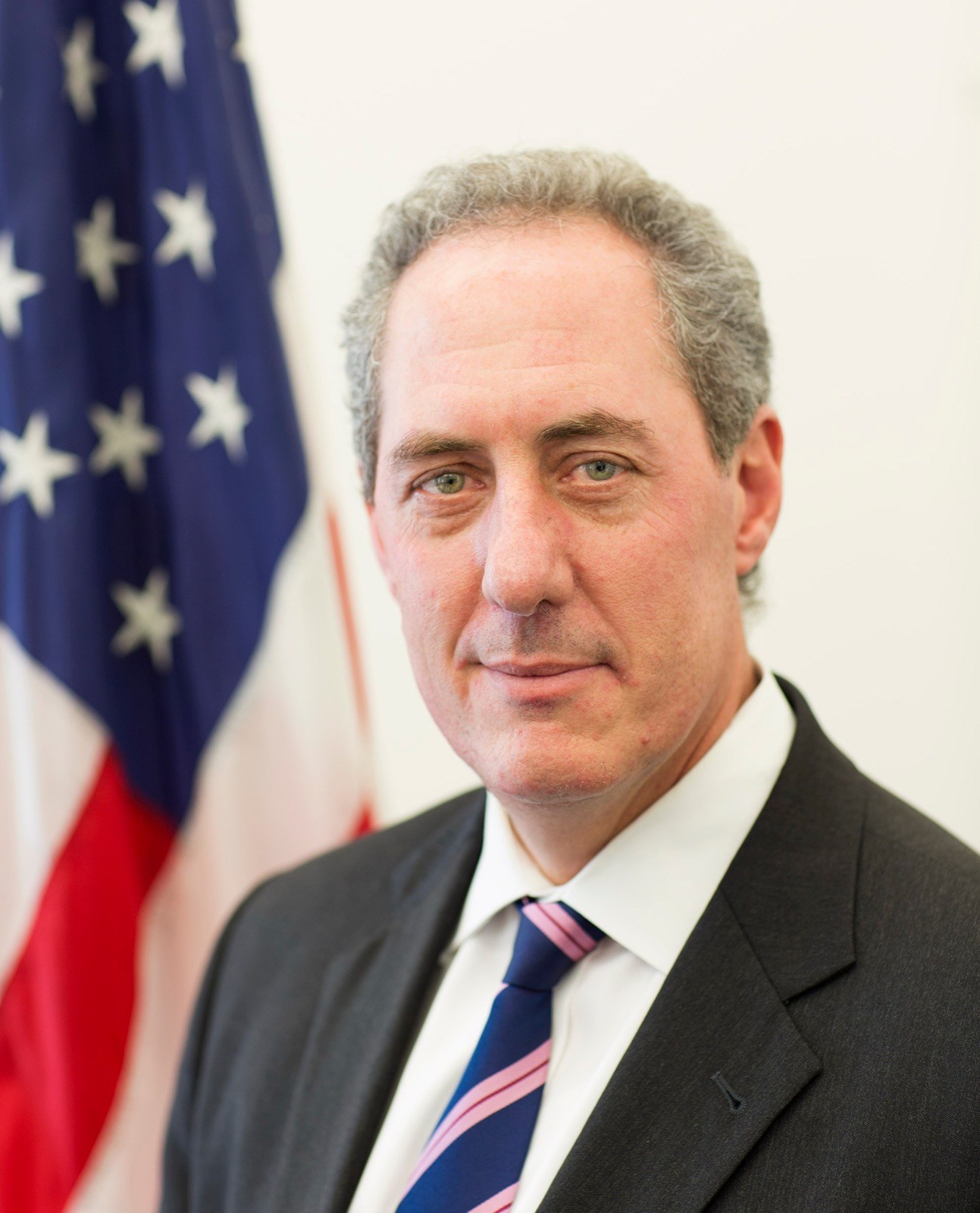
Ambassador Michael Froman
Ambassador Michael Froman is the President of the Council on Foreign Relations and a key player in the Trans-Pacific Partnership negotiations who served as U.S. Trade Representative under President Obama.
Episode Summary
The new President of the Council on Foreign Relations, Ambassador Michael Froman, joins One Decision to talk about the China challenge as President Joe Biden prepares to meet with Chinese President Xi Jinping later this month in California. Froman was a key player in the Trans-Pacific Partnership negotiations while serving as U.S. Trade Representative under President Obama—a massive trade deal which Donald Trump pulled the U.S. out of in 2017— something that Froman says will go down as one of the most "significant strategic blunders in American history." One Decision's resident spymaster Sir Richard Dealove shares his thoughts on the latest news on the Israel-Hamas war.
Listen & Subscribe
- Watch on YouTube
- Listen on Apple Podcasts
- Listen on Spotify
Transcript
COLD OPEN
Froman: Look. I think the decision to pull out of TPP will be seen historically as one of the most significant strategic blunders in American history.
INTRODUCTION
Mcfarlane: You're listening to One Decision, the podcast that looks at the choices made that shape our world. I'm your host, Julia McFarlane.
Dearlove: And I'm Sir Richard Dearlove,
Mcfarlane: the former chief of MI6, the British Secret Intelligence Service. Together, Sir Richard and I talk to the top decision makers and influencers who shape world events to try and understand what it is that drives the defining choices and decisions that have global impact and affect us all. Now, for the last few weeks, we've paid close attention to the crisis in the Middle East and the latest escalation between Israel and Hamas in Gaza. It's dominated headlines and global attention this last month and rightly so. But this week for our main discussion, we're going to be checking back in on the various diplomatic meetings and summits coming up between top level US officials and their Chinese counterparts. They've been ticking along the last few weeks trying to patch things up after relations really deteriorated earlier this year after Chinese spy balloons were spotted over US territory. So we have as our guest this week, the new president of the Council on Foreign Relations, Michael Froman. He's gonna talk to us about all things US, China, and national security. But before we get into that, I did want to bring up with you, Sir Richard, just a few news updates on Israel and Gaza since our last podcast. This is obviously going to remain the top foreign policy issue on the entrees of President Biden, Arab leaders in the region, but also here in the UK, it's still dominating the news agenda. And I think partly because it's such a divisive topic in our national conversation. And just this week, we've had politicians in both the two main parties being suspended and even sacked with some of their comments about the conflict. We've seen also in the last few days, Israeli prime minister Netanyahu has dismissed international pressure and calls for a ceasefire, saying that would essentially amount to surrender to Hamas. Richard, Netanyahu's also been in some hot water domestically. He was forced to delete some tweets claiming that his intelligence chiefs had failed to warn him about an impending attack. He got slammed for his tweets, even by other members of his war cabinet, and rather embarrassingly, he had to delete the posts and issue what I think for Netanyahu is quite a rare apology for what he said. And he added that he had total confidence in the security services. I mean, how damaging do you think is the split between the military, the security services, and the politicians in Israel in the middle of this war?
Dearlove: Well, I'm not sure that the split is institutionally serious. I think what is problematic particularly for Netanyahu is the blame that a lot of prominent Israelis place on him because of the political background that we've all read about widely in Israel that preceded the crisis. So I think it's more a reflection of Netanyahu's concerns about his own political future. But obviously, at a time of crisis, what one would expect from Israel in particular is unity amongst the politicians, the IDF, the Israeli Defense Forces, their intelligence and security community. And I think probably that sort of background explains why Netanyahu found himself in hot water. I think he's worrying about his own political future and with good reason. I mean, some of my interlocutors are telling me he's dead politically once this military engagement is finished. Or maybe it won't be finished cleanly, but once that's no longer the sort of primary issue that's being talked about and concerned within the Israeli government, you know, he's got a very powerless future.
Mcfarlane: I mean, that's something a lot of people have been saying, but I mean, this is Netanyahu we're talking about. He's been prematurely written off so many times. He is the great survivor. I mean, do you agree with those assessments? Everyone's saying, oh, he's finished after this, so he's a dead man walking. But do you think there's any chance he'll be able to cling on somehow? Personally, I doubt it.
Dearlove: I mean, I might say only cats have seven lives. What I mean by that even, their lives are finite. I can't really see Netanyahu escaping from this one. I think he's in a very, very vulnerable political position. And, I mean, before this crisis started, I know from one or two of my old friends and interlocutors on the intelligence side that they are appalled by the whole business of his attack on the judiciary. So, you know, the foundations of his political situation were pretty weak before this started. I think they've largely been removed now. So, you know, he's without foundation in my view,
Mcfarlane: without political depth. But let's see how it plays out. There's also been some modest successes with regards to humanitarian aid making it into Gaza amid the Israeli airstrikes on the Gaza Strip. The border with Egypt, the Rafah border crossing that opened this week for the first time in this latest round of war. There were some dual nationals and injured Palestinians who crossed the border into Egypt and a slight increase in the number of trucks going in, although a fraction of of what is needed, some of those trucks now being allowed into Gaza, is something that's taken weeks and weeks of pressure of, I think, a lot of American legwork persuading the Israelis to let that in. Richard, the pictures coming out of the bombardment in Gaza, it's incredibly distressing and disturbing, and it sparked a massive surge in reported antisemitic and also Islamophobic incidents here in the UK. I expect we're seeing also an uptick in the US and other Western countries. And so it's quite unsurprising really that we also saw this week Christopher Wray, the head of the FBI, saying that the conflict and in particular the Hamas attack on Israel on October 7 had raised the threat of a terror attack against Americans in the US to a whole other level not seen since ISIS launched its so called caliphate nearly ten years ago.
Dearlove: Yeah. Well, I think what's happened, if you took a general analysis of the terrorist threat, the capability of ISIS has been diminished. And a number of the more recent attacks have been, I think, what one would more describe as lone wolves, radicals who are inspired to do extreme things, but they're not, as it were, at the base or involved in an organized or fundamental conspiracy, which, let's say, precedes a big terrorist attack when there's a lot of organization and messaging. I imagine that, you know, Wray has made the statement on the basis of evidence that the US intelligence community has picked up, probably quite a lot of it from intercept, you know, the sort of noise that will be circulating on extremist websites or amongst groups. And I think probably what he's talking about is the rising threat of conspiracy attacks, i.e. organized more serious attacks on US interests, whether that's in the Middle East or more broadly, globally. And, you know, there's no question that Hamas probably has some of the capability to carry that out. So I guess I would agree with him. I think there is a rising threat. I think there's a rising threat of lone wolf attacks too because that, you know, one's seen one or two incidents already because there will be individuals who are inspired or appalled by these events. I mean, I think I said on the last podcast that there are no good options. For Israel, in a way, they've walked into a trap. The trap is that the media was set against them before their sort of counter offensive against Hamas even started. And you can now see that unfolding in the media and the sort of massive criticism that they're getting, particularly in areas which are, well, the Middle East in particular, and then, you know, the developing South. I mean, all these sorts of areas where there's strong sympathy for the Palestinian cause. And, I mean, even in the UK, I must say I'm quite shocked by the size of the demonstrations here. And I was talking to someone last night who said that that is even evident in bits of New York City where there is a significant immigration.
Mcfarlane: Yeah. I mean, I would just push back on it because I mean, I think personally, I do have a lot of faith in my colleagues in the media. And I wouldn't say that it's the media dead set against Israel, but I think the nature of these punitive airstrikes on such an impoverished place where people are not free to escape, they can't leave by the sea, they can't leave by land borders. And the scale of the destruction is really quite incredible. I mean, it's comparable to the Russian bombardment in Homs and Aleppo. And so I think it's more the idea that the Israelis are carrying out this military operation and it's being broadcast in real time. And we have journalists in Gaza, even if we don't have Western journalists, but we have people who are professional journalists working there, who are recording what they're seeing. And it is the ugly face of war. And I think the international community does hold Israel to a higher standard of behavior. But I think that's because it is a Western ally. It's a recipient of billions of dollars of Western aid. And I sympathize with the Israelis taking umbrage at the standards it is being held to. But I think it is because it wants to be seen as an upstanding member of the international community. But you're right, it is a trap that Israel are walking into. How they have to respond to Hamas, but it is one that's difficult.
Dearlove: Yeah, I think, you know, the problem is profound. I mean, we seem to have got ourselves into a frame of mind in the twenty first century. A, that war is conducted according to, you know, a legal framework. And b, you know, many of these crises, warfare has become civilianized. What I mean by that is that the civilian population find themselves part of the front line and exploited to that extent. And, I mean, I had a fervently Jewish taxi driver today when I was traveling back from London, and it was very interesting talking to him. And okay, other people have made the parallel, but, you know, he was referring to the Allies bombing of Dresden towards the end of World War Two. I mean, I've certainly visited Dresden and seen the sort of evidence of the catastrophic raids that were mounted, the fire bombing of Dresden, you know, which were hugely costly to the civilian population. And this isn't unprecedented.
Mcfarlane: No. And I mean, obviously, Iraq is the other one, and it is tricky.
Dearlove: And there's no question that, you know, if you take this recent attack on the Jabalia refugee camp, it's quite clear that there was a Hamas installation presumably underneath it where there was an important command center with an important commander. Okay, the Israelis take it out. But of course in doing so, they suffer massively adverse, you know, international reaction because the collateral damage is so severe. It's tragic. It's terrible. And I think that this conflict is going to be very, very difficult for us all to watch and observe as it unfolds. And it probably isn't gonna go quickly because the military challenge that Israel faces in rubbing, let's say, out Hamas, they can't rub out the idea, but they can rub out the military capability.
Mcfarlane: It's going to be very, very painful and very costly of human lives on both sides. Well, let's turn now to our main discussion this week. As I said earlier, we are checking back in with that number one foreign policy challenge, which is the US China relationship, if relationship is not too strong a word. Richard, the situation in the Middle East is obviously perhaps a greater immediate emergency right now, but it is the China challenge that is the strategic long term priority. And we've had these recently, these high level meetings with Wang Yi, China's foreign minister, essentially over in Washington. He met with President Biden. He met with his counterpart, Tony Blinken. It was a three day trip where all sorts of things were discussed. And I think it essentially served as a blueprint for what we're expecting to be a Biden Xi meeting later this month, later in November, on the sidelines of this economic cooperation summit in California, which we believe that Xi will be attending. Now I thought it was a really, really interesting conversation with Michael Froman. Now he previously served in President Obama's cabinet. He was trade representative between 2013 and 2017. And he was central in the negotiations for the doomed Trans Pacific Partnership. Well, not doomed, but of course, President Trump pulled the US out of it. So at least for the US, it was a doomed partnership. Michael Froman said that that decision to withdraw the US is going to go down as one of the biggest blunders in US diplomatic history. What did you make of that, Richard? Yeah. That's quite surprising.
Dearlove: But and, of course, he is one of the original architects of the TPP. So he has a vested interest in its future. And I mean, we also talked about the benefits to the UK, of the UK joining that trading alliance. I think that the underlying interpretation I give to his comment is that if you can maintain a structured trading relationship with China, which as I said in the podcast is a mercantile society, you're much less likely to face a crisis with China at the strategic level because of that sort of interlocking of economies. So I think what he's arguing for is maintaining as far as possible in the face of a realistic and competitive relationship a closely linked economic interest. Okay, this is a challenge. It's very difficult, particularly when, you know, China abuses its membership of the WTO or when China is stealing your intellectual property or you feel that China is treating you unfairly in the relationship. But on the other hand, the fact of the matter is we have two intertwined economies, the US and the Chinese economy. And what he's saying is it's far better in a regulated trading agreement than it is left to, you know, a variable and difficult bilateral relationship. And to that extent, I think I agree with his interpretation.
Mcfarlane: Yeah. He was quite measured, though. One of the things I thought was most interesting was, he said, it doesn't really matter if or when China's economy outgrows the US economy because the scale of its own domestic challenges, which are largely to do with its population and productivity levels. It's not necessarily a race of the superpowers that's gonna result in some global confrontation, but something that might end up being rather underwhelming, a moment when it comes. It was a really, really interesting conversation, I thought. So let's get to that discussion now with our guest, Michael Froman, the new president of the Council on Foreign Relations.
INTERVIEW: MICHAEL FROMAN
Mcfarlane: Now in President Biden's State of the Union speech earlier this year, he laid out that the United States seeks competition, not conflict with China. It's pretty clear this involves a scenario where hot conflict or even cold conflict, a new Cold War for example, is a scenario that Biden and the United States wants to avoid. But what we haven't heard that much detail or clarity about is what a successful strategy looks like. We know what we don't want with China. What do we want to see? What does a relationship based on competition and not conflict look like? To what extent is there cooperation?
Froman: Well, first of all, I think as you laid out, the Biden administration has really established a framework, a three part framework for managing relations with China. One is to identify that set of issues where we should cooperate, where it's in our mutual interests. Those could be issues like climate change, issues like nonproliferation, areas where we've in the past had a great deal of common interest in working together. The second area are potential areas of conflict that need to be carefully managed. Taiwan, the South China Sea. And then the third bucket is that bucket of competition, technological competition, economic competition. And there too, are there some guardrails we can put on it to ensure that the competition does not, again, escalate into conflict? That's the framework the Biden administration has laid out. I think the challenge has been that up to now China hasn't really accepted that framework. They have their own three categories of things that they would like to pursue. I think the question for the meeting upcoming in San Francisco is will the leaders be able to come out and give some clarity as to are there areas where we can cooperate? Are we willing to take some actions to manage potential conflicts?
Dearlove: And can we put some guardrails around competition? I think that's a very clear analysis of what's been stated so far. But what I think concerns me at the moment is the sort of catalytic effect for worsening relations of issues like Ukraine, and now Gaza. And the sort of thinking that I've certainly encountered, for example, today, and I was talking to an MP in the UK, he used to be until very recently head of the Defense and Security Committee, and he's a former junior minister for foreign affairs. I mean, he was saying, isn't there a danger that, you know, China is pulling the United States into, as it were, a false position of confidence that the relationship can be managed when the preconditions in the international situation may be tempting China to become actually more aggressive rather than less aggressive.
Froman: And more aggressive in the context of Taiwan or with regard to those specifically.
Dearlove: Isn't this the moment for China to blockade Taiwan, so that you've got poly crisis around the world? And we all know that governments are not great at handling three crises at the same time. They've got two on their hands at the moment.
Froman: Look. I think there is potential for the fact that the US is very focused, both on the Middle East and on Russia, Ukraine, for some in China to draw that conclusion. But I also think there are some significant lessons for China to draw, particularly from the Russia Ukraine conflict and even from this Middle East conflict in terms of the commitment of the US to stand by allies, in the case of Ukraine, of a much smaller military to effectively stand up against an invading force. The concern that insurgencies are very hard to fight, and so one should think twice before at least some sort of invasion of Taiwan, which I don't think is what China really has in mind necessarily. So I do think there are multiple lessons to be drawn from this. And you're right that it's hard for any country to be actively involved in three military conflicts at the same time, whether it's directly or indirectly. But I think the case is far from clear as to whether China would draw from that comfort or confidence to escalate the tensions over Taiwan.
Mcfarlane: I think both of you have pulled on some really interesting threads in areas where the US and the Chinese have to talk to each other, that there is some kind of diplomatic symbiosis that is possible in a situation where it's not like the Cold War, where we do have intertwining economies, we do have a framework in which both sides are more or less equally invested in preserving. But essentially, I mean, I feel like you can just boil it down to very, very simple terms that the real key question is China obviously wants to replace the US as number one global superpower. The question is, how far is America willing to go to ensure that that does not happen? Is it even really that invested in preserving that? Will America fight to keep its place at the number one spot of global power? I mean, I'm reminded of the America First vision laid out by Donald Trump and his followers, which involved really a retreat from globalization and particularly of the global policeman role. Is that compatible with the scenario, Michael, of that space, of the global policeman role being vacated by the US, let's say if Donald Trump wins the next election or someone with a similar vision, that space is vacated, China steps into the void and yet somehow that doesn't all wind up leading to a direct confrontation between the two?
Froman: Well, first, I don't think it's obvious that China really wants to assume the role as the world's policeman or as a global superpower. China is very good and disciplined around pursuing its national interests narrowly defined. And even in areas where it has stepped into international diplomacy, for example, Iran and Saudi Arabia, it looks quite transparently that their main issue of concern was ensuring uninterrupted access to oil exports from that region and encouraging Iran to no longer attack Saudi oil infrastructure. That was the extent of their involvement. It wasn't about Iran's broader behavior in the region, its support for instability, etcetera. And so I think China would be reluctant, frankly, to step into the role that the US has traditionally played because it would distract it from its own domestic objectives at a time when its economic prospects are quite worrisome and where it has some serious demographic and other domestic social issues that could have political ramifications. So on one hand, I don't think China's waiting in the wings just to supplant the US as that global superpower. But the second part of your question is what about the US itself? Will the US want to continue to play that role going forward? And that's much less clear, as you say, because we have our own debate going on here in the United States between being internationally engaged, being not the world's policeman. I don't think anybody would rally to that particular description, but showing US leadership or showing focus internally and becoming more isolationist. And we have yet to see how that plays out in our politics. We clearly have elements of both strongly in our population. I think the most likely outcome is that the US continues to be very much engaged because despite noise around being isolated, the broad majority of both parties and of the American public supports Ukraine and supports giving aid to Ukraine and supports Israel and giving aid to Israel for its defense. And so my guess is that even after November 2024, that will remain US policy.
Mcfarlane: I was just gonna ask you to respond to that, Richard, because, you know, it's a year now since that landmark party congress last year where President Xi set out his sort of goals for the next few decades of where he wanted to bring China. And there was speculation that he was basically setting out to restore China's, in historical context, its position as, for want of a better phrase, number one global superpower. But do you think perhaps maybe it's more about China being in a position where it's no longer prevented from determining its own goals by the US? It gets into a position where perhaps it has the biggest economy or it's powerful enough to be able to realize its own nationalist goals without being held back by the US with regards to sanctions?
Dearlove: The view I take, I think, is, and I'd be interested to know whether Michael agrees with this, I mean, China has become much more cautious in its foreign policy over the last eighteen months. That's not to say it's, as it were, surrendered any of its principles or ambitions in relation to Taiwan. But if you actually look at the way it's conducted itself internationally, it's been much, much more careful. I think this is a byproduct, partly of the fact that the domestic position of China in relation to its economy has deteriorated quite seriously. And things like the poor demography of the country have really been emphasized. And I mean, if you look at the bottom line, China is a mercantile nation, it's a trading nation. And to prejudice its trading relationship, particularly with its primary economic partners like the United States and Australia, would be complete folly at the moment for Xi. And I think the reason that one's seen this growth of dialogue, particularly with the US through Blinken and the National Security Advisor and senior members of the State Department, and there've been quite a lot of contacts, if you look at them and list them, I think China is just behaving much more cautiously, with much more care and attention. And I think in a way, one should look at this as the lead up to a meeting between Xi and the President, which won't necessarily have a positive outcome, but it will avoid a lot of the negatives, which we've seen emphasized over the last year to eighteen months in the US China relationship. So I'm personally feeling a little more optimistic about the prospects. I don't know whether Michael agrees with that.
Froman: I do agree with that. And we just had Wang Yi here for the last few days, and there was very little of the wolf warrior evidence in his conversations. Now to Richard's point, he didn't give up on any of China's core interests, needless to say, but it was a much more businesslike, down to earth discussion about what concretely might get done in the context of a meeting to draw a line under the relationship to stabilize it, which I think they need, given what's going on domestically and we find desirable obviously as well. So I too have some cautious optimism, not for major deliverables coming out of the bilateral in San Francisco, but some modest steps, some good mood music, some messaging from the leaders to their own governments about how to take the relationship forward during what will be a very important year between Taiwan's election in January, US election in November. And so I think both sides have a strong interest in just creating stability.
Mcfarlane: I think that's really interesting. I think that it's sort of one step forward, two steps back, or maybe it's the other way around. We're anticipating President Xi turning up to this economic cooperation summit in the middle of the month. Yet the headlines are always full of the ratcheting up of restrictions and limits on things like semiconductor chips to China. What is the nature of the relationship between Washington and Beijing economically? Because obviously, as we've mentioned, these are two countries who are huge mutual trading partners. There's a lot at stake.
Froman: Well, I think this administration has been very clear from the start that we were going to take issues around economic competition and technological competition seriously. And that didn't mean we can't cooperate in other areas. It didn't mean that we wanted to keep China down as an economy. Indeed, China's growth is good for the global economy. But at the same time, being very clear and very consistent that there were going to be certain technologies and certain areas of the economy that were sensitive, and that those would be constrained, and trying to be very transparent about that. So I think that's what you've seen on our part. Now, China doesn't necessarily like that. They call that unfair competition. And I think there is now a dialogue going on for China seeking clarification of just how large that yard is going to be of prohibited exports and how high that fence is going to be around the yard. But I think they understand that the US no longer sees it as its obligation to share technology with China that China can then use in a military sense against it or in an intelligence sense, and will want to compete to maintain a lead in those technologies for as long as possible.
Dearlove: Julia, can I just add to what Michael's just said? Because there's a minor key model for this, which is Australia's relationship with China. Okay. It doesn't sort of cover technology, but it covers national security. And, you know, the Australians have been very tough on China on national security issues. But by far, you know, the Chinese Australian trading relationship in agricultural products and minerals in particular are vital to both economies. So I think that Australia has demonstrated that you can play tough with China, but keep the economic relationship fruitful and beneficial to both countries. And I applaud what the US has done and what the UK, rather late in the day, because we've been very slow in the UK to get our act together in taking a tough line with China on, you know, these strategic issues where we're assisting Chinese defense industry. Why on earth should we be doing that?
Mcfarlane: Michael, I wanted to ask you about the Chinese economy more broadly because obviously there is so much at stake when it comes to how we are all invested in the Chinese economic recovery. We all got into this huge panic when Evergrande defaulted on its debts. It's now declared bankruptcy and is restructuring its debts as of the summer. Now there's this new poster child for the economic crisis, which is the Country Garden developer, once China's biggest home builder. They have now defaulted on international bonds for the first time. It's looking like they're potentially going to be unable to raise enough money in order to pay the billions of dollars that it owes and is supposed to pay by, I think it's June 2024. It could be heading for a similar scenario as Evergrande. It could collapse. We all thought that Evergrande was the canary in the coal mine back when the alarm bells were first raised. Is Country Garden the real warning cry? I mean, how worried are you about the property market crisis in China and what may result if this huge developer does indeed collapse?
Froman: Well, look, I think the health and the future of the Chinese economy, it doesn't turn necessarily on one developer or another. But I think it is an indication of one of the many challenges that the Chinese economy is currently facing. And when you see it slowing down the way it has slowed down, China has traditionally dealt with a slowdown by promoting and subsidizing exports. That route really isn't available to it anymore because markets have become, in some ways, closed to Chinese exports, there's just less demand for Chinese product. Secondly, by investing in infrastructure, and there's only so many roads that you can build or so many fields that you can pave over. And then thirdly, very importantly, in property, in real estate. And we're seeing that that may no longer be available as a tool to the government in terms of stimulating the economy. So yes, there could be further defaults in the sector that could have implications. I have a fair degree of confidence in China's authorities to be able to deal with defaults of that sort because of the nature of their banking system and state control. And they've had other big debt problems in the past. Of course, this one affects people, and individuals who've invested their savings in property. A huge proportion of the Chinese population have done so.
Mcfarlane: Absolutely.
Froman: And a failure here, it can hurt what is already a damaged degree of confidence, investor confidence and consumer confidence. And to me, that's one of the biggest challenges China faces, which is once you've lost consumer confidence, they don't tend to want to spend money and they save more. And once you've lost investor confidence, it's very hard to attract it back. And China is sending schizophrenic messages about this. On one hand, they are on a charm offensive trying to send a message to foreign direct investors that China is open for business and they want investment to come into the country. On the other hand, they're implementing some of their new laws, their counter espionage law, some of their data laws, etcetera, in such a way as to do raids on foreign firms, detain CEOs and other business leaders. And you have a lot of CEOs outside of China saying, I won't go there. I'm not going to send my people there. And I'm not going to put another dollar in there. And that is not in China's interest. And of course, the way to really judge what's going on in an economy, I hate to say it, is where are the rich people in that economy putting their money? And if they're investing in their country and they have confidence in their country, that's one sign. If they're trying to get out of their country and take as much of their capital with them as they can, even with all these capital constraints, that's a pretty dangerous sign of a lack of confidence. And that's exactly what we're seeing. So China needs to really send some clear messages if it wants that capital to stay and to come back and further capital to be invested in China. And right now they're not doing so.
Mcfarlane: Michael, I wanted to ask, if you'll forgive me, about the TPP. I understand you were involved in the original plans and negotiations all the way back under President Obama. Of course, President Trump pulled the US out of the Trans Pacific Partnership when he was president. It ended up being something that both Democrats and Republicans turned away from. It's now sort of grown into this mega global trade deal called, unbearably, the CPTPP, the Comprehensive and Progressive Agreement. The UK, this summer, they have now signed the treaty to formally accede. Now it just has to be ratified in parliament and member countries also have to have their own legislative processes. Should the US have joined, was pulling out a big misstep by the Trump administration? And I note that even President Biden has said that he's not interested in joining the agreement anytime soon.
Froman: Look, I think the decision to pull out of TPP will be seen historically as one of the most significant strategic blunders in American history. And I think all you need to do is look now at just how important an arrangement like that could be in terms of balancing China in the region. The more China exerts its influence in the region, and as you alluded to, it wasn't that China has a tradition of being a global superpower, but it certainly has a tradition of being a regional superpower. The more it exerts that, the more the countries in the region want the US to be involved and engaged to give them choice, to give them hedging, and to be a balancer for China. And that's exactly what the TPP was intended to do. The politics have shifted quite significantly against free trade agreements, and I understand that, and I'm not holding my breath for the US to return to TPP anytime soon. And I think the Biden administration's pursuit of the Indo Pacific Economic Framework is a substitute mechanism. It's nothing like a free trade agreement, but it does help get some of our economic allies and partners in a room together to talk concretely about things that they can do to further integrate their economies.
Dearlove: I think it's worth adding, Julia, that the UK sees this as a pretty strategic move in terms of its global trading position now that we have left the EU as a member state. I think the press it gets in the UK, this trading alliance, is generally very favorable. And I think even if there's a change of government in the UK, I don't think there'll be a change of policy on this new association or market association for the UK.
Froman: I think it's quite a bold strategic move by the UK. It allowed them to get free trade with 11 other countries, some of which they already had some degree of free trade with, and to play a very significant role in a key region of the world.
Dearlove: And I think it gives us political heft in the region, which we have lost over the last, you know, through membership of the EU as well, which is interesting, I think.
Mcfarlane: Yes. Something we are in great need of, at this moment in time. Michael, we're running out of time. I just wanted to turn back to geopolitics and I wanted to ask you about the East China Sea, the disputes in the Pacific and also the growing anxiety that a lot of America's allies have voiced concerns about in recent years. Of course, the Philippines, there's been another sort of spat between the Philippines and China. We've seen a lot of Pacific nations signing security agreements with China. We're seeing growing anxiety about Chinese expansionism. How much anxiety do you have about that sphere of geopolitics? And what conversations have you had with key players among America's allies in the region? And what do they tell you about their concerns and whether the US is stepping up to give them the support that they're asking for?
Froman: There's a lot of concern about the rise of China's military, the heavy investment they've made into it, into ships, and of course, into their nuclear capabilities, as well. You know, back when, China's leaders said they wouldn't militarize the disputed islands. And, of course, they've been fully militarized. There's been quite aggressive behavior, both in the air and on the water. And I think that there's a great deal of concern that there could be an accident, that this could escalate. And it's one of the reasons why in that category of conflicts to be managed carefully, restoring military to military communications so that those kinds of accidents can be managed if and when they occur would be a very positive step forward. The fact that the US has redoubled its commitment, that you've got AUKUS, that you've got the Quad, that you've got stronger alliance relations with Japan and with South Korea and a trilateral cooperation between the United States, Japan, and South Korea, two countries in Asia that have had their share of difficulties cooperating with each other, that the US was able to bring that together. I think that's all been very positive for shaping the security environment in which China's military buildup is occurring. And to your point, of course, the Philippines being at the moment the tip of the spear in terms of where the conflict may be coming to a head, President Biden's statement about standing by our treaty ally, I think is an important message to Beijing and hopefully a deterring message. There's been a big focus on increasing deterrence in the region. Nobody wants a war between the United States and China in the Asia Pacific, whether it's over Taiwan or whether it's over the South China and East China Sea. I think it's really a question of ensuring that the deterrent is sufficiently robust that those kinds of actions aren't taken.
Dearlove: I think China currently is outbuilding, in terms of a blue water navy, all the other countries that we have mentioned put together, including the United States. I mean, its naval construction at the moment is sort of unparalleled historically. And this does leave me certainly feeling uncomfortable about what its medium to long term ambitions are. Okay, we're managing that relationship for the moment. But it clearly is anticipating the need, you know, to have an extremely powerful long distance naval capability, which one could view as a significant destabilizer internationally, if you look ahead, you know, five to ten years when this program is complete. And that worries me.
Froman: I share that concern. And, of course, they're beginning to build out some bases around the world, but I do take some comfort that nobody has the string of bases and very importantly, the string of alliances that the US has as a counterweight to that. That being said, I think to your point, it's something that really bears watching because it could be quite destabilizing.
Dearlove: Well, the UK certainly needs to up its shipbuilding, naval shipbuilding program. We're massively behind the curve, and that's one of the big changes we need to make in the UK.
Mcfarlane: What comes after Xi? The economist Derek Scissors has forecasted that China's economy will grow briskly in the 2020s, but slow down in the 2030s as it experiences the effects of an aging population, growing debt, and self imposed constraints on private sector innovation. He expects that the gap between the US and Chinese GDP, currently at $7,000,000,000,000, will narrow to $4,000,000,000,000 by 2030, but then begin to widen again by mid century. In other words, Beijing is neither on the cusp of peaking, nor is it on a road to hegemony. It will be an enduring but constrained competitor to the United States. You know, Xi is in his seventies now. He's not immortal. There will be, you know, China after Xi. What are your thoughts on that economist's assessment about China in the years to come?
Froman: Well, I think far too much attention is paid to that moment in time if and when China's economy on a nominal basis surpasses the US economy. I don't think it really matters whether China's economy is slightly larger than ours or slightly smaller than ours. It's a big economy. It's an important economy as is ours, and we're each gonna continue to compete and grow the best we can. I think to Derek's point, the challenges facing China, just take demographics and the aging population, but then the shrinking population. And I'm sure you've seen the reports that China is expected to shrink down from 1,300,000,000 or 1,400,000,000 now to something like 700,000,000 by the end of this century. While India continues to grow, Nigeria continues to grow, the US is more or less the same or maybe slightly larger in part because we tend still to have a more open immigration policy and a slightly better birth rate. But it's very hard to turn around China's one child policy and the other factors that are limiting their capacity to deal with their demographic challenges. And one then has to ask the question, if you've got a population that is cut in half and relative productivity only increases so much, how are you going to continue to make the gains and advances that you hope to gain? So they've got tremendous challenges, including the ones that Derek mentioned in that article. Whether or not they get slightly bigger than us or continue to fall short, I don't think really matters. And I think it's really more about what are their long term prospects, and they're gonna have some serious issues to deal with.
Mcfarlane: That's it for this week's episode of One Decision. We drop new episodes every Thursday. Like and subscribe so you never miss an episode. Drop us a line. Tell us your thoughts. What decisions have impacted you and where you live? You can write to us. Our email is 1decision@1decisionpodcast.com. From me and the team, thank you for listening, and see you next time.