Episode Info
- Season25
- Episode6
Hosted by Christina Ruffini and Sir Richard Dearlove
Guest
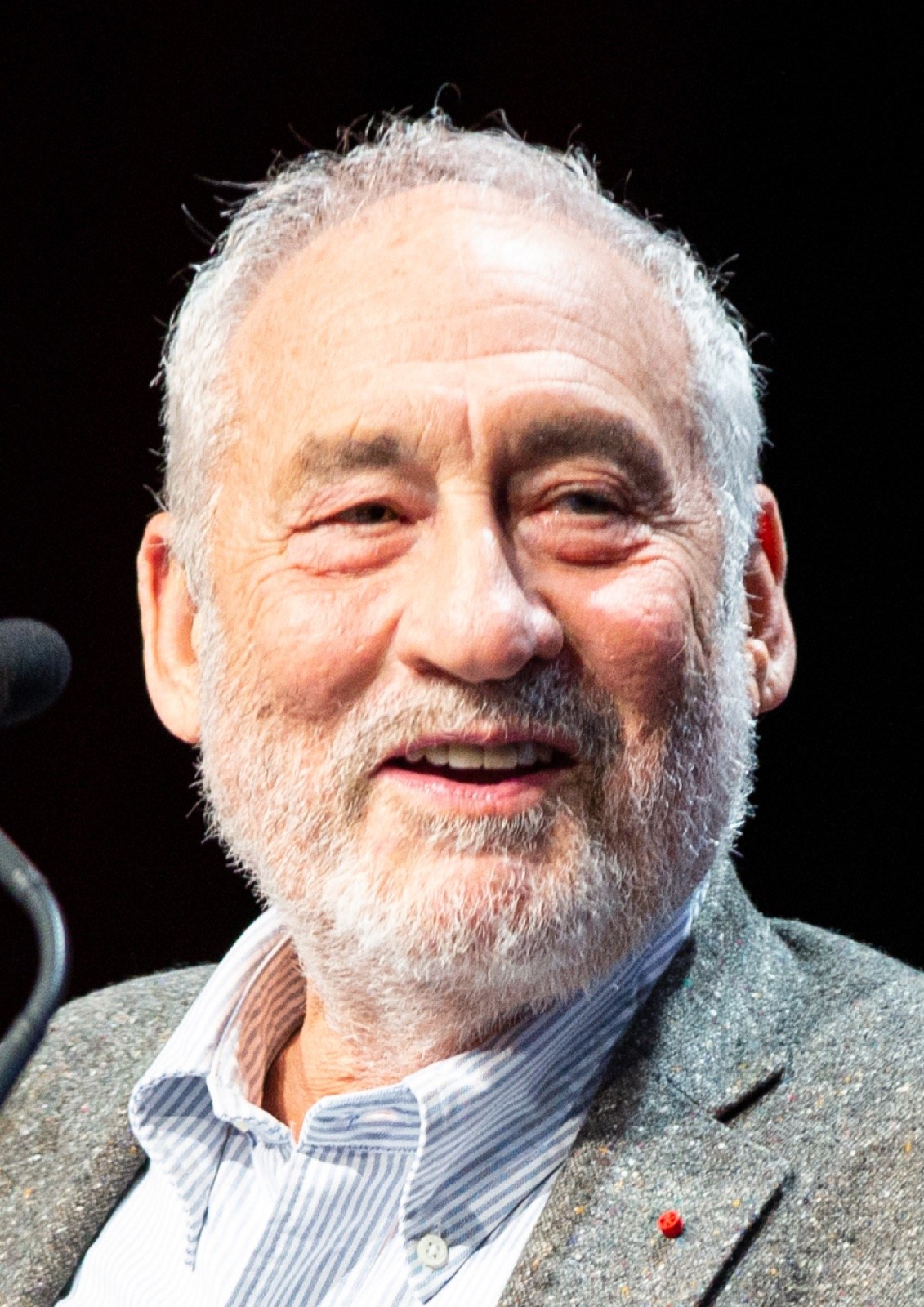
Joseph E. Stiglitz
Joseph E. Stiglitz is a Columbia University Professor and Nobel Laureate economist and author of The Road to Freedom: Economics and the Good Society who argues that authoritarian populism is on the rise due to governments doing too little.
Episode Summary
Columbia University Professor and Nobel Laureate Joseph E. Stiglitz is one of the world's best-known economists—and one of the most outspoken. He's locked horns with a fellow Nobel laureate, the neoliberal economist Milton Friedman, and openly criticizes globalization. He sits down with One Decision's resident spymaster, Sir Richard Dearlove, and guest host, BBC anchor Kasia Madera, to discuss his recently published book, The Road to Freedom: Economics and the Good Society. Stiglitz argues that authoritarian populism is on the rise today due to governments doing too little rather than too much. They also discuss the impact of Donald Trump's isolationism and why Liz Truss' plan to revive "trickle-down economics" failed.
Listen & Subscribe
- Watch on YouTube
- Listen on Apple Podcasts
- Listen on Spotify
Transcript
INTRODUCTION
Hazarika: You're listening to One Decision, the podcast that looks at the choices that shape our lives. I'm Ayesha Hazarika, a journalist and broadcaster,
Dearlove: and today, I'm your guest host. And I'm Richard Dearlove, former chief of British intelligence, otherwise known as MI6.
Hazarika: Each week, we explore some of the biggest choices and issues that have global impact. We hear from the key players and influencers making, informing, and shaping the decisions that affect us all. So Richard, I'm really looking forward to hearing some of our guests' thoughts on the many challenges that we're facing. Because not only is he one of the best known economists in the world, he's also one of the most outspoken. Professor Joseph Stiglitz was awarded the Nobel Prize for Economic Sciences in 2001, just a few years after resigning as chief economist at the World Bank. He advised the Clinton administration, locked horns with fellow Nobel laureate, the neoliberal economist Milton Friedman, and openly criticizes globalization. He teaches at Columbia University and has recently published his latest book, The Road to Freedom: Economics and the Good Society. Professor Stiglitz, thank you so much for joining us today. Now in your book, you talk about how your idea of freedom was really challenged during the COVID pandemic.
INTERVIEW
Stiglitz: Very much so. One of the things I emphasize in the book is that always there are going to be, or often there are trade offs. One person's freedom is another person's unfreedom, or as Isaiah Berlin, who was a great philosopher at Oxford, put it: freedom for the wolves has often meant death for the sheep. And the way this played out in COVID-19 was that many people said that a requirement to wear masks interfered with their freedom. But not wearing masks resulted in contagion, the spread of the disease, people being hospitalized, even dying and deprived others of their freedom. And that's an example where I think that most reasonable people in balancing their freedoms would say it's more important not to be hospitalized, not to die, than the slight inconvenience of having to wear a mask or social distancing or if you are healthy enough to be vaccinated.
Hazarika: You make it sound like a logical choice. So why was there such strength in feeling against getting vaccinated or even wearing a mask?
Stiglitz: Look, I think it's partly because people haven't seen freedom in this social context that I try to put it. Everybody thinks maybe selfishly they focus on their own freedom, not realizing that in a modern society, urban society, we are very interdependent. And therefore we have to think about balancing these freedoms. And it's the failure to think deeply about what freedom means and how you balance it that I think has led to such controversy. And I'm trying to call in this book for just a more open discussion of the nature of these trade offs and recognizing that there are some cases where a little coercion can actually be freeing for everybody, or almost everybody.
Hazarika: Now when you say a little coercion, you're talking about government involvement, and yet neoliberal societies strive to reduce state influence. Think of Ronald Reagan's famous quote about those nine most terrifying words in the English language: I'm from the government. I'm here to help. He says terrifying, yet you're saying thrilling.
Stiglitz: Yes. So an example that I have is like a stoplight. A stoplight is coercion, I can't go through without facing a fine. We have to take turns, but if you live in New York or London you know that in the absence of those stoplights nobody can move. You have gridlock. And that's a good example, the way I frame the notion of freedom, is what you can do. And if you can't move, you don't have the freedom. And so a little bit of coercion, the stoplight, expands all of our ability to move, to do.
Dearlove: Professor, isn't the problem where and how you draw the lines? And, you know, who basically is gonna make those decisions. I mean, I had the unique experience of living behind the Iron Curtain for five years. And I'm not suggesting that you're going, you know, to those extremes. But once you start this, as it were, necessity to regulate, control, there is a temptation on the part of government not to be restrained, to go too far. And I think it's striking this balance. And I think we all agree that stoplights and masks are good examples where you need to regulate. But then, you know, when you get into other areas, the degree of social control can become quite problematic and quite a challenge to the freedom of the individual.
Stiglitz: One of the things that I emphasize is that you need not only checks and balances within government, something we emphasize all the time in political science, but also unique checks and balances within our society. The idea that you need some regulation goes back to the Ten Commandments. It was a restraint on the freedom of the thief or the killer, but the gains of our society from having people not steal, not kill are enormous. And successful societies have put bounds on where those occur. So I think one of the points of the book is a critique of Hayek, who, like Milton Friedman, were one of the two strongest proponents of this unrestrained, unfettered, so called neoliberal market. And he thought too much government would lead us down the road to serfdom. The title of his book was The Road to Serfdom. If we look around, what we see is that the rise of populism, authoritarian populism today is linked more to countries where the government is doing too little than to places where government is doing too much. And so really, the road to serfdom is associated with, I would argue, neoliberalism.
Dearlove: Can I just sort of put forward the fact that populism is also a product of democracy?
Stiglitz: But it's a product of failed democracy where we don't respond to the legitimate needs of individuals. We had a failure in the United States. We need to admit it that even though we are a rich country, we are a rich country with poor people. And indeed, life expectancy has been in decline. Even though we're such a rich country, our life expectancy is much lower than in countries where per capita real income is lower. And that just illustrates the principle that if your democracy is captured by the rich, which has happened in the United States, it doesn't deliver. And when it doesn't deliver, you get the rise of populism like Donald Trump.
Hazarika: Donald Trump was voted in in a democracy and there's more than a chance he'll get voted in again in a democracy.
Stiglitz: That's right. And what I'm saying is democracies sometimes fail and they fail particularly when they are captured by the elites, by the rich. And to go back to one of the things I said just a few minutes ago, if you have excesses of economic inequality and we do have that in the United States, it's almost inevitable that those excesses of economic inequality get translated into political power. And that means what the rules of the game, what government does, is not reflective of the interest of society in general, but of those with power. And that's why I think it really is important for us to work to create a more egalitarian society. You know, one of the critiques, let me put it another way, both Friedman and Hayek thought that economic freedom was, as they defined it, was necessary if you're going to have political freedom. And as I said, that's not what's happened. And in fact, even in the narrow area of economic freedom, we deregulated the banks. When we did that, we had a financial crisis, an economic crisis, and that freedom of the banks took away the freedom of the rest of us. It took away our freedom in many, many ways. We had to spend hundreds of billions of dollars to bail out the banks. So we had to pay taxes. If we hadn't, the threat was the collapse of the entire financial system. Many people lost their homes and their jobs. That's a restraint on their freedom, their meaningful freedom, what they could do. So, those are all examples where expanding the freedom of the bankers came at the expense of a contraction of the freedom of the rest of society. And all I'm calling for here is a more democratic understanding and debate, discussion of these trade offs and an attempt to identify those cases where a little coercion can actually expand freedom. Let me give one more example I think that may be instructive. We began our discussion talking about COVID-19. We might not be here if we had not had the COVID-19 vaccines and particularly the very effective mRNA vaccines. Those vaccines were produced in record time because of government support and because government had supported basic and applied research that created the mRNA platform. Now if you're going to have something like that, that's kind of science, you have to have taxes. Taxes inevitably are a form of coercion. But that was a case where a little coercion, the requirement to pay taxes for the collective good of developing a vaccine that saved all of us, expanded all of our freedom. Freedom from worry, fear of the pandemic getting worse. Freedom to live. Freedom not to be hospitalized. That's another example, I think, and a very relevant one today, for the ways in which a political coercion can really expand the meaningful freedom of most citizens, perhaps all of us.
Dearlove: Professor Stiglitz, you, in your writings and in interviews, talking about the failures of sort of neoliberal economics, you've been a great critic of what you've called asymmetric information, i.e. a sort of inaccurate understanding of what's happening. And I think you apply that very clearly to, you know, what happened in the banking crisis. Isn't it possible now that we might be heading towards a world where AI could solve that problem? I mean, the problem of understanding the knowledge available to you because it will do it more efficiently than a human. Therefore, you could, as it were, argue that some of the problems that we faced in the past could be solved by the application of AI and therefore you could have a more perfectly risked economy, if we put it like that.
Stiglitz: Some of the problems will face new problems. Many of us are worried about what AI will do to market power. We've seen the agglomeration of market power in the hands of the tech giants making exorbitant profits. And in spite of the exorbitant profits, there's limited entry. Even when there's large dissatisfaction with a platform like X, formerly Twitter. So, the conception that Hayek and Friedman had that markets are naturally competitive and therefore work in this wonderful way was just wrong and those problems are probably going to be exacerbated by AI. There's another problem that many of us are worried about: what will happen to employment and wages? The economy on its own doesn't adjust very easily, quickly and there is a real risk not only of the kind of unemployment we've seen, unskilled workers, but even in white collar workers. And so unless we move more quickly towards the kind of vision that I've talked about, I worry where our politics will go when the magnitude of dissatisfaction and market failure becomes so much larger.
Hazarika: If what you're saying, Professor, is that democracy has failed, what goes in its place? We already touched upon communism, and that arguably did not work out so well. What's the alternative then?
Stiglitz: What I'm saying is that the way we've structured our democracy in many countries, not all, has led to for instance too much influence of money in our politics. I put it in one of my earlier writings, we've moved from a view that one person, one vote to something more akin to one dollar, one vote. And in the United States, it's obviously much worse than in any other country where campaigns cost in the billions and they call them campaign contributions. The reality is they're really campaign investments and you don't give those magnitude of money to candidates without expecting something in return. And unfortunately, this kind of money driven democracy with a lot of lack of transparency hasn't served many citizens well. And so, in many ways, what I'm calling for, and I describe it quite extensively in the book, is not only reforms in our economy but in our politics. And the two are interlinked because markets don't exist in a vacuum. They're structured. They're structured by rules like competition laws, antitrust laws, corporate governance laws, bankruptcy laws. Those laws are made in a political process and if that political process is captured by those at the top, they'll use their power to shape those rules to preserve, maintain, and amplify their wealth. And, you know, as I said, we see some democracies like the United States moving in that direction, but not all. There are some democracies that have worked better in ensuring the well-being of their citizens and promoting more shared prosperity.
Hazarika: Those democracies that you're saying are working better, are they the ones that redistribute wealth in a higher proportion? So basically, I'm talking about higher taxation. Is that your answer?
Stiglitz: No, they tend to do that. But they tend to also have rules that are fairer. For instance, one of the concerns that I've had is insufficient enforcement of anti-competition laws. There's been enormous growth in market power in the United States that allows firms to raise their prices, effectively redistributing income from ordinary citizens to themselves. We've also seen a very marked increase in what we call monopsony power, the power that firms have, large corporate firms have, over their workers and that depresses their wage. This old category that I'm just describing is often referred to as predistribution. So with the right rules, you get a better distribution of market income, and then there's less need for redistribution. The well functioning democracies do some of both. You know there are such great differences in the magnitudes of inequalities as we look across advanced countries, differences in inequalities not only in income and wealth but even in life expectancy, that it is a reminder that how we shape those rules make a very big difference for the lives of ordinary citizens.
Dearlove: Professor, looking around the world, which countries, which economic systems do you feel inclined towards your vision for a more just society? Where would you find sort of inspiration? Where would you find encouragement as opposed to criticism?
Stiglitz: The word that you used, I think, is the right word, encouragement. None of them are perfect. I take an evolutionary view, a little bit like Hayek in that way, of the economy and of politics. We need to be striving to do better. Nobody's perfect. We can learn from each other. Finland may have a very good educational system and some other country can have a very good child care system. And so there's a lot we can learn from each other. I think among the developed countries, among those that have been most successful are those in Scandinavia. In developing emerging markets, a little island like Mauritius has been very, very successful. There is something that smaller societies, because they can talk more about these issues, they can see the trade offs more clearly, they can see how one person's freedom impinges on that of another, they may be better able to face up to the realities that I describe in the book, and that's why they may be more successful. But there is no reason that larger societies, UK, United States, can't learn from these. It's challenging, I don't want to deny that, but it seems to me that this is the road that we ought to be embarking on.
Dearlove: Well, small is definitely beautiful. If you're looking at Mauritius, I'm very familiar with Iceland as well through family connections. And you know, Iceland has achieved a quite, you know, extraordinary degree of, well, I would say social equality, but a very high standard of living. But it's much, much easier when you're dealing with a microcosm as opposed to a macrocosm. And one other thing that fascinated me, I think you said in an interview with Martin Wolf that macroeconomics is about credit. You know, I'm a layman, I'm not an economist, but if you'd asked me what macroeconomics was about, I would have said it's about debt. But maybe that's just you're flipping the coin, and it's the other side of the same coin. But I'm sort of fascinated if you could explain the sort of thinking behind that. Because it's rather important that we understand these concepts as sort of ordinary citizens being delivered the sort of like gospel-like judgments.
Stiglitz: This is a subject I didn't have time to go into in the book, but it's an important topic. And here again I don't want to treat Milton Friedman as mistaken in every area, but this is, he was also wrong in this area where he focused on the money supply and the way that the money supply really turns out to affect the level of economic activity, unemployment, GDP, is that when there's an expansion of the money supply, are able to lend more to businesses, to households, to purchase cars, and that enables an increase in aggregate demand. And that is what affects the macro economy. You might say aren't these two sides of the same coin? And they look very much like two sides of the same coin. But occasionally those two sides get disjointed and they get disjointed at particular moments where we are facing a crisis either of unemployment or inflation. Let me give you an example. In 2008 the central banks in the United States, Japan and Europe expanded the base money supply in an amazing amount. They tripled it, quadrupled it. We're talking about trillions of dollars. A traditional monetary economist like Milton Friedman would have become very anxious that it would lead to rampant inflation. It didn't. It didn't even have the impact in reviving the economy that we had hoped. And why? Because it gave the power of banks to lend more, but banks decided not to lend more. And they decided not to lend more because there was a high degree of uncertainty, nobody knew where anything was going. So the consequence of all of that was that the expansion of monetary policy, while it helped, helped only a little. What we needed was fiscal policy, or more active policies to ensure that banks expanded the credit supply that would have enabled people to purchase more, firms to invest more, and so forth. The other side of that coin is that in the presence of that degree of uncertainty, even the willingness of banks to lend more might not have resulted in more spending because firms were so uncertain that they would not have been willing to invest more. So they would not have been willing to borrow more. So that's the sense in which credit is essential, to understand how much banks are able and willing to lend and how much the private sector is able and willing to borrow.
Hazarika: Are you suggesting that there's just too much emphasis on the big companies, too much attention is being paid to the banking system. Of course, you touched upon already the huge banking bailouts after the 2008 crash. Is there just too much emphasis on that and not enough on the individual?
Stiglitz: That is part of the problem and that showed up very clearly in the 2008 crisis and we did a little bit better in the pandemic. In the 2008 crisis a lot of the downturn was related to the investment, employment decisions of small and medium sized enterprises. And there was a disconnect. The big firms had ample coffers. They could invest if they wanted to. They could employ if they want to. They decided not to. But small firms, many of them, even if they had a good project, couldn't get the funds. And so I tried to encourage stronger programs for helping small and medium sized enterprises and ordinary individuals.
Dearlove: So what you're talking about there really is a sort of micro economic foundations on which the larger systems are built and that one should pay perhaps more attention at that level.
Stiglitz: That's right. I emphasize all the foundations. Big firms are an important part of our economy. Some of them are too big and I'd like to break them up and or otherwise make sure they're more competitive because the lack of competition itself leads to a weakening of investment. So, that's part of the story. I think we have to be having strong competition policies as part of good macroeconomics. But when we have a downturn, we often don't think as much as we should about the impact on ordinary individuals and small firms. While this is particularly important for assessing the well-being of these people, the stress that an economic downturn, it's also important to assure that we get a quick recovery.
Hazarika: So you touched upon some firms potentially being too big. Now we know that you're an outspoken critic of globalization, but arguably, it is inevitable when you have such huge companies. Is the answer then what Donald Trump is advocating, isolationism, putting a ring around the US economy? Are you agreeing with him?
Stiglitz: No, definitely not, and again this is a loss of balance. You have to understand how Donald Trump approaches the world. It's a very zero sum world and if some other country is doing better that means US is doing worse. That is a view that has been discredited for more than two hundred and some years. The world is a positive sum world. If others do well, I can sell more to them, they can sell more to me. We can all grow together. Donald Trump is not a great economist. But he was president. The real revelation is that much of the wealth that Donald Trump gets is because he takes advantage of others. So, he lives in a zero sum world where he tries to steal or, you know, not pay what he's agreed to pay somebody else, take advantage of them. And that's a zero sum world. But that's not the world that most of us live in. We all believe that by cooperating, honoring our contracts, being honest, that we can all do better.
Dearlove: Professor Stiglitz, I was also fascinated in your book, having been someone who studied what we call the Scottish Enlightenment many, many years ago, that you actually quote not from Wealth of Nations that Adam Smith wrote, but from Moral Sentiments, his other work, which virtually nobody's read. And, you know, it seems to me that your economic theory reflects, let's say, the ideas expressed by Smith in Moral Sentiments, which are much more about, you know, social responsibility than they are about the operations of capitalism. Would it be fair to say that you've taken the best of each of those works and molded them?
Stiglitz: I've tried to combine both of them, and actually if you read The Wealth of Nations, you see that in many of the passages, his thinking brings in some of the thinking of the Theory of Moral Sentiments. And unfortunately, what's happened by many of the economists of Chicago is they sort of deleted those passages because they weren't quite the kind of ruthless capitalism that they wanted. So, I quote in my book several passages where he says, you know, you have to have regulation. And he was very strongly pro regulation. In particular, he was very concerned about firms conspiring together against the public interest, and he was very concerned about firms getting together to conspire against their workers.
Hazarika: I'd like to focus in on an idea that made an appearance here in the trickle down economics. Now we had a rather short lived prime minister, Liz Truss, and she was very keen on it. But even president Biden said it wasn't a great idea. What are your thoughts on it?
Stiglitz: Oh, it's a terrible idea. There never was a theory to say that by enriching the people at the top, everybody would benefit. And there is now overwhelming evidence to the contrary. In fact, one of the very disappointing things that's happened in recent decades in the United States is the rich has gotten richer and those at the bottom have actually gotten poorer. Wages at the bottom are at the same level they were sixty five years ago. I mean, it's really quite astounding. And if you look at what's happened to the wages of those who have no college education, they have not done very well. So unfortunately, trickle down economics has not worked. And that has led to, in part, to the phenomena that Anne Case and Angus Deaton, Angus Deaton was another Nobel Prize winner, wrote called deaths of despair. The kind of despair in large parts of the United States. A loss of hope. And so it's just the opposite of trickle down economics. It hasn't played out.
Hazarika: Well, that's a note on which to end, Professor. Thank you so, so much for speaking to us. Well, that's it for this week's episode of One Decision. We drop new episodes every Thursday. Like and subscribe so you never miss an episode. Drop us a line, tell us your thoughts. What decisions have impacted you where you live? You can write to us. Our email is onedecision@onedecisionpodcast.com. From me, Sir Richard, and the team, thank you so much for listening. See you next time.