Hosted by Christina Ruffini and Sir Richard Dearlove
Guests
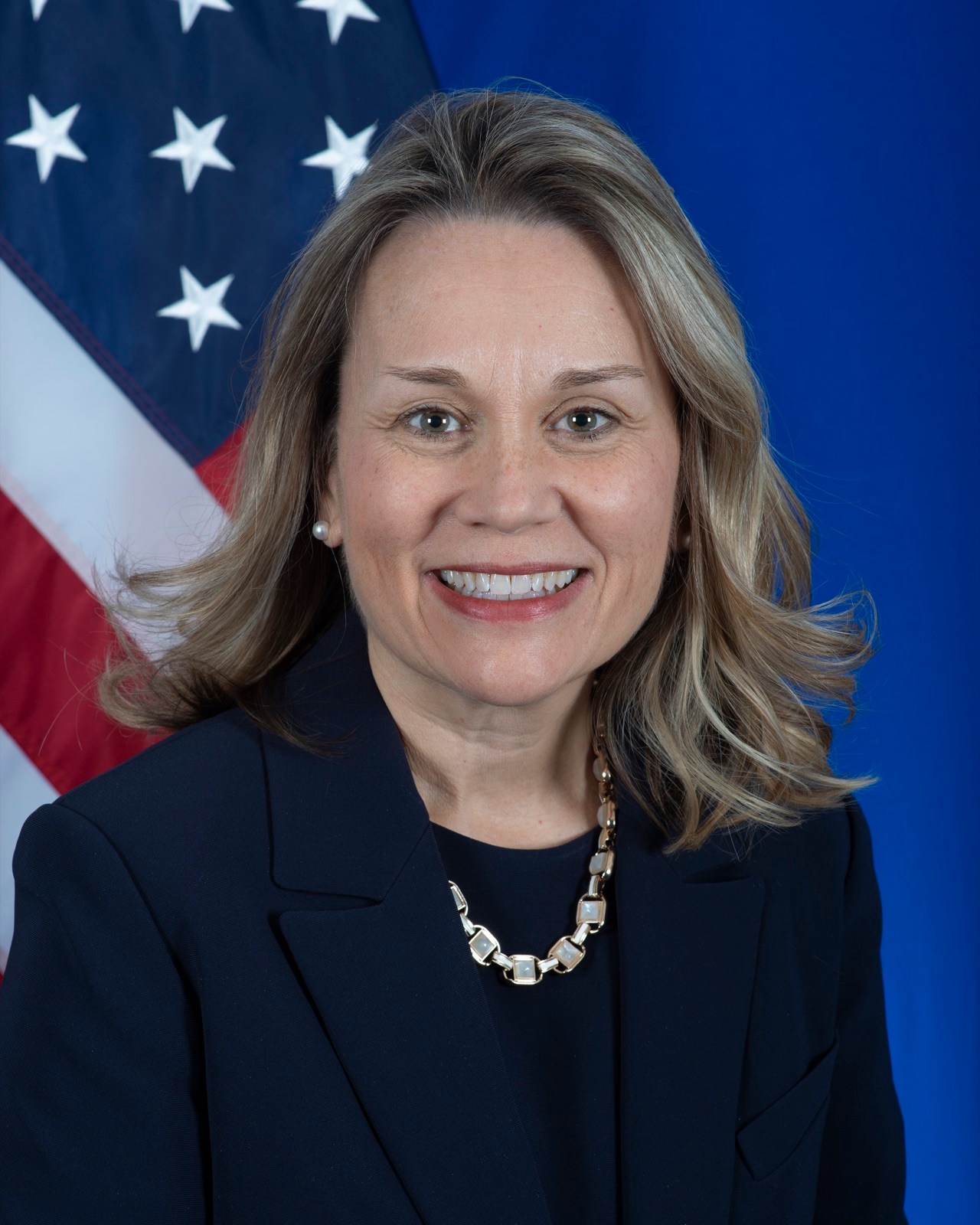
Julianne Smith
Julianne Smith is an Ambassador and former United States Permanent Representative to NATO under President Biden.
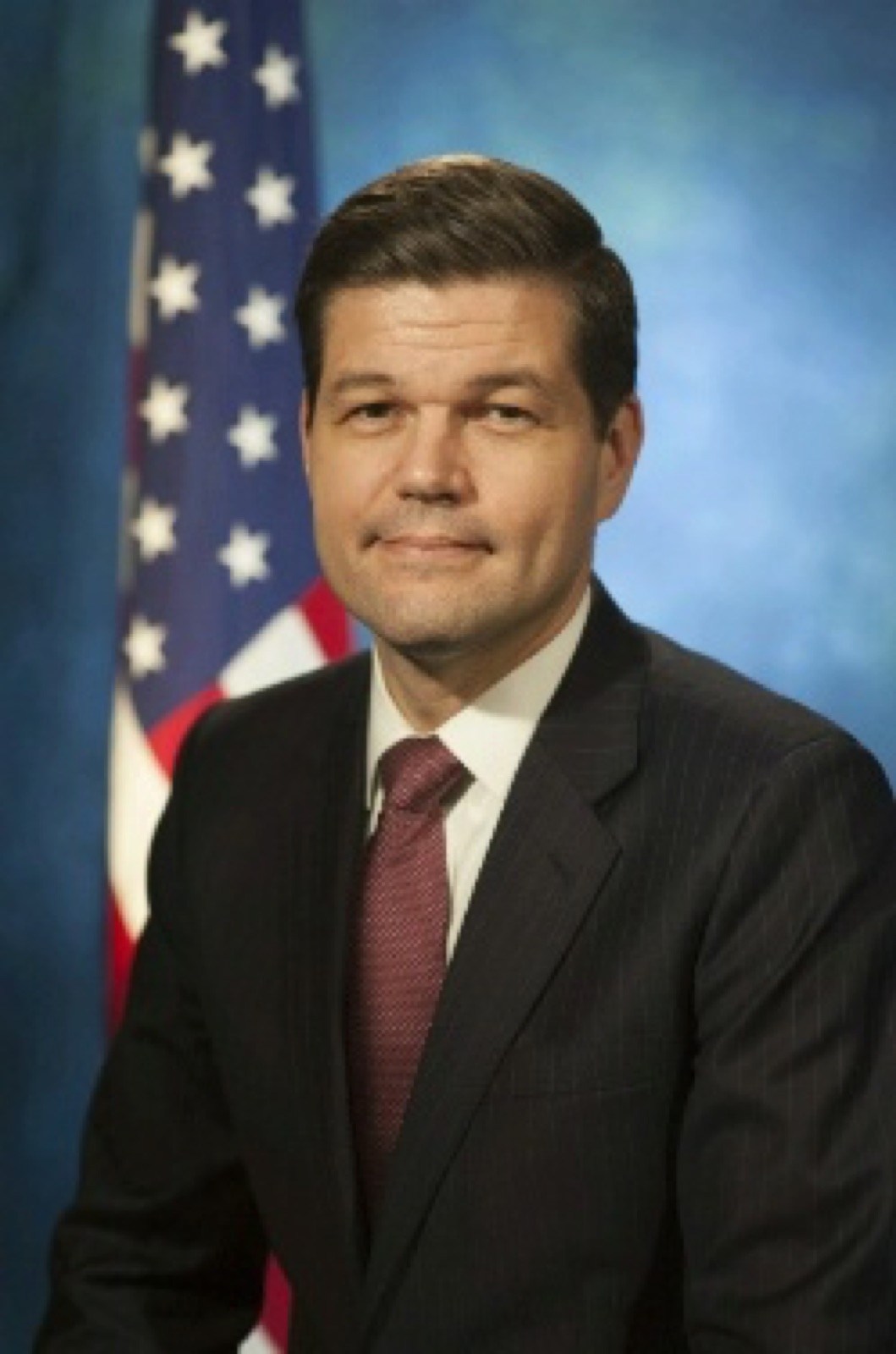
A. Wess Mitchell
A. Wess Mitchell holds a Ph.D. and is a former senior State Department official who helped shape the first Trump administration's Europe strategy.
Episode Summary
President Donald Trump has continued his pressure campaign on European defense spending. But in the lead-up to the next NATO Summit, there is another core question to ask: How is Europe coordinating its defense production? This might be the key issue that determines how Trump's pressure campaign pays off in the long run.
Kate McCann and Sir Richard Dearlove are joined by Ambassador Julianne Smith (Former United States Permanent Representative to NATO under President Biden) and A. Wess Mitchell, Ph.D. (former senior State Department official who helped shape the first Trump administration's Europe strategy) to break down what's really at stake in Ankara.
Plus: Should NATO stay laser-focused on Russia and leave China to the U.S.? How deep is the lingering trust deficit after the Greenland dispute?
Got a question or comment? Email us at hello@onedecision.com or drop us a comment on YouTube. We might answer it in next week's episode.
In this episode:
(00:00) Cold Open
(00:57) Where US-Iran Talks Stand
(06:33) Five Eyes Warnings: Chinese LinkedIn Recruitment & AI Threats
(11:51) Setting the Scene for NATO's Ankara Summit
(13:35) What Does the US Want Out of This Summit?
(19:47) Debating What "US Leadership" Really Means
(24:59) Trump's Balancing Act: Pressure vs. Reassurance
(28:04) The Coordination Problem: Europe's "Potluck Dinner"
(37:19) Should NATO Even Focus on China?
(44:31) The Anglosphere & AUKUS Debate
(45:23) Who's the Most Awkward Meeting for Trump in Ankara?
(47:47) Is Trump's Personality a Distraction From Policy?
(50:05) Will the Iran War Overshadow the Summit?
(52:35) Chaos Agent or Strategic Operator?
(56:19) The One Decision to Watch at Ankara
(59:31) Listener Mail: Energy Pricing & Geopolitical Reality
(1:04:15) Listener Mail: Cuba's Civil Society Problem
Show Notes:
https://www.youtube.com/watch?v=l7FGkxRO_es
Hosted by Sir Richard Dearlove (former MI6 Chief) and Kate McCann (Political Editor at Times Radio)
Listen & Subscribe
- Watch on YouTube
- Listen on Apple Podcasts
- Listen on Spotify
Transcript
COLD OPEN
Smith: Everyone in Europe wants to bring paper plates and somebody's gotta bring the main course. The US used to bring the main course, right? We brought the steak.
Mitchell: We have to judge this summit in NATO by the core metric, which is whether Europe is getting itself ready for war.
Dearlove: Brussels and the EU are completely hopeless on this issue.
Smith: If NATO were to say, you know what, that's not really our problem — who picks that up?
INTRODUCTION
Mccann: Hello and welcome to One Decision. I'm your host, Kate McCann, and I'm joined by my co-host and the former head of MI6, Sir Richard Dearlove. Hi, Sir Richard.
Dearlove: Hi Kate, how are you?
Mccann: I'm well, thank you. How are you doing?
Dearlove: I'm fine because I'm on holiday in beautiful Maine.
Mccann: Well, you're escaping the horrific temperatures that we've had here in London.
Dearlove: Surprisingly cool up here and beautiful weather, but certainly nothing too fierce in terms of heat.
Mccann: Well, good. I'm glad for you. I'm also glad to see you because there's a lot going on and we're going to tackle the NATO summit today. But before we do that, let's go through some of the big stories that are going on elsewhere. The geopolitical news, if you like. Sir Richard, I think we should start with Iran, because for a couple of months — a good few months — Iran was top of the news agenda every single day. You could not escape that story. There was a constant dialogue about who was saying what to whom, how close we were to an agreement, what it meant for all of us, energy prices — every element of this story was picked over. And then one day it sort of fell off a cliff. So where are we now? We've had the memorandum of understanding, but where do the talks stand between the US and Iran at the moment?
IN BRIEF: IRAN TALKS — WHERE ARE WE?
Dearlove: Well, they've just restarted after the most recent interruption caused by Iranian attacks on shipping using the other channel through the Strait of Hormuz — that is the one closer to the Omani coast. I'm very skeptical that the talks are making very much progress. Okay, they've restarted. They've got a sixty-day deadline. Every time we think that maybe they're settling down to address serious details, there's a flare-up. And I thought what was particularly extraordinary in the recent flare-up was who the Iranians attacked. They fired missiles at Bahrain and Kuwait — which is massively destabilizing action in the Middle East. They're hitting American allies rather than going after specifically American targets. I'm of the view — unless there's something going on in Iran that we don't understand — that it's going to be very surprising if these talks make any progress at all. And of course the other feature is the Israelis are keen to undermine progress, and they are not withdrawing from positions in Lebanon. The Lebanese government cannot disarm Hezbollah. The military issue of defeating Hezbollah remains unfulfilled. So I stick to my original analysis: the conflict isn't over.
Mccann: No. And you've got to ask at this point what the US has actually got out of this. There is a lot of frustration and concern about the fact that Iran is now able to trade oil, has sanctions lifted, there is still no full ceasefire agreement, and as you mentioned the Israeli issue remains and is difficult — despite the US working hard to broker that ceasefire deal, though whether it's meaningful or not is a difficult question to answer. Obviously, Sir Richard, you have a huge amount of experience of intelligence-sharing and you know what's going on underneath all of this in a way that maybe we don't. What do you think that the US and Iranian intelligence services are trying to find out about one another at the moment? What might they be working on in the background to try and get to some agreement, or at least a resolution?
Dearlove: I think US intelligence will have one very clear set of requirements, and that is what the impact of negotiation is on the Iranian leadership. Are there splits between the government and the IRGC? Is the IRGC really so dominant? And is there internal disagreement and fragility? I'm sure that one of the explanations for the negotiation may well be that intelligence indicates that the fact of negotiation is putting Iran in a very difficult position. And maybe these attacks on shipping reflect the fact that there are bits of the IRGC — or maybe the whole of the IRGC leadership — that differ from the position that the Iranian prime minister is taking. So I think the intelligence picture would relate very closely to that issue. On the Iranian side, they will want to understand more closely what's happening between Israel and the United States. They'll also want to understand — I’m thinking of things that fall within their capability — what exactly the position of the Gulf states and Saudi Arabia is towards what's going on in Iran. And I'm sure their intelligence coverage will be best or better in Saudi Arabia and the Gulf states than it will be on the United States. I think they'll have real problems covering thinking in Washington and issues like that.
Mccann: Yeah, we'll watch and wait and see. But I think there are a lot of people who would agree with that conclusion in terms of that agreement. I want to move on though to talk about Five Eyes, which I'm sure most people listening will know — it's the intelligence alliance comprising Australia, Canada, New Zealand, the UK, and the United States. It shares a huge amount of intelligence between those partners and has a number of fairly deep agreements. It's issued two warnings recently. The first is about Chinese agents using LinkedIn. Now it might sound amusing, but it's the suggestion that there are agents posing as recruiters or employees at think tanks and targeting those with security clearances, particularly at Five Eyes agencies. And I think we've discussed this quite a lot in the UK, Sir Richard — the idea that there are people who work in and around Parliament or Whitehall or government here who are often targeted on LinkedIn and offered a reasonable amount of money to help advise a company which is actually linked directly to the Chinese state. And the second warning is this call to action about the threat of AI to classified systems. Shall we talk about LinkedIn first? I mean, is this just run of the mill now? Is this the norm — that people might find they're targeted on LinkedIn, offered something which sounds amazing, and they should be very wary? Is this just something we have to accept and get used to? IN BRIEF: FIVE EYES WARNINGS — LINKEDIN AND AI THREATS
Dearlove: Yes. I think it reflects the realities of social media and the fact that this is a very fruitful area for intelligence organizations to develop relationships which may be presented as innocent but have an intention and an objective — which is to obtain classified information. So somebody targeted living in London who's got a heavy mortgage to pay suddenly finds himself being solicited by a Chinese company to advise them on strategic issues. They ask him to write a couple of papers, pay him five thousand dollars for each paper. And if he has got access to government or classified information, he already finds himself halfway compromised when the Chinese start asking for material which is actually government protected. So yes, there have been many instances of this, and only more recently have they been emphasized to the extent that there’s a public warning being given. But I know of some earlier cases where the law wasn't necessarily quite so clear — where, let's say, ex-weapons experts, particularly those working in academia who understand some of the technology of modern weapons, have gone to China and behaved in the most appalling fashion in giving material to the Chinese.
Mccann: Knowingly?
Dearlove: I think in these instances, probably feeling that they were scientists doing what scientists do, which is sharing information. But on the other hand, they were giving the Chinese really important strategic material which wasn't necessarily classified, but was of real importance to the Chinese. The other thing I think it's important to understand — there is this extraordinary organization in China which works very closely with Chinese intelligence, which is the United Front Work Department, which has a massive amount of money, a massive amount of employees, and is there to create a world beyond China's borders which is coordinated with China's interests. That's a very sinister organization which has money, power, and influence, and is a stepping stone to recruiting spies.
Mccann: We must have done this though. I mean, our intelligence agencies must also do this. Back in the day or in modern times, we must recruit people in this way, surely.
Dearlove: Well, I'm not going to go into detail.
Mccann: Damn it!
Dearlove: Let's put it this way: if you're an intelligence officer and you have requirements to fulfill, targeting, as it is called — i.e., finding people with the information that you're trying to get, and then working out how to get alongside them and how to get hold of this information — is a highly developed skill to which those professionally involved devote a lot of attention. Let's leave it at that.
Mccann: Fine. Let's leave it at that. Shall we get into our interview for the day? We're days away from NATO's summit in Ankara, Turkey, and NATO leaders will be gathering at a moment of transatlantic tension. How strong is the alliance in the age of President Trump? And what can we expect from the meeting next week? We've got two great guests to assess the state of the world's largest alliance. Ambassador Julianne Smith — former US representative to NATO during the Biden administration. Hello, Ambassador Smith. Great to have you with us.
Smith: Thank you for the invitation.
Mccann: And Wes Mitchell helped craft Europe and Eurasia strategy as a senior State Department official in the first Trump administration. He also served as co-chair of NATO's 2030 Reflection Group. Hi, Wes.
Mitchell: Hi Kate. Good to see you. Thanks for having me.
Mccann: Well, it's great to have you both, and I can't think of two people better suited, along with Sir Richard Dearlove, who is at my side, to tackle what happens next at this NATO summit. I feel like the story when these leaders meet is often about the tension between the American side and the EU and Canadian side. Wes, do you think that's still the story here this time round? THE NATO SUMMIT — WHAT TO EXPECT IN ANKARA
Mitchell: Headlines tend to be dominated by political friction. I think that's true in any period, and we're living through a disruptive period of history, so it's to be expected. But I think beneath the surface there is a very positive and constructive picture at NATO. I think the alliance is recalibrating and has been for several years to adapt to a new strategic environment. And I think that's the leitmotif of what we'll see in Ankara — a sort of checkup on that recalibration. I think the recalibration started under Trump one and it was accelerated by the Ukraine war and maybe even a little bit the Iran war. But I think the leitmotif is mobilization — mobilization of the alliance, and moving from debates about inputs and spending levels to more of a focus on outputs and mobilization. So I think that's a good thing.
Mccann: Ambassador Smith, is that still the main aim of the game here for the United States? I want to come on to talk about the other allies in the partnership. But for the US going into this summit, what do you think they’re hoping to achieve? What's the message?
Smith: Well, first of all, we're looking at a pretty short summit. I mean, it's hard to even call it a summit — it's a little bit of a leaders' meeting. It's one social dinner and one session. Summits are usually a little bit longer. But this one is focused on taking the temperature on the degree to which allies have started to move out on the 5% target that was agreed last year. So for the president, he wants to come in and have an A-plus report card by all 31 allies. And I think the fear is that this gathering might resemble what unfolded in 2018, when he came into the summit and he was visibly frustrated that a number of allies were just not meeting the mark. And he had kind of a list in hand and went around and challenged some of the leaders that were dragging their feet — the laggards — around the table. And I think Rutte, the Secretary General at NATO, is doing his best to avoid that kind of outcome. He wants it to be a positive moment for the alliance — demonstrated unity, demonstrated resolve, movement on the 5%. You saw when he visited the Oval Office that he was keen to lay out as many numbers as possible, almost like a statistician. He talked about the Trump Trillion to kind of show progress. So from a US perspective, we'll have to see what mood the president is in — but he really wants to be able to say: look, I urged the allies, I pushed them to spend more, and now they're spending more. My fear is though that beneath the surface there are still a couple of allies that are not meeting the moment.
Mccann: Sir Richard, President Trump can claim a bit of a success on pushing the allies towards spending more, but as Ambassador Smith says there, it's definitely not over — those targets have not been met. What do you think the Europeans and the Canadians are coming into this summit hoping to deliver in terms of a message to President Trump?
Dearlove: Well, I think what they're mainly concerned about is loss of American leadership in NATO. And although the effect of Trump's pressure on NATO members has in my view — and I think in most people's views — been extremely positive, the redesign of NATO, the recalibration — Wes used that phrase, which I think is highly appropriate — hasn't really yet taken effect. So I think there's a loss of confidence inside NATO which needs now to be rebuilt. Okay, NATO members are being thrown back on their own resources and have got to get their act together, and are doing so at varying speeds — that’s a huge problem, as Julianne has pointed out, because they're all stepping up at different speeds. I mean, today we've had this announcement in the UK about defense expenditure, and most of us are very disappointed indeed that the government is only going partially towards implementation of the recommendation of our strategic defense review. So even the UK, which has been a primary NATO member, is in my view falling short. There's a host of problems generated by Trump's pressure, which are essentially positive. The question is how you turn that positive initiative into something which reflects NATO's potential strength.
Mccann: And Wes, has the picture changed a little bit because of the Middle East, because of Iran? Because there is a perception in some countries in Europe that this hasn't gone well for America, it hasn't gone well for the Trump administration, and that may weaken his power in this context.
Mitchell: Well, we'll see. My perception from Europeans that I talk to is that there's a pervasive sense of cautious relief that the crisis may be winding down. I think the Europeans were hesitant to get involved and are ready for it to be over. And I think that mood will prevail more than questions about US efficacy. I think everyone watching the situation can see that the United States has capabilities that it could use — for example, to open the strait — but that those would come with risks and costs. And the alternative of a ground invasion is not something that the American public wants. I did want to respond to one thing from a moment ago. Richard mentioned US leadership, and I hear that a lot. The concern that I have — and I think it's reflected in US statecraft towards NATO right now — is that in recent years the term “US leadership in Europe” came to mean, basically, the United States would carry the bulk of the burden for warfighting while European countries focused their spending on the social welfare state. That's what leadership actually came to mean in practice. And so it can't be that if the US changes something in Europe — takes steps to jolt allies to do more — that that's a failure of leadership. From a US perspective, you have to be willing to put that concept on the shelf and pull back somewhat from Europe and kind of shock the system in order to get allies to do more. We've seen this at earlier points in Cold War history when the United States needed to focus on Asia in the Korean War or the Vietnam War. So I just a caution there — I wouldn't get too carried away with a nostrum or a notion about so-called leadership. I think we have to judge this summit in NATO and others by the core metric, which is whether Europe is getting itself ready for war.
Smith: I think it is a positive thing, obviously, to have the US pushing Europe to not only spend more, but to enlarge their defense industrial base, to have a kind of different strategic seriousness. I like the way in which Europeans are experimenting with some coalitions even outside of the EU and NATO. I mean, France is talking about Europeanizing its nuclear deterrent. But what worries me, despite all of those positive developments, is that the alliance right now seems to be most focused on managing the United States. And when I run the halls of NATO headquarters, as I've done in recent months just to check in on folks, I don't see as much US leadership — and frankly I don't see others stepping in to fill the void to move out on other areas of NATO's work. So let's take the gray zone challenges, the way in which Russia tests the alliance all the time and has for many, many years — undersea cables being cut, cyber attacks, disinformation campaigns. We know all the favorite Russian plays from their classic playbook. It used to be that the US was leading a lot of the work inside the alliance. The summits were reserved to roll out big announcements on cybersecurity and other areas. And this time you've got that single session rightly focused to check in on defense spending — I'm not opposed to that, and that should be the chief focus, to see who's delivering and who's not. Fine. But it would be wonderful to have some other bits to the summit. And more work across the alliance — sometimes with the US leading to push allies to develop new capabilities and new tools to address the ways in which the Russians are coming at the alliance and alliance territory on a regular basis. So I will applaud everything that the US is doing right now to try and get Europe to step up, but I worry that it comes at a cost in these other areas: emerging tech, AI. I mean, the alliance does a lot. There are 4,000 people that work there. It's not just defense spending — there are lots of other categories of work. And, to be sure, that work hasn't stopped, but it sometimes takes the US to come in and kind of focus minds and drive the alliance towards some new initiatives. I'd either like the US to return to some of that type of leadership, or frankly I'd like to see some of the other European countries stepping up and assuming some of those leadership roles. Lastly, I just have to say something about trust. We can't ignore the fact that we had a very dark chapter in the relationship with Europe, late 2025 into early 2026, over the issue of Greenland. And while I think many Americans feel like we're past it, I do think it still sits with Europeans as some sort of indication that trust in the United States cannot be guaranteed and there's this uncertainty: if NATO were to get into trouble, would the United States show up and back the allies over a whole array of different contingencies, whether it's the Russians or some other threat. And so that trust deficit righ now is casting a bit of a dark shadow across the alliance. I worry about how that's going to play out over the long term — maybe not next week in Ankara, but in the months to come.
Dearlove: There's one specific issue when I talk about leadership that obviously reflects my own background: I mean the US intelligence capability, particularly overhead and their coverage. And what Europeans at the moment absolutely are not able to replicate, and it'll take a decade for them to build their own capability anywhere close to what the Americans can offer. And Wes, I absolutely agree with you when you say that the Europeans, including the UK, indulged in social security spending at the expense of American paying for European defense capability. That problem is in the process – it's not entirely solved. Look at the UK: we have a contest between a welfare budget and a defense budget, and the emphasis in my view is entirely in the wrong place. But that strategic capability that the US enjoys is of vital importance in countering the Russian threat. And I think if there's reassurance in those sorts of areas during the Ankara summit, that will put a lot of minds at ease.
Mitchell: Thinking about what Richard and Julie both said, I think the US is trying to do two things in Europe right now that are both important and good. One is to pressure the Europeans to deploy more conventional capabilities for their own defense. The other is a kind of calculated reassurance that says to the Europeans: even though we're asking you to do more, when the chips are down, you can count on the United States, you can count on Article 5. So that's a balancing act. And it's a very old balancing act in US Cold War history. This administration has a particular approach to it. But the problem in the recent past is that progress in NATO and these annual leaders' meetings came to be judged by a kind of optical cohesion and soup-to-nuts communiqués. And I think at the juncture in history that we're at, I would rather see the US laser-focused — as I think the administration is — on the core issue, which does require a lot of sustained pressure: getting the Europeans up to a Cold War mentality. Bridge Colby's concept that he unveiled in Brussels in February of a NATO 3.0 that reverts to some of the characteristics of Cold War NATO — I think that's coherent. It's an attainable vision. I think it moves in the right direction. So my overarching point would be: I don't know that it's necessarily a bad thing right now for European allies to be worried about the United States, wondering about the United States — as long as that's within certain boundaries. The pressure side of the balance can produce outcomes that I don't think we would have seen from a more conventional presidency or a more conventional approach. Europeans that I talk to, now looking back on several years of the first Trump administration and now this one — a lot of Europeans I know will privately acknowledge that Europe is where it's at, including on the 5% pledge and the enormous increases in capabilities that Rutte stressed in the White House last week. We just wouldn't be at this point if the more vanilla, conventional approach to NATO – if we were still clipping along with the old method. So I think it's worth pointing that out that the administration's approach rubbed some people the wrong way, but I think it's gotten real results.
Mccann: I think a lot of people here in the UK and inside Number Ten and around the government here would agree with that — that actually some of these things needed to be said, and it's not unhelpful to have them said publicly and repeatedly. But Julianne, I want to pick up on something you said, which is about what comes next. The next step after we've gathered all the money together in a big pot — what then? Where do we spend it? How do we focus it? Part of that is the conversation about what the threat is and where the threat really is now. And we can debate that. different countries will have different ideas about that — I’m sure that Ukraine comes into it, China comes into it, and other bits and bobs. But how do we get all these allies to be coherent about the plan, about the spending, about the direction of travel, and about the priorities? Are we anywhere near that right now? WHERE DOES THE MONEY GO? COORDINATION AND INDUSTRIAL CAPACITY
Smith: Yeah, I'm so glad you raised this. But I do have to say one other thing on defense spending: fully agree with Wes that Donald Trump has had a major impact on the increase in defense spending. But I would also note that the war in Ukraine has had a dramatic effect as well. During 2022 and 2024, we went from six allies spending 2% to twenty-three. In part, we continued to grind away in the Biden administration in its own way behind closed doors, but also the Ukraine war brought an urgency to the spending and pointed them to a crisis that triggered some really tough decisions. And then with the bookends of Trump's first term and the second term, that has moved the needle significantly. Anyways, back to your question about all this spending. I am a little worried that at the end of the next decade, Europe will have spent a lot of money. Let's say they end up spending what's calculated, upwards of a trillion euros over ten years. But Europe isn't quite in the place that it needs to be. A couple of things worry me. The politics of all this spending is becoming very complicated. There are debates in Europe and across the Atlantic about whether or not everything Europe is purchasing should come from Europe and avoid US primes, US defense tech startups, et cetera — or whether or not we should, in my mind, look at co-production. This is what I would advocate: co-production, co-development, joint R&D, where Europe gets access to the tech and innovation, but also they benefit from the fact that the transatlantic partners are building out a transatlantic defense industrial base that serves both continents' interests, creates jobs in Europe, allows US companies to continue to sell to our allies, and focuses on things like interoperability. So, one — the politics is complicated, and depending on which capital you're in, some countries are putting a stronger emphasis on sovereignty and autonomy than others. We’ll see how that unfolds. There may not be a perfect answer there, but it is creating some interesting dilemmas and in some cases some unwise choices about how countries are going about their purchasing. Secondly, there's just a question of speed, and scale, and industrial capacity - frankly on both sides of the Atlantic. Let's take Germany — I have a little statistic I like to refer to because I think it's kind of a microcosm of the problem. By 2035, the Germans are going to be putting forward somewhere between 74 billion euros and 139 billion euros. Some staggering sum of money. And yet domestic industry can only supply about twenty-two billion euros' worth of capacity. So any way you look at it, we have an issue where despite the surge in the primes in Europe primes — Saab, BAE, Rheinmetall, Leonardo — it's still unclear whether Europeans can absorb all of this spending and how they're going to go about it. And lastly, where is the coordination happening? Because I like to refer to it as a potluck dinner, and everyone has to bring a dish to pass. And everyone in Europe wants to bring paper plates, and somebody's got to bring the main course. The US used to bring the main course — we brought the steak. But my concern is as individual national capitals move out on determining where they're going to invest all this capital, we end up with, say, twenty-five different air defense systems or armored vehicles — pick your capability — and we're missing things like lift, air-to-air refueling, ISR. If not better coordinated and we see some consolidation on the European continent, I'm just not sure Europe travels the distance from A to B in a way that actually gives Europe as a whole the capabilities it needs to provide for its own security. So I do have some concerns about all of this. And lastly, rightly, Europeans often mention all the regulatory friction — ITAR, et cetera — that in some cases prevents them from accessing some of our technology. So there's a whole host of problems to talk about there.
Dearlove: Can I jump in there with a comment? Because I think Julianne has put her finger on the core of the European problem in the transition of NATO. Because the existing mechanisms for coordination just don't really exist. Brussels and the EU are completely hopeless on this issue — are out to lunch and will never solve the problem. In fact, in my view, they confuse the problem. And what one really needs — and I've seen this recommended in some Atlantic Council paper — is some sort of transition mechanism where the Europeans, and I'm not just talking about Brussels, I’m talking about the UK as well of course, can coordinate their defense production and also link it appropriately in terms of standardization with American technology. So the actual challenges — commercial and manufacturing — are massive. And I think this is probably what is most lacking and what could best be achieved at this NATO summit is some sort of agreement on the expertise to coordinate the solution to the problem you've outlined.
Mccann: Wes, is there anything in there you'd like to pick up on? Or can I put a question to you about how we might go about identifying those threats or what your idea is where the greatest threats lie in how we should go about coordinating ourselves?
Mitchell: Well, I'm happy to quickly respond to both. I think on the spending point, Julianne is right — it's a dramatic increase. Germany alone, the numbers are astonishing. I'm skeptical of mechanisms. I don't know that there is an elegant institutional fix to this stuff. If there is one, I would root for it. But I think the simplest quick answer starts on the European side and is regulatory in nature. The Germans, for example, actually have enormous underutilized capacity. But the problems are more regulatory and energy in nature — especially post-Ukraine war, German industry just can't fill the energy thirst that it was filling from cheap Russian gas. And there are complex layers of regulation that keep German and European firms from industrial expansion. So if the Europeans are serious about this, it starts at that level of making it easier to support industrial expansion, making it easier to build LNG terminals and have long-term LNG contracts, et cetera. So I think it starts on that level. And then I think Julianne's right on the ITAR part and other restrictions. We have to go back to the Cold War template — with some modifications, because the EU now exists as a big actor — that allow for co-production. That was the ace in the hole in the Cold War: the US and Germany would co-produce this stuff. Something like that has got to be the answer now. And just briefly on threats, Kate — I think it's pretty clear that Russia is the organizing threat for Europe for the foreseeable future. Europe on its own energy, with time, should be able to handle a lot more of that threat. There are other actors and problems that NATO working groups like to latch onto, and I wouldn't say that they're all not necessarily invalid, but I don't think, for example, that NATO should be in the business of combating climate change. And I'll go a step further and say I don't think NATO needs to be that focused on the China problem and the Asia-Pacific. I love that there are Asian allies and partners who are attending and observing the Ankara summit, but I think we want NATO to be focused on the core thing, which is the ability to fight and win or deter a land war in Europe. Other things I just view as way down the list of priorities and kind of externalities.
IS CHINA NATO'S PROBLEM?
Mccann: Wes, I find it so interesting that you think focusing on China is a bit of a distraction. Because we often hear about China as the next great threat, the thing that we all need to really focus on, that our attention is not turned enough towards China. If NATO were to say, you know what, that's not really our problem — who picks that up?
Mitchell: Well, I think the United States —
Mccann: But is Trump willing to do that?
Mitchell: Yeah, look — let me take both of those. First, I think what makes sense is a division of labor where Europeans are primarily focused on their own theater. And that’s simply because whatever the Europeans could put in the Asia theater, I don't know that it would change the balance of power in Asia, but it could undermine deterrence in Europe. So I'd say first and foremost, Europeans, stay laser-focused on deterring a major war in your own theater. I think that's an appropriate task — it aligns with your obvious interests, et cetera — with the US providing a more limited but substantial role. I think for the US in Asia, China is and will be our organizing national security problem for all of my lifetime. That doesn't necessarily mean that every administration is going to take a confrontational approach to China. I think it'll be a lot like it was in the Cold War, where within an overall strategic frame — of, in this case, competition — different presidencies see fit to toggle different parts of US policy on a prudential basis. And that's what I see the Trump administration doing. My interpretation of what they're driving for with China tactically, I think it’s a kind of geoeconomic détente. I hope it works — we'll see. But I think that's partly to buy time for a US military-industrial base that is not prepared for major war. The organizing problem in all this for the US is what's talked about here as the simultaneity problem — the fact that we have a military that's not postured or equipped to handle more than one rival, but we have two, two-and-a-half, three major opponents that we might have to fight simultaneously in a major war. So in that construct, if Europe is doing its part in its theater, it frees up the US to focus more attention and resources over time towards the China problem. I think that's the right way to think about it.
Smith: I see it a little bit differently than Wes. From a NATO standpoint, because of the good work that the Trump administration did when Wes was serving in the administration, NATO moved out on a China agenda — because of what China was doing in and around the Euro-Atlantic area: deepening its relationship with Russia, joining joint exercises in the Baltic Sea, disinformation campaigns, coercion, cyber — you name it. And then we in the Biden administration grabbed the baton from the prior administration, built on their good work, and were able to insert China into the strategic concept. Not because we believed that NATO needed to move assets into the South China Sea — as Wes notes, that would be a very bad idea — but because we also felt that by deepening the partnerships with Australia, New Zealand, Japan, and South Korea, the alliance would be stronger and would benefit from their insights on things like: what does your recent cyber national security strategy look like? How are you dealing with some of the hybrid challenges from China as we in the Euro-Atlantic space deal with what Russia is doing in the same sphere? So I think if you look at it from a strictly military perspective: no, I don't think we want to suggest that NATO goes global or that allies suddenly are sending ships across the Pacific. But from a non-military perspective, looking at those gray zones, looking at the evolving China-Russia relationship, I think, at the time, allies felt there was some utility. And I would note that this wasn't just abstract conversation. When North Korea sent 11,000 troops to Russia to fight in Ukraine, it was the South Koreans that sent in a delegation of intelligence officials to come brief allies on who those troops were, how they were trained, how they might perform working alongside Russian troops. So that was a very concrete example of the benefit of deepening these relationships, merging some of America's European allies closer to our Indo-Pacific allies. In essence, the theory of the case was: China, Russia, North Korea, and Iran have assembled their own team, all focused on Ukraine in different ways. NATO needs to assemble its own team of democratic allies. But again, it has limits, and I wouldn't suggest that this blow up and evolve into something much bigger than that. But I do think it's important that two of the four Indo-Pacific leaders will be joining the Ankara summit. I do see value in the alliance continuing to talk through how they can better equip themselves to deal with cyber attacks or we’ll see how emerging tech comes into play, and learning from our closest partners in South Korea or Japan.
Dearlove: If you look at the issue of China through the eyes of what might we might refer to as the Anglosphere rather than NATO, it's very difficult indeed to subtract the Chinese threat to the broader interests of the Anglosphere. Okay, I agree with Wes that there is no immediate military problem in Europe with China. But there is certainly a massive Chinese challenge to Western industry generally — but particularly to European and English or British industry. To treat China as if it’s partly off the map – I'm just quite interested in how Wes sees the AUKUS agreement in relation to NATO interests, because that does reflect an Anglosphere approach to the threat of China. Maybe we're getting slightly off the subject here because NATO does stand for North Atlantic, and it's very easy to talk about NATO and not remember what the acronym actually represents. But I still think that pulling these problems apart is almost impossible when you're talking about national security — even national security as expressed by NATO members broadly in Europe. Wes, what are your observations?
Mitchell: Yeah, I think both are true. It is true that the United States needs Europeans to focus militarily primarily on Russia — so when asked about the main threat to Europe, the immediate military threat, NATO is primarily a military organization, you have to start with that. And it is true that in all kinds of areas and fields — industrial cooperation, regulatory alignment, et cetera — that the United States and members of NATO, whether its in a NATO format, or coordinating with the European Union, or with Asian partners and allies and the Anglosphere — Canada and Australia — you have to be able to address those other things as well. My point is more: if we're talking about NATO and remembering what NATO's main job jar is, that was primarily a military observation.
AWKWARD PERSONALITIES: WHO TO WATCH AT ANKARA
Mccann: Can I close this discussion by maybe reducing it a little bit to personalities? Because Julianne, you mentioned Greenland before and I think that ruffled a few feathers. Who do you think is going to be the most awkward meeting, the most awkward brush-by for President Trump at this NATO summit?
Smith: Well, I'll be very interested to see the dynamic between those leaders in Europe that he perceives to have let him down. So he's been frustrated with the Chancellor of Germany for some of his comments about the Iran war, obviously very frustrated with Sánchez because of the refusal to allow the United States to use their airspace to execute the war in Iran. And Meloni recently at the G7 — this dust-up over who said what about some photo. I don't know, maybe that's passed by. It will be interesting to see. It always depends on what mood the president is in, what he's coming off of, what's happening here in the United States. We’ll have to see. I will say what was a little bit awkward last year was Zelensky — the president has not had a terrific relationship with President Zelensky, well known. My understanding is they had a better discussion at the recent G7. So that might be quite calm. And I know Zelensky, as I understand it, will join the social dinner — that's important. I wish there was a separate meeting on Ukraine with NATO allies the next day, but alas they've reduced it — maybe it's for the best and very pragmatic — just to have this single session. But yeah, Zelensky probably will not be the one to watch. Last year I was very interested in the body language and how things would look. Obviously for the United Kingdom, knowing Starmer is on his way out — it's a bit awkward. That'll be kind of interesting to see how he maneuvers that moment. But yeah, personalities matter. And trust me, having sat through several of these, it's always interesting people watching. Let me put it that way.
Mccann: Wes, I think you said that NATO was a bit of a cold-water shock tactic and that ultimately it would probably strengthen ties in the end. It may be awkward for some, maybe less awkward for others. Is there anything that you really detect. I think that probably will come up. But is there any awkward moment you're looking out for?
Mitchell: Yeah, the personality side is fun to watch. I think there's maybe in the headlines a little too much focus on the personalities in the sense that none of this is a great indicator for policy outcomes ultimately. There's been so much speculation and hand-wringing about Donald Trump's personality since he became president in the first term. I remember then everybody was confidently predicting the end of NATO — he said this, or he tweeted this. And I think that's just a very poor predictor of actual policy and outcomes. My read of President Trump is that he's pragmatic, clearly business-minded, focused on achieving good things for his country. You know the old saying that statecraft is stagecraft — clearly these dynamics do matter, and I'm not trying to trivialize them. But I think the best predictor of outcomes is going to be the interests of the states that are at the table, where they align, where they don't. Personalities matter, but it's pretty clear now that broadly, we’re on a track in the West in the period since Trump came to office and then with the Ukraine war and now with the Iran war, we're on a track of collectively getting ourselves in a better position — industrially, militarily, everything else — for war, in order to hopefully deter it. So I look at Ankara as a really important way station along the way — a check-in on this recalibration. And I think we have a lot more positive things to point to in the recalibration that the West collectively is doing – I think that side of the ledger far outweighs any of these pecadillos or momentary interactions. As engrossing as they are for the public. I think Trump has done a lot of good for NATO and, viewed on this longer arc, I think Ankara is an installment in that bigger story.
Dearlove: Won't the elephant in the room unavoidably be the Iran war? Or do you think there will be avoidance of discussion of the Iran war? Because it seems to me if you take France, Germany, Italy — it's going to be very much to the forefront of Meloni, Macron, and Merz's minds. And to avoid discussion when it's actually at such a sensitive point in negotiation with Iran is going to be very, very difficult.
Mitchell: Well, to the contrary: my guess is that you'll actually see more convergence, at least nominally and optically, on Iran. I don't think it's going to be a source of friction, if that’s what you mean. I was looking at the language coming out of the most recent E5 meeting, and it seems clear to me that the Europeans are preparing to have certain provisions that they're willing to offer. Maybe it’s on the sidelines — I don't know if it comes out in the communiqué so much. But we're not where we were at the start of the crisis with respect to transatlantic relations and the temporary closing of airspace and this stuff. I think in the period since then the Europeans, while still reticent to get deeply involved, are looking for ways to find bridges with the US on this — as part of going hand in hand with the diplomacy and the tentative ceasefire. So I think you're right, Richard, that it will be present on the sidelines, but I don't see it as a source of friction. I think the Europeans may be relieved because they've probably been hit worse than any other global region, other than the developing world, by the downstream disruptions from the Iran war. So I don't foresee that as a source of awkwardness or friction at the summit.
DOES TRUMP HAVE A STRATEGY?
Mccann: Wes, before we go — I'm interested in your take on Trump and his approach to this kind of summit. And also that you said we should look at the longer arc here, and that's what lots of European partners and allies hope to do, try to do, would like to do. It's often difficult because some of the language, some of the Truth Social posts, some of the comments on Air Force One on the way over do cause people to step back and think twice. Are you imposing a logic on a sort of chaos that we should just take for what it is? Do you really think that Trump has some bigger plan here, or is he a bit of a chaos agent — and ultimately that can get results, but sometimes it goes badly?
Mitchell: I think it's both true. I think individual figures matter in history, and I think Trump as a leader is very strong and clear in his goals. His methods are unconventional compared to the baseline of the Euro-Atlantic elite that we've come to see from the end of the Cold War. I take him at face value, and I think people should certainly take him seriously — but do that in a way that isn't based on the most shrill or outlandish headline. If you go on social media or read a lot of the major European outlets, they've been confidently predicting the end of the world as a result of the election of Donald Trump since his first day in office. And it hasn't come and it's not going to come. So what I would say is: yes, look at the priorities and statements of the president, put them within the context of what I see as a very clear and clearly articulated strategy. I think it was spelled out in the national security strategy last year, the national defense strategy. I would characterize it as a recalibration — what Trump is ultimately doing, both in his behavior and what is reflected in the strategy, is a renegotiation of the transatlantic bargain towards greater reciprocity, first and foremost. No alliance can operate without it, and greater credibility. And I think if you use that as a guide, you have a context for understanding tactics on the part of President Trump and his senior people that is a lot more coherent and I think a more predictive tool than simply reacting to the latest European freakout over something that the president said or tweeted. I think that's a very poor guide to outcomes.
Mccann: Julianne, do you think the Europeans are listening? Don't freak out.
Smith: No, I think it's too late for that. And I don't think it's coherent. I think it's very unpredictable, unreliable. He changes his mind quickly. One day he doesn't want you to do anything, there are no consultations with Europeans on Iran, and then suddenly it's a loyalty test — but it doesn't matter, and yet it does, and there'll be punitive measures. And I just think Europe has had a very hard time navigating this second term especially. I think they were counting on it being like the first term, where there'd be people around him that they knew, steady hands on the till. But this is a whole new world. And I think we've seen lots of ups and downs that could have lasting damage on the relationship, on trust, and on the values that we've talked about for seventy-seven, eighty years now. I do think we're turning the page on that history. I don't know what will come next — something new will replace it. But it has been hard for Europeans to navigate this. They're told not to take him literally but seriously. But Greenland, Canada — he said we will get it, we will do it — until he said they wouldn't. And these chapters can be laughed off as just Trump being Trump and it's all a joke, and you know, be careful, don't overstep. But I mean, there have been several moments in the last year and a half that stopped them in their tracks. And I think it's too easy to say, well, that's just who he is, that's his style, learn to live with it. I really think there's been some damage here, and I think we'll be mopping up from — despite the benefits of allies spending more on defense. I think the damage is done and we’re going to have to grapple with that in the years ahead, of the state of this relationship going forward.
ONE DECISION TO WATCH
Mccann: What's the one decision you're looking out for at this NATO summit or in the run-up to it? Sir Richard, I'm going to put you on the spot — you can go first.
Dearlove: Well, in spite of what was said about not believing in process and coordination — I think some sort of mechanism to coordinate spending and development of NATO's capability. The sums of money are huge, the commitments are massive. We can't afford to have an uncoordinated approach to the reconstruction of NATO's military capability, which is a very positive outcome from the attitude that Trump has taken towards the European nations.
Mccann: Wes?
Mitchell: Well, I don't know that it's going to happen in the next few days, and it's not directly related to NATO — but it's playing out in the background. I would watch the escalation or potential escalation in transatlantic digital relations. It's a storm that's been brewing for a while and there are signs that it could escalate pretty dramatically over the summer. You probably know that there are several EU states that are considering implementing the new digital services tax on US companies. Trump has responded by saying that there would be a hundred percent tariffs. And all this is coming right after the EU has approved some of the commitments that were made at Turnberry. Digital services were not included in the Turnberry agreements. But I think this issue is massive — the United States has really big interests at stake. Our ability to power the kind of tech innovation that we're going to need to compete with China in fields like AI could be dampened by EU digital regulations and basically a rent-seeking mentality from Brussels. And on the EU side, they're insisting on this as a tech sovereignty issue. So the heart of the matter is: if it really does come apart, what you're talking about is potentially unwinding Turnberry in spirit. So I'd watch that really closely — it's not directly in NATO, but it has massive implications for NATO.
Mccann: Julianne.
Smith: Well, I hesitate to suggest a mechanism — I know Wes is not going to support that. For the summit, I guess what I would say is I really like the language coming out of the recent G7 on Ukraine. I thought Secretary Rubio did a nice job ensuring that the US could sign off on that. That was language that was not really reflected in last year's summit. So I hope we'll see some of that positive language on the importance of continuing to support Ukraine, in light of or despite the fact that the US continues to work on negotiations between Russia and Ukraine. If we saw some language that reflected what was just said at the G7, I think that would be a really positive development.
Mccann: Ambassador Julianne Smith, Wes Mitchell — great to have you both with us today. It's been a really interesting discussion. Thank you for giving us your time.
Smith: Thank you.
Mitchell: Thanks for having me.
Dearlove: Thank you very much indeed.
Mccann: It was really interesting. I've learned so much from you both. It's really good to have you. Thank you. And I will be watching the body language — I can't help it, Wes. I know it makes me pathetic and a bad journalist, but I can't help it.
Smith: We all will. We all will.
Dearlove: Real pleasure to meet you both. Thanks.
POST-INTERVIEW DISCUSSION
Mccann: Sir Richard, there was so much in that — and actually lots of things that I hadn't really considered in the context of a discussion about NATO. What really stood out for you?
Dearlove: Well, I suppose you've got two opposing points of view from the two panel members, but at the same time there was a significant core of agreement, which is the positive aspects of the tough line that Trump has taken and forcing European nations to up their expenditure. That's one aspect of the problem. But I'm pleased that at the end, Julianne made that emphasis on Trump's personality and unpredictability. Because I think you have to juxtapose the two — because the European members can't think about the first one without thinking about the other one. And okay, someone like Wes can separate them in his mind, which is understandable — he's a pretty key Trump advisor in this specific area. But on the other hand, it's all very well to sit there in Washington and see it from that very logical perspective when there's an awful lot of emotion locked up amongst all of the European leaders in the way they've been treated by Trump at one time or another. And symbolically one has to refer to the way that the Danish government was treated over Greenland, which caused massive offense given Denmark's record as a very positive and important NATO member — okay, a small one, but heavily involved, for example, in Afghanistan taking significant losses fighting a distant war. So all of those issues were below the surface, and I think it's important in summing up to emphasize them.
Mccann: Yeah, I totally agree. And also Wes's suggestion that we should watch out for potentially some sharp comments from the administration on the European attitude to social media and those big social media organizations. It's been on the periphery, but it's one of those things that has a feeling of just a throwaway remark at the summit or on the plane on the way over — it could end up being the focus and be quite difficult for some of those European governments, especially in the context of what Wes was saying about AI. I also found his remarks on China something that I hadn't really considered. We often see China and Russia in the same context, and we talk about the threat from China and the nefarious nature of the Chinese government — and we talk about it a lot in the UK. But this sense, almost, that NATO shouldn't get itself distracted by the idea of China, and that it's really a US problem — and that a strengthened NATO that takes care of Europe will mean that American administrations can take care of China. I find that an interesting split.
Dearlove: It's an interesting split and in my view an artificial one. But I think you have to look at these issues as being inseparable. Julianne has written quite extensively in foreign policy journals on the concept of Eurasia — which presumably Wes would not subscribe to, because they're basically saying, stay out of that area, we’re dealing with China. But I don't think that's a very practical approach because China is fundamentally threatening, particularly in economic terms, to all the European nations. And that's now right at the top of the EU's economic agenda in a way that it hasn't been previously. So there's a big shift in Brussels in thinking about that. So it isn't just a Russian military threat to Europe — it's a Chinese economic and industrial threat to Europe as well.
LISTENER COMMENTS
Mccann: Well, and that's one of the things actually, the idea of this sort of European economic reality and especially relating to energy – it came up in our discussion. And I mention it, Richard, because we often talk between us about what we think about the interviews that we do. But our listeners are talking, too, and sharing their thoughts. Lots of you post underneath our podcast on our YouTube page or in other areas. And we thought it might actually be nice to bring some of you into the conversation. This comment came in from Ben. It was about the discussion last week with Helima Croft, and it's relevant here. Ben says: it was a great discussion of energy markets and the apparent disconnect from geopolitical reality. Should market pricing reset to recognize the effects of the conflict, that would clearly be devastating for the Trump administration domestically. How much damage would such a reset do to US global leadership in both politics and economics? It's an interesting question, isn't it?
Dearlove: It's a fascinating question. Probably puts his finger on the most sensitive energy topic globally, full stop. Because the subtext of the comment is correct — I don't think energy is being correctly priced. And I think that's also what Helima is saying in the podcasts that we've done with her, in response to what is actually happening geopolitically. And as you say, it would be absolutely fundamental to public support for the Trump administration, given the nature of the US economy and its energy security position. Very, very clever and incisive comment.
Mccann: I think it would do a lot of damage. I also wanted to mention this one from Jerry, which was about our interview with Ricardo Zúñiga about Cuba. And it's really a reflection on Cuba. Jerry says: when I was in Cuba I was struck by the lack of a significant civil society — by contrast to countries like Myanmar, for example, where the ruling class and the government monopolize power and the economy, but leave room for society to organize education and community support services and micro-businesses. And he goes on to talk about how that allows corruption to flourish and leaves very little room for people to improve their lives. And I think that's something that the impact on people that our discussions draw out but maybe we don't focus on so much.
Dearlove: Yeah, I like that comment a lot, too. And the reason I like it is because I'm always interested in the issue of the strength of civic society. Because in democracies, the complexity of civil society — whether it's libraries, reading clubs, golf clubs — what I'm saying is there's a network of civic identity which particularly in communist-run autocracies doesn't exist. Particularly in an autocracy as ideological as Cuba — because over time, and they've been there a very long time since the Cuban Revolution, they've destroyed any civic organization which threatens their influence and authority down at the day-to-day level of social life. And I think that's an incredibly important feature of any country. Another very good comment.
Mccann: It is indeed. So look — write to us. We've got a brand new email address: hello@onedecision.com. And we ‘dlove your comments, your thoughts, your questions. Send them in to us. You never know, we might do an episode entirely based on your questions at some point. Drop us a note there, or you can comment under wherever you get your podcast, and we might just respond to you in next week's episode. Well, that's it for today. You can join us every Thursday for more exciting conversation about world events that goes beyond the usual headlines. You can subscribe to One Decision on YouTube and you won't miss any of our conversations. And now you can email us too — send us your questions, comments, insights, secrets, pet theories, whatever it is we would love to hear it. That email address again is hello@onedecision.com. And for more conversations with leading decision makers and thinkers, you can check out onedecision.com where you'll find more commentary, conversations, and explainers. I'm Kate McCann and I was joined, as always, by Sir Richard Dearlove. Thank you very much for listening.