Hosted by Christina Ruffini and Sir Richard Dearlove
Guest
Episode Summary
German Chancellor Friedrich Merz's speech at the Munich Security Conference marks a seismic shift in European defense. Former MI6 Chief Sir Richard Dearlove breaks down why Germany's massive military spending increase changes everything, and why the UK might be left behind.
Plus: Is the US heading toward military conflict with Iran? What is the significance of US Secretary of State Marco Rubio’s controversial support for Orban in Hungary?
In this episode:
Germany's constitutional change for unprecedented defense spending
Merz's "German Gaullism" - what it means for Europe
Why Starmer's Munich speech fell flat
Israel strategizing with Trump administration regarding Iran
Zelensky's election strategy and Ukraine's battlefield gains
Show Notes:
Royal Navy misses £500m of submarine maintenance | The Times
Le gaullisme allemand de Merz à Munich: discours intégral | Le Grand Continent
Hosted by Sir Richard Dearlove (former MI6 Chief) and Kate McCann (Political Editor at The Times).
Listen & Subscribe
- Watch on YouTube
- Listen on Apple Podcasts
- Listen on Spotify
Transcript
INTRODUCTION
Mccann: Hello, and welcome to In Brief from One Decision. I'm your host, Kate McCann, and I'm joined as always by Sir Richard Dearlove. Hi, Richard. How are you doing?
Dearlove: I'm fine. I'm here still in Colorado, a nice place to be doing a podcast from anyway.
Mccann: Oh, amazing. Well, lovely to be there. It's still raining here in London as it always has been, has been for the last month, I think. Lacking snow in Colorado, but it's still very nice. Lovely. Well, should we talk about somewhere different altogether? Because the world of defense and international affairs has been gathering in Munich for the Munich Security Conference over the last week. And I think it was quite a significant moment on a number of different fronts. Let's take the European Union and The UK's defense relationship first, and then talk a little bit about America. Because I think, for me, Keir Starmer, the UK Prime Minister, gave a speech at the Munich Security Conference, which I think he thought was a defining moment for him. But it's been interpreted by EU allies and others in NATO as a bit of a missed opportunity. And I was speaking to somebody earlier today who said it felt like the speech was written by someone who didn't even understand defense. What is the big takeaway for you from the conference?
MUNICH SECURITY CONFERENCE AND EUROPEAN DEFENSE
Dearlove: Starmer's performance there was worrying. And there's a wonderful phrase that I read here recently written by George Will, the political commentator, talking about becoming accustomed to a vocabulary of military seriousness. And, I mean, Starmer's speech falls into that. He's talking about defense spending, but not doing anything. The trouble is that, you know, you look at The UK, and the program for increasing defense expenditure is extremely slow. However, I noticed this morning the BBC are reporting that a possible acceleration to 3% spending before the end of the present parliament, which may be a reaction to the criticism of Starmer's performance in Munich, which I agree was rather peculiar, rather naive, and showed no real grasp of military urgency or let's say the urgency of increasing defense expenditure. Well, I think the big takeaway for me certainly was the speech that Merz gave. And I think in terms of European defense, I think in terms of European politics, that was a hugely significant statement. I think the best commentary I've read on it refers to a German version of Gaullism, you know, the French Gaullist tradition of a very strong nation state asserting its own national identity and spending heavily on national defense. And I think that's a very clever way of, as it were, conceptualizing the way that Merz has expressed this. And, of course, even more important is that the Germans had to change the constitution in order to draw down on German debt to accelerate spending to 5%. So, you know, this is a huge, massive change in European politics and puts Germany at the center of European security. And then, of course, the other aspect, which is really interesting, is that in his speech, Merz referred to discussions with Macron about a new European nuclear capability. Now the irony there is that, of course, you have to, as it were, consider what the British role in this might be in the medium term. And it is complicated because although the French nuclear deterrent is sophisticated, it's independent of the United States, whilst The UK's nuclear capability is integrated with American technology. So how that circle might be squared politically in the medium to long term is really a real challenge.
Mccann: And in that context, what Friedrich Merz was saying to America is really interesting because in his speech, as you mentioned, he set out not only that The UK and European nations need to work together to strengthen NATO, but that actually the US won't be powerful enough to go it alone anymore either. That is a significant statement in the world that we are living in now, that, you know, even the US is going to need to rely on us, and essentially, marking himself out and European partners out as a force to be reckoned with.
Dearlove: Yeah. I think that was really important. And, of course, if you read between the lines of Rubio's speech, which was more reassuring than Vance last year, it's still quite aggressive in its own way. And the best response to Rubio with the echoes of Vance in the background is, of course, building Europe's strength, not just as a commercial power, but as a military power. And I think there's a certain amount of confusion in people understanding what this is about. It isn't about building defense through the European Union. It's really about building defense through the coordination of NATO and the identity of nation states, because, of course, the three lead nations include The UK, which isn't a member of the EU. I think the EU's role in this is largely one of coordinating industrial production and coordinating funding and not in any sense trying to build some military capability which duplicates anything which NATO's already got. So I think what's beginning to emerge is a blueprint for much, much more powerful, coordinated European defense initiative actually founded on NATO, not founded on Brussels.
Mccann: Yeah, exactly. And the significance of having Germany at the center of that, I think we miss that out of this conversation. Because for such a long time, Germany just wasn't present in that way, certainly not at the center, not the focus, and not the driving force. In the context of I was talking about The UK and Keir Starmer's contribution to NATO, it does make me wonder what role The UK has now when you have a leader like Merz putting money on the table in a very definite way. You know, working with France, I mean, The UK was shut out of the big pact, the big defense pact, you know, a huge amount of investment. The UK has been shut out of being part of it, of investment, the SAFE Pact, because we wouldn't pay a contribution to join up. I don't know, I suppose part of me just wonders, are we being edged out of this conversation? Does that matter?
Dearlove: Well, I think that's a difficult question to answer at the moment, because I think that issue is still under negotiation. And it's largely been the French who have demanded a massive premium from The UK to the phrase that's been used in the media is pay to play. I mean, I personally think that this issue will be resolved through negotiation in The UK because the reason it'll be resolved is that The UK does have a massive contribution to make in terms of its own armaments industry and technology. I think that Europe will really find a way, and they need to find a way around pretty quickly so that The UK is a full participant in this relationship. I think the other issue is we are talking about the prospect of German leadership on the continent. And obviously The UK's role, if it were to be a very significant presence, is naval rather than military. But we're very long way behind in terms of rebuilding the British Navy. But the latest deal with Norway is very significant. This is to build a number of destroyers for the Norwegian Navy, plus part of that program is to include British frigate construction as well. And I think that's the area that needs to be pursued with massive urgency now, I think.
Mccann: It's really interesting as well. There's an article in the Times newspaper today about how The UK is behind on its upkeep of submarines basically, and has been for some I think years, £500,000,000 worth of updates and improvements need to be done and haven't yet been done. So I think, you know, significant investment is still needed there too. Should we talk about because we've kind of referenced a little bit of Marco Rubio should we talk about America? Because you have been pointing out and flagging for some time now the significance of America moving assets, basically, the sort of closer to Iran. And there is this kind of question about what happens next and what the point of doing this is. Where do you think we are temperature wise in that process at the moment?
AMERICA, IRAN, AND THE RISK OF CONFLICT
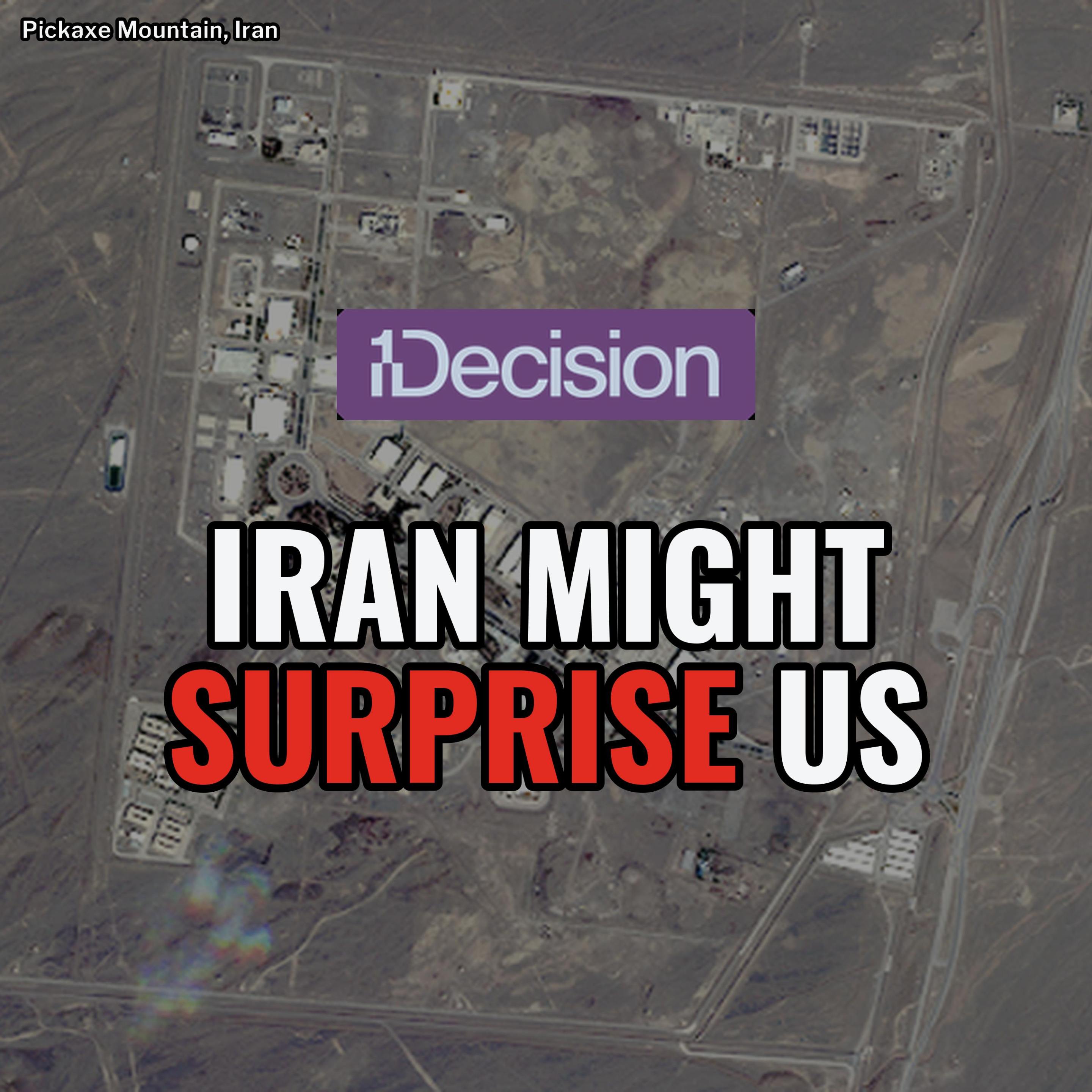
Dearlove: Well, this week, supposedly, there will be direct negotiations between the Americans and the Iranians again. But of course, there is this second carrier group now on its way to the Mediterranean. I think it will arrive probably next week. This puts huge pressure onto Iran. And I think watching BBC News this morning, watching an interview with the Iranian foreign minister, the Iranian deputy foreign minister, it's clear that there's a huge gap in the agenda for negotiation. And the Iranians are saying, well, we'll negotiate on the nuclear, but don't expect us to negotiate on anything else. And I think that the Americans are absolutely insistent that there should be restrictions on the Iranian ballistic missile program and also their support for Shia militia and other movements, the axis of resistance, Hezbollah, what's left of Hezbollah, the Houthi. It seems to me that the negotiations are just so far apart, unless the Iranians, as it were, put it bluntly, cave in with the arrival of the second carrier group. I'm strongly of the view that we're heading towards a military conflict. And of course, you've got to remember that the Israeli pressure on American policy, on the Iranians themselves, is huge. And it doesn't look to me at the moment as the Iranians making any concessions at all.
Mccann: Yeah. I think that point about the Israeli pressure is a really interesting one. Because if you take that out of this equation, which obviously you can't, but if you look at this from an American perspective, Donald Trump is a president who likes quick, decisive, short term, pretty easy military intervention, arguably Venezuela, what he did to aid Israel with the strike on Iranian nuclear facilities. You know, wham bam, we're done, we can get out. Iran is a completely different kettle of fish right now. And just looking at it alone in that cold light of day, I cannot see any logic for Donald Trump using the assets that he sent in a hot military capacity. I just cannot see him pressing the button, given everything that we know about him. That said, as you say, the pressure from the Israelis, and that is very evident. There was a visit Netanyahu, Benjamin Netanyahu, went to the White House, met Trump. I thought it was fascinating recently that Netanyahu went in the back door. There was no press conference. There was no glad handing. It was very much not that kind of a showy meeting. I think that says quite a lot, actually, about the fact that Netanyahu feels he doesn't need that. Many leaders go to the White House for that. And also shows the balance of power between those two men.
Dearlove: And so for that reason, I think it's a more difficult calculation than it would immediately appear. I think that the Israelis would have a strategy. They will have the intelligence to target the Iranian leadership. They will have a military plan, even though the Americans may lack one. And that military plan will be extremely precise and will be about hitting targets like the control of the IRGC, the barracks of the IRGC, the biker gangs which are used on the street to create this suppression of the civilian population. I agree. It's very hard to see militarily what, you know, this would consist of, but I think that the Israelis have gone to the White House and said, look, we've got a clear plan here which you can follow or, you know, you can implement. So let's see how this plays out. The other issue which I think is quite shocking this morning is Rubio's speech he's just made in Hungary in support of Orbán. I was really taken aback. Of course, the significance of this is the fact that Orbán's facing an election in a few weeks' time and is rather badly behind in the polls. But it's still surprising to see such a clear statement of support when Orbán is such a disruptive influence politically in Europe at the moment. And the same actually goes for Slovakia, where Rubio is going next. And Fico, the leader of Slovakia, is another strongly pro Russian European leader who is in a very difficult position politically after the assassination attempt. That's getting into too much detail about Slovakia's internal politics. But these are important issues for Brussels and for the Germans as well.
Mccann: Is this better the devil you know, do you think, when it comes to Rubio's speech and Orbán's leadership?
Dearlove: It may be. And, of course, they have got this sort of cultural link. I mean, cultural political link through this very right wing movement, the Danube Institute, which I've had some invitations from, but it very much stands in the sort of Trump position of apparent sympathy for Putin on certain issues, which I think is quite alarming.
Mccann: Well, we'll see how it plays out. I mean, I think the best we can hope for is that Orbán actually loses the election. There's certainly a lot going on. Before we end this, and I know we've done a bit of a romp through a lot of different stories, can we just touch briefly on Ukraine? Because you and I haven't spoken since President Zelensky appeared to offer up elections in Ukraine. And we now know that that position is slightly more nuanced. It's based on an agreement of a ceasefire. I think there is some movement in terms of the territorial asks and the territorial willingness from the Ukrainian side. But I find that a really interesting power play from Zelensky. And I was talking to the journalist, Simon Shuster, who interviewed him at Munich, who was saying he was very struck by how bullish Zelensky was and quite how he was his line on some things, including on President Trump, was different even to his own aides, who were a bit sort of cagey, I suppose, a bit less willing to be robust in public. What do you think is going on with Zelensky at the moment? Is this him recognizing he has to keep Donald Trump interested?
UKRAINE
Dearlove: Possibly, yes. I mean, the Americans well, Trump would like an election because he doesn't like Zelensky, and there's a fair chance that Zelensky wouldn't win. Of course, the alternative lead, the sort of prince over the water is Zaluzhny, who's the ambassador in London. My Ukrainian contacts tell me he's got a pretty fair chance of beating Zelensky in an election. But I think the other thing that's happening, despite the suffering of Ukrainian population with these attacks on civilian infrastructure and energy infrastructure in particular. Actually, militarily, things are going better for the Ukrainians recently, much better. And the Russian economy is showing real signs of strain, and there are real problems for the Russians in terms of recruitment and replacing their military losses. And there's even a suggestion now that they can't recruit fast enough to replace the rate at which the Ukrainians are killing or injuring Russian soldiers. And I've read something recently in one of these restricted reviews of the current state of the conflict, which is the losses somewhere near 40 to one, forty Russian soldiers to one Ukrainian. I think that Zelensky's optimism reflects the fact that there is a shift in the balance of the military conflict in Ukraine at the moment. But you know? And of course, we're approaching the spring. The weather's gonna warm up. The attack on energy infrastructure is going to be less consequential. Let's see how this plays out. And of course, the Ukrainian military are showing themselves to be successful and resilient in spite of the enormous pressure on them.
Mccann: I completely agree with all of that. And it is, it's one we will keep an eye on, of course, here, and we'll bring you any updates whenever we get them. And we know that those talks are ongoing. Sir Richard, it's been great speaking to you.
Dearlove: Okay. Lovely talking to you again.
Mccann: That is it for this episode of One Decision in Brief. You can join us on Thursday for our exciting full length episode, plenty more to discuss of course. And for more conversations like this, the short versions or the longer ones, you can go to our page onedecision.com, our YouTube page too, and you'll find additional commentaries, conversations and explainers. Thanks very much for listening.