Episode Info
- Season19
- Episode2
Hosted by Christina Ruffini and Sir Richard Dearlove
Guest
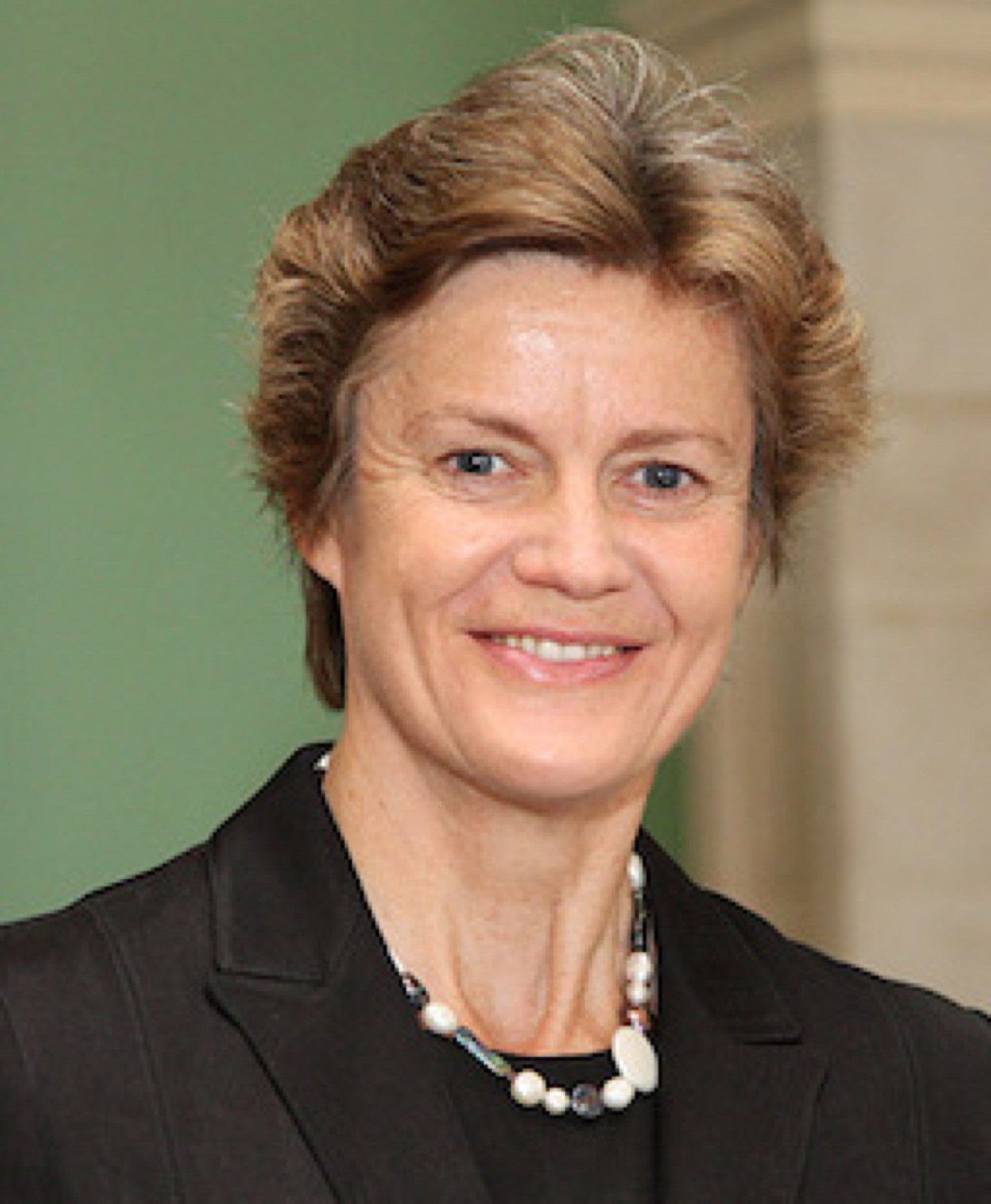
Barbara Woodward
Barbara Woodward is the UK's UN Ambassador who served as the first female Ambassador to Beijing. Barbara Woodward discusses UK relations with China.
Episode Summary
China's President Xi Jinping is absent from this year’s United Nations General Assembly, but he’s certainly being talked about. Prime Minister Rishi Sunak, who also skipped the meeting, is moving the United Kingdom away from its previously hostile stance toward China, arguing that boycotting Beijing is not an option amidst the many global challenges requiring cooperation. He has angered many in his right-wing governing party, particularly longstanding China hawks like former leader Iain Duncan Smith. One Decision's Julia Macfarlane sits down with the UK’s UN Ambassador Barbara Woodward, who served as their first female Ambassador to Beijing to discuss UK relations with China and Sir Richard Dearlove joins Julia to discuss his takeaways and Russia's role in the UN Security Council.
Listen & Subscribe
- Watch on YouTube
- Listen on Apple Podcasts
- Listen on Spotify
Transcript
INTRODUCTION
Mcfarlane: You're listening to One Decision, the podcast that looks at the choices made that shape our world. I'm your host, Julia McFarlane. Alongside my co-host, Sir Richard Dearlove, the former chief of Britain's secret intelligence service, we speak to the leaders, experts, and activists making the kinds of decisions that impact all of our lives. This week, we're coming to you from the city of New York, where the world's leaders are converging for the United Nations General Assembly. Think of it as our world's annual town hall. President Biden is here, as is Ukraine's Volodymyr Zelenskyy, as well as representatives and leaders from nearly 200 nations. But one key player is not here. China's Xi Jinping is giving the forum a miss, but he and his Communist Party are a key item on the agendas of many of the delegations here. Ambassador Barbara Woodward is The UK's representative to the UN. She spent a great deal of her career based in China as The UK's first female ambassador to the country. In fact, it was during her posting there that the late Queen Elizabeth was caught on camera in 2016 complaining that the Chinese delegation had been very rude to her ambassador during the Xi visit that year. A bit of a wrinkle to the attempted golden era of China-UK relations back then. Those efforts rather short lived as The UK has grown to be far more skeptical about dealing with Beijing. Recently two parliamentary workers were exposed as alleged spies for China and the foreign secretary James Cleverly has described China as a systemic challenge. However, there has been a change in policy with this current UK government, which has a very different position on China than previous administrations. Cutting China off completely is not an option according to Prime Minister Rishi Sunak. We sat down with Ambassador Barbara Woodward to talk about the changing UK relationship with Beijing.
INTERVIEW
Mcfarlane: Ambassador Woodward, thank you so much for joining us on One Decision. It's so great to talk to you. It is UNGA month, and so we've got a whole lot of topics that we're gonna try and squeeze in the time that we have with you. I guess to start off with, I wanna talk about China. Obviously it's a challenge that will be looming large for British diplomats and a lot of your colleagues across the West. You previously served as ambassador to China from 2015 to 2020, if I'm not mistaken. I mean, must have been quite an extraordinary time to be based in Beijing with all the different challenges and changes that were happening around the world at the time. How was your time at your diplomatic post there?
Woodward: Well, thanks Julia and thanks for having me on the podcast. It's great to be here. So I had quite an extraordinary five years as ambassador to China. And that came on the back of more than seven years that I'd already spent in China, starting in the 1980s as an English teacher. And then I was there in the early 2000s through the Beijing Olympics, the summer Olympics, of course, because Beijing has now hosted the Winter Olympics. And my tenure as ambassador was really bookmarked, bookended by two things, which was at the beginning of 2015, an extraordinary year through which we worked up to President Xi Jinping's state visit to The UK. And that was hosted by Her Majesty, the late Queen and Prime Minister David Cameron. And that saw the launch of what we called the golden era between our two countries, a real effort to intensify relations at government to government level, business to business level. We saw trade grow almost five times in the five years I was there, and then a real intensification of people to people relationships both ways, students, tourists, exchanges, and so on. So that was sort of first bookend. And we worked through that a bit and obviously came up against some of the challenges of that time, China's national security law in Hong Kong, which changed the dynamic quite a lot. Some of the reporting that came out of Xinjiang about the abuse of Uighur human rights, which I think put a strain on the relationship. But the good thing was it was already load bearing at that point. And then of course the real test came, in January 2020 when COVID broke out in Wuhan, spread across the country, and we were of course seeking to support and evacuate British citizens around Hubei province in Wuhan. But it was an extraordinary five years to be in China and a huge privilege to serve at that time.
Mcfarlane: Yeah, thank you so much for that reminder of all those so many sort of twists and turns in the story between The UK and China. And you mentioned a lot of, you know, the strains in the relationship. And I imagine that your job as a diplomat, lot of the time, maybe you're doing a little bit of damage control, to keep relations sweet when government officials or politicians of your country maybe say the wrong thing or put their foot in it. Was it a bit of a nightmare for you? Was it possibly the worst thing to land in your intro when all those headlines about the queen getting caught on camera saying that the Chinese officials were rude to the Brits during Xi's state visit. Was that a bit of a nightmare sort of fire for you to put out with your counterparts in Beijing at the time?
Woodward: It was certainly a fire to put out, but I think the driving force of any ambassador's job is, you know, jobs and growth and national security in The UK. So everything I was doing in China was either directly relevant to that, if we were securing Chinese investment into The UK that was creating jobs, we were working with China on some of the global challenges of the day, whether it was cybersecurity or climate change, that has an impact on The UK's security and economic growth. So that was always my sort of true north as it were as ambassador. And sure, if someone says something that can impact negatively on the bilateral relationship, it's my duty to manage it. But I think to be honest, the Chinese agreed with us that that state visit had been extraordinarily successful. Of course, there had been some difficulties setting it up. There was high stakes on both sides, and we had to get it right. It hadn't been done for ten years. So when the queen said that, we just needed to put that into the context of what was an important visit and in a very important relationship.
Mcfarlane: James Cleverly, the current foreign secretary, he of course recently went on a high level trip to Beijing. He's attracted a bit of criticism from some of his colleagues in the Conservative Party who are a bit more hawkish on how The UK needs to handle the challenge of China and what our foreign policy should be. He made this speech at Mansion House where he rejected what foreign policy analysts have described as the Thucydides trap, which is this phrase coined by this policy analyst referring to the inevitable collision between world superpowers at the time of ancient Athens, and I think it was Sparta. And today, of course, it's referenced in relation to The US and China collision and the fact that many countries around the world are sort of feeling like they have to choose what side they ally themselves to. And then China, the great challenge of our time. I mean, how do you navigate trying to foster good relations between two very strongly opposing forces, particularly one of them, particularly when one of them is as closely intertwined with our country culturally, economically, and on security?
Woodward: So I think I wouldn't characterize it as being stuck between a rock and a hard place. I go back first of all, to what I said before, which is, what are we doing fundamentally? We're doing things that enhance and promote the security of The UK and grow jobs and growth for The UK. And so we're looking in all of our bilateral and multilateral relationships for ways to do that. So that's the sort of first key point. The second point I think is that The US recognizes, and we've seen a series of high level US visits to China in recent months that they too want to engage with China on the global issues of the day, the global challenges, whether it's climate change, the economy and trade supply lines, key things like semiconductors, the threat of cyber and AI. So we're all trying to find a way through for the people of our countries on these key global issues that are transnational challenges that can be managed only by having a relationship. And that's why wherever we agree and disagree, and that balance will be different with every country, the relationship has to be load bearing because then as you saw, the foreign secretary raised the sanctions on British parliamentarians. He raised our concerns about the national security law in Hong Kong and in particular, treatment of the businessman and politician, Jimmy Lai. He raised our concerns about the treatment of the Uighurs in Xinjiang, and also looked at areas where we want to deepen our cooperation with China, the economy, trade, climate change, looking forward for technology of the future, people to people exchanges and so on. So you're always looking to build a load bearing relationship. Now you might have a very narrow space, as you say, between a rock and a hard place to do that, or you might have quite a lot of water between your rock and a hard place. But I don't see any difficulty in working here with The US, which I do very closely, at the UN, but also I work here closely, with my Chinese counterpart at the UN. And we're all trying to find solutions to these problems.
Mcfarlane: Ambassador, obviously, we are in UNGA week and there are a lot of global challenges on the agenda. And obviously climate is ranked very, very highly on it. I mean, what is the key message that The UK is trying to bring with regards to climate? And obviously off the back of James Cleverly, foreign secretary's trip to China, action on climate figured very strongly on that. He said part of our reasons for needing to engage with China is we cannot solve the climate crisis without them.
Woodward: Exactly. So we have in UNGA High Level Week, I think this unique annual fixed moment where leaders and foreign ministers get together same place, same time. And it's a very intense, very productive few days of face to face meeting. It's the point where the UN sets the agenda. So this year, the overall focus will be progress on the sustainable development goals, which of course includes climate in many ways and very specifically. And for that, when we look across the totality of the UN memberships, so 193 countries, more than 140 of those, well more than two thirds think of themselves as developing countries in some way or other. So they have a very high stake indeed in the Sustainable Development Goals. So we have 193 leaders descending on New York to focus on the Sustainable Development Goals, in particular on climate and on health. And we'll have a series of summits, a series of meetings where The UK will be very well represented, the Deputy Prime Minister will lead our delegation. We have two more cabinet ministers joining, four more government ministers supporting. We will be absolutely covering that agenda. And on climate in particular, of course, we want to reach the $100,000,000,000 that were promised in Glasgow, which was of course, I think a landmark summit in climate change. When you look at Kyoto, Paris, Glasgow, the momentum there, Egypt hosted in Sharm last year, and we'll be looking ahead to The UAE hosting in November, but a really important moment for the climate. You've seen the secretary general said last week that this has been the hottest year on record. So action on climate is really very urgent indeed. So in addition to our commitments, our financial commitments, The UK has also been leading work to try and unpick the red tape that strangles some of the international financial institutions in order to see more money flowing into these urgent climate mitigation and adaptation projects. So when I talk to my colleagues from some of the Pacific Islands, for example, you know, they're talking about projects that require tens of thousands of dollars, which is a drop in the ocean, an unfortunate phrase perhaps in this context, in terms of the money that's available, but they're not getting that money into their finance ministries in order to be able to build seawall defenses, to put up solar power stations that would really save their existence if you're a small Pacific Island. And that's where The UK has been trying to help releasing money through the Green Climate Fund, really making it work, the way it was intended to, and getting beyond these pledges and announcements.
Mcfarlane: Critics of spending on development, I think they perhaps see it as a good to have, but I kind of want to tie in development with one of the goals of development spending, which is stability. And we have seen this wave of coups across Africa and they have occurred in places that are unstable countries that have weak democracies and many of them dealing with Islamist insurgencies. And a lot of this is happening in the Sahel and also in Francophone Africa. There's a situation most recently in Gabon, but also we've seen Niger, two coups in Burkina Faso last year and a failed coup attempt in Guinea-Bissau. What should ECOWAS, the regional bloc, be doing? What should the AU be doing? And what will you be arguing that the UN needs to do? I mean, there are so many different opinions about being interventionist or the fact that we've been perhaps too interventionist with regards to how the French have handled a lot of their former colonies. What are you going to be saying to your colleagues about what the international response should be?
Woodward: We've been very concerned, as you say, by this wave of coups, eight in all, in the last couple of years across Africa and The Sahel. And you cited Gabon, that's the most recent before that Niger, but we've also seen in countries like Mali, where the Russian Wagner Group, the Russians have persuaded Mali to throw out the UN operation. And since then we have seen Islamic extremists take over more territory in Mali than they had when the UN peacekeeping forces were there. So I think the most important thing is that we have a holistic international response. It can't be humanitarian relief on its own. It can't be development on its own. It can't be peace and security on its own. All three have to be knitted together. And that's what the UN does very well with its system of resident coordinators. Now, in order for us to find that stability, we do need development. As the foreign secretary has said, stopping the migrant boats coming to The UK shores starts with giving people enough to eat, giving them the wherewithal for agricultural produce, giving them some education, giving them jobs in their home countries. So those triggers are broken down. So what we say in the UN Security Council is that we need to address all of these underlying challenges. And that's why we have convened debates in the UN Security Council on climate change, on health and COVID in order to try and get at these things which undermine security for and in these countries. And of course you need to have rule of law, you need to tackle corruption, all of the things that undermine that. But fundamentally, that's the point of this year's UN High Level Week is to look at where we've got to in development progress and try and accelerate that as we head to 2030.
Mcfarlane: Ambassador, you had quite a strongly worded statement recently with regards to Russia. You accused it of showing a flagrant disregard for the UN Charter. Russia, of course, has a permanent member seat on the Security Council. You said that Russia has increasingly used its position on the council and used the council itself as a platform for propaganda and disinformation. And calling on your colleagues that you had to maintain the authority, integrity and legitimacy of the Security Council. Should Russia be allowed to keep its permanent seat on the council? And at this rate, I mean, is the UN Charter still worth the paper that it's written on these days?
Woodward: So I think it's without doubt that apart from the appalling violation of international law and the cost in human life of Russia's illegal invasion of Ukraine, Russia is just trampling on the UN Charter and the principles which underpin it. So sovereignty and territorial integrity, obviously, respect for human life, human rights and the rules of conflict have all gone into the mud in Ukraine, thanks to what Russia has been doing. We've really, I think led the response here at the UN, both in trying to make sure that Russia's disinformation and lies. I mean, remember they said that they weren't going to invade Ukraine. That was lie number one. So we've really been pushing hard to put out the truth here at the UN, the truth about the appalling human rights violations, the rape, the torture, the murder at Bucha and Irpin, for example.
Mcfarlane: Should they keep their seat? Should they be allowed to keep their seat given everything that you've said that they have done?
Woodward: So there is no mechanism to throw a permanent member off the Security Council. And believe me, we have looked for one. But what we have been able to do is first of all, to ensure Russia is thrown off other UN bodies. So for example, we got them thrown off the Human Rights Council, UN Commission on the Status of Women, bodies where Russia has had an influential voice since the foundation of the UN. So we've constrained their power there. And so in the Security Council, we can't throw them off, but we can make sure that they are isolated. And when you look at the voting records in the Security Council, for example, you know, even China, this, you know, all weather friend that Russia claims to have, even China has not voted with Russia on Security Council votes and in the General Assembly, they've been that uncomfortable. And the rest of the membership of the Security Council has done the same thing. So we've tried to expose the truth. We've encouraged the UN to keep delivering the objective facts. So when you look at the protection they've put around Zaporizhzhia, the evidence they've produced to counter Russian disinformation, and that is now all in the public domain, thanks to the fact that we've done that in the Security Council, we're countering Russian disinformation and lies, which I think is an important part of supporting Ukraine in the war that they are robustly defending themselves in.
ANALYSIS WITH SIR RICHARD DEARLOVE
Mcfarlane: So, Richard, this was a really, really interesting conversation with such an experienced diplomat as well as someone who has spent a lot of time in China quite a few years. Ambassador Woodward spent as an English teacher and then again on a diplomatic posting. It's a really interesting time to be sort of weighing up and analyzing British foreign policy when it comes to China because the stance taken by the current prime minister Rishi Sunak is quite a marked change from his predecessor Liz Truss and Boris Johnson as well.
Dearlove: Yeah, I was very struck. I mean, you've got the full diplomatic works talking to Barbara Woodward, and she's very clear and fluent and obviously very practiced at saying what she wants to say and avoiding awkwardnesses. But I thought there was an element in the interview which was really striking and actually I think important and it sort of underlies the policy issue and that was the fantastic contrast in the way she talked about China with the way that she talked about Russia. She was incredibly careful in what she said about China and used the phrase several times load bearing relationship which I think is indicative of the way the government is thinking, i.e. the relationship is strong enough to bear significant disagreements, and that they want to emphasize when they talk about it that, you know, it has a positive side and that that positive side is important going forward. But when she talked about Russia, which is surprising coming from a diplomat of her experience, and I'm sure this was deliberate too, there was really very little restraint in what she said about the Russians. I found this extraordinary because, you know, bear in mind I've got a huge experience of dealing with the Foreign Office, being almost in it for much of my career. And her words about Russia just show how far off the diplomatic map Russia has put itself and how it really is in a pretty isolated position. And trying to interpret that difference, I can see we really don't want to drive China into the arms of Russia. And I think this was almost the subtext of your interview with Barbara Woodward. But if it hurt, because I think in a subtle way without saying it that clearly, she certainly got the message across to me.
Mcfarlane: I asked her if Russia should lose their permanent seat on the Security Council because she has used her platform at the UN to really vociferously criticize Russia, and she didn't say no. She just said there is no means. There is no process to kick someone off the Security Council, so we can't do it. Which, you know, yes, she's classic diplomat and so careful in how she worded things. And it can make a quite a frustrating interview at times. But when they do say or they do reveal little things, they can be very insightful. President Biden has at the UN, once again, this is turning into a bit of an annual tradition, calling for more countries to sit on the council. So I guess Biden's thinking is, fine. If we can't kick Russia out, we should have more countries in. I mean, he's been calling for this annually.
Dearlove: Well, personally, I think you're entering the sort of politics of the impossible because there are so many countermanding interests. And of course, it's absolutely right. You can't chuck Russia off. There's no way that that can be done under the UN constitution, if you can talk of a constitution. And of course, you know, this idea of permanent membership, the whole question is, you know, should really international alliances like the AU or the EU have access to a permanent seat. But then of course the question is would France—France won't swap its seat for an EU seat, The UK won't swap its seat for an EU seat, well of course it doesn't apply to the EU anymore because we're not a member but it wouldn't have done in the past. But permanent seats were all about traditionally, it was the nuclear armed states, wasn't it? It was really global security in the aftermath of World War II, so the five permanent members, you know, China, Russia, France, UK, and The United States. And I mean, sort of grows out of the logic of the alliances in World War Two. And the difficulty now is, I don't think that can be changed. And in a way, your interview with Barbara Woodward reflected this, because I suppose the key question is what could or can the Security Council actually achieve? And my answer to that is not very much, because China will abstain and Russia will veto. And it'll happen over and over and over again on anything controversial, that's what has happened. But I mean interestingly, someone like me grew up and worked in a period when everything was focused on the Security Council, Security Council decisions, the sort of strategic role that the UN could play in achieving, you know, a successful function of the international system. And I think what's happened, for reasons that hardly need explaining, that role has broken down, it's evaporated, it can't function, but it still can function in these technical areas. And in a way, it's a huge diminution of the UN's global influence. And I think trying to interpret Barbara Woodward's interview, I think these are the points which struck me. And I mean, listening to it, and it's very very interesting for someone like myself because, you know, I've been out of government affairs essentially, okay, I've been commenting on them and following them since 2004 really, but it just struck me how things have hugely moved, particularly in the UN in New York in that period. And of course I myself served in the UN post in Geneva, where the UN agencies function more in Geneva. You don't get those overriding issues which are dealt with at the General Assembly. But I was thinking well in a way New York, the UN has become a bit more like Geneva than you know aspiring to these big issues that it used to deal with.
Mcfarlane: The other interesting thing that she pointed out correctly, I think, I certainly forget this from time to time, but the Chinese, they don't always have the Russians' back on the Security Council or even in the General Assembly votes. They don't always vote alongside Russia. They do abstain quite a lot. And she used an interesting phrase that China was not the all weather friend that the Russians sometimes make out to be. Obviously, Putin and Xi have a very interesting relationship that we're all desperately trying to divine. Do you think things may have changed in terms of Xi's calculation of how useful Putin can be to him, particularly after that attempted coup by Wagner?
Dearlove: Well, I'm sure that Xi and his team, you know, play their strategic cards with enormous care. And on the one hand they want to keep channels open to Russia, but I think on the other hand they really want to keep a measure of distance and independence, they certainly don't want to be seen as inevitably backing Russia up to the hilt on everything. And I think, you know, Barbara Woodward's comment about the Chinese not always supporting the Russians and not always voting with the Russians, I think she was trying really very hard to define the difference between these two, you know, major players and to find the difference in The UK's relationships with the two players. And I think there's substantial rational argument to be made, which we're actually seeing to an extent in practice with Cleverly recently going to Beijing, you know, where there is such a difference. I mean no one is suggesting Cleverly goes to Moscow and, you know, he certainly won't be going to Moscow. Although, of course, we've still got diplomatic relations just about functioning with the Russians.
Mcfarlane: And I think what has been interesting, the debate within The UK and particularly within the ruling Conservative Party, there is a big ideological divide between people like the former leader, Iain Duncan Smith, who is a big China hawk who wants us to have nothing to do with Beijing. He made a real stink about those two alleged spies who have been potentially rooted out in parliament. And Rishi Sunak, who is way more pragmatic, he was really challenged on China, and it's a bit awkward for him because he spent a little bit of political capital in his party arguing about the need to engage with China and that we can't boycott them the way that some China hawks might want to. And what I thought was very interesting in the time that has passed since you and I talked about this issue of the alleged Chinese spies in parliament is that not just yourself, but other former chiefs of MI6 have taken to the airwaves to talk about this story. So Alex Younger, one of your successors, also addressing this on the BBC recently. And when asked about it, you all seem to give pretty similar answers. And, you know, he laughed a little and he sounded a bit despairing when he said, look, the way The UK-China relationship is portrayed is so binary and it's so, like, it's not how it works and, you know, spies spy. That's what they do. And you said something very similar on Sky News as well. I mean, obviously, we've talked about the relationship with China before, and you've said that reciprocity is the best way forward. But how difficult do you think is it going to be for not just The UK that also has this rump of China hawks to deal with, but also the Americans. There's a lot of pressure from The US on The UK. We've seen this since Huawei. The Trump administration and Mike Pompeo, very unhappy counterparts for not being tough on Huawei soon enough. I mean, is this difficult for leaders on both sides of the Atlantic to be pragmatic about China?
Dearlove: Obviously, it's politically controversial as to how you actually handle the Chinese relationship on a month by month basis. But I think it's personally, I think it's possible to be really pretty tough with the Chinese, but at the same time to be reasonably pragmatic. And, you know, you asked Barbara Woodward about that incident, you know, after she had stayed at Buckingham Palace, the Queen remarked on the rudeness of Chinese officials. I have to say, I heard some even more damning comments than that about—
Mcfarlane: Oh, really? Do you want to tell us more? Off the record.
Dearlove: Well, you know, the fuss apparently that was made by Xi and the Chinese, it was quite incredible. And, I mean, the queen wouldn't have said anything unless the frustration and the offense had been at a pretty high level. But let's face it, you do not make—
Mcfarlane: Just quickly on the queen though, she is so used to this kind of stuff. She knows what she's doing. She never says anything on a hot mic without meaning to.
Dearlove: Well, she didn't, and I agree. But, I mean, you don't make policy towards China on, you know, the extent to which the central heating in Buckingham Palace does or doesn't function well, which is the sort of thing that was going on. So it's really quite an amusing aspect to it. And similarly, the FT, the Financial Times, quoted me on this spy thing as saying, you don't make policy on China over a spy case, and you don't. You might make policy on China over successive spy cases, and if you've got a mega mega problem. And, you know, the Chinese, as they become more powerful, are becoming much more aggressive in intelligence collection. And I'm not saying there's nothing wrong with that, it is, you know, we have to protect our national security, we've got to get the message across to them that we mean business as well. I mean, you know, if that relationship wasn't around, we would probably be feeling a cold economic draft. So you can't just, you know, say tough line beginning and end the story. I mean, I've preached a very tough line on Huawei, but I'm not preaching cutting off relationships and isolationism. I'm just preaching eyes open relations. And I said in my interview with Sky on this subject, which I think is worth repeating. And this was said to me by someone who knows China really, really well. The Chinese are really good at making you think commercially they believe in win win. But actually, what the Chinese commercially are up to is we win, you lose. And as long as we understand that and, you know, protect ourselves and promote our own interests, and that's why I was so struck when you were questioning Mike Pompeo, which he did extremely well, and Mike Pompeo said, what's the answer? It's reciprocity. And he's spot on right. Do to them what they do to us, treat them the same way. They get the message, it'll be fine. Okay, it'll be awkward, it'll be angular, we'll have rows, we'll have arguments. But you know, we don't need to be in a confrontation with China, which is strategic, when that's the situation we're in with Russia. I mean, we're fighting a gray war with Russia. We do not want or need to fight a gray war with China at the same time.
Mcfarlane: That's it for this week's episode of One Decision. We drop new episodes every Thursday. Like and subscribe so you never miss an episode. Drop us a line. Tell us your thoughts. What decisions have impacted you and where you live? You can write to us. Our email is 1decision@1decisionpodcast.com. From me and the team, thank you for listening, and see you next time.